Apsarā-kuṇḍa
अप्सरा-कुण्ड Hindi name proposed
Also called Apsarā Lake
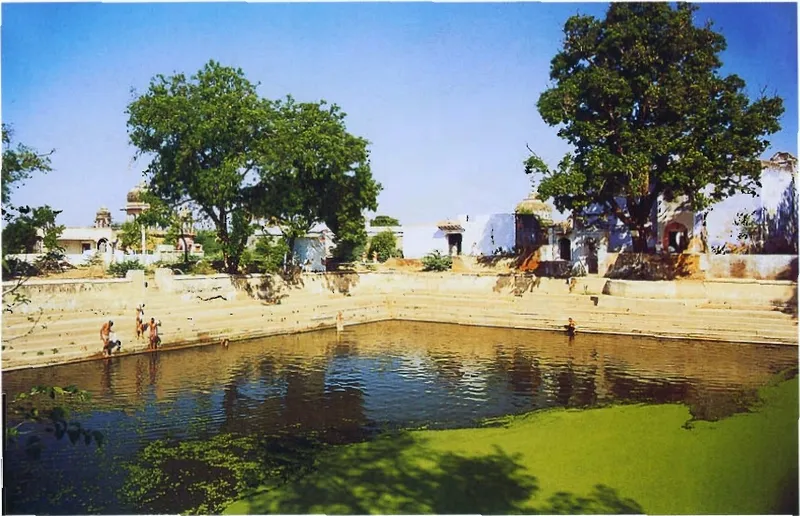
- What it is
- Apsarā-kuṇḍa, the kuṇḍa of the Apsarās, the dancers of heaven, is a pond at the southern end of Govardhana Hill.
- Visiting
- Śrī Vraja-maṇḍala Parikramā (2007) says that the nearby place of rāsa was once a grove of thousands of kadamba and tamāla trees, of which hardly any remain, and that fortunate sādhakas, practitioners …
- Parikramā
- Govardhana parikramā, station 31
- Places here
- Place of rāsa (Apsarā-kuṇḍa and Navala-kuṇḍa)
In short
Apsarā-kuṇḍa, the kuṇḍa of the Apsarās, the dancers of heaven, is a pond at the southern end of Govardhana Hill. The Bhakti-ratnākara places it at the end of Govardhana, the guidebook Govardhana Hill (2001) at the hill's southernmost tip, where the hill goes under the ground, and Śrī Vraja-maṇḍala Parikramā (2007) at Pūñcharī.[1 +3] The neighbouring pond is Navala-kuṇḍa.[2 +3] Śrīla Raghunātha dāsa Gosvāmī names the kuṇḍa of the Apsarās among the kuṇḍas around Govardhana.[7] The Varāha Purāṇa also names a kuṇḍa called Āpsarasa on the circuit of the hill and praises bathing in it, but no source identifies that kuṇḍa with this pond.[8] The guidebooks tell several stories of the kuṇḍa; Śrīmad-Bhāgavatam tells the pastimes they refer to without naming it.[9 +10]
Key facts
| Kind | kuṇḍa |
|---|---|
| Region · area | Govardhana · Pūñcharī |
| Also part of | Apsarā Vana |
| On the parikramā | Govardhana parikramā, station 31 · the route |
| Ācāryas | Śrīla Raghunātha dāsa Gosvāmī, Śrīla Nārāyaṇa Bhaṭṭa Gosvāmī, Śrīla Śrīnivāsa Ācārya, Śrīla Narahari Cakravartī Ṭhākura, Śrīla Rāghava Paṇḍita Gosvāmī of Govardhana |
Why it is glorified
Śrīla Raghunātha dāsa Gosvāmī names the kuṇḍa twice (summarised here, not translated).
Śrīla Raghunātha dāsa Gosvāmī names the kuṇḍa twice (summarised here, not translated). In his Govardhanāśraya-daśaka (verse 3) the kuṇḍa of the Apsarās is one of the kuṇḍas that shine all around Govardhana, dearer to Hari than the heavenly Gaṅgā and the other great tīrthas; in his Vraja-vilāsa-stava (verse 79) a lake of the Apsarās is among the best lakes on all sides of the hill. Neither verse tells a story or gives a position.[7 +2]
The Nārada Purāṇa also names a lake of the Apsarās among the holy places of Vraja, after Rādhā's Śrī-kuṇḍa, Vatsa-tīrtha and Candra-saras and before Rudra-kuṇḍa, again without a story or a position.[22]
Two Purāṇas thus name a kuṇḍa or lake of the Apsarās as texts, without placing it. The Varāha Purāṇa's rule for walking around Govardhana names, after Mānasa-gaṅgā and the Puṇḍarīka kuṇḍa, a kuṇḍa called Āpsarasa, "of the Apsarās", a pool of clear water, and promises the fruit of the Rājasūya and Aśvamedha sacrifices to one who bathes and offers tarpaṇa (libations of water) there (summarised here, not translated). It tells no story of the kuṇḍa and gives it no position on the hill, and no source identifies it, or the Nārada Purāṇa's lake, with this pond.[8 +1]
Divine pastimes
Kṛṣṇa's bath after the lifting of the hill
Śrīmad-Bhāgavatam (10.27) tells that after Kṛṣṇa had held up Govardhana, Surabhi bathed Him with her milk and Indra with water of the heavenly Gaṅgā from the trunk of his elephant Airāvata, and named Him Govinda, while the Gandharvas and others sang and the wives of the demigods danced. It names no place and no kuṇḍa formed by the bath, and it does not call the dancers Apsarās.[9 +2]
tatrāgatās tumburu-nāradādayo gandharva-vidyādhara-siddha-cāraṇāḥ / jagur yaśo loka-malāpahaṃ hareḥ surāṅganāḥ sannanṛtur mudānvitāḥ
Tumburu, Nārada and other Gandharvas, along with the Vidyādharas, Siddhas and Cāraṇas, came there to sing the glories of Lord Hari, which purify the entire world. And the wives of the demigods, filled with joy, danced together in the Lord’s honor.
Translation: Śrīla Prabhupāda's disciples (BBT)The commentators explain "there" in this verse as the place of the bath in the Govardhana region, known as Śakra-kuṇḍa or Govinda-kuṇḍa; none of them mentions Apsarā-kuṇḍa or the Apsarās (summarised here, not translated).[24] Read more: The lifting of Govardhana Hill, Indra's homage and the name Govinda →
The later texts connect the kuṇḍa with that bath in different ways. Śrīla Nārāyaṇa Bhaṭṭa Gosvāmī's Vraja-bhakti-vilāsa gives a prayer for bathing here that calls the tīrtha arisen from the play of the Apsarās and born of the bathing of Kṛṣṇa and Indra (summarised here, not translated).[25 +1] The guidebook Vṛndāvana-Dhāma Ki Jaya! (c. 1986) says that when Indra bathed Kṛṣṇa, many Gandharvas and Apsarās danced and bathed in the two kuṇḍas at Pūñcharī.[2 +3]
Accounts differ Who performed Kṛṣṇa's bathing ceremony after the lifting of Govardhana, where, and whether Apsarā-kuṇḍa was formed by it
- Śrīmad-Bhāgavatam 10.27.22-24 (translation by Śrīla Prabhupāda's disciples)Surabhi with her milk and Indra with the heavenly Gaṅgā from Airāvata's trunk bathed Kṛṣṇa; the Gandharvas and others sang and the wives of the demigods danced; no place, no kuṇḍa formed, no bath by the Apsarās
- Śrīla Prabhupāda, Kṛṣṇa book ch. 27the residents of Gandharvaloka and the other higher planets glorified the Lord 'as their wives and damsels danced with great joy'; no place
- Vaṁśīdhara, Śrīla Sanātana Gosvāmī and Śrīla Jīva Gosvāmī on ŚB 10.27.24at the spot of Govardhana called Śakra-kuṇḍa (Varāha Purāṇa) or Govinda-kuṇḍa (Jīva: Skanda Purāṇa); Sanātana, in a second explanation, at a place on Govardhana known from the Skanda, printed śatru-kuṇḍa
- Govardhana Hill: India's Most Sacred Mountain (2001)'it is said' that 108 kuṇḍas were formed by the water of the bathing ceremony; Apsarā-kuṇḍa was created when the seven main Apsarās performed their abhiṣeka of Kṛṣṇa
The wording of these accounts is our summary of the sources, not a published translation.
Kṛṣṇa's games with His friends
Govardhana Hill (2001) and the undated parikramā notes Govardhana say that at Apsarā-kuṇḍa Kṛṣṇa showed His friends some of His incarnation forms: a twelve-armed Viṣṇu carried by a cowherd boy as Garuḍa (Subala, in the undated notes), Varāha the boar, and Rāmacandra with the boys as monkeys and bears.[2 +1]
Śrīmad-Bhāgavatam tells only that Kṛṣṇa and Balarāma passed Their early childhood in Vraja with games such as hide-and-seek, building make-believe bridges and jumping like monkeys, and it names no place:[12 +1]
evaṃ vihāraiḥ kaumāraiḥ kaumāraṃ jahatur vraje / nilāyanaiḥ setu-bandhair markaṭotplavanādibhiḥ
In this way Kṛṣṇa and Balarāma passed Their childhood age in Vrajabhūmi by engaging in activities of childish play, such as playing hide-and-seek, constructing a make-believe bridge on the ocean, and jumping here and there like monkeys.
Translation: Śrīla A.C. Bhaktivedanta Swami PrabhupādaŚrīla Prabhupāda's Kṛṣṇa book says that the brothers imitated, among Their friends, Lord Rāmacandra's monkeys, who built the bridge over the ocean, and Hanumān's leap to Ceylon. The commentators call these games an imitation of Śrī Rāma's pastime and of the deeds of other incarnations; none of them names this kuṇḍa (summarised here, not translated).[12 +2]
Accounts differ Whether Kṛṣṇa showed His friends incarnation forms at Apsarā-kuṇḍa, or played at other incarnations' deeds without a place being named
- Śrīmad-Bhāgavatam 10.11.59 = 10.14.61 (translation of 10.11.59 by Śrīla Prabhupāda)Kṛṣṇa and Balarāma passed Their childhood in Vraja with games such as hide-and-seek, building a make-believe bridge and jumping like monkeys; no place
- Śrīla Prabhupāda, Kṛṣṇa book ch. 11They imitated, among Their friends, Lord Rāmacandra's monkeys who built the bridge over the ocean, and Hanumān's leap to Ceylon; no place
- Śrīla Sanātana Gosvāmī, Śrīla Jīva Gosvāmī and Śrīla Viśvanātha Cakravartī on ŚB 10.14.61an imitation of Śrī Raghunātha's pastime; the deeds of other incarnations (bridge, march to Laṅkā, churning of the milk ocean); in one explanation of Sanātana, a bridge built by the friends acting as monkeys in the middle of an unnamed lake
- Govardhana Hill: India's Most Sacred Mountain (2001)at Apsarā-kuṇḍa, for the pleasure of His boyfriends, Kṛṣṇa manifested incarnation forms: a twelve-armed Viṣṇu before the gopīs with a cowherd boy as Garuḍa, Varāha, and Rāmacandra with the boys as monkeys and bears; the twenty-four incarnations eternally sport there (Viṣṇu-dharmottara)
The wording of these accounts is our summary of the sources, not a published translation.
The rāsa dance
Śrīmad-Bhāgavatam (10.29–10.33) tells the rāsa dance on autumn nights, on the sandy bank of the river, the Yamunā in the translation; it does not name Apsarā-kuṇḍa or Rādhā and says nothing of the lovers melting into ponds.[14 +5] Some of its commentators let the rāsa nights include spring and the other seasons. Vaṁśīdhara and Śrīla Jīva Gosvāmī place at Govardhana, in the middle of spring, the rāsa of the night when the bull demon Ariṣṭa came, without naming a spot, and they say that after Ariṣṭa was killed it went on where he was killed, by Rādhā-kuṇḍa (summarised here, not translated).[30 +7] Read more: The spring rāsa at Govardhana: Pārāsaulī, Candra-sarovara and Paiṭhā →
Where Rādhā and Kṛṣṇa's rāsa of spring took place, the sources differ: Govardhana Hill (2001) sets it on the banks of Apsarā-kuṇḍa, while Śrī Vraja-maṇḍala Parikramā (2007) and the Bhakti-ratnākara set it at Pārāsaulī.[1 +1]
Accounts differ Where Rādhā and Kṛṣṇa's spring-season rāsa took place
- Govardhana Hill: India's Most Sacred Mountain (2001)'It was also on the sacred banks of Apsarā-kuṇḍa that Rādhā and Kṛṣṇa enjoyed Their spring season rāsa dancing'; Sutala Vana is 'believed to be one of the places on the banks of Apsarā-kuṇḍa where the rāsa-līlā took place'.
- Śrī Vraja-maṇḍala Parikramā (2007)Pārāsaulī, also called Candra-sarovara, 'is the place of the spring rāsa-līlā'; near Apsarā- and Navala-kuṇḍa is 'a place of rāsa' (season not stated).
- Bhakti-ratnākara, Fifth WaveAt Pārāsaulī (Kṛṣṇa) performed the rāsa in the spring season; at Candra-sarovara Kṛṣṇacandra rested in the rāsa.
The wording of these accounts is our summary of the sources, not a published translation.
Traditional accounts
According to Govardhana Hill (2001), Śrī Vraja-maṇḍala Parikramā (2007) and the undated parikramā notes Govardhana, Rādhā and …
According to Govardhana Hill (2001), Śrī Vraja-maṇḍala Parikramā (2007) and the undated parikramā notes Govardhana, Rādhā and Kṛṣṇa melted in ecstasy during a rāsa dance here: Rādhā, with the gopīs in two of the books, became Apsarā-kuṇḍa, and Kṛṣṇa became the neighbouring Navala-kuṇḍa. Śrī Vraja-maṇḍala Parikramā calls the two kuṇḍas the melted forms of the Divine Couple.[2 +3] No scripture, Gosvāmī text or Bhakti-ratnākara passage that tells this pastime has been found, and that guidebook names no source for it.[2 +3]
The Gosvāmīs and ācāryas
According to the Bhakti-ratnākara of Śrīla Narahari Cakravartī Ṭhākura, when Śrīla Rāghava Paṇḍita guided Śrīla Śrīnivāsa Ācārya …
According to the Bhakti-ratnākara of Śrīla Narahari Cakravartī Ṭhākura, when Śrīla Rāghava Paṇḍita guided Śrīla Śrīnivāsa Ācārya around Govardhana, he showed him Apsarā-kuṇḍa at the end of Govardhana, where, he said, the most fortunate bathe. Then he showed him the old palāśa trees called Śyāma-ḍhāka, and then his own cave, Rāghava Paṇḍita's cave. These pages name neither Pūñcharī nor Navala-kuṇḍa.[1]
Śrīla Nārāyaṇa Bhaṭṭa Gosvāmī's Vraja-bhakti-vilāsa gives the circuit of the forest Apsarā Vana and then the prayer for bathing in the kuṇḍa, with sixteen immersions and sips of its water (summarised here, not translated).[25 +1]
Śrīla Prabhupāda
No statement of Śrīla Prabhupāda about Apsarā-kuṇḍa has been found in the works searched.
No statement of Śrīla Prabhupāda about Apsarā-kuṇḍa has been found in the works searched. In the Kṛṣṇa book he tells, without naming a place, the pastimes that the guidebooks set here: the bath after the lifting of the hill, the childhood games imitating Rāmacandra's monkeys, and the rāsa dance, which he places in autumn.[11 +2] Of the bath he writes:[11]
General teaching (does not name the place)“Then the surabhi cow bathed Kṛṣṇa with her milk, and Indra bathed Him with the water of the celestial Ganges … The residents of all higher planetary systems, such as Gandharvaloka, Vidyādharaloka, Siddhaloka and Cāraṇaloka, all combined and glorified the Lord by chanting His holy name as their wives and damsels danced with great joy.”
Śrīla Prabhupāda, Kṛṣṇa, the Supreme Personality of Godhead (Kṛṣṇa book), Chapter 27, 'Prayers by Indra, the King of Heaven' · vedabase.io
Songs
Śrīla Raghunātha dāsa Gosvāmī's Govardhanāśraya-daśaka: its third verse names the kuṇḍa of the Apsarās among the kuṇḍas that …
Śrīla Raghunātha dāsa Gosvāmī's Govardhanāśraya-daśaka: its third verse names the kuṇḍa of the Apsarās among the kuṇḍas that shine around Govardhana.[40]
svar-dhuny-ādi-vareṇya-tīrtha-gaṇato hṛdyāny ajasraṁ hareḥ
sīri-brahma-harāpsaraḥ-priyaka-tat-śrī-dāna-kuṇḍāny api
prema-kṣema-ruci-pradāni parito bhrājanti yasya vrati
kas taṁ manya-munīndra-varṇita-guṇaṁ govardhanaṁ nāśrayet
Visiting today
Śrī Vraja-maṇḍala Parikramā (2007) says that the nearby place of rāsa was once a grove of thousands of kadamba and tamāla trees, of which hardly any remain, and that fortunate sādhakas, practitioners of bhakti, have darśana of the two ponds.[4]
The Narasiṁha Mandira
The Narasiṁha Mandira is a temple of Lord Narasiṁha on a small hill near the banks of Navala-kuṇḍa, overlooking Apsarā-kuṇḍa.[4 +7] In 2001 the guidebook Govardhana Hill called it fort-like and said that its roof gave a view of both kuṇḍas and of Govardhana Hill rising above Apsarā Vana, with the Gopāla temple of Aniyora in the far distance.[5 +4] The same book described the Deity as made of black stone. Under His dress, it says, Hiraṇyakaśipu is shown being torn apart on Lord Narasiṁha's lap, with Prahlāda standing nearby, and the old pūjārī (priest) would lift the dress on request.[5]
Location
| Where it is | 'at the southernmost tip of Govardhana Hill'; the hill goes underground 'just before Apsarā Kuṇḍa'[46] near Navala-kuṇḍa, at Pūñcharī[47] |
|---|---|
| On the numbered Govardhana chart | 49 (printed as “Apsara Kunda”)[48] |
Places at Apsarā-kuṇḍa
2 places
Also described on this page
Nearby places
Govardhana · Navala-kuṇḍa · Sutala Vana · Rāghava Paṇḍita's cave
Pictures
2 pictures
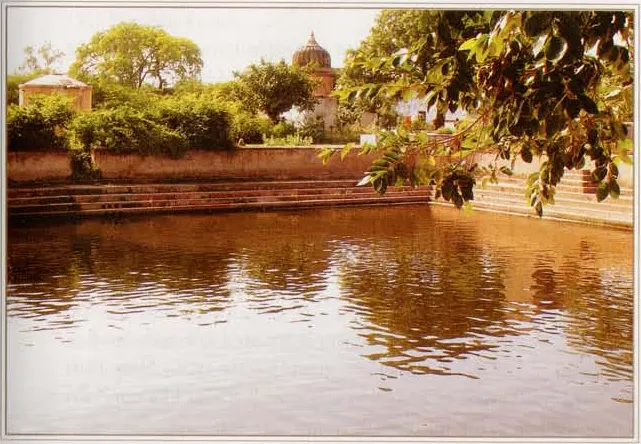
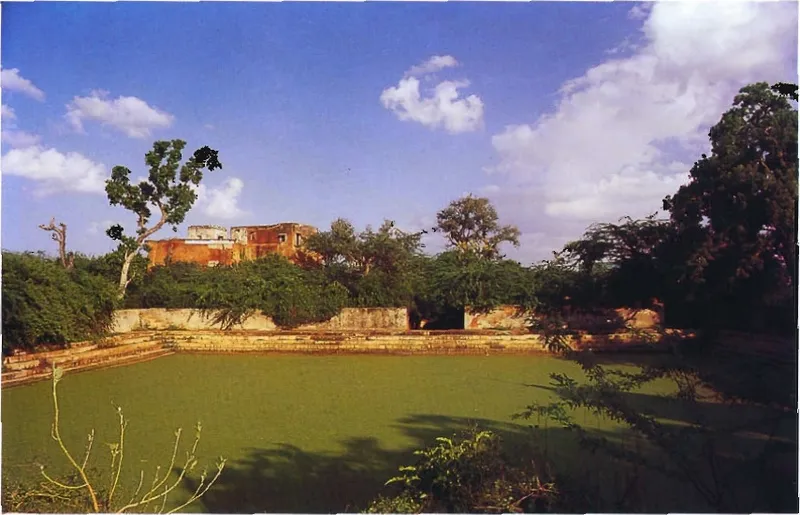
Where the sources differ
How the kuṇḍa came into being and why it bears the Apsarās' name: the guidebooks say that the Apsarās bathed Kṛṣṇa here, or danced and bathed here, or that the name comes from Śrīmatī Rādhikā, whom one of them likens to an apsarā; the Varāha Purāṇa gives the name without a story.[2 +4]
Accounts differ How Apsarā-kuṇḍa came into being and why it bears the Apsarās' name
- Govardhana Hill: India's Most Sacred Mountain (2001)It was created when the seven main Apsarās came to perform their abhiṣeka of Kṛṣṇa ('it is said' that 108 kuṇḍas came from the bath water).
- the undated parikramā notes GovardhanaAt the time of Kṛṣṇa's abhiṣeka (Indra-pūjā, Govardhana-pūjā) the apsaras danced here and had their abhiṣeka here.
- Śrī Vraja-maṇḍala Parikramā (2007)Śrīmatī Rādhikā is likened to the most beautiful apsarā, and Apsarā-kuṇḍa received its name after Her; it is Her melted form.
- Vraja-bhakti-vilāsa (Śrīla Nārāyaṇa Bhaṭṭa Gosvāmī), bathing prayerThe tīrtha arose from the play (helā) of the Apsarās and was born of the bathing of Kṛṣṇa and Indra.
Accounts differ In which season and where the rāsa took place
- Śrīmad-Bhāgavatam 10.29.1, 10.29.45, 10.33.2, 10.33.25in autumn nights, on the sandy bank of the river (the Yamunā in the translation); no Govardhana place
- Śrīla Prabhupāda, Kṛṣṇa book ch. 29, 33, 34on the bank and in the water of the Yamunā; 'the rāsa-līlā was performed during the autumn'
- The Bṛhat-krama-sandarbha (printed under Śrīla Jīva Gosvāmī's name) on 10.29.1; Śrīla Jīva Gosvāmī, Śrīla Viśvanātha Cakravartī and Śrīla Baladeva Vidyābhūṣaṇa on 10.33.25the nights of the rāsa include those of spring and the other seasons; no place
- Śrīla Sanātana Gosvāmī on ŚB 10.33.25the rāsa took place on all nights of the whole kaiśora age; 'autumn' stands for every season, or śarat means the year; no place
More on this place
The lifting of Govardhana Hill, Indra's homage and the name Govinda · The spring rāsa at Govardhana: Pārāsaulī, Candra-sarovara and Paiṭhā
References
48 references
- Śrīla Narahari Cakravartī, Bhakti-ratnākara, Fifth Wave, 1912 ed. p. 203, 2nd ed., 1912
- Govardhana Hill: India's Most Sacred Mountain (2001), Rajasekhara dasa Brahmacari, PDF p. 122
- Govardhana Hill: India's Most Sacred Mountain (2001), Rajasekhara dasa Brahmacari, PDF p. 59
- Śrī Vraja-maṇḍala Parikramā (2007), PDF p. 131
- Govardhana Hill: India's Most Sacred Mountain (2001), Rajasekhara dasa Brahmacari, PDF p. 123
- the undated parikramā notes Govardhana, ¶122
- Śrīla Raghunātha dāsa Gosvāmī, Govardhanāśraya-daśaka, verse 3
- Varāha Purāṇa, adhyāya 164, verses 20b-21, Sanskrit Wikisource
- Śrīmad-Bhāgavatam 10.27.22-23, GRETIL
- Śrīmad-Bhāgavatam 10.27.24, GRETIL
- Śrīla Prabhupāda, Kṛṣṇa, the Supreme Personality of Godhead (Kṛṣṇa book), Chapter 27, 'Prayers by Indra, the King of Heaven' · vedabase.io
- Śrīmad-Bhāgavatam 10.11.59 (the same verse is 10.14.61), GRETIL
- Śrīla Prabhupāda, Kṛṣṇa, the Supreme Personality of Godhead (Kṛṣṇa book), Chapter 11, 'Killing the Demons Vatsāsura and Bakāsura' · vedabase.io
- Śrīmad-Bhāgavatam 10.29.1, GRETIL
- Śrīmad-Bhāgavatam 10.29.45, GRETIL
- Śrīmad-Bhāgavatam 10.33.2, GRETIL
- Śrīmad-Bhāgavatam 10.33.25, GRETIL
- Śrīla Prabhupāda, Kṛṣṇa, the Supreme Personality of Godhead (Kṛṣṇa book), Chapter 29, 'The Rāsa Dance: Introduction' · vedabase.io
- Śrīla Prabhupāda, Kṛṣṇa, the Supreme Personality of Godhead (Kṛṣṇa book), Chapter 33, 'Description of the Rāsa Dance' · vedabase.io
- Śrīla Raghunātha dāsa Gosvāmī, Vraja-vilāsa-stava, verse 79
Show all 48 references
- Govardhana Hill: India's Most Sacred Mountain (2001), Rajasekhara dasa Brahmacari, PDF p. 81
- Nārada Purāṇa, उत्तरार्धः (Uttara-bhāga), adhyāya 80, verses 80-71 (second half) to 80-73
- Varāha Purāṇa, adhyāya 164, verses 19-21, Sanskrit Wikisource
- Vaṁśīdhara, Śrīla Sanātana Gosvāmī, Śrīla Jīva Gosvāmī: commentary on ŚB 10.27.24, Bhagavata Vidya Pith edition, ed. Bhagavata Rishi and Krishna Shankar Shastri, 1996
- Śrīla Nārāyaṇa Bhaṭṭa Gosvāmī, Vraja-bhakti-vilāsa, Apsarā-vana section, verse numbered 35, 1st ed., publ. Bābā Kṛṣṇadāsa, Kusuma-sarovara, Saṁvat 2008
- Śrīla Nārāyaṇa Bhaṭṭa Gosvāmī, Vraja-bhakti-vilāsa, verse numbered 36, after the Apsarā-kuṇḍa prayer, 1st ed., publ. Bābā Kṛṣṇadāsa, Kusuma-sarovara, Saṁvat 2008
- Vṛndāvana-Dhāma Ki Jaya! (c. 1986), by Dhruva Mahārāja dāsa, PDF p. 43
- the undated parikramā notes Govardhana, ¶121
- Śrīla Sanātana Gosvāmī, Śrīla Jīva Gosvāmī: commentary on ŚB 10.14.61 (= 10.11.59), Bhagavata Vidya Pith edition, ed. Bhagavata Rishi and Krishna Shankar Shastri, 1996
- Śrīla Jīva Gosvāmī: commentary on ŚB 10.29.1
- Śrīla Jīva Gosvāmī: commentary on ŚB 10.33.25
- Śrīla Sanātana Gosvāmī, Śrīla Jīva Gosvāmī: commentary on ŚB 10.34.20, Bhagavata Vidya Pith edition, ed. Bhagavata Rishi and Krishna Shankar Shastri, 1996
- Śrīmad-Bhāgavatam 10.34.20, GRETIL
- Śrīla Sanātana Gosvāmī, Śrīla Jīva Gosvāmī: commentary on ŚB 10.36.1, Bhagavata Vidya Pith edition, ed. Bhagavata Rishi and Krishna Shankar Shastri, 1996
- Vaṁśīdhara: commentary on ŚB 10.36.5-6, Bhagavata Vidya Pith edition, ed. Bhagavata Rishi and Krishna Shankar Shastri, 1996
- Vaṁśīdhara: commentary on ŚB 10.36.16, Bhagavata Vidya Pith edition, ed. Bhagavata Rishi and Krishna Shankar Shastri, 1996
- Śrīla Jīva Gosvāmī: commentary on ŚB 10.36.15, parts 1/2 and 2/2, Bhagavata Vidya Pith edition, ed. Bhagavata Rishi and Krishna Shankar Shastri, 1996
- Śrīla Narahari Cakravartī, Bhakti-ratnākara, Fifth Wave, 1912 ed. p. 200, 2nd ed., 1912
- Śrīla Prabhupāda, Kṛṣṇa, the Supreme Personality of Godhead (Kṛṣṇa book), Chapter 34, 'Vidyādhara Liberated and the Demon Śaṅkhacūḍa Killed' · vedabase.io
- Saptaham Murajit Karambuja (Govardhanāśraya-daśaka) (Raghunatha Dasa Goswami (as the song book credits it)) · song book
- Śrī Vraja-maṇḍala Parikramā (2007), PDF p. 110
- Govardhana Hill: India's Most Sacred Mountain (2001), Rajasekhara dasa Brahmacari, PDF p. 119
- Govardhana Hill: India's Most Sacred Mountain (2001), Rajasekhara dasa Brahmacari, PDF p. 22
- the undated parikramā notes Govardhana, ¶132
- the key of the numbered Govardhana chart, ¶50
- Govardhana Hill: India's Most Sacred Mountain (2001), Rajasekhara dasa Brahmacari, p. 108
- Śrī Vraja-maṇḍala Parikramā (2007), p. 236-237
- Numbered list of the Govardhana sites (key of the Govardhana chart)