The spring rāsa at Govardhana: Pārāsaulī, Candra-sarovara and Paiṭhā
गोवर्धन का वसन्त-रास: परासौली, चन्द्र-सरोवर और पैठा
In short
The rāsa is Kṛṣṇa's circle dance with the gopīs. The Bhāgavatam tells it on autumn nights by the Yamunā, but the Caitanya-caritāmṛta and the Gosvāmīs, Śrī Caitanya's leading followers, also speak of a rāsa in spring at Govardhana. The Bhakti-ratnākara places it at Pārāsaulī, beside Candra-sarovara, and tells the four-armed pastime at Paiṭhā.[1–10]
On this page
At a glance
- The Bhāgavatam: the rāsa took place on moonlit autumn nights, on the sandy bank of the Yamunā; it names no village.[1–6]
- Śrīla Prabhupāda: the rāsa of the Bhāgavatam was on the full-moon night of autumn, in Kṛṣṇa's eighth year.[11]
- The Caitanya-caritāmṛta (Ādi 17.282) places a springtime rāsa at Govardhana.[7, 8]
- Śrīla Jīva Gosvāmī's Gopāla-campū tells a spring rāsa on Govardhana, apart from the autumn one.[12, 13]
- The Bhakti-ratnākara names the village Pārāsaulī for the spring rāsa and Candra-sarovara beside it.[9]
- At Paiṭhā, the same book says, Kṛṣṇa showed the searching gopīs a four-armed form.[10]
What does the Bhāgavatam say about the rāsa?
The Tenth Canto opens the rāsa with the season. It is autumn, and the jasmine flowers are in bloom.[1]
Śrī Bādarāyaṇi said: Śrī Kṛṣṇa is the Supreme Personality of Godhead, full in all opulences, yet upon seeing those autumn nights scented with blossoming jasmine flowers, He turned His mind toward loving affairs. To fulfill His purposes He employed His internal potency.
Translation: Śrīla Prabhupāda's disciples (BBT)Kṛṣṇa took the gopīs, the cowherd girls of Vraja, to the bank of the Kālindī, which is the Yamunā. There the autumn moon lit the night, and there the dance began (10.32.11–12, 10.33.2).[1 +4] Śrīla Prabhupāda gives the season and Kṛṣṇa's age.[11]
General teaching (does not name the place)“In Śrīmad-Bhāgavatam it is stated that the rāsa dance took place on the full-moon night of the śarat season. … At the age of seven years He lifted Govardhana Hill. Therefore the rāsa dance took place during His eighth year.”
Śrīla Prabhupāda, Kṛṣṇa, the Supreme Personality of Godhead (Kṛṣṇa book), Chapter 29, 'The Rāsa Dance: Introduction' · vedabase.io
Two details of that night return later in the guidebooks. The moon and the stars were astonished at the dance (10.33.18). The gopīs went home only when the brahma-rātra had passed, in the translation an entire night of Brahmā (10.33.38).[15–17] Śrīla Prabhupāda explains, after Śrīla Viśvanātha Cakravartī Ṭhākura, that the rāsa lasted that whole long night, though the gopīs did not know it.[16]
The Bhāgavatam names no village, lake or hill for this rāsa.[1–6] Where its autumn rāsa took place is told in “Where the autumn rāsa took place”.[1 +4]
Were there rāsa nights in other seasons?
According to some commentators on the Tenth Canto, there were rāsa nights in other seasons as well as autumn. These are summarised here, not translated.[18, 19]
- *The Bṛhat-krama-sandarbha,* printed under Śrīla Jīva Gosvāmī's name, reads the opening verse so that the rāsa nights are nights of autumn, spring and summer brought together.[18]
- Śrīla Jīva Gosvāmī explains the closing verse of the rāsa (10.33.25) as including moonlit nights of spring and the other seasons as well.[19, 20]
- Śrīla Viśvanātha Cakravartī Ṭhākura says that on other nights too, all through the year, Kṛṣṇa enjoyed such pastimes in Vṛndāvana.[19]
None of these comments names a place.[18, 19]
A place appears in the comments on the chapter of the bull demon Ariṣṭa. Vaṁśīdhara and Śrīla Jīva Gosvāmī explain why Nārada went to Kaṁsa only long after Ariṣṭa's death (10.36.16). The rāsa at Govardhana, on the night when Ariṣṭa came, took place in the middle of spring.[20] Śrīla Jīva Gosvāmī adds that after the killing Kṛṣṇa went out again and the rāsa went on. For the rāsa before Ariṣṭa came, they name no particular spot on the hill (summarised here, not translated).[21]
What do the Caitanya-caritāmṛta and the Gosvāmīs say?
The Caitanya-caritāmṛta names Govardhana for the spring rāsa.[7, 8]
বসন্তকালে রাসলীলা করে গোবর্ধনে ।
অন্তর্ধান কৈলা সঙ্কেত করি’ রাধা–সনে ॥ ২৮২ ॥
vasanta-kāle rāsa-līlā kare govardhane
antardhāna kailā saṅketa kari’ rādhā-sane
During the season of springtime, when the rāsa dance was going on, suddenly Kṛṣṇa disappeared from the scene, indicating that He wanted to be alone with Śrīmatī Rādhārāṇī.
Translation: Śrīla A.C. Bhaktivedanta Swami PrabhupādaThe Bengali verse says that the rāsa took place govardhane. Śrīla Prabhupāda's word-for-word meaning renders it near the Govardhana Hill, while his English translation leaves the word out. The verse names no village or kuṇḍa (sacred pond).[7, 8]
The Gosvāmīs and Śrīla Viśvanātha Cakravartī Ṭhākura say the same. These are summarised here, not translated.[12 +4]
- *Śrīla Jīva Gosvāmī's Gopāla-campū*** tells a spring dance, the carcarī, on Govardhana, on the night when the subduing of Ariṣṭa ended. He sets it apart from the earlier rāsa of autumn. He describes a jewelled rāsa circle on a night white with moonlight, with Rādhikā's dance above all.[12, 13]
- The same book quotes an unnamed scripture (āgama) for Kṛṣṇa on Govardhana, eager for the rāsa, when spring flowers scented every quarter.[13]
- *Śrīla Raghunātha dāsa Gosvāmī's Govardhanāśraya-daśaka* (7)** asks who would not take shelter of Govardhana. There is the supreme rāsa-sthalī (place of the rāsa), where Śrī Rādhā danced in spring among Her friends.[22, 23]
- *His Muktā-carita*** has Vṛndā, the goddess of Vraja's forests, speak of a further rāsa-sthalī near Govardhana, with a dense dark forest, apart from the rāsa-sthalī on the bank of the Kālindī.[25] Read more: The Muktā-carita and Mālyahāriṇī-kuṇḍa →
- *Śrīla Viśvanātha Cakravartī Ṭhākura's Kṛṣṇa-bhāvanāmṛta* (10.3)** has Vṛndā give the season of spring the rāsa-sthalī near Govardhana, and autumn the bank of the Yamunā.[24]
- *His Vraja-rīti-cintāmaṇi* (3.17)** names, east of Dāna-nivartana-kuṇḍa, the ground of the supreme rāsa pastimes side by side with Candra-sarovara, without a season.[26]
Śrīla Jayadeva's Gīta-govinda also sings of Hari (Kṛṣṇa) dancing with the young gopīs in spring. It sets the scene in the forest of Vṛndāvana by the Yamunā, not at Govardhana.[27, 28]
What is the four-armed pastime?
The Caitanya-caritāmṛta tells what happened when Kṛṣṇa left that spring rāsa (Ādi 17.282–293). He hid in a bush. When the gopīs came searching, He showed them a four-armed form of Nārāyaṇa. They bowed down and went on searching. Then Śrīmatī Rādhārāṇī came.[7 +3]
লুকাইলা দুই ভুজ রাধার অগ্রেতে ।
বহু যত্ন কৈলা কৃষ্ণ, নারিল রাখিতে ॥ ২৯১ ॥
lukāilā dui bhuja rādhāra agrete
bahu yatna kailā kṛṣṇa, nārila rākhite
In front of Śrīmatī Rādhārāṇī, Śrī Kṛṣṇa had to hide the two extra arms. He tried His best to keep four arms before Her, but He was completely unable to do so.
Translation: Śrīla A.C. Bhaktivedanta Swami PrabhupādaThe Caitanya-caritāmṛta tells it to show that the gopīs' love is fixed on Kṛṣṇa in His own two-armed form. The passage closes with a verse of Śrīla Rūpa Gosvāmī's Ujjvala-nīlamaṇi, in Śrīla Prabhupāda's translation.[29, 31]
rāsārambha-vidhau nilīya vasatā kuñje mṛgākṣī-gaṇair dṛṣṭaṃ gopayituṃ svam uddhura-dhiyā yā suṣṭhu sandarśitā
rādhāyāḥ praṇayasya hanta mahimā yasya śriyā rakṣituṃ sā śakyā prabhaviṣṇunāpi hariṇā nāsīc catur-bāhutā
“Prior to the rāsa dance, Lord Kṛṣṇa hid Himself in a grove just to have fun. When the gopīs came, their eyes resembling those of deer, by His sharp intelligence He exhibited His beautiful four-armed form to hide Himself. But when Śrīmatī Rādhārāṇī came there, Kṛṣṇa could not maintain His four arms in Her presence. This is the wonderful glory of Her love.”
Translation: Śrīla A.C. Bhaktivedanta Swami PrabhupādaŚrīla Rūpa Gosvāmī gives the principle just before it: although Hari may playfully show four arms, Śrī Rādhā's love makes Him two-armed (summarised here, not translated).[31, 33] In his play Lalita-mādhava, the gopīs' feelings are checked before the four-armed form, and the commentary printed with it sets that moment in the rāsa.[34]
In the Muktā-carita, Lalitā recalls the great festival of the spring rāsa. In a bower of a forest called Praviṣṭaka, near the supreme rāsa-sthalī, Kṛṣṇa showed a four-armed form to the gopīs (summarised here, not translated).[35] Śrīla Prabhupāda told the same pastime in a lecture.[36]
General teaching (does not name the place)“Sometimes it so happened that Kṛṣṇa disappeared from the rāsa dance and the gopīs were very much eager to find out Kṛṣṇa again. So when they were too much eager to see Kṛṣṇa, where He is, Kṛṣṇa appeared as Nārāyaṇa, four-handed Nārāyaṇa. The gopīs saw nārāyaṇa-mūrti but did not become attracted by Him.”
Śrīla Prabhupāda, Lecture on Bhagavad-gītā 4.12, Appearance Day of Lord Rāmacandra, Bombay, 1 April 1974 · vedabase.io
The Bhāgavatam tells a disappearance on its autumn night as well (10.29.48–10.32.2). Kṛṣṇa vanished to curb the gopīs' pride, they searched for Him from forest to forest, and He came back to them on the Yamunā's bank. It says nothing of a four-armed form, and no source says that the two accounts tell the same night.[4 +5]
Where are the places of the spring rāsa?
The texts above say Govardhana, or near it. The village names come from the Bhakti-ratnākara of Śrīla Narahari Cakravartī Ṭhākura (summarised here, not translated).[9, 10]
- Pārāsaulī. The book's guide shows Śrīla Śrīnivāsa Ācārya the village where Kṛṣṇa performed the rāsa in spring, and quotes the Govardhanāśraya-daśaka verse for it.[9, 23]
- Candra-sarovara. Here, the book says, Kṛṣṇa-candra rested, absorbed in the rāsa. Candra-sarovara means the lake of the moon.[9]
- Paiṭhā. At this village Kṛṣṇa disappeared from the rāsa and appeared four-armed to the searching gopīs. When He saw Śrī Rādhā the two extra arms entered His body, and so, the book says, the village is called Paiṭha, entered.[10]
What the guidebooks add
The guidebooks tell the places in their own words, each at its own date.[42–46]
Śrī Vraja-maṇḍala Parikramā (2007) calls Pārāsaulī the place of the spring rāsa. It says the dance lasted a night of Brahmā while the moon, stunned, stood still, and it tells the four-armed form at Paiṭhā.[42] Those two details are the ones the Bhāgavatam and the Kṛṣṇa book give for the autumn rāsa on the Yamunā.[15, 16]
The same book names a place of rāsa by Apsarā-kuṇḍa and Navala-kuṇḍa. It says that Śrī Rādhā and Kṛṣṇa melted in love while dancing there, so that the two kuṇḍas are Their melted forms. No scripture is known to tell this, so it may be a local telling.[43–46]
Where the sources differ
The sources do not agree on where the spring rāsa took place. The Bhakti-ratnākara and the 2007 guidebook say Pārāsaulī. The 2001 guidebook Govardhana Hill sets the spring rāsa on the banks of Apsarā-kuṇḍa. The Caitanya-caritāmṛta says only near Govardhana.[7–9, 42]
Accounts differ Where the spring (vasanta) rāsa took place
- Śrī Vraja-maṇḍala Parikramā (2007)Pārāsaulī 'is the place of the spring rāsa-līlā'; Kṛṣṇa disappeared from 'the springtime rāsa' and took the four-armed form at Paiṭhā
- Bhakti-ratnākara, Fifth Wave (1912 ed. p. 200)at this Parāsauli village Kṛṣṇa performed the rāsa in the spring season; Kṛṣṇa disappeared from the rāsa in this forest of Paiṭha
- Śrī Caitanya-caritāmṛta Ādi 17.282in springtime Kṛṣṇa performed the rāsa 'govardhane' (glossed 'near the Govardhana Hill'); no village named
- Govardhanāśraya-daśaka 7 (Śrīla Raghunātha dāsa Gosvāmī)Rādhā dances in springtime at Govardhana's supreme rāsa-sthalī; no spot named
The wording of these accounts is our summary of the sources, not a published translation.
Accounts differ Where the spring (vasanta) rāsa took place
- Govardhana Hill: India's Most Sacred Mountain (2001)'It was also on the sacred banks of Apsarā-kuṇḍa that Rādhā and Kṛṣṇa enjoyed Their spring season rāsa dancing'
- Śrī Vraja-maṇḍala Parikramā (2007)Pārāsaulī 'is the place of the spring rāsa-līlā'; by Apsarā- and Navala-kuṇḍa it names only 'a place of rāsa'
- Bhakti-ratnākara, Fifth Wave (1912 ed. p. 200)at this Parāsauli village Kṛṣṇa performed the rāsa in springtime; nothing is said of a rāsa at Apsarā-kuṇḍa (p. 203)
- Caitanya-caritāmṛta, Ādi 17.282the springtime rāsa took place at Govardhana ('rāsa-līlā kare govardhane'); no spot is named
The wording of these accounts is our summary of the sources, not a published translation.
The season and the length of the night are told differently too. The Bhāgavatam sets its rāsa in autumn. The commentators and the Gosvāmīs speak also of spring. The guidebooks give the Bhāgavatam's night of Brahmā to the spring rāsa.[1 +8]
Accounts differ In which season, and at what age of Kṛṣṇa, the rāsa took place: the Bhāgavatam's rāsa and the spring rāsa set at Pārāsaulī
- Śrīmad-Bhāgavatam 10.29.1, 10.33.25 (vedabase translation)on 'those autumn nights' with the jasmine in bloom; 'all those moonlit autumn nights'
- Kṛṣṇa book ch. 29 (Śrīla Prabhupāda)'the rāsa dance took place on the full-moon night of the śarat season', in Kṛṣṇa's eighth year
- Śrīla Viśvanātha Cakravartī on ŚB 10.29.1on the full moon of Āśvina in the year after the lifting of Govardhana, when Kṛṣṇa was eight years old
- Bṛhat-krama-sandarbha on ŚB 10.29.1the rāsa nights were nights of autumn, spring and summer brought together, not only the autumn nights
The wording of these accounts is our summary of the sources, not a published translation.
Two questions stay open. The commentary on the Kṛṣṇa-bhāvanāmṛta names the rāsa place near Govardhana Parā Rāsuli and Rāsaulī, close to the village name Pārāsaulī. But no source says that the name comes from the supreme rāsa-sthalī of Śrīla Raghunātha dāsa Gosvāmī. The Muktā-carita's forest Praviṣṭaka, entered, has the same meaning as the Bhakti-ratnākara's explanation of Paiṭha, but no source says that they are one place.[10 +3]
Accounts differ How Kṛṣṇa's disappearance from the rāsa and the gopīs' search are told (four-armed form, who leaves whom, season and place)
- Śrīmad-Bhāgavatam 10.29.48–10.32.2on the autumn rāsa night by the Yamunā Kṛṣṇa disappears to curb the gopīs' pride, with one gopī whom He leaves when she grows proud; the gopīs search, return to the Kālindī's bank and sing; He reappears smiling in His own form; no four-armed form
- Śrīla Viśvanātha Cakravartī and Baladeva on ŚB 10.29.48Rādhā had become jealous (māninī); Kṛṣṇa took Her away by force to pacify Her and to curb the others' pride
- Śrī Caitanya-caritāmṛta Ādi 17.282-293at the spring rāsa at Govardhana Kṛṣṇa disappeared after a sign to Rādhā, hid in a bush, showed the gopīs a four-armed Nārāyaṇa form and could not keep it before Rādhā
- Ujjvala-nīlamaṇi 5.7 (Śrīla Rūpa Gosvāmī)at the beginning of the rāsa (rāsārambha-vidhau) Kṛṣṇa hid in a grove and showed the gopīs a four-armed form, which He could not keep before Rādhā
Places in this article
Pārāsaulī
परासौलीPārāsaulī is a village in the lowlands of Govardhana, about one and a quarter miles south-east of Govardhana town, according to the guidebook Śrī Vraja-maṇḍala Parikramā …
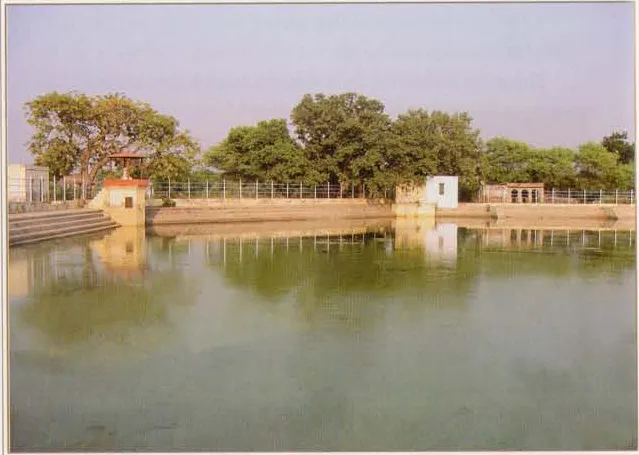
Candra-sarovara
चन्द्र-सरोवरCandra-sarovara, the lake of the moon, is a lake at Pārāsaulī.
Rāsa-sthali (Candra-sarovara)
रास-स्थली (चन्द्र-सरोवर)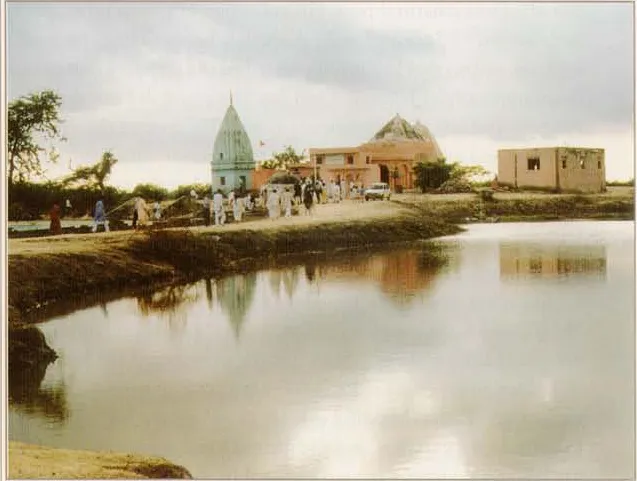
Paiṭhā-grāma
पैठा-ग्रामPaiṭhā is a village of the Govardhana area, two miles south of Pārāsaulī, according to the guidebook Śrī Vraja-maṇḍala Parikramā (2007).
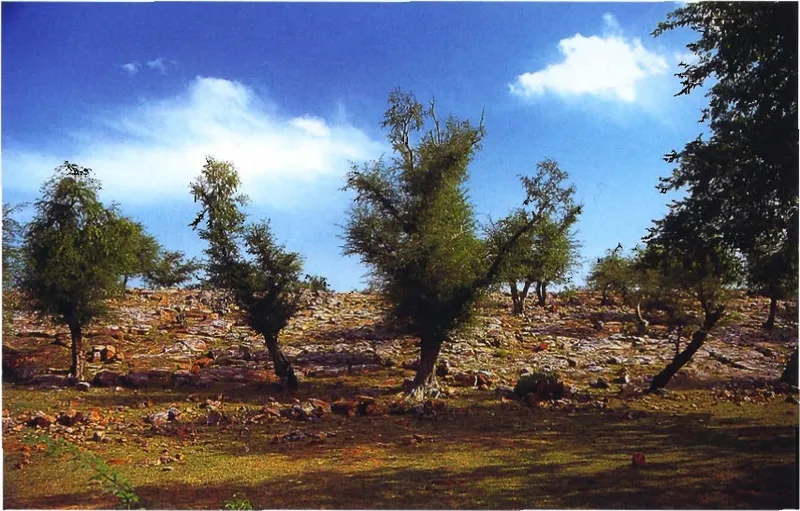
Govardhana
गोवर्धनGovardhana is the hill that Kṛṣṇa lifted with one hand and held up for seven days, so that the people and cows of Vraja could shelter under it from Indra's rain.
Place of rāsa (Apsarā-kuṇḍa and Navala-kuṇḍa)
रास-स्थली (अप्सरा-कुण्ड और नवल-कुण्ड)The place of rāsa is a spot beside the two kuṇḍas Apsarā-kuṇḍa and Navala-kuṇḍa at Govardhana.
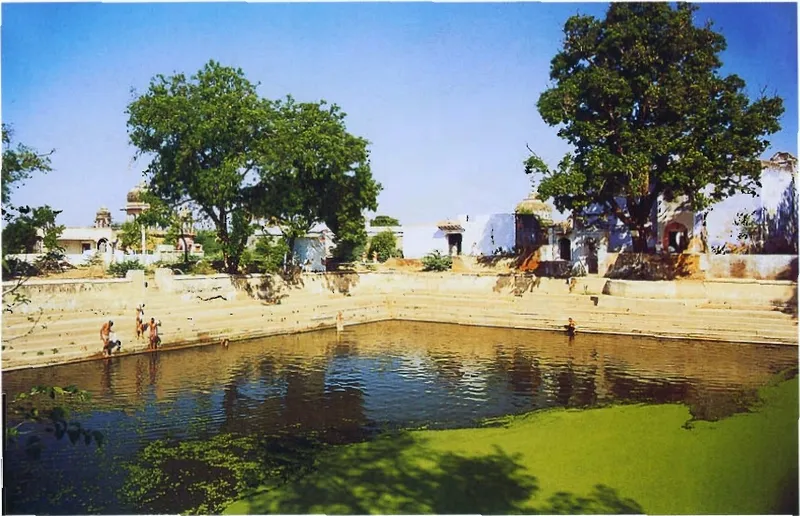
Apsarā-kuṇḍa
अप्सरा-कुण्डApsarā-kuṇḍa, the kuṇḍa of the Apsarās, the dancers of heaven, is a pond at the southern end of Govardhana Hill.
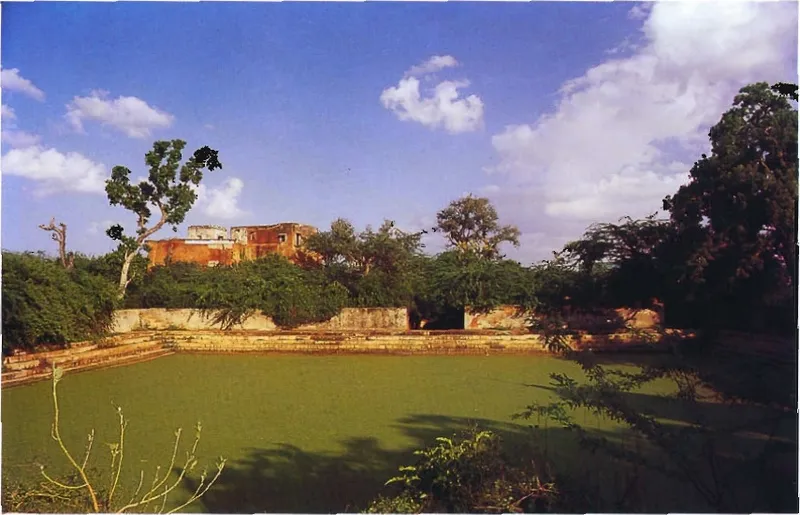
Navala-kuṇḍa
नवल-कुण्डNavala-kuṇḍa is a pond just beside Apsarā-kuṇḍa at Pūñcharī, and a temple of Lord Narasiṁha stands on a small hill near its banks.
Questions and answers
The Caitanya-caritāmṛta says near Govardhana. The Bhakti-ratnākara names the village of Pārāsaulī, with Candra-sarovara beside it. The guidebooks name other spots as well.[7 +6]
The Bhāgavatam tells its rāsa on autumn nights by the Yamunā. Śrīla Jīva Gosvāmī and other commentators read its closing verse as including rāsa nights in spring and other seasons.[1 +7]
The lake of the moon, beside Pārāsaulī. The Bhakti-ratnākara says Kṛṣṇa rested there, absorbed in the rāsa, and Śrīla Viśvanātha Cakravartī Ṭhākura names it beside the ground of the supreme rāsa pastimes.[9, 26]
The Bhakti-ratnākara says that there Kṛṣṇa's two extra arms entered His body when He saw Śrī Rādhā, and paiṭha means entered.[10]
The Caitanya-caritāmṛta says He hid during the spring rāsa and showed a four-armed form when the gopīs found Him. They bowed and went on, because their love is fixed on Him in His two-armed form.[7 +3]
The Gosvāmīs set it in spring. Śrīla Jīva Gosvāmī's Gopāla-campū places it on the night when the subduing of Ariṣṭa ended.[12 +3]
Sources
- Śrīmad-Bhāgavatam 10.29.1, GRETIL
- Śrīmad-Bhāgavatam 10.29.3, GRETIL
- Śrīmad-Bhāgavatam 10.29.45, GRETIL
- Śrīmad-Bhāgavatam 10.30.44, GRETIL
- Śrīmad-Bhāgavatam 10.33.2, GRETIL
- Śrīmad-Bhāgavatam 10.33.25, GRETIL
- Śrīla Kṛṣṇadāsa Kavirāja Gosvāmī, Śrī Caitanya-caritāmṛta, CC Ādi-līlā 17.282, online edition · vedabase.io
- Śrīla Prabhupāda, Śrī Caitanya-caritāmṛta, Ādi-līlā 17.282, synonyms · vedabase.io
- Śrīla Narahari Cakravartī, Bhakti-ratnākara, Fifth Wave, 1912 ed. p. 200, 2nd ed., 1912
- Śrīla Narahari Cakravartī, Bhakti-ratnākara, Fifth Wave, 1912 ed. pp. 200-201, 2nd ed., 1912
- Śrīla Prabhupāda, Kṛṣṇa, the Supreme Personality of Godhead (Kṛṣṇa book), Chapter 29, 'The Rāsa Dance: Introduction' · vedabase.io
- Śrīla Jīva Gosvāmī, Gopāla-campū, Pūrva-campū, pūraṇa 31, verses 51-53 with prose [80], GRETIL
- Śrīla Jīva Gosvāmī, Gopāla-campū, Pūrva-campū, pūraṇa 31, verse 56 and the opening of prose [82], GRETIL
- Śrīmad-Bhāgavatam 10.32.11–12, GRETIL
- Śrīmad-Bhāgavatam 10.33.18, GRETIL
- Śrīla Prabhupāda, Kṛṣṇa, the Supreme Personality of Godhead (Kṛṣṇa book), Chapter 33, 'Description of the Rāsa Dance' · vedabase.io
- Śrīmad-Bhāgavatam 10.33.38, GRETIL
- Śrīla Jīva Gosvāmī: commentary on ŚB 10.29.1
- Śrīla Jīva Gosvāmī: commentary on ŚB 10.33.25
- Vaṁśīdhara: commentary on ŚB 10.36.16, Bhagavata Vidya Pith edition, ed. Bhagavata Rishi and Krishna Shankar Shastri, 1996
Show all 47 references
- Śrīla Jīva Gosvāmī: commentary on ŚB 10.36.15, parts 1/2 and 2/2, Bhagavata Vidya Pith edition, ed. Bhagavata Rishi and Krishna Shankar Shastri, 1996
- Śrīla Raghunātha dāsa Gosvāmī, Govardhanāśraya-daśaka, verse 7
- Śrīla Narahari Cakravartī, Bhakti-ratnākara, Fifth Wave, 1912 ed. p. 200: quotation of the Govardhanāśraya-daśaka, 2nd ed., 1912
- Śrīla Viśvanātha Cakravartī Ṭhākura, Kṛṣṇa-bhāvanāmṛta, sarga 10 ('kuñja-keli-cāturyāsvādana'), verse 3, with the ṭīkā'; the index labels it 'navamaḥ sargaḥ'), after the edition of Radhikanath Goswami, Vrindavan, 1906
- Śrīla Raghunātha dāsa Gosvāmī, Muktā-carita, prose, paragraph 473 of the, GRETIL
- Śrīla Viśvanātha Cakravartī Ṭhākura, Vraja-rīti-cintāmaṇi, third sarga, verse 17
- Gīta-govinda, 1.33, GRETIL
- Śrī Vraja-maṇḍala Parikramā (2007), PDF p. 125
- Śrīla Kṛṣṇadāsa Kavirāja Gosvāmī, Śrī Caitanya-caritāmṛta, CC Ādi-līlā 17.291, online edition · vedabase.io
- Śrīla Prabhupāda, Śrī Caitanya-caritāmṛta, Ādi-līlā 17.288, purport · vedabase.io
- Śrīla Rūpa Gosvāmī, Ujjvala-nīlamaṇi, Nāyikā-bheda (chapter 5), verse 7, GRETIL
- Śrīla Rūpa Gosvāmī, Ujjvala-nīlamaṇi, Nāyikā-bheda (chapter 5), verse 7, GRETIL
- Śrīla Rūpa Gosvāmī, Ujjvala-nīlamaṇi, Nāyikā-bheda (chapter 5), verse 6, GRETIL
- Śrīla Rūpa Gosvāmī, Lalita-mādhava, Act 6, verse 15, with the commentary on it
- Śrīla Raghunātha dāsa Gosvāmī, Muktā-carita, prose, paragraph 194 of the, GRETIL
- Śrīla Prabhupāda, Lecture on Bhagavad-gītā 4.12, Appearance Day of Lord Rāmacandra, Bombay, 1 April 1974 · vedabase.io
- Śrīmad-Bhāgavatam 10.29.48, GRETIL
- Śrīmad-Bhāgavatam 10.30.28, GRETIL
- Śrīmad-Bhāgavatam 10.30.38, GRETIL
- Śrīmad-Bhāgavatam 10.32.2, GRETIL
- Śrīla Prabhupāda, Kṛṣṇa, the Supreme Personality of Godhead (Kṛṣṇa book), Chapter 30, 'Kṛṣṇa’s Hiding from the Gopīs' · vedabase.io
- Śrī Vraja-maṇḍala Parikramā (2007), PDF p. 124
- Śrī Vraja-maṇḍala Parikramā (2007), PDF p. 131
- Govardhana Hill: India's Most Sacred Mountain (2001), Rajasekhara dasa Brahmacari, PDF p. 122
- Govardhana Hill: India's Most Sacred Mountain (2001), Rajasekhara dasa Brahmacari, PDF p. 123
- the undated parikramā notes Govardhana, ¶122
- Śrīla Viśvanātha Cakravartī Ṭhākura, Kṛṣṇa-bhāvanāmṛta, sarga 13 ('madhu-pāna-līlānumodana'), verse 22, with the ṭīkā'; the index labels it 'dvādaśaḥ sargaḥ'), after the edition of Radhikanath Goswami, Vrindavan, 1906
Further sources
- Śrīmad-Bhāgavatam 10.29–10.33 and 10.36 (BBT), with the Canto 10 commentaries of the Bṛhat-krama-sandarbha, Śrīla Jīva Gosvāmī, Śrīla Viśvanātha Cakravartī Ṭhākura and Vaṁśīdhara (Sanskrit; summarised here, not translated).
- Śrīla Prabhupāda, Kṛṣṇa, the Supreme Personality of Godhead, chapters 29 and 33; lecture on Bhagavad-gītā 4.12; Śrī Caitanya-caritāmṛta, Ādi 17.281–293 with translations (BBT).
- Śrīla Rūpa Gosvāmī, Ujjvala-nīlamaṇi and Lalita-mādhava; Śrīla Jīva Gosvāmī, Gopāla-campū; Śrīla Raghunātha dāsa Gosvāmī, Govardhanāśraya-daśaka and Muktā-carita; Śrīla Viśvanātha Cakravartī Ṭhākura, Kṛṣṇa-bhāvanāmṛta and Vraja-rīti-cintāmaṇi; Śrīla Jayadeva, Gīta-govinda (summarised here, not translated, except where Śrīla Prabhupāda's translation is shown).
- Bhakti-ratnākara, Fifth Wave (Bengali, 1912 edition); guidebooks Govardhana Hill: India's Most Sacred Mountain (2001) and Śrī Vraja-maṇḍala Parikramā (2007).