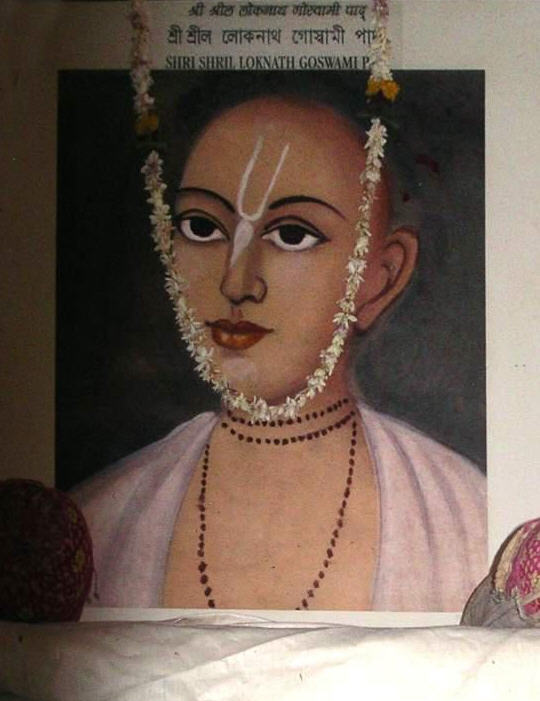
Srila Murari Gupta
Physician-Devotee and Author of the Earliest Life of Sri Chaitanya Mahaprabhu
Also known as Murari Gupta Thakur, Ramadasa, Murari Gupta Vaidya
“I have sold my very head to the lotus feet of Raghunatha. I cannot take it back, and my mind aches with the pain of it.”
Murari Gupta's reply when Mahaprabhu tested his devotion to Rama (Chaitanya-charitamrita, Madhya-lila 15.149)
Srila Murari Gupta was special in two ways among the many devotees who surrounded Sri Chaitanya Mahaprabhu in Navadvipa. He was a working physician, and he is remembered for treating the Lord Himself on more than one occasion. He was also the first person known to have sat down and written Mahaprabhu's life story while Mahaprabhu was still living it. His Sanskrit account of Chaitanya Mahaprabhu's early years is usually called his Kadaca, or diary. It is the earliest biography of the Lord that the Gaudiya Vaishnava tradition has. It is older than Vrindavana Dasa Thakura's Chaitanya-bhagavata, and older still than Krishnadasa Kaviraja Goswami's Sri Chaitanya-charitamrita. Chaitanya-charitamrita, at least, drew on it directly.
| Detail | Description |
|---|---|
| Family | A vaidya (Ayurvedic physician) family from Srihatta (Sylhet, in present-day Bangladesh); moved to Navadvipa while Murari was young |
| Born | Not recorded; sources agree only that he was some years older than Sri Chaitanya Mahaprabhu (b. 1486) |
| Given name later | Ramadasa, a name Mahaprabhu is said to have written on his forehead |
| Chief work | Sri Krishna-Chaitanya-Caritamrita, his Kadaca - the earliest known biography of Sri Chaitanya Mahaprabhu |
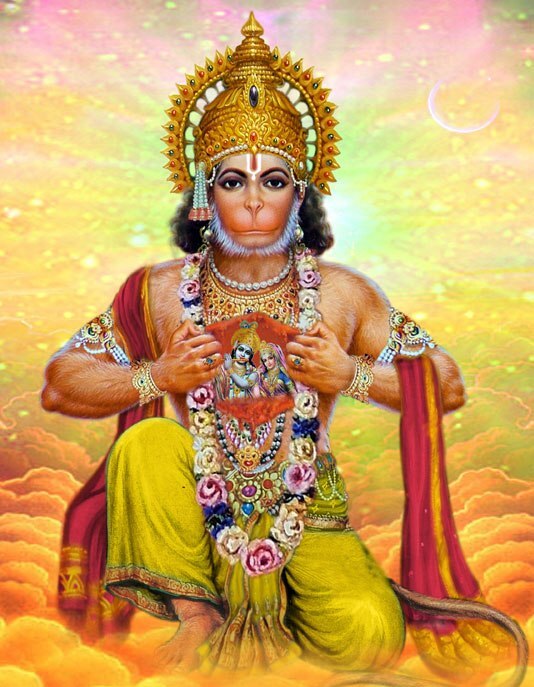
| Identity | Hanuman, the eternal servant of Lord Ramachandra (Gaura-ganoddesha-dipika 91; Chaitanya-charitamrita Madhya 15.156) |
| Disappeared | Year not recorded; tradition places the day on Sharad Purnima, the autumn rasa-lila full-moon |
| Sripat/samadhi | Near Ballal Dighi, east of the Yogapitha, Sri Mayapur - still maintained today |
A Physician's Family from Srihatta #
Murari Gupta was born into a family of vaidyas, physicians trained in the Ayurvedic tradition, in Srihatta. This district, on the eastern edge of Bengal, was also the ancestral home of Mahaprabhu's own father, Jagannatha Mishra. When his family moved to Navadvipa, they settled very close to the Mishra household. So Murari grew up almost next door to the boy who would become Sri Chaitanya Mahaprabhu. Chaitanya-bhagavata explains his name in this way. The word gupta means "hidden," and the tradition takes his name as a sign that Murari, which is one of Krishna's own names, lay secretly at rest in this physician's heart from the start. No source records his parents' names, and no birth year survives either. Every account agrees only that he was somewhat older than Mahaprabhu. His training and the daily practice of his work are described more fully in Birth and Training as a Physician.
Growing Up Beside Nimai Pandita #
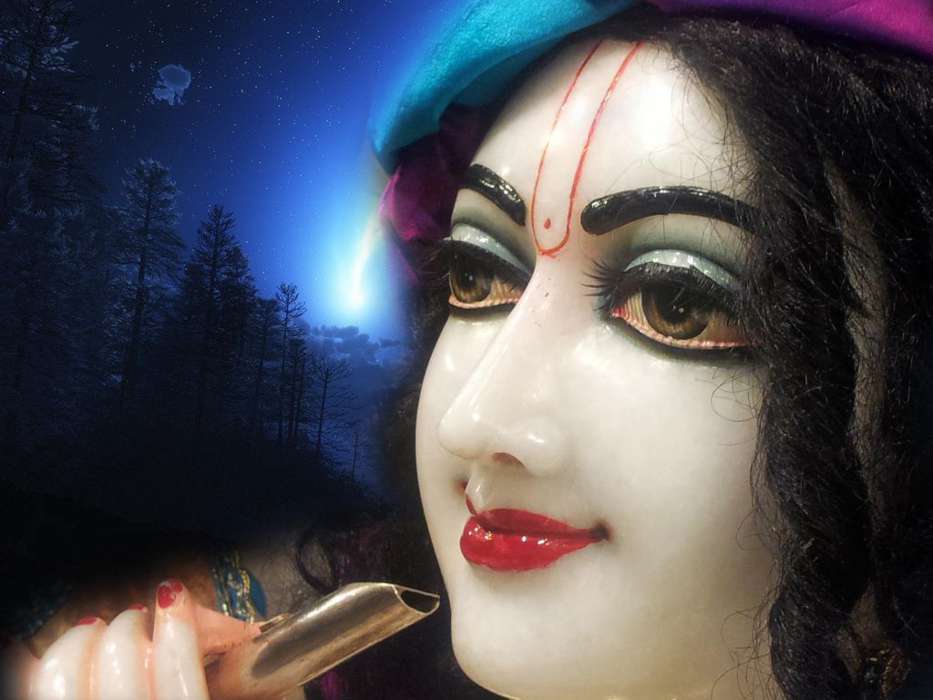
As a young man, Murari studied at the tol, or school, of Ganga Das Pandit in Navadvipa. The boy Nimai Pandita later attended the same school. Murari was the senior student, but he could never defeat Nimai in debate, however many times he tried. Chaitanya-bhagavata remembers a lively scene from these days. The two of them lost their patience and wrestled their way into the Ganges, until the water became too muddy for anyone else to bathe. Tradition says that it was around this time that Nimai teased Murari directly about his hopes of becoming a scholar. Nimai pointed out that a future vaidya had no real need of grammar and logic, since leaves, roots and simple remedies were his actual trade. A related and even sharper version of the same teasing comes from Lochana Dasa Thakura's Chaitanya-mangala. It is told in full in Boyhood Friendship with Nimai Pandita.
Revealed as Hanuman #
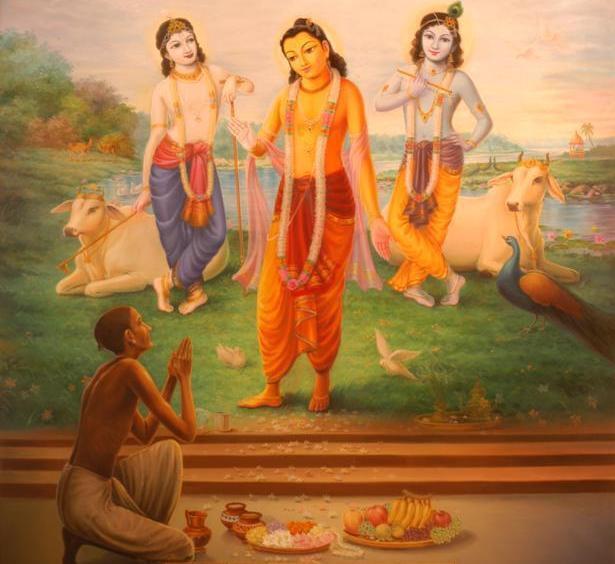
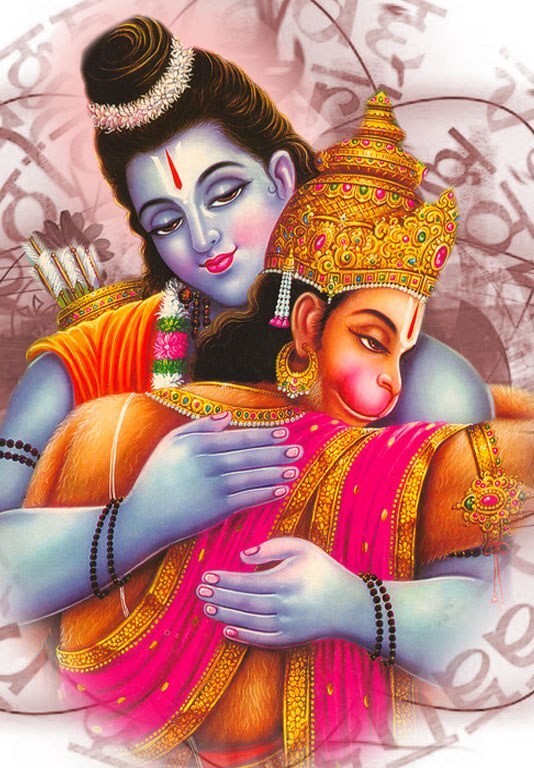
From childhood, Murari's own worship belonged to Sri Sita-Rama, not to Krishna. In the Gaura-ganoddesha-dipika, Gaudiya Vaishnava tradition directly identifies him as Hanuman, Lord Ramachandra's eternal servant, now present in Mahaprabhu's Nadia pastimes. Tradition holds that this identity was confirmed during Mahaprabhu's mahaprakasha at Srivasa Thakura's courtyard. This was a display of the Lord's divinity in ecstasy that lasted twenty-one hours. During it, the Lord showed Murari a vision of Himself as Ramachandra, bow in hand, with Sita and Lakshmana at His side and an army of monkeys singing His praise. When he saw himself among those monkeys, Murari fainted at once. In his purport to this part of Chaitanya-charitamrita, Srila Prabhupada clearly confirms the episode: "When Sri Caitanya Mahaprabhu exhibited His maha-prakasa form, He appeared before Murari Gupta as Lord Ramacandra."
The verse of Kavi Karnapura's Gaura-ganoddesha-dipika (verse 91) reads:
murāri gupto hanumān aṅgadaḥ śrī-purandaraḥ
"The devotee named Murari Gupta in Lord Caitanya's pastimes had previously been Hanuman." (Gaura-ganoddesha-dipika 91)
Mahaprabhu Himself says the same in Chaitanya-charitamrita. Before all the devotees at Puri, He recalls how He once tested Murari's loyalty to Lord Ramachandra and then praised him: "Indeed, you are the incarnation of Hanumān. Consequently you are the eternal servant of Lord Rāmacandra." (Chaitanya-charitamrita Madhya 15.156)
Physician to the Lord Himself #
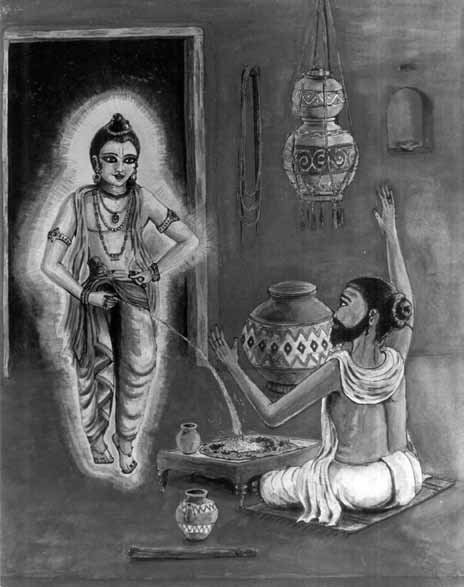
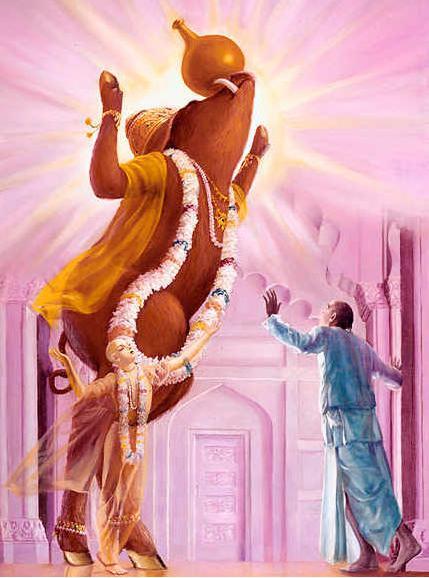
Chaitanya-charitamrita describes Murari's work and its deeper purpose in one short, direct couplet. As he treated his patients, both their bodily disease and the deeper disease of material existence subsided by his mercy. This was seen in real events. Once a devotee fed Mahaprabhu food cooked with too much ghee, and the next day the Lord fell ill. He went to Murari's house for treatment. Murari offered his own drinking water as a simple remedy for indigestion, and it cured Him at once. On another occasion the Lord came to Murari's home absorbed in the mood of Varaha, the boar incarnation. He lifted a waterpot in His teeth and danced on Murari's shoulders in Murari's own courtyard. These episodes, and what they show about Murari's place among Mahaprabhu's Nadia associates, are told more fully in Serving as the Lord's Physician.
The Earliest Life of Mahaprabhu #
Murari Gupta's most lasting contribution to the tradition is a book. While Mahaprabhu was still alive, or not long after, Murari wrote down in Sanskrit verse what he had personally seen of the Lord's Nadia years. This work is generally called his Kadaca, meaning diary or notebook. Its more formal name is Sri Krishna-Chaitanya-Caritamrita. Sources vary on the exact title. The page on Krishnadasa Kaviraja Goswami calls it the Sri-krishna-chaitanya-charanamrita, and some sources give Sri-Krishna-Chaitanya-carita-mahakavya instead. Whatever its exact name, no one disputes that it is the earliest surviving life of Mahaprabhu. Generations later, Krishnadasa Kaviraja Goswami himself drew on it for the order of events when he wrote Chaitanya-charitamrita. Banglapedia records that Kavikarnapura, Lochana Dasa Thakura and Narahari Chakravarti also drew on Murari's account when writing their own. The work itself, how it is arranged, and its uncertain relationship to the larger biographies that followed it are discussed in Writing the Earliest Biography of Mahaprabhu.
Devotion Tested and Confirmed #
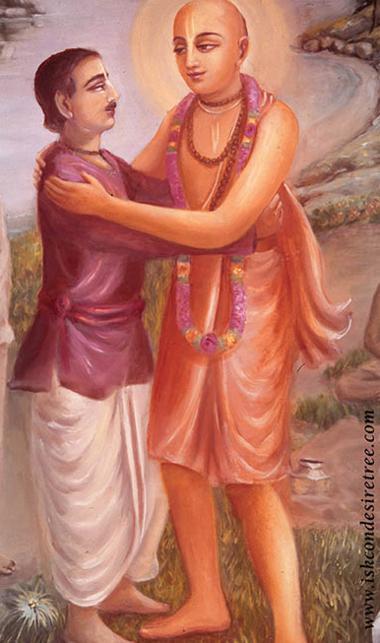
Murari's own worship belonged to Ramachandra. So Mahaprabhu is said to have tested him directly. More than once He urged Murari to turn his devotion to Krishna instead, since Krishna is the source from whom Rama and every other incarnation appears. Murari could not do what the Lord asked, but he would not disobey Him either. He spent a sleepless night in anguish. In the morning he came before the Lord, ready to give up his life rather than choose between them. "I have sold my very head to the lotus feet of Raghunatha," he told Mahaprabhu, by his own account preserved in Chaitanya-charitamrita, "I cannot take it back, and my mind aches with the pain of it." The Lord was not displeased at all. He praised this very refusal as the mark of real devotion. Later, in Chaitanya-charitamrita's Antya-lila, He spoke of His past test of Murari Gupta and held it up as the standard for Jiva Goswami's father Anupama. Sanatana Goswami once described Anupama in almost identical terms.
Disappearance and Legacy #
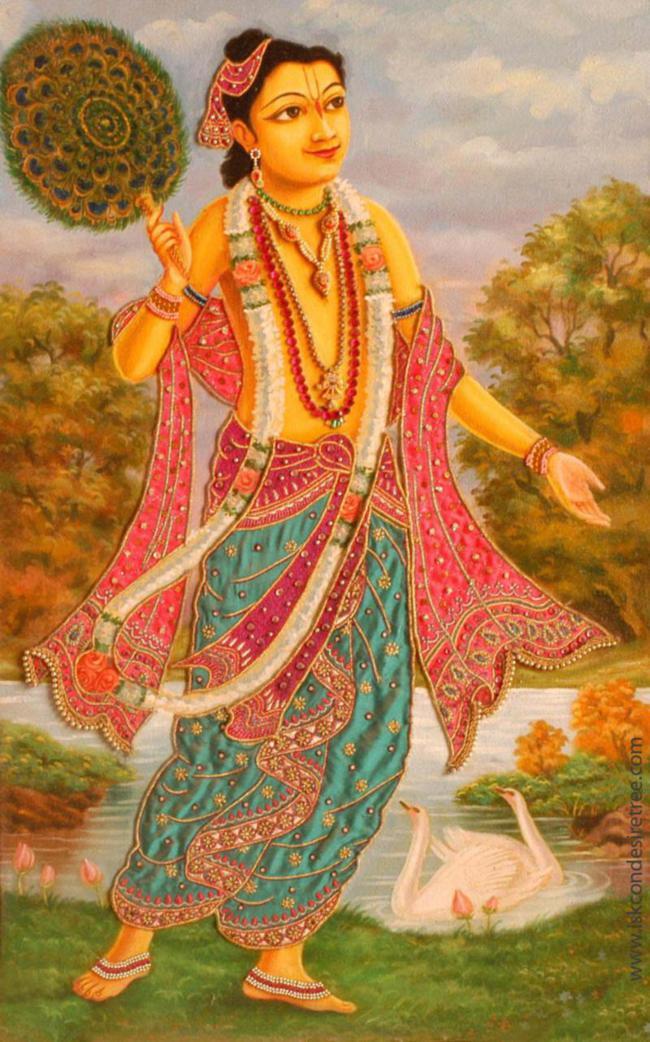
No source records a disappearance year for Murari Gupta. Tradition places the day itself on Sharad Purnima, the same autumn full-moon that is associated with Krishna's rasa-lila festival. Some accounts say that in Navadvipa Murari looked up to an elder devotee called Chandrashekhara Acharya, also known as Acharyaratna. This is a different person from the Varanasi physician of the same name, who has his own page. Srila Prabhupada's own recorded conversations clearly separate the two, and this page follows that instead of merging them. Murari's sripat, where Deities of Sita, Rama, Lakshmana and Hanuman are still worshipped, stands near Ballal Dighi in Sri Mayapur today. Srila Prabhupada himself spoke about Murari Gupta more than once in his own lectures. Most memorably, he used him to illustrate alambana, the stage of devotion in which a single reminder of Krishna is enough. For Murari, that reminder was a peacock feather glimpsed from an elephant's back, and it made the old physician faint on the spot. More about his final years, and about how the tradition has remembered him since, is given in Disappearance and Legacy.
Scriptural evidence
Quoted in the text above:
- Verse 91 Gaura-ganoddesha-dipika
Further verses:
শ্ৰীমুরারি গুপ্ত শাখা—প্রেমের ভাণ্ডার। প্রভুর হৃদয় দ্রবে শুনি' দৈন্য যাঁর॥
sri-murari gupta sakha - premera bhandara
prabhura hrdaya drave suni' dainya yanra
Word for word
sri-murari gupta sakha - Sri Murari Gupta, the branch; premera bhandara - a storehouse of love of Godhead; prabhura hrdaya - the Lord's heart; drave - melts; suni' - hearing; dainya - humility; yanra - of whom
Murari Gupta, the twenty-first branch of the tree of Sri Chaitanya Mahaprabhu, was a storehouse of love of Godhead. His great humility and meekness melted the heart of Lord Chaitanya.
From the purport: Purport excerpt: "He belonged to a vaidya physician family of Srihatta, the paternal home of Lord Caitanya, and later became a resident of Navadvipa. He was among the elders of Sri Caitanya Mahaprabhu."
Names Murari Gupta as one of the principal branches of Mahaprabhu's own devotional tree and states his family origin in Srihatta.
রঘুনাথের পায় মুঞি বেচিয়াছোঁ মাথা। কাঢ়িতে না পারি মাথা, মনে পাই ব্যথা॥
raghunathera paya muni veciyachon matha
kadhite na pari matha, mane pai vyatha
Word for word
raghunathera paya - unto the lotus feet of Lord Raghunatha (Ramachandra); muni - I; veciyachon matha - have sold my head; kadhite na pari matha - I cannot take my head back; mane pai vyatha - my mind feels pain
It is not possible for me to give up the service of Raghunatha's lotus feet. At the same time, if I do not do so I shall break Your order. What can I do?
Murari Gupta's own words when Mahaprabhu tested whether he could be persuaded to shift his exclusive devotion from Ramachandra to Krishna; the basis for the pull-quote used here.
গোসাঞি কহেন, — "এইমত মুরারি-গুপ্ত। পূর্বে আমি পরীক্ষিলুঁ তার এই রীত॥
gosani kahena, - "ei-mata murari-gupta
purve ami pariksilun tara ei rita
Word for word
gosani kahena - Sri Chaitanya Mahaprabhu replied; ei-mata murari-gupta - there was a similar incident concerning Murari Gupta; purve ami pariksilun - formerly I examined him; tara ei rita - his determination was of this same kind
Sri Chaitanya Mahaprabhu said, "There was a similar incident concerning Murari Gupta. Formerly I examined him, and his determination was similar.
Mahaprabhu Himself, years later, cites His earlier test of Murari Gupta's exclusive devotion as the standard He held up for Jiva Goswami's father Anupama.
sākṣāt hanumān tumi śrī-rāma-kiṅkara
tumi kene chāḍibe tāṅra caraṇa-kamala
“In this way, I congratulated Murāri Gupta, saying, ‘Indeed, you are the incarnation of Hanumān. Consequently you are the eternal servant of Lord Rāmacandra. Why should you give up the worship of Lord Rāmacandra and His lotus feet?’ ”
Sri Chaitanya Mahaprabhu's own words, spoken before the devotees, calling Murari Gupta the incarnation of Hanuman and the eternal servant of Lord Ramachandra.
- Banglapedia: Murari Gupta
- Gaudiya History: Murari Gupta - Biography
- Gaudiya History: Murari Gupta - Biography (2)
- Gaudiya History: Murari Gupta (disciple of Chandrashekhara Acharya)
- Shyam Das Baba: Sri Murari Gupta (from Sri Chaitanya: His Life & Associates, Bhakti Ballabh Tirtha Maharaj)
- The Gaudiya Treasures of Bengal: Murari Gupta - Life and Pastimes
- ISKCON Desire Tree: Srila Murari Gupta - Disappearance (Prabhupada purports, CC Adi 10.49-51)
- ISKCON Bangalore: Sri Murari Gupta
- Sri Chaitanya-charitamrita, Adi-lila 10.49-51 (Bhaktivedanta VedaBase)
- Sri Chaitanya-charitamrita, Antya-lila 4.44-46 (Bhaktivedanta VedaBase)
- Srila Prabhupada lecture, Srimad-Bhagavatam 7.7.32-35, San Francisco, March 17 1967 (Bhaktivedanta VedaBase)
- Nandgram Dham: Srila Krishnadasa Kaviraja Goswami - Composing Sri Chaitanya-charitamrita
- Nandgram Dham: Srila Chandrashekhara Acharya (Varanasi physician - a distinct figure)
Frequently asked
When was Srila Murari Gupta born?
Srila Murari Gupta appeared Not recorded (an older contemporary of Sri Chaitanya Mahaprabhu, b. 1486) in Srihatta (Sylhet, present-day Bangladesh); raised from boyhood in Navadvipa, Bengal.
When and where did Srila Murari Gupta disappear?
Srila Murari Gupta disappeared Year not recorded; tradition places the day on Sharad Purnima, the autumn rasa-lila full-moon at According to tradition, near Ballal Dighi, Sri Mayapur, where his sripat and samadhi site stand.
What are the main pastimes of Srila Murari Gupta?
The pastimes covered here include: Birth and Training as a Physician, Boyhood Friendship with Nimai Pandita, Serving as the Lord's Physician, Writing the Earliest Biography of Mahaprabhu, Disappearance and Legacy.