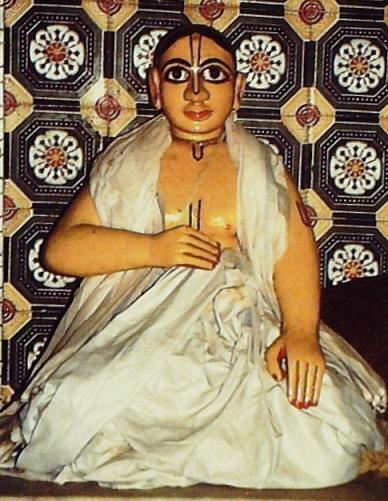
श्री चैतन्य महाप्रभु का क्रोध, जब वह सीधे देवानन्द पण्डित के द्वार तक पहुँचा, तब भी उन्हें बदल नहीं सका। अन्ततः जिस बात ने उन्हें बदला, वह था अपने ही आँगन में एक साधारण अतिथि को नृत्य करते देखना।
सड़क से सुनी गई फटकार #
श्रीवास ठाकुर का रुदन पृष्ठ पर बताई गई घटना के कुछ समय बाद महाप्रभु संयोगवश महेश्वर विशारद के घर के पास से जा रहे थे। महेश्वर विशारद सार्वभौम भट्टाचार्य के पिता थे। महाप्रभु देवानन्द के घर के इतने पास थे कि उन्हें सुनाई दिया कि देवानन्द अब भी भागवत को ठीक पहले जैसा ही पढ़ा रहे हैं। श्री चैतन्य-भागवत में लिखा है कि प्रभु स्पष्ट रूप से क्रोधित हुए। उन्होंने घोषणा की कि कितनी भी विद्वत्ता इस समझ का स्थान नहीं ले सकती कि भक्ति ही भागवत का पूरा विषय है। उन्होंने यह भी कहा कि भागवत वास्तव में ग्रन्थ के रूप में स्वयं कृष्ण ही हैं। उन्होंने कहा कि जो कोई यह बात छोड़कर इसे पढ़ाता है, वह चाहे कितना भी विद्वान् हो, उसने एक भी श्लोक नहीं समझा है। उन्होंने यह सब इतनी ऊँची आवाज़ में कहा कि उनकी बात वहाँ तक पहुँच गई, जहाँ देवानन्द बैठे थे। देवानन्द ने एक-एक शब्द सुना। लेकिन बाद में उन्होंने स्वयं स्वीकार किया कि उन्होंने यह क्षण यूँ ही जाने दिया और अपने पढ़ाने के ढंग में कुछ भी नहीं बदला।
पाँच वर्ष जिनमें कुछ नहीं बदला #
इसके कुछ ही समय बाद महाप्रभु ने सन्न्यास ग्रहण किया और जगन्नाथ पुरी चले गए। वर्षों तक कुलिया में देवानन्द का जीवन पहले जैसा ही चलता रहा। अन्त में उन्हें किसी नए टकराव ने नहीं, बल्कि आतिथ्य के एक साधारण काम ने बदला। वाकेश्वर पण्डित महाप्रभु के अपने पार्षदों में से एक थे। पूरी गौड़ीय परम्परा में वे कीर्तन में बहुत तीव्रता से नृत्य करने के लिए प्रसिद्ध हैं। कम से कम एक बार उनका नृत्य लगातार तीन दिन तक बिना रुके चलता रहा। वाकेश्वर पण्डित कुलिया में अतिथि बनकर ठहरने आए। वे देवानन्द के घर के पास ही एक भक्त के घर पर ठहरे। एक शाम उनके चारों ओर कीर्तन शुरू हो गया, और जैसे-जैसे रात बढ़ी, भीड़ भी बढ़ती गई। शोर सुनकर देवानन्द स्वयं देखने गए कि क्या हो रहा है।
एक नृत्य करते भक्त की रखवाली में #
देवानन्द ने वहाँ जो देखा, उससे वे अपनी दृष्टि हटा ही नहीं सके। परम्परा के अनुसार वे घंटों वहीं खड़े रहे। वाकेश्वर सबके सामने बिना किसी रोक-टोक के नृत्य कर रहे थे। उनके शरीर में आँसू, कम्पन और प्रेम-भाव से रुँधा स्वर खुलकर प्रकट हो रहे थे। भीड़ इतनी बढ़ गई कि लोग आगे की ओर दबाव डालने लगे और नृत्य में बाधा पड़ने का डर हो गया। देवानन्द एक सम्मानित स्थानीय विद्वान् थे, उस आँगन में किसी के औपचारिक शिष्य नहीं थे। फिर भी उन्होंने ही एक छड़ी उठाई और भीड़ को पीछे रोके रखा, ताकि वाकेश्वर बिना बाधा के नृत्य करते रहें। जब अन्त में वाकेश्वर भाव में डूबकर गिर पड़े, तब देवानन्द ने उन्हें सँभाला। उन्होंने उनका सिर अपनी गोद में रखा और अपने ही वस्त्र से उनके शरीर की धूल पोंछी। सभी विवरण इस बात पर सहमत हैं कि देवानन्द के जीवन में यह पहली बार था, जब उन्होंने किसी वैष्णव के बारे में केवल प्रवचन देने के बजाय उनकी सेवा की।
कुलिया में महाप्रभु से भेंट #
सेवा की उस एक रात ने देवानन्द के भीतर वह खोल दिया, जो वर्षों की विद्वत्ता और एक सीधी फटकार भी नहीं खोल सकी थी। इसके बाद देवानन्द ने वाकेश्वर से सुना कि महाप्रभु वास्तव में कौन हैं। तब प्रभु की दिव्यता के बारे में उनका बहुत पुराना सन्देह दूर हो गया। बाद में महाप्रभु पुरी से नवद्वीप लौटे, और हज़ारों लोग अपने पुराने अपराधों की क्षमा माँगने के लिए कुलिया में इकट्ठे हुए। देवानन्द भी उनके बीच आए। वे संकोच में थे, और प्रणाम करने के बाद भी एक ओर खड़े रहे। महाप्रभु ने उन्हें देखा, और उन्हें यह समझने के लिए किसी स्पष्टीकरण की आवश्यकता नहीं पड़ी कि देवानन्द में क्या परिवर्तन आया है: "तुम मेरे प्रिय भक्त वाकेश्वर पण्डित के सेवक हो," परम्परा के अनुसार महाप्रभु ने उनसे कहा। "उनकी सेवा से तुमने मुझे प्रसन्न किया है, और उसी सेवा से तुम मेरे निकट आ गए हो।"
निर्देश और क्षमा-याचना #
महाप्रभु ने देवानन्द के वर्षों की शुष्क विद्वत्ता पर कोई प्रवचन नहीं दिया। इसके बजाय उन्होंने सीधा निर्देश दिया कि उस विद्वत्ता का उपयोग कैसे करना है: भागवत की व्याख्या सदा भक्ति के सन्दर्भ में करो, और अपने मुख से फिर कभी कोई अन्य व्याख्या न निकलने दो। फिर वह निर्देश आया, जो किसी भी दार्शनिक बात से अधिक महत्वपूर्ण था: श्रीवास ठाकुर के पास जाकर उनके चरणों में क्षमा माँगो। श्री चैतन्य-चरितामृत का तात्पर्य और चैतन्य-भागवत का विस्तृत विवरण, दोनों इसका एक ही कारण बताते हैं। अन्त में ग्रन्थ भागवत और उस भक्त में कोई भेद नहीं है, जो उस शिक्षा का जीवित रूप है। एक की कृपा से दूसरे को समझने का मार्ग खुलता है। देवानन्द ने ठीक यही किया। श्रीवास ने उस पुराने अपमान की याद वर्षों तक चुपचाप अपने मन में रखी थी। उन्होंने कभी उस व्यक्ति का नाम तक नहीं लिया था, जो इसके लिए उत्तरदायी था। अब श्रीवास ने बिना किसी हिचक के देवानन्द को गले लगा लिया।
उस दिन से परम्परा देवानन्द पण्डित को महाप्रभु के अपने भक्तों में से एक के रूप में याद करती है। उन्हें अब उस विद्वान् के रूप में याद नहीं किया जाता, जिनके शिष्यों ने कभी एक रोते हुए भक्त को उनकी कक्षा से निकाल दिया था। यह परिवर्तन इतना पूरा था कि कुलिया ही अपराध-भञ्जनेर पाट कहलाने लगा, अर्थात् वह स्थान जहाँ अपराध क्षमा होते हैं। यह नाम आज भी उस मुहल्ले की पुरानी गलियों में पहचाना जा सकता है। शताब्दियों बाद यह नाम उसी भूमि में भी सुरक्षित है, जहाँ आज श्री देवानन्द गौड़ीय मठ खड़ा है।
