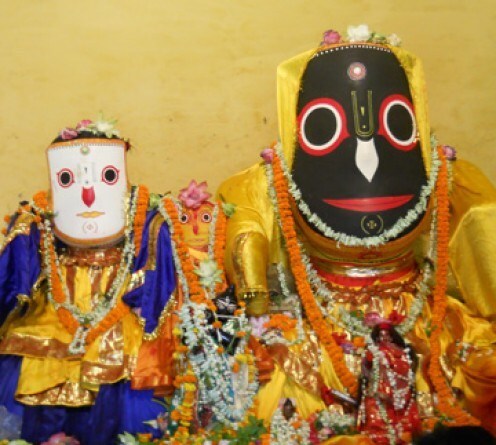
कमलाकर पिप्पलाई महेश कैसे पहुँचे, यह कथा बताने वाला हर स्रोत इसे एक बिल्कुल अलग भक्त से शुरू करता है। वे थे ध्रुवानन्द नामक एक वृद्ध वैरागी। ध्रुवानन्द की अपनी कथा वर्षों पहले जगन्नाथ पुरी में मिली एक गहरी निराशा से शुरू हुई थी।
ध्रुवानन्द की अभिलाषा #
ध्रुवानन्द एक बड़ी अभिलाषा लेकर पुरी गए थे। वे अपने हाथों से भगवान जगन्नाथ के लिए भोजन बनाना और स्वयं उन्हें अर्पित करना चाहते थे। यह उनकी एक बहुत व्यक्तिगत भक्ति-भावना थी। पुरी के मन्दिर-प्रबन्धकों ने इसकी अनुमति नहीं दी। श्री चैतन्य-चरितामृत पर श्रील भक्तिसिद्धान्त सरस्वती ठाकुर की अनुभाष्य में सुरक्षित विवरण के अनुसार, इस मनाही से ध्रुवानन्द इतने दुखी हुए कि उन्होंने मृत्यु तक उपवास करने का संकल्प ले लिया। उपवास के तीसरे दिन उन्होंने स्वप्न में जगन्नाथ की वाणी सुनी। भगवान ने उनसे बंगाल लौटकर गंगा तट पर बसे महेश नामक गाँव में जाने को कहा। वहाँ, भगवान ने कहा, ध्रुवानन्द की अभिलाषा अन्त में पूरी होगी। जब ध्रुवानन्द महेश पहुँचे, तो उन्होंने स्वयं जगन्नाथ, बलराम और सुभद्रा को नदी में बहते हुए पाया। उन्होंने तीनों विग्रहों को जल से निकाला और उनके लिए एक छोटी कुटिया बनाई। वहाँ वे अकेले उनकी सेवा करने लगे, और अन्त में वे अपने हाथों से पकाया भोजन जगन्नाथ को अर्पित कर सके।
आगे सौंपा गया स्वप्न #
वर्ष बीतते गए, और ध्रुवानन्द वृद्ध हो गए। उनका कोई शिष्य या परिवार नहीं था, जिसे वे विग्रहों की देखभाल सौंप सकें। इसलिए उनके सामने वही प्रश्न आ खड़ा हुआ, जो हर अकेले भक्त की सेवा के अन्त में आता है: उनके बाद यह सेवा कौन आगे बढ़ाएगा? इसका उत्तर भी एक बार फिर स्वप्न में ही आया। जगन्नाथ ने उन्हें सुन्दरबन वन के खलीजुली ग्राम में रहने वाले "कमलाकर पिप्पलाई नामक एक महान वैष्णव" के बारे में बताया। कमलाकर पिप्पलाई को पहले ही अपने एक स्वप्न में यह निर्देश मिल चुका था कि वे महेश आकर भगवान की सेवा सम्भालें। ध्रुवानन्द से बस इतना कहा गया कि जब वे पहुँचें, तो सब कुछ उन्हें सौंप दिया जाए।
अगली सुबह, ठीक जैसा वचन दिया गया था, कमलाकर पिप्पलाई महेश पहुँचे। हर विवरण के अनुसार, उन्हें भी वही स्वप्न याद था। ध्रुवानन्द ने उसी क्षण उन्हें जगन्नाथ, बलराम और सुभद्रा की पूरी सेवा सौंप दी। इतने महत्त्वपूर्ण हस्तान्तरण के लिए यह घटना आश्चर्यजनक रूप से शान्त थी। न कोई वाद-विवाद हुआ, न योग्यता की कोई परीक्षा हुई, न कोई विधि-विधान हुआ। बस, स्वप्न से मार्गदर्शन पाए एक भक्त ने दूसरे भक्त पर विश्वास किया। उस दिन से कमलाकर पिप्पलाई ने अधिकारी की उपाधि धारण की, अर्थात् भगवान की सेवा के लिए "अधिकार-प्राप्त व्यक्ति"। यह उपाधि उनके परिवार का उपनाम बन गई, और उनके वंशज आज तक इसे धारण करते हैं। वैष्णवाचार-दर्पण भक्तिसिद्धान्त सरस्वती के स्रोतों में से एक है। यह ग्रन्थ यह भी बताता है कि पिप्पलाई नाम राढ़ ब्राह्मणों की पचपन मान्य शाखाओं में से एक का नाम है। इस प्रकार यह कमलाकर के परिवार को बंगाल के ब्राह्मण समाज में स्पष्ट स्थान देता है। साथ ही यह भी बताता है कि वे एक सामान्य ब्राह्मण गृहस्थ से कहीं आगे बढ़कर क्या बन गए।
जंगल से महेश का निर्माण #
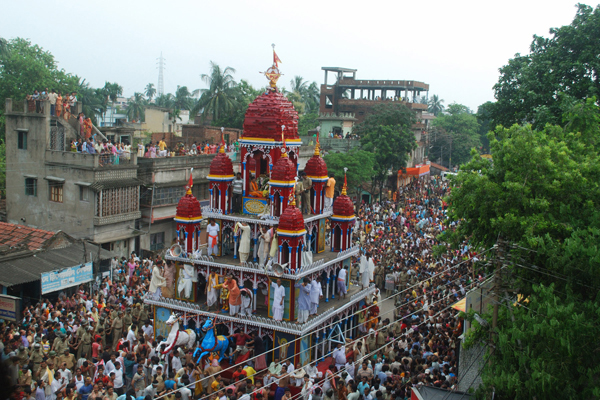
कमलाकर पिप्पलाई को ध्रुवानन्द से कोई जमा-जमाया, सुव्यवस्थित मन्दिर नहीं मिला। उन्हें नदी तट पर केवल एक छोटी-सी कुटिया मिली, जो कई स्रोतों के अनुसार लगभग निर्जन जंगल में थी। आगे के वर्षों में उन्होंने आसपास की भूमि साफ करवाई और उसे विकसित किया। समय के साथ विग्रह-सेवा के आसपास बसी यह बस्ती एक अच्छा-खासा गाँव बन गई। यही वह महेश है, जो आज भी हुगली जिले के श्रीरामपुर रेलवे स्टेशन से दो मील से कुछ अधिक दूरी पर मौजूद है। उन्होंने वहाँ जो मन्दिर बनाया, वह आगे चलकर बंगाल की सबसे पुरानी और सबसे महत्त्वपूर्ण रथ यात्राओं में से एक का स्थान बना, और आज भी है। जगन्नाथ, बलराम और सुभद्रा की यह वार्षिक रथ-यात्रा हर वर्ष लाखों तीर्थयात्रियों को आकर्षित करती है। सम्भवतः न ध्रुवानन्द ने और न ही कमलाकर पिप्पलाई ने नदी किनारे की उस पहली छोटी कुटिया के समय इतनी बड़ी भक्ति की कल्पना की होगी।
कथा एक भक्त से क्या माँगती है #
भक्तिसिद्धान्त सरस्वती ठाकुर की अनुभाष्य यह कथा केवल सुनाती नहीं, बल्कि इससे एक शिक्षा भी निकालती है। कमलाकर पिप्पलाई का अपना जीवन इस शिक्षा को सीधे प्रमाणित करता है। अनुभाष्य कहती है कि भक्त सदा भगवान की सेवा के लिए उत्सुक रहता है। इसी कारण भगवान ऐसे भक्त को ही निर्देश देते हैं, कभी ऐसे व्यक्ति को नहीं जो पहले से भक्त न हो। सामान्य बद्धजीव इन्द्रिय-सुखों में डूबे रहते हैं। जब वे कृष्ण और वैष्णवों की सेवा की बात सुनते हैं, तो उन्हें वह केवल बोझ लगती है, और वे उससे बचने का कोई न कोई बहाना ढूँढ़ते हैं। वे ऐसी सेवा को धन के समान नहीं देखते, जैसे एक सच्चा वैष्णव देखता है। कमलाकर पिप्पलाई ने इसके ठीक विपरीत किया। जगन्नाथ का निर्देश पाते ही उन्होंने घर-परिवार छोड़ दिया और वहीं गए जहाँ उन्हें कहा गया था। उन्होंने यह त्याग अनिच्छा से नहीं किया। अनुभाष्य के ही शब्दों में, उन्होंने यह स्वाभाविक और सहज रूप से किया। यह परम्परा इसे ऐसे हृदय का चिह्न मानती है, जो गृहस्थ जीवन के सामान्य कामों में नहीं, बल्कि पहले से ही भगवान के विरह में डूबा हुआ है। आगे की कथा उत्सव, परिवार और अधिकारी परम्परा पृष्ठ पर बताई गई है। उसमें वह परिवार है जिसे कमलाकर पिप्पलाई ने पीछे छोड़ा, वह परिवार है जो उन्होंने उसके स्थान पर महेश में बसाया, और वे उत्सव हैं जिनमें वे इस आजीवन सेवा में स्थिर होने के बाद भी व्यापक वैष्णव समुदाय के साथ सम्मिलित होते रहे।
