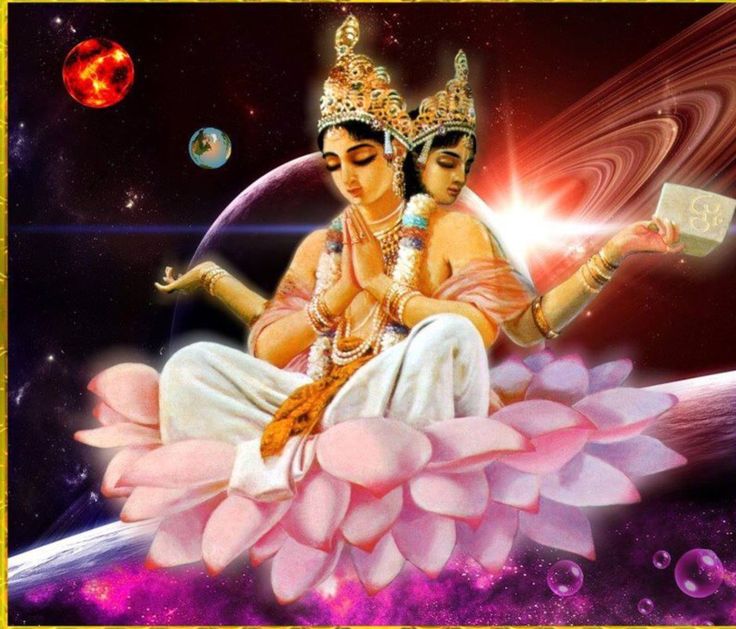
ब्रह्मा ने पहली बार अपनी आँखें खोलीं, तो उन्हें ऐसा कुछ भी नहीं दिखा जिसे वे पहचानते हों। वह कमल जिसने उन्हें उत्पन्न किया था चारों ओर फैले अँधेरे जल पर तैर रहा था। आस-पास कहीं कोई नहीं था, जिससे वे एक भी प्रश्न पूछ सकें। गौड़ीय वैष्णव समझ के अनुसार, आगे जो हुआ, वह इस ब्रह्माण्ड के इतिहास में आध्यात्मिक ज्ञान की सबसे पहली खोज है। उस खोज का उत्तर चतुःश्लोकी भागवत था। यह इस परम्परा के सबसे महत्त्वपूर्ण छोटे शास्त्रीय अंशों में से एक है।
हर दिशा में खोज #
श्रीमद्भागवतम् बताता है कि ब्रह्मा ने एक ध्वनि सुनी और यह जानने का प्रयत्न किया कि इसे किसने कहा। "जब उन्होंने वह ध्वनि सुनी, तो उन्होंने उस वक्ता को खोजने का प्रयत्न किया, चारों ओर देखते हुए," श्रीमद्भागवतम् 2.9.7 में यह वर्णन मिलता है, "किन्तु जब वे अपने अतिरिक्त किसी को भी न पा सके, तो उन्होंने यही उचित समझा कि अपने कमल-आसन पर दृढ़ता से बैठ जाएँ और, जैसा निर्देश मिला था, तपस्या के सम्पादन में अपना ध्यान लगाएँ।" श्रील प्रभुपाद का तात्पर्य एक ऐसी बात जोड़ता है, जिस पर आसानी से ध्यान नहीं जाता: ब्रह्मा "उस समय के एकमात्र जीव थे क्योंकि उस समय कोई अन्य सृष्टि विद्यमान नहीं थी," इसलिए वह वाणी किसी बाहरी वक्ता की नहीं हो सकती थी। वह बात स्वयं भगवान ने कही थी, जो ब्रह्मा के अपने हृदय में उपस्थित थे।
श्रीमद्भागवतम् 2.9.6 के अनुसार, ब्रह्मा ने वास्तव में दो अक्षर सुने: "त" और "प"। ये मिलकर तप बनते हैं, जो तपस्या शब्द का मूल है। श्रील प्रभुपाद का तात्पर्य इसे संन्यास-आश्रम की सम्पदा कहता है। वह यह भी बताता है कि दूसरे लोग भी वही फल पा सकते हैं: "जो कोई इस प्रकार गुरु-परम्परा में दीक्षित होता है, वह सृष्टि के उसी परिणाम अथवा शक्ति को प्राप्त कर सकता है... केवल ऐसी तपस्या, अथवा तप, के द्वारा ही भगवान का भक्त भगवान ब्रह्मा के समान सभी सिद्धियाँ प्राप्त कर लेता है।" दूसरे शब्दों में, ब्रह्मा को दीक्षा दी गई थी। उनके सामने कोई मानवीय गुरु खड़ा नहीं था, क्योंकि उस समय कोई था ही नहीं। भगवान ने स्वयं भीतर से उन्हें सीधे दीक्षा दी।
| विवरण | वर्णन |
|---|---|
| ब्रह्मा को मिला निर्देश | दो अक्षर, "त-प", जिसका अर्थ है तपस्या |
| शास्त्रीय स्रोत | श्रीमद्भागवतम् 2.9.6-7 |
| आगे क्या हुआ | दीर्घकालीन तपस्या, फिर भगवान का साक्षात् प्राकट्य |
| प्राकट्य | चार श्लोक (चतुःश्लोकी), श्रीमद्भागवतम् 2.9.32-35 |
| उनका महत्त्व | कहा जाता है कि इनमें अठारह हज़ार श्लोकों वाले सम्पूर्ण भागवत का दर्शन बीज रूप में समाहित है |
चार श्लोक #
ब्रह्मा की तपस्या के बाद भगवान एक साकार रूप में उनके सामने प्रकट हुए और उन्होंने चार श्लोक कहे। तब से गौड़ीय वैष्णव इन्हें चतुःश्लोकी, अर्थात् "चार श्लोक", कहते हैं। वे इन्हें वह बीज मानते हैं, जिससे बाकी पूरा श्रीमद्भागवतम् विकसित हुआ। पहले श्लोक में भगवान ब्रह्मा से कहते हैं कि उनका नित्य रूप, उनके गुण और उनकी लीलाएँ ब्रह्मा को केवल "अहैतुकी कृपा" से ही ज्ञात होंगी, किसी सामान्य भौतिक शिक्षा से नहीं। दूसरे श्लोक में वे बताते हैं कि वे नित्य हैं, अर्थात् सृष्टि से पहले, सृष्टि के समय और प्रलय के बाद भी वे रहते हैं: "तुम अभी जो देखते हो वह भी मैं ही हूँ, भगवान की सत्ता, और प्रलय के पश्चात् जो शेष रहेगा वह भी मैं ही रहूँगा।" तीसरे श्लोक में वे समझाते हैं कि जो कुछ भी उनसे सम्बन्ध के बिना मूल्यवान लगता है, वह माया है। यह माया उन्हीं की शक्ति है, "उस प्रतिबिम्ब के समान जो अन्धकार में प्रतीत होता है।" चौथे श्लोक में वे बताते हैं कि वे एक ही समय में सृष्टि के हर तत्त्व के भीतर भी हैं और उससे परे भी, ठीक वैसे ही जैसे आकाश हर वस्तु के भीतर और बाहर दोनों जगह रहता है।
इन श्लोकों में से चौथे, अर्थात् श्रीमद्भागवतम् 2.9.35, पर श्रील प्रभुपाद का तात्पर्य इसका परिणाम बहुत स्पष्ट रूप से बताता है: "ब्रह्माजी ने यही रहस्य नारद को समझाया, नारद ने व्यास को समझाया, व्यास ने शुकदेव गोस्वामी को समझाया, और वही ज्ञान गुरु-परम्परा की अखण्ड शृंखला में नीचे आ रहा है।" इसी वाक्य के कारण यह पूरी परम्परा अपने मूल में स्वयं को ब्रह्म-सम्प्रदाय कहती है। इस दावे की पूरी जाँच परम्परा की प्रथम कड़ी पृष्ठ पर की गई है।
कृष्ण से सीधे शिक्षा #
यह वृत्तान्त ब्रह्मा के अपने जीवन के बारे में एक महत्त्वपूर्ण बात बताता है। सामान्य अर्थ में उनका कोई आध्यात्मिक गुरु नहीं था। श्रील प्रभुपाद ने 1973 में लॉस एंजिल्स के एक प्रवचन में श्रीमद्भागवतम् के पहले श्लोक पर बोलते हुए यह बात सीधे समझाई। वह श्लोक श्रीकृष्ण को वह सत्ता बताता है, जिन्होंने "आदि जीव ब्रह्माजी के हृदय में वैदिक ज्ञान का संचार किया," अर्थात् तेने ब्रह्म हृदा। "यद्यपि ब्रह्मा अकेले थे, वे परम सत्ता से ज्ञान, निर्देश, प्राप्त कर रहे थे," प्रभुपाद ने कहा। "श्रीकृष्ण हमें भीतर से सहायता करते हैं... बाहर से, वे गुरु हैं। और भीतर से वे परमात्मा हैं, चैत्य-गुरु।" इस परम्परा के हर दूसरे आचार्य से पहले की कड़ी के रूप में किसी मानवीय या दैवी व्यक्ति का नाम मिलता है। ब्रह्मा इससे अलग हैं, और यह कोई भूल नहीं है। यह बस वही बताता है, जो शास्त्र स्वयं कहता है कि हुआ था।
