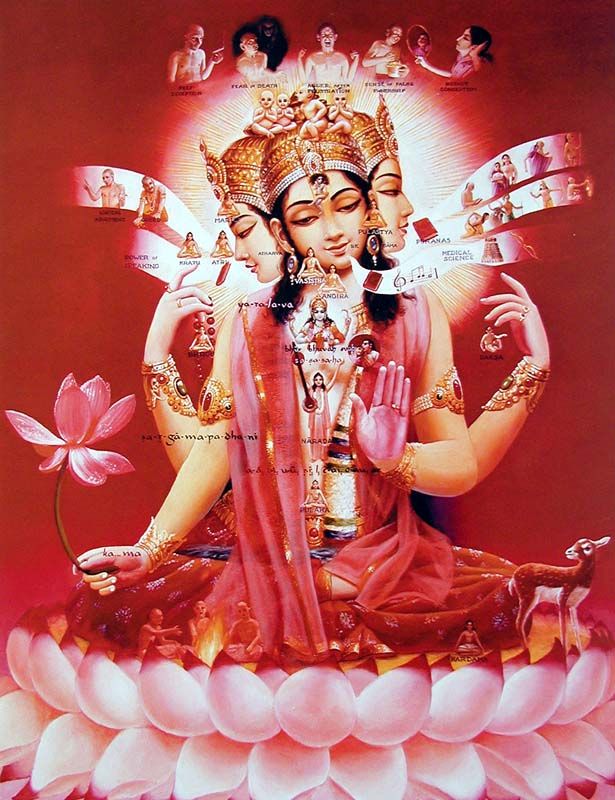
ब्रह्मा से पारम्परिक रूप से जुड़ी सभी रचनाओं में से, गौड़ीय वैष्णव सबसे अधिक बार एक छोटे संस्कृत ग्रन्थ को उद्धृत करते हैं, जिसे ब्रह्म-संहिता कहा जाता है। आज कोई इसे उद्धृत कर पाता है, तो इसका लगभग एकमात्र कारण यह है कि श्री चैतन्य महाप्रभु ने भारत के दक्षिणी तट पर इसकी एक पाण्डुलिपि खोजी थी।
सृष्टि के प्रारम्भ में कहा गया स्तोत्र #
परम्परा के अनुसार, ब्रह्म-संहिता एक स्तुति-स्तोत्र है, जिसे स्वयं ब्रह्मा ने श्रीकृष्ण की महिमा में कहा था। बाद की परम्परा कहती है कि इसमें कभी सौ अध्याय तक थे। इनमें से केवल पंचम अध्याय, जिसमें बासठ श्लोक हैं, बचा हुआ ज्ञात है। इसकी पहली पंक्ति वह श्लोक है, जो पूरे ग्रन्थ से सबसे अधिक जुड़ा है। इसका सरल अनुवाद यह है: "गोविन्द नाम से विख्यात श्रीकृष्ण ही परम ईश्वर हैं। उनका शरीर सच्चिदानन्दमय एवं नित्य है। वे समस्त उत्पत्ति के मूल हैं। उनका कोई अन्य उद्गम नहीं है, और वे ही समस्त कारणों के आदि कारण हैं।" यह श्लोक ब्रह्मा से आता है, जिन्हें द्वितीयक सृष्टि का कार्य सौंपा गया था। किसी निम्न तत्त्वज्ञान में वे अपने लिए सबसे ऊँचे स्थान का दावा कर सकते थे। लेकिन इसके बजाय यह श्लोक जान-बूझकर की गई विनम्रता का कार्य है। यह ब्रह्मा को नहीं, और विष्णु के किसी दूसरे रूप को भी नहीं, बल्कि श्रीकृष्ण को ही सभी कारणों का कारण बताता है।
| विवरण | वर्णन |
|---|---|
| माने गए रचनाकार | ब्रह्मा, सृष्टि के प्रारम्भ में |
| बचा हुआ अंश | पंचम अध्याय, बासठ श्लोक (उस ग्रन्थ में से जो परम्परा के अनुसार कभी बहुत विस्तृत था) |
| सबसे अधिक उद्धृत श्लोक | पंचम अध्याय, प्रथम श्लोक: ईश्वरः परमः कृष्णः |
| पुनः खोजकर्ता | श्री चैतन्य महाप्रभु, अपनी दक्षिण भारत यात्रा के दौरान, लगभग 1510 ईस्वी |
| प्रथम अंग्रेजी अनुवाद | भक्तिसिद्धान्त सरस्वती ठाकुर, 1932, जीव गोस्वामी की टीका के साथ |
सुदूर दक्षिणी तट पर प्राप्त #
शताब्दियों तक यह ग्रन्थ अधिक से अधिक कुछ बिखरे हुए अंशों के रूप में मौजूद था। भक्तों ने इसका नाम तो सुना था, लेकिन वे इसे पढ़ नहीं सकते थे। श्री चैतन्य महाप्रभु की दक्षिण भारत यात्रा में यह स्थिति बदल गई। उस यात्रा में वे पयस्विनी नदी के तट पर आदि-केशव मन्दिर पहुँचे। बाद की परम्परा और आधुनिक विद्वान, दोनों इस स्थान को तिरुवत्तार के आदि केशव पेरुमाल मन्दिर से जोड़ते हैं। यह मन्दिर कन्याकुमारी के निकट, भारत के सबसे दक्षिणी छोर पर है। वहाँ आध्यात्मिक विषयों पर चर्चा कर रहे उन्नत भक्तों की एक सभा के बीच महाप्रभु को ब्रह्म-संहिता का एक हस्तलिखित अध्याय मिला। उस समय तक यह ग्रन्थ लगभग लुप्त हो चुका था। चैतन्य-चरितामृत में कृष्णदास कविराज गोस्वामी ने इस खोज के बारे में अपना निर्णय लिखा है, और वे बिना किसी संकोच के इसकी प्रशंसा करते हैं। वे इसे सभी वैष्णव ग्रन्थों में अनिवार्य कहते हैं, और कहते हैं कि अन्तिम तात्त्विक निष्कर्ष के विषय में इसके बराबर कोई शास्त्र नहीं है। उनके इस निर्णय की और चर्चा श्री चैतन्य महाप्रभु की दक्षिण भारत यात्रा पृष्ठ पर की गई है। महाप्रभु ने उस अध्याय की हाथ से प्रतिलिपि करवाई और उसे अपने साथ उड़ीसा ले गए। इस यात्रा के जीवनी-लेखक कहते हैं कि महाप्रभु इस यात्रा से दो रत्न घर लाए थे। ये दो रत्न दो पाण्डुलिपियाँ थीं। यह अध्याय उनमें से एक था, और दूसरा बिल्वमंगल ठाकुर का श्री कृष्ण-कर्णामृत था।
पाण्डुलिपि से आधुनिक कीर्तन तक #
इसके बाद लगभग चार शताब्दियों तक यह ग्रन्थ मुख्य रूप से उन्हीं गौड़ीय समूहों में जाना जाता रहा, जिनके पास इसकी हस्तलिखित प्रतियाँ थीं। 1932 में भक्तिसिद्धान्त सरस्वती ठाकुर ने यह स्थिति बदल दी। उन्होंने बचे हुए पंचम अध्याय का पहला अंग्रेजी अनुवाद, श्रील जीव गोस्वामी की संस्कृत टीका के साथ, प्रकाशित किया। यह कृति आज भी छपती है और आज भी इसका मानक अंग्रेजी संस्करण है। आज इसके श्लोक पूरे गौड़ीय वैष्णव जगत् में दैनिक मन्दिर-पूजा में गाए जाते हैं। 1970 में ये श्लोक अप्रत्याशित रूप से बहुत बड़े श्रोता-वर्ग तक भी पहुँचे। उस वर्ष जॉर्ज हैरिसन ने इस प्रार्थना की एक आधुनिक रिकॉर्डिंग तैयार की, जिसका नाम "गोविन्दा" था और जिसे श्रील प्रभुपाद के एक शिष्य ने गाया था। इसका शीर्षक उसी टेक-पंक्ति से लिया गया है, "गोविन्दम् आदि-पुरुषं तम् अहं भजामि", जिस पर ग्रन्थ के बहुत-से श्लोक समाप्त होते हैं।
कालनिर्धारण पर एक ईमानदार टिप्पणी #
यहाँ एक वास्तविक कठिनाई है। इसे टालने के बजाय स्पष्ट और ईमानदारी से कहना चाहिए। गौड़ीय वैष्णव परम्परा मानती है कि ब्रह्मा ने ये श्लोक ब्रह्माण्ड के बिलकुल आरम्भ में कहे थे। परम्परा यह भी मानती है कि श्री चैतन्य महाप्रभु ने इस ग्रन्थ की रचना में कोई सहायता नहीं की। उन्होंने केवल एक ऐसे ग्रन्थ को फिर से खोजा, जो पहले से अनेक युगों पुराना था। लेकिन पांचरात्र साहित्य पर कुछ आधुनिक शैक्षणिक अध्ययन इस पारम्परिक तिथि से सचमुच मेल नहीं खाते। मित्सुनोरी मत्सुबारा का इस प्रकार के साहित्य पर अध्ययन बचे हुए ग्रन्थ की रचना को लगभग 1600 ईस्वी के आस-पास रखता है। यह समय सृष्टि के आरम्भ की अपेक्षा महाप्रभु की खोज के बाद की शताब्दी के अधिक निकट है। हम इस अन्तर को सुलझाने का प्रयास किए बिना यहाँ केवल बता रहे हैं। एक विद्वान पाण्डुलिपियों और साहित्य के इतिहास के प्रमाणों से काम करता है। एक भक्ति-परम्परा प्राप्त शिक्षा की अखण्ड शृंखला से काम करती है। दोनों बस अलग-अलग प्रश्न पूछ रहे हैं और अलग-अलग उत्तरों तक पहुँच रहे हैं। यह पृष्ठ इन दोनों के बीच निर्णय देने का प्रयास नहीं करता।
