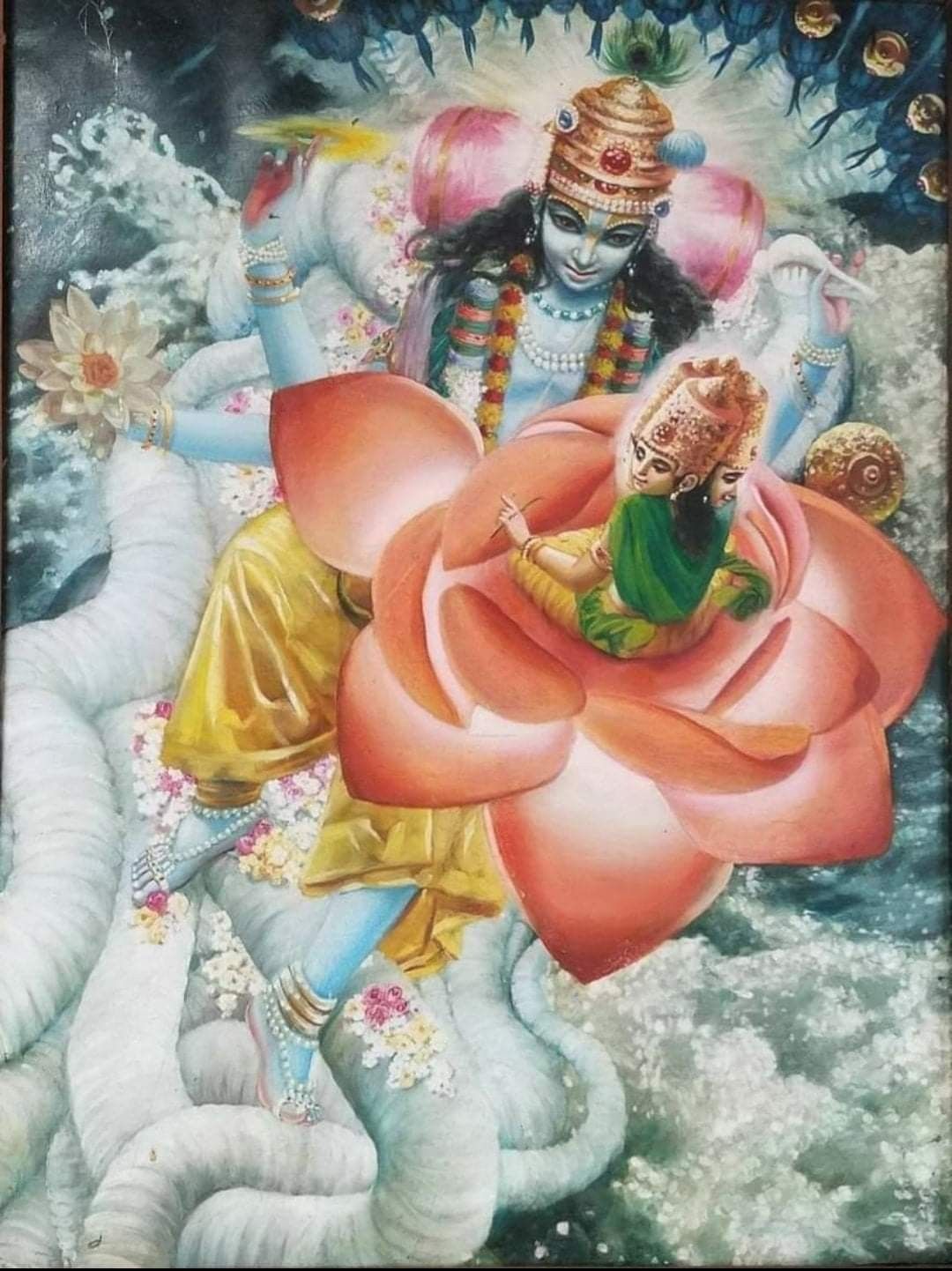
वैष्णव शास्त्र एक बात हमेशा स्पष्ट रखता है। ब्रह्माण्ड के निर्माण में ब्रह्मा चाहे जो भी भूमिका निभाएँ, ब्रह्माण्ड को सम्भव बनाने वाले वे नहीं हैं। यह पृष्ठ इसी अन्तर को समझाता है। साथ ही यह भी बताता है कि पहला जीव वास्तव में कैसे अस्तित्व में आया।
विष्णु की नाभि से कमल #
श्रीमद्भागवतम् बताता है कि अपने अस्तित्व के आरम्भ में पूरा ब्रह्माण्ड गर्भोदकशायी विष्णु के शरीर के भीतर विश्राम करता है। भगवान के इसी रूप में वे हर ब्रह्माण्ड के भीतर गर्भोदक सागर में करवट लेकर लेटे रहते हैं। ऐसे असंख्य ब्रह्माण्ड हैं, और हर एक के अपने-अपने गर्भोदकशायी विष्णु हैं। उनकी नाभि से एक कमल-नाल निकलती है। वह जल में ऊपर उठती जाती है और अन्त में एक विशाल कमल पुष्प के रूप में खिलती है। यह पुष्प उन सभी भौतिक गुणों से चमकता है, जिनकी आने वाली सृष्टि को आवश्यकता होगी। श्रीमद्भागवतम् 3.8.15 पर श्रील प्रभुपाद का तात्पर्य इसे सरल शब्दों में कहता है: "उस ब्रह्माण्डीय कमल पुष्प में भगवान विष्णु ने स्वयं परमात्मा के रूप में प्रवेश किया, और जब यह इस प्रकार प्रकृति के समस्त गुणों से गर्भित हो गया, तब वैदिक ज्ञान की वह सत्ता उत्पन्न हुई जिसे हम स्वयंभू कहते हैं।" वह स्वयंभू सत्ता ब्रह्मा हैं। सामान्य अर्थ में उनके कोई माता-पिता नहीं हैं।
| विवरण | वर्णन |
|---|---|
| कहाँ | गर्भोदकशायी विष्णु की नाभि से उगे कमल के भीतर |
| कब | वर्तमान सृष्टि (कल्प) के प्रारम्भ में |
| शास्त्रीय स्रोत | श्रीमद्भागवतम्, तृतीय स्कन्ध, अष्टम अध्याय |
| ब्रह्मा का इसके लिए अपना नाम | स्वयम्भू, "स्वयं जन्मे" |
| तात्त्विक श्रेणी | जीव-तत्त्व (एक जीव), विष्णु-तत्त्व (स्वयं भगवान) कदापि नहीं |
पद, व्यक्ति नहीं #
इस बात को गलत समझना बहुत आसान है, इसलिए इसे बड़ी सावधानी से कहना आवश्यक है। ब्रह्मा एक जीव हैं, ठीक वैसे ही जैसे हर आत्मा एक जीव है। वे बहुत उन्नत जीव हैं और सभी सृष्ट प्राणियों में पहले हैं, लेकिन वे किसी भी प्रकार से स्वयं परम भगवान नहीं हैं। श्रील प्रभुपाद ने 1973 में लॉस एंजिल्स के एक प्रवचन में श्रीमद्भागवतम् 1.8.34 की चर्चा करते हुए यह बात बहुत दृढ़ता से कही। उन्होंने चैतन्य-चरितामृत का वह श्लोक उद्धृत किया, जो नारायण को ब्रह्मा या भगवान शिव के बराबर मानने वाले को अपराधी, अर्थात् पाषण्डी, कहता है। "ब्रह्मा, विष्णु, रुद्र, भगवान शिव, ये वास्तव में एक ही स्तर पर बैठे हैं," प्रभुपाद ने समझाया, "फिर भी विष्णु सर्वोच्च हैं। ब्रह्मा और रुद्र को भी कोई समान नहीं मान सकता। अन्य की तो बात ही क्या।"
वैष्णव परम्परा इस बात को अधिकांश पाठकों की अपेक्षा से एक कदम और आगे ले जाती है। वह मानती है कि ब्रह्मा एक पद का नाम है। अलग-अलग ब्रह्माण्डीय चक्रों में अलग-अलग योग्य आत्माओं को ब्रह्मा के पद पर बिठाया जाता है, ताकि वे द्वितीयक सृष्टि का वही कार्य करें। यह वैसा ही है, जैसे अलग-अलग कार्यकालों में अलग-अलग अधिकारी एक ही सरकारी पद सँभालते हैं। व्यक्ति बदल जाता है, लेकिन कर्तव्य वही रहता है। यह बात भी नहीं बदलती कि हर ब्रह्मा विष्णु के अधीन सेवा करते हैं।
"द्वितीयक" स्रष्टा क्यों #
ब्रह्मा देवताओं, ऋषियों, पहले मनुष्यों और लोकों को उत्पन्न करते हैं। लेकिन ब्रह्माण्ड को बसाने में वे जो कुछ भी करते हैं, उसमें से कुछ भी परम भगवान से स्वतन्त्र होकर नहीं होता। ब्रह्मा उन्हीं भौतिक तत्त्वों और उसी बुद्धि से कार्य करते हैं, जो विष्णु पहले ही कमल के भीतर रख चुके हैं। वे ब्रह्माण्ड को अस्तित्व में नहीं लाते। वे केवल उसे जीवन से भरते हैं और उसका विस्तार से प्रबन्ध करते हैं, और यह सब उस योजना के भीतर होता है जो उन्हें पहले से दी गई है। इसीलिए वैष्णव तत्त्वज्ञान उन्हें सदा द्वितीयक स्रष्टा कहता है। वे वास्तविक और सक्रिय स्रष्टा हैं, और उनका कार्य आवश्यक है। फिर भी वे अपने पीछे खड़े एकमात्र स्रष्टा पर पूरी तरह आश्रित हैं।
ब्रह्मा शक्तिशाली हैं और सबसे पहले जन्मे हैं, फिर भी वे पूरी तरह आश्रित हैं। इसीलिए उनके जीवन में आगे जो होता है, वह इतना महत्त्वपूर्ण है। यह सृजन का कार्य करने से पहले उन्हें यह समझना था कि वे कौन हैं और उनका अपना अस्तित्व कहाँ से आया है। उस खोज की पूरी कथा ब्रह्मा की ज्ञान-खोज और चतुःश्लोकी भागवत पृष्ठ पर दी गई है।
असंख्य ब्रह्माण्ड, असंख्य ब्रह्मा #
गौड़ीय वैष्णव शास्त्र एक ब्रह्माण्ड का नहीं, बल्कि असंख्य ब्रह्माण्डों का वर्णन करता है। इससे पता चलता है कि यह सृष्टि-विज्ञान किसी एक कथा से कितना आगे तक जाता है। हर ब्रह्माण्ड अपने आवरण में बन्द है, हर एक कारण-सागर में तैरता है, और हर एक के भीतर अपने-अपने गर्भोदकशायी विष्णु लेटे हैं। इसी वर्णन के अनुसार, ब्रह्मा भी एक नहीं हैं, बल्कि हर ब्रह्माण्ड के लिए एक ब्रह्मा हैं। इस प्रकार असंख्य स्वयं जन्मे, चतुर्मुख द्वितीयक स्रष्टा हैं, और हर एक अपने ही ब्रह्माण्ड में वही नियत कार्य करता है। यहाँ जिन ब्रह्मा की चर्चा है, वे हमारे अपने ब्रह्माण्ड में जन्मे हैं। उनकी ज्ञान-खोज, उनके शिष्य और उनकी ब्रह्म-संहिता की रचना, ये सब उसी विशेष शिक्षा-शृंखला से जुड़े हैं, जिसे यह परम्परा उन तक ले जाती है।
