Kaliya Krishna Dasa
A Cowherd-Boy Associate of Nityananda Prabhu, Remembered for a Story of a Fall and a Return
The complete life, on one page: The main biography and every pastime page, in order, in one place
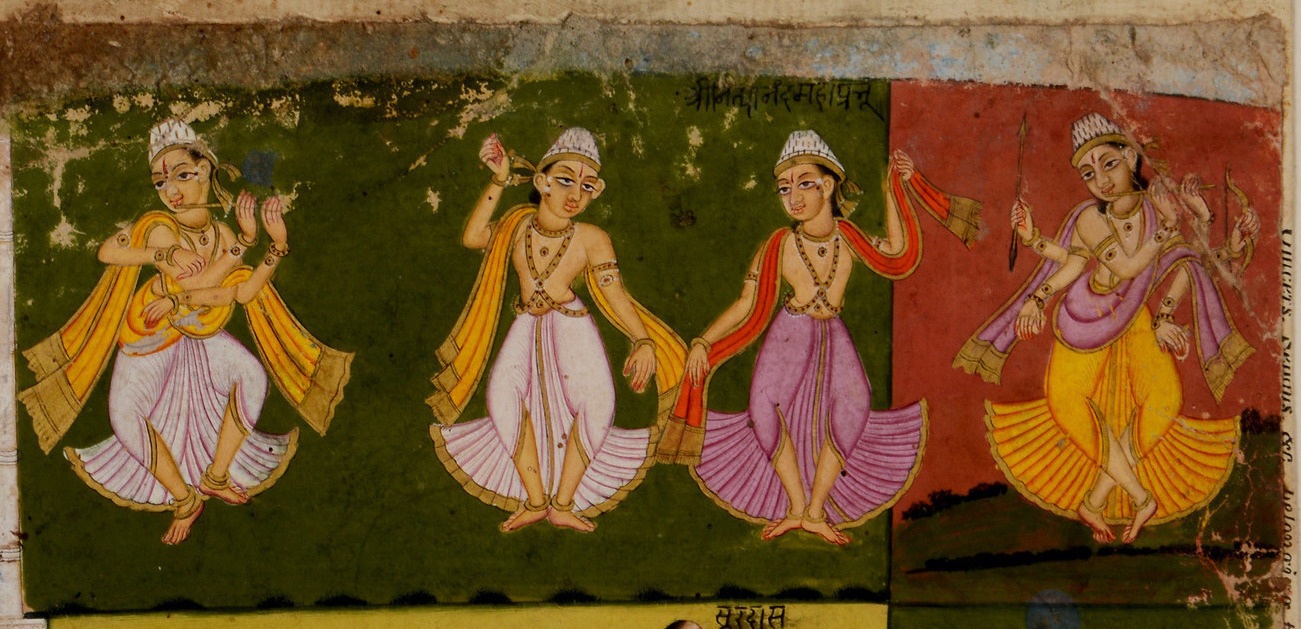
Introduction
Kaliya Krishna Dasa's name appears in Sri Chaitanya-charitamrita's list of Sri Nityananda Prabhu's devotees in Bengal. There he is remembered simply as a Vaishnava who "did not know anything beyond Nityananda Prabhu." That single line covers most of what can be said about him with real confidence. But his story is more complicated, and more interesting. In Gaudiya Vaishnava sources the same name is also carried by a second devotee. This was Chaitanya Mahaprabhu's own personal brahmana servant during the Lord's famous tour of South India. That servant fell and was mercifully taken back, and this is the episode most people mean today when they mention this name. Gaudiya Vaishnava tradition itself is divided on whether these are one person or two. This disagreement is presented here honestly, not hidden.
| Detail | Description |
|---|---|
| Also known as | Kala Krsnadasa, Kaliya Krishna Das |
| Native place | Akaihata village, Bardhaman (Burdwan) district, Bengal, on the old road between Navadvipa and Katwa |
| Place among Nityananda's associates | The ninth of Nityananda Prabhu's twelve cowherd-boy (gopala) companions |
| Identity | Lavanga, a cowherd friend of Krishna in Vraja (Gaura-ganoddesha-dipika 132; Chaitanya-charitamrita Adi 11.37 purport) |
| Best-known episode | A fall and reclamation during Chaitanya Mahaprabhu's tour of South India, told in Sri Chaitanya-charitamrita, Madhya-lila, Chapter 10 |
| Disappearance | Month of Chaitra; an annual festival is kept at Akaihata to this day |
Scriptural evidence for the introduction (2)
kālā-kṛṣṇadāsa baḍa vaiṣṇava-pradhāna
nityānanda-candra vinu nahi jāne āna
The twenty-second devotee of Lord Nityānanda Prabhu was Kālā Kṛṣṇadāsa, who was the ninth cowherd boy. He was a first-class Vaiṣṇava and did not know anything beyond Nityānanda Prabhu.
From the purport: In the Gaura-gaṇoddeśa-dīpikā (132) it is said that Kālā Kṛṣṇadāsa, who was also known as Kāliyā Kṛṣṇadāsa, was formerly a gopa (cowherd boy) of the name Lavaṅga. He was one of the twelve cowherd boys.
The verse naming Kala Krishnadasa among Nityananda Prabhu's devotees as the ninth cowherd boy; the purport gives his Vraja identity from the Gaura-ganoddesha-dipika.
नाम्नार्जुनः सखा प्राग्यो दासः स परमेश्वरः ।
कालः श्रीकृष्णदासः स यो लवङ्गः सखा व्रजे ॥१३२॥
nāmnārjunaḥ sakhā prāg yo dāsaḥ sa parameśvaraḥ
kālaḥ śrī-kṛṣṇa-dāsaḥ sa yo lavaṅgaḥ sakhā vraje
Lord Krsna's cowherd friend Arjuna appeared as Sri Paramesvara dasa in Lord Caitanya's pastimes. Lavanga, who had been Lord Krsna's cowherd friend in Vrajabhumi, appeared in Lord Caitanya's pastimes as Sri Kalakrsna dasa.
From the purport: In the Gaura-gaṇoddeśa-dīpikā (132) it is said that Kālā Kṛṣṇadāsa, who was also known as Kāliyā Kṛṣṇadāsa, was formerly a gopa (cowherd boy) of the name Lavaṅga. He was one of the twelve cowherd boys. (Srila Prabhupada, Chaitanya-charitamrita Adi 11.37 purport)
The second line of this verse identifies Kala Krishnadasa as Lavanga, a cowherd friend of Krishna in Vraja (the first line is about Paramesvara Dasa). Sanskrit: diacritic edition of the Gaura-ganoddesha-dipika; English translation as published at bvmlu.org.
Chapter 1
Life Among Mahaprabhu's Associates
A Bengal cowherd-boy devoted only to Nityananda Prabhu, and another devotee with the same name whose story is very different.
Sri Chaitanya-charitamrita's Adi-lila closes with a long list of the devotees who gathered around Sri Nityananda Prabhu across Bengal. It is in this list that the name Kala Krsnadasa first appears in the text. Krishnadasa Kaviraja Goswami names him as the twenty-second devotee in that list and describes him in a single line: he "did not know anything beyond Nityananda Prabhu." Srila Prabhupada's purport on the verse adds a little more. It draws on the Gaura-ganoddesha-dipika, the traditional list that shows who each of Chaitanya Mahaprabhu's associates had been in Krishna's own Vraja-lila. The purport explains that Kala Krsnadasa was the ninth of Nityananda Prabhu's twelve cowherd-boy, or gopala, companions. In Vraja he had formerly been the cowherd boy named Lavanga.
| Detail | Description |
|---|---|
| Textual source | Sri Caitanya-charitamrita, Adi-lila 11.37, with purport |
| Place in Nityananda's circle | Ninth of twelve gopala (cowherd-boy) associates |
| Vraja identity | The cowherd boy Lavanga |
| Native place | Akaihata village, on the Navadvipa-Katwa road |
| Family | Two sons, per Bhaktisiddhanta Sarasvati Thakura's Anubhashya (tradition, not scripture) |
A Village on the Navadvipa-Katwa Road #
The purport locates Kala Krsnadasa's headquarters at Akaihata, a small village on the old royal road connecting Navadvipa to Katwa. It is in what is today Bardhaman (Burdwan) district of West Bengal. Srila Prabhupada's purports often give this kind of geographical detail for lesser-known devotees. It is enough to place a person on the map of sixteenth-century Bengal, even where a fuller biography is not available. Apart from the bare fact of his devotion to Nityananda Prabhu, most of what else is said about Kala Krsnadasa's life at Akaihata comes from later tradition, not from Sri Chaitanya-charitamrita's own text. Bhaktisiddhanta Sarasvati Thakura's Anubhashya commentary is preserved and quoted on gaudiyahistory.iskcondesiretree.com. It records that he had two sons, Mohana Dasa and Gauranga Dasa, also called Vrindavan Dasa. It also records that in the commentator's own time their descendants were still living in the village of Sonatala, worshipping a Deity called Kala Chand. The same website, drawing on the Bhakti-ratnakara, places Kala Krsnadasa among the devotees who went with Jahnava Devi, Nityananda Prabhu's consort, on a visit to Katwa. None of these details can be checked against Sri Chaitanya-charitamrita itself, since its mula (original) text only names him. So they are reported here as tradition, and clearly called tradition, not quietly mixed into settled biography.
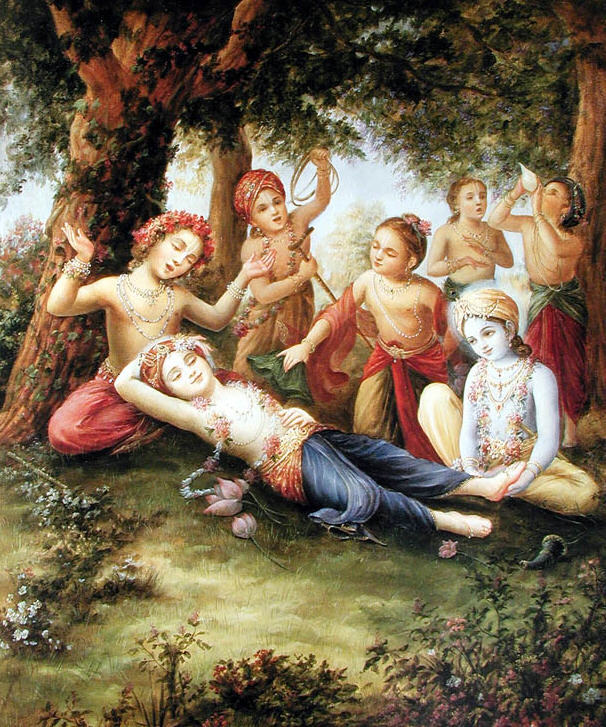
A Second Name, A Different Story #
Anyone searching for "Kaliya Krishna Dasa" today will find one story far more often than the quiet Akaihata householder above. It is the story of a devotee who travelled personally with Chaitanya Mahaprabhu on the Lord's famous tour of South India. He fell into bad association there, and was rescued through the mercy of Nityananda Prabhu and three other devotees. It is a moving and well-recorded episode, told across several chapters of Sri Chaitanya-charitamrita's Madhya-lila. But according to the tradition's own most careful commentator, it belongs to a different person of the same name. Bhaktisiddhanta Sarasvati Thakura's Anubhashya states this directly: "The Kala Krsna Das who accompanied Sri Chaitanya Mahaprabhu to Southern India was not the same personality" as the Akaihata devotee described above. This is not an unusual situation in Gaudiya Vaishnava biographical writing. Sri Chaitanya-charitamrita's own list of Nityananda's associates includes a separate, unrelated "Krsnadasa Brahmana" only one verse before the verse about Kala Krsnadasa. Many later retellings of this story are understandably drawn to its clear devotional lesson, and they do not always keep this distinction.
Why Both Stories Belong Here #
The South Indian companion's story is the one almost universally linked with the name today. It is also by far the richer and more fully recorded of the two, and it carries real weight in how Gaudiya Vaishnava tradition thinks about failure and forgiveness. For these reasons, the pages that follow tell that story in full. Readers should keep two facts in mind together. First, a devotee named Kala Krsnadasa is genuinely recorded, though only briefly, among Nityananda Prabhu's Bengal associates. Second, a different devotee of the same name, known from separate sources, is the central figure of the fall-and-mercy episode that follows. Sri Chaitanya-charitamrita itself, in the relevant Madhya-lila chapter, gives no sign that its Kala Krsnadasa is the Akaihata gopala-associate. It introduces him simply as the brahmana who had gone with Mahaprabhu to South India, without any mention of Nityananda Prabhu's earlier circle. So the pages The Episode of Correction and The Meaning of the Lord's Mercy are best read as the biography of this second Kala Krsnadasa. They present him under the shared name, because that is how the tradition itself has come to know and tell the story. But they keep him honestly separate from the Akaihata devotee's own quieter, separately recorded life.
Scriptural evidence for this chapter (4)
Quoted in the text above:
- Anubhashya 2.7.39 (via gaudiyahistory.iskcondesiretree.com) Bhaktisiddhanta Sarasvati Thakura's Anubhashya commentary (secondary quotation)
Further verses:
rāḍhe yāṅra janma kṛṣṇadāsa dvija-vara
śrī-nityānandera tenho parama kiṅkara
Word for word
rāḍhe: in West Bengal; yāṅra: whose; janma: birth; kṛṣṇadāsa: of the name Krsnadasa; dvija-vara: the best brahmana; śrī-nityānandera: of Nityananda Prabhu; tenho: he; parama: first-class; kiṅkara: servant.
The twenty-first devotee of Sri Nityananda in Bengal was Krsnadasa Brahmana, who was a first-class servant of the Lord.
Cited to show that Sri Chaitanya-charitamrita's own list of Nityananda's associates names another, unrelated devotee called Krsnadasa only one verse before Kala Krsnadasa: a reminder that shared or similar names among these devotees were common and must be checked carefully rather than assumed.
kāla-kṛṣṇadāsa baḍa vaiṣṇava-pradhāna
nityānanda-candra vinu nāhi jāne āna
Word for word
kāla-kṛṣṇadāsa: of the name Kala Krsnadasa; baḍa: great; vaiṣṇava-pradhāna: first-class Vaisnava; nityānanda-candra: Lord Nityananda; vinu: except; nāhi jāne: he did not know; āna: anything else.
The twenty-second devotee of Lord Nityananda Prabhu was Kala Krsnadasa, who was the ninth cowherd boy. He was a first-class Vaisnava and did not know anything beyond Nityananda Prabhu.
From the purport: Purport excerpt: "In the Gaura-ganoddesa-dipika, verse 132, it is said that Kala Krsnadasa, who was also known as Kaliya Krsnadasa, was formerly a gopa (cowherd boy) of the name Lavanga."
This is the primary textual attestation of the Akaihata devotee's identity and his place among Nityananda Prabhu's twelve cowherd-boy associates.
"Kaliya Krishna Das was known throughout the three worlds. One can attain Gaurachandra through remembrance of him."
Cited as a secondary translation, since Sri Chaitanya-bhagavata has no standalone English corpus on vedabase.io; this verse of glorification is quoted here via gaudiyahistory.iskcondesiretree.com's biography page rather than from the Bengali original directly.
Chapter 2
The Episode of Correction
On the road through South India, Chaitanya Mahaprabhu's personal servant is drawn away, and later, at Jagannatha Puri, he is openly dismissed from His service.
In the chapters about Chaitanya Mahaprabhu's long tour of South India, Sri Chaitanya-charitamrita's Madhya-lila describes a brahmana named Kala Krsnadasa. He went with the Lord as a personal servant throughout the journey. Somewhere along the route, Kala Krsnadasa became separated from the Lord's party. The text connects this region with the Bhattatharis, a wandering community skilled in tantric arts. Sri Chaitanya-charitamrita is specific about how this happened. As the text and Srila Prabhupada's purport explain, the Bhattatharis used women on purpose to draw outsiders into their camp and increase their own numbers. This is what pulled Kala Krsnadasa away from Mahaprabhu's company.
| Detail | Description |
|---|---|
| Textual source | Sri Caitanya-caritamrita, Madhya-lila 10.62-66, with purport |
| Where it happened | South India, in Bhattathari territory; the rejection itself at Jagannatha Puri |
| Who was involved | Chaitanya Mahaprabhu, Kala Krsnadasa, Sarvabhauma Bhattacharya |
| What is verified | A public rejection from personal service |
| What is not verified | Any physical punishment, including head- or moustache-shaving |
Who Were the Bhattatharis #
Srila Prabhupada's purport describes the Bhattatharis as a group who "used to increase their numbers by using women to allure outsiders," and this practice was aimed especially at travellers who were separated, even briefly, from the protection of their own community. Mahaprabhu's party was moving on foot across unfamiliar territory, on a tour that took months. It would have been just the kind of travelling group such a community could target. The purport does not treat the incident as a single strange event. It draws out a lesson for everyone: "Only one who is overwhelmed by maya can be so unfortunate as to leave Sri Caitanya Mahaprabhu's company, yet unless one is very conscientious, the influence of maya can drag one away, even though he be the personal assistant of Sri Caitanya Mahaprabhu. And what to speak of others?" The warning is meant as much for the reader as for Kala Krsnadasa himself.
Allured, Not Accusing #
To tell this story rightly, we must be clear about who is described as doing what. Sri Chaitanya-charitamrita's own text, in Madhya-lila 10.64, has Mahaprabhu say of Kala Krsnadasa: "He left My company to associate with the Bhattatharis, but I rescued him from their company and brought him here." The verb is "associate," and the wider account shows Kala Krsnadasa as the one who was allured. Srila Prabhupada's purport says plainly that he "was influenced and allured by nomads or gypsies, who enticed him with women," not that he used his own position as a Vaishnava to seek out or take advantage of anyone. This needs to be said clearly, because looser retellings of the story sometimes mix up who was the victim and who did wrong. The text itself is consistent that Mahaprabhu personally went and rescued him from the Bhattatharis' camp before this scene at Puri takes place.
A Public Reckoning Before Sarvabhauma #
Once the Lord's party had reached Jagannatha Puri, Mahaprabhu chose to raise the matter openly before Sarvabhauma Bhattacharya. Sarvabhauma Bhattacharya asked everyone else present to leave. Then Mahaprabhu called for Kala Krsnadasa and spoke directly to the Bhattacharya: "Just consider this man's character. He went with Me to South India... He left My company to associate with the Bhattatharis, but I rescued him from their company and brought him here. Now that I have brought him here, I am asking him to leave. Now he can go wherever he likes, for I am no longer responsible for him." Srila Prabhupada's purport shows that the lesson is not only for this one person: "Even though a person may associate with Sri Caitanya Mahaprabhu, he can be allured by maya and leave the Lord's company due to his slight independence... This is factual evidence showing that it is possible at any time to fall down from the Lord's association." When Kala Krsnadasa heard himself rejected in these words, he began to cry. The text says plainly that Mahaprabhu, "not caring for him, immediately left to take His noon lunch," and so the scene ended without any softening.
What the Text Does Not Say #
Popular retellings sometimes describe this episode as involving a dramatic physical punishment, in particular a public shaving of the head and moustache. But a careful reading of Sri Chaitanya-charitamrita's own verses and purport, and of the available secondary devotional essays, does not support this. No such detail appears anywhere in this account. What the text records is a public rejection from personal service. It was given in front of a senior devotee, as a deliberate lesson about the power of maya. Then Mahaprabhu left quickly, and the scene was left unresolved. But the story does not end there. Its resolution comes from a completely different direction, which is the subject of The Meaning of the Lord's Mercy.
Scriptural evidence for this chapter (4)
Quoted in the text above:
- Madhya 10.64 Sri Caitanya-caritamrita
- Madhya 10.65 Sri Caitanya-caritamrita
Further verses:
bhaṭṭācārya saba loke vidāya karāila
tabe prabhu kāla-kṛṣṇadāse bolāila
Word for word
bhaṭṭācārya: Sarvabhauma Bhattacarya; saba loke: all persons; vidāya karāila: asked to leave; tabe: at that time; prabhu: Sri Caitanya Mahaprabhu; kāla-kṛṣṇadāse: Kala Krsnadasa; bolāila: called for.
Sarvabhauma Bhattacarya then asked all the people to leave. Afterward, Sri Caitanya Mahaprabhu called for Kala Krsnadasa, who had accompanied the Lord during His South Indian tour.
Marks the start of the public scene in which Mahaprabhu addresses Kala Krsnadasa's conduct in front of Sarvabhauma Bhattacharya.
eta śuni' kṛṣṇadāsa kāndite lāgila
madhyāhna karite mahāprabhu cali' gela
Word for word
eta śuni': hearing this; kṛṣṇadāsa: Kala Krsnadasa; kāndite lāgila: began to cry; madhyāhna: noon lunch; karite: to execute; mahāprabhu: Sri Caitanya Mahaprabhu; cali' gela: left.
Hearing the Lord reject him, Kala Krsnadasa began to cry. However, Sri Caitanya Mahaprabhu, not caring for him, immediately left to take His noon lunch.
The scene is left unresolved here: Mahaprabhu's own response does not soften, which is what makes the devotees' later intervention meaningful rather than redundant.
Chapter 3
The Meaning of the Lord's Mercy
Rejected by Mahaprabhu Himself, Kala Krsnadasa is quietly restored to service through the mercy of four fellow devotees.
Sri Chaitanya-charitamrita does not end Kala Krsnadasa's story with his public rejection. Right after Mahaprabhu walked away to take His noon meal, four of His own closest associates quietly began to consider what could be done. They were Nityananda Prabhu, Jagadananda Pandit, Mukunda, and Damodara. Krishnadasa Kaviraja Goswami's verse is brief: "the other devotees, headed by Nityananda Prabhu, Jagadananda, Mukunda and Damodara, began to consider a certain plan." Srila Prabhupada's purport on this single line is one of the more often quoted passages in this part of Sri Chaitanya-charitamrita: "Even though a person is rejected by the Supreme Personality of Godhead, the devotees of the Lord do not reject him; therefore the Lord's devotees are more merciful than the Lord Himself." Srila Prabhupada also adds a line from Narottama Dasa Thakura's own songs, chadiya vaisnava-seva nistara payeche keba. The line says that no one can be freed from material bondage without the service of pure devotees. Prabhupada gives it as the spiritual basis for what happens next.
| Detail | Description |
|---|---|
| Textual source | Sri Caitanya-caritamrita, Madhya-lila 10.67-79, with purport |
| Who intervened | Nityananda Prabhu, Jagadananda Pandit, Mukunda, and Damodara |
| The plan | Send Kala Krsnadasa to Bengal to announce the Lord's safe return |
| Mahaprabhu's response | "Do whatever you decide," raising no objection |
| Outcome | Restoration to service, and joy among the Navadvipa devotees |
A Plan Built Around Good News #
The four devotees' idea was both practical and compassionate. Mother Saci and the devotees of Navadvipa, headed by Advaita Acharya and Srivasa Thakura, had been waiting anxiously for news of Mahaprabhu's return from His long South Indian tour. Someone needed to carry that news to Bengal. "Let us therefore send Krsnadasa to Bengal," they decided. The text records that after saying this, "they kept Krsnadasa engaged in the service of the Lord and gave him assurance." Srila Prabhupada's purport on this step speaks directly about Kala Krsnadasa's sorrow: "Because Sri Caitanya Mahaprabhu rejected him, Kala Krsnadasa became very, very sorry and began to cry. Therefore the Lord's devotees took compassion upon him, gave him assurance and encouraged him to continue to engage in the Lord's service." The next day, the four went to Mahaprabhu directly and asked His permission to send someone to Bengal. Since rejecting Kala Krsnadasa, Mahaprabhu had shown him no further attention. He answered simply: "Do whatever you decide." He raised no objection to the plan, even though it clearly involved the very servant He had just sent away.
Carrying Maha-Prasada to Navadvipa #
Kala Krsnadasa was sent to Bengal carrying a generous supply of Lord Jagannatha's own maha-prasada to distribute among the devotees there. When he reached Navadvipa, he went first to Mother Saci. He offered her the prasada and told her that her son had safely returned to Jagannatha Puri, and "this good news gave much pleasure to mother Saci, as well as to all the devotees of Navadvipa, headed by Srivasa Thakura," the text records. From there he went to the home of Advaita Acharya. Again he offered prasada and obeisances, and then he gave a complete account of Mahaprabhu's return. This news filled everyone present with what the text calls "supreme happiness." So, within a single chapter, a servant whom the Lord Himself had publicly sent away becomes the one given the task of carrying the Lord's own mercy to the devotees who loved Him most. That mercy was literally in his hands, in the form of maha-prasada.
Reading the Episode as the Tradition Reads It #
Gaudiya Vaishnava tradition does not read this story as evidence that Mahaprabhu's rejection was insincere, or that the fall itself did not matter. Srila Prabhupada's purport carefully affirms two things together. First, falling from the Lord's association is a real danger, and it can happen even to His personal servant. Second, the mercy of the Lord's devotees is still available, even when the Lord's own immediate response is severe. The episode is honest about what happened. It shows a way back through the compassion of fellow devotees, not through any suggestion that the fall did not matter. This combination gives the episode its lasting place in Gaudiya Vaishnava memory, no matter exactly which Kala Krsnadasa the story was first told about.
Scriptural evidence for this chapter (6)
Quoted in the text above:
- Madhya 10.77 Sri Caitanya-caritamrita
Further verses:
nityānanda, jagadānanda, mukunda, dāmodara
cāri-jane yukti tabe karila antara
Word for word
nityānanda: Lord Nityananda Prabhu; jagadānanda: Jagadananda Pandit; mukunda: Mukunda; dāmodara: Damodara; cāri-jane: four persons; yukti: plan; tabe: thereupon; karila antara: did within the mind.
After this, the other devotees — headed by Nityananda Prabhu, Jagadananda, Mukunda and Damodara — began to consider a certain plan.
From the purport: Purport excerpt: "Even though a person is rejected by the Supreme Personality of Godhead, the devotees of the Lord do not reject him; therefore the Lord's devotees are more merciful than the Lord Himself."
The key verse and purport of this whole episode: the moment the tradition's real teaching about mercy and reclamation is stated outright.
ei kṛṣṇadāse dibā gauḍe pāṭhāna
eta kahi' tāre rākhilena āśvāsiyā
Word for word
ei: this; kṛṣṇadāse: Kala Krsnadasa; dibā: away; gauḍe: to Bengal; pāṭhāna: let us send; eta kahi': saying this; tāre: him; rākhilena: they kept; āśvāsiyā: giving assurance.
"Let us therefore send Krsnadasa to Bengal." Saying this, they kept Krsnadasa engaged in the service of the Lord and gave him assurance.
From the purport: Purport excerpt: "Because Sri Caitanya Mahaprabhu rejected him, Kala Krsnadasa became very, very sorry and began to cry. Therefore the Lord's devotees took compassion upon him."
The practical shape the four devotees' mercy took: not a reversal of Mahaprabhu's decision, but a new service that restored Kala Krsnadasa's place among the devotees.
eka-jana yāi' kahuka śubha samācāra
prabhu kahe, — sei kara, ye icchā tomāra
Word for word
eka-jana: one person; yāi': going; kahuka: may inform; śubha samācāra: this auspicious news; prabhu kahe: the Lord replied; sei kara: do that; ye icchā tomāra: whatever your desire.
"One person should go to Bengal and inform them about the auspicious news of Your return to Jagannatha Puri." Upon hearing this, Sri Caitanya Mahaprabhu replied, "Do whatever you decide."
Mahaprabhu's own assent to the devotees' plan: He does not reverse His stated rejection of Kala Krsnadasa, but neither does He block his restoration to service.
tabe sei kṛṣṇadāse gauḍe pāṭhāila
vaiṣṇava-sabāke dite mahā-prasāda dila
Word for word
tabe: thereafter; sei: that; kṛṣṇadāse: Krsnadasa; gauḍe: to Bengal; pāṭhāila: sent; vaiṣṇava-sabāke: to all the Vaisnavas; dite: to deliver; mahā-prasāda: the remnants of Jagannatha's food; dila: they gave.
In this way Kala Krsnadasa was sent to Bengal, and he was given sufficient quantities of Lord Jagannatha's food remnants to distribute there.
The mission that restores Kala Krsnadasa to meaningful service: carrying the Lord's own maha-prasada to the Bengal devotees.
suniyā sabāra haila parama ullāsa
advaita-ācārya-gṛhe gela kṛṣṇadāsa
Word for word
suniyā: hearing; sabāra: of all; haila: there was; parama: supreme; ullāsa: happiness; advaita-ācārya: of Advaita Acarya Prabhu; gṛhe: to the home; gela: went; kṛṣṇadāsa: Krsnadasa.
Hearing of Lord Caitanya's return to Puri, everyone became very glad. Krsnadasa next went to the house of Advaita Acarya.
Completes Kala Krsnadasa's mission: from a servant publicly set aside to the bearer of joyful news at Advaita Acharya's own home.
Closing
Among Nityananda Prabhu's Cowherd-Boy Associates #
Sri Chaitanya-charitamrita's Adi-lila gives a long list of Nityananda Prabhu's devotees across Bengal. It names Kala Krsnadasa as the twenty-second in that list and the ninth of Nityananda's twelve gopala, or cowherd-boy, companions. Srila Prabhupada's own purport on the verse quotes the Gaura-ganoddesha-dipika. It adds that this Kala Krsnadasa was formerly the cowherd boy Lavanga in Krishna's Vraja-lila. It also says that his headquarters in this life was the small village of Akaihata, on the old royal road between Navadvipa and Katwa, in what is now Bardhaman district. Bhaktisiddhanta Sarasvati Thakura's own Anubhashya commentary, as recorded on gaudiyahistory.iskcondesiretree.com, adds a few more details. These are worth passing on as tradition, not as settled fact. He had two sons, Mohana Dasa and Gauranga Dasa (also called Vrindavan Dasa). Their descendants were said to be still living in Sonatala village, worshipping a Deity named Kala Chand. And according to the Bhakti-ratnakara, he travelled with Jahnava Devi, Nityananda Prabhu's consort, to Katwa. None of this is dramatic, but it all fits together. It shows a quiet, devoted Bengali householder-Vaishnava who is known in the records only for his attachment to Nityananda Prabhu's feet.
Srila Prabhupada's exact words in his purport to Chaitanya-charitamrita Adi 11.37 are: "In the Gaura-gaṇoddeśa-dīpikā (132) it is said that Kālā Kṛṣṇadāsa, who was also known as Kāliyā Kṛṣṇadāsa, was formerly a gopa (cowherd boy) of the name Lavaṅga. He was one of the twelve cowherd boys." The line of the Gaura-ganoddesha-dipika that he refers to reads:
kālaḥ śrī-kṛṣṇa-dāsaḥ sa yo lavaṅgaḥ sakhā vraje
"Lavanga, who had been Lord Krsna's cowherd friend in Vrajabhumi, appeared in Lord Caitanya's pastimes as Sri Kalakrsna dasa." (Gaura-ganoddesha-dipika 132)
Two Devotees Sharing One Name #
Here the record becomes truly confusing. A number of devotional essays and articles in circulation today tell the story of "Kala Krsnadasa" or "Kaliya Krishna Dasa" as one continuous biography. In these, he is a cowherd-boy associate of Nityananda Prabhu who also went with Chaitanya Mahaprabhu to South India, fell into bad association there, and was rescued. But Bhaktisiddhanta Sarasvati Thakura's own Anubhashya commentary on Sri Chaitanya-charitamrita states directly that they were different. His words are quoted on gaudiyahistory.iskcondesiretree.com's biography page for the Akaihata devotee: "The Kala Krsna Das who accompanied Sri Chaitanya Mahaprabhu to Southern India was not the same personality." In other words, the tradition's own most authoritative commentator separates two devotees who happened to have the same name. Sri Chaitanya-charitamrita has met this kind of situation before. Its own list of Nityananda's associates includes yet a third, unrelated "Krsnadasa Brahmana" one verse earlier. Still, the South Indian companion's story is told under this name far more often, and it carries a clearer devotional lesson. So the account that follows tells it in full. But it is clearly marked as a second account, known from separate sources, about a devotee with the same name.
Fallen and Found on the Road Through South India #
The better-known Kala Krsnadasa served personally at Chaitanya Mahaprabhu's side during the Lord's long tour of South India, which is described across several chapters of Madhya-lila. Somewhere along that journey he came into contact with the Bhattatharis, a wandering community skilled in tantric arts. Sri Chaitanya-charitamrita records that they deliberately used women to draw outsiders away from their travelling companions and into their own camp. Kala Krsnadasa left the Lord's company for theirs, and Mahaprabhu Himself went and brought him back. This detail is easy to blur, so we should be exact here. The text describes the Bhattatharis as the ones who set out to tempt him. It is not a case of Krsnadasa misusing his position as a Vaishnava to take advantage of anyone. He was the one "allured and bewildered," not the one doing the alluring.
Once the party reached Jagannatha Puri, Mahaprabhu raised the matter in front of Sarvabhauma Bhattacharya. He told him plainly, "Just consider this man's character. He went with Me to South India... he left My company to associate with the Bhattatharis, but I rescued him from their company and brought him here. Now that I have brought him here, I am asking him to leave." He then released Kala Krsnadasa from personal service. Srila Prabhupada's purport does not dwell on blame. Instead it draws out the wider lesson: maya is strong enough to pull down even someone in the Lord's personal service, and "once fallen and separated from the Supreme Personality of Godhead's association, one becomes a candidate for suffering." When Kala Krsnadasa heard himself rejected, he broke down and wept. No source records any physical punishment, such as a public shaving of his head or moustache. The verses do not record it, nor does the purport, nor do the secondary essays we checked. The record shows only that he was rejected from service, not that he was physically punished.
The Mercy of Four Devotees #
What happened next is the part of the story Gaudiya Vaishnava tradition actually treasures. Seeing Kala Krsnadasa in tears, four of the Lord's own associates, Nityananda Prabhu, Jagadananda Pandit, Mukunda, and Damodara, quietly worked out a plan of their own. Srila Prabhupada's purport on this moment is direct: "Even though a person is rejected by the Supreme Personality of Godhead, the devotees of the Lord do not reject him; therefore the Lord's devotees are more merciful than the Lord Himself." The four kept Kala Krsnadasa engaged in service and gave him assurance. The next day they asked Mahaprabhu's permission to send him to Bengal, to carry the good news of the Lord's return to Mother Saci and the Navadvipa devotees. Mahaprabhu's answer was simply, "Do whatever you decide." He raised no further objection. Kala Krsnadasa carried Lord Jagannatha's own maha-prasada to distribute along the way, and travelled to Navadvipa. He delivered the news and prasada first to Saci Mata, filling her with joy. Then he delivered them to Advaita Acharya and the devotees gathered around Srivasa Thakura, who were overjoyed. In this way a servant who had been publicly sent away was restored to meaningful service. This came about through the mercy of four fellow devotees, not through any change in the Lord's own decision. It is the tradition's preferred way of showing that a devotee's fall need not be the end of the story.
Legacy and Disappearance #
For the Akaihata devotee described earlier, Srila Prabhupada's purport records an annual festival that commemorates his disappearance. It is held on the day of Varuni-yoga in the month of Chaitra, and his descendants are said to continue there to this day. A separate account on gaudiyahistory.iskcondesiretree.com instead gives the twelfth day of the waning moon of Chaitra. It says he passed away in Vrindavana while absorbed in bhajana. So the two accounts agree on the month, but not on the day or the place. This small difference is left open here, not settled by guesswork. In that same source, the Chaitanya-bhagavata is quoted as declaring that "one can attain Gaurachandra through remembrance" of him. This praise matches the way devoted associates of Nityananda Prabhu are remembered throughout Gaudiya Vaishnava literature.
At a Glance #
- Named in Sri Chaitanya-charitamrita as one of Nityananda Prabhu's twelve cowherd-boy associates, headquartered at Akaihata near Katwa.
- Bhaktisiddhanta Sarasvati Thakura's own commentary distinguishes this devotee from a second "Kala Krsnadasa", known from separate sources, who served Chaitanya Mahaprabhu personally in South India.
- The pastimes below tell that second devotee's story at length. He fell in with the Bhattatharis, was rejected from service, and was mercifully restored through Nityananda Prabhu and three other devotees.
- No source records any physical punishment in that story; the correction was a rejection from service, reversed through the devotees' own mercy.
- Commemorated with an annual festival in the month of Chaitra.
- Sri Caitanya-caritamrita, Adi-lila 11.36-37, with purport
- Sri Caitanya-caritamrita, Madhya-lila 10.62-79, with purports
- Kaliya Krishna Dasa - Biography | Gaudiya History
- Kaliya Krishna Dasa | Gaudiya History
- Fall of Kala Krsnadasa - A Commentary on Philosophical Misconceptions | Sri Narasingha Chaitanya Ashram
- Kala-Krsna Dasa and the Mercy of the Vaishnavas | The Harmonist
- Chapter 10, Sri Caitanya-caritamrita Madhya-lila (full chapter text mirror)
- Chapter 11, Sri Caitanya-caritamrita Adi-lila (full chapter text mirror)
