Shridhara's story does not end with the night his identity as Krishna's servant was revealed to him. Sri Chaitanya-caritamrta's purport to Adi-lila 10.67 records what happened later. Sri Chaitanya Mahaprabhu began His public campaign of sankirtana, openly going against the local qazi's ban on congregational chanting. Then Shridhara danced joyfully in the streets along with everyone else. Before the Lord took sannyasa and left His mother Sachi's household for good, Shridhara sent her a squash from his own garden to cook. It was a small, practical gift from a man who had almost nothing else to give. And after Sri Chaitanya Mahaprabhu left Bengal for Jagannatha Puri, Shridhara did not stay behind. Every year, the purport says, he made the journey to Puri simply to see Him again. For years this man had bargained with the Lord over banana leaves. Once he understood who he had been bargaining with, he kept the relationship going for the rest of his life, in his own way and at his own cost.
A Shrine Where His Home Once Stood #
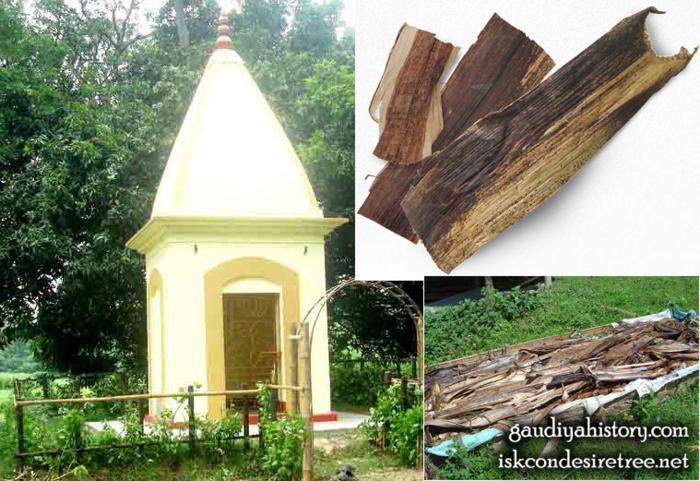
Centuries later, Srila Bhaktisiddhanta Sarasvati Thakura had a small shrine built on the site of Shridhara's old home, on ground still known as Shridhara Angan. He was the guru of Srila Prabhupada, and he did more than anyone else to recover and mark the holy places of Sri Chaitanya Mahaprabhu's Navadwip pastimes. The shrine was not a grand monument. It was a marker, placed so that a poor banana-seller's part in the Lord's life would not be lost. Almost everything else about him was never recorded: his birth year, his family, and, in most tellings, even the year he died. The shrine stands there still, one stop among many on the parikrama routes that pilgrims walk through Mayapur and Navadwip today.
What Srila Prabhupada Preserved #
Srila Prabhupada's own purport to Sri Chaitanya-caritamrta Adi-lila 10.67 does not preach about Shridhara's poverty or draw a clear lesson from it. It simply states the facts as the tradition preserved them: the fifty-fifty split of his income, the daily joking, the broken iron pot, the squash for Sachi, the yearly trips to Puri, and his earlier identity as Krishna's cowherd friend Kusumasava. It lets them speak for themselves. This simple way of telling says something by itself. Everywhere else, the text explains the philosophy behind every pastime it records. But here Shridhara's story is left as it is. It is a plain account of one very poor man whom the Supreme Lord chose to visit every single day. The text does not tell us why.
A Devotee Whose Guru Is Not Recorded #
The sources we found do not name a diksha or siksha guru for Shridhara, and this page does not guess one. What the sources do record is his close, personal bond with Sri Chaitanya Mahaprabhu. In this he is much like Haridasa Thakura, another devotee the Lord loved dearly. The Lord loved Haridasa not for any social standing but for the plain, unbroken sincerity of his devotion. For both men, poverty and low standing were never obstacles in Sri Chaitanya Mahaprabhu's eyes. In fact, the tradition remembers both of them because they had nothing to offer Him except that sincerity.
