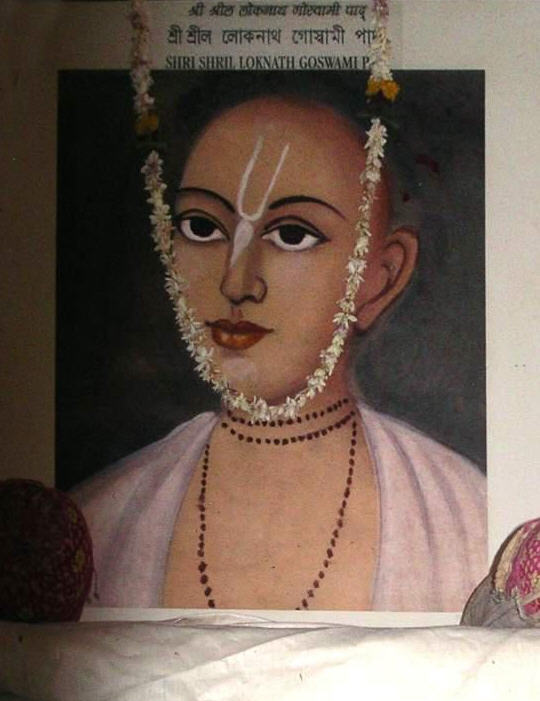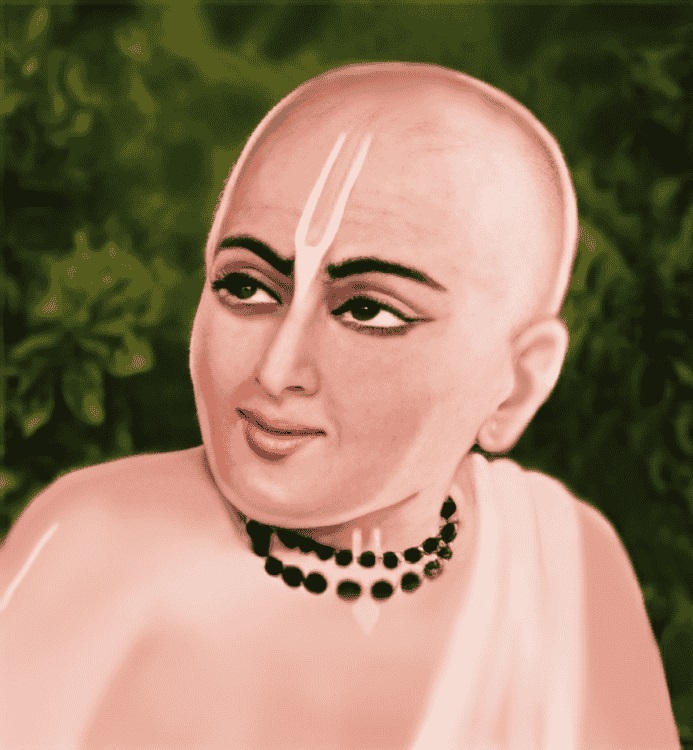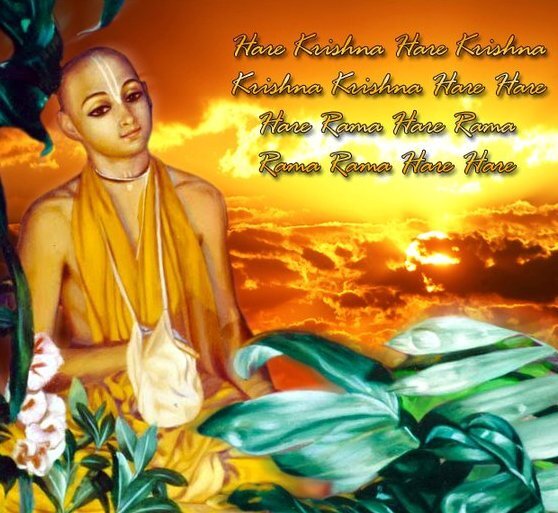
Srila Haridasa Thakura
Namacharya: The Teacher of the Holy Name
Also known as Thakura Haridasa, Brahma Haridasa, Namacharya Haridasa Thakura, Haridas Thakur, Srila Haridas Thakur
“Even if my body is cut to pieces, I will never give up the chanting of the holy name.”
Said to the qazi of Nabadwip before being ordered beaten in twenty-two marketplaces (Chaitanya-bhagavata, Adi-khanda).
Srila Haridasa Thakura (Haridāsa Ṭhākura) is remembered across Gaudiya Vaishnavism as Namacharya (Nāmācārya), the teacher of the holy name. The Gaura-ganoddesha-dipika (verses 93-95) names him as Brahma, the great ascetic son of Rcika Muni, appearing together with Prahlada. Srila Prabhupada calls him the incarnation of Lord Brahma (Antya 11.25 purport). His whole life shows what the chanting of Krishna's names can do. He was born to Muslim parents around 1451 in the village of Budhan (some sources say Buron) in rural Bengal. From his youth until his last days, he chanted 300,000 names of Krishna every day. He survived a public beating that was meant to kill him, and by his mercy a prostitute who was sent to seduce him became one of the most respected Vaishnavas of her time. He grew so dear to Sri Chaitanya Mahaprabhu that the Lord came to see him every day during his last years at Puri, and when he left this world the Lord buried him with His own hands.
| Detail | Description |
|---|---|
| Born | c. 1451, village of Budhan/Buron, Bengal Sultanate (today Satkhira District, Bangladesh) |
| Disappeared | Ananta Chaturdashi (Ananta Caturdaśī) day, at Jagannatha Puri, in Sri Chaitanya Mahaprabhu's presence (the exact year is not clear from the sources checked) |
| Family background | Muslim by birth |
| Identity | Incarnation of Lord Brahma (Chaitanya-charitamrita Antya 11.25 purport); Brahma Mahatapa, son of Rcika Muni, combined with Prahlada (Gaura-ganoddesha-dipika 93-95) |
| Title | Namacharya, "teacher of the holy name" (Srila Prabhupada's translation of Sri Chaitanya-caritamrta, Antya 3.55) |
| Daily practice | 300,000 names of Krishna chanted aloud, roughly 175 rounds of japa |
| Guru | Not named in Sri Chaitanya-caritamrta or Chaitanya-bhagavata; later devotional biographies (Advaita-prakasha, Prema-vilasa) name Advaita Acharya |
| Best-known episodes | The prostitute's test at Benapola; beaten in twenty-two marketplaces; daily visits from Mahaprabhu at Puri |
Lord Brahma in the Pastimes of Sri Chaitanya #
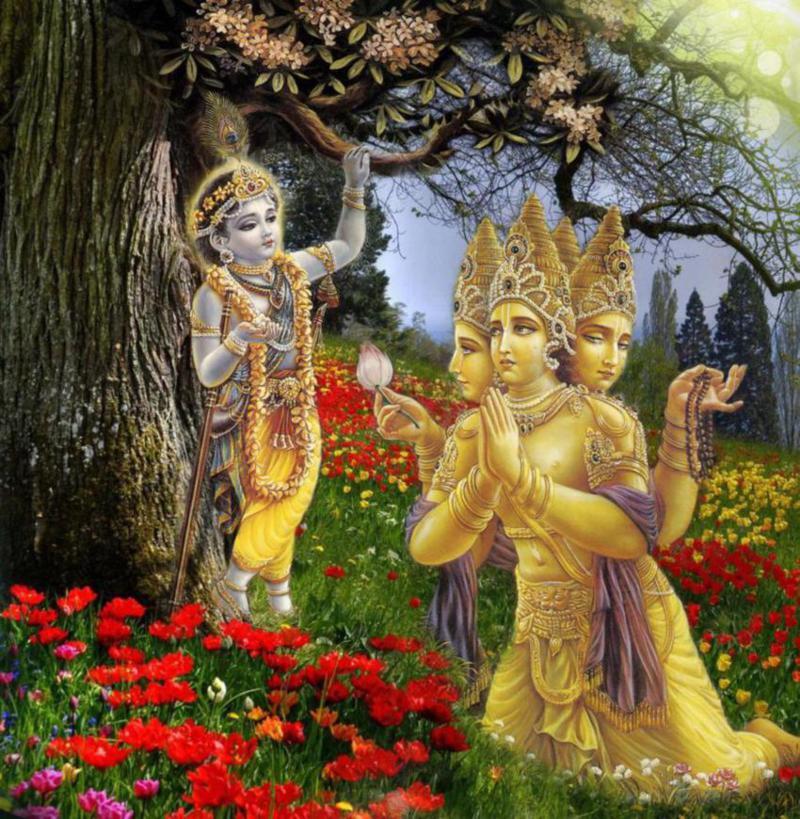
Gaudiya Vaishnavas have never seen Haridasa's birth in a Muslim home as a mere accident. Kavi Karnapura's Gaura-ganoddesha-dipika (verse 93) names him as Brahma, a great ascetic (mahatapa) and the son of Rcika Muni, who appeared together with Prahlada Maharaja. Verses 94-95 follow the account of Murari Gupta and tell why he was born in a yavana (Muslim) family:
ṛcīkasya muneḥ putro nāmnā brahmā mahātapāḥ
prahlādena samaṁ jāto haridāsākhyako'pi san
murāri-gupta-caraṇaiś caitanya-caritāmṛte
ukto muni-sutaḥ prātas tulasī-pātram āharan
adhautam abhiṣaptas taṁ pitā yāvanatāṁ gataḥ
sa eva haridāsaḥ san jātaḥ parama bhaktimān
"Rcika Muni's son Brahma Mahatapah, and Prahlada Maharaja combined to appear as Haridasa Thakur in Lord Caitanya's pastimes. ... In the book Caitanya-carita, Murari Gupta explains that one morning Mahatapah gave an unwashed tulasi leaf to his father, who became so angry at him for this that he cursed him. Because of this Mahatapah took birth in a yavana family as the great devotee Haridasa Thakura." (Gaura-ganoddesha-dipika 93-95)
In Sri Chaitanya-charitamrita (Antya 11.25), Sri Chaitanya Mahaprabhu Himself tells Haridasa: "Your role in this incarnation is to deliver the people in general. You have sufficiently preached the glories of the holy name in this world." Srila Prabhupada explains in his purport to Chaitanya-charitamrita Antya 11.25: "By using the words tomāra avatāra (“your incarnation”), Śrī Caitanya Mahāprabhu confirms that Haridāsa Ṭhākura is the incarnation of Lord Brahmā. ... Haridāsa Ṭhākura is thus the incarnation of Lord Brahmā, and other devotees are likewise incarnations who help in the prosecution of the Lord’s mission."
Birth and Early Life #
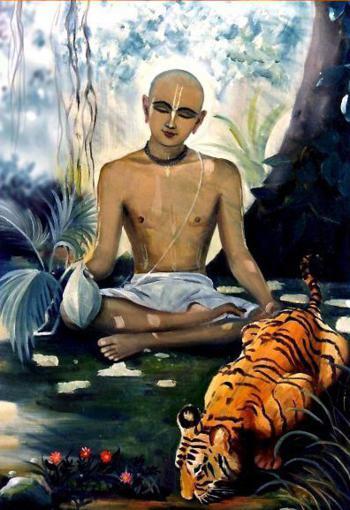
Vrindavana Dasa Thakura explains that Haridasa took a low birth by the Lord's own wish, to prove that a devotee of Vishnu is worthy of worship even if he is born in a low family (Chaitanya-bhagavata Adi 16.237-240). Sri Chaitanya-charitamrita says the same thing in one line: "Śrī Caitanya Mahāprabhu exhibited the glories of the holy name of the Lord through Haridāsa Ṭhākura, who was born in a Muslim family" (Chaitanya-charitamrita Antya 5.86). Bhaktivinoda Thakura's Navadvipa-dhama-mahatmya gives the inner reason. After he stole Krishna's calves and cowherd friends, Brahma understood that his pride in being Brahma had kept him from the sweetness of Vraja. So he did austerities at Antardvipa and prayed for a birth in which that pride would leave him. Gauranga granted it: "You will consider yourself lowly. You will be known as Haridāsa, and you will be free from pride" (Navadvipa-dhama-mahatmya 5.146). Following the Chaitanya-bhagavata, Srila Prabhupada writes that Haridasa "was born in a village known as Buḍhana but after some time came to live on the bank of the Ganges at Phuliyā, near Śāntipura" (Chaitanya-charitamrita Adi 10.43, purport). The Advaita-vilasa makes him about thirty-five years older than the Lord, which places his birth around 1451 (The Gaudiya Treasures of Bengal).
At Shantipura (Chaitanya-charitamrita tells this after the Chandapura episode below), he found his dearest friend, Advaita Acharya, who made him a cave-like shelter on the bank of the Ganges and fed him every day (Antya 3.216-217). Haridasa felt uneasy that Advaita honoured a low-born man so openly in a society of great brahmanas, so he begged Him for protection from public disapproval (Antya 3.218-220). Advaita answered by offering him the first plate at His father's shraddha, the ceremony for a departed ancestor. This honour was kept for the foremost brahmana (Chaitanya-charitamrita Adi 10.44):
tumi khāile haya koṭi-brāhmaṇa-bhojana”
eta bali, śrāddha-pātra karāilā bhojana
“Feeding you is equal to feeding ten million brāhmaṇas,” Advaita Ācārya said. “Therefore, accept this śrāddha-pātra.” Thus Advaita Ācārya made him eat. (Sri Chaitanya-charitamrita Antya 3.222)
In his purport, Srila Prabhupada writes that Advaita did this "considering him greater than any of the foremost brāhmaṇas." Krishnadasa Kaviraja Goswami adds that it was Advaita's worship with Ganges water and tulasi, together with Haridasa's chanting in his cave, that drew Sri Chaitanya Mahaprabhu into this world (Antya 3.223-226).
Persecution in Twenty-Two Marketplaces #
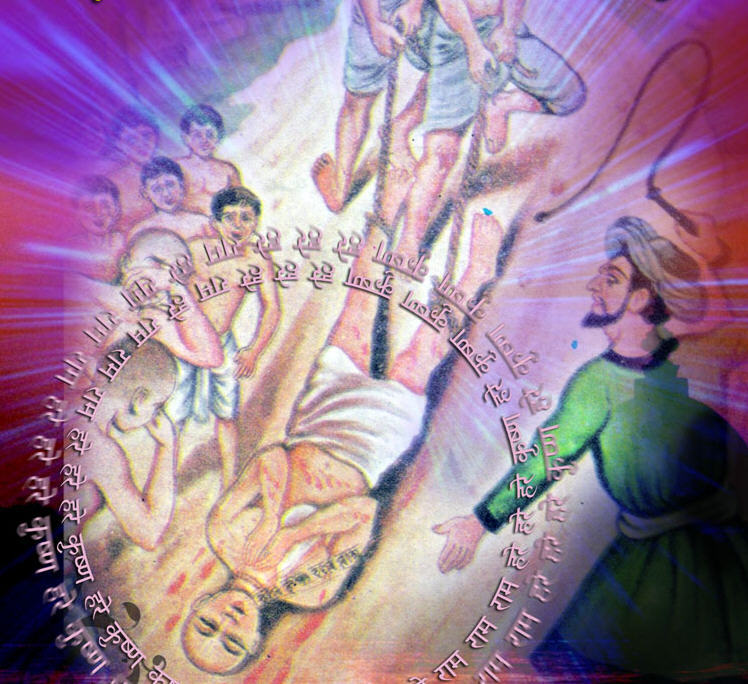
Chaitanya-bhagavata sets this trial in the years when Haridasa lived at Phuliya. The local qazi, the Muslim judge, could not bear to see a man born a Muslim openly chanting the names of Krishna, and when he complained, the governor had Haridasa thrown into prison (Chaitanya-bhagavata Adi 16). There he blessed the other prisoners to stay as they were (Chaitanya-bhagavata Adi 16.49-64). Srila Prabhupada explains what he meant: "Haridasa Thakura was taken to the jail and he told the prisoners there, oh, you are so fortunate to have this opportunity to sit and chant the Holy Names without the Maya distractions of the outer world!" (Srila Prabhupada, letter to Upendra, 5 February 1968) Before the governor, he said simply that God is one and that He moves every heart as He wishes (Chaitanya-bhagavata Adi 16). When he was ordered to give up the holy name, he replied:
khaṇḍa khaṇḍa hai deha yāya yadi prāṇa
tabu āmi vadane nā chāḍi hari-nāma
"Even if my body is cut into pieces and I give up my life, I will never give up chanting the Lord’s holy name." (Chaitanya-bhagavata Adi 16.94, translated by Bhumipati Dasa)
The qazi had him caned through twenty-two marketplaces, a punishment meant to end in death. Lost in the holy name, Haridasa felt no pain, and he prayed for the men who struck him (Chaitanya-bhagavata Adi 16.110). Srila Prabhupada writes: "Haridāsa Ṭhākura was severely lashed in twenty-two marketplaces by the Muslim Kazi's sentries. Still he prayed to the Lord not to punish his tormentors" (Srila Prabhupada, Renunciation Through Wisdom 2.3). At last he went into such a deep trance that they thought he was dead and threw him into the Ganges. But he came back to the shore chanting, and the men who had persecuted him begged his pardon (Chaitanya-bhagavata Adi 16). Srila Prabhupada writes: "Haridāsa Ṭhākura is exceptional for his forbearance because although he was beaten with canes in twenty-two marketplaces, he was nevertheless tolerant." (Chaitanya-charitamrita Adi 10.84, purport)
The Vow of Chanting, the Prostitute's Test and Maya Devi #
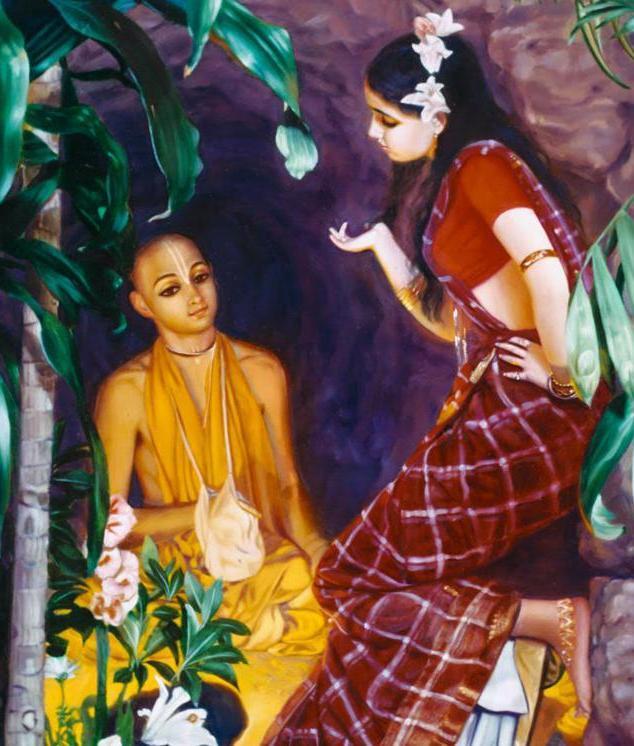
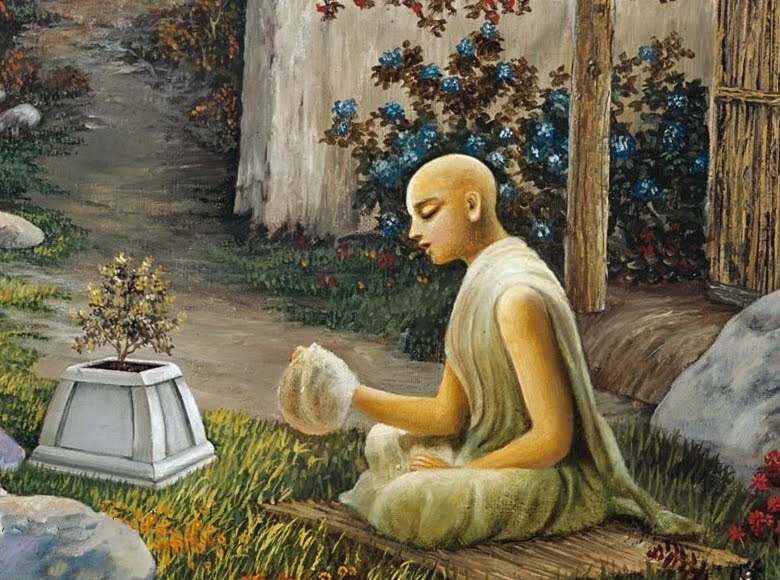
After leaving home, Haridasa lived for some time in the forest of Benapola, in a little cottage in front of a tulasi plant, chanting day and night (Chaitanya-charitamrita Antya 3.99-100). The zamindar (landlord) Ramachandra Khan could not bear the respect Haridasa received. He could find no fault in him, so he hired a young prostitute who promised to break his vow within three days (Antya 3.102-106). Each night Haridasa kindly asked her to sit and hear the holy name until his fixed chanting was done. He explained that he had vowed to chant ten million names in a month (Antya 3.114-126). By the end of the third night her heart had changed. She fell at his feet, confessed the plot and pleaded, "Kindly act as my spiritual master" (Antya 3.130-135). He told her to give all she owned to the brahmanas and to live in that cottage chanting and serving tulasi (Antya 3.136-138).
prasiddhā vaiṣṇavī haila parama-mahāntī
baḍa baḍa vaiṣṇava tāṅra darśanete yānti
"Thus the prostitute became a celebrated devotee. She became very advanced in spiritual life, and many stalwart Vaiṣṇavas would come to see her." (Sri Chaitanya-charitamrita Antya 3.142)
Sri Chaitanya-caritamrta does not give her name. Local tradition at Benapola, where her bhajana-kutir (the hut where she worshipped) is still shown to pilgrims, remembers her as Hira Bai. Later she chanted lakhs of holy names every day, so she came to be known as Laksha-Hira (Lakshahira). Ramachandra Khan suffered the result of his offence soon after he insulted Nityananda Prabhu. A government officer arrested him with his wife and sons and took away his wealth and position (Antya 3.144-163). Later Maya Devi herself tested Haridasa for three nights at his cave by the Ganges (Antya 3.229-245). When she could not move him, she begged for the name of Krishna, and Haridasa "initiated her by saying, “Just perform chanting of the Hare Kṛṣṇa mahā-mantra.”" (Chaitanya-charitamrita Antya 3.259)
Read the full accounts: The Vow of Chanting and the Prostitute's Test and Maya Devi Tests Haridasa Thakura
Teachings on the Holy Name #
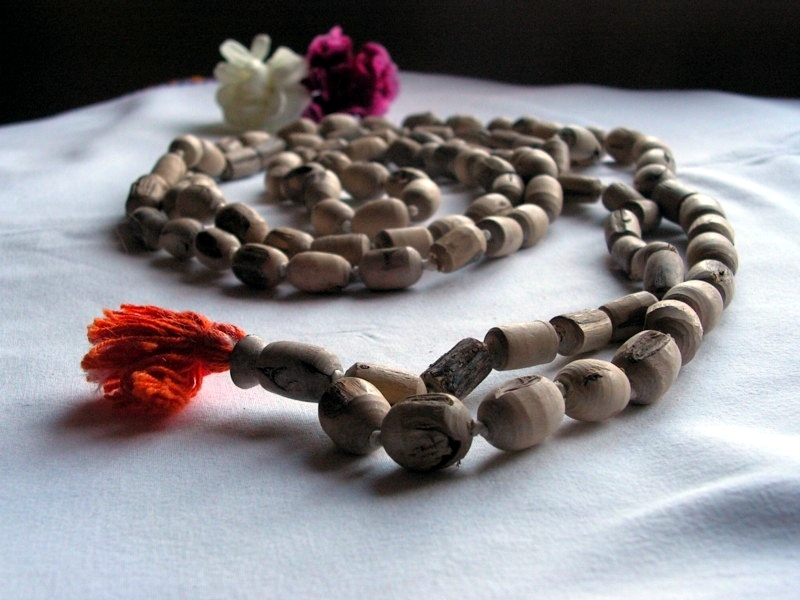
From Benapola, Haridasa walked to Chandapura. There Govardhana Majumadara's young son, the future Raghunatha Dasa Goswami, came to see him every day and received the mercy that later brought him to Mahaprabhu's feet (Chaitanya-charitamrita Antya 3.165-170). In the assembly of Govardhana and his brother Hiranya, the scholars praised the holy name for wiping out sin and giving liberation. Haridasa gently told them that these are only side benefits. He gave an example: the first glow before sunrise drives away the fear of thieves and ghosts long before the sun itself appears (Antya 3.177-184):
aiche nāmodayārambhe pāpa-ādira kṣaya
udaya kaile kṛṣṇa-pade haya premodaya
"Similarly, the first hint that offenseless chanting of the Lord’s holy name has awakened dissipates the reactions of sinful life immediately. And when one chants the holy name offenselessly, one awakens to service in ecstatic love at the lotus feet of Kṛṣṇa." (Sri Chaitanya-charitamrita Antya 3.185)
A young tax collector, Gopala Chakravarti, mocked this. He said that if the name did not give liberation in this way, he would cut off Haridasa's nose, and Haridasa calmly staked his own nose on it (Antya 3.193-199). When the assembly fell at his feet in shame, he only smiled and said, "One cannot understand the glories of the holy name simply by logic and argument" (Antya 3.206). Within three days the scoffer was struck by leprosy and lost his nose (Antya 3.209), and Krishnadasa Kaviraja Goswami explains why: "A characteristic of a pure devotee is that he excuses any offense by an ignorant rascal. A characteristic of Kṛṣṇa, however, is that He cannot tolerate blasphemy of His devotees." (Chaitanya-charitamrita Antya 3.213) Back at Phuliya, a brahmana from Harinadi demanded scriptural proof for chanting aloud. Haridasa replied that even birds, beasts and insects are saved by hearing the name. He told him: "If one silently chants the names of Kṛṣṇa, then he is delivered; but if one loudly chants, then he delivers others also." (Chaitanya-bhagavata Adi 16.281, translated by Bhumipati Dasa)
Namacharya, the Teacher of the Holy Name #
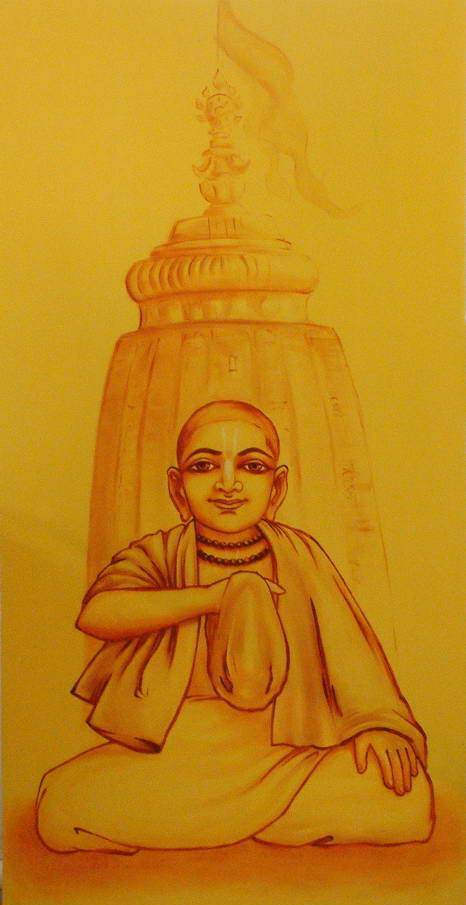
At Puri, Sri Chaitanya Mahaprabhu once asked Haridasa with real sorrow how the yavanas of Kali-yuga, people far from Vedic culture, could ever be delivered (Chaitanya-charitamrita Antya 3.50-51). Haridasa told Him not to grieve. He said that such people often cry "hā rāma, hā rāma" in their everyday speech, and even that shadow of the name, nāmābhāsa, is enough to free them (Antya 3.52-54). Srila Prabhupada gives him his title while translating this very answer:
yadyapi anya saṅkete anya haya nāmābhāsa
tathāpi nāmera teja nā haya vināśa
"Nāmācārya Haridāsa Ṭhākura, the authority on the chanting of the holy name, said, “The chanting of the Lord’s holy name to indicate something other than the Lord is an instance of nāmābhāsa. Even when the holy name is chanted in this way, its transcendental power is not destroyed." (Sri Chaitanya-charitamrita Antya 3.55)
The word Namacharya is not in the Bengali verses. It comes from Srila Prabhupada's translation, here and again at Antya 3.61. When the Lord asked him about trees and insects, Haridasa said that the forests do not merely echo the Lord's kirtana: "it is the kīrtana of the nonmoving living entities" (Antya 3.71). Mahaprabhu embraced him and then praised him to His devotees "as if He had hundreds of mouths" (Antya 3.90-93). Later He told the scholar Vallabha Bhatta, "I have learned about the glories of the Lord’s holy name from Haridāsa Ṭhākura, and by his mercy I have understood these glories." (Chaitanya-charitamrita Antya 7.49)
With Sri Chaitanya Mahaprabhu in Navadvipa and Puri #
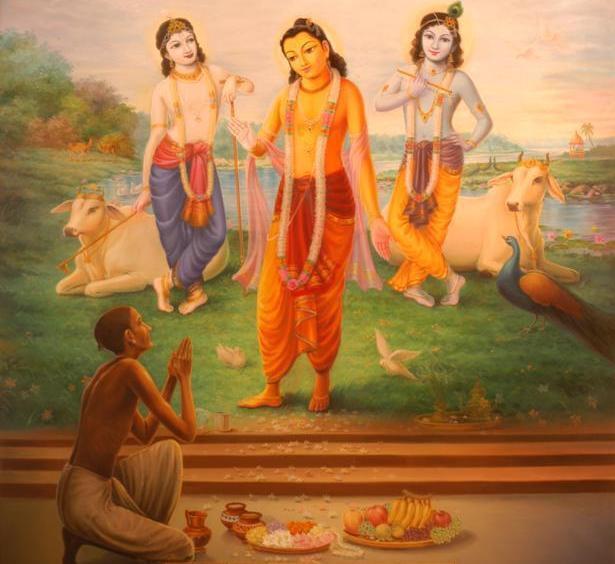
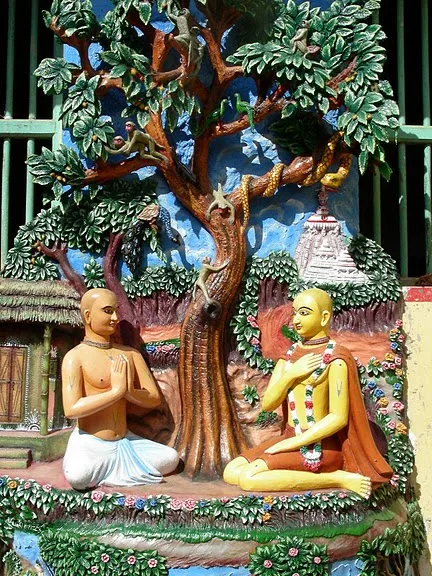
When Mahaprabhu came back from Gaya and began His sankirtana in Navadvipa, Haridasa was there every night in the kirtans at the homes of Srivasa Thakura and Chandrashekhara Acharya (Chaitanya-bhagavata Madhya 8.110-112). The Lord sent him out with Nityananda Prabhu to beg at every door (Chaitanya-bhagavata Madhya 13.7-11). Srila Prabhupada describes it: "He used to send Nityānanda Prabhu, Haridāsa Ṭhākura ... to canvass, 'Please chant Hare Kṛṣṇa. Please chant Hare Kṛṣṇa. Please surrender to Kṛṣṇa.'" (Srila Prabhupada, lecture on Srimad-Bhagavatam 1.5.23, Vrindavana, 4 August 1974) When Mahaprabhu took sannyasa, the renounced order, and set out for Puri, Haridasa wept that a man as low as he could never follow, so the Lord promised to bring him there (Chaitanya-charitamrita Madhya 3.193-197).
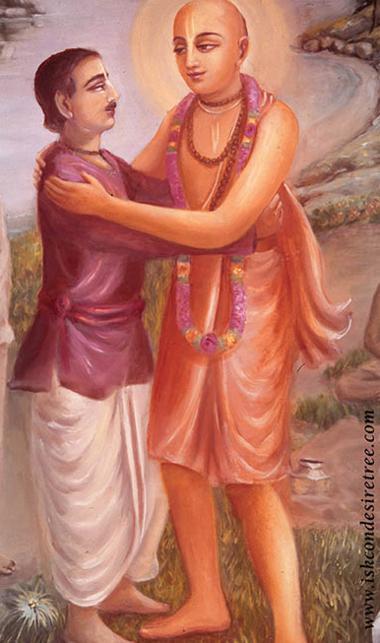
At Puri he would not go near the temple. He lay flat on the road at a distance and asked only for a quiet place in a garden (Chaitanya-charitamrita Madhya 11.162-167). Mahaprabhu gave him a solitary room in a flower garden near His own residence, the place now called Siddha Bakula. When the Lord embraced him there, Haridasa begged Him not to touch him (Madhya 11.175-188), and the Lord answered:
prabhu kahe, — tomā sparśi pavitra ha-ite
tomāra pavitra dharma nāhika āmāte
"The Lord said, “I wish to touch you just to be purified, for your purified activities do not exist in Me.”" (Sri Chaitanya-charitamrita Madhya 11.189)
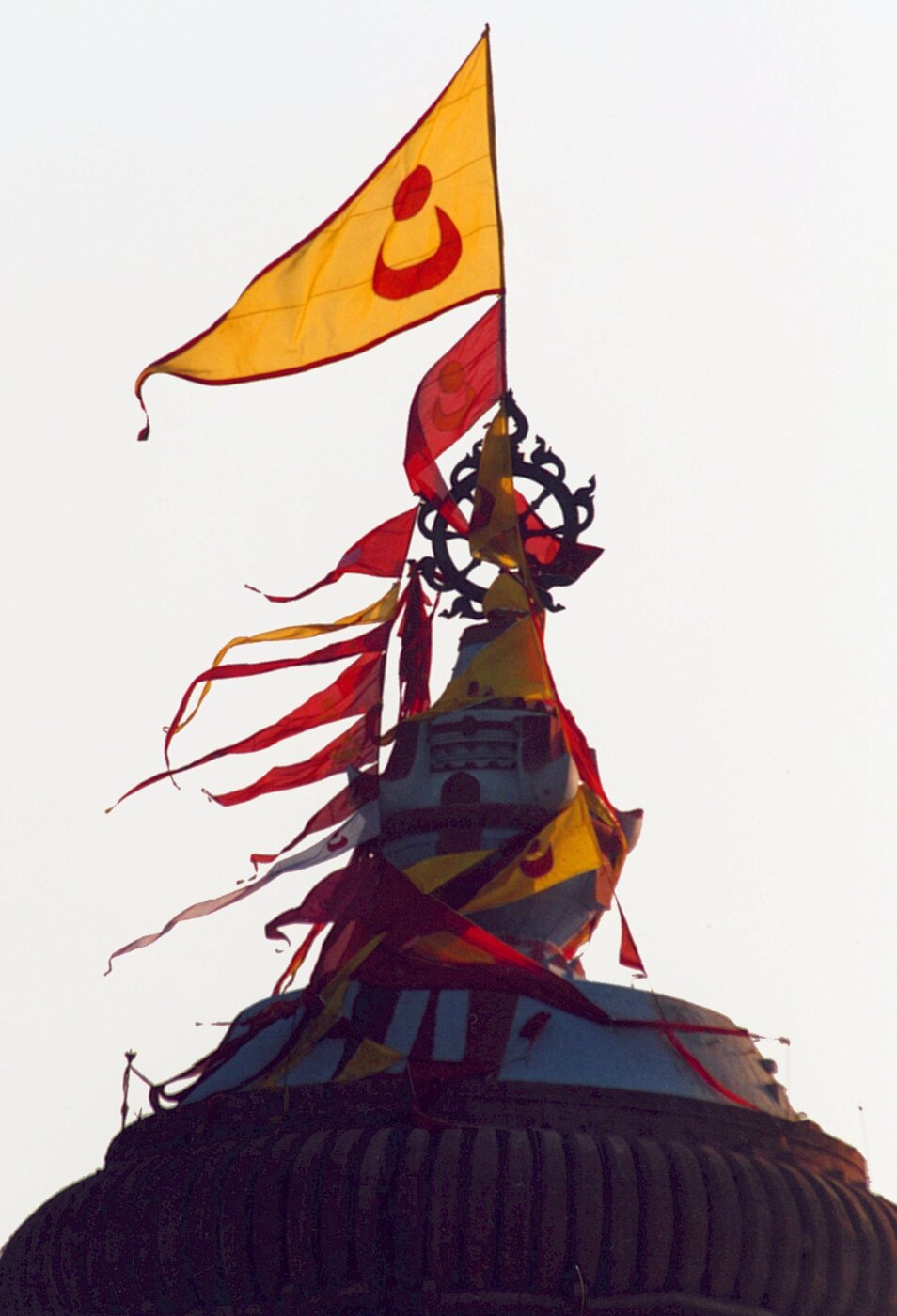
He told Haridasa to "look at the cakra on the top of the temple and offer obeisances" and promised to send him prasadam and to visit him daily (Chaitanya-charitamrita Madhya 11.194-195). He kept that promise. Every morning, after seeing Lord Jagannatha, He came to Haridasa, and He visited Rupa Goswami and Sanatana Goswami in the same way when they were in Puri (Madhya 1.63-65).
Read the full accounts: With Sri Chaitanya Mahaprabhu in Navadvipa and Life With Sri Chaitanya Mahaprabhu at Puri
Disappearance in the Lord's Embrace #
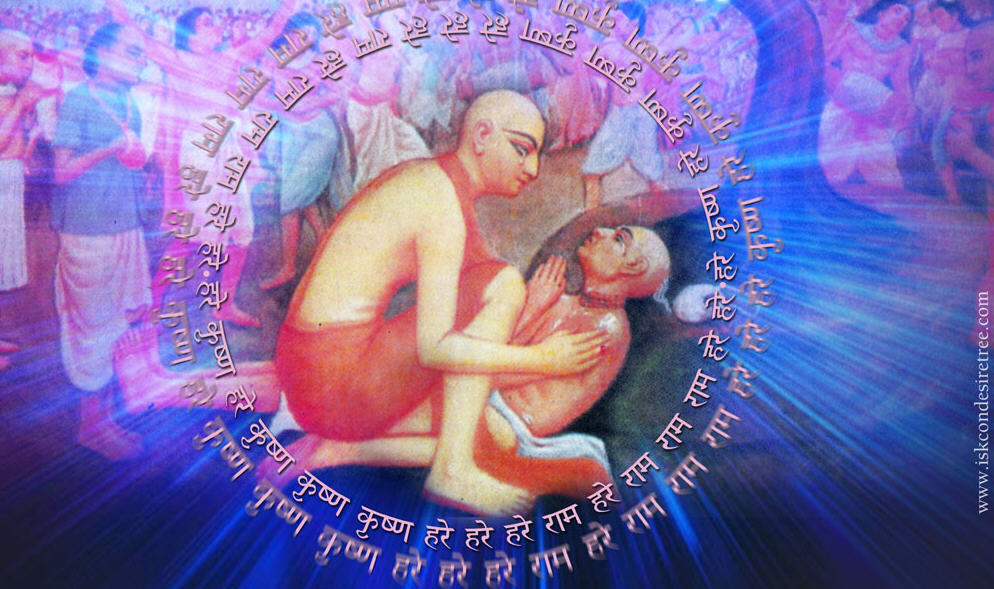
In his last days, Haridasa grew too weak to finish his rounds. When the Lord asked what his illness was, he replied, "My disease is that I cannot complete my rounds" (Chaitanya-charitamrita Antya 11.23). Mahaprabhu gently urged him to chant fewer names, because his mission of preaching the holy name was already fulfilled (Antya 11.24-26). Haridasa asked instead for one last gift: to leave his body before the Lord ended His own pastimes, with the Lord's feet on his heart and the name "Śrī Kṛṣṇa Caitanya" on his tongue (Antya 11.31-36). The Lord protested that all His happiness came from Haridasa's company, but Haridasa pleaded, calling himself an insignificant insect whose loss would mean nothing (Antya 11.37-42). The next morning a great kirtana, led by Svarupa Damodara Goswami, filled Haridasa's courtyard. Haridasa seated the Lord before him, held His feet to his heart, put the dust of the devotees' feet on his head, and chanted with tears streaming from his eyes (Antya 11.48-55).
‘śrī-kṛṣṇa-caitanya’ śabda karite uccāraṇa
nāmera sahita prāṇa kaila utkrāmaṇa
"While chanting the holy name of Śrī Kṛṣṇa Caitanya, he gave up his air of life and left his body." (Sri Chaitanya-charitamrita Antya 11.56)
Mahaprabhu took the body on His lap and danced. Then He carried it to the sea, bathed it, and covered it with sand with His own hands, chanting "Haribol! Haribol!" (Antya 11.59-68). He begged prasadam at the Simha-dvara, the Lion Gate of the Jagannatha temple, for a festival in Haridasa's honour and had the devotees fed until they could eat no more (Antya 11.72-88). Then He declared, "Haridāsa Ṭhākura was the crown jewel on the head of this world; without him, this world is now bereft of its valuable jewel." (Chaitanya-charitamrita Antya 11.97)
What Srila Prabhupada Teaches From His Life #
Srila Prabhupada returned to Haridasa Thakura's example again and again, but he never asked anyone to copy the number 300,000. "No ordinary person can chant so many names, nor should one artificially imitate Haridāsa Ṭhākura’s behavior. It is essential, however, that everyone fulfill a specific vow to chant the Hare Kṛṣṇa mantra" (Chaitanya-charitamrita Adi 10.43, purport). The simple life at Benapola became his model for every devotee:
nirjana-vane kuṭira kari’ tulasī sevana
rātri-dine tina lakṣa nāma-saṅkīrtana
"Haridāsa Ṭhākura constructed a cottage in a solitary forest. There he planted a tulasī plant, and in front of the tulasī he would chant the holy name of the Lord 300,000 times daily. He chanted throughout the entire day and night." (Sri Chaitanya-charitamrita Antya 3.100)
In his purport he writes: "We can follow his example, however, by chanting sixteen rounds of the Hare Kṛṣṇa mahā-mantra on beads every day and offering respect to the tulasī plant." He saw in Haridasa the proof that birth decides nothing: "He was apparently born in a family of Muhammadans, but because he was chanting the holy name of the Supreme Lord offenselessly, Lord Caitanya empowered him to become the authority, or ācārya, of spreading the name" (Srimad-Bhagavatam 3.33.7, purport). From the way Haridasa guided the woman he saved, Prabhupada drew a rule for every teacher: "Following the instructions of Haridāsa Ṭhākura, a pure Vaiṣṇava does not personally take even a single paisa from anyone" (Chaitanya-charitamrita Antya 3.139, purport). And from Haridasa's last illness he drew a gentle warning for all of us: "If one cannot complete the fixed number of rounds he is assigned, he should be considered to be in a diseased condition of spiritual life" (Chaitanya-charitamrita Antya 11.23, purport).
Scriptural evidence
Quoted in the text above:
- Verse 93 Gaura-ganoddesha-dipika
- Verses 94-95 Gaura-ganoddesha-dipika
- Antya 11.25 Sri Chaitanya-charitamrita quoted above ↑
- Antya 3.142 Sri Chaitanya-charitamrita quoted above ↑
- Antya 3.55 Sri Chaitanya-charitamrita quoted above ↑
- Antya 11.97 Sri Chaitanya-charitamrita quoted above ↑
- Antya 3.222 Sri Chaitanya-charitamrita quoted above ↑
- Antya 3.185 Sri Chaitanya-charitamrita quoted above ↑
- Madhya 11.189 Sri Chaitanya-charitamrita quoted above ↑
- Antya 11.56 Sri Chaitanya-charitamrita quoted above ↑
- Antya 3.100 Sri Chaitanya-charitamrita quoted above ↑
Further verses:
मन्दिरेर चक्र देखि' करिह प्रणाम ।
एइ ठाञि तोमार आसिबे प्रसादान्न ॥
mandirera cakra dekhi’ kariha praṇāma
ei ṭhāñi tomāra āsibe prasādānna
“Remain here peacefully and look at the cakra on the top of the temple and offer obeisances. As far as your prasādam is concerned, I shall arrange to have that sent here.”
From the purport: This means that if one is not allowed to enter the temple, or if he thinks himself unfit to enter the temple, he can look at the wheel from outside the temple, and that is as good as seeing the Deity within. (Srila Prabhupada, Chaitanya-charitamrita Madhya 11.195 purport)
The Lord's instruction to Haridasa at Puri: bow to the temple's cakra from outside, and prasadam will be sent to him.
Primary Scriptural Sources
Teachings of Srila Prabhupada
Historical and Secondary References
Frequently asked
When was Srila Haridasa Thakura born?
Srila Haridasa Thakura appeared c. 1451 (disputed) in Village of Budhan/Buron, Bengal Sultanate (today Satkhira District, Khulna Division, Bangladesh).
When and where did Srila Haridasa Thakura disappear?
Srila Haridasa Thakura disappeared Ananta Chaturdashi day (exact year uncertain) at Jagannatha Puri, Odisha.
What are the main pastimes of Srila Haridasa Thakura?
The pastimes covered here include: Birth and Early Life, Persecution in Twenty-Two Marketplaces, The Vow of Chanting and the Prostitute's Test, Maya Devi Tests Haridasa Thakura, Teachings on the Holy Name, Namacharya, the Teacher of the Holy Name, With Sri Chaitanya Mahaprabhu in Navadvipa, Life With Sri Chaitanya Mahaprabhu at Puri, Disappearance in the Lord's Embrace.