Sri Kholavecha Shridhara
The Khola-Seller of Navadwip
Also known as Sridhara Pandit, Kholaveca Sridhara, Kolavecha Sridhara, Shridhara Pandit
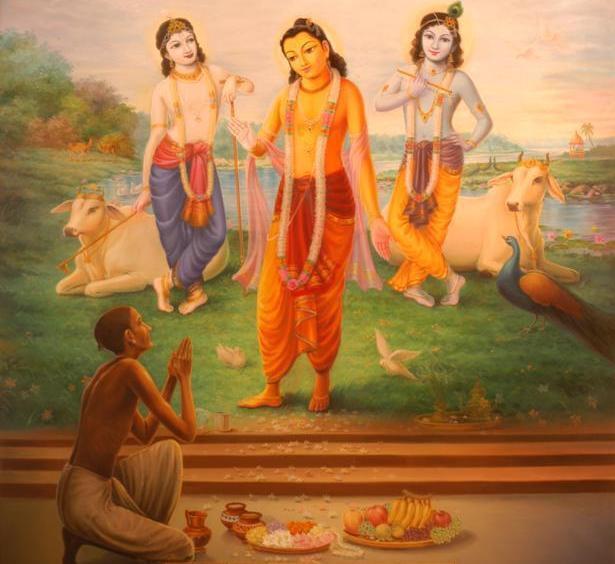
“Let that brahmana who forcibly took away my banana leaves be my Lord birth after birth. Let me always engage in the service of the lotus feet of that brahmana who constantly quarreled with me.”
Shridhara's request to Sri Chaitanya Mahaprabhu, after the Lord revealed His four-armed Krishna-Balarama form and offered him any boon he wished (Sri Chaitanya-Bhagavata, Madhya-khanda 9.224-225, translated by Bhumipati Dasa).
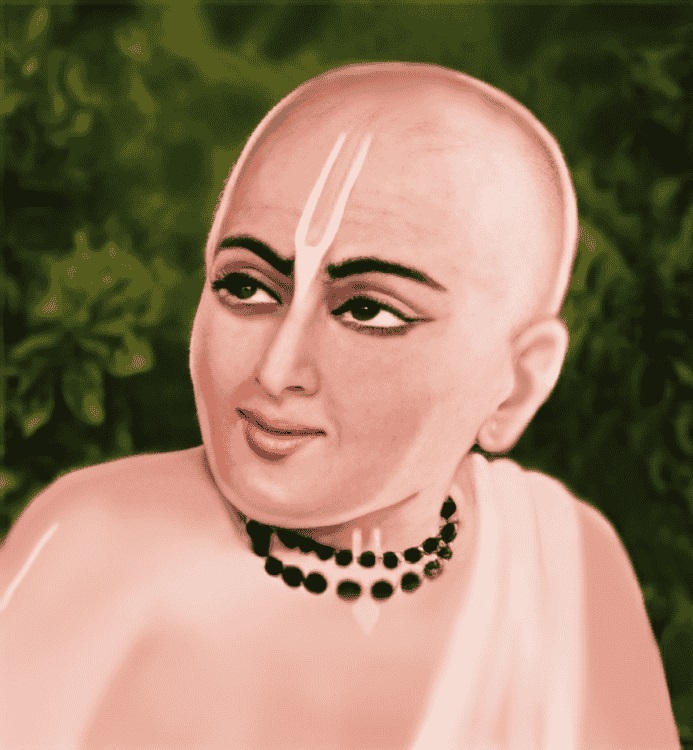
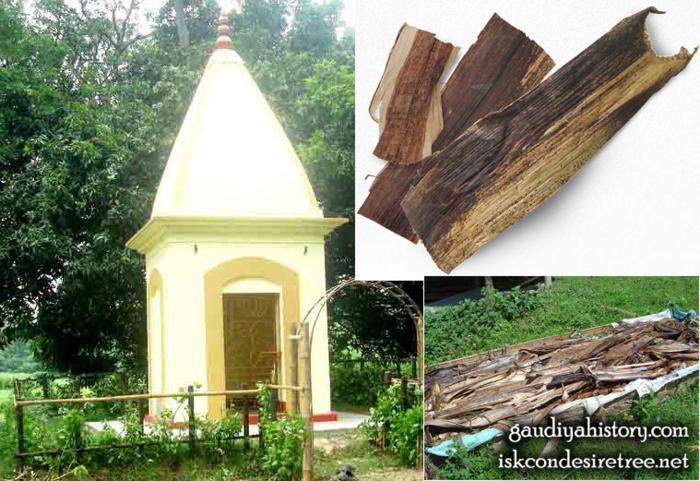
Kholavecha Shridhara, "Shridhara the khola-seller," was one of the poorest people in Navadwip during Sri Chaitanya Mahaprabhu's own householder years there, and one of the Lord's most cherished companions. He earned a bare living selling khola, strips of banana-tree bark used as disposable cups. He also sold banana flowers, stems and fruit from his own small orchard. He owned almost nothing. Even his metal water pot was cracked. Yet the young Nimai Pandit, not yet known to the world as Sri Chaitanya Mahaprabhu, made a daily habit of visiting his stall. He would bargain over the prices and drink from Shridhara's broken iron jug. Like Haridasa Thakura, Shridhara belongs to a small group of devotees whom the tradition remembers because they had no social standing to offer the Lord. They had only unbroken, one-pointed devotion, and that is what Sri Chaitanya Mahaprabhu turned out to value more than anything else.
| Detail | Description |
|---|---|
| Trade | Sold khola (banana-tree bark, used as disposable cups) and banana produce (flowers, stems, fruit) from his own orchard |
| Home | Navadwip, at the site later known as Shridhara Angan, near Mayapur |
| Other names | Sridhara Pandit, Kholaveca Sridhara, Kolavecha Sridhara |
| Daily practice | Gave half his day's earnings to the worship of Mother Ganga before spending anything on himself |
| Best-known pastime | Sri Chaitanya Mahaprabhu's daily bargaining over his goods and drinking from his broken iron pot, culminating in a revelation of His Krishna-Balarama form |
| Identity | Kusumasava, the cowherd friend who made Krishna laugh in Vraja (Gaura-ganoddesha-dipika 133; Chaitanya-charitamrita Adi 10.67 purport) |
| Legacy | A shrine at Shridhara Angan, built under Srila Bhaktisiddhanta Sarasvati Thakura's direction, still stands and is visited during Mayapur parikrama |
A Poor Man's Trade in Navadwip #
Shridhara made his living the way any poor tradesman in a river town would: gathering the bark, leaves and produce of his own banana trees and carrying them to sell in Navadwip's market, at the site now remembered as Shridhara Angan. Sri Chaitanya-caritamrta calls him simply "a poor brahmana" who sold banana-tree bark to be made into cups (Adi 10.67): no title, no distinction, just a name in a long list of devotees. What the sources agree on beyond that is his poverty: a hut with a broken, leaking roof, no brass utensils, and a cracked iron pot for a water jug. The fuller picture of his trade and his circumstances is told in A Poor Devotee's Life in Navadwip.
Srila Prabhupada's purport to that same verse (Adi 10.67) adds who Shridhara was in Krishna's own pastimes, quoting Kavi Karnapura's Gaura-ganoddesha-dipika (verse 133):
kholāvecatayā khyātaḥ paṇḍitaḥ śrīdharo dvijaḥ
āsīd vraje hāsya-kārī yo nāmnā kusumāsavaḥ
"The cowherd boy known as Kusumāsava in kṛṣṇa-līlā later became Kholāvecā Śrīdhara during Caitanya Mahāprabhu's līlā at Navadvīpa." (Gaura-ganoddesha-dipika 133, translated by Srila Prabhupada in his Chaitanya-charitamrita Adi 10.67 purport)
The verse calls him hāsya-kārī, the cowherd boy "who joked with Lord Krsna and made Him laugh in Vrajabhumi" (Gaura-ganoddesha-dipika 133). The same playful friendship shows again in Navadwip, in the Lord's daily bargaining at his stall.
A Vow Kept Before Anything Else #
Whatever little Shridhara earned in a day, he gave half of it to the worship of the Ganges before he spent a single coin on his own needs. Srila Prabhupada records this discipline plainly in his purport to Chaitanya-caritamrta Adi-lila 10.67. It was not a large offering by any ordinary measure. But it came first, every single day, out of an income that left him almost nothing to begin with. What that vow meant, and how his neighbors mistook the real reason he stayed up at night, is told in The Daily Vow to the Ganges.
The Lord Who Would Not Pay Full Price #
Every day, the young Nimai Pandit came to Shridhara's stall, took what he wanted from his banana leaves, flowers and stems, argued him down to half price or less, and drank water from his broken iron pot as if it were the most natural thing in the world. Shridhara protested loudly and often, "Go buy your leaves somewhere else if you don't like my price," without ever once refusing him. Sri Chaitanya-caritamrta records the habit in a single verse (Adi 10.68); Sri Chaitanya-Bhagavata gives the fuller, funnier version of the running argument between them. The complete account, and what later tellings have sometimes changed about it, is in Mahaprabhu's Play for the Water Pot.
A Form Revealed, and a Single Request #
The teasing had a purpose beyond affection. According to Sri Chaitanya-Bhagavata, during a night-long outpouring of ecstasy that some accounts place at Srivasa Thakura's house, Sri Chaitanya Mahaprabhu revealed His four-armed Krishna-Balarama form to Shridhara and offered him any boon he wanted: the eight mystic perfections included. Shridhara, still wary from years of being teased, asked for none of it. He asked only that the brahmana who had spent years underpaying him and stealing his banana leaves would remain his Lord, birth after birth. The full narrative of the revelation and the boon is told in The Maha-Prakasha and Shridhara's Boon.
Remembered Long After the Lord Left #
Shridhara did not disappear from Sri Chaitanya Mahaprabhu's life once the Lord left Navadwip. He danced in the streets when Mahaprabhu defied the local qazi's ban on sankirtana, sent food for Mother Sachi to cook before the Lord took sannyasa, and travelled to Jagannatha Puri every year afterward simply to see Him again. Centuries later, Srila Bhaktisiddhanta Sarasvati Thakura had a small shrine built on the site of his old home, keeping a poor banana-seller's name attached to the ground he once stood on. How that memory has been carried forward is told in Legacy and Remembrance.
Scriptural evidence
Quoted in the text above:
- Verse 133 Gaura-ganoddesha-dipika quoted above ↑
- Sri Chaitanya-caritamrta, Adi-lila 10.67-68
- Sri Chaitanya-Bhagavata, Madhya-khanda, Chapter 9 (translated by Bhumipati Dasa)
- Gaudiya History: Kholavecha Shridhara - Biography
- Gaudiya History: Sri Kholaveca Sridhara
- ISKCON Bangalore: Kholavecha Sridhara - Dear Devotee of Lord Chaitanya Mahaprabhu
- ISKCON Desire Tree: Kolavecha Sridhara Angana
- Vine of Devotion: Mahaprabhu's Love for the Unseen Devotee (Part One)
Frequently asked
When was Sri Kholavecha Shridhara born?
Sri Kholavecha Shridhara appeared Date not recorded (a contemporary of Sri Chaitanya Mahaprabhu's householder years in Navadwip, early 16th century) in Navadwip, Bengal — the site later known as Shridhara Angan, near Mayapur.
When and where did Sri Kholavecha Shridhara disappear?
Sri Kholavecha Shridhara disappeared Date not recorded in the available sources at Not recorded in the available sources.
What are the main pastimes of Sri Kholavecha Shridhara?
The pastimes covered here include: A Poor Devotee's Life in Navadwip, The Daily Vow to the Ganges, Mahaprabhu's Play for the Water Pot, The Maha-Prakasha and Shridhara's Boon, Legacy and Remembrance.