Sri Lakshmipati Tirtha
The Acharya Named Lakshmipati
The complete life, on one page: The main biography and every pastime page, in order, in one place
Introduction
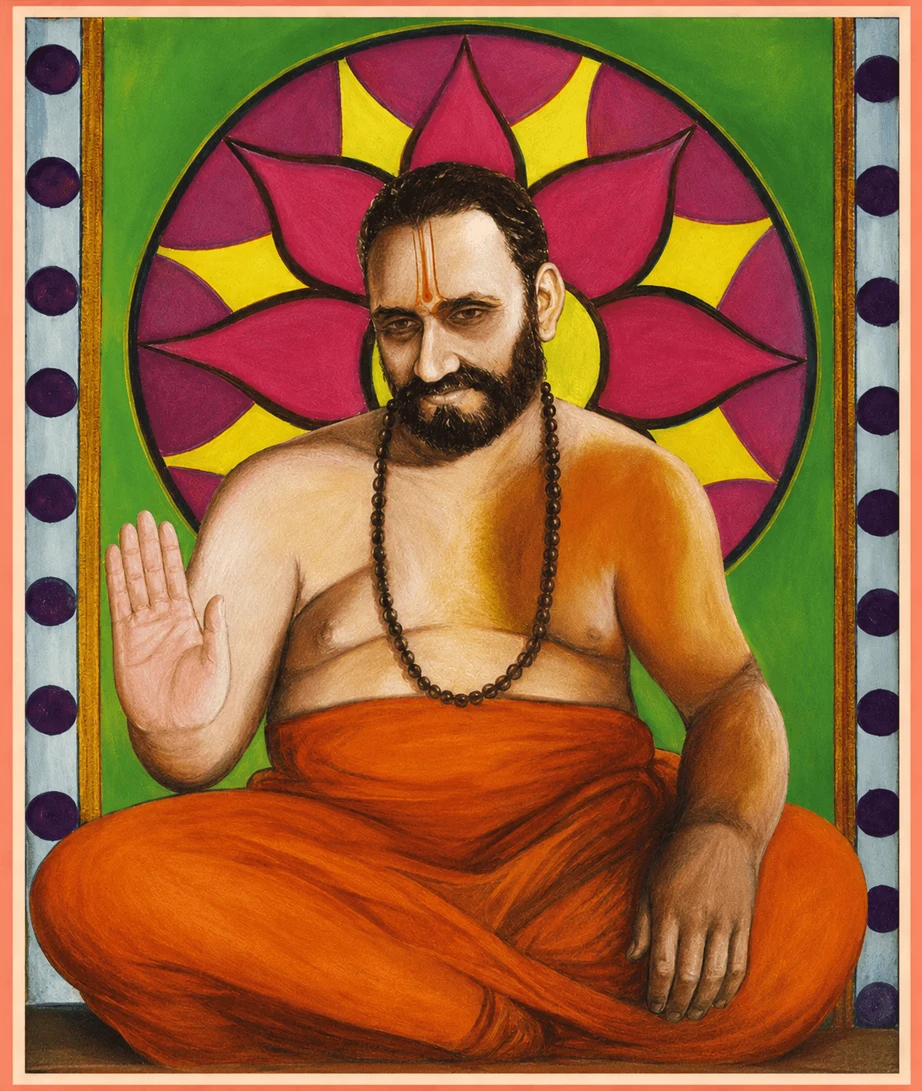
Sri Lakshmipati Tirtha holds an unusual place in this guru chain. He is one of the most important names in the entire Gaudiya Vaishnava guru-parampara. Yet he is also one of the names about whom independent sources tell us the least. Srila Bhaktisiddhanta Sarasvati Thakura's own list of the guru succession places him as the disciple of Vyasa Tirtha, closing a six-name chain that runs back through Brahmanya Tirtha, Purushottama Tirtha, Jayadharma, and Rajendra Tirtha to Madhvacharya himself. The same list names him, in turn, as the guru of Sri Madhavendra Puri, the sannyasi in whom Sri Chaitanya-charitamrita says the seed of Gaudiya devotional service first cracked open.
| Detail | Description |
|---|---|
| Guru (per Gaudiya parampara list) | Vyasa Tirtha |
| Sannyasa order | Madhva (Tattvavadi) sampradaya |
| Most famous disciple | Madhavendra Puri |
| Also credited, by some accounts, as guru of | Nityananda Prabhu |
| Birth and disappearance dates | Not confirmed by any independent source |
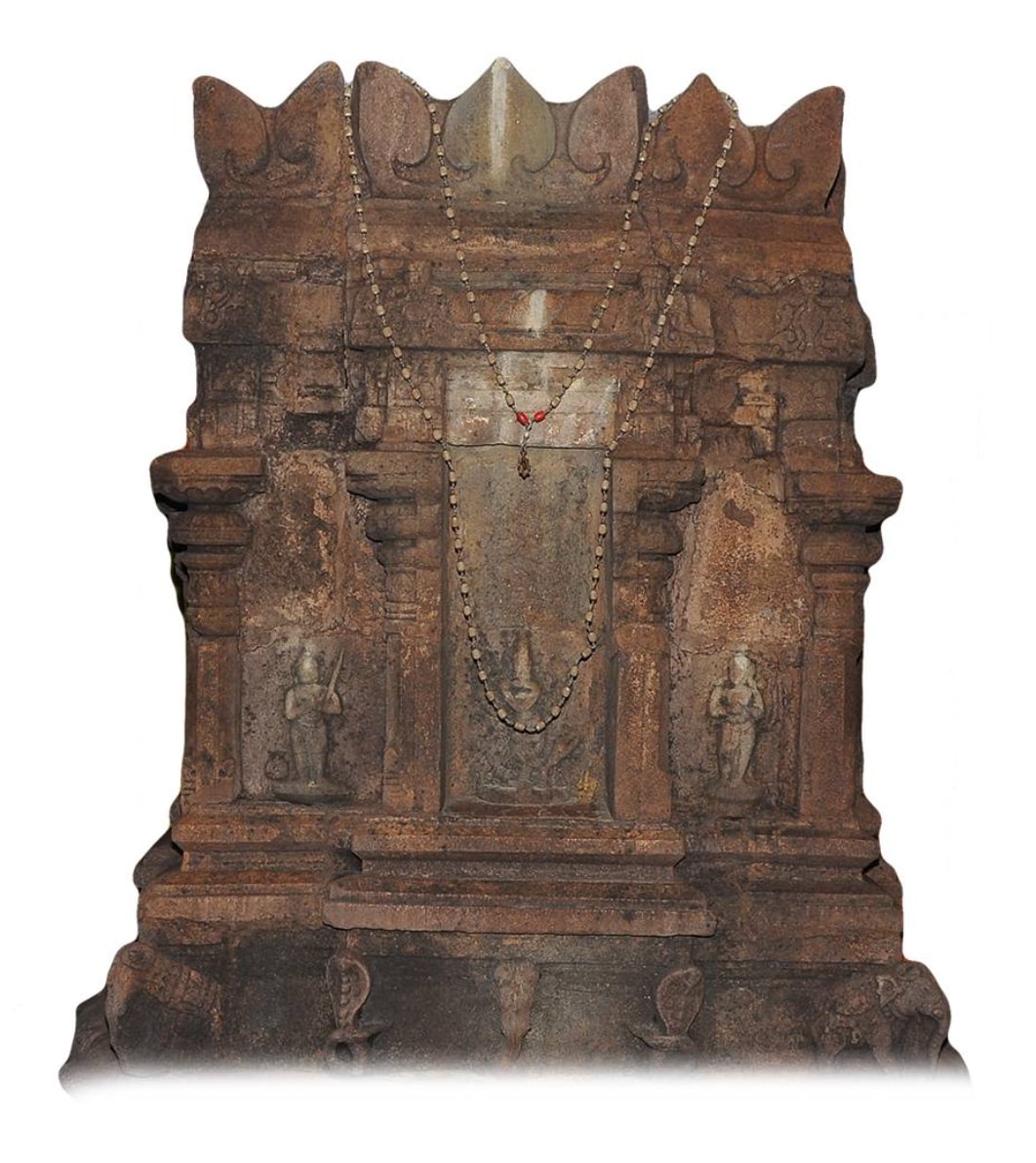
| Traditional samadhi (Vrindavana) site | Srirangam, Tamil Nadu, per one photograph; not confirmed in any text |
Chapter 1
Life in the Madhva Lineage
The Gaudiya parampara list names him as Vyasa Tirtha's own disciple, but the surviving Madhva sampradaya records we could find do not confirm it.
Srila Bhaktisiddhanta Sarasvati Thakura's guru-parampara list names Lakshmipati Tirtha as the direct disciple of Vyasa Tirtha. This list is discussed at length on Madhvacharya's own page. Lakshmipati Tirtha closes a chain that goes back through Brahmanya Tirtha, Purushottama Tirtha, Jayadharma, and Rajendra Tirtha to Madhvacharya himself. That page already explains the main finding about this whole chain. In his purport to Chaitanya-charitamrita Madhya 9.245, Srila Prabhupada says that this exact list is not confirmed by the guru-succession that the Madhva sampradaya recorded on its own. This point has been traced to the historian Friedhelm Hardy, among others. Lakshmipati Tirtha's case shows this finding most clearly, and it matters most here, because he is the final link the whole chain depends on to reach Madhavendra Puri.
What Prabhupada's Own Cited Source Says #
The same Madhya 9.245 purport does more than simply say that the list is not confirmed. It also gives an actual list of the branch of the Madhva-sampradaya succession that this six-name chain follows. This list is taken from the South Kanara Manual and the Bombay Gazette:
"Rajendra Tirtha, 1254; Vijayadhvaja; Puruṣottama; Subrahmaṇya; and Vyāsa Rāya, 1470-1520."
The list, as Prabhupada records it, simply ends there. It names no further acharya in that branch, and certainly no Lakshmipati Tirtha. This source gives Vyasa Tirtha's dates exactly. So when it says nothing about any disciple named Lakshmipati Tirtha, that silence has meaning. It is not just an oversight.
What the Vyasaraja Matha's Own Record Shows #
A second, independent check points the same way. Vyasa Tirtha himself was the twelfth head of the Vyasaraja Matha. The matha keeps its own modern account of his life, and it names his well-known disciples one by one. They are Purandara Dasa and Kanaka Dasa, the founding figures of the Haridasa devotional-song movement, and the sannyasis Vadiraja Tirtha and Vijayindra Tirtha. Lakshmipati Tirtha does not appear among them. This does not prove that Lakshmipati Tirtha never existed, or that he had no connection at all with Vyasa Tirtha. Matha records of this kind do not list everyone. They mostly name disciples who left a lasting mark through institutions or writings. But the two institutions best placed to know are the Gaudiya tradition and the Madhva sampradaya itself. Of these two, only the Gaudiya side keeps this particular claim.
A Caution About the Name Itself #
The names Lakshmipati Tirtha and Lakshminatha Tirtha were used again by other heads of other, completely unrelated mathas, long after this period. For example, one Lakshminatha Tirtha headed the Gokarna Partagali matha centuries later. This kind of name reuse is common in Madhva monastic lines, because new initiates are often given the names of earlier acharyas in their own lineage. So if you search for the name "Lakshmipati Tirtha" alone, you may find records that belong to a different person with the same title. We have taken care here to keep those records separate, and not to mix them together.
Where the Claim Actually Traces Back To #
Wikipedia's short entry for Lakshmipati Tirtha says that he was Vyasa Tirtha's disciple. For this claim it cites a single source: Sambidananda Das's The History and Literature of the Gaudiya Vaishnavas and Their Relation to Other Medieval Vaishnava Schools. That is itself a scholarly work from the Gaudiya tradition, not an independent record from within the Dvaita sampradaya. Putting all this together, we can say the following. The guru-disciple link between Vyasa Tirtha and Lakshmipati Tirtha can be traced again and again in Gaudiya-tradition sources. But it cannot be confirmed independently from the Madhva sampradaya's own surviving records of succession, or from its own matha's account of Vyasa Tirtha's disciples. This site follows the same practice for the whole six-name chain. So Lakshmipati Tirtha is listed here as Vyasa Tirtha's disciple, because that is what the Gaudiya parampara list itself claims. Throughout, this listing is understood to give the Gaudiya tradition's own account. It shows a limit in what we could confirm independently. It is not a claim that the traditional account is false.
Scriptural evidence for this chapter (1)
Caitanya Mahaprabhu next arrived at Udupi, the place of Madhvacharya, where the philosophers known as Tattvavadis resided. There He saw the Deity of Lord Krishna and became mad with ecstasy.
From the purport: Purport excerpt: "After the sixteenth acharya (Vidyadhiraja Tirtha), there was another disciplic succession, including Rajendra Tirtha, 1254; Vijayadhvaja; Purushottama; Subrahmanya; and Vyasa Raya, 1470-1520."
This is the same Madhvacharya-sampradaya succession list, sourced by Srila Prabhupada to the South Kanara Manual and the Bombay Gazette, already used on the Madhvacharya page to show the Gaudiya parampara list is not independently corroborated. It names this exact chain (Rajendra Tirtha, Jayadharma/Vijayadhvaja, Purushottama, Brahmanya/Subrahmanya, Vyasa Raya) with a specific date range for Vyasa Tirtha, and then stops; no Lakshmipati Tirtha is named as continuing it. Cited here from Lakshmipati Tirtha's own angle as the central piece of evidence for the honesty note here.
Chapter 2
Guru to Madhavendra Puri
Tradition remembers Lakshmipati Tirtha for only one fact. It is the very thing that his own disciple's devotion is said to have outgrown.
No account of any conversation or teaching between Lakshmipati Tirtha and Madhavendra Puri survives in any source found. Only a single background fact survives. Sri Chaitanya-charitamrita mentions it briefly in its account of Madhavendra Puri. It says that Madhavendra Puri took sannyasa in the Madhva sampradaya under an acharya named Lakshmipati Tirtha. Nearly everything that can be said about the relationship between the two men has to come from that one sentence and from Srila Prabhupada's purport on it.
The Purport That Defines Him #
Srila Prabhupada's purport to Madhavendra Puri's own verse of separation, chanted at the end of his life, states the connection directly:
"Beginning from Madhvacharya down to the spiritual master of Madhavendra Puri, the acharya named Lakshmipati, there was no realization of devotional service in conjugal love. Sri Madhavendra Puri introduced the conception of conjugal love for the first time in the Madhvacharya-sampradaya."
This is an unusual way for history to remember someone. Lakshmipati Tirtha is described here almost entirely by what he was not. He was the last acharya in a long line that was strict and careful in philosophy, just before his own disciple broke from it. The purport does not blame him for any fault. It simply places him at the very end of a tradition that, in Prabhupada's view, had not yet developed madhurya. Madhurya is the mood of loving Krishna the way the gopis of Vrindavana do.
A Guru Present Mainly by Absence #
Once Madhavendra Puri's own devotional life really takes shape, the record turns its attention away from Lakshmipati Tirtha almost completely. Madhavendra Puri became famous across the Vaishnava world through a well-loved story. He walked around Govardhana Hill. A cowherd boy brought him milk. He recovered the buried Gopala Deity and installed Him. A Deity stole sweet rice for him at Remuna. He composed the verse of separation and chanted it until his death. All this is told at length on Madhavendra Puri's own page and its account of life in the Madhva sampradaya. None of it involves any further recorded appearance by his guru. Whatever formal training Lakshmipati Tirtha gave him in sannyasa and Vedanta, the devotional change that defines Madhavendra Puri's place in Gaudiya history happened later, elsewhere, and, as far as any source shows, without Lakshmipati Tirtha.
The Only Named Disciple #
Wikipedia's brief entry on Lakshmipati Tirtha lists exactly one disciple by name: Madhavendra Puri. This may show what the surviving record really holds, or it may simply be a gap. If it is the first, then Madhavendra Puri may be the only reason Lakshmipati Tirtha is remembered by name at all outside Madhva matha succession lists. And, as Life in the Madhva Lineage explains, those lists may not include him either. It is a rare kind of legacy. Lakshmipati Tirtha is known to history almost entirely through one disciple. By Prabhupada's own account, that disciple's devotion moved in a direction that his teacher's own line had not yet gone.
Scriptural evidence for this chapter (1)
ayi dīna-dayārdra nātha he
mathurā-nātha kadāvalokyase
hṛdayaṁ tvad-aloka-kātaraṁ
dayita bhrāmyati kiṁ karomy aham
O My Lord! O most merciful master! O master of Mathura! When shall I see You again? Because of My not seeing You, My agitated heart has become unsteady. O most beloved one, what shall I do now?
From the purport: Purport excerpt: "Beginning from Madhvacharya down to the spiritual master of Madhavendra Puri, the acharya named Lakshmipati, there was no realization of devotional service in conjugal love."
The verse itself is Madhavendra Puri's own composition, not Lakshmipati Tirtha's; it is cited here because Srila Prabhupada's purport to it is the single most direct statement in Chaitanya-charitamrita naming Lakshmipati Tirtha and placing him at the close of the pre-madhurya Madhva-sampradaya line, immediately before his own disciple.
Chapter 3
Credited as Nityananda's Guru Too
A separate Gaudiya tradition says that this sannyasi's second, far more famous disciple was chosen by Lord Balarama Himself, not by ordinary events.
Alongside Madhavendra Puri, a second, less commonly followed Gaudiya tradition names Lakshmipati Tirtha as the initiating guru of Nityananda Prabhu as well. Srila Prabhupada himself mentions this tradition twice in his purports to Sri Chaitanya-charitamrita. Both times he speaks carefully and does not present it as certain.
What Prabhupada's Purports Actually Say #
In his purport to Madhya-lila 3.85, discussing how people in Khadadaha sometimes misunderstood Nityananda Prabhu's own background, Srila Prabhupada writes:
"Nityananda Prabhu was always a brahmachari of a sannyasi of the Vaidika order. Actually He was a paramahamsa. Sometimes He is accepted to be a disciple of Lakshmipati Tirtha. If He is so accepted, Nityananda Prabhu belonged to the Madhva-sampradaya. He did not belong to the tantrika-sampradaya of Bengal."
Elsewhere, in the purport to Madhya-lila 8.128, discussing how great souls sometimes accept initiation outside expected social lines, he writes more directly still:
"Similarly, Sri Nityananda Prabhu was initiated by Madhavendra Puri, a sannyasi. According to others, however, He was initiated by Lakshmipati Tirtha."
In neither place does Prabhupada decide which account is correct. He gives both as traditions that are told, not as a settled fact that forces us to choose between them.
The Fuller Devotional Story #
A more detailed account tells the story at length. It is kept on gaudiyahistory.iskcondesiretree.com and, by its own account, is drawn from an older devotional compilation. Lord Balarama is said to have appeared to Lakshmipati Tirtha in a dream while the elderly sannyasi wept alone at night, singing of his own unworthiness. Balarama told him that a wandering brahmana would arrive in his town, appearing as an avadhuta, a renounced madman. Balarama instructed him to give that visitor Vaishnava diksha. Lakshmipati Tirtha did so. The disciple was Nityananda Prabhu Himself. Later He came to Lakshmipati Tirtha a second time in a dream, again as Balarama. He told him never to reveal what had passed between them, and then disappeared. Not long afterward, the account says, Lakshmipati Tirtha stopped speaking altogether. His disciples grew anxious watching him fade, and he left the world without warning.
A Second, Independently Reported Story #
The same page records a separate tradition, which it reports secondhand. H.H. Bhakti Hridoy Mangal Maharaja of Sri Chaitanya Gaudiya Math recalled a class that Srila Bhaktisiddhanta Sarasvati Thakura gave in the late 1920s. In that class, Bhaktisiddhanta Sarasvati Thakura told of a sannyasi who came begging alms at the home of Nityananda Prabhu's father, Hadai Pandit, as recorded in Chaitanya Bhagavata. The sannyasi asked for the boy Nityananda Himself as alms. Hadai Pandit gave him, and the young Nityananda walked off with the sannyasi without looking back. That sannyasi, the account says, was Lakshmipati Tirtha.
How Seriously to Take This #
We should be honest about how strong this material really is. Both stories trace back to a single devotional website that collects older spoken and written reports. They do not come from a source that could be confirmed independently elsewhere. And Prabhupada's own purports clearly present the tradition that Lakshmipati Tirtha was Nityananda's guru as one account among others, not as the main or preferred one. Gaudiya sources themselves differ on this point. Prabhupada's purport to Madhya-lila 8.128, quoted above, gives Madhavendra Puri as Nityananda's initiating guru. It adds that, according to others, it was Lakshmipati Tirtha. The Chaitanya-bhagavata (Adi 9.188) says that Nityananda regarded Madhavendra Puri as His guru. The Bhakti-ratnakara names Lakshmipati Tirtha, which would make Nityananda and Madhavendra Puri Godbrothers. So only this much can fairly be said. In Gaudiya devotional memory, even though the evidence is weak, different tellings credit Lakshmipati Tirtha with initiating two of the tradition's most important figures. This is a rare distinction.
Scriptural evidence for this chapter (2)
From the purport: Purport excerpt: "Nityananda Prabhu was always a brahmachari of a sannyasi of the Vaidika order. Actually He was a paramahamsa. Sometimes He is accepted to be a disciple of Lakshmipati Tirtha. If He is so accepted, Nityananda Prabhu belonged to the Madhva-sampradaya."
Discusses a misunderstanding of Nityananda Prabhu's background in Khadadaha and states, with explicit hedging ("sometimes"), the minority tradition that Lakshmipati Tirtha, not Madhavendra Puri, initiated Nityananda Prabhu.
From the purport: Purport excerpt: "Similarly, Sri Nityananda Prabhu was initiated by Madhavendra Puri, a sannyasi. According to others, however, He was initiated by Lakshmipati Tirtha."
A second, parallel purport presenting both traditions about Nityananda Prabhu's initiating guru side by side, without resolving between them.
Chapter 4
Legacy
Lakshmipati Tirtha was Madhavendra Puri's own guru, and his page had to be written before the chain on this site could finally be linked.
On the evidence available, Lakshmipati Tirtha is the least recorded figure in this whole guru chain. His name holds together two much better recorded lives. On one side is his guru, Vyasa Tirtha, a major and well-recorded figure in Dvaita Vedanta in the Vijayanagara era. On the other side is his disciple, Madhavendra Puri, the acharya whom Chaitanya-charitamrita calls the seed of the entire Gaudiya bhakti tree. Almost everything that can be said about Lakshmipati Tirtha comes from what the records of those two lives happen to preserve, along with Srila Prabhupada's purports that connect them.
Closing a Gap Already Named #
Madhavendra Puri names Lakshmipati Tirtha as his guru, and Srila Prabhupada's purport to Madhya-lila 4.197 describes the disciplic line "from Madhvacharya down to the spiritual master of Madhavendra Puri, the acharya named Lakshmipati." With this, the fuller chain can be traced name by name. It runs from Madhvacharya through Rajendra Tirtha, Jayadharma, Purushottama Tirtha, Brahmanya Tirtha, and Vyasa Tirtha, then through Lakshmipati Tirtha to Madhavendra Puri, and onward through Isvara Puri to Sri Chaitanya Mahaprabhu Himself.
A Prominence the Independent Record Does Not Match #
Lakshmipati Tirtha is the single most important link in the whole six-name chain. But his place in this guru chain is much larger than his place in any independently recorded Dvaita-tradition source available. The Madhva sampradaya's own succession records do not preserve him. This is true even of the records cited in Srila Prabhupada's own purport to Madhya 9.245. The Vyasaraja Matha's own account of Vyasa Tirtha's disciples does not preserve him either. He is kept almost entirely by the Gaudiya tradition's own memory, which carried him forward because of who he is said to have taught. This imbalance is not a flaw. It is simply how the historical record stands, and we state it plainly here instead of smoothing it over.
What Remains of Him #
In the end, what remains is modest but real. There is a name in a guru-parampara list recited for centuries by Gaudiya Vaishnavas. There are two careful mentions in Srila Prabhupada's own purports. There is a devotional story of Lord Balarama's mercy, preserved outside the mainstream account. And there is a single photograph of a samadhi at Srirangam that may or may not be his. Because of these things, and because of his disciple, whose devotion the tradition remembers so much more fully, Sri Lakshmipati Tirtha keeps his place in the chain now traced between Sri Madhvacharya and Sri Madhavendra Puri.
Closing
A Name Carried by His Disciple #
Outside this one guru-disciple connection, almost nothing about Lakshmipati Tirtha's own life survives in any source available. No source gives a birthplace, a family, a matha he is confirmed to have headed, a work he composed, or a single recorded conversation. Only the connection itself survives. Chaitanya-charitamrita states it as background in its account of Madhavendra Puri, and later Gaudiya writing has repeated it since. So we must say plainly that very little is known about him. What we can say about him comes mainly from those who came after him.
What the Madhva Tradition's Own Records Show #
Madhvacharya's own page already explains, from Srila Prabhupada's purport to Chaitanya-charitamrita Madhya 9.245, that the Madhva sampradaya's own separately recorded succession does not confirm the Gaudiya parampara list. Lakshmipati Tirtha's case is a clear example of this. That same purport draws on the South Kanara Manual and the Bombay Gazette. It lists the exact branch of the Madhva-sampradaya succession running "Rajendra Tirtha, 1254; Vijayadhvaja; Purushottama; Subrahmanya; and Vyasa Raya, 1470-1520," and then simply stops. It does not name any further acharya in that line. Separately, the Vyasaraja Matha's own present-day account of Vyasa Tirtha names his well-known disciples one by one: Purandara Dasa, Kanaka Dasa, Vadiraja Tirtha, and Vijayindra Tirtha. It does not include Lakshmipati Tirtha. Wikipedia's own short entry on him says that he was Vyasa Tirtha's disciple. But for this claim it cites only a single Gaudiya-tradition history book (Sambidananda Das's The History and Literature of the Gaudiya Vaishnavas), not an independent Dvaita-sampradaya record. There is a further problem. Generations later, the names Lakshmipati Tirtha and Lakshminatha Tirtha were used again for other pontiffs, in other, unrelated mathas. So the name alone cannot settle the question. On this site we follow the same practice across this whole six-name guru chain. So Vyasa Tirtha is still listed here as his guru, since that is what the Gaudiya tradition's own succession list claims. But readers should understand that this particular link rests on Gaudiya sources, not on any independent Dvaita-sampradaya record that we could find.
Guru to Madhavendra Puri #
Srila Prabhupada's purport to Madhavendra Puri's own verse of separation states the connection directly:
"Beginning from Madhvacharya down to the spiritual master of Madhavendra Puri, the acharya named Lakshmipati, there was no realization of devotional service in conjugal love."
In this one sentence, Lakshmipati Tirtha is described almost entirely by contrast. He is the last link in a long and disciplined line. But by this account, that line did not yet have the mood of madhurya, devotion in conjugal love. Right after him, his own disciple broke that pattern. No story that we found anywhere describes what Lakshmipati Tirtha personally taught Madhavendra Puri, or where the initiation happened. Later, his disciple's devotional life took the shape the tradition remembers. Madhavendra Puri discovered the Gopala Deity at Govardhana, received stolen sweet rice from Gopinatha at Remuna, and composed the verse of separation that has been chanted for centuries since. All this is told at length on Madhavendra Puri's own page, particularly its account of life in the Madhva sampradaya. None of it involves any further recorded role for his guru.
Honesty About the Record #
Every other person in this six-person guru chain has at least some life story recorded in independent sources, beyond the parampara list. On the evidence available, Lakshmipati Tirtha does not. This gap is not a failure to find more. It is simply the true shape of what survives. What can be said with confidence is less, but it is still real. Within Gaudiya Vaishnava tradition, his name forms the link between two figures. On one side is a Dvaita Vedanta teacher whose life is well documented. On the other is the acharya credited with sowing the seed of Gaudiya bhakti.
- Sri Chaitanya-charitamrita, Madhya-lila 4.197, purport
- Sri Chaitanya-charitamrita, Madhya-lila 9.245, purport
- Sri Chaitanya-charitamrita, Madhya-lila 3.85, purport
- Sri Chaitanya-charitamrita, Madhya-lila 8.128, purport
- Sri Vyasa Tirtha - Sri Vyasaraja Matha (official matha biography, listing his disciples)
- Shripada Lakshmipati Tirtha and Lord Nityananda, story - Gaudiya History (ISKCON Desire Tree)
- Shripada Lakshmipati Tirtha and Lord Nityananda Story (second posting) - Gaudiya History (ISKCON Desire Tree)
- File: Sri Lakshmipathi Teertharu.jpg - Wikimedia Commons
