Vaishnava tradition describes four bona fide disciplic lines, or sampradayas. They are authorized to carry genuine Vedic mantra and teaching through the age of Kali. Each is traced to a different divine source: the Sri-sampradaya, through the goddess Lakshmi to Ramanujacharya; the Brahma-sampradaya, through the god Brahma to Madhvacharya; the Rudra-sampradaya, through Lord Shiva to Vishnusvami; and the Kumara-sampradaya, through the four Kumaras to Nimbarka. In Madhvacharya's own story, what matter most are his place among these four lines and the very different tradition he actually founded at Udupi. That tradition is still alive today.
| Detail | Description |
|---|---|
| Sampradaya founded | Brahma-sampradaya, also called the Madhva-sampradaya |
| Other three (per tradition) | Sri (Ramanujacharya), Rudra (Vishnusvami), Kumara (Nimbarka) |
| Source of the four-sampradaya teaching | Verses said to be from the Padma Purana, quoted by later Vaishnava acharyas; not traced to any particular surviving chapter of the printed Padma Purana |
| Living centre today | Udupi Sri Krishna Matha and its eight associated mathas, Karnataka |
| Distinct from | Gaudiya Vaishnavism, which reveres Madhvacharya as a lineage source but follows Achintya-bhedabheda-tattva, not Dvaita |
The Four-Sampradaya Scheme, and a Note of Caution #
Later Vaishnava literature repeats very consistently the idea that there are exactly four authorized Vaishnava sampradayas. Kavi Karnapura, Gopala Guru Goswami, Baladeva Vidyabhusana and Harirama Vyasa all do so, and all quote a pair of verses said to come from the Padma Purana:
sampradāya-vihīnā ye mantrās te niṣphalā matāḥ
ataḥ kalau bhaviṣyanti catvāraḥ sampradāyinaḥ
śrī-brahma-rudra-sanakāḥ vaiṣṇavāḥ kṣiti-pāvanāḥ
catvāras te kalau bhavyā hy utkale puruṣottamāt
"Mantras that are without a disciplic succession do not bear fruit. Therefore the founders of four disciplic successions will appear in the age of Kali. Thus the four world-purifying Vaishnavas of the Sri, Brahma, Rudra and Sanaka (Kumara) lines will appear in the age of Kali, out of Purushottama (Jagannatha Puri) in the land of Utkala (Orissa)."
Researchers who have looked for this exact verse in the surviving text of the Padma Purana have not been able to find it there. Even so, the wider idea it expresses has real roots in older Vaishnava thought. This does not make the idea of four sampradayas false. The verse may simply come from a source, or an edition of the Purana, that is not easily searched today. But it does mean that where the verse comes from is less certain than its wide devotional use suggests. So it should not be presented as a fact settled by scholars.
Wherever the idea of four sampradayas first came from in the texts, Madhvacharya's own historical role is not in question. No one, whether a practitioner of Sanatana Dharma or an academic, a devotee or a historian, doubts that he founded a major, independent Vaishnava school of Vedanta. His place among the four founding acharyas reflects this undisputed greatness as a philosopher, whatever the exact origin of the verses used to describe the four lines.
The Living Tradition at Udupi Today #
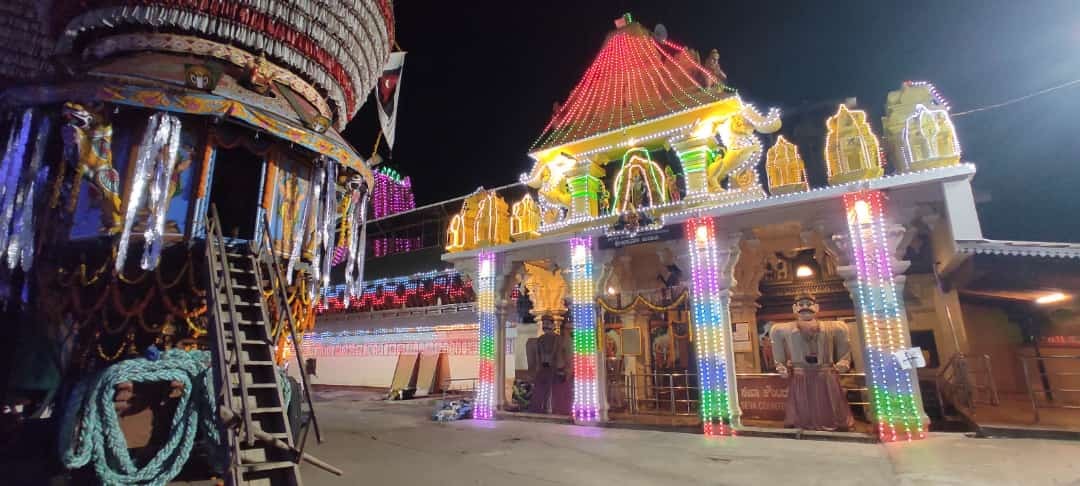
Leaving aside any claims that later traditions have made about it, Madhvacharya's own Dvaita, or Tattvavada, school is a real religious community today. It has continued to function without a break. Its centre is the Udupi Sri Krishna Matha and the eight associated mathas he founded, discussed on Travels and Establishing Udupi. Every two years, in the Paryaya festival introduced in 1522 CE, the charge of the Krishna temple's worship formally passes from one of the eight mathas to the next. The order is fixed, beginning with Palimaru and ending with Pejavara, and each change is still marked with major public celebration in Udupi. Three further institutions descend from Madhvacharya's line: the Uttaradi Matha, the Vyasaraja Matha and the Raghavendra Matha. Together they are known as the Mathatraya. They carry on the broader Tattvavada tradition outside Udupi itself, with their own lines of scholar-saints. Vyasaraja Tirtha and Raghavendra Tirtha, in particular, remain widely revered figures within that tradition, centuries after Madhvacharya's own life.
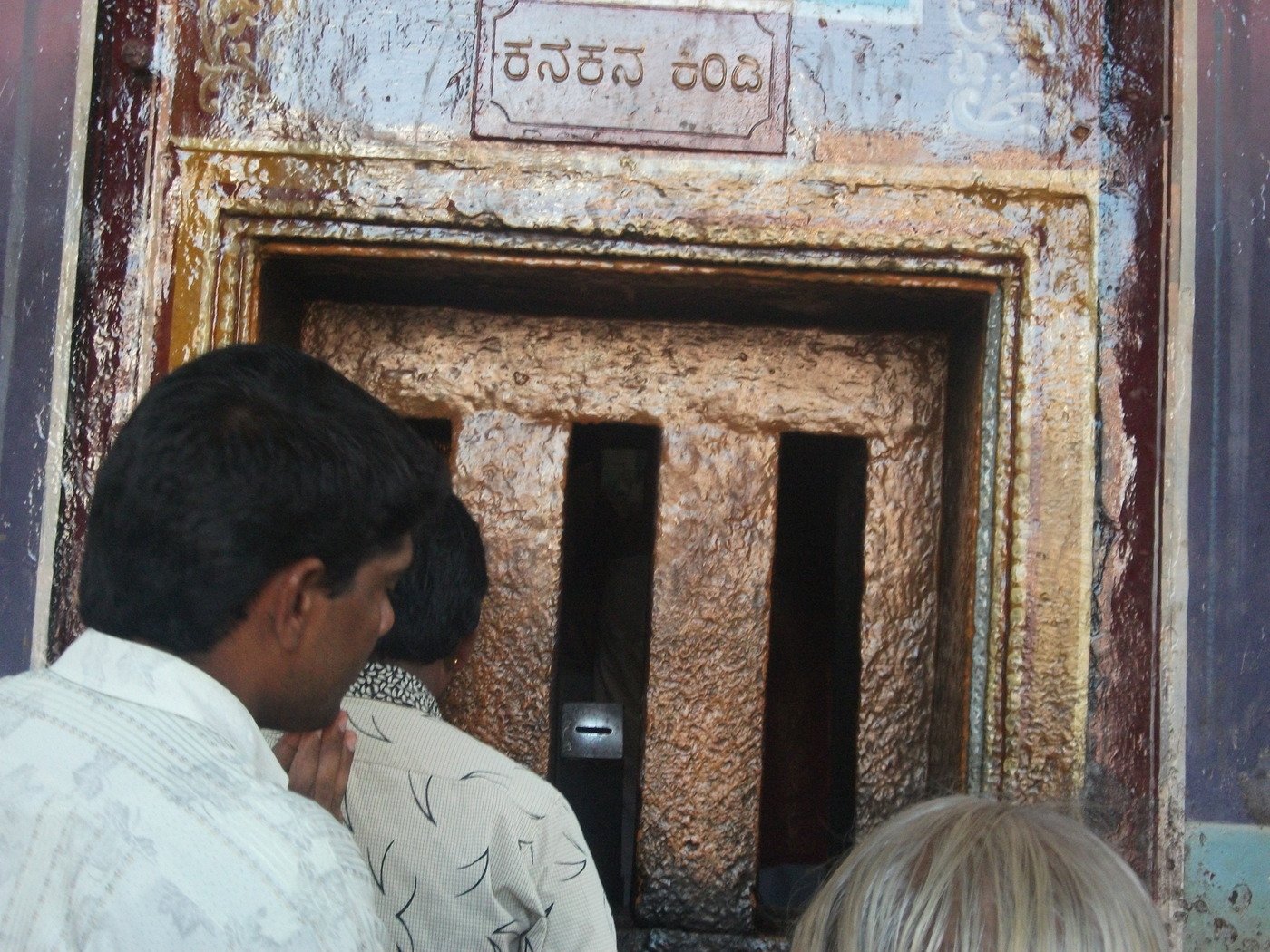
One of the best-known devotional stories associated with the Udupi temple today belongs to a much later century than Madhvacharya's own lifetime. It is the story of Kanakadasa, a sixteenth-century devotee-poet. He is said to have been turned away from the temple's main entrance because of his caste. He is remembered as having gone instead to a small opening in the temple's western wall and sung his devotion to Krishna through it. Tradition holds that at this the Deity turned to face him. Visitors are still shown that opening today. It is called the Kanakana Kindi, or "Kanaka's Window," and the story is widely told as one of devotion overcoming social barriers. But the earliest written record of it dates from roughly two centuries after Kanakadasa's own lifetime, and some more recent retellings dispute exactly how it should be read. In any case, it belongs to the Udupi tradition's own later devotional history. It is not something Madhvacharya personally witnessed.
Related, But a Distinct Tradition #
In closing, it should be said clearly that the Dvaita, or Tattvavada, tradition alive today at Udupi is not the same religious community as Gaudiya Vaishnavism. This is so even though Gaudiya Vaishnavism reveres Madhvacharya as standing at its own historical root. The Udupi tradition follows Madhvacharya's own strict, eternal-difference Dvaita philosophy without modification. It does not accept Achintya-bhedabheda-tattva. It does not centre its worship on Radha and Krishna together in the way Gaudiya Vaishnavism does. Its scholars have at times said plainly that, from their own side, they do not see the Gaudiya lineage claim as historically established. Among them, in the modern era, was the widely respected Vishvesha Tirtha Swamiji of the Pejavara Matha. This is discussed on Dvaita Vedanta and Achintya-Bhedabheda. To tell Madhvacharya's story honestly, we must recognise his greatness. We must also recognise that his living tradition today is its own separate religious community, and not an earlier chapter of Gaudiya Vaishnavism.
