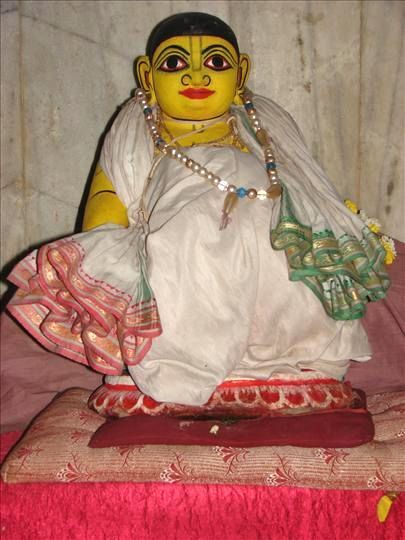
Sri Gopala Guru Goswami
The Boy Mahaprabhu Named Guru, Later Keeper of Sri Radha-Kanta at Puri
Also known as Gopal Guru Goswami, Gopala Guru Gosvami, Gopalaguru Gosvami, Makaradhvaja Pandit
“Later this house was inherited by Vakresvara Pandita and then by his disciple Gopalaguru Gosvami, who established a Deity of Radhakanta there.”
Srila Prabhupada's purport to Sri Chaitanya-charitamrita, Adi-lila 10.131, on the devotees connected with Kashi Mishra's house at Jagannatha Puri
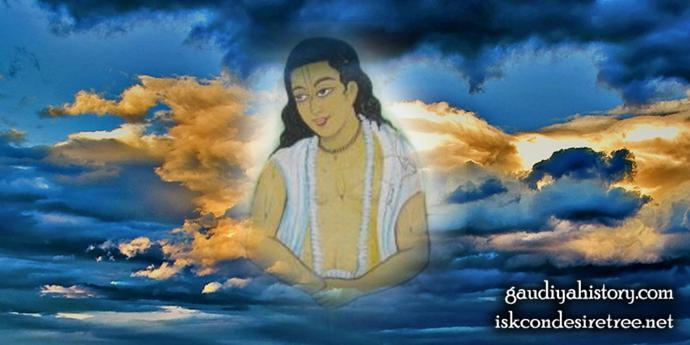
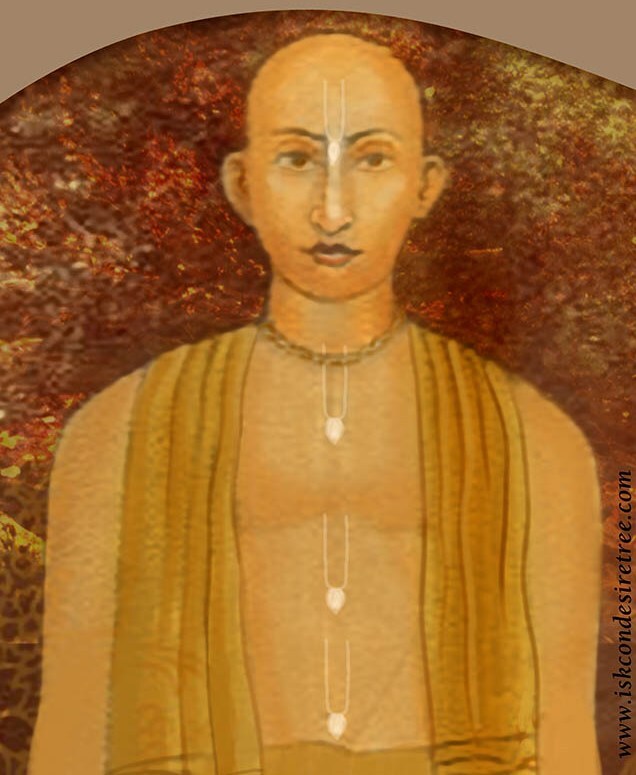
Sri Gopala Guru Goswami began life as an ordinary Oriya brahmana boy named Makaradhvaja Pandit. He was born to a father called Murari Pandit in Utkala (Orissa). By the end of his life he was the keeper of one of Puri's most important Deities and the teacher of a major Gaudiya writer. In between comes one of the more unusual stories in Gaudiya Vaishnavism. As a small child in Sri Chaitanya Mahaprabhu's own household at Jagannatha Puri, he was jokingly given the title "guru" by the Lord Himself. This nickname stayed with him for the rest of his life, and the tradition still remembers him by it. He grew up to become a formal disciple of Sri Vakreshwara Pandita, one of Mahaprabhu's most ecstatic dancing associates. Srila Prabhupada's purport to Sri Chaitanya-charitamrita confirms this discipleship. It also confirms the guru-disciple line that follows from it, down to Gopala Guru Goswami's most important student, Sri Dhyanachandra Goswami.
| Detail | Description |
|---|---|
| Birth name | Makaradhvaja Pandit |
| Family | Oriya (Utkala) brahmana; father Murari Pandit |
| Title's origin | Jokingly given by Sri Chaitanya Mahaprabhu Himself, as a boy at Puri |
| Diksha guru | Sri Vakreshwara Pandita |
| Trained in rasa-tattva by | Svarupa Damodara Goswami and Raghunatha Dasa Goswami |
| Seva entrusted | Deity of Sri Radha-Kanta, at the Gambhira, Puri |
| Foremost disciple | Sri Dhyanachandra Goswami |
At a Glance
- As a boy in Sri Chaitanya Mahaprabhu's own company at Puri, he earned the name "Gopala Guru" from the Lord Himself, after a clever question about chanting the holy name.
- He later became a formal disciple of Sri Vakreshwara Pandita and studied rasa-tattva, the theology of devotional relationships with Krishna, under Svarupa Damodara Goswami and Raghunatha Dasa Goswami.
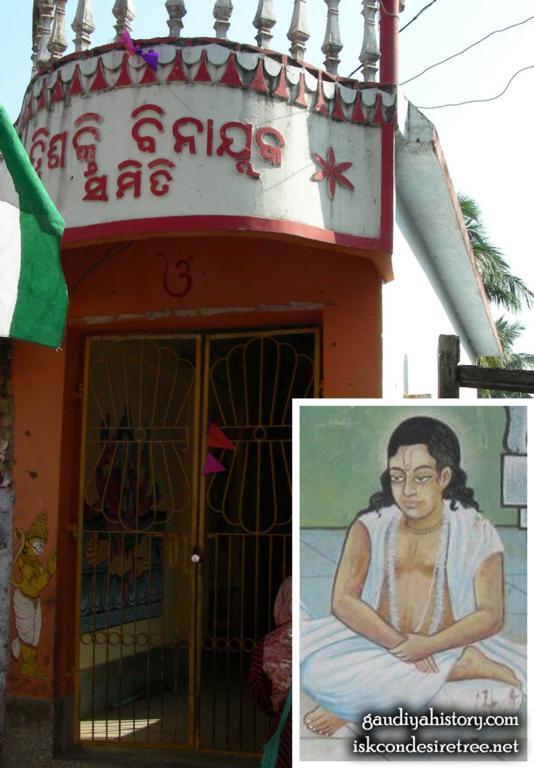
- After Vakreshwara Pandita's disappearance, he took charge of the Deity of Sri Radha-Kanta at the Gambhira - the very house in Puri where Mahaprabhu had lived - and expanded its worship.
- He trained Sri Dhyanachandra Goswami, and together they wrote versions of a paddhati, a manual for meditative worship of Gauranga and Radha-Govinda, still used by some Gaudiya Vaishnavas today.
- Some devotional traditions are connected with his name, including a miraculous return after his own disappearance and a disputed identity in Krishna's Vraja pastimes. The sections below report honestly both what is well recorded and what is still genuinely disputed.
A Boy Called Guru at Sri Chaitanya Mahaprabhu's Side #
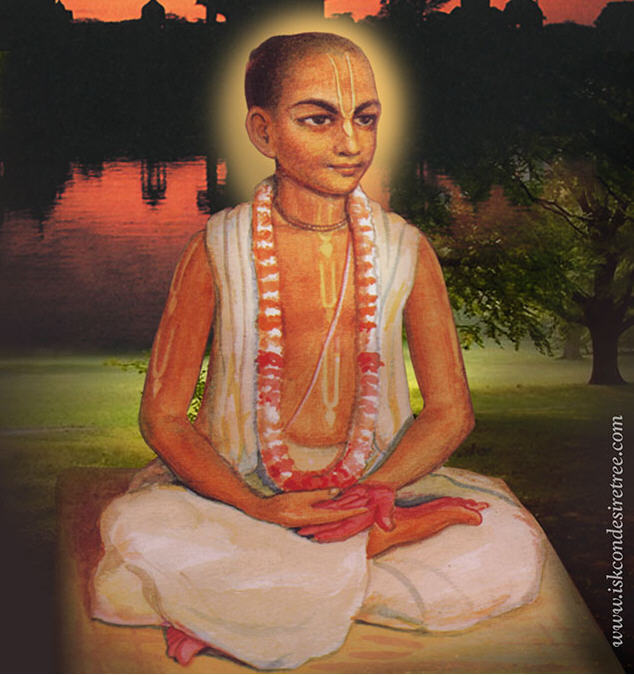
Tradition says the boy who would become Gopala Guru Goswami first came into Mahaprabhu's personal company through the mercy of Govinda, the Lord's own attendant. He quickly became a favorite. He was teased, joked with, and kept close. The most famous story about him explains his adult name. Mahaprabhu was asked why He held His tongue between His teeth during a call of nature. He said that He could not stop chanting even then. The boy gave a sharp reply: what would happen to anyone else who died at such a moment without chanting? This so pleased the Lord that He named the boy guru on the spot. The title even led to a formal test from Nityananda Prabhu's associate Sri Abhirama Thakura, who tells the same story from his side. None of this appears in Sri Chaitanya-charitamrita itself, so it is given here as devotional memory, not scripture. But it is the only explanation anywhere for how "Gopala Guru" got his name. The fuller version, including Abhirama Gopala Thakura's own test of the boy, is told on Boyhood Service to Mahaprabhu at Puri.
Disciple of Vakreshwara Pandita, Teacher of Dhyanachandra Goswami #
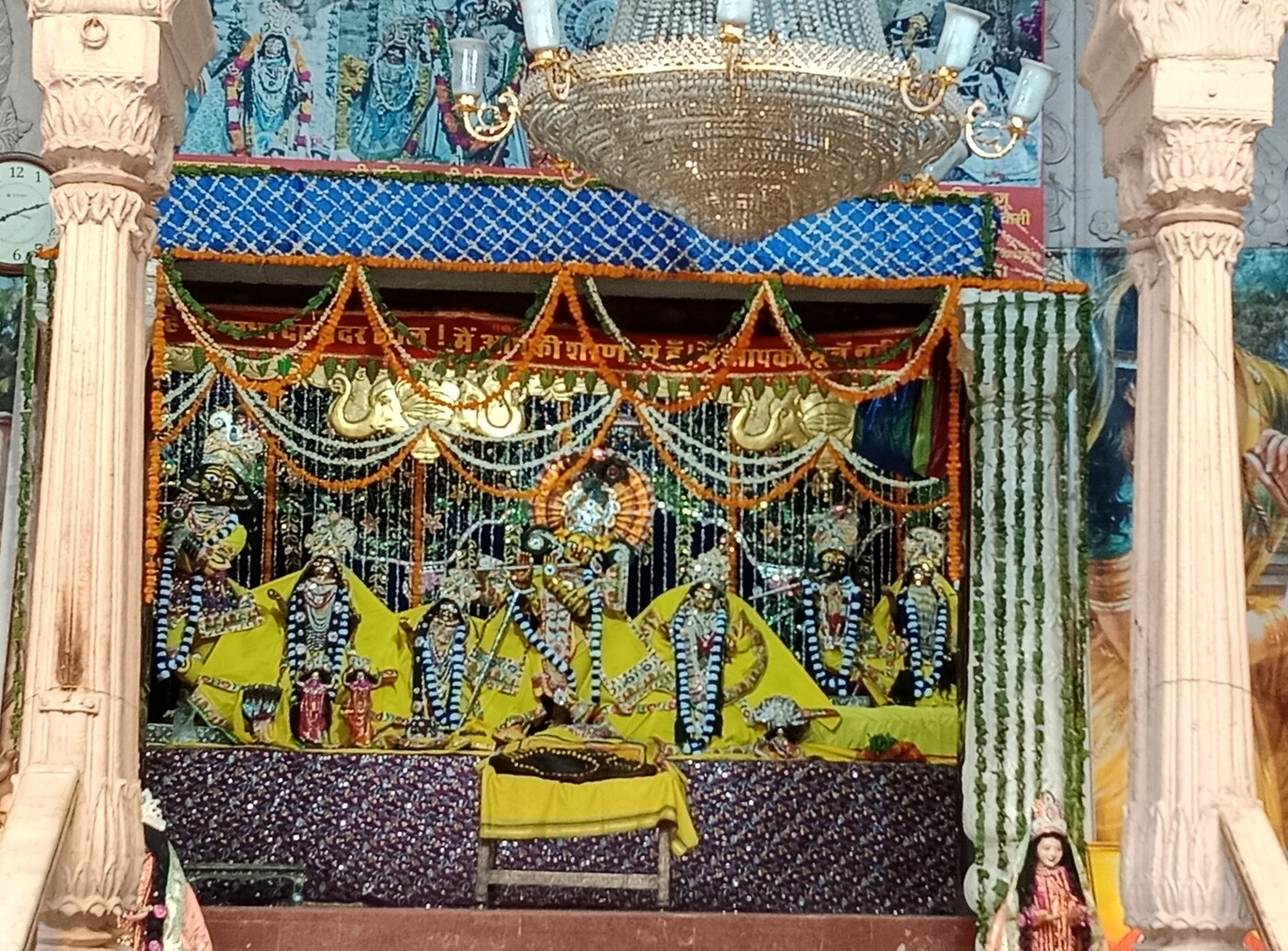
After Mahaprabhu's disappearance, the boy grew into a recognized spiritual figure. Srila Prabhupada's own purport to Chaitanya-charitamrita, Adi-lila 10.17, names him directly as a disciple of Sri Vakreshwara Pandita. Vakreshwara Pandita was "the fifth branch" of Sri Chaitanya Mahaprabhu's own tree of devotees, and he is remembered for dancing in unbroken ecstasy for seventy-two hours at a stretch. The same purport also names Dhyanachandra Goswami as Gopala Guru Goswami's disciple in turn. So this three-generation line stands on a real written source, not on devotional guesswork alone. Tradition adds that Svarupa Damodara Goswami and Raghunatha Dasa Goswami personally trained him in rasa-tattva. Tradition also says that when Vakreshwara Pandita passed on, Gopala Guru Goswami inherited both his residence and the seva of his worshipable Deity, Sri Radha-Kanta. The residence was at Kashi Mishra's house in Puri, which by then was called the Gambhira. According to the temple record, he served as mahant there during at least the years 1538 to 1548 CE, and he rebuilt the temple and added four more Deities to the altar. His most important act as a teacher was training Sri Dhyanachandra Goswami and writing an early version of the Sri Gaura-Govindarcana-Smarana-Paddhati together with him. This is told in full on Training and Teaching After Mahaprabhu's Disappearance.
Legacy at the Gambhira and Beyond #
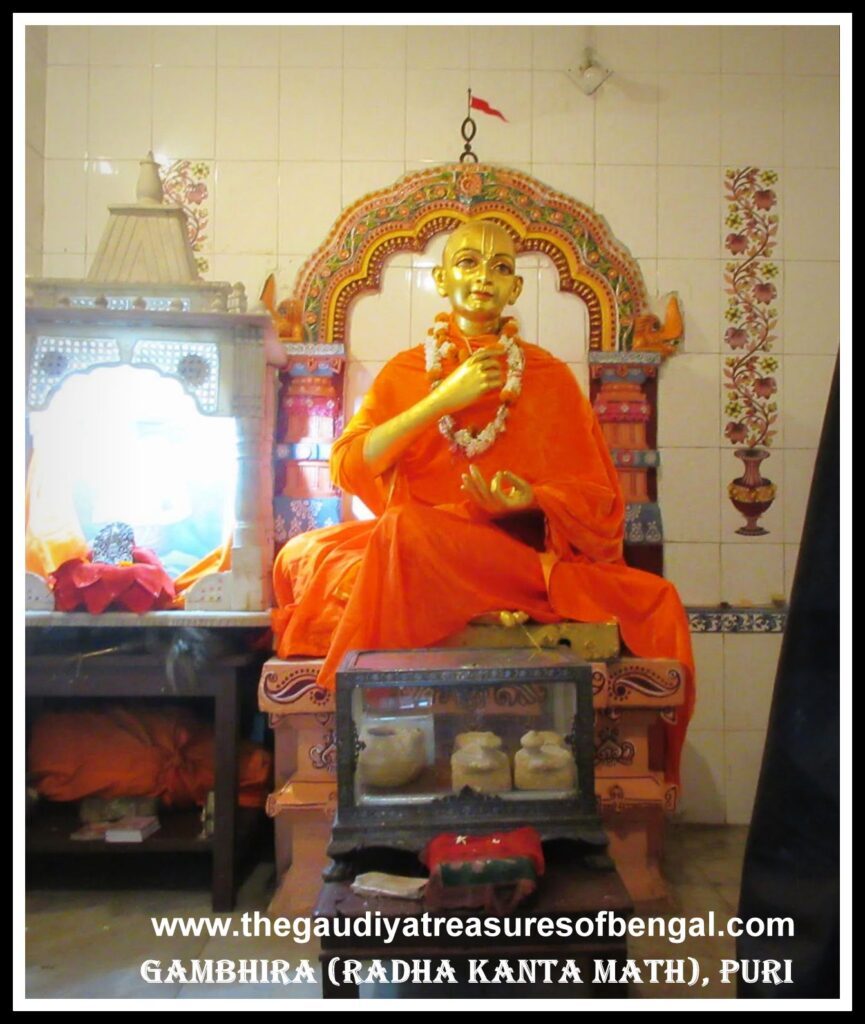
Gopala Guru Goswami's disappearance is remembered on the ninth day of a fortnight of Kartika. Sources differ on which fortnight, and no year survives. But according to tradition, his disappearance did not end his connection to Sri Radha-Kanta's seva. A dramatic story describes him rising from his own funeral procession to defend the temple's succession against a king's soldiers. A second story describes Dhyanachandra Goswami finding him a year later, doing bhajana at Vamsivat in Vrindavana. This should have been impossible, since he had already left his body at Puri. From that meeting comes the small neem-wood deity of Gopala Guru Goswami himself, which is still shown near the entrance of the Radha-Kanta temple today. One claim about him does not hold up when checked carefully. Gaudiya History's biography identifies him with the gopi Tungavidya Sakhi. But a separate version of Dhyanachandra Goswami's own paddhati gives that same identity to Vakreshwara Pandita instead. This is a real disagreement that has not been settled, and we report it openly instead of smoothing it over. The fuller account of both traditions, and of the temple that still stands at Puri today, is on Legacy.
Scriptural evidence
কাশীমিশ্র, প্রদ্যুম্নমিশ্র, রায় ভবানন্দ ।
যাঁহার মিলনে প্রভু পাইলা আনন্দ ॥ ১৩১ ॥
kasi-misra, pradyumna-misra, raya bhavananda
yanhara milane prabhu paila ananda
Word for word
kasi-misra: Kasi Misra; pradyumna-misra: Pradyumna Misra; raya bhavananda: Bhavananda Raya; yanhara: of whom; milane: meeting; prabhu: the Lord; paila: got; ananda: great pleasure.
In the list of devotees at Jagannatha Puri [which begins with Paramananda Puri, Svarupa Damodara, Sarvabhauma Bhattacharya and Gopinatha Acharya], Kasi Misra was the fifth, Pradyumna Misra the sixth and Bhavananda Raya the seventh. Lord Chaitanya took great pleasure in meeting with them.
From the purport: Purport excerpt: "Later this house was inherited by Vakresvara Pandita and then by his disciple Gopalaguru Gosvami, who established a Deity of Radhakanta there."
This purport is the single clearest, most independently reliable confirmation that Gopala Guru Goswami inherited Kashi Mishra's house at Puri and its Deity from Vakreshwara Pandita.
- Sri Chaitanya-charitamrita, Adi-lila 10.17, with Srila Prabhupada's purport
- Sri Chaitanya-charitamrita, Adi-lila 10.131, with Srila Prabhupada's purport
- Sri Chaitanya-charitamrita, Madhya-lila 10.21-32 (Kashi Mishra's house at Puri)
- Gaudiya History (ISKCON Desire Tree): Gopala Guru Goswami - Biography
- Gaudiya History (ISKCON Desire Tree): Gopala Guru Goswami
- Gaudiya History (ISKCON Desire Tree): Sri Gopala Guru Goswami - Biography
- Stephen Knapp: Gopala Guru Goswami
- ISVARA.org Vedic Library: Vakresvara Pandita (quoting Dhyana-chandra-paddhati)
- The Gaudiya Treasures of Bengal: Gambhira, Jagannath Puri - Residence of Chaitanya Mahaprabhu
- Hindu Temples of India: Radha Kanta Matha, Puri, Odisha
Frequently asked
When was Sri Gopala Guru Goswami born?
Sri Gopala Guru Goswami appeared Not recorded; he was a small boy in Sri Chaitanya Mahaprabhu's own company at Puri, so he was born in the early sixteenth century in Utkala (Orissa); father Murari Pandit, an Oriya brahmana.
When and where did Sri Gopala Guru Goswami disappear?
Sri Gopala Guru Goswami disappeared Ninth day of a fortnight of the month of Kartika, year not recorded (sources differ on whether it was the dark or bright fortnight) at The Gambhira (Sri Radha-Kanta Matha), Puri, Odisha.
What are the main pastimes of Sri Gopala Guru Goswami?
The pastimes covered here include: Boyhood Service to Mahaprabhu at Puri, Training and Teaching After Mahaprabhu's Disappearance, Legacy.