After Sri Chaitanya Mahaprabhu accepted sannyasa, He toured through Bengal in the years that followed to see His mother and His devotees. On that tour He stopped at Raghava Pandit's home at Panihati. What He saw there impressed Him so much that He later described it, without being asked, to the whole assembly of devotees gathered at Sarvabhauma Bhattacharya's house: "Just hear about the pure devotional service rendered to Krishna by Raghava Pandita. Indeed, Raghava Pandita's service is supremely pure and highly accomplished."
| Detail | Description |
|---|---|
| Setting | Raghava Pandit's home, Panihati, and later Sarvabhauma Bhattacharya's house, Puri |
| Source | Sri Chaitanya-charitamrita, Madhya-lila 15.69–91 |
| Best-documented offering | Coconuts, fetched from twenty miles away at four times the ordinary price |
| Also offered | Bananas, mangoes, oranges, jackfruit, spinach, sweetmeats, pickles, condiments |
| Praised by | Sri Chaitanya Mahaprabhu, in front of the assembled devotees |
Coconuts From Twenty Miles Away #
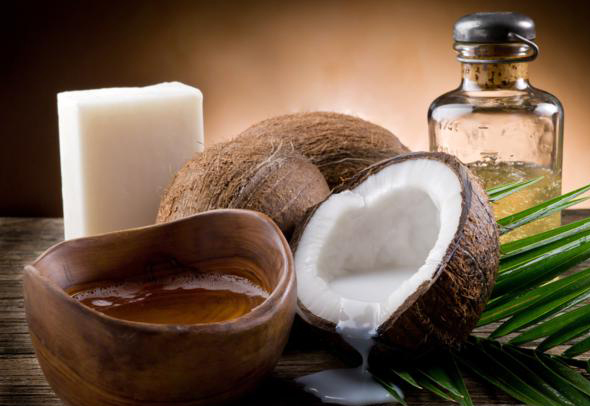
Mahaprabhu's description, as Krishnadasa Kaviraja Goswami records it, is remarkably specific. "Although he already has hundreds of trees and millions of fruits," the Lord said, "he is still very eager to hear about the place where sweet coconuts are available. He collects coconuts with great endeavor from a place twenty miles away, and he pays four panas each for them." Every day, five to seven coconuts were clipped and set in water to cool. At the time of offering they were clipped again, holes were made at the top, and they were presented to the Deity. Mahaprabhu said that the Deity drank the juice and sometimes refilled the pulp inside, so that Raghava Pandit found the shell mysteriously full again after the first offering. In Mahaprabhu's telling, this detail only deepened Raghava Pandit's faith.
The Coconuts He Threw Away #
One particular day shows the standard he held himself to. A servant was carrying ten coconuts, properly cleaned, to the Deity. While waiting at the door for a chance to enter, he brushed the ceiling above the doorway and then touched the coconuts with the same hand. Raghava Pandit noticed. "People are always coming and going through that door," he said. "The dust from their feet blows up and touches the ceiling. After touching the ceiling above the door, you have touched the coconuts. Now they are no longer fit to be offered to Krishna because they are contaminated." He had the entire batch thrown over the wall and new coconuts prepared from scratch.
Srila Bhaktisiddhanta Sarasvati Thakura's commentary, quoted in Srila Prabhupada's purport at this point, insists that this was not simply fussiness about cleanliness: "Raghava Pandita was not simply a crazy fellow suffering from some cleansing mania... He was always absorbed in the transcendental thought of how he could always serve Krishna with everything." The purport goes on to warn against the opposite error. It warns against devotees on a lower platform imitating his outward behavior as if cleanliness itself were the point. The whole episode was really about Raghava Pandit's very particular, personal absorption in service, and that cannot simply be copied.
Fruit From Distant Villages, And A Favorite Dish Of Spinach #
The same standard extended to everything else in the kitchen. "From distant villages he collects excellent bananas, mangoes, oranges, jackfruits and whatever other first-class fruits he has heard about," Mahaprabhu told the devotees, "bought at a high price" and trimmed with the same great care. Raghava Pandit prepared spinach, vegetables, radishes, chipped rice, powdered rice, sweetmeats, cakes, sweet rice, condensed milk and pickles such as kashamdi, along with scents, garments and ornaments for the Deity. By tradition, Mahaprabhu was especially fond of the spinach dishes that came from this same kitchen. Mahaprabhu's summary of the whole visit was direct: "Thus Raghava Pandita serves the Lord in an incomparable way. Everyone is very much satisfied just to see him." He then embraced Raghava Pandit before continuing on His tour.
This same household's cooking, on a far larger and more famous scale, is what filled the bags that traveled every year to Jagannatha Puri. That story is told in full at the annual pilgrimage to Puri. It was also this house that Nityananda Prabhu filled with kirtan and dancing on a separate visit, described at Nityananda Prabhu at Panihati.
