Every year, Shivananda Sena organized and paid for the long walk that carried Bengal's devotees to Jagannatha Puri to see Sri Chaitanya Mahaprabhu. That journey is described in full at Shivananda Sena's own account of leading it. Each year, Raghava Pandit's household also sent something with that same party that no other household sent. It was bags and bags of food that his sister Damayanti had spent the year preparing, packed and sealed for the journey south.
| Detail | Description |
|---|---|
| Prepared by | Damayanti, Raghava Pandit's sister, on his instruction |
| Carried by | Three bearers, under the pilgrim party organized by Shivananda Sena |
| Superintendent of the bags | Makaradhvaja Kara, Raghava Pandit's own disciple |
| Known collectively as | Raghavera jhali ("the bags of Raghava") |
| How long the food lasted | The entire year, until the next pilgrimage arrived |
| Source | Sri Chaitanya-charitamrita, Antya-lila 10.13–42, 124–131 |
What Went Into The Bags #
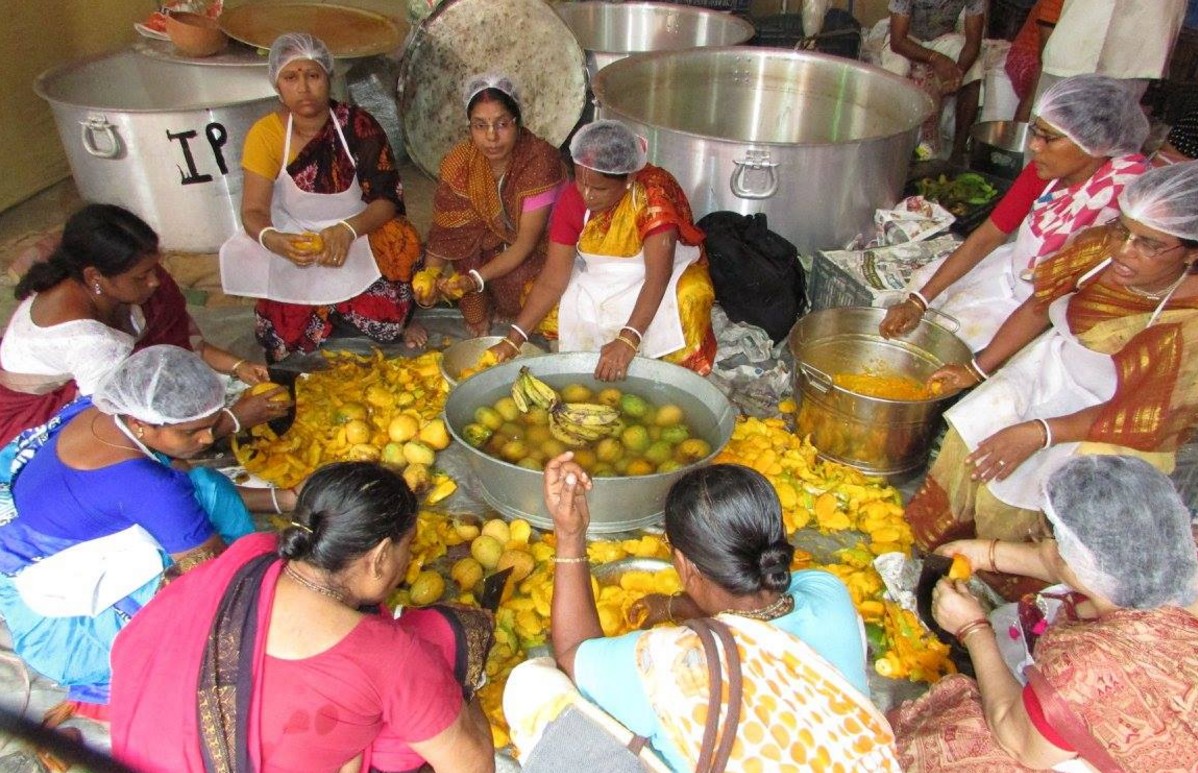
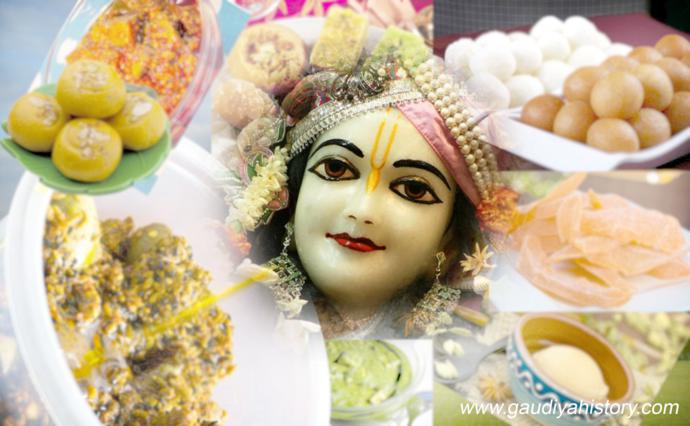
Sri Chaitanya-charitamrita gives an unusually long and detailed list of what Damayanti packed. She dried and powdered Ganges clay, strained it and rolled it into scented balls. She made a hundred kinds of pickles and condiments, including koli-shunthi, koli-churna and koli-khanda. She rolled sweets from coriander and anise cooked in sugar, and others from dried ginger meant to settle the digestion. She prepared long-lasting cheese, cream sweets and amrita-karpura. She also made several kinds of flattened and puffed rice fried in ghee and cooked in sugar syrup, and a preparation of powdered fused peas rolled into balls. "I could not mention the names of all these wonderful eatables, even in a lifetime," Krishnadasa Kaviraja Goswami writes. "Damayanti made hundreds and thousands of varieties." One preparation gets a special note of its own. It is sukuta, a bitter dish of dried vegetables. Damayanti thought of Mahaprabhu as an ordinary person who might fall sick from overeating. So she worried about His digestion and made sukuta to settle it. "Do not neglect sukuta because it is a bitter preparation," the text says. "Sri Chaitanya Mahaprabhu derived more happiness from eating this sukuta than from drinking panchamrita." Small cloth bags were sewn into larger ones, wrapped and sealed. The whole collection became famous ever after as raghavera jhali. It was given to three bearers and placed under the personal charge of Makaradhvaja Kara. The text describes him as guarding them "with great attention like his very life."
"Only The Bags Of Raghava" #
What happened when the party reached Puri shows clearly how Mahaprabhu thought of this gift. Each year, devotees brought food for Him, and His servant Govinda would announce each one by name as he set it before the Lord: from Advaita Acharya, from Srivasa Thakura, from Vasudeva Datta and Murari Gupta, from the communities of Kulina-grama and Khanda. Mahaprabhu ate all of it that same day. The text says it was enough for a hundred people. Then He asked Govinda if anything remained. "Now there are only the bags of Raghava," Govinda replied. Mahaprabhu set them aside and said, "Let them remain today. I shall see them later." The next day, while eating alone in a quiet place, He opened Raghava Pandit's bags Himself. He tasted a little from each one and praised its flavor and aroma. Then He had the rest kept aside. It was served to Him little by little, sometimes at lunch and sometimes at night, through the whole year that followed, until the next year's bags arrived. No other devotee's offering was treated this way. Everyone else's gifts were eaten at once, with others present, and named aloud. Only Raghava's bags were kept aside, enjoyed in private, and made to last.
A Gift That Outlasted The Season #
As a result, a piece of Raghava Pandit's and Damayanti's devotion was on Mahaprabhu's plate at Puri on most days of the year, long after the pilgrims who carried it had gone back to Bengal. In this quiet way, their devotion continued day after day, alongside the more public devotion of festivals and kirtan. What is known of Raghava Pandit's own later life, and how Panihati remembers him today, is told at disappearance and legacy.
