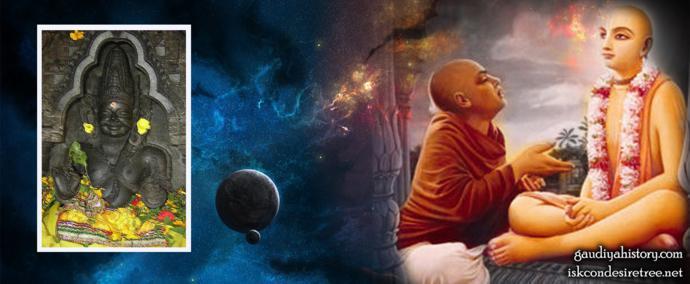
Chaitanya-charitamrita's Madhya-lila opens its tenth chapter with a homecoming. Sri Chaitanya Mahaprabhu had been away from Jagannatha Puri for many months, touring South India, and in His absence King Prataparudra had repeatedly asked Sarvabhauma Bhattacharya to arrange an audience with the Lord he had heard so much about. When Mahaprabhu finally returned, He went to the home of a Puri brahmana named Kashi Mishra - and it was there that Sarvabhauma Bhattacharya introduced Shikhi Mahiti to the Lord by name.
A Line of Devotees Like Thirsty Birds #
Sarvabhauma took his seat at the Lord's right side and began bringing Puri's devotees before Him one after another, describing each in turn. Chaitanya-charitamrita preserves the picture Sarvabhauma used. He said that in Mahaprabhu's absence, all these people had been like thirsty cataka birds crying out in distress. He simply asked the Lord to accept them now that He had returned. After this, the text gives a scene made almost entirely of names and short descriptions, one devotee after another. They come in the exact order Sarvabhauma actually spoke them. First came Janardana, a servitor of Lord Jagannatha. Then came Krishnadasa, described as the bearer of a golden cane. And immediately after him came Shikhi Mahiti.
Introduced in Two Words #
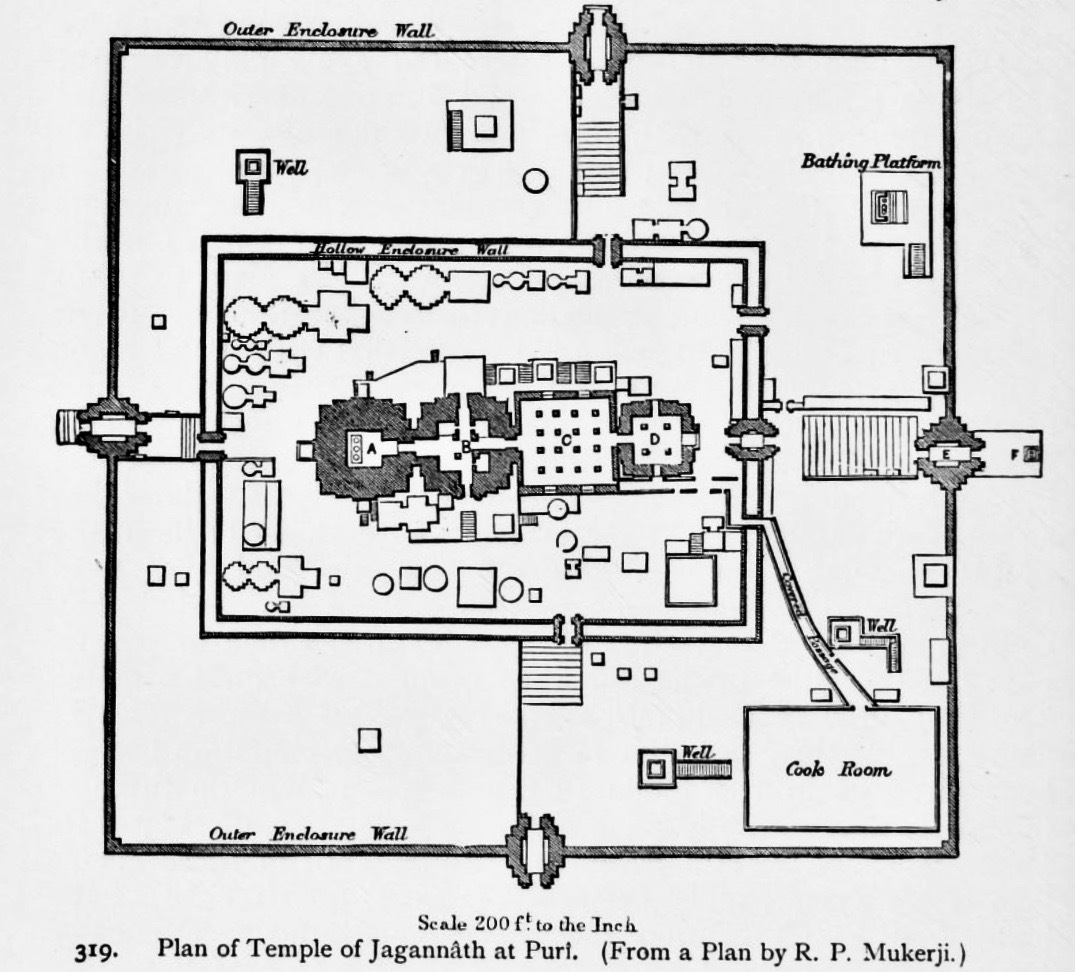
Sarvabhauma's own description was very brief: "This is Krishnadasa, who carries a golden cane, and here is Shikhi Mahiti, who is in charge of writing." That single phrase, likhanadhikari, is the only occupation Chaitanya-charitamrita records for any devotee in this whole scene, besides the golden-cane bearer standing next to him. Srila Prabhupada's purport explains exactly what the post involved. A likhanadhikari was also known as a deula-karana-pada-prapta karmacari. He was an officer employed especially to keep the Madala Panji. This was the running written record and calendar of the Jagannatha temple's own daily life and religious observances. It was a real administrative responsibility inside one of the largest and most complex temples in India. This record-keeping let a temple as vast as Jagannatha's keep track of its festivals, offerings, and observances from one year to the next. Nothing else is said about how Shikhi Mahiti came to hold the post, how long he had held it by this time, or what family before him might have held it. But the Mahiti title itself gives a clue. Like Mahapatra or Pattanayaka, it is carried by hereditary Odia temple-service families. This suggests that the post was not won by one man alone. It was attached to a household across generations.
A Family Named Twice in the Same Scene #
Sarvabhauma was not finished with this family. Two verses later, after introducing Pradyumna Mishra as chief among all Vaishnavas, he turned to the youngest of the household: "This is Murari Mahiti, the brother of Shikhi Mahiti. He has nothing other than Your lotus feet." Within moments of each other, the two brothers were described in strikingly different ways. Shikhi Mahiti was identified by an actual post and title. Murari Mahiti was identified by nothing but a relationship and a devotion. That second introduction is told more fully on Murari Mahiti's own page. That page also notes that a different, unrelated devotee named Murari Brahmana was introduced only two verses after that. Taken together, the two introductions show a single household presented to Mahaprabhu within the space of three verses. One brother was known by his post at the temple, and the other only by his devotion. Their sister is not named in this particular scene. But the Lord would later count her among His most confidential associates in the world. That honor is told in full on Named Among the Three and a Half.
What the Introduction Preserves #
Chaitanya-charitamrita does not record how Mahaprabhu responded to Shikhi Mahiti at this particular meeting, or whether any words passed between them beyond Sarvabhauma's introduction. What the text does keep is the introduction itself. Sarvabhauma was Puri's most learned Vaishnava scholar, and he knew this devotee by his actual administrative post. At that moment Sarvabhauma was moving quickly through a long line of names, and mostly he gave just one defining fact about each person. For Krishnadasa, that fact was a golden cane. For Shikhi Mahiti, it was a temple office responsible for keeping a written record of the temple's own life. It was a fitting role for a man of whom the tradition itself would later keep such an exact and lasting record.
