Shikhi Mahiti
The Likhanadhikari Counted Among Mahaprabhu's Three Confidential Devotees
The complete life, on one page: The main biography and every pastime page, in order, in one place
Introduction
Shikhi Mahiti held a real administrative post inside the Jagannatha temple at Puri. This sets him apart from almost every other devotee in Sri Chaitanya Mahaprabhu's Puri circle. The tradition records their devotion in detail, but it rarely names their worldly work at all. Sarvabhauma Bhattacharya introduced him to Mahaprabhu in two words: likhanadhikari, the official in charge of writing. He was the eldest of three siblings, all serving that same temple. Sri Chaitanya-charitamrita gives his rank very exactly. He was not just one of the many devotees Mahaprabhu accepted at Puri. He was one of the three men the text names as His most confidential associates in the entire world. His sister, Srimati Madhavi Devi, was the "half" that completed that number to three and a half. His younger brother, Murari Mahiti, belonged to the same household of unbroken service. Both siblings have their own documented lives, and Shikhi Mahiti is named in each account. This page gathers what the sources say about him in particular.
| Detail | Description |
|---|---|
| Family | Eldest of three siblings; sister Srimati Madhavi Devi, brother Murari Mahiti |
| Temple post | Likhanadhikari, "in charge of writing," at the Jagannatha temple, Puri - keeper of the Madala Panji chronicle |
| Region | Jagannatha Puri, Odisha - the title Mahiti marks an Odia temple-service family |
| Rank among devotees | One of the "three" among Mahaprabhu's three-and-a-half most confidential associates, with Svarupa Damodara Goswami and Ramananda Raya (Antya-lila 2.105-106) |
| Identity | Ragalekha, a maidservant of Srimati Radharani (Gaura-ganoddesha-dipika 189; Chaitanya-charitamrita Adi 10.135-136 purport) |
| Born / Disappeared | Not recorded |
| Principal source | Sri Chaitanya-charitamrita, Adi-lila Chapter Ten, Madhya-lila Chapters One, Ten and Sixteen, and Antya-lila Chapter Two |
Scriptural evidence for the introduction (5)
prataparudra raja, ara odhra krsnananda
paramananda mahapatra, odhra sivananda
bhagavan acarya, brahmanandakhya bharati
sri-sikhi mahiti, ara murari mahiti
King Prataparudra of Orissa, the Oriya devotees Krsnananda and Sivananda, and Paramananda Mahapatra, Bhagavan Acarya, Brahmananda Bharati, Sri Sikhi Mahiti and Murari Mahiti constantly associated with Caitanya Mahaprabhu while He resided in Jagannatha Puri.
From the purport: In the Gaura-gaṇoddeśa-dīpikā (189) it is said that Śikhi Māhiti was formerly an assistant of Śrīmatī Rādhārāṇī named Rāgalekhā. His sister Mādhavī was also an assistant of Śrīmatī Rādhārāṇī and was named Kalākelī. Śikhi Māhiti, Mādhavī and their brother Murāri Māhiti were all unalloyed devotees of Śrī Caitanya Mahāprabhu who could not forget Him for a moment of their lives.
The formal listing that places Shikhi Mahiti, by name and with the honorific Sri, among the devotees who constantly surrounded Mahaprabhu at Puri, alongside his own younger brother Murari Mahiti.
damodara-svarupa-milane parama ananda
sikhi-mahiti-milana, raya bhavananda
Then there was a meeting with Svarupa Damodara, bringing great pleasure, and a meeting with Shikhi Mahiti and with Bhavananda Raya, the father of Ramananda Raya.
A joyful listing, from Chaitanya-charitamrita's own summary of the Lord's later pastimes, that names a reunion with Shikhi Mahiti in the same breath as the reunion with Svarupa Damodara Goswami.
tabu vrndavana yaha' loka sikhaite
seita karibe, tomara yei laya citte
"Although wherever You stay is Vrindavana, You will still go to Vrindavana just to instruct people. Otherwise, You will do whatever You think best."
From the purport: Purport excerpt: "Sri Pundarika Vidyanidhi, Sri Haridasa Thakura, Srivasa Pandita, Sivananda Sena, Sri Ramananda Raya, Sri Sikhi Mahiti, Sri Madhavidevi and Sri Gadadhara Pandita Gosvami never visited Vrindavana-dhama."
The source for the tradition, already recorded on the Madhavi Devi and Pundarika Vidyanidhi pages, that Shikhi Mahiti himself never made the journey to Vrindavana-dhama.
kasi-misra, ramananda, pradyumna, sarvabhauma
vaninatha, sikhi-adi yata bhakta-gana
Kasi Misra, Ramananda Raya, Pradyumna, Sarvabhauma Bhattacharya, Vaninatha Raya, Sikhi Mahiti and all the other devotees [gathered together].
Cited here for the honest tension it leaves unresolved: this verse, from the very chapter describing Mahaprabhu's own attempt to travel to Vrindavana, still lists Shikhi Mahiti among the devotees gathered at Puri, even though other verses state he never made that journey himself.
रागलेखाकलाकेल्यौ राधादास्यौ पुरा स्थिते ।
ते ज्ञेये शिखिमाहाती तत्स्वसा माधवीक्रमात् ॥
rāgalekhā-kalākelyau rādhā-dāsyau purā sthite
te jñeye śikhi-māhātī tat-svasā mādhavī-kramāt
Srimati Radharani's maidservants, Rangalekha-devi and Kalakeli-devi, appeared as Sikhi-mahiti and his sister, Madhavi-devi respectively.
Kavi Karnapura names Radharani's maidservants Ragalekha and Kalakeli as Shikhi Mahiti and his sister Madhavi Devi; Srila Prabhupada repeats this in his purport to Chaitanya-charitamrita Adi 10.135-136. (The bvmlu English spells the first name 'Rangalekha'; the Sanskrit and Prabhupada read Ragalekha.) Sanskrit: diacritic edition of the Gaura-ganoddesha-dipika; English translation as published at bvmlu.org.
Chapter 1
The Likhanadhikari of Jagannatha Puri
Two words from Sarvabhauma Bhattacharya introduced a temple official responsible for the Jagannatha temple's own written chronicle.
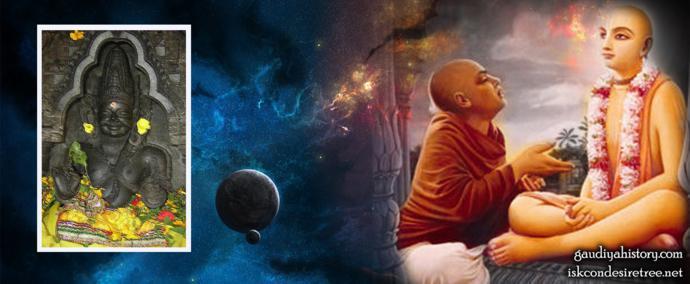
Chaitanya-charitamrita's Madhya-lila opens its tenth chapter with a homecoming. Sri Chaitanya Mahaprabhu had been away from Jagannatha Puri for many months, touring South India, and in His absence King Prataparudra had repeatedly asked Sarvabhauma Bhattacharya to arrange an audience with the Lord he had heard so much about. When Mahaprabhu finally returned, He went to the home of a Puri brahmana named Kashi Mishra - and it was there that Sarvabhauma Bhattacharya introduced Shikhi Mahiti to the Lord by name.
A Line of Devotees Like Thirsty Birds #
Sarvabhauma took his seat at the Lord's right side and began bringing Puri's devotees before Him one after another, describing each in turn. Chaitanya-charitamrita preserves the picture Sarvabhauma used. He said that in Mahaprabhu's absence, all these people had been like thirsty cataka birds crying out in distress. He simply asked the Lord to accept them now that He had returned. After this, the text gives a scene made almost entirely of names and short descriptions, one devotee after another. They come in the exact order Sarvabhauma actually spoke them. First came Janardana, a servitor of Lord Jagannatha. Then came Krishnadasa, described as the bearer of a golden cane. And immediately after him came Shikhi Mahiti.
Introduced in Two Words #
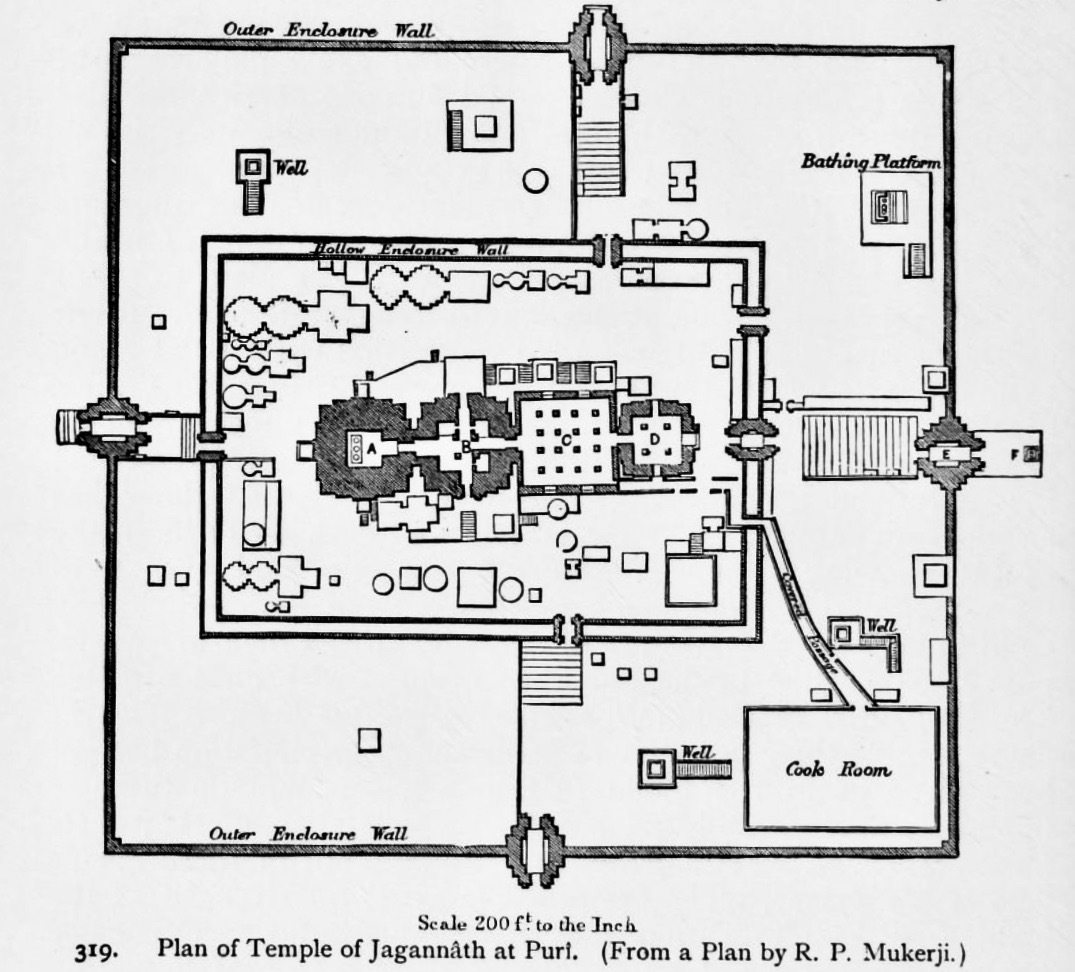
Sarvabhauma's own description was very brief: "This is Krishnadasa, who carries a golden cane, and here is Shikhi Mahiti, who is in charge of writing." That single phrase, likhanadhikari, is the only occupation Chaitanya-charitamrita records for any devotee in this whole scene, besides the golden-cane bearer standing next to him. Srila Prabhupada's purport explains exactly what the post involved. A likhanadhikari was also known as a deula-karana-pada-prapta karmacari. He was an officer employed especially to keep the Madala Panji. This was the running written record and calendar of the Jagannatha temple's own daily life and religious observances. It was a real administrative responsibility inside one of the largest and most complex temples in India. This record-keeping let a temple as vast as Jagannatha's keep track of its festivals, offerings, and observances from one year to the next. Nothing else is said about how Shikhi Mahiti came to hold the post, how long he had held it by this time, or what family before him might have held it. But the Mahiti title itself gives a clue. Like Mahapatra or Pattanayaka, it is carried by hereditary Odia temple-service families. This suggests that the post was not won by one man alone. It was attached to a household across generations.
A Family Named Twice in the Same Scene #
Sarvabhauma was not finished with this family. Two verses later, after introducing Pradyumna Mishra as chief among all Vaishnavas, he turned to the youngest of the household: "This is Murari Mahiti, the brother of Shikhi Mahiti. He has nothing other than Your lotus feet." Within moments of each other, the two brothers were described in strikingly different ways. Shikhi Mahiti was identified by an actual post and title. Murari Mahiti was identified by nothing but a relationship and a devotion. That second introduction is told more fully on Murari Mahiti's own page. That page also notes that a different, unrelated devotee named Murari Brahmana was introduced only two verses after that. Taken together, the two introductions show a single household presented to Mahaprabhu within the space of three verses. One brother was known by his post at the temple, and the other only by his devotion. Their sister is not named in this particular scene. But the Lord would later count her among His most confidential associates in the world. That honor is told in full on Named Among the Three and a Half.
What the Introduction Preserves #
Chaitanya-charitamrita does not record how Mahaprabhu responded to Shikhi Mahiti at this particular meeting, or whether any words passed between them beyond Sarvabhauma's introduction. What the text does keep is the introduction itself. Sarvabhauma was Puri's most learned Vaishnava scholar, and he knew this devotee by his actual administrative post. At that moment Sarvabhauma was moving quickly through a long line of names, and mostly he gave just one defining fact about each person. For Krishnadasa, that fact was a golden cane. For Shikhi Mahiti, it was a temple office responsible for keeping a written record of the temple's own life. It was a fitting role for a man of whom the tradition itself would later keep such an exact and lasting record.
Scriptural evidence for this chapter (1)
krsnadasa-nama ei suvarna-vetra-dhari
sikhi mahati-nama ei likhanadhikari
Word for word
krsnadasa-nama ei: named Krsnadasa; suvarna-vetra-dhari: carrier of the golden cane; sikhi mahati-nama ei: named Sikhi Mahiti; likhana-adhikari: entrusted with writing.
Sarvabhauma Bhattacharya continued, "This is Krsnadasa, who carries a golden cane, and here is Sikhi Mahiti, who is in charge of writing."
From the purport: Purport excerpt: "The person in charge of writing is also called deula-karana-pada-prapta karmacari. He is employed especially to write a calendar called Matala-panji."
The direct textual source for Shikhi Mahiti's own temple post and its formal name, likhanadhikari.
Chapter 2
Named Among the Three and a Half
Only three and a half people, in the entire world, were Mahaprabhu's most confidential devotees - and Srila Prabhupada kept returning to that exact number for the rest of his life.
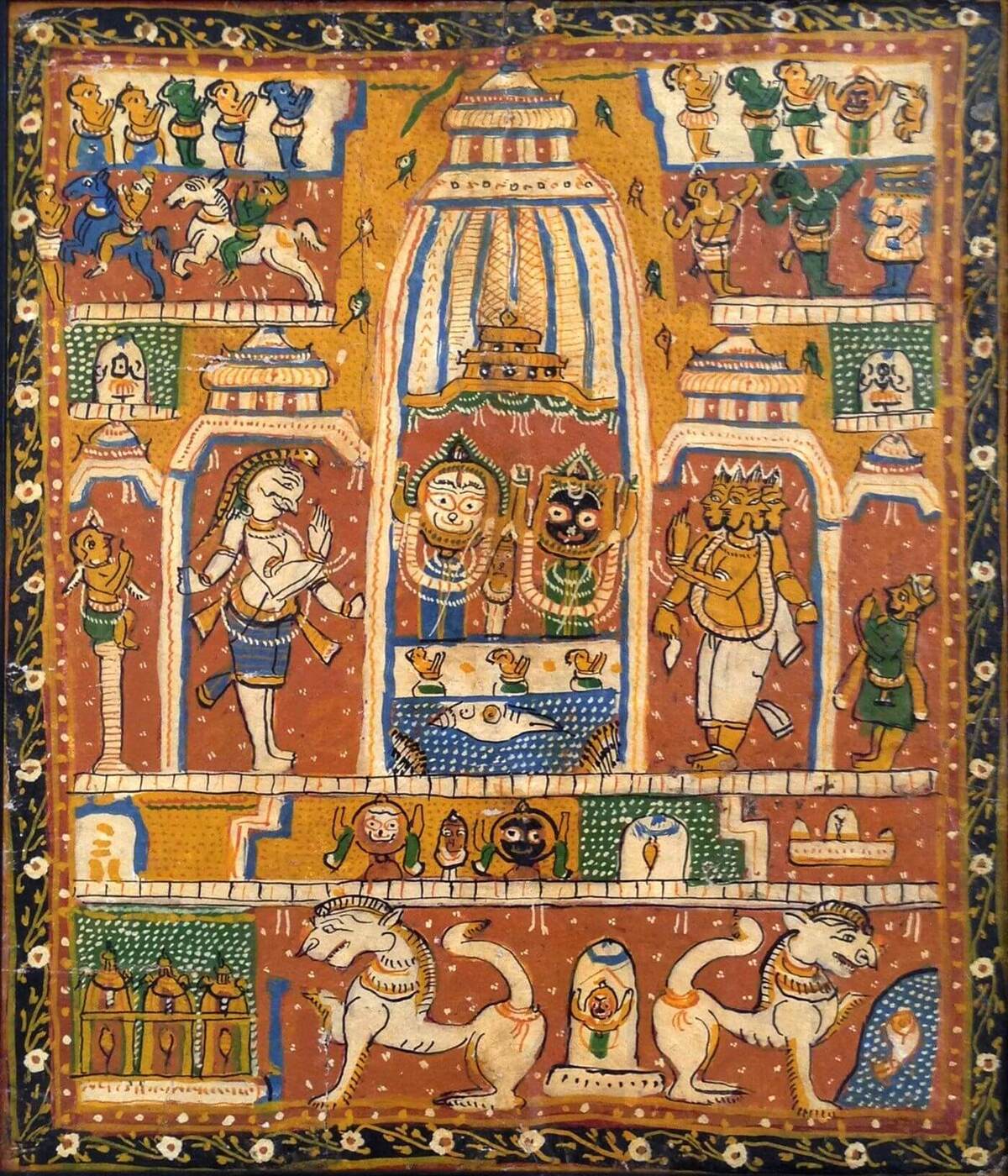
Chaitanya-charitamrita's Antya-lila states it simply, as a plain fact, without further explanation. In the entire world, only three and a half people were ever counted among Sri Chaitanya Mahaprabhu's truly confidential devotees during His last eighteen years at Jagannatha Puri. Shikhi Mahiti was one of the three. His case is unusual not only because of the ranking itself. It is also unusual because the ranking came up again and again, centuries later, in Srila Prabhupada's own explanations of who Mahaprabhu's closest associates really were.
An Exact and Startling Count #
The verse itself gives the names: "The three were Svarupa Damodara Gosvami, Ramananda Raya and Shikhi Mahiti, and the half a person was Shikhi Mahiti's sister." Svarupa Damodara Goswami served as the Lord's private secretary and closest personal companion at Puri. Ramananda Raya had been a government administrator before he became one of the most celebrated devotees in the entire Gaudiya tradition. Shikhi Mahiti was named as the third man in that company, ahead of every other devotee Chaitanya-charitamrita records at Puri. This is among the highest marks of trust the text gives anyone. Shikhi Mahiti's own sister, Srimati Madhavi Devi, completed the count as the "half". Srila Prabhupada's purport explains that this was not because her devotion was any less. It was because of the social customs of that time. They did not allow her the same free, personal access to the Lord that Shikhi Mahiti and the other two men had.
Srila Prabhupada's Own Description #
Srila Prabhupada wrote an introduction to the very first volume of his Srimad-Bhagavatam translation. This was long before any of his own disciples would have reason to know the name. In it he singled out Shikhi Mahiti specifically: "There was another gentleman at Puri of the name Sikhi Mahiti, who was also a confidant like Ramananda Raya. The Lord used to hold confidential talks on spiritual values with three or four companions at Puri, and He passed eighteen years in that way in spiritual trance." It is a striking choice. Dozens of named devotees surrounded Mahaprabhu across His life. But Prabhupada chose Shikhi Mahiti, by name, as his example of how small that inner circle at Puri truly was.
Named Again, Years Later and Half a World Away #
The pattern continued for the rest of Srila Prabhupada's own preaching life. In 1976 Prabhupada wrote a letter from Mayapur to Ajita Kumar Chatterjee. In it he warned against discussing the most confidential Radha-Krishna topics in public, and he wrote plainly: "Caitanya Mahaprabhu used to discuss with Svarupa Damodara, Ramananda Ray, Sikhi Mahiti, but not publicly." A year later, Prabhupada arrived in Bhubaneswar, in Shikhi Mahiti's own home province of Odisha. There he told the gathered devotees that among Mahaprabhu's personal associates at Puri were "Sri Ramananda Raya, Sarvabhauma Bhattacharya, Sikhi Mahiti." Four days after that, in an evening lecture at the same Bhubaneswar center, he named him again: "Sri Krishna Caitanya Mahaprabhu's one of the confidential devotees was an Oriya, this Ramananda Raya and Sikhi Mahiti. So it is a great opportunity for the Oriyas to understand Krishna consciousness science through the mercy of Sri Chaitanya Mahaprabhu." He said this to an Odia audience, in Shikhi Mahiti's own native region. So the remark seems to be a deliberate reminder to them. One of Mahaprabhu's three most confidential devotees in the entire world had been a local temple official from their own province.
What Stays Unexplained #
Nothing in Chaitanya-charitamrita or in Srila Prabhupada's own comments explains why these particular three men, and no others, were given that level of confidential access. Nor does anything explain what exactly those private conversations at Puri were about, beyond what Prabhupada calls "spiritual values" of the most intimate kind. By their very nature, the contents of those conversations were never recorded for a wider audience. Prabhupada's own letter says clearly that Mahaprabhu kept them private even from the devotees at Puri as a whole. But one thing is recorded consistently, across some fifteen years of Srila Prabhupada's own teaching, far from the Jagannatha temple where it happened. It is the number itself, and Shikhi Mahiti's place inside it. He was a modest temple official from the eastern coast of India. Yet by that particular measure, he ended up ranked above every other devotee Sri Chaitanya Mahaprabhu ever accepted at Puri.
Scriptural evidence for this chapter (2)
prabhu lekha kare yare — radhikara 'gana'
jagatera madhye 'patra' — sade tina jana
svarupa gosani, ara raya ramananda
sikhi-mahiti — tina, tanra bhagini — ardha-jana
Sri Caitanya Mahaprabhu accepted her as having formerly been an associate of Srimati Radharani. In the entire world, three and a half people were His intimate devotees. The three were Svarupa Damodara Gosvami, Ramananda Raya and Sikhi Mahiti, and the half a person was Sikhi Mahiti's sister.
The single defining statement of Shikhi Mahiti's rank among Mahaprabhu's associates - one of only three people, in the entire world, counted as fully confidential.
From the purport: "There was another gentleman at Puri of the name Sikhi Mahiti, who was also a confidant like Ramananda Raya. The Lord used to hold confidential talks on spiritual values with three or four companions at Puri, and He passed eighteen years in that way in spiritual trance."
Srila Prabhupada's own written description of Shikhi Mahiti, from his introduction to the very first volume of his Srimad-Bhagavatam translation - not a verse purport, but his own prose account of who Mahaprabhu's Puri associates were.
Closing
A Dream That Proved True #
There is only one moment where Shikhi Mahiti is shown doing something, and not simply named. It comes in Srila Prabhupada's purport to Chaitanya-charitamrita (Adi 10.135-136), which retells it from the Oriya book Caitanya-carita-mahakavya. One night he fell asleep in the middle of his own mental service to the Lord. He dreamed that Mahaprabhu was entering the body of the Jagannatha Deity and coming back out of it again and again. He woke his brother and sister in tears, unsure whether he had lost his mind: "I am still seeing the same dream. Do you think I have become deranged?" The three went together to the temple. There they found Mahaprabhu exactly as the dream had shown Him, absorbed in looking at Jagannatha in the Jagamohana hall. The Lord embraced Shikhi Mahiti at once, calling him "the elder brother of Murari." The same account is the source for Shikhi Mahiti's identity in Krishna's own pastimes. The Gaura-ganoddesha-dipika (189) names him as Ragalekha, a former assistant of Srimati Radharani, and names Madhavi Devi as another such assistant, Kalakeli. The dream, the run to the temple and the embrace are narrated in full on Madhavi Devi's own page, exactly as Chaitanya-charitamrita's purport preserves them. They are told there because she is present throughout, as the sister who helped wake him.
Kavi Karnapura's verse names brother and sister together:
rāgalekhā-kalākelyau rādhā-dāsyau purā sthite
te jñeye śikhi-māhātī tat-svasā mādhavī-kramāt
"Srimati Radharani's maidservants, Rangalekha-devi and Kalakeli-devi, appeared as Sikhi-mahiti and his sister, Madhavi-devi respectively." (Gaura-ganoddesha-dipika 189)
Srila Prabhupada gives the same identity in his purport to Chaitanya-charitamrita Adi 10.135-136: "In the Gaura-gaṇoddeśa-dīpikā (189) it is said that Śikhi Māhiti was formerly an assistant of Śrīmatī Rādhārāṇī named Rāgalekhā. His sister Mādhavī was also an assistant of Śrīmatī Rādhārāṇī and was named Kalākelī."
A Household United in Service #
Chaitanya-charitamrita almost never separates Shikhi Mahiti from his brother and sister. The three are named together everywhere the text lists the devotees who constantly surrounded Mahaprabhu at Puri. They are described as devotees "who could not forget Him for a moment of their lives." That closeness touched even one of the harder episodes in the Lord's later years. A young man of the renounced order named Junior Haridasa was once sent, in a respected householder's name, to beg fine rice from "the sister of Shikhi Mahiti" for the Lord's meal. This ordinary act of charity became the occasion for Mahaprabhu to uphold a strict standard, with no exceptions, for the renounced order. It ended Junior Haridasa's place at His side for the rest of his life. Shikhi Mahiti himself plays no active part in that story. It belongs to Madhavi Devi, and it is told in full on The Rice Alms and Junior Haridasa. But Srila Prabhupada came back to the episode often, even decades later in a 1976 lecture in Honolulu. Because of this, his sister's name and Shikhi Mahiti's own family became permanently attached to it in the tradition's memory.
What the Record Does Not Say #
No surviving source gives a birth year, a disappearance year, or a native place for Shikhi Mahiti beyond his family's standing service at Jagannatha Puri. Srila Prabhupada's purport to Chaitanya-charitamrita, Madhya-lila 16.281, states plainly that Shikhi Mahiti never visited Vrindavana-dhama in this life. It says the same of Pundarika Vidyanidhi, Haridasa Thakura, Shivananda Sena, Ramananda Raya, Gadadhara Pandit and his own sister Madhavi Devi. The same chapter is about Mahaprabhu's own attempt to travel to Vrindavana. In it, Shikhi Mahiti is named among the devotees who met the Lord at Puri when He came back, together with Kashi Mishra, Ramananda Raya and Sarvabhauma Bhattacharya (Madhya-lila 16.254). The two passages agree: Shikhi Mahiti's place of service was Puri, and he did not go to Vrindavana. Likewise, nothing in Chaitanya-charitamrita records how long Shikhi Mahiti held his post as likhanadhikari, what became of that post after him, or how or when his own service at Puri ended. So what remains is not a full life story. It is an exact and unusual picture of his place. He was a working temple official, holding a real administrative post inside one of India's largest temples. And Sri Chaitanya Mahaprabhu Himself counted him as one of only three people in the entire world close enough to call truly His own.
- Sri Chaitanya-charitamrita, Adi-lila 10.135-137 (vedabase.io)
- Sri Chaitanya-charitamrita, Madhya-lila 1.130 (vedabase.io)
- Sri Chaitanya-charitamrita, Madhya-lila 10.42-44 (vedabase.io)
- Sri Chaitanya-charitamrita, Madhya-lila 16.254 and 16.281 (vedabase.io)
- Sri Chaitanya-charitamrita, Antya-lila 2.104-106 (vedabase.io)
- Srimad-Bhagavatam, Canto 1, Introduction (vedabase.io)
- Letter to Sri Ajita Kumar Chatterjee, 12 February 1976 (vedabase.io)
- Arrival address, Bhubaneswar, 19 January 1977 (vedabase.io)
- Evening Lecture, Bhubaneswar, 23 January 1977 (vedabase.io)
- Srimad-Bhagavatam 6.1.23 lecture, Honolulu, 23 May 1976 (vedabase.io)
- Shikhi Mahiti Biography, Gaudiya History (ISKCON Desire Tree)
- Shikhi Mahiti, Gaudiya History (ISKCON Desire Tree)
- Madhavi Devi (nandgramdham.org)
- Murari Mahiti (nandgramdham.org)
