Srila Shrikanta Sena
Shivananda Sena's Nephew, Identified as the Gopi Katyayani
The complete life, on one page: The main biography and every pastime page, in order, in one place
Introduction
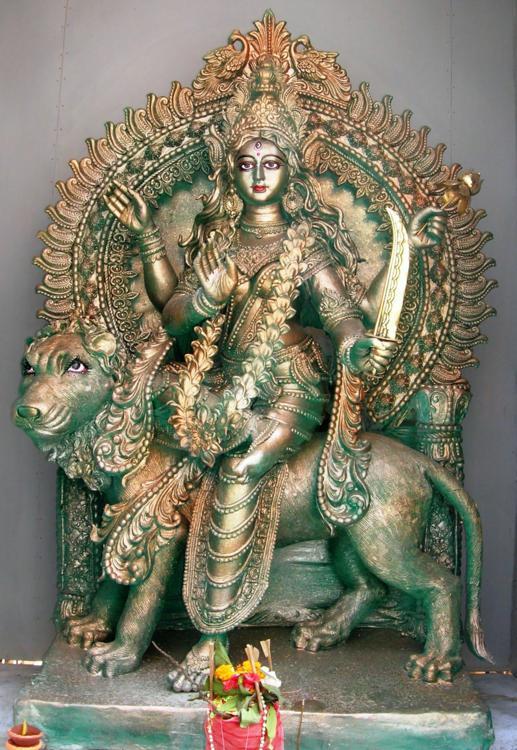
Shrikanta Sena appears in only a handful of verses of Sri Chaitanya-charitamrita. Yet Krishnadasa Kaviraja Goswami takes the trouble to name him individually, instead of leaving him as one of a crowd. He names him as the nephew of Srila Shivananda Sena and as a singer in the Ratha-yatra kirtan parties. He also names him as the boy who once, for a moment, misunderstood something Lord Nityananda Prabhu did to his own uncle. Kavi Karnapura's Gaura-ganoddesha-dipika goes further and names him as the Vraja-gopi Katyayani-devi appearing in Gaura-lila. By any measure, very little is recorded about him. But what is recorded is real and specific. We also need to be careful about which "Shrikanta" it belongs to.
| Detail | Description |
|---|---|
| Also known as | Srikanta, Srikanta Sena, Shrikanta Sena |
| Family | Sister's son (nephew) of Srila Shivananda Sena; cousin of Shrivallabha Sena |
| Documented role | Kirtan singer in Srila Mukunda Datta's party during Ratha-yatra at Jagannatha Puri |
| Identity | Katyayani-devi, a gopi of Vraja (Gaura-ganoddesha-dipika 174; Chaitanya-charitamrita Adi 10.63 purport) |
| Principal source | Sri Chaitanya-charitamrita: Adi 10.63, Madhya 13.41, Antya 12.34-41 |
| Birth / disappearance | Not recorded: his life is documented only through these scattered verses |
Scriptural evidence for the introduction (3)
śrī-vallabhasena, āra sena śrīkānta / śivānanda-sambandhe prabhura bhakta ekānta
Word for word
śrī-vallabha-sena: Śrīvallabha Sena; āra: and; sena śrīkānta: Śrīkānta Sena; śivānanda: Śivānanda Sena; sambandhe: in relationship; prabhura: the Lord’s; bhakta: devotees; ekānta: unflinching.
Śrīvallabha Sena and Śrīkānta Sena were also subbranches of Śivānanda Sena, for they were not only his nephews but also unalloyed devotees of Śrī Caitanya Mahāprabhu.
From the purport: Purport excerpt: "When Lord Nityananda Prabhu rebuked Sivananda Sena on the way to Puri, these two nephews of Sivananda left the company as a protest and went to see Sri Caitanya Mahaprabhu at Jagannatha Puri... In the Gaura-ganoddesa-dipika (174) it is said that the gopi whose name was Katyayani appeared as Srikanta Sena."
Establishes Shrikanta Sena as one of Shivananda Sena's two nephews and names his identity in Krishna-lila per the Gaura-ganoddesha-dipika.
sei hājipure rahe — śrīkānta tāra nāma / gosāñira bhaginī-pati, kare rāja-kāma
Word for word
sei: that; hājipure: in Hājipura; rahe: there is; śrīkānta: Śrīkānta; tāra: his; nāma: name; gosāñira: of Sanātana Gosvāmī; bhaginī-pati: sister’s husband; kare: executes; rāja-kāma: government service.
In Hājipura there was a gentlemen named Śrīkānta, who happened to be the husband of Sanātana Gosvāmī’s sister. He was engaged there in government service.
Describes a man named Shrikanta at Hajipura, Sanatana Gosvami's brother-in-law and a government horse-trade officer -- cited here only to flag the honest, unresolved question of whether this is the same Shrikanta Sena, since no purport or verse in the text identifies the two as one person.
व्रजे कत्यायनी यासीदद्य श्रीकान्तसेनकः ॥
vraje katyāyanī yāsīd adya śrīkānta-senakaḥ
The vraja-gopi Katyayani-devi appeared as Srikanta Sena.
Kavi Karnapura's identification of Shrikanta Sena, nephew of Shivananda Sena, as the gopi Katyayani-devi of Vraja; Srila Prabhupada repeats it in his purport to Chaitanya-charitamrita Adi 10.63. Sanskrit: diacritic edition of the Gaura-ganoddesha-dipika; English translation as published at bvmlu.org.
Chapter 1
A Nephew's Place In The Kirtan Party
Growing up inside Shivananda Sena's household and singing in the Ratha-yatra kirtan parties at Jagannatha Puri.
Long before Shrikanta became known for a single moment of injured pride on the road to Jagannatha Puri, he was simply one face among the two or three hundred devotees who made the annual walk from Bengal to see Sri Chaitanya Mahaprabhu at Ratha-yatra. Two facts about those years survive in Sri Chaitanya-charitamrita: whose household he belonged to, and what he did once he arrived.
A Sub-Branch Of Shivananda's Household #
Sri Chaitanya-charitamrita's tenth chapter of Adi-lila is built around an extended image: the Lord's movement as a great tree, with named branches and sub-branches carrying its fruit outward. Shrikanta appears there as one twig of that tree, tied directly to his uncle: "Shrivallabha Sena and Shrikanta Sena were also subbranches of Shivananda Sena, for they were not only his nephews but also unalloyed devotees of Sri Chaitanya Mahaprabhu" (Adi 10.63). Srila Shivananda Sena was the householder responsible for leading Bengal's devotees to Puri every year: arranging lodging, paying tolls and ferrymen, and keeping two hundred or more pilgrims fed and moving. Shrikanta and his cousin Shrivallabha grew up inside that same circle of organized service, which is likely why both boys are named together wherever either one appears.
Krishnadasa Kaviraja Goswami did not name so many minor figures in this chapter just for decoration. His choice reflects something the tradition takes seriously. The tradition holds that devotion is not measured by fame. It also holds that a householder devotee's nephew belongs in the same record as a renowned Goswami, provided his devotion is genuine. Kavi Karnapura's Gaura-ganoddesha-dipika is a separate work that lists the Krishna-lila identity behind each of these associates. It adds one more detail about Shrikanta's place in this list. It names him as the Vraja-gopi Katyayani-devi, appearing in this lifetime inside Shivananda Sena's own family.
A Responsive Singer In Mukunda's Party #
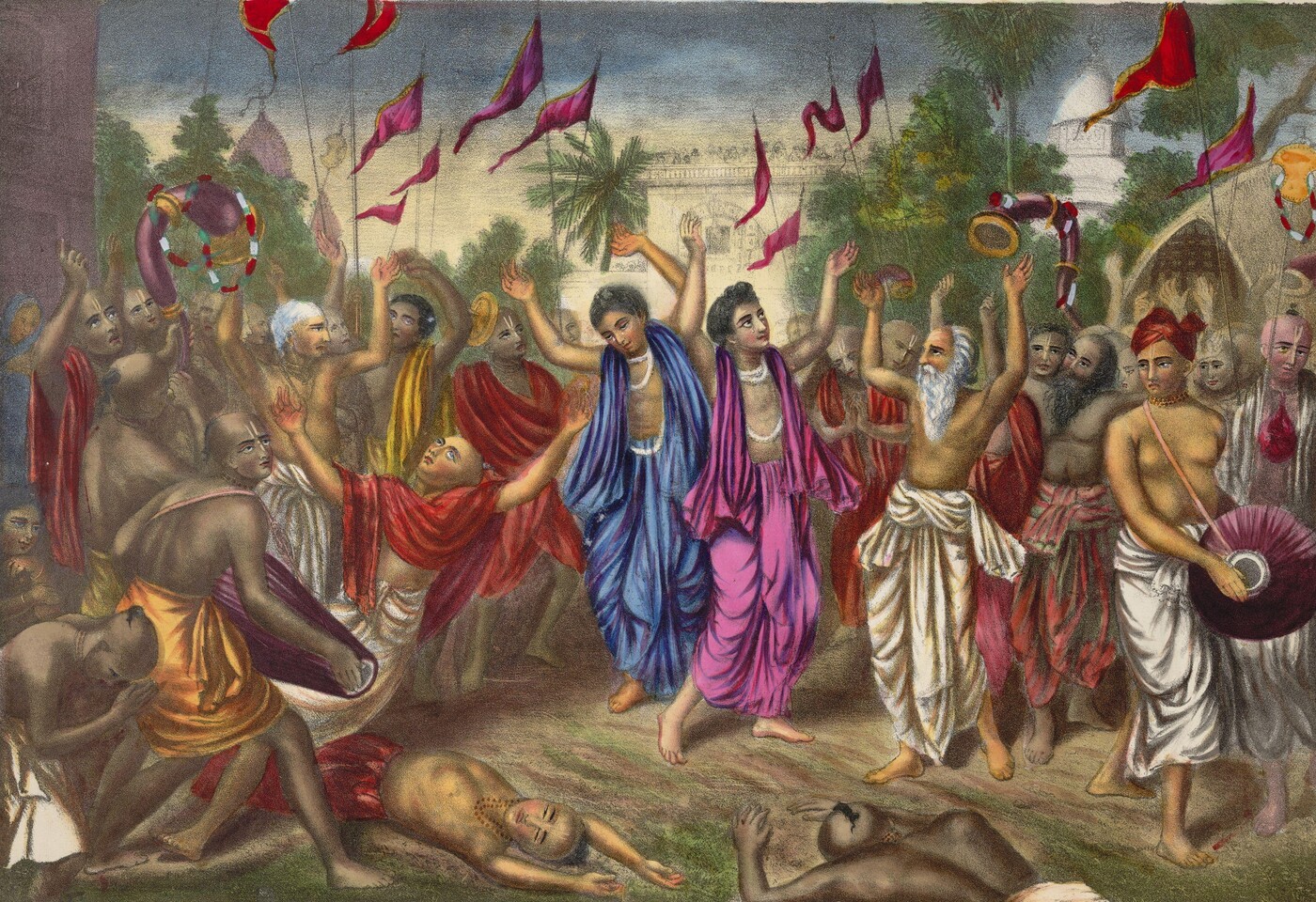
The one concrete role Shrikanta is given in the text comes from the Ratha-yatra festival itself. At the festival, the assembled devotees were organized into several kirtan parties for the procession before Lord Jagannatha's chariot. Sri Chaitanya-charitamrita records: "Another two persons, Shrikanta and Vallabha Sena, joined as responsive singers. In this group, the senior Haridasa Thakura was the dancer" (Madhya 13.41). Srila Prabhupada's purport gives the full list of this party's members. Srila Mukunda Datta led it as chief singer. Vasudeva, Gopinatha, Murari, Shrikanta and Vallabha Sena were the responsive singers who answered his lines back. The senior Haridasa Thakura, one of the most exalted devotees present at any Ratha-yatra, danced in front of them all.
Kirtan at this level of the festival was carefully planned. Each party had its own singer, its own responders, and its own dancer. These places were not given casually. They put junior devotees like Shrikanta directly inside the same performing group as some of the movement's most senior figures. Haridasa Thakura danced in this party, and its chief singer was the accomplished Mukunda Datta. So to be a "responsive singer" here, answering back the melody, was itself a mark of trust. Young voices were given a place in the Lord's own sankirtana, instead of being left to watch from the edge of the crowd.
What The Kirtan Years Do Not Tell Us #
Nothing in the text says how many years in a row Shrikanta sang in this party, how old he was when it began, or what became of his singing after the events described in The Boy Who Left The Party took place. In general, Sri Chaitanya-charitamrita is not interested in biography for its own sake. It will name a devotee's role in a single festival and then let decades pass in silence. This is because its purpose is to record devotion wherever it appears, not to trace a life from beginning to end. The two verses about Shrikanta's kirtan years are exactly that kind of record. They are exact about the one thing that mattered (his place in the party, and whose party it was). But they are silent about everything else a modern reader might want to know.
Together, the two verses do give a steady, settled picture of Shrikanta before the episode on the Puri road. He was a nephew inside a well-run household. He was given a genuine role in the festival's kirtan. He stood near some of Sri Chaitanya Mahaprabhu's most trusted associates. All this was years before anything happened that made Krishnadasa Kaviraja Goswami pause to record his name a third time. This settled picture helps us read what comes next. Shrikanta was a boy secure enough in his place among the devotees to feel that something had gone wrong when his uncle was struck, and to say so aloud.
Scriptural evidence for this chapter (1)
śrīkānta, vallabha-sena āra dui jana / haridāsa-ṭhākura tāhāṅ karena nartana
Word for word
śrīkānta, vallabha-sena: Śrīkānta and Vallabha Sena; āra: another; dui jana: two persons; haridāsa-ṭhākura: Haridāsa Ṭhākura; tāhāṅ: there; karena: performs; nartana: dancing.
Another two persons, Śrīkānta and Vallabha Sena, joined as responsive singers. In this group, the senior Haridāsa [Haridāsa Ṭhākura] was the dancer.
From the purport: Purport excerpt: "In the third group, Mukunda was appointed the chief singer. This party was composed of Vasudeva, Gopinatha, Murari, Srikanta and Vallabha Sena."
Places Shrikanta as a responsive singer in Mukunda Datta's Ratha-yatra kirtan party, with Haridasa Thakura as the dancer.
Chapter 2
The Boy Who Left The Party
When Nityananda Prabhu kicked Shivananda Sena in loving anger, his nephew Shrikanta walked away in protest, and learned something at Sri Chaitanya Mahaprabhu's feet.
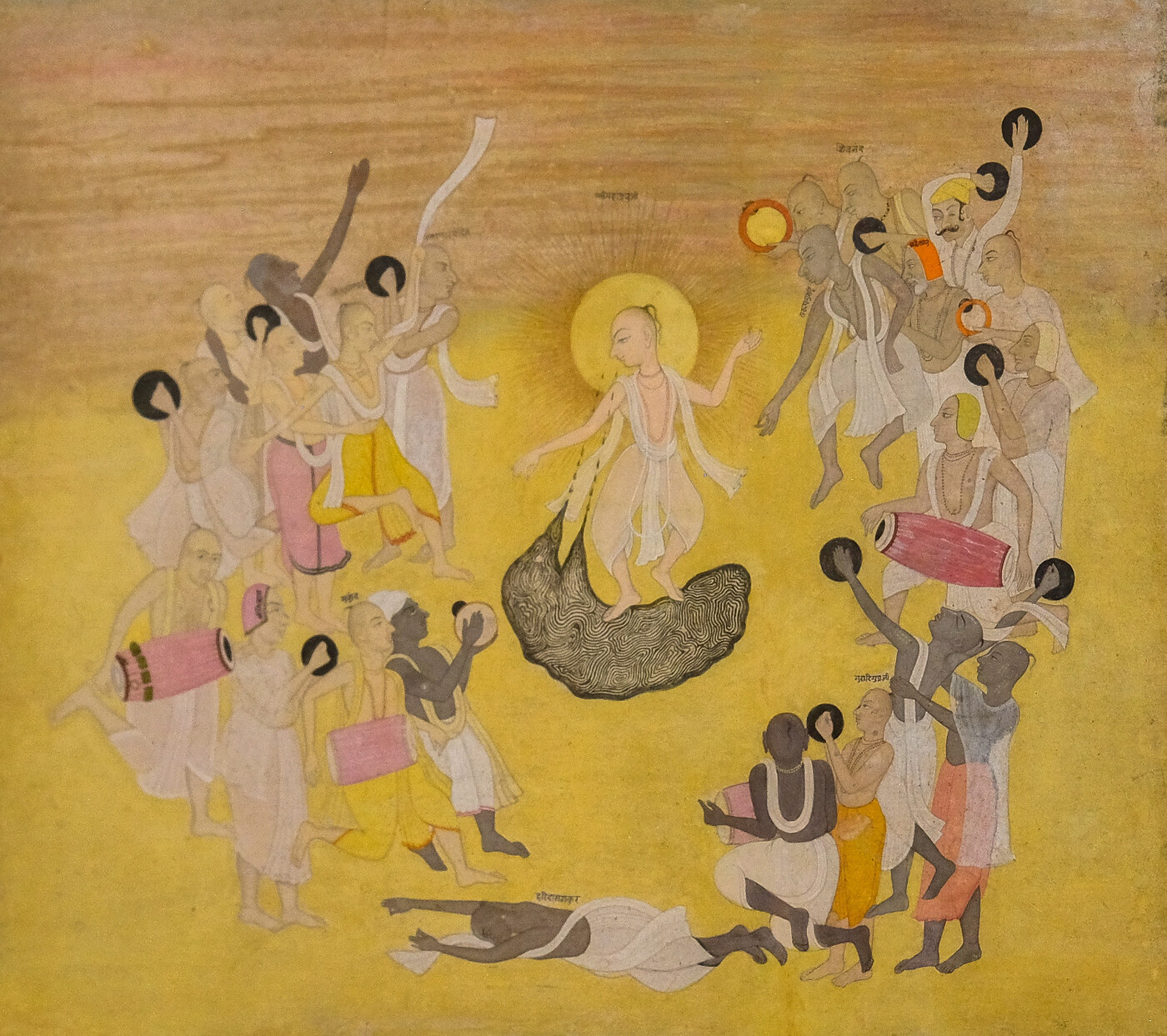
Every year, Srila Shivananda Sena led the devotees of Bengal on the long walk to Jagannatha Puri, arranging their lodging and paying every toll along the way. One year he was delayed at a tax post while the rest of the party went ahead, so he could not arrange a residence in time. Nityananda Prabhu was hungry and displeased at the disorder. He called Shivananda names, and when Shivananda arrived, He kicked him in anger. It is one of the best-known moments in Sri Chaitanya-charitamrita's account of that pilgrimage. What it did to one boy standing nearby is told less often. This boy loved Shivananda Sena very much. He was Shivananda's nephew, Shrikanta.
An Uncle Kicked, A Nephew Offended #
Shivananda Sena himself took the kick as the highest mercy: he touched Nityananda Prabhu's feet, arranged a milkman's house as the Lord's residence within moments, and later told Nityananda directly that being chastised by Him was the fulfillment of his whole life (Antya 12.24-30). But "Shivananda Sena's nephew, Shrikanta, the son of his sister, felt offended, and he commented on the matter when his uncle was absent" (Antya 12.34). What he said, to whoever was near him, was blunt: "My uncle is well known as one of the associates of Sri Chaitanya Mahaprabhu, but Lord Nityananda Prabhu asserts His superiority by kicking him" (Antya 12.35).
It is a very human line. The young man could not yet see such a scolding as a sign of closeness. His uncle saw grace in it, but Shrikanta saw only insult. Chaitanya-charitamrita does not soften it or apologize for him. It simply records that "after saying this, Shrikanta, who was only a boy, left the group and traveled on alone to the residence of Sri Chaitanya Mahaprabhu" (Antya 12.36). He walked ahead of the whole pilgrim party, by himself. He did not stay with the people whose devotion he had just quietly judged.
Arriving Still In His Traveling Clothes #
When Shrikanta reached the Lord's residence at Puri, he was still dressed for the road. He was wearing the shirt and coat (petangi) that travelers wore. Such garments were forbidden near the Deity or when offering obeisances. Govinda, the Lord's personal attendant, noticed this immediately: "My dear Shrikanta, first take off these garments" (Antya 12.37). Before Shrikanta could respond, Sri Chaitanya Mahaprabhu spoke up for him: "Don't bother him. Let Shrikanta do whatever he likes, for he has come here in a distressed state of mind" (Antya 12.38). This is a small but clear example of the Lord's own character. No one had told Him that anything was wrong, yet He noticed the boy's inner state. And in that moment He chose to be gentle, instead of insisting on what was correct.
Naming Everyone, Except One Thing #
Once Shrikanta had settled, Sri Chaitanya Mahaprabhu "inquired from Shrikanta about all the Vaishnavas, and the boy informed the Lord about them, naming them one after another" (Antya 12.39), an ordinary, even pleasant exchange, a boy giving the Lord news of home. But it was the Lord's earlier remark, "he has come here in a distressed state of mind," that stayed with Shrikanta: "when Shrikanta Sena heard the Lord say 'He is distressed,' he could understand that the Lord is omniscient" (Antya 12.40). Having grasped that Sri Chaitanya Mahaprabhu already knew everything without being told, Shrikanta made a choice of his own: "As he described the Vaishnavas, therefore, he did not mention Lord Nityananda's kicking Shivananda Sena" (Antya 12.41).
That single omission is the real turning point of the episode. The same boy had walked away from the party in protest. He had been unable to see anything but injury in what Nityananda Prabhu had done. Now he arrived at Sri Chaitanya Mahaprabhu's feet and chose silence about the very thing that had upset him. No one told him to be silent. But he was in the Lord's presence, and he understood that the Lord knew everything. So the complaint now felt small. Soon after, the rest of the devotees arrived, Shivananda Sena among them, and the Lord received them in turn. The pilgrimage went on as it always had. The incident was never settled in words. It was simply taken in and let go, as many small disagreements inside a loving family are.
Read Alongside #
Before this episode, Shrikanta held a kirtan role, singing in Ratha-yatra's parties under Mukunda Datta, with Haridasa Thakura dancing before him. That story is told in A Nephew's Place In The Kirtan Party.
Scriptural evidence for this chapter (8)
Quoted in the text above:
- Antya 12.36 Chaitanya-charitamrita
- Antya 12.39 Chaitanya-charitamrita
- Antya 12.41 Chaitanya-charitamrita
Further verses:
śivānandera bhāginā, — śrīkānta-sena nāma / māmāra agocare kahe kari’ abhimāna
Word for word
śivānandera: of Śivānanda Sena; bhāginā: the sister’s son; śrīkānta-sena nāma: named Śrīkānta Sena; māmāra: of his maternal uncle; agocare: in the absence of; kahe: said; kari’ abhimāna: with an offended state of mind.
Śivānanda Sena’s nephew, Śrīkānta, the son of his sister, felt offended, and he commented on the matter when his uncle was absent.
Introduces the moment Shrikanta, offended on his uncle Shivananda Sena's behalf, voices his complaint.
“caitanyera pāriṣada mora mātulera khyāti / ‘ṭhākurālī’ karena gosāñi, tāṅre māre lāthi”
Word for word
caitanyera pāriṣada: associate of Śrī Caitanya Mahāprabhu; mora: my; mātulera: of the maternal uncle; khyāti: reputation; ṭhākurālī: superiority; karena: exhibits; gosāñi: Nityānanda Prabhu; tāṅre: him; māre lāthi: kicks.
“My uncle is well known as one of the associates of Śrī Caitanya Mahāprabhu, but Lord Nityānanda Prabhu asserts His superiority by kicking him.”
The exact words of Shrikanta's complaint, used here as his pull-quote.
peṭāṅgi-gāya kare daṇḍavat-namaskāra / govinda kahe, — ‘śrīkānta, āge peṭāṅgi utāra’
Word for word
peṭāṅgi: shirt and coat; gāya: on the body; kare: performs; daṇḍavat-namaskāra: offering of obeisances; govinda kahe: Govinda said; śrīkānta: my dear Śrīkānta; āge: first; peṭāṅgi utāra: take off your shirt and coat.
When Śrīkānta offered obeisances to the Lord, he was still wearing his shirt and coat. Therefore Govinda told him, “My dear Śrīkānta, first take off these garments.”
From the purport: Purport excerpt: "One is forbidden to enter the Deity room or offer anything to the Deity while wearing a shirt or coat."
Govinda's instruction to remove traveling clothes before approaching the Lord, per the tantric etiquette his purport cites.
prabhu kahe, — “śrīkānta āsiyāche pāñā mano-duḥkha / kichu nā baliha, karuka, yāte ihāra sukha”
Word for word
prabhu kahe: Śrī Caitanya Mahāprabhu said; śrīkānta: Śrīkānta; āsiyāche: has come; pāñā: getting; manaḥ-duḥkha: distress in the mind; kichu: anything; nā baliha: do not say; karuka: let him do; yāte: by which; ihāra: his; sukha: happiness.
As Govinda was warning Śrīkānta, Śrī Caitanya Mahāprabhu said, “Don’t bother him. Let Śrīkānta do whatever he likes, for he has come here in a distressed state of mind.”
Sri Chaitanya Mahaprabhu's gentle response, showing He perceived Shrikanta's distress before being told.
‘duḥkha pāñā āsiyāche’ — ei prabhura vākya śuni’ / jānilā ‘sarvajña prabhu’ — eta anumāni’
Word for word
duḥkha: unhappiness; pāñā: getting; āsiyāche: he has come; ei: this; prabhura: of Śrī Caitanya Mahāprabhu; vākya: statement; śuni’: hearing; jānilā: could understand; sarva-jña prabhu: the Lord is omniscient; eta: this; anumāni’: guessing.
When Śrīkānta Sena heard the Lord say “He is distressed,” he could understand that the Lord is omniscient.
Shrikanta's realization of the Lord's omniscience, which leads him to omit the Nityananda incident when naming the Vaishnavas.
Closing
A Name Shared By Several Vaishnavas #
First of all, this name needs to be made clear, because it belongs to more than one figure in Gaudiya Vaishnava sources. "Shrikantha" is also a well-known name of Lord Shiva, "the one with the beautiful throat," referring to the blue mark left on his neck by the poison he swallowed at the churning of the ocean. That is a name for a deity, not a devotee, and it has nothing to do with the person described here. Separately, Chaitanya-bhagavata and Chaitanya-charitamrita both mention that Sri Srivasa Thakura had three brothers living with him in Navadwip. Later Vaishnava reference works name the youngest of them as Shrikanta, also called Shrinidhi Pandit. He is a quiet figure about whom almost nothing is recorded, and he is not the Shrikanta discussed below. The Shrikanta described below is Shrikanta Sena, Shivananda Sena's nephew. He is named repeatedly in Sri Chaitanya-charitamrita and identified in the Gaura-ganoddesha-dipika. He is also the only one of the three for whom any specific episode survives.
Nephew of Shivananda Sena #
Chaitanya-charitamrita's tenth chapter of Adi-lila lists, one by one, the main branches and sub-branches of the "Chaitanya tree". These are the devotees who carried the movement forward in their own households and local areas. Among them is this entry: "Shrivallabha Sena and Shrikanta Sena were also subbranches of Shivananda Sena, for they were not only his nephews but also unalloyed devotees of Sri Chaitanya Mahaprabhu" (Chaitanya-charitamrita, Adi 10.63). Shivananda Sena is remembered as the householder who organized and paid for Bengal's devotees on their yearly walk to Jagannatha Puri for Ratha-yatra. He paid every toll and ferry fare along the way. Shrikanta evidently grew up inside that same household of service, alongside his cousin Shrivallabha.
That upbringing shows in the one detail about his service that Chaitanya-charitamrita gives. During the Ratha-yatra sankirtana, the assembled devotees were divided into singing parties, and "another two persons, Shrikanta and Vallabha Sena, joined as responsive singers. In this group, the senior Haridasa Thakura was the dancer" (Madhya 13.41). Srila Prabhupada's purport names the full party, Vasudeva, Gopinatha, Murari, Shrikanta and Vallabha Sena, under the leadership of Srila Mukunda Datta. It is a small detail. But it places Shrikanta inside the most senior circle of Ratha-yatra kirtan. He sang back the melodic lines Mukunda's party led, with Haridasa Thakura himself dancing in front of them.
A Gopi Named Katyayani #
Kavi Karnapura wrote the Gaura-ganoddesha-dipika to record the Krishna-lila identity behind each of Sri Chaitanya Mahaprabhu's associates. At text 174 it states plainly: "The Vraja Gopi Katyayani Devi appeared as Srikanta Sena." The strict Katyayani-vrata in Srimad-Bhagavatam is named after the goddess Katyayani. It was the vow the young gopis of Vraja kept every morning of the month of Margashirsha. They worshipped the goddess Katyayani and prayed only that Krishna would become their husband. Srila Prabhupada's own purport to Adi 10.63 repeats this identification directly. It also adds one more detail about the incident that made Shrikanta briefly well known. When he and his cousin left Shivananda Sena's party as a protest (see below), "the Lord could understand the feelings of the boys, and He asked His personal assistant, Govinda, to supply them prasadam until the party of Shivananda arrived."
In Kavi Karnapura's Sanskrit, the line quoted above (Gaura-ganoddesha-dipika 174) reads:
vraje katyāyanī yāsīd adya śrīkānta-senakaḥ
Srila Prabhupada's own words in his purport to Chaitanya-charitamrita Adi 10.63 are: "In the Gaura-gaṇoddeśa-dīpikā (174) it is said that the gopī whose name was Kātyāyanī appeared as Śrīkānta Sena."
A Possible Meeting At Hajipura #
Later in Chaitanya-charitamrita's Madhya-lila, Srila Sanatana Gosvami escapes from prison and makes a difficult journey toward Vrindavana. The text says he reached a town called Hajipura. There he met "a gentleman named Shrikanta, who happened to be the husband of Sanatana Gosvami's sister". This Shrikanta was also a government officer entrusted with 300,000 gold coins for the royal horse trade (Madhya 20.38-39). He gave Sanatana a woolen blanket and helped him cross the Ganges before Sanatana pressed on toward Varanasi. It is tempting to join this with the story above and say that the same young man grew up to hold a government post. But Chaitanya-charitamrita itself never says so. No purport or verse anywhere connects the two. Also, a "boy" (balaka) protesting on the Puri road does not fit easily with a trusted royal officer managing a fortune in gold. The honest answer is that the Hajipura Shrikanta may or may not be Shivananda Sena's nephew. The sources do not settle the question either way.
Only Verses, No Independent Life #
There is no tradition of Shrikanta Sena's birth, disappearance, home town, or any teaching, book, or verse composed by him. Everything known about him is carried inside someone else's story: his uncle Shivananda Sena's household, Mukunda's kirtan party, a single afternoon of injured pride outside Jagannatha Puri. Even this lack of detail is worth thinking about. Sri Chaitanya-charitamrita is, among other things, a careful record of exactly this kind of devotee. He was not a teacher, not an author, and not a famous person of the renounced order. He was a named face inside a moving crowd of pilgrims, singers and family members. The tradition considered the devotion of such devotees worth remembering by name, instead of letting it disappear into the words "and many others."
- Sri Chaitanya-charitamrita, Adi-lila 10.63 (verse, synonyms, translation, purport)
- Sri Chaitanya-charitamrita, Madhya-lila 13.41 (verse, synonyms, translation, purport)
- Sri Chaitanya-charitamrita, Antya-lila 12.34-41
- Sri Chaitanya-charitamrita, Madhya-lila 20.37-44
- Shrikanta — Gaudiya History (ISKCON Desire Tree)
- Shrivasa Pandit — Biography 3 (naming Srivasa's youngest brother Shrikanta/Shrinidhi Pandit) — Gaudiya History
- Sri Gaura-ganoddesha-dipika, text 174 (English edition, Part 3) — isvara.org
- Sri Shivananda Sena — A Confidential Servant of Lord Chaitanya Mahaprabhu, ISKCON Bangalore blog
