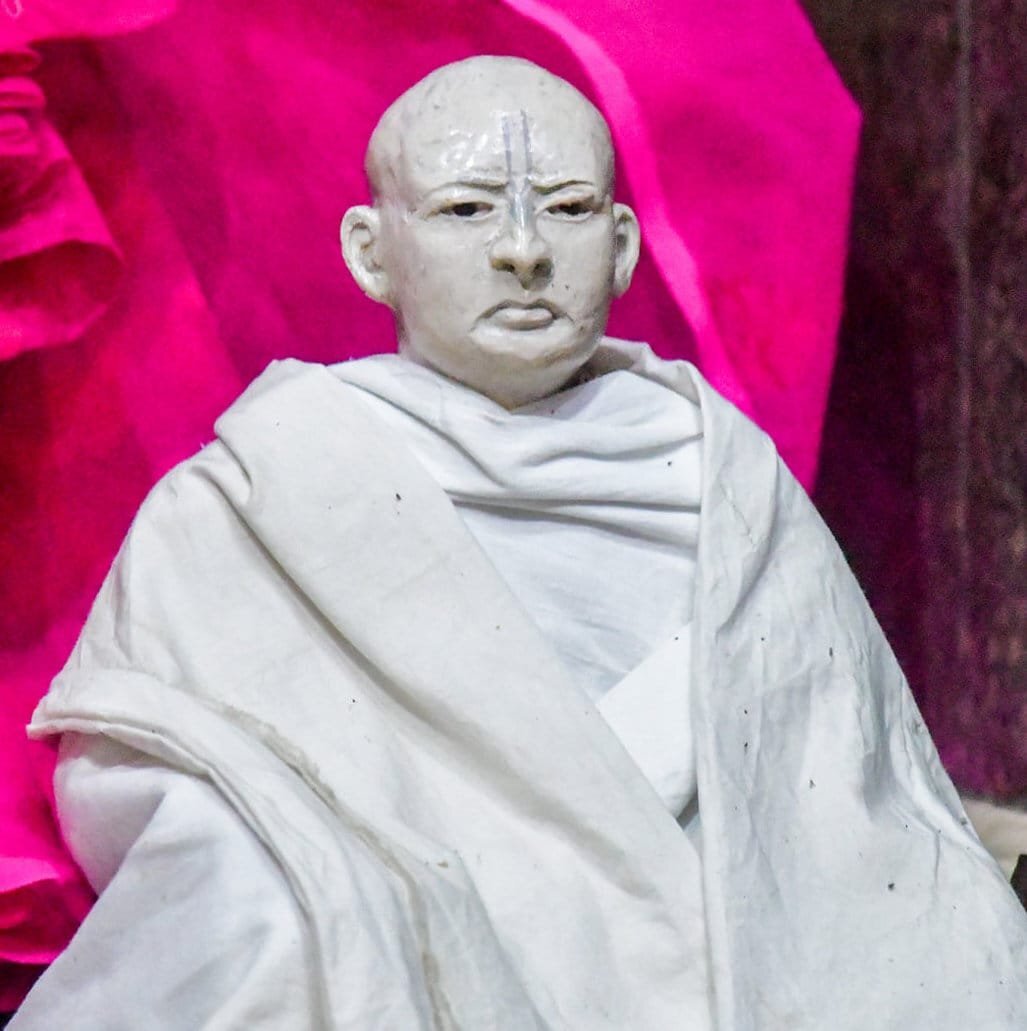
Vasudeva Datta's devotion left behind more than words and prayers. At some point in his life he established a Deity of Madana-gopala in the village of Mamagachi, near Navadvipa. Unlike almost everything else recorded about him, this act of devotion can still be visited today.
| Detail | Description |
|---|---|
| Location | Mamagachi, Modadrumadvipa, about one mile from Purvasthali railway station near Navadvipa |
| Founded by | Vasudeva Datta |
| Deity established | Sri Madana-gopala |
| Present caretakers | Gaudiya Matha devotees |
| Pilgrimage status | Regular stop on the annual Navadvipa-parikrama |
| Parikrama inaugurated by | Srila Bhaktisiddhanta Sarasvati Thakura |
A Temple Beside Vrindavana Dasa Thakura's Birthplace #
Mamagachi is not a place Vasudeva Datta chose at random. Srila Bhaktisiddhanta Sarasvati Thakura's own Anubhashya commentary is quoted directly in Srila Prabhupada's purport. It identifies Mamagachi as the birthplace of Vrindavana Dasa Thakura, the author of Sri Chaitanya-bhagavata. That book is one of the very sources behind the account of Mahaprabhu's three-fold vow over Vasudeva Datta's own body. The temple Vasudeva Datta founded stands very close to the birthplace of the devotee who first wrote down some of the pastimes involving him. The Gaudiya Vaishnava holy places of Bengal seem to hold many quiet coincidences like this. There, the events told in scripture and the places devotees still visit today are only a short walk apart.
What Bhaktisiddhanta Sarasvati Recorded #
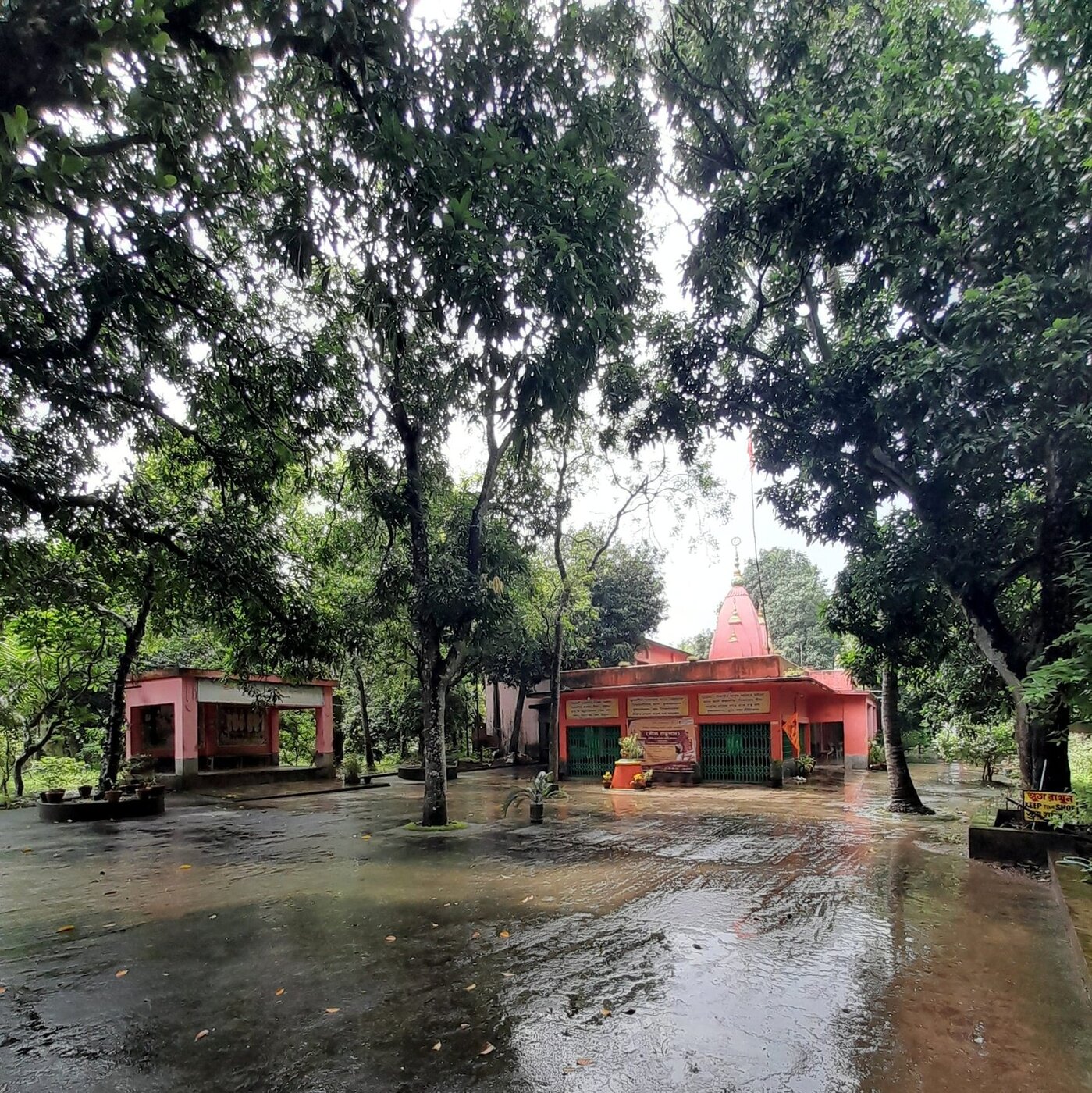
Srila Prabhupada's purport preserves Bhaktisiddhanta Sarasvati Thakura's own description of the site almost word for word. It mentions a railway station named Purvasthali near the Navadvipa station. About a mile away, in the village of Mamagachi, there is "a temple of Madana-gopala that was established by Vasudeva Datta." It is a plain, factual description, the kind a pilgrimage guide gives, not a poem of praise. That plainness itself tells us something. By the time Bhaktisiddhanta Sarasvati Thakura was writing, the temple did not need grand words. It had simply continued, generation after generation, doing what Vasudeva Datta had established it to do.
A Stop on Pilgrimage Ever Since #
The same purport records that Gaudiya Matha devotees took charge of the temple and that its seva-puja, the daily worship of the Deity, was continuing very nicely under their care. It also records something that Mukunda Datta's own page mentions. Every year, pilgrims walking the Navadvipa-parikrama visit Mamagachi, and the temple has been well managed ever since Bhaktisiddhanta Sarasvati Thakura began that annual parikrama. So, five centuries later, devotees still walk on foot to a place connected with a pastime from the earliest years of the sankirtana movement. One devotee founded this one temple as a private act of worship. It became part of a pilgrimage route that did not even exist in his own lifetime.
Shared Ground With Other Devotees #
The Mamagachi temple complex today is not devoted to Vasudeva Datta's Deity alone. Other accounts of the site describe Deities of Radha-Gopinatha connected to Saranga Thakura, another of Mahaprabhu's associates. They are worshiped within the same temple grounds alongside Vasudeva Datta's own Madana-gopala. This fits a common pattern in Navadvipa. Its holy places often bring the memory of many devotees together on one stretch of ground, instead of keeping each memorial separate. A single visit to Mamagachi today touches the memory of several of Mahaprabhu's associates at once, not Vasudeva Datta's alone.
Why This Temple Matters #
The name of his birth village is disputed, and there is no recorded date at all for his disappearance. Beside these, the Madana-gopala temple at Mamagachi is the one part of Vasudeva Datta's story that is free from all uncertainty. It is a real place, not a claim. People can walk to it, not only read about it. His most famous moments are a prayer offered once at Jagannatha Puri and a vow spoken three times at Srivasa Pandita's house. Both are preserved only in text. So a temple still standing and still worshiped is its own kind of evidence. It is proof, of a kind no verse can give, that what Vasudeva Datta built outlasted him.
