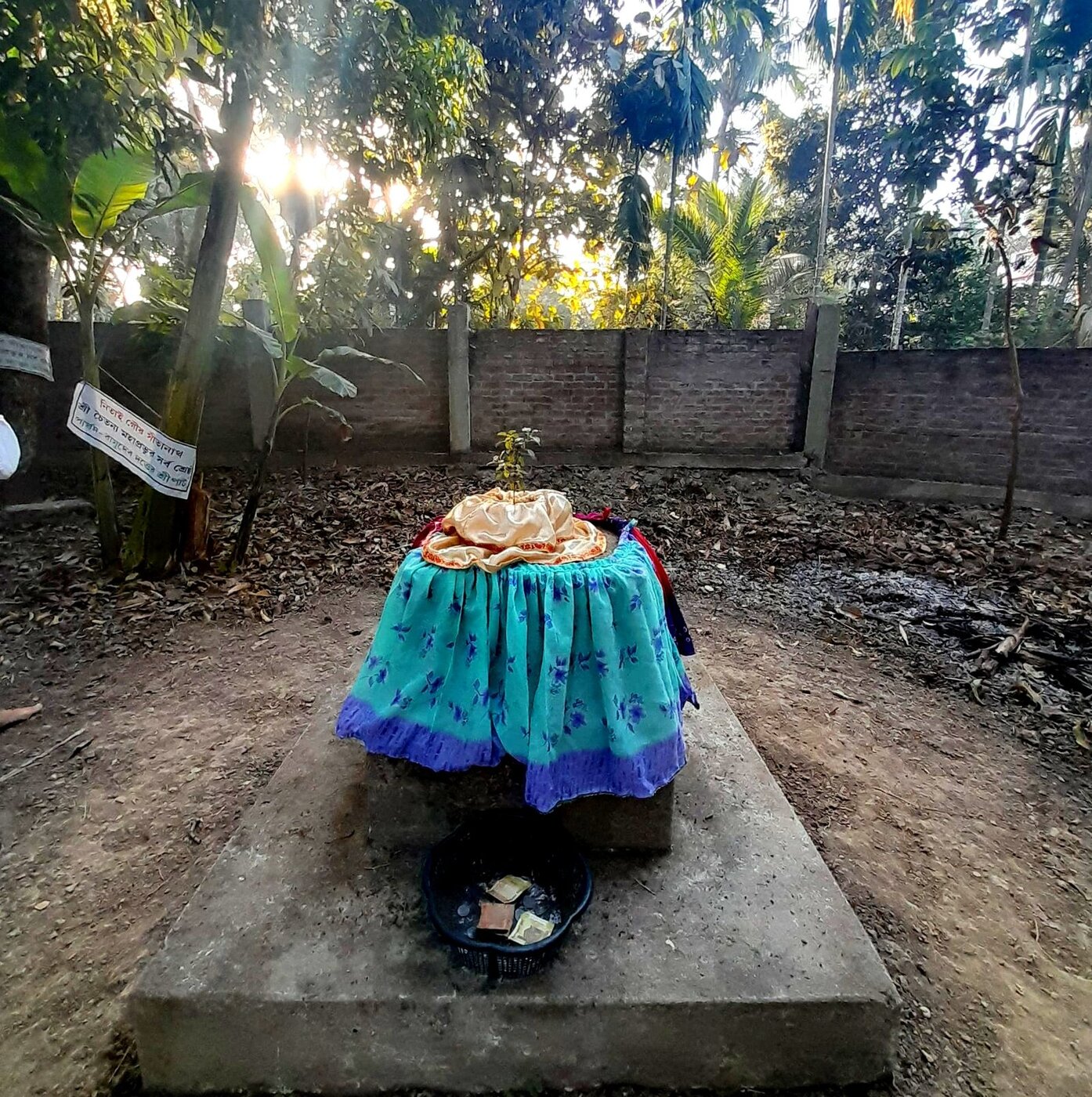
Two brothers left a family of physicians in Chittagong, at the eastern edge of Bengal, and walked into the very center of Sri Chaitanya Mahaprabhu's own life. The younger, Mukunda Datta, has his own detailed birth story told on his own page. The elder brother, Vasudeva Datta, is a different matter. Very little is recorded about his own earliest years. Sri Chaitanya-charitamrita introduces him without a single childhood story, unlike the schoolyard debates recorded for Mukunda. What survives is a family, a trade, and a place.
| Detail | Description |
|---|---|
| District | Chittagong, Bengal |
| Village (per a later compiled biography) | Chakrashala |
| Village (per Srila Prabhupada's purport on Mukunda Datta's verse) | Chanhara, Patiya police station |
| Family trade | Ambastha physicians, surname Datta |
| Birth order | Elder of two brothers |
| Younger brother | Mukunda Datta |
Two Sources, Two Village Names #
Sri Chaitanya-charitamrita's own verse on Vasudeva Datta gives no village at all. It says only that he was "the brother of Mukunda Datta" and "a resident of Chattagrama," the Sanskritized form of Chittagong. The specific village name comes from two later sources, and they disagree with each other. A compiled biography drawing on the older text Prema-vilasa names the ancestral village as Chakrashala and describes the Datta family as respected Ambastha physicians. Srila Prabhupada's own purport gives a different place. It was written for Mukunda Datta's neighboring verse in the same chapter, and it places the family's home in Chanhara, under the Patiya police station, about twenty miles from the home of Pundarika Vidyanidhi. Neither source responds to the other's claim, and nothing in either one decides which is right. Both brothers were born into the same household, so this disagreement over the village name applies to Vasudeva too. It is only a detail that neither tradition has settled. There is no real dispute over which family raised him.
The Elder of the Two #
Sri Chaitanya-charitamrita almost always identifies Vasudeva Datta through his relationship to his brother: "the brother of Mukunda Datta," "the older brother of Mukunda Datta." It does this even in passages written well after Vasudeva Datta had clearly become the more famous of the two. This is a strange habit of the text, because Krishnadasa Kaviraja Goswami elsewhere calls Vasudeva "the nineteenth branch of the Chaitanya tree" and says a thousand mouths could not finish praising him. The most likely reason is simply the order of events. Mukunda Datta was Mahaprabhu's own childhood classmate, so that friendship came before anything recorded of Vasudeva. The habit of naming Vasudeva through that older relationship remained, even after his own devotion had outshone it in every other way.
Ambastha Physicians Named Datta #
The Ambastha community that the Prema-vilasa tradition assigns to the Datta family was, in Bengal, known specifically for the practice of medicine. This places Vasudeva Datta in interesting company. Murari Gupta, another of Mahaprabhu's close associates from this same generation, was also a practicing physician by trade, though from a completely separate family. Whether Vasudeva Datta himself ever practiced medicine is not recorded. What the tradition preserves is only the family's professional identity, not any detail of a medical career for either brother. Both brothers, in any case, left Chittagong for Navadvipa, where a large community of Vaishnava families from the Chittagong region had already settled to live near the Ganges and study.
A Household That Produced No Ordinary Sons #
Beyond the family trade and the disputed village name, nothing else is recorded of Vasudeva Datta's life before he appears, already an adult, as one of Sri Chaitanya Mahaprabhu's intimate associates. He was extremely generous and close to Srivasa Thakura. He was eventually placed under the informal financial care of Shivananda Sena, because he could not stop giving his own wealth away. No source records who initiated him, or whether he received diksha at all before joining Mahaprabhu's circle. Several of his contemporaries have a named guru, but Vasudeva Datta's guru is simply never named. The record does preserve what came next, in remarkable and specific detail. There was a prayer so compassionate that it made Mahaprabhu weep, and a vow the Lord Himself made three times over. Both are told in The Vow to Take on the World's Sins and Mahaprabhu's Three-Fold Vow.
