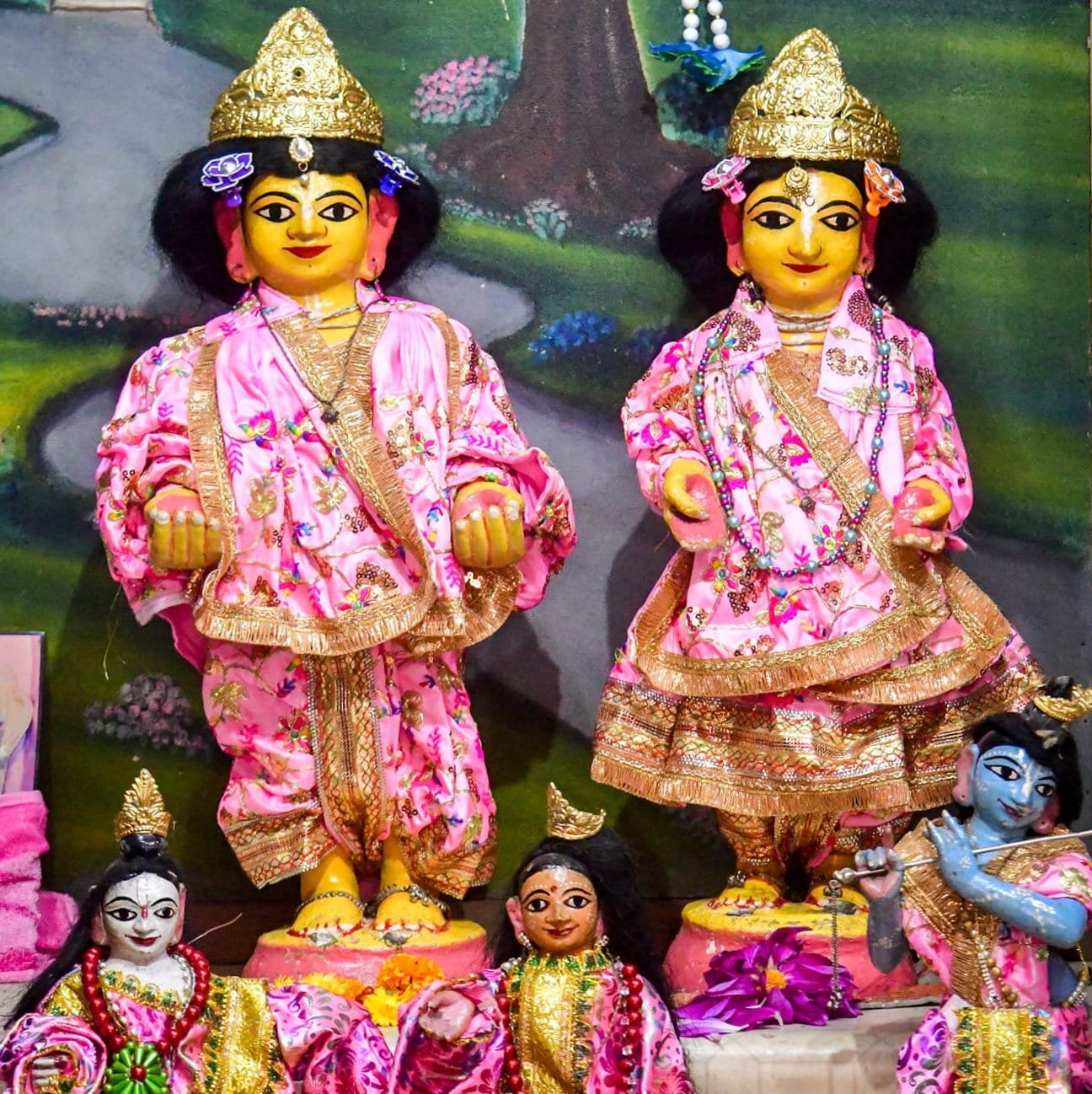
Of all that Sri Chaitanya-charitamrita records about Mahaprabhu's associates, Srila Prabhupada treats one prayer of Vasudeva Datta's as standing alone. It happened during the Bengali devotees' annual visit to Jagannatha Puri. Sri Chaitanya-charitamrita tells it in Madhya-lila, chapter fifteen. At that time Mahaprabhu was bidding the year's pilgrims farewell before they went home. He had just finished praising Raghava Pandita, the residents of Kulina-grama, and several other devotees, one after another, for their individual qualities. When Vasudeva Datta's turn came, something different happened. Instead of praise, there came a request.
| Detail | Description |
|---|---|
| Setting | Jagannatha Puri, during the annual farewell to visiting Bengali devotees |
| Textual source | Sri Chaitanya-charitamrita, Madhya-lila, chapter 15, verses 160-172 |
| The request | To take on the sinful reactions of every living being in the universe |
| Mahaprabhu's reply | Vasudeva Datta's prayer alone was sufficient; no suffering was required of him |
| Comparison drawn in the purport | Srila Bhaktisiddhanta Sarasvati Thakura's commentary, comparing him to Jesus Christ |
A Heart That Could Not Bear the World's Suffering #
Vasudeva Datta told the Lord plainly that he could no longer bear to see the suffering of conditioned souls. He asked Mahaprabhu to place the karma of every sinful living being in the universe onto his own head. He asked to suffer forever in hell as a result, so long as it meant every other living being could be freed from material existence. This was not a request made lightly, or just for effect. Sri Chaitanya-charitamrita says that on hearing it, the Lord's heart grew soft, tears began to flow from His eyes, and He answered in a voice that faltered.
"You Are the Incarnation of Prahlada Maharaja" #
Mahaprabhu's reply gave the whole request a new meaning. Such a prayer, He told Vasudeva Datta, was no surprise at all, because he was himself an incarnation of Prahlada Maharaja (Chaitanya-charitamrita, Madhya-lila 15.165), the great devotee-son of Hiranyakashipu, whose own compassion for suffering souls is well known throughout the Bhagavatam. A pure devotee's sincere desire, the Lord explained, is something Krishna never refuses. Simply by Vasudeva Datta's wish that every living being be delivered, all of them could be liberated, without his having to suffer even a moment of what he had offered to take on. Whoever received his compassion, Mahaprabhu said, would immediately become a Vaishnava, and Krishna removes every past sinful reaction from a Vaishnava's account without exception.
Millions of Times Beyond Any Other Example #
In the purport to this section, Srila Prabhupada directly quotes Srila Bhaktisiddhanta Sarasvati Thakura's own commentary. The comparison he draws is unusually bold for a Vaishnava text. Vasudeva Datta and Haridasa Thakura are described as many millions of times more advanced than even Lord Jesus Christ. The reason given is that Christ relieved only his own followers of their sins. But Vasudeva Datta offered to take on the sinful reactions of every living being in the universe, without exception. He asked for nothing in return and expected no honor or reputation from the offer. Bhaktisiddhanta Sarasvati is not trying to compare religions here. He wants to show how great this compassion was. It was for every living being, it had no conditions, and it had no trace of self-interest.
Remembered Long After, by Haridasa Thakura Himself #
Even within Mahaprabhu's own lifetime, other devotees would point back to this episode. Later, in Sri Chaitanya-charitamrita's Antya-lila, Haridasa Thakura has a separate philosophical exchange with Mahaprabhu. It is about how the chanting of the holy name delivers even those who chant it improperly. There Haridasa Thakura himself brings up Vasudeva Datta's plea as proof that the Lord accepts and fulfills a devotee's prayer for the world's deliverance. So a story from one chapter came up again, unprompted, in an entirely different conversation years later. This alone shows how deeply this single prayer had entered the devotional memory of Mahaprabhu's own associates, long before any book was written down to preserve it.
Not a Philanthropist, Not a Mystic #
Srila Bhaktisiddhanta Sarasvati Thakura's commentary makes one more distinction. It helps us understand what kind of act this really was. He writes that Vasudeva Datta's prayer should not be mistaken for ordinary philanthropy or social work. It should also not be mistaken for the impersonal longing of a mystic to merge into the Brahman effulgence, or for any wish for material honor or a reputation for saintliness. Fruitive workers and speculative philosophers, in his account, cannot become pure through their own efforts, exactly because some form of self-interest still clings to them. Vasudeva Datta's prayer had no trace of this. It was offered, in the purport's own words, without any duplicity at all. This is part of why Sri Chaitanya-charitamrita treats it as one of the purest examples of Vaishnava compassion ever recorded.
