Nityananda Prabhu spent the first half of his life as a wandering avadhuta, a renounced holy man who had gone completely beyond the ordinary rules of caste and custom. Yet he ended his life as a married householder at Khardaha, with two wives and children. This is one of the more surprising turns in Gaudiya Vaishnava history, and Viracandra's own story begins there.
| Detail | Description |
|---|---|
| Father | Nityananda Prabhu |
| Birth mother | Vasudha, elder daughter of Suryadasa Sarakhela |
| Guru and foster mother | Jahnava Devi, younger daughter of Suryadasa Sarakhela |
| Siblings | Ganga Devi (surviving sister); seven elder brothers, all of whom died in infancy |
| Birthplace | Khardaha, on the Ganges north of present-day Kolkata |
| Traditional identity | Incarnation of Kshirodakashayi Vishnu (Gaura-ganoddesha-dipika 67) |
A Marriage Chaitanya Mahaprabhu Asked For #
Later Bengali biographies record that Chaitanya Mahaprabhu personally asked Nityananda to give up the wandering life of an avadhuta, free of ordinary rules, and settle down as a married householder. These biographies include the Bhakti-ratnakara, the Premavilasa, and the wider body of devotional biographies that grew up around the Nityananda line. The purpose was that the preaching mission in Bengal would have a family ordinary people could actually copy. However, this account does not appear in Krishnadasa Kaviraja Goswami's own Sri Chaitanya-charitamrita. Still, it fits everything else known about the Bengal mission, which was built around householders from the start. Nityananda married two sisters, Vasudha and Jahnava, daughters of Suryadasa Sarakhela of Saligrama, and settled at Khardaha. The fuller story of that courtship and marriage is told on Nityananda Prabhu's own page.
Vasudha's Son, Jahnava's Disciple #
Vasudha, the elder of the two sisters, bore Nityananda eight sons and one daughter. Seven of the sons died as infants. The two who survived were the daughter, Ganga Devi, and the youngest son, Viracandra. Vasudha herself died not long after his birth, and Jahnava, who had no children of her own, raised both children as her own. Srila Bhaktisiddhanta Sarasvati Thakura's Anubhasya commentary to Chaitanya-charitamrita, Adi-lila 11.8, states the relationship more plainly than any other source in this tradition: "Virabhadra Gosani was the direct son of Srila Nityananda Prabhu and a disciple of Jahnava-devi. His real mother was Vasudha." Some traditional accounts, drawing on the Premavilasa, add a further detail. They say that Viracandra decided to accept Jahnava as his diksha-guru after he saw her in a four-armed form and understood who she really was. The Anubhasya quoted in that purport itself states both halves of this: Vasudha was his mother and Jahnava his guru. Looser retellings that simply call him "the son of Nityananda and Jahnava" are not wrong about the household he grew up in. But they blur a difference that the earliest and most careful sources take care to keep clear.
An Incarnation Who Lived Like a Devotee #
The Gaura-ganoddesha-dipika is a traditional Gaudiya Vaishnava text that identifies the eternal spiritual identities of Chaitanya Mahaprabhu's associates. In its sixty-seventh verse it names Viracandra as an incarnation of Kshirodakashayi Vishnu. This is the form of Krishna's expansion Sri Sankarshana who dwells within every living being. Bhaktisiddhanta Sarasvati Thakura's own commentary draws the conclusion directly: Viracandra Gosani is therefore non-different from Sri Krishna Chaitanya Mahaprabhu Himself. A separate tradition, preserved in the Bengali devotional biography Sri Nityananda Charitamrita, traces this claim back to a promise. Chaitanya Mahaprabhu is said to have made this promise to Nityananda Prabhu at Puri, before sending him back to Bengal to marry. He promised that He would appear again within Nityananda's own family, in secret, in a way scripture itself would not openly announce. Krishnadasa Kaviraja Goswami's Chaitanya-charitamrita takes this identity seriously, but does not make a show of it: "Although Virabhadra Gosani was the Supreme Personality of Godhead, He presented Himself as a great devotee. And although the Supreme Godhead is transcendental to all Vedic injunctions, He strictly followed the Vedic rituals" (Adi-lila 11.9). The tradition remembers him living in exactly this way for the rest of his life, with real divinity but without any outward claim to it.
A Birth Date No Two Sources Agree On #
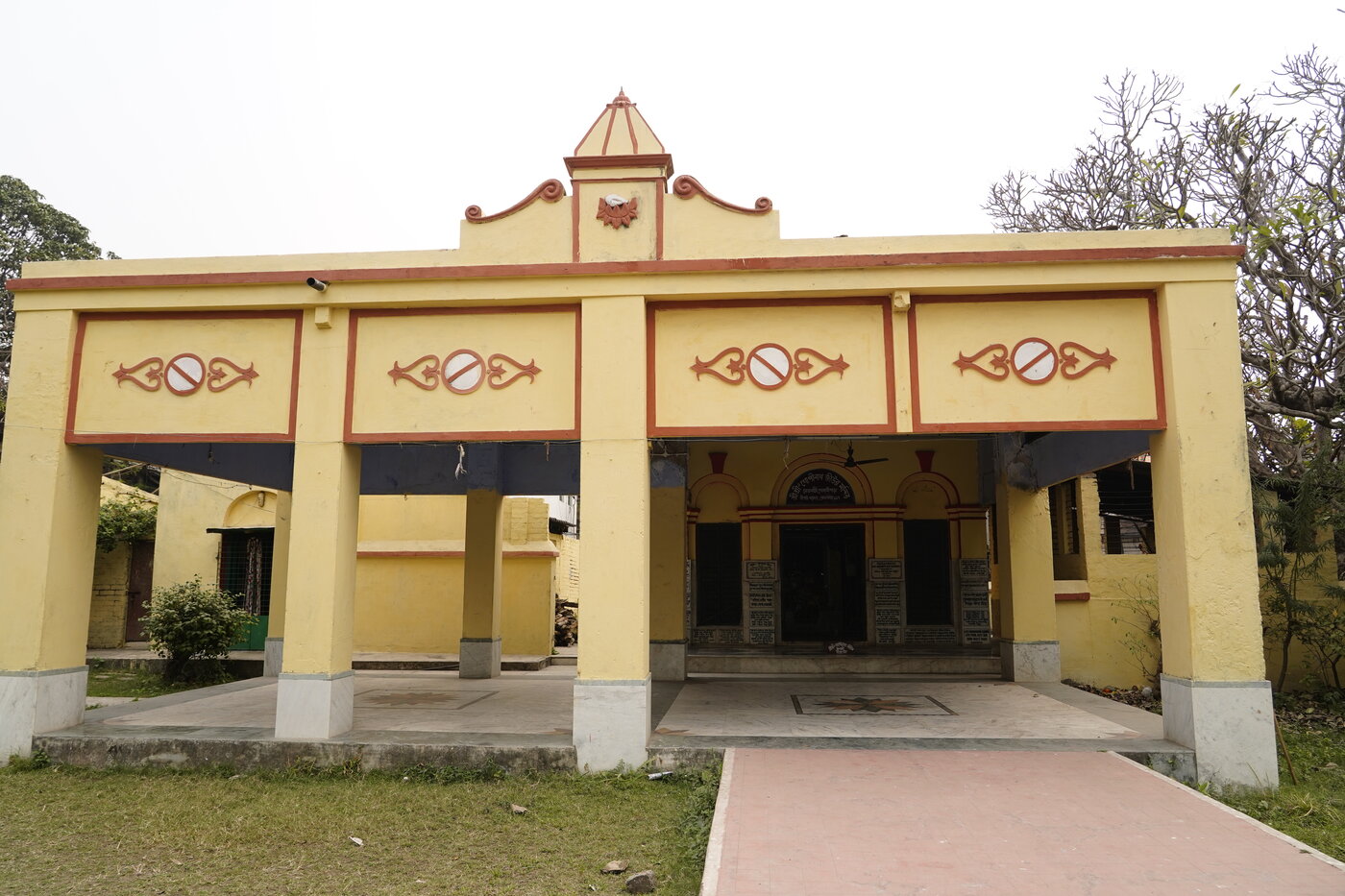
Even the date of Viracandra's birth is not settled. One tradition gives it as the ninth day of the dark fortnight of the month of Kartika. A different source, the Gaudiya Vaishnava Abhidhana, gives Agrahayana shukla chaturdashi instead, a different month and a different lunar fortnight entirely. We report both here instead of picking one. Another claim is found on a Wikimedia Commons description of the Khardaha temple Viracandra later built. It gives his birth year as 1457 CE. This date cannot be correct, because Nityananda Prabhu himself was born around 1474, some seventeen years later. That single detail looks like a simple copying mistake, not a real separate tradition, so we do not repeat it here as fact. More can be said with confidence about the place. It was Khardaha, at the family home the tradition calls Kunja Vatika, on the Ganges north of present-day Kolkata. This town would remain the center of Viracandra's own life and work.
