Killola-kuṇḍa (Govardhana)
किल्लोल-कुण्ड (गोवर्धन) Hindi name proposed
Also called Kilola-kuṇḍa
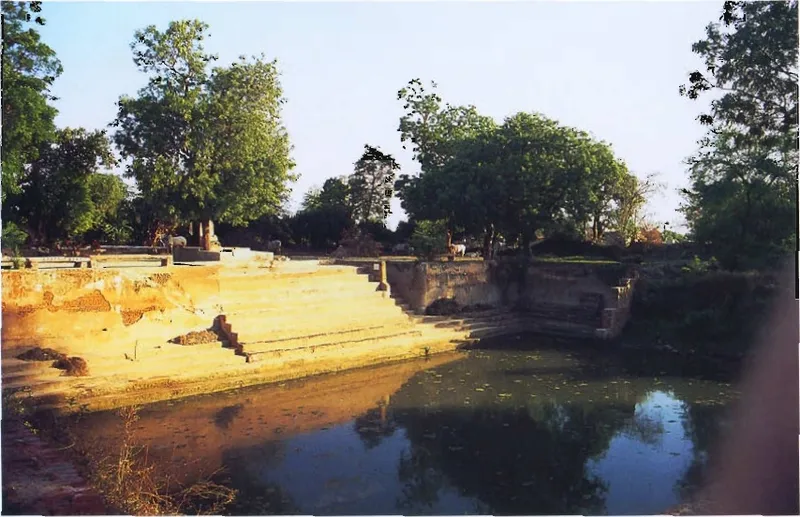
- What it is
- Killola-kuṇḍa, also written Kilola-kuṇḍa, is a small pond a short distance from the main Govardhana parikramā path, south of Gvāla-pokharā.
- Visiting
- In 2001 Govardhana Hill described the kuṇḍa as a short distance from the main parikramā path, with a small temple and a go-śālā, a shelter for cows.
- Parikramā
- Govardhana parikramā, station 9
In short
Killola-kuṇḍa, also written Kilola-kuṇḍa, is a small pond a short distance from the main Govardhana parikramā path, south of Gvāla-pokharā.[1 +1] Two guidebooks say that Kṛṣṇa enjoyed water sports here with Rādhārāṇī and the gopīs, the cowherd girls of Vraja, and played with His cowherd friends; Śrī Vraja-maṇḍala Parikramā (2007) explains killola as sport or frolic.[1 +1] According to Govardhana Hill (2001), the kuṇḍa was on the parikramā route of Śrīla Sanātana Gosvāmī.[1 +1] Śrīmad-Bhāgavatam tells a water play of Kṛṣṇa and the gopīs at the end of the rāsa dance, His dance with them, in the water of the Yamunā; it does not name this kuṇḍa.[4 +3]
Key facts
| Kind | kuṇḍa |
|---|---|
| Region · area | Govardhana |
| Also part of | Kelanvana |
| On the parikramā | Govardhana parikramā, station 9 · the route |
| Ācāryas | Śrīla Sanātana Gosvāmī |
Divine pastimes
The water play
Śrīmad-Bhāgavatam (10.33.22–24) tells that at the end of the rāsa dance Kṛṣṇa entered the water with the gopīs to remove their tiredness, was splashed by them on all sides, and then walked with them in a small forest on the bank of the Yamunā. It does not name Killola-kuṇḍa or any kuṇḍa near Govardhana.[4 +3]
so 'mbhasy alaṃ yuvatibhiḥ pariṣicyamānaḥ premṇekṣitaḥ prahasatībhir itas tato 'ṅga / vaimānikaiḥ kusuma-varṣibhir īdyamāno reme svayaṃ sva-ratir atra gajendra-līlaḥ
My dear King, in the water Kṛṣṇa found Himself being splashed on all sides by the laughing gopīs, who looked at Him with love. As the demigods worshiped Him by showering flowers from their airplanes, the self-satisfied Lord took pleasure in playing like the king of the elephants.
Translation: Śrīla Prabhupāda's disciples (BBT)The commentators say that the water was the Yamunā's (summarised here, not translated). Śrīla Viśvanātha Cakravartī Ṭhākura and Śrīla Baladeva Vidyābhūṣaṇa compare this water play to the bath that closes a sacrifice. None of them names a kuṇḍa.[8]
Govardhana Hill and Śrī Vraja-maṇḍala Parikramā, which set Kṛṣṇa's water play with Rādhārāṇī and the gopīs at this kuṇḍa, do not say that it is this episode of the Bhāgavatam.[1 +2]
Games with the cowherd boys
The Bhāgavatam (10.11.38–40, 10.18.9–16) tells many games that Kṛṣṇa and Balarāma played with the cowherd boys among the rivers, hills, valleys and lakes of Vṛndāvana, and names no lake or forest for them.[9 +3] Śrī Vraja-maṇḍala Parikramā says that Kṛṣṇa and His sakhās, His friends, frolicked and played at this kuṇḍa, and Govardhana Hill that He played ball with them in Kelanvana around it.[1 +1]
Kelanvana
Kelanvana is the forest around Killola-kuṇḍa. According to the local tradition recorded in Govardhana Hill (2001), the only source that names the forest, Kṛṣṇa played ball games here with His cowherd friends; this is not certain.[1]
kvacid vādayato veṇuṃ kṣepaṇaiḥ kṣipataḥ kvacit / kvacit pādaiḥ kiṅkiṇībhiḥ kvacit kṛtrima-go-vṛṣaiḥ
… vṛṣāyamāṇau nardantau yuyudhāte parasparam / anukṛtya rutair jantūṃś ceratuḥ prākṛtau yathā
Sometimes Kṛṣṇa and Balarāma would play on Their flutes, sometimes They would throw ropes and stones devised for getting fruits from the trees, sometimes They would throw only stones, and sometimes, Their ankle bells tinkling, They would play football with fruits like bael and āmalakī. Sometimes They would cover Themselves with blankets and imitate cows and bulls and fight with one another, roaring loudly, and sometimes They would imitate the voices of the animals. In this way They enjoyed sporting, exactly like two ordinary human children.
Translation: Śrīla A.C. Bhaktivedanta Swami PrabhupādaThe commentators explain the games of these verses (summarised here, not translated). Śrīla Sanātana Gosvāmī, Śrīla Jīva Gosvāmī and Śrīla Baladeva Vidyābhūṣaṇa say that a ball (kanduka) was among the playthings of the two brothers. Śrīla Śrīdhara Svāmī and Śrīla Baladeva Vidyābhūṣaṇa say that They threw bilva and other fruits far with slings and kicked them with Their belled feet, while Śrīla Jīva Gosvāmī takes the belled feet to mean that They danced. None of them names a place.[9 +4]
Later the Bhāgavatam (10.18.14–16) lists games with bilva, kumbha and āmalaka fruits among many others, played among the rivers, hills, valleys, trees and lakes of Vṛndāvana, again without naming a place. Śrīla Prabhupāda's Kṛṣṇa book tells these fruit games as catching ball.[10 +2]
The Garga-saṁhitā counts a Kanduka-kṣetra, a field of Kṛṣṇa's ball games with the cowherd boys, among the holy places of Govardhana, and in its picture of the hill as a body that field forms the hill's sides (summarised here, not translated). It gives no position, and no source says that this field is Kelanvana.[17 +1]
Traditional accounts
According to the local tradition recorded in Govardhana Hill (2001), Nanda Mahārāja and the cowherd men stayed at this kuṇḍa for …
According to the local tradition recorded in Govardhana Hill (2001), Nanda Mahārāja and the cowherd men stayed at this kuṇḍa for a few days. The book gives no occasion for their stay and names no source, so this is not certain.[1]
The Gosvāmīs and ācāryas
Govardhana Hill (2001) names Killola-kuṇḍa among the places on the twenty-four-mile Govardhana parikramā route that Śrīla …
Govardhana Hill (2001) names Killola-kuṇḍa among the places on the twenty-four-mile Govardhana parikramā route that Śrīla Sanātana Gosvāmī followed.[1 +1]
Visiting today
In 2001 Govardhana Hill described the kuṇḍa as a short distance from the main parikramā path, with a small temple and a go-śālā, a shelter for cows. Śrī Vraja-maṇḍala Parikramā (2007) places it south of Gvāla-pokharā, towards Śrī Giridhārī Gauḍīya Maṭha.[1 +1]
Location
| Where it is | 'a short distance from the main parikramā path'[19] Govardhana Town map: small square 'Killola-kuṇḍa' on the east side, beside the road 'To Rādhā-kuṇḍa'; Govardhana map: square '7' right of the parikramā path[20] |
|---|---|
| On the numbered Govardhana chart | 16 (printed as “Kilola Kunda”)[21] |
Places at Killola-kuṇḍa (Govardhana)
1 places
Also described on this page
- Kelanvana forest
Nearby places
Govardhana parikramā path · Gvāla-pokharā · Giridhārī Gauḍīya Maṭha
Pictures
1 pictures
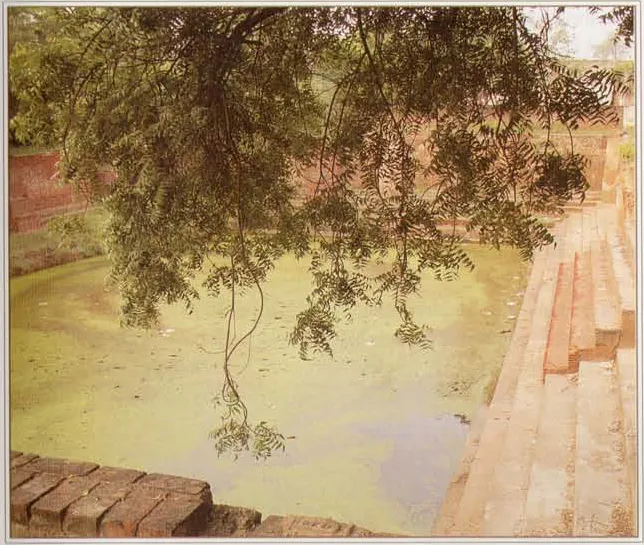
Where the sources differ
Where Kṛṣṇa's water play with the gopīs took place: the Bhāgavatam and its commentators name the Yamunā, the guidebooks this kuṇḍa.
Accounts differ Where Kṛṣṇa's water play (jala-keli) with the gopīs is set
- Śrīmad-Bhāgavatam 10.33.22–24 (translation by Śrīla Prabhupāda's disciples)at the end of the rāsa dance Kṛṣṇa entered 'the water' with the gopīs (in the translation 'the water of the Yamunā'), was splashed by them, and then strolled in a small forest on the Yamunā's bank
- Śrīla Sanātana Gosvāmī, Śrīla Jīva Gosvāmī, Śrīla Viśvanātha Cakravartī, Śrīla Baladeva Vidyābhūṣaṇa on ŚB 10.33.22the water of the Yamunā (Kālindī)
- Śrīla Prabhupāda, Kṛṣṇa book ch. 33Kṛṣṇa and the gopīs entered the water of the Yamunā
- Govardhana Hill: India's Most Sacred Mountain (2001) (printed p. 50)Kilola-kuṇḍa 'where Kṛṣṇa would enjoy water sports and other pastimes with Rādhārāṇī and the gopīs'
References
21 references
- Govardhana Hill: India's Most Sacred Mountain (2001), Rajasekhara dasa Brahmacari, PDF p. 64
- Śrī Vraja-maṇḍala Parikramā (2007), PDF p. 116
- Govardhana Hill: India's Most Sacred Mountain (2001), Rajasekhara dasa Brahmacari, PDF p. 38
- Śrīmad-Bhāgavatam 10.33.22, GRETIL
- Śrīmad-Bhāgavatam 10.33.23, GRETIL
- Śrīmad-Bhāgavatam 10.33.24, GRETIL
- Śrīla Prabhupāda, Kṛṣṇa, the Supreme Personality of Godhead (Kṛṣṇa book), Chapter 33, 'Description of the Rāsa Dance' · vedabase.io
- Śrīla Sanātana Gosvāmī: commentary on ŚB 10.33.22
- Śrīmad-Bhāgavatam 10.11.39-40, GRETIL
- Śrīmad-Bhāgavatam 10.18.16, GRETIL
- Śrīmad-Bhāgavatam 10.18.14, GRETIL
- Śrīla Prabhupāda, Kṛṣṇa, the Supreme Personality of Godhead (Kṛṣṇa book), Chapter 18, 'Killing the Demon Pralambāsura' · vedabase.io
- Śrīmad-Bhāgavatam 10.11.38, GRETIL
- Śrīla Prabhupāda, Kṛṣṇa, the Supreme Personality of Godhead (Kṛṣṇa book), Chapter 11, 'Killing the Demons Vatsāsura and Bakāsura' · vedabase.io
- Śrīla Sanātana Gosvāmī: commentary on ŚB 10.11.38, Bhagavata Vidya Pith edition, ed. Bhagavata Rishi and Krishna Shankar Shastri, 1996
- Śrīdhara Svāmī: commentary on ŚB 10.11.39, Bhagavata Vidya Pith edition, ed. Bhagavata Rishi and Krishna Shankar Shastri, 1996
- Garga-saṁhitā, Girirāja-khaṇḍa (3), adhyāya 7, verse 12, Sanskrit Wikisource
- Garga-saṁhitā, Girirāja-khaṇḍa (3), adhyāya 8, verse 8, Sanskrit Wikisource
- Govardhana Hill: India's Most Sacred Mountain (2001), Rajasekhara dasa Brahmacari, p. 50
- Śrī Vraja-maṇḍala Parikramā (2007), p. 194-195
- Numbered list of the Govardhana sites (key of the Govardhana chart)