Nārada-vana
नारद-वन Hindi name proposed
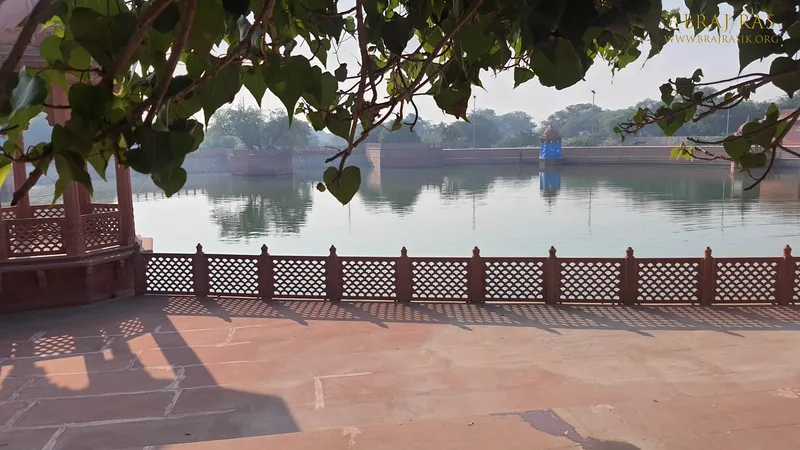
- What it is
- Nārada-vana, the forest of Nārada, lies in the Govardhana area.
- Places here
- Nārada-kuṇḍa (Govardhana)
In short
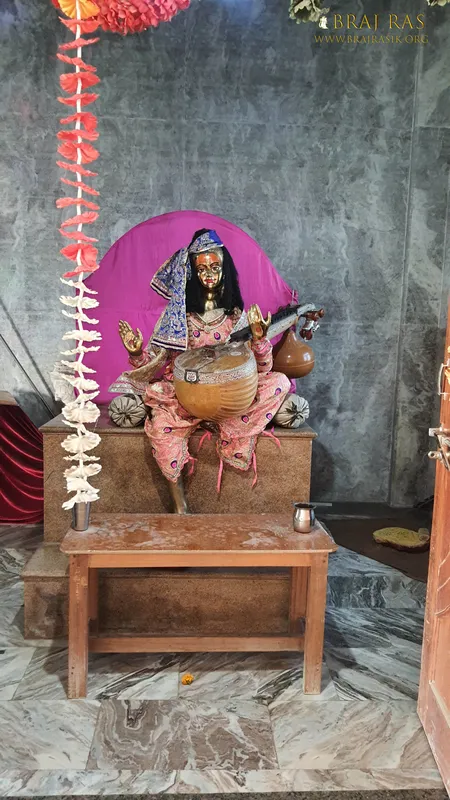
Nārada-vana, the forest of Nārada, lies in the Govardhana area. According to the guidebooks, Śrī Nārada Muni performed austerities here.[1 +5] According to the guidebook Govardhana Hill (2001) and the undated parikramā notes Govardhana, the forest has gone; they place a kuṇḍa, Nārada-kuṇḍa, and a temple of Nārada Muni there, and Vṛndāvana-Dhāma Ki Jaya! (c. 1986) shows the Deity of Nārada Muni at Nārada-vana in a photograph.[1 +2] The Nārada Purāṇa places his austerity, at Vṛndā's order, on the south-east side of a lake of flowers, without naming a forest.[6] Śrīla Nārāyaṇa Bhaṭṭa Gosvāmī's Vraja-bhakti-vilāsa counts a forest named after Nārada among the twelve upavanas, the smaller forests, of Vraja, but it is not settled that it means this place.[5 +2]
Key facts
| Kind | forest |
|---|---|
| Region · area | Govardhana |
| Ācāryas | Nārada Muni, Śrīla Nārāyaṇa Bhaṭṭa Gosvāmī |
Divine pastimes
The Nārada Purāṇa (Uttara-bhāga 80) tells (summarised here, not translated) that Vṛndā's friend Mādhavī had Nārada bathe in Vṛndā's lake, that he rose from it in a woman's form and was taken to Kṛṣṇa, and that a second dip made him Nārada again. Then, at Vṛndā's order, he practised austerity alone on the south-east side of the lake, living on fruits that Vṛndā sent.[6 +1] The Padma Purāṇa tells his change of form at a lake called Amṛta and gives no place in Vraja for it.[11 +1]
Traditional accounts
The Vraja-bhakti-vilāsa quotes a list of the twelve upavanas of Vraja that it attributes to the Varāha Purāṇa; the eleventh is …
The Vraja-bhakti-vilāsa's Nāradavana
The Vraja-bhakti-vilāsa quotes a list of the twelve upavanas of Vraja that it attributes to the Varāha Purāṇa; the eleventh is the forest named after Nārada.[8] In its account of this forest's glory it quotes a verse that it attributes to the Ādi-purāṇa: the forest is named after Nārada, who performed austerities there to see Kṛṣṇa, and the kuṇḍa named after him lies within it. The book sets the darśana of the forest on the fourteenth day of the dark fortnight of Bhādra and on the first day of the bright fortnight of Kārttika.[5 +2]
The book places this account between its sections on Jāvaṭa and Saṅketa, so it is not settled that its Nāradavana is the forest at Govardhana.[5 +2]
What the guidebooks tell
The guidebooks Govardhana Hill (2001) and Vṛndāvana-Dhāma Ki Jaya! (c. 1986) say that Nārada compiled the Nārada-bhakti-sūtras here, and the undated parikramā notes Govardhana give it more cautiously, as a saying. They give no older source for it, so it is not certain.[2 +2]
According to the local tradition recorded in Govardhana Hill, when Kṛṣṇa saw Nārada in the form of a gopī, He asked him to stay at Nārada-vana and write books on bhakti for the good of all, telling him that Dakṣa's curse would not apply here, because Vṛndāvana is not part of the material world; this is not certain. Vṛndāvana-Dhāma Ki Jaya! says only that Kṛṣṇa told him to write about the glories of bhakti.[7 +2] The curse itself is told in Śrīmad-Bhāgavatam (6.5.43): Prajāpati Dakṣa cursed Nārada to travel over the universe with no residence anywhere. The verse does not mention Vṛndāvana or Nārada-vana.[15]
Location
| Where it is | near Kusuma-sarovara[17] |
|---|
Places at Nārada-vana
1 places
Nearby places
Kusuma-sarovara
Pictures
2 pictures
Where the sources differ
The guidebooks also tell how Nārada's austerities here led to his gopī form at Kusuma-sarovara, but each tells it in its own way; the accounts are set side by side on the page of Kusuma-sarovara.[1 +9]
With which mantra Nārada worshipped before he received a gopī's form, and who gave it to him, is told differently and is not certain: Govardhana Hill (2001) says that he meditated here on a mantra received from Lord Śiva; the accounts are set side by side on the page of Nārada-kuṇḍa.[1 +1]
References
17 references
- Govardhana Hill: India's Most Sacred Mountain (2001), Rajasekhara dasa Brahmacari, PDF p. 53
- Vṛndāvana-Dhāma Ki Jaya! (c. 1986), by Dhruva Mahārāja dāsa, PDF p. 36
- the undated parikramā notes Govardhana, ¶34
- Śrīla Narahari Cakravartī, Bhakti-ratnākara, Fifth Wave (pañcama taraṅga), 1912 ed. p. 199, 2nd ed., 1912
- Śrīla Nārāyaṇa Bhaṭṭa, Vraja-bhakti-vilāsa, printed p. 120, Nāradavana-utpatti-māhātmya, 1st ed., publ. Bābā Kṛṣṇadāsa, Kusuma-sarovara, Saṁvat 2008
- Nārada Purāṇa, उत्तरार्धः/अध्यायः 80 v.80-32 to 80-35
- Vṛndāvana-Dhāma Ki Jaya! (c. 1986), by Dhruva Mahārāja dāsa, PDF p. 37
- Śrīla Nārāyaṇa Bhaṭṭa, Vraja-bhakti-vilāsa, printed p. 2, verses 18-22, 1st ed., publ. Bābā Kṛṣṇadāsa, Kusuma-sarovara, Saṁvat 2008
- Śrīla Nārāyaṇa Bhaṭṭa, Vraja-bhakti-vilāsa, printed p. 47, section 51, 1st ed., publ. Bābā Kṛṣṇadāsa, Kusuma-sarovara, Saṁvat 2008
- Nārada Purāṇa, उत्तरार्धः/अध्यायः 80 v.80-22 to 80-26
- Padma Purāṇa, Pātāla-khaṇḍa (5), adhyāya 75 (Vṛndāvana-māhātmya, 'nāradīyānunaya'), verses 29-31, Sanskrit Wikisource
- Padma Purāṇa, Pātāla-khaṇḍa (5), adhyāya 75, verses 48-49, Sanskrit Wikisource
- Śrīla Nārāyaṇa Bhaṭṭa, Vraja-bhakti-vilāsa, printed p. 119, 1st ed., publ. Bābā Kṛṣṇadāsa, Kusuma-sarovara, Saṁvat 2008
- Govardhana Hill: India's Most Sacred Mountain (2001), Rajasekhara dasa Brahmacari, PDF p. 56
- Śrīla Prabhupāda, Śrīmad-Bhāgavatam, Canto 6, Chapter 5, verse 43, translation · vedabase.io
- Śrī Vraja-maṇḍala Parikramā (2007), PDF p. 114
- Vṛndāvana-Dhāma Ki Jaya! (c. 1986), by Dhruva Mahārāja dāsa, p. 18