Nārada-kuṇḍa (Govardhana)
नारद-कुण्ड (गोवर्धन) Hindi name proposed
Also called Nārada-kuṇḍa
- What it is
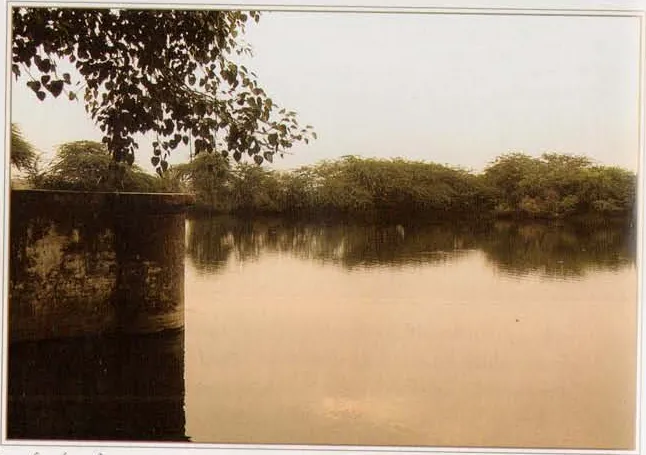
- Nārada-kuṇḍa is a kuṇḍa (sacred pond) on the Govardhana circuit, south-east of Kusuma-sarovara, with a temple and Deity of Śrī Nārada Muni beside it.
- Visiting
- The guidebook Śrī Vraja-maṇḍala Parikramā (2007) and the undated parikramā notes Govardhana place Nārada-kuṇḍa about four hundred metres south-east of Kusuma-sarovara, with a temple and Deity of …
- Parikramā
- Govardhana parikramā, station 5
In short
Nārada-kuṇḍa is a kuṇḍa (sacred pond) on the Govardhana circuit, south-east of Kusuma-sarovara, with a temple and Deity of Śrī Nārada Muni beside it.[1 +1] According to the Bhakti-ratnākara, it is the place where Nārada performed austerities and fulfilled the desire of his heart through the instruction of Vṛndā.[3] The Nārada Purāṇa places his austerity on the south-east side of a lake of flowers without naming a kuṇḍa, and the Skanda Purāṇa names a Nārada-kuṇḍa in words that Uddhava speaks near Govardhana, without saying where it lies or that it is this one.[4 +1]
Key facts
| Kind | kuṇḍa |
|---|---|
| Region · area | Govardhana |
| Also part of | Nārada-vana |
| On the parikramā | Govardhana parikramā, station 5 · the route |
| Ācāryas | Śrīla Śrīnivāsa Ācārya, Śrīla Narottama dāsa Ṭhākura, Śrīla Narahari Cakravartī Ṭhākura, Nārada Muni, Śrīla Nārāyaṇa Bhaṭṭa Gosvāmī |
Divine pastimes
How Nārada received a gopī's form
The Nārada Purāṇa (Uttara-bhāga 80) tells it this way (summarised here, not translated). At Vṛndā's order her friend Mādhavī had Nārada bathe in Vṛndā's lake on its north-west side, and he rose from the water in a woman's form. Viśākhā and the other sakhīs, the companions of Śrī Rādhā, received him and took him to Kṛṣṇa. When he came back to the lake of flowers, Mādhavī dipped him again and he became Nārada once more.[4 +1]
Then, at Vṛndā's order, Nārada practised austerity alone on the south-east side of the lake, living on fruits that Vṛndā sent. The Purāṇa names no kuṇḍa at that spot; it is the Bhakti-ratnākara, as told below, that sets Nārada's austerities at Nārada-kuṇḍa.[3 +1]
The Padma Purāṇa tells it differently. On Mahā-Viṣṇu's order Brahmā had Nārada bathe in a lake called Amṛta, and later Rādhikā took him back to the same lake, where he became Nārada again. It gives no place in Vraja for the lake.[7 +1]
त्वमेवादेशतो मह्यं नीत्वा वै नारदं मुनिम् । स्नानाय विनियुंक्ष्वामुं सरस्यमृतसंज्ञके ॥ 29 ॥ महाविष्णुसमादिष्टः स्वयंभूर्मां तथाकरोत् । तत्रामृतसरश्चाहं प्रविश्य स्नानमाचरम् ॥ 30 ॥ तत्क्षणात्तत्सरः पारे योषितां सविधेऽभवम् । सर्वलक्षणसपन्ना योषिद्रूपातिविस्मिता ॥ 31 ॥
tvamevādeśato mahyaṁ nītvā vai nāradaṁ munim
snānāya viniyuṁkṣvāmuṁ sarasyamṛtasaṁjñake mahāviṣṇusamādiṣṭaḥ svayaṁbhūrmāṁ tathākarot
tatrāmṛtasaraścāhaṁ praviśya snānamācaram tatkṣaṇāttatsaraḥ pāre yoṣitāṁ savidhe'bhavam
sarvalakṣaṇasapannā yoṣidrūpātivismitā
Traditional accounts
In the Skanda Purāṇa's Bhāgavata-māhātmya, Uddhava, speaking at a festival near Govardhana, says that though he has gone to …
Texts that name a Nārada-kuṇḍa
In the Skanda Purāṇa's Bhāgavata-māhātmya, Uddhava, speaking at a festival near Govardhana, says that though he has gone to Badarī he stays among the creepers of Vraja and so remains for ever, by his own choice, at the Nārada-kuṇḍa "here" (nārada-kuṇḍe 'tra). The verse does not describe that kuṇḍa or say where it lies, and Badarī, which he names in the same breath, has a Nārada-kuṇḍa of its own; no source says that he means this one.[5 +1]
Śrīla Nārāyaṇa Bhaṭṭa Gosvāmī's Vraja-bhakti-vilāsa says that Nārada bathed every day in a kuṇḍa named after him, in the middle of a forest named after him, while he performed austerities to see Kṛṣṇa. The book gives a mantra for bathing in it, which it attributes to the Bṛhan-nāradīya (the Nārada Purāṇa), praising the kuṇḍa as giving Brahmaloka and Vaikuṇṭha and removing sins. It does not say where that forest is, and whether it is the Nārada-vana of Govardhana is not settled.[10 +1]
The Gosvāmīs and ācāryas
According to the Bhakti-ratnākara of Śrīla Narahari Cakravartī Ṭhākura, Śrīla Rāghava Paṇḍita guided Śrīla Śrīnivāsa Ācārya and …
According to the Bhakti-ratnākara of Śrīla Narahari Cakravartī Ṭhākura, Śrīla Rāghava Paṇḍita guided Śrīla Śrīnivāsa Ācārya and Śrīla Narottama dāsa Ṭhākura around Govardhana, south from Rādhā-kuṇḍa past Mukharāī. He showed them Kusuma-sarovara and then Nārada-kuṇḍa: here, he said, Nārada performed austerities and fulfilled the desire of his heart. That desire, the book adds, is told in the Purāṇas, and Vṛndā's instruction was the means of fulfilling it. Next he showed them Ratna-siṁhāsana.[3]
Visiting today
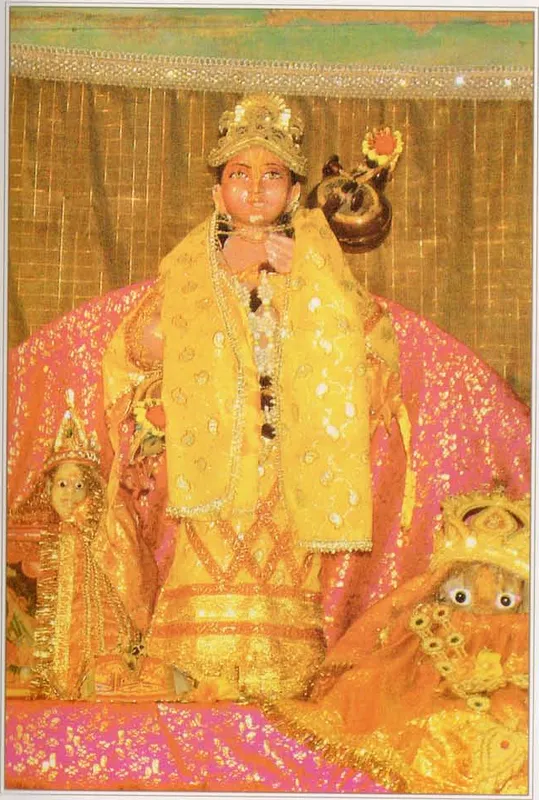
The guidebook Śrī Vraja-maṇḍala Parikramā (2007) and the undated parikramā notes Govardhana place Nārada-kuṇḍa about four hundred metres south-east of Kusuma-sarovara, with a temple and Deity of Nārada beside it. The 2007 book distinguishes it from the Nārada-kuṇḍa of Kāmyavana and says that it is highly beneficial to visit.[1 +1]
Location
| Where it is | about 400 metres south-east of Kusuma-sarovara[14] Govardhana map: '3', small square just outside the loop on the right, on a short spur[15] |
|---|---|
| On the numbered Govardhana chart | 8 (printed as “Narada Kunda”)[16] |
Nearby places
Kusuma-sarovara · Pāleī · Nārada-vana
Pictures
1 pictures
Where the sources differ
How, through whom and in which lake Nārada received a gopī's form: the Purāṇas, the Bhakti-ratnākara and the guidebooks tell it differently, and their accounts are set side by side on the page of Kusuma-sarovara.[4 +3]
Even one guidebook gives two places for it, Kusuma-sarovara and Brahma-kuṇḍa in Vṛndāvana; those accounts are set side by side on the page of Brahma-kuṇḍa.[1 +5]
Accounts differ Which mantra Nārada worshipped with before obtaining a gopī's form, and from whom he received it
- Śrī Vraja-maṇḍala Parikramā (2007)the gopāla-mantra, received from Brahmā; worship at Nārada-kuṇḍa in rāga-mārga
- Govardhana Hill: India's Most Sacred Mountain (2001)a mantra received from Lord Śiva, meditated on at Nārada Vana
- Padma Purāṇa, Pātāla-khaṇḍa 75.38after his transformation, when Lalitā-devī had asked him to come with her, the fourteen-syllable mantra of Kṛṣṇa and also of that goddess was kindly told to him (75.36-38); the text does not say by whom
The wording of these accounts is our summary of the sources, not a published translation.
Where in Vraja Uddhava lives as grass and creepers: the sources differ, and their accounts are set side by side on the page of the Uddhava temple at Kusuma-sarovara.[5 +1]
References
16 references
- Śrī Vraja-maṇḍala Parikramā (2007), PDF p. 114
- the undated parikramā notes Govardhana, ¶34
- Śrīla Narahari Cakravartī, Bhakti-ratnākara, Fifth Wave (pañcama taraṅga), 1912 ed. p. 199, 2nd ed., 1912
- Nārada Purāṇa, उत्तरार्धः/अध्यायः 80 v.80-32 to 80-35
- Skanda Purāṇa, Vaiṣṇava-khaṇḍa (2), Śrīmad-bhāgavata-māhātmya (section 6), adhyāya 3, verses 49-50, Sanskrit Wikisource
- Nārada Purāṇa, उत्तरार्धः/अध्यायः 80 v.80-22 to 80-26
- Padma Purāṇa, Pātāla-khaṇḍa (5), adhyāya 75 (Vṛndāvana-māhātmya, 'nāradīyānunaya'), verses 29-31, Sanskrit Wikisource
- Padma Purāṇa, Pātāla-khaṇḍa (5), adhyāya 75, verses 48-49, Sanskrit Wikisource
- Skanda Purāṇa, 2.6.2.24, Sanskrit Wikisource
- Śrīla Nārāyaṇa Bhaṭṭa, Vraja-bhakti-vilāsa, printed p. 120, Nāradavana-utpatti-māhātmya, 1st ed., publ. Bābā Kṛṣṇadāsa, Kusuma-sarovara, Saṁvat 2008
- Śrīla Nārāyaṇa Bhaṭṭa, Vraja-bhakti-vilāsa, printed p. 47, section 51, 1st ed., publ. Bābā Kṛṣṇadāsa, Kusuma-sarovara, Saṁvat 2008
- Govardhana Hill: India's Most Sacred Mountain (2001), Rajasekhara dasa Brahmacari, PDF p. 56
- Vṛndāvana-Dhāma Ki Jaya! (c. 1986), by Dhruva Mahārāja dāsa, PDF p. 36
- Śrī Vraja-maṇḍala Parikramā (2007), p. 202-203
- Śrī Vraja-maṇḍala Parikramā (2007), p. 194-195
- Numbered list of the Govardhana sites (key of the Govardhana chart)