Kusuma-sarovara
कुसुम-सरोवर
Also called Sumanaḥ-sarovara
- What it is
- Kusuma-sarovara lies on the right of the Govardhana parikramā path, about one and a half miles south-west of Rādhā-kuṇḍa, according to Śrī Vraja-maṇḍala Parikramā (2007).
- Visiting
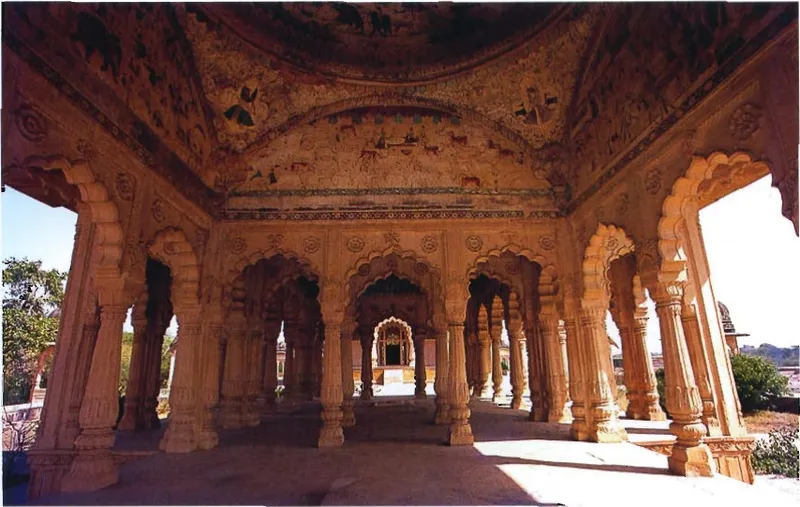
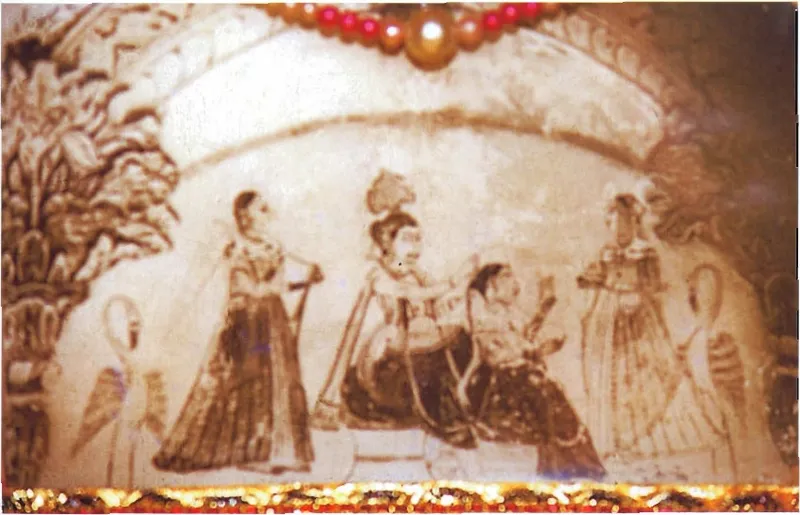
- In 2001 Govardhana Hill described the main memorial building: a replica of Kṛṣṇa's footprints in the centre of its floor, and a ceiling painted with Kṛṣṇa's pastimes and the deeds of Sūraj Mal.
- Parikramā
- Govardhana parikramā, station 4
- Places here
- Cenotaph of Rājā Sūraj Mal (Kusuma-sarovara), Girirāja Mandira (Kusuma-sarovara), Śiva shrine (Kusuma-sarovara), Aṣṭavakra Muni's samādhi (Kusuma-sarovara), Uddhava Mandira (Kusuma-sarovara)
In short
Kusuma-sarovara lies on the right of the Govardhana parikramā path, about one and a half miles south-west of Rādhā-kuṇḍa, according to Śrī Vraja-maṇḍala Parikramā (2007).[1] The Padma Purāṇa names a lake called Kusuma not far from Govardhana, and the Skanda Purāṇa sets at the Flower Lake near Govardhana the kīrtana at which Uddhava came out of the creepers.[2 +2] Śrī Caitanya Mahāprabhu came from Rādhā-kuṇḍa to Sumanas Lake and saw Govardhana from there; the Govinda-līlāmṛta, by the author of the Caitanya-caritāmṛta, calls one lake both Sumanas and kusuma-sarasī, the lake of flowers.[5 +3] The Bhakti-ratnākara calls it the place where Rādhā and Kṛṣṇa played at gathering flowers.[9] Sandstone memorials of the eighteenth century stand on its bank.[10 +4]
Key facts
| Kind | sarovara |
|---|---|
| Region · area | Govardhana |
| On the parikramā | Govardhana parikramā, station 4 · the route |
| Ācāryas | Śrī Caitanya Mahāprabhu, Śrīla Raghunātha dāsa Gosvāmī, Śrīla Kṛṣṇadāsa Kavirāja Gosvāmī, Śrīla Śrīnivāsa Ācārya |
Why it is glorified
The Padma Purāṇa (Pātāla-khaṇḍa 71) speaks of an aśoka creeper that blossoms in every season beside Kusuma lake near Govardhana.
In the Purāṇas
The Padma Purāṇa (Pātāla-khaṇḍa 71) speaks of an aśoka creeper that blossoms in every season beside Kusuma lake near Govardhana. There, Śrī Rādhā's companions tell the sage Nārada, he will find them all at midnight (summarised here, not translated).[2]
दर्शनं च पुनर्नास्याः प्राप्स्यसि ब्रह्मवित्तम । किंतु वृंदावने कापि भात्यशोकलता शुभा ॥ 77 ॥ सर्वकालेऽपि पुष्पाढ्या सर्वदिग्व्यापि सौरभा । गोवर्द्धनाददूरेण कुसुमाख्यसरस्तटे ॥ 78 ॥ तन्मूले ह्यर्द्धरात्रे च द्रक्ष्यस्यस्मानशेषतः
darśanaṁ ca punarnāsyāḥ prāpsyasi brahmavittama
kiṁtu vṛṁdāvane kāpi bhātyaśokalatā śubhā sarvakāle'pi puṣpāḍhyā sarvadigvyāpi saurabhā
govarddhanādadūreṇa kusumākhyasarastaṭe tanmūle hyarddharātre ca drakṣyasyasmānaśeṣataḥ
The Nārada Purāṇa's Vṛndāvana-māhātmya speaks of a lake of flowers in the forest of Vṛndā, where Govardhana Hill stands, near Sakhī-sthala. On its bank is the āśrama of Vṛndā, where Hari rests every day at midday with His friends (summarised here, not translated). The Purāṇa does not use the name Kusuma-sarovara and does not say that this is the present lake.[15]
The Garga-saṁhitā lists Kusumākara, the mine of flowers, among the holy waters of Govardhana, and calls it the end of the hill's ear. It gives no position, and that Kusumākara is this lake rests only on its English translator's rendering of the name as Kusuma-sarovara.[16 +1]
In the ācāryas' writings
Śrīla Raghunātha dāsa Gosvāmī names Sumanas among the best lakes that shine all round Govardhana in his Vraja-vilāsa-stava (verse 79), and names it with the same group of places in his Govardhanāśraya-daśaka.[10 +5] Śrīla Viśvanātha Cakravartī Ṭhākura's Vraja-rīti-cintāmaṇi describes Kusumākara as a lotus lake full of the flowers of land and water and of clusters of bowers, and asks whether it is the very face of the king of hills (summarised here, not translated).[23]
Divine pastimes
Gathering flowers
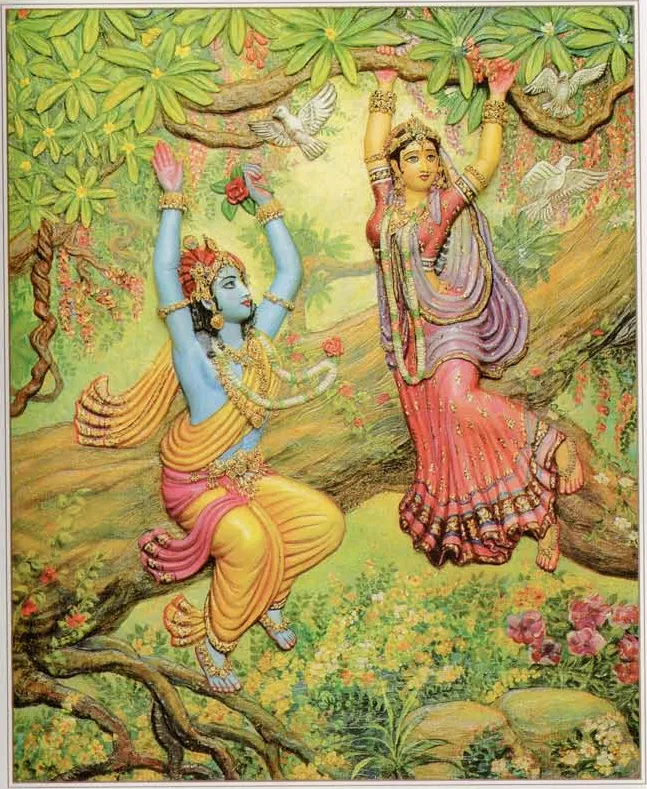
Śrīmad-Bhāgavatam (10.30.31–33) tells how the gopīs, the cowherd girls of Vraja, searched for Kṛṣṇa on the night of the rāsa dance. Following His footprints, they saw where He had set His beloved down to gather flowers, had picked flowers for Her standing on tiptoe, and had sat with Her to dress Her hair and crown Her with them. It names no place; in the Kṛṣṇa book Śrīla Prabhupāda names the beloved as Rādhārāṇī. The sources that tell flower pastimes at Kusuma-sarovara do not say that this episode took place here.[24 +2]
atra prasūnāvacayaḥ priyārthe preyasā kṛtaḥ / prapadākramaṇa ete paśyatāsakale pade
Just see how in this place dear Kṛṣṇa collected flowers for His beloved. Here He has left the impression of only the front part of His feet because He was standing on His toes to reach the flowers.
Translation: Śrīla Prabhupāda's disciples (BBT)The commentators do not name the place either (summarised here, not translated). Śrīla Viśvanātha Cakravartī Ṭhākura says that the tree was an aśoka, which blossoms at once when Her foot touches it, and the commentator Vaṁśīdhara says that the spot where Kṛṣṇa dressed Her hair is now known as Śṛṅgāravaṭa.[27 +1]
In the forenoon pastimes of Śrīla Kṛṣṇadāsa Kavirāja Gosvāmī's Govinda-līlāmṛta, Kṛṣṇa sends the cows to graze in the valley of Govardhana and goes with Madhumaṅgala, Vṛndā, Dhaniṣṭhā and Subala to the Sumanas lake, which the poem also calls the lake of flowers. Eager for Rādhā's coming, He talks with them of how She can come; Vṛndā says that a friend of Rādhā may have come to gather flowers, and Tulasī arrives, sent ahead by Rādhā (summarised here, not translated).[7 +3]
According to the Bhakti-ratnākara, when Śrīla Rāghava Paṇḍita showed Śrīla Śrīnivāsa Ācārya and Śrīla Narottama dāsa Ṭhākura the places round Govardhana, he pointed out Kusuma-sarovara "in this forest", where the Divine Couple's wonderful play of gathering flowers took place.[9 +1]
Śrī Vraja-maṇḍala Parikramā (2007) tells of one morning here, when Rādhikā was picking flowers on the bank and Kṛṣṇa, hiding in a tree, played a trick on Her.[31]
The guidebooks also set here a teasing exchange in which Kṛṣṇa accuses Rādhā and Her friends of stealing flowers from His garden. Śrī Vraja-maṇḍala Parikramā cites Śrīla Viśvanātha Cakravartī Ṭhākura's Kṛṣṇa-bhāvanāmṛta for it. In that poem Kṛṣṇa does call them robbers of the forest and flower thieves, and Rādhā answers that they need flowers to worship the Sun, but the exchange takes place in the forest of Rādhā's own lake, and Kusuma-sarovara is not named.[32 +1]
Accounts differ Where the flower-thief exchange between Kṛṣṇa and Rādhā with Her friends is set
- Śrīla Viśvanātha Cakravartī Ṭhākura, Kṛṣṇa-bhāvanāmṛta 8.55-9.24in the forest of Rādhā's own lake (svaṁ saraḥ, 8.57; sva-sarasī-vane, 8.59; the ṭīkā on 8.67: the kuṇḍa resorted to by Rādhā), after Her visit to the sun-god's temple; Kusuma-sarovara is not named
- Śrī Vraja-maṇḍala Parikramā (2007) (printed p. 197)at Kusuma-sarovara: 'Kṛṣṇa-bhāvanāmṛta describes how one day Śrīmatī Rādhikā was picking flowers here with Her girlfriends when Kṛṣṇa arrived'
- Govardhana Hill: India's Most Sacred Mountain (2001) (printed pp. 31-38)at Kuṣuma-sarovara, in the Puṣpa Vana around the lake; in its dialogue Rādhā says, 'This forest has grown around the banks of Rādhā-kuṇḍa and it is My playground'
- Śrīla Kṛṣṇadāsa Kavirāja Gosvāmī, Govinda-līlāmṛta 6.49 (context, no exchange told)at the Sumanas lake Vṛndā expects that a friend of Rādhā may come to gather flowers
The wording of these accounts is our summary of the sources, not a published translation.
Uddhava among the creepers
The Bhāgavatam (10.47.54–61) tells that Uddhava stayed in Vraja for several months, relieving the gopīs' sorrow by singing of Kṛṣṇa's pastimes, and that, seeing their love, he prayed to be one of the bushes, creepers or herbs of Vṛndāvana, so that the dust of their feet might fall on him. The verses name Vṛndāvana only, and its commentators explain that he named Vṛndāvana because the gopīs always wander there; none of them names a particular place.[34 +5]
āsām aho caraṇa-reṇu-juṣām ahaṃ syāṃ vṛndāvane kim api gulma-latauṣadhīnām yā dustyajaṃ sva-janam ārya-pathaṃ ca hitvā bhejur mukunda-padavīṃ śrutibhir vimṛgyām
The gopīs of Vṛndāvana have given up the association of their husbands, sons and other family members, who are very difficult to give up, and they have forsaken the path of chastity to take shelter of the lotus feet of Mukunda, Kṛṣṇa, which one should search for by Vedic knowledge. Oh, let me be fortunate enough to become one of the bushes, creepers or herbs in Vṛndāvana, for the gopīs trample them and bless them with the dust of their lotus feet.
Translation: Śrīla A.C. Bhaktivedanta Swami PrabhupādaThe Skanda Purāṇa's Bhāgavata-māhātmya tells where he stays. Kālindī, the Yamunā, tells Kṛṣṇa's grieving queens that Uddhava dwells close to Govardhana, at Sakhī-sthala, as young shoots and creepers, and advises them to camp with Vajra by Kusuma-saras, the Flower Lake, and begin a kīrtana festival with vīṇā, flute and mṛdaṅga (summarised here, not translated).[3 +4]
गोवर्धनाददूरेण वृन्दारण्ये सखीस्थले ।। प्रवृत्तः कुसुमाम्भोधौ कृष्णसंकीर्तनोत्सवः ॥ 2.6.2.30 ॥ वृषभानुसुताकान्तविहारे कीर्तनश्रिया ।। साक्षादिव समावृत्ते सर्वेऽनन्यदृशोऽभवन् ॥ 31 ॥ ततः पश्यत्सु सर्वेषु तृणगुल्मलताचयात् ।। आजगामोद्धवः स्रग्वी श्यामः पीताम्बरावृतः ॥ 32 ॥
govardhanādadūreṇa vṛndāraṇye sakhīsthale
pravṛttaḥ kusumāmbhodhau kṛṣṇasaṁkīrtanotsavaḥ vṛṣabhānusutākāntavihāre kīrtanaśriyā
sākṣādiva samāvṛtte sarve'nanyadṛśo'bhavan tataḥ paśyatsu sarveṣu tṛṇagulmalatācayāt
ājagāmoddhavaḥ sragvī śyāmaḥ pītāmbarāvṛtaḥ
As they watched, Uddhava came out of the creepers, dark-complexioned, with a garland and yellow cloth, singing of the gopīs' beloved over and over; everyone there saw him in Kṛṣṇa's form and worshipped him (summarised here, not translated).[3 +2] Read more: Uddhava among the creepers: the queens' kīrtana →
Nārada becomes a gopī
The Nārada Purāṇa tells the story at its lake of flowers near Govardhana (summarised here, not translated). Vṛndā's friend Mādhavī, at Vṛndā's order, had Nārada bathe on the north-west side of Vṛndā's lake. Rising from the water, he found himself in a woman's form; Viśākhā and the other sakhīs, Rādhā's companions, received him and took him to Kṛṣṇa. When he came back to the lake of flowers, Mādhavī dipped him again and he became Nārada once more.[44 +1] At Vṛndā's order he then practised austerities alone on the south-east side of the lake, living on fruits that Vṛndā sent.[45]
The Bhakti-ratnākara shows Nārada-kuṇḍa right after Kusuma-sarovara, as the place where Nārada fulfilled the desire of his heart by austerities; it says that the Purāṇas tell the desire in full and that Vṛndā's instruction was the means.[9] Śrīla Viśvanātha Cakravartī Ṭhākura records the saying (iti mohanoktiḥ, so runs the charming saying) that Śrī Nārada became a gopī simply by bathing in the lake Kusumākara.[23]
Other texts tell it differently. In the Padma Purāṇa, Brahmā, on Mahā-Viṣṇu's order, has Nārada bathe in a lake called Amṛta, and the Purāṇa gives no place in Vraja for it; the guidebooks say that he bathed in Kusuma-sarovara, sent there by Vṛndā-devī or dipped in it by Yogamāyā Paurṇamāsī.[46 +1] Read more: How Nārada became a gopī: the accounts side by side →
Accounts differ How, through whom and in which lake Nārada obtained a gopī's (woman's) form
- Govardhana Hill: India's Most Sacred Mountain (2001)after receiving a mantra from Lord Śiva and doing tapasya at Nārada Vana, Nārada was taken by Vṛndā Devī to Kuṣuma-sarovara; bathing there he obtained a gopī's form, saw the aṣṭa-kāliyā pastimes at Rādhā-kuṇḍa, and after a second bath there became male again
- Vṛndāvana-Dhāma Ki Jaya! (c. 1986)blessed by Vṛndā-devī, he took on a female form after bathing in Kusuma-sarovara and saw the pastimes at Rādhā-kuṇḍa
- the undated parikramā notes GovardhanaVrinda Devi told him to bathe in Kusuma-sarovara; he became a gopi and entered the rāsa-maṇḍala to see the rāsa dance
- Śrī Vraja-maṇḍala Parikramā (2007)after Nārada heard the glories of gopī-bhāva from Vṛndā-devī, he received the gopāla-mantra from Brahmā and worshipped at Nārada-kuṇḍa for a long time; then Yogamāyā Paurṇamāsī dipped him in Kusuma-sarovara, by which he received a gopī's form and then the ekādaśa-bhāva
The first Govardhana-pūjā
According to the local tradition recorded in Śrī Vraja-maṇḍala Parikramā (2007), the huge four-armed form of Girirāja that ate the offerings at the first Govardhana-pūjā then drank the water of Mānasī-gaṅgā, Kusuma-sarovara and other ponds, crying out that He was satisfied; this is not certain.[48] The Bhāgavatam (10.24.35) says only that Kṛṣṇa took another, huge form, declared that He was the hill and ate the offerings; it does not say that the form drank from any pond. Its commentators, who describe the form standing above the hill like a second mountain and eating with thousands of arms, say nothing of drinking either (summarised here, not translated).[49 +2]
Traditional accounts
According to a saying that Govardhana Hill (2001) and the undated parikramā notes Govardhana record, whoever bathes in …
According to a saying that Govardhana Hill (2001) and the undated parikramā notes Govardhana record, whoever bathes in Kusuma-sarovara becomes fit to witness the aṣṭa-kāla-līlā, Rādhā and Kṛṣṇa's pastimes through the eight periods of the day. No scriptural source for this has been found.[52 +1]
According to Govardhana Hill (2001), a forest of flowers, Puṣpa Vana, once surrounded the lake; Śrī Vraja-maṇḍala Parikramā (2007) says that the flower garden has now completely disappeared.[1 +2]
Two guidebooks connect the sage Aṣṭāvakra with the lake, but the older texts place him elsewhere. According to the local tradition recorded in Govardhana Hill (2001) and the undated parikramā notes Govardhana, a small Śiva shrine on the western bank marks the place of his samādhi, his tomb; the first book gives it as a belief.[10 +1] The Brahma-vaivarta Purāṇa sets his penance, his meeting with Rādhā and Kṛṣṇa and his departure for Goloka at Malaya-droṇī, a valley of the Malaya mountains, and the Bhakti-ratnākara places his austerities in the village of Āṭasu, on another part of the Vraja circuit; Śrī Vraja-maṇḍala Parikramā calls that village Aṣṭāvakra Muni's place of worship.[56 +3]
The Gosvāmīs and ācāryas
The Caitanya-caritāmṛta (Madhya 18.15) tells that Śrī Caitanya Mahāprabhu went from Rādhā-kuṇḍa to Sumanas Lake and, seeing …
The Caitanya-caritāmṛta (Madhya 18.15) tells that Śrī Caitanya Mahāprabhu went from Rādhā-kuṇḍa to Sumanas Lake and, seeing Govardhana from there, was overwhelmed with joy; in the next verse He offers obeisances and embraces a stone of the hill.[5 +5]
tabe cali’ āilā prabhu ‘sumanaḥ-sarovara’
tāhāṅ ‘govardhana’ dekhi’ ha-ilā vihvala
From Rādhā-kuṇḍa, Śrī Caitanya Mahāprabhu went to Sumanas Lake. When He saw Govardhana Hill from there, He was overwhelmed with joy.
Translation: Śrīla A.C. Bhaktivedanta Swami PrabhupādaThe verse does not say that Sumanas Lake is Kusuma-sarovara. The guidebooks say so, and the identification has older support: the Govinda-līlāmṛta, by the author of the Caitanya-caritāmṛta, calls one lake both sumanaḥ-saraḥ and kusuma-sarasī and names the Sumanaḥ-sarovara again in a later canto, and Śrī Vṛndāvana Cakravartī's commentary on it calls the Sumanas lake Kusuma-sarovara.[7 +8] According to Govardhana Hill (2001) and the undated parikramā notes Govardhana, Mahāprabhu also bathed in the lake, in 1515 according to the notes; the Caitanya-caritāmṛta does not mention a bath, so this is not certain.[5 +3]
Śrīla Prabhupāda
Śrīla Prabhupāda's books are known to name this lake only once, under its older name: in his translation of Caitanya-caritāmṛta …
Śrīla Prabhupāda's books are known to name this lake only once, under its older name: in his translation of Caitanya-caritāmṛta Madhya 18.15, given above, Śrī Caitanya Mahāprabhu goes from Rādhā-kuṇḍa to Sumanas Lake. That Sumanas Lake is Kusuma-sarovara is said by the guidebooks, not by Śrīla Prabhupāda.[6]
As a general teaching, not about this lake, he explains Uddhava's wish to become a creeper in Vṛndāvana:[38]
General teaching (does not name the place)“Observing the unalloyed devotion and love of the gopīs for Kṛṣṇa, Uddhava desired to become a creeper, a blade of grass or an herb in Vṛndāvana so that sometimes the gopīs would trample him and he would receive the dust of their lotus feet on his head.”
Śrīla Prabhupāda, Śrī Caitanya-caritāmṛta, Antya-līlā 7.47, purport · vedabase.io
Songs
Śrīla Raghunātha dāsa Gosvāmī's Govardhanāśraya-daśaka: in this verse Sumanas is among the places that shine all round Govardhana.
Śrīla Raghunātha dāsa Gosvāmī's Govardhanāśraya-daśaka: in this verse Sumanas is among the places that shine all round Govardhana.[63]
jyotsnāmokṣaṇa-mālya-hāra-sumano-gaurī-balāri-dhvaja
gāndharvādi-sarāṁsi nirjhara-giriḥ śṛṅgāra-siṁhāsanam
gopālo 'pi hari-sthalaṁ harir api sphūrjanti yat-sarvataḥ
kas taṁ go-mṛga-pakṣi-vṛkṣa-lalitaṁ govardhanaṁ nāśrayet
Śrīla Bhaktivinoda Ṭhākura names Kusuma-sarovara, with Mānasa-gaṅgā and the Yamunā, among the places that he knows to kindle the pastimes of the Divine Couple.[64]
kusuma-sarovara, mānasa-gaṅgā
kalinda-nandinī vipula-taraṅga
yugala-vilāse anukūla jāni
Visiting today
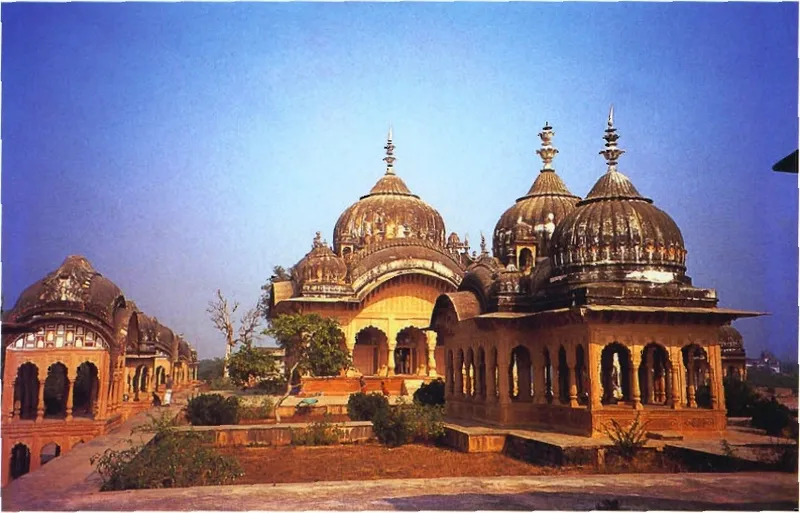
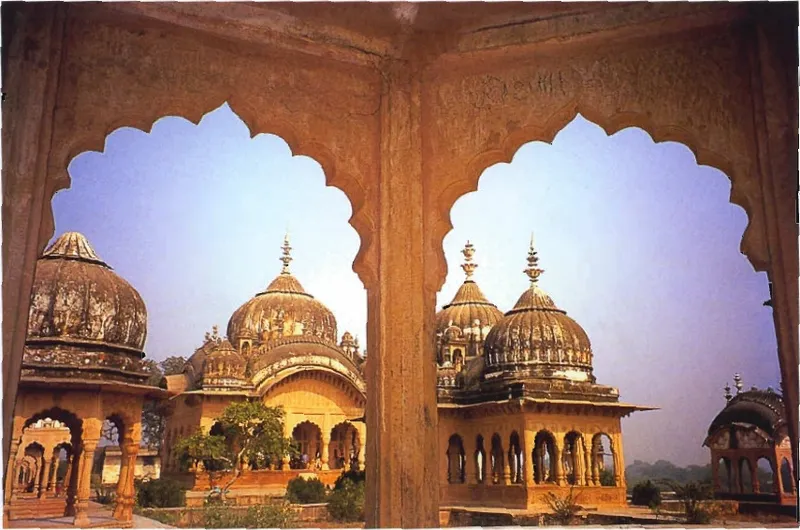
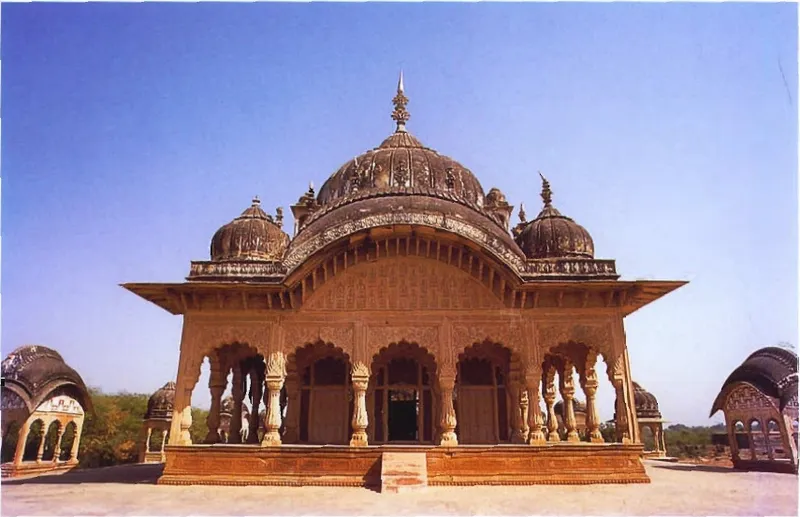
In 2001 Govardhana Hill described the main memorial building: a replica of Kṛṣṇa's footprints in the centre of its floor, and a ceiling painted with Kṛṣṇa's pastimes and the deeds of Sūraj Mal. The two side buildings held replicas of Śrīmatī Rādhārāṇī's footprints and had painted ceilings too.[10] The same book mentions a temple of Girirāja at the lake, whose elderly pūjārī (priest) was always happy to show devotees round; it is not certain that this is still so.[10]
Location
| Where it is | Govardhana Hill formerly stood behind it and reached Rādhā-kuṇḍa; Uddhava-kuṇḍa is 'only a few hundred meters' from it[65] 'Kusuma-sarovara, which was formerly situated on the other side of Govardhana Hill' (wording ambiguous; printed in the Uddhava-kuṇḍa entry)[66] |
|---|---|
| On the numbered Govardhana chart | 5 (printed as “Kusama Sarovara”)[67] |
Places at Kusuma-sarovara
6 places
Nearby places
Rādhā-kuṇḍa · Uddhava-kuṇḍa · Nārada-vana · Aśoka Vana
Pictures
6 pictures
History
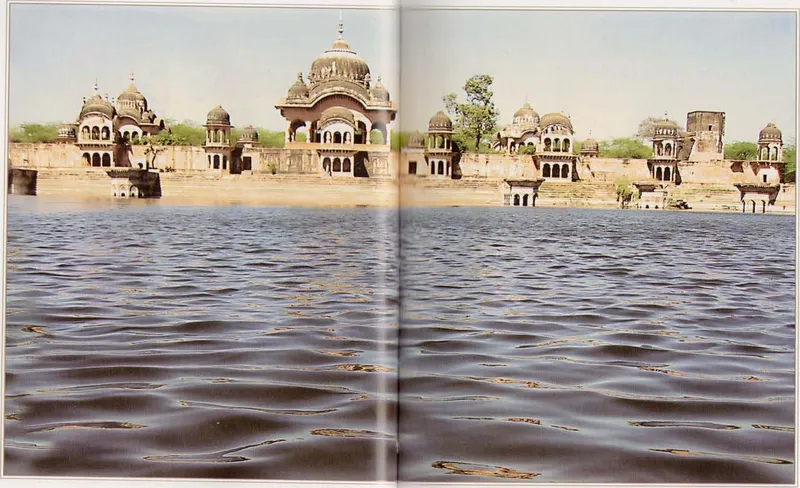
According to the guidebook Govardhana Hill (2001), the main sandstone memorial at the lake was built around 1764 by Mahārāja Jawāhar Singh of Bharatpur in honour of his father, Rājā Sūraj Mal, whose ashes are buried in it; the two side buildings hold the ashes of his two queens.[10 +4] Śrī Vraja-maṇḍala Parikramā (2007) dates the ornate stone ghāṭas (bathing steps) to 1767 and says that Jawāhar Singh paid for them with money taken from the royal treasury of Delhi; it places the cenotaph of Rājā Sūraj Mal, flanked by those of his two queens, on the west side of the lake.[60]
Two historians credit the same builder but give no year. A. W. Entwistle (1987) writes that the tank was already a recognized site before it was given masonry steps, and that the steps and the chatrīs (domed memorial pavilions) on its west side were built in the time of Rājā Jawāhar Singh in memory of his father, who was killed in December 1763. Prabhudayāl Mītal (1966) writes that Jawāhar Singh built Kusuma-sarovara, with the chatrīs of Sūraj Mal and his queen, from the wealth he took in the loot of Delhi. He also records two earlier stages: Vīrasiṁha Deva, the ruler of Orchhā, faced the old earthen tank with masonry in Saṁvat 1675, and Rājā Sūraj Mal later rebuilt it as a large, deep lake.[11 +3]
Where the sources differ
Where Uddhava lives as creepers, and where Kṛṣṇa's queens met him: the sources differ, and the guidebooks connect them with the …
Where Uddhava lives as creepers, and where Kṛṣṇa's queens met him: the sources differ, and the guidebooks connect them with the Uddhava temple next to the lake or with Uddhava-kuṇḍa. Their accounts are set side by side on the page of the Uddhava temple.[3 +3]
Where Kṛṣṇa dressed Rādhārāṇī's hair. Two guidebooks name Aśoka Vana by the lake.
Accounts differ Where Kṛṣṇa's dressing of His beloved's (Rādhārāṇī's) hair is set
- Śrīmad-Bhāgavatam 10.30.31–33at a spot ('atra', 'iha') in the forest where the gopīs searched for Kṛṣṇa on the rāsa night; no name
- Śrīla Prabhupāda, Kṛṣṇa book ch. 30Kṛṣṇa sat down 'here' with Rādhārāṇī and tried to set flowers in Her hair; no name
- Śrīla Viśvanātha Cakravartī on ŚB 10.30.31–32the flowers came from an aśoka tree that blossomed at her touch; no name
- Vaṁśīdhara on ŚB 10.30.33the spot is now known as Śṛṅgāra-vaṭa
Accounts differ What Kṛṣṇa's huge form did at the first Govardhana-pūjā (and whether it drank Kusuma-sarovara's water)
- Śrīmad-Bhāgavatam 10.24.35Kṛṣṇa took another, huge form, declared that He was the hill (in the translation 'I am Govardhana Mountain!') and ate the abundant offerings; no pond, no drinking, no number of arms
- Śrīla Prabhupāda, Kṛṣṇa book ch. 24a great transcendental form declared that He was Himself Govardhana Hill and ate all the food offered
- Śrīla Viśvanātha Cakravartī on ŚB 10.24.35 (Śrīla Baladeva Vidyābhūṣaṇa similar)a form above the hill like a second mountain (Baladeva: thousand-armed) invited boons and ate with thousands of crores of long hands the offerings of those near and far; no drinking
- Garga-saṁhitā, Girirāja-khaṇḍa 3.2.21–24Kṛṣṇa took another, very tall form from the middle of the hill, declared that He was the hill (śailo'smi) and devoured the whole Annakūṭa; ready to give a boon, He was asked by the cowherds that their cattle and kin increase day by day, said so be it and vanished; no drinking
The wording of these accounts is our summary of the sources, not a published translation.
Accounts differ Where Aṣṭāvakra did his penance, met Rādhā and Kṛṣṇa and gave up his body
- the undated parikramā notes Govardhana and Govardhana Hill: India's Most Sacred Mountain (2001)at Kusuma-sarovara; he gave up his body on seeing the Divine Couple (Govardhana Hill: India's Most Sacred Mountain (2001) credits the penance to the Brahma-vaivarta Purāṇa)
- Brahma-vaivarta Purāṇa, Kṛṣṇa-janma-khaṇḍa 29-30at Malaya-droṇī; Kṛṣṇa performed his last rites there and he was taken to Goloka; Kusuma-sarovara and Vraja are not named
- Bhakti-ratnākara, Fifth Wave (1912 ed. p. 271)he performed austerities in the village Āṭasu on another part of the Vraja circuit; nothing about his death
- Śrī Vraja-maṇḍala Parikramā (2007)Āṭasa-gaon, six miles from Vṛndāvana, is Aṣṭavakra Muni's place of worship; the name Āṭasa comes from 'aṣṭavakra'; nothing about Kusuma-sarovara
Accounts differ Where at Kusuma-sarovara Aṣṭāvakra's samādhi is
- the undated parikramā notes Govardhana'His Samadhi is said to be near the old Shiva temple on the western bank of the lake'
- Govardhana Hill: India's Most Sacred Mountain (2001)'a small shrine dedicated to Lord Śiva is believed to be the actual place where Aṣṭavakra entered into samādhi'
Accounts differ Who first gave Kusuma-sarovara its masonry, and who built the present ghāṭas and when
- Śrī Vraja-maṇḍala Parikramā (2007)In 1767 AD Mahārāja Javāhara Singh of Bharatapura built ornate stone ghāṭas at Kusuma-sarovara with money taken from the royal treasury of Delhi.
- Entwistle (1987), p. 341The tank was a recognized place before it was provided with masonry steps; the steps and the chatrīs on the west side were built in the time of Rājā Jawāhar Singh to commemorate his father Sūraj Mal (no year).
- Mītal (1966), p. 105Vīrasiṁha Deva of Orchhā made the old unpaved tank pucca in Saṁvat 1675; Sūrajamala rebuilt it anew as a large deep lake about Saṁvat 1777 (as printed); his son Javāharasiṁha then gave it its artistic, grand form.
- Mītal (1966), part 2 p. 248Javāharasiṁha built Kusuma-sarovara, chief of the buildings he made with the wealth from the loot of Delhi, with the chatrīs of Sūrajamala and his queen (no year).
More on this place
How Nārada became a gopī: the accounts side by side · Uddhava among the creepers: the queens' kīrtana
References
67 references
- Śrī Vraja-maṇḍala Parikramā (2007), PDF p. 111
- Padma Purāṇa, Pātāla-khaṇḍa (5), adhyāya 71 (Śrī-Rādhā-Kṛṣṇa-māhātmya), verses 77-79, Sanskrit Wikisource
- Skanda Purāṇa, Vaiṣṇava-khaṇḍa (2), Śrīmad-bhāgavata-māhātmya (section 6), adhyāya 2, verses 25-26, Sanskrit Wikisource
- Skanda Purāṇa, Vaiṣṇava-khaṇḍa (2), Śrīmad-bhāgavata-māhātmya (section 6), adhyāya 2, verses 30-32, Sanskrit Wikisource
- Śrīla Kṛṣṇadāsa Kavirāja Gosvāmī, Śrī Caitanya-caritāmṛta, CC Madhya-līlā 18.15, online edition · vedabase.io
- Śrīla Prabhupāda, Śrī Caitanya-caritāmṛta, Madhya-līlā 18.15, translation · vedabase.io
- Vṛndāvana Cakravartī, on Govinda-līlāmṛta 6.44
- Śrīla Kṛṣṇadāsa Kavirāja Gosvāmī, Govinda-līlāmṛta, sarga 6, verses 44–45, after the editions of Haridas Das and Haridas Shastri
- Śrīla Narahari Cakravartī, Bhakti-ratnākara, Fifth Wave (pañcama taraṅga), 1912 ed. p. 199, 2nd ed., 1912
- Govardhana Hill: India's Most Sacred Mountain (2001), Rajasekhara dasa Brahmacari, PDF p. 44
- A. W. Entwistle, ch. 8 §13 'Kusum Sarovar', printed p. 341, Egbert Forsten, Groningen, 1987
- A. W. Entwistle, ch. 5 §30 'Suraj Mal', printed pp. 199-200, Egbert Forsten, Groningen, 1987
- Prabhudayāl Mītal, part 2 ('Braj kā itihās'), 'Jāṭ-Marahaṭhā kāl': 'Javāharasiṁha kā mūlyāṅkan' (begun on p. 247; the running head of p. 248 is 'Jāṭ rājya kā hrās'), printed p. 248
- Mathurá (1883), F. S. Growse, B.C.S., M.A. Oxon., C.I.E. (as the title page gives him
- Nārada Purāṇa, उत्तरार्धः/अध्यायः 80 v.80-6 to 80-10
- Garga-saṁhitā, Girirāja-khaṇḍa (3), adhyāya 7, verse 8, Sanskrit Wikisource
- Garga-saṁhitā, Girirāja-khaṇḍa (3), adhyāya 8, verse 6, Sanskrit Wikisource
- Śrīla Raghunātha dāsa Gosvāmī, Vraja-vilāsa-stava, Stavāvalī, section (9) Vraja-vilāsa-stava, v.79
- Śrīla Raghunātha dāsa Gosvāmī, Govardhanāśraya-daśaka, verse 4
- Śrīla Raghunātha dāsa Gosvāmī, Vraja-vilāsa-stava, as quoted in the Bhakti-ratnākara, Fifth Wave, 1912 ed. p. 208: 'stavāvalyāṁ vraja-vilāse' verse '৮৯' (Govardhana Hill: India's Most Sacred Mountain (2001) cites it as verse 79), 2nd ed., 1912
Show all 67 references
- Govardhana Hill: India's Most Sacred Mountain (2001), Rajasekhara dasa Brahmacari, PDF p. 81
- Vṛndāvana-Dhāma Ki Jaya! (c. 1986), by Dhruva Mahārāja dāsa, PDF p. 36
- Śrīla Viśvanātha Cakravartī Ṭhākura, Vraja-rīti-cintāmaṇi, tṛtīyaḥ sargaḥ (sarga 3), verses 26-27
- Śrīmad-Bhāgavatam 10.30.32, GRETIL
- Śrīmad-Bhāgavatam 10.30.33, GRETIL
- Śrīla Prabhupāda, Kṛṣṇa, the Supreme Personality of Godhead (Kṛṣṇa book), Chapter 30, 'Kṛṣṇa’s Hiding from the Gopīs' · vedabase.io
- Śrīla Viśvanātha Cakravartī Ṭhākura: commentary on ŚB 10.30.31 (last line) and 10.30.32
- Vaṁśīdhara: commentary on ŚB 10.30.33
- Śrīla Kṛṣṇadāsa Kavirāja Gosvāmī, Govinda-līlāmṛta, sarga 6, verse 49, after the editions of Haridas Das and Haridas Shastri
- Śrīla Kṛṣṇadāsa Kavirāja Gosvāmī, Govinda-līlāmṛta, sarga 10, verses 59 and 61, after the editions of Haridas Das and Haridas Shastri
- Śrī Vraja-maṇḍala Parikramā (2007), PDF p. 112
- Śrīla Viśvanātha Cakravartī Ṭhākura, Kṛṣṇa-bhāvanāmṛta, sarga 9 ('navamaḥ sargaḥ', Narma-vilāsāsvādana), verses 13-14, after the edition of Radhikanath Goswami, Vrindavan, 1906
- Śrīla Viśvanātha Cakravartī Ṭhākura, Kṛṣṇa-bhāvanāmṛta, sarga 8 ('saṅgava-līlāsvādana'), verses 57 and 59, after the edition of Radhikanath Goswami, Vrindavan, 1906
- Śrīmad-Bhāgavatam 10.47.54, GRETIL
- Śrīmad-Bhāgavatam 10.47.56, GRETIL
- Śrīla Prabhupāda, Kṛṣṇa, the Supreme Personality of Godhead (Kṛṣṇa book), Chapter 47, 'Delivery of the Message of Kṛṣṇa to the Gopīs' · vedabase.io
- Śrīmad-Bhāgavatam 10.47.61, GRETIL
- Śrīla Prabhupāda, Śrī Caitanya-caritāmṛta, Antya-līlā 7.47, purport · vedabase.io
- Śrīla Sanātana Gosvāmī: commentary on ŚB 10.47.61, Bhagavata Vidya Pith edition, ed. Bhagavata Rishi and Krishna Shankar Shastri, 1996
- Skanda Purāṇa, 2.6.2.24, Sanskrit Wikisource
- Skanda Purāṇa, Vaiṣṇava-khaṇḍa (2), Śrīmad-bhāgavata-māhātmya (section 6), adhyāya 3, verses 49-50, Sanskrit Wikisource
- Skanda Purāṇa, 2.6.2.24-25 (Bhāgavata-māhātmya, adhyāya 2, verses 24-25), Sanskrit Wikisource
- Skanda Purāṇa, 2.6.2.32-35 and the colophon of adhyāya 2, Sanskrit Wikisource
- Nārada Purāṇa, उत्तरार्धः/अध्यायः 80 v.80-22 to 80-26
- Nārada Purāṇa, उत्तरार्धः/अध्यायः 80 v.80-32 to 80-35
- Padma Purāṇa, Pātāla-khaṇḍa (5), adhyāya 75 (Vṛndāvana-māhātmya, 'nāradīyānunaya'), verses 29-31, Sanskrit Wikisource
- Padma Purāṇa, Pātāla-khaṇḍa (5), adhyāya 75, verses 48-49, Sanskrit Wikisource
- Śrī Vraja-maṇḍala Parikramā (2007), PDF p. 126
- Śrīmad-Bhāgavatam 10.24.35, GRETIL
- Śrīla Prabhupāda, Kṛṣṇa, the Supreme Personality of Godhead (Kṛṣṇa book), Chapter 24, Worshiping Govardhana Hill · vedabase.io
- Śrīla Viśvanātha Cakravartī Ṭhākura, Baladeva Vidyābhūṣaṇa: commentary on ŚB 10.24.35, Bhagavata Vidya Pith edition, ed. Bhagavata Rishi and Krishna Shankar Shastri, 1996
- Govardhana Hill: India's Most Sacred Mountain (2001), Rajasekhara dasa Brahmacari, PDF p. 52
- the undated parikramā notes Govardhana, ¶28
- Govardhana Hill: India's Most Sacred Mountain (2001), Rajasekhara dasa Brahmacari, PDF p. 45
- the undated parikramā notes Govardhana, ¶30
- Brahma-vaivarta Purāṇa, Kṛṣṇa-janma-khaṇḍa (4), adhyāya 30, verses labelled 7, 8, 9 and 4.30.110 in the text (second numbering run), Sanskrit Wikisource
- Brahma-vaivarta Purāṇa, Kṛṣṇa-janma-khaṇḍa (4), adhyāya 30, verses 8-12, Sanskrit Wikisource
- Śrīla Narahari Cakravartī, Bhakti-ratnākara, Fifth Wave, 1912 ed. p. 271, 2nd ed., 1912
- Śrī Vraja-maṇḍala Parikramā (2007), PDF p. 248
- Śrī Vraja-maṇḍala Parikramā (2007), PDF p. 113
- Prabhudayāl Mītal, 'Braj-yātrā', Rādhā-kuṇḍa and Kusuma-sarovara: 'Kusuma sarovara', printed p. 105
- the undated parikramā notes Govardhana, ¶29
- Saptaham Murajit Karambuja (Govardhanāśraya-daśaka) (Raghunatha Dasa Goswami (as the song book credits it)) · song book
- Radha Kunda Tata Kunja Kutir (Śaraṇāgati) (Bhaktivinoda Ṭhākura (as the song book credits it)) · song book
- Govardhana Hill: India's Most Sacred Mountain (2001), Rajasekhara dasa Brahmacari, p. 30
- Govardhana Hill: India's Most Sacred Mountain (2001), Rajasekhara dasa Brahmacari, p. 136
- Numbered list of the Govardhana sites (key of the Govardhana chart)