Phisalanī-śilā (Sakhīgiri-parvata)
फिसलनी-शिला (सखीगिरि-पर्वत) Hindi name proposed
In short
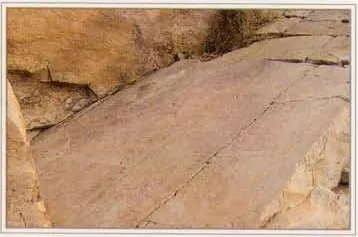
This Phisalanī-śilā, or Khisalinī-śilā, is a stone slide on Sakhīgiri-parvata, the hill of the sakhīs near Ūñcāgaon. Śrīla Nārāyaṇa Bhaṭṭa Gosvāmī's Vraja-bhakti-vilāsa calls it Kṛṣṇa's play-stone, gives a prayer for it and names a day in the month of Bhādra for the pilgrimage here.[1 +1] The guidebook Śrī Vraja-maṇḍala Parikramā (2007) says instead that Lalitā and the other sakhīs used to slide here, and that the marks of the slide can still be seen.[3] The guidebook treats it as a different stone from the Phisalanī-śilā of Kāmyavana.[3]
Key facts
| Kind | śilā |
|---|---|
| Region · area | Kāmyavana · Sakhīgiri-parvata |
| Ācāryas | Śrīla Nārāyaṇa Bhaṭṭa Gosvāmī |
Traditional accounts
In its list of the places of Lalitā-grāma, the Vraja-bhakti-vilāsa names the Sakhīgiri hill and, beside it, the Khisilinī stone. Right there, it says, is the place of Lalitā's wedding, which has its own page at Lalitā-vivāha-maṇḍapa; the sources differ on where that place is. On the hill's south side the book names a Triveṇī-tīrtha with a rāsa-maṇḍala and the Sakhī-kūpa, a well, beside it (summarised here, not translated). The book introduces this list with the words "in the Śrīvatsa-upaniṣad", a work that could not be identified.[1 +1]
In a later chapter the Vraja-bhakti-vilāsa, quoting a Viṣṇu-rahasya, says that beside Sakhīgiri stands the well-known "Khisalī", Kṛṣṇa's play-stone, and that the forest pilgrimage here falls on the third day of the bright fortnight of Bhādra. Its prayer honours the place of the sliding play of Gopāla-Kṛṣṇa, the son of Yaśodā; the Hindi of the edition adds that He slid here with the cowherd boys. One who recites the prayer ten times and slides with obeisances, the book says, reaches Vaikuṇṭha (summarised here, not translated). The Viṣṇu-rahasya itself could not be checked.[1 +1]
According to the local tradition recorded in Śrī Vraja-maṇḍala Parikramā (2007), it was Lalitā and the other sakhīs who slid here, and the mark of the slide and the red lac marks of the gopīs' feet can still be seen. The Vraja-bhakti-vilāsa speaks of Kṛṣṇa's sliding play instead; the two accounts are shown below.[1 +2]
Location
| Where it is | on Sakhīgiri-parvata, adjacent to Lalitā-vivāha-sthala[5] |
|---|
Nearby places
Lalitā-vivāha-maṇḍapa · Citra-śilās (Sakhīgiri-parvata)
History
In 1987 the historian A. W. Entwistle described the Khisalinī Śilā as a sloping rock with a smooth face under a chatrī, a small canopied pavilion. He placed it on a low, stony hill on the far side of the canal, west of Ūñcāgaon. He gave no builder or date for the chatrī.[4]
Where the sources differ
Who slid on the stone: the sakhīs, as the guidebook says, or Kṛṣṇa with the cowherd boys, as the Vraja-bhakti-vilāsa says.
Who slid on the stone: the sakhīs, as the guidebook says, or Kṛṣṇa with the cowherd boys, as the Vraja-bhakti-vilāsa says.
Accounts differ Who slid on the stone slide of Sakhīgiri
- Śrī Vraja-maṇḍala Parikramā (2007)'Lalitā and other sakhīs used to slide here'; the slide mark and the red lac of the gopīs' feet are still seen
- Vraja-bhakti-vilāsa ch. 4 v.37 (quoting the Viṣṇu-rahasya) and its prayer, with the edition's Hindiit is Kṛṣṇa's play-stone (kṛṣṇa-krīḍā-śilā); the prayer honours the place of Gopāla-Kṛṣṇa's sliding play; the Hindi: Śrī Kṛṣṇa's sliding play with the cowherd boys (gopāla-gaṇa)
References
5 references
- Śrīla Nārāyaṇa Bhaṭṭa, Vraja-bhakti-vilāsa, Fourth chapter, v.37 (Viṣṇu-rahasya continued; the Khisalinī-śilā and its prayer); printed p. 95, 1st ed., publ. Bābā Kṛṣṇadāsa, Kusuma-sarovara, Saṁvat 2008
- Śrīla Nārāyaṇa Bhaṭṭa Gosvāmī, Vraja-bhakti-vilāsa, chapter 2 v.46, printed pp.45-46: the marks (liṅga) of Lalitā-grāma, 1st ed., publ. Bābā Kṛṣṇadāsa, Kusuma-sarovara, Saṁvat 2008
- Śrī Vraja-maṇḍala Parikramā (2007), PDF p. 162
- A. W. Entwistle, printed p. 369, Egbert Forsten, Groningen, 1987
- Śrī Vraja-maṇḍala Parikramā (2007), p. 298-299