Kāmyavana
काम्यवन Hindi name proposed
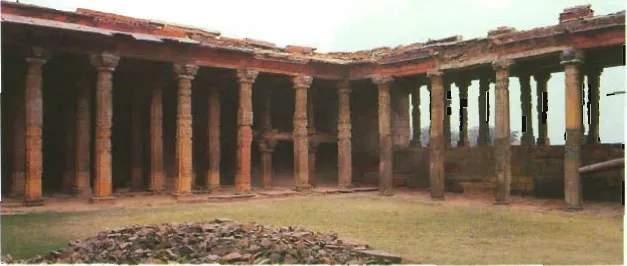
- What it is
- Kāmyavana, also called Kāmavana, is one of the twelve forests of Vraja, around the town of Kāmā (Kāman).
- Visiting
- Śrī Vraja-maṇḍala Parikramā (2007) places Kāmyavana six miles west of Varṣāṇā, two miles north-west of Indraulī and six miles north-east of Kedāranātha, in Rājasthān.
- Places here
- Ūñcāgaon, Indraulī, Ādi-badrī, Beheja, Kanovāro +60 more
In short
Kāmyavana, also called Kāmavana, is one of the twelve forests of Vraja, around the town of Kāmā (Kāman). The guidebook Śrī Vraja-maṇḍala Parikramā (2007) places it in Rājasthān, near the western border of Vraja, six miles west of Varṣāṇā.[1 +5] The Varāha Purāṇa calls it the fourth forest and the best of forests, and Śrīla Prabhupāda counts it among the seven forests on the western side of the Yamunā.[7 +7] Śrī Caitanya Mahāprabhu came here after seeing the Gopāla Deity, visited the places of Kṛṣṇa's pastimes and went on to Nandīśvara.[11 +3] The Bhakti-ratnākara says that its tīrthas, its holy places, are too many to write down.[10 +4]
Key facts
| Kind | forest |
|---|---|
| Ācāryas | Śrī Caitanya Mahāprabhu, Śrīla Rūpa Gosvāmī, Śrīla Sanātana Gosvāmī, Śrīla Jīva Gosvāmī, Śrīla Kṛṣṇadāsa Kavirāja Gosvāmī |
Why it is glorified
The Varāha Purāṇa, in its Mathurā-māhātmya, counts Kāmyaka-vana as the fourth of the forests and the best of them: one who goes …
The Varāha Purāṇa, in its Mathurā-māhātmya, counts Kāmyaka-vana as the fourth of the forests and the best of them: one who goes there is honoured in the Lord's world, and at the kuṇḍa (sacred pond) of Vimala one is freed from all sins. Śrīla Rūpa Gosvāmī, the Bhakti-ratnākara and Śrīla Prabhupāda quote the verse as the Ādi-varāha's, and Śrīla Prabhupāda translates it in his purport on Śrī Caitanya Mahāprabhu's visit:[7 +4]
चतुर्थं काम्यकवनं वनानां वनमुत्तमम्।। तत्र गत्वा नरो देवि मम लोके महीयते ॥ 37 ॥ विमलस्य च कुण्डे तु सर्वपापैः प्रमुच्यते ।। यस्तत्र मुंचते प्राणान्मम लोकं स गच्छति ॥ 38 ॥
caturthaṁ kāmyakavanaṁ vanānāṁ vanamuttamam|| tatra gatvā naro devi mama loke mahīyate
37
vimalasya ca kuṇḍe tu sarvapāpaiḥ pramucyate
yastatra muṁcate prāṇānmama lokaṁ sa gacchati || 38 ||
Lord Śiva said, “The best of all forests is the fourth of these, named Kāmyaka. O goddess Devī, any person who goes there is eligible to enjoy the glories of my abode.
Translation: Śrīla A.C. Bhaktivedanta Swami PrabhupādaTwo other texts read the verse in their own way, and they are recorded here beside Śrīla Prabhupāda's translation, not as corrections of it. In the Sanskrit text of the Varāha Purāṇa (chapter 153) the chapter is spoken by Lord Varāha to the goddess Earth, and in the Bhakti-ratnākara (Fifth Wave, 1912 Bengali edition, p. 214) Śrīla Rāghava Paṇḍita Gosvāmī, introducing the verse, takes the world it promises to be Viṣṇu's. The readings are set side by side below.[7 +4]
Śrīla Rūpa Gosvāmī's Mathurā-māhātmya and the Bhakti-ratnākara also quote two verses that they give from the Skanda Purāṇa: Kāmyavana is where the Lord stayed in His childhood; merely bathing there grants everyone the fruit of every desire; and there lie the Kāma-saras, called Gopikā-ramaṇa, and thousands of other tīrthas and lakes (summarised here, not translated). The verses are known only from these quotations.[9 +4] The lake, Kāma-sarovara, has its own page.
The Padma Purāṇa (Pātāla-khaṇḍa 69) names Kāmya among the twelve principal forests of the Māthura-maṇḍala. In its picture of the land as a lotus it makes Kāmāraṇya, the forest of Kāma, the tenth petal, the principal one, it says, and a place of Kṛṣṇa's play (summarised here, not translated).[25 +1] The lists of the twelve forests give Kāmyavana different places in their order (see below).[7 +6] Read more: The twelve forests of Vraja: the lists side by side →
The Brahma-vaivarta Purāṇa, listing the names of the goddess by place, calls her Kāmyā in the Kāmyaka forest; it does not say where that forest lies.[27]
Three books explain the name. Śrīla Viśvanātha Cakravartī Ṭhākura, who places Kāmyavana south-west of Nandīśvara, says in his Vraja-rīti-cintāmaṇi that it is called so because many kuṇḍas and bowers shine there, and forests desirable (kāmya) to Kṛṣṇa.[28] Śrīla Nārāyaṇa Bhaṭṭa Gosvāmī's Vraja-bhakti-vilāsa gives a verse that it quotes from the Ādi-varāha: it is Kāmyavana because there the desires of the demigods, sages, men and ascetics are fulfilled. The verse has not been found in the printed Varāha Purāṇa.[29 +2] Śrī Vraja-maṇḍala Parikramā (2007) adds, quoting Śrīla Rūpa Gosvāmī's Bhakti-rasāmṛta-sindhu, that in scripture the word kāma means only the gopīs' pure love for Kṛṣṇa, and that in Kāmyavana one can attain that love, what to speak of worldly desires.[5 +2]
A song in the song book hails Kāmyavana, with Kumudavana, as a place of Kṛṣṇa's pastimes; the song book does not name its author.[33]
Divine pastimes
Kṛṣṇa's outing to Kāmyavana
Śrīmad-Bhāgavatam does not name Kāmyavana, but the Gosvāmīs name it in their commentaries on several verses. The Bhāgavatam (10.22.29) tells that Kṛṣṇa once went far from Vṛndāvana with Balarāma and the cowherd boys, herding the cows:[34 +5]
atha gopaiḥ parivṛto bhagavān devakī-sutaḥ / vṛndāvanād gato dūraṃ cārayan gāḥ sahāgrajaḥ
Some time later Lord Kṛṣṇa, the son of Devakī, surrounded by His cowherd friends and accompanied by His elder brother, Balarāma, went a good distance away from Vṛndāvana, herding the cows.
Translation: Śrīla Prabhupāda's disciples (BBT)Śrīla Jīva Gosvāmī explains that He went first to the hilly Kāmyaka-vana, and that the coloured minerals on His body, which the wives of the brāhmaṇas saw soon after (10.23.22), came from a hill of Kāmyaka-vana named Saugandhika. His Gopāla-campū tells the same (both summarised here, not translated). Śrīla Prabhupāda's Kṛṣṇa book speaks of the minerals of Vṛndāvana and names no hill.[34 +5] Read more: Kṛṣṇa and the wives of the brāhmaṇas: the pastime and its places →
Where the Bhāgavatam (10.18.16) tells that Kṛṣṇa and Balarāma played among the rivers, hills and groves of Vṛndāvana, Śrīla Jīva Gosvāmī counts Kāmyaka-vana among the groves within Śrī Vṛndāvana. Śrīla Sanātana Gosvāmī names it among the forests marked by Kṛṣṇa's feet that Nanda remembers when he speaks to Uddhava (10.46.22) (both summarised here, not translated).[40 +3] Discussing how far Vṛndāvana extends, Śrīla Sanātana Gosvāmī says that Khadiravana, Kāmyaka-vana and the others are separate from Vṛndāvana only when the name means its principal part, the seat of Śrī Govindadeva (summarised here, not translated). The sources differ on this question (see below).[44 +1]
Vyomāsura
Śrīmad-Bhāgavatam (10.37) tells that one day the cowherd boys played a game of thieves and herders on the mountain slopes. The demon Vyoma, son of Maya, disguised as a cowherd boy, hid the boys one by one in a mountain cave and sealed it with a boulder, until Kṛṣṇa seized and killed him and freed His friends. It names no hill.[46 +4] Śrīla Prabhupāda's Kṛṣṇa book sets the game on Govardhana Hill.[49]
Śrīla Jīva Gosvāmī's Gopāla-campū sets Vyoma's coming near the hills of the Kāmyaka forest (summarised here, not translated), and in the Bhakti-ratnākara Śrīla Rāghava Paṇḍita Gosvāmī shows the hill of Kāmyavana where Kṛṣṇa killed Vyomāsura at the mouth of a cave.[10 +5] The sources differ on the place and the time. The verses, Śrīla Prabhupāda's words and the differing accounts are given on the page of Vyomāsura's cave, on Indrasena Hill, which is described below.[46 +4] Read more: Where and when Kṛṣṇa killed Vyomāsura →
The bridge-building game
Śrīmad-Bhāgavatam (10.11.59) counts the building of make-believe bridges among the childhood games of Kṛṣṇa and Balarāma in Vraja, without naming a place.[52 +1] In the Kṛṣṇa book Śrīla Prabhupāda says that They imitated Lord Rāmacandra's monkeys, who built the bridge over the ocean.[53]
According to the Bhakti-ratnākara, Kāmyavana has a Setubandha-kuṇḍa where Kṛṣṇa performed the pastime of binding the ocean, and Śrīla Nārāyaṇa Bhaṭṭa Gosvāmī lists a kuṇḍa of the bridge over the ocean among Kāmyavana's holy places.[19 +1] Later books tell the story at the lake in different ways; they are set side by side on the page of Setubandha-sarovara.[5 +3]
Pastimes in the Garga-saṁhitā
The Garga-saṁhitā calls the forest Kāmavana. It counts divine Kāmavana among the forests where Kṛṣṇa, dressed as a dancer and playing His flute, herded the cows and delighted the gopīs. It tells that on a hill of Kāmavana His flute was so sweet that the hills melted, and that the hill kept His footprints. And it tells that the daughters of King Vimala stayed with Him in Kāmavana, and that in the rāsa dance the drops of their joy became Vimala-kuṇḍa (all summarised here, not translated).[58 +4] The modern guidebooks show the hill of the footprints at Caraṇa-pahāḍī, and Vimala-kuṇḍa has its own page.[58 +4] Read more: The hills that melted at Kṛṣṇa's flute: the three Caraṇa-pahāḍīs →
Other pastimes the ācāryas place here
Śrīla Viśvanātha Cakravartī Ṭhākura praises Kāmyavana's Laṅkā-kuṇḍa as the witness of Lord Rāma's pastimes and tells of a game of hide-and-seek here.[28] The Bhakti-ratnākara shows the place of that game at Luk-lukī-kuṇḍa.[63]
Śrīla Kṛṣṇadāsa Kavirāja Gosvāmī's Govinda-līlāmṛta names Kāmyaka-vana once, in its account of Kṛṣṇa's midday pastimes, as a forest where He grazes the cows; the words are spoken by one of the characters and do not describe a pastime here.[64]
Śaṅkhacūḍa
Śrīmad-Bhāgavatam (10.34) tells that one night, while Kṛṣṇa and Balarāma were with the women of Vraja in the forest, Kubera's servant Śaṅkhacūḍa drove the women off towards the north. Kṛṣṇa overtook him, took his head with its crest jewel and gave the jewel to His elder brother. It names no place.[65 +5] Translating another verse on this pastime (2.7.33), Śrīla Prabhupāda renders the forest as the forest of Vṛndāvana, and in his purport he gives the time as the Horikā festival in the month of Phālguna.[71 +1]
According to Śrīla Nārāyaṇa Bhaṭṭa Gosvāmī's Vraja-bhakti-vilāsa, the place where Śaṅkhacūḍa was killed is at Kuśa-sthalī in Kāmyavana. Its prayer there, which it gives from the Mahābhārata, says that whoever finds a conch at the place and keeps it at home is never left by Lakṣmī, the goddess of fortune; the verse has not been found in the Mahābhārata.[5 +2] Other sources set the killing at other places; their accounts are set side by side on the page of Ratna-siṁhāsana.[65 +5] Read more: The killing of Śaṅkhacūḍa: when, where, and the jewel →
Śrī Caitanya Mahāprabhu in Kāmyavana
The Caitanya-caritāmṛta tells that after seeing the Gopāla Deity Śrī Caitanya Mahāprabhu went to Kāmyavana:[11 +3]
prastāve kahiluṅ gopāla-kṛpāra ākhyāna
tabe mahāprabhu gelā ‘śrī-kāmyavana’
In the course of this story, I have given a description of Lord Gopāla’s mercy. After seeing the Gopāla Deity, Śrī Caitanya Mahāprabhu went to Śrī Kāmyavana.
Translation: Śrīla A.C. Bhaktivedanta Swami PrabhupādaHe visited the places of Kṛṣṇa's pastimes there and then went to Nandīśvara, overwhelmed with ecstatic love. The book names none of the places that He saw in the forest.[16 +1]
In Śrīla Murāri Gupta's and Śrīla Locana dāsa Ṭhākura's accounts of Mahāprabhu's tour, His guide, describing the forests before they set out, places Kāmyavana west of Govardhana; Śrīla Murāri Gupta adds that the holy Sarasvatī river flows near it. On the tour the guide points to Kāmyavana west of Nandīśvara, and Śrīla Murāri Gupta names a hill there called Picchala (both summarised here, not translated).[76 +3]
Traditional accounts
According to Śrīla Nārāyaṇa Bhaṭṭa Gosvāmī's Vraja-bhakti-vilāsa, Kāmyavana was built by Kāmasena.
The eighty-four tīrthas
According to Śrīla Nārāyaṇa Bhaṭṭa Gosvāmī's Vraja-bhakti-vilāsa, Kāmyavana was built by Kāmasena. The book quotes a verse that it gives from the Viṣṇu Purāṇa on eighty-four tīrthas, eighty-four temples and eighty-four pillars made by him; the verse has not been found in the printed Viṣṇu Purāṇa.[5 +3]
The same book sets the pilgrimage. On the first day of the bright fortnight of Bhādrapada the pilgrims come to Kāmyavana and stay the night; on the second day, after bathing at dawn in the Vimala tīrtha, they walk its circuit of seven krośas and see its eighty-four deities, eighty-four tīrthas and eighty-four pillars. Quoting the Bṛhan-nāradīya, it names Gopīnātha as the Lord who presides over the forest.[5 +5] Its list of Kāmyavana's holy places, with a prayer for each, is the order that Śrī Vraja-maṇḍala Parikramā (2007) also follows, and the places below are described from these two books.[5 +7] Read more: Kāmyavana parikramā: Vimala-kuṇḍa and the eighty-four tīrthas →
The stay of Nanda's people
Śrī Vraja-maṇḍala Parikramā (2007) says that Nanda's people, leaving Gokula-Mahāvana because of the demons, stayed at Chaṭṭīkarā, Ḍerāvalī, Ḍīg and Kāmyavana before they settled at Nandagrāma, and that Kṛṣṇa performed childhood pastimes in Kāmyavana; the undated parikramā notes Kāmyavana also tell of a stay here. Śrīmad-Bhāgavatam tells the move from Mahāvana to Vṛndāvana without naming a stop, and the sources differ:[22 +5] Read more: Nanda's family at Nandagrāma →
Accounts differ The route of Nanda's people from Gokula-Mahāvana.
- ŚB 10.11.28-36 (Śrīla Prabhupāda's translation); Kṛṣṇa book ch.11from Mahāvana to Vṛndāvana, 'between Nandeśvara and Mahāvana'; no stops named
- Śrī Vraja-maṇḍala Parikramā (2007)Chaṭṭīkarā, Ḍerāvalī, Ḍīg, Kāmyavana (and Khelanvana), then Nandagaon
- the undated parikramā notes Kāmyavanaa stay at Kāmyavana on the way from Shakatikara to Nandagrāma
The Pāṇḍavas
Śrīla Prabhupāda names a Kāmyavana of the Pāṇḍavas' exile in his purports: there, he writes, the sage Bṛhadaśva first met Mahārāja Yudhiṣṭhira, and Jayadratha saw Draupadī on the way to Kāmyavana. He does not say where this forest lay.[88 +1] The Padma Purāṇa tells that Nārada once went to Kāmyavana to see the suffering Pāṇḍavas, again without saying where it was.[90]
Two Vaiṣṇava books name Pāṇḍava sites among Kāmyavana's holy places: the Bhakti-ratnākara a kuṇḍa of the five Pāṇḍavas, and the Vraja-bhakti-vilāsa their five tīrtha-ponds and the darśana of the five Pāṇḍavas with Draupadī. Neither tells a story of the exile here.[20 +2] According to the Bengali Vṛndāvana-kathā (1920), the Pāṇḍavas stayed in this forest for some days during their exile.[92] The modern guidebooks tell their exile here at length, while the Mahābhārata sets its Kāmyaka forest on the bank of the Sarasvatī; the accounts differ:[93]
Accounts differ Where the Pāṇḍavas' Kāmyaka/Kāmyavana forest of the exile was.
- Śrī Vraja-maṇḍala Parikramā (2007); the undated parikramā notes Kāmyavana; Vṛndāvana-Dhāma Ki Jaya! (c. 1986) ('people say')the Pāṇḍavas lived for a long time in this Kāmyavana of Vraja
- Padma Purāṇa, Uttara-khaṇḍa 3.1; Śrīla Prabhupāda, ŚB 1.9.6-7 purportname the Pāṇḍavas' Kāmyavana without locating it
- Kṛṣṇa Dharma dāsa, Mahābhārata, a modern English retelling (BBT), ch. 23It too puts the Kāmyaka forest on the bank of the Sarasvatī, as the epic's own text does.
- Bhakti-ratnākara printed p.215; Vraja-bhakti-vilāsa printed pp.48, 50name a kuṇḍa of the five Pāṇḍavas, their five tīrtha-ponds and the darśana of the five Pāṇḍavas with Draupadī among Kāmyavana's sites, without a story of the exile
Śrīmad-Bhāgavatam (1.15.11) tells how, during the exile, Kṛṣṇa saved the Pāṇḍavas from Durvāsā and his ten thousand disciples by accepting a little food, so that the sages bathing in the water felt fed; it names no place.[94 +1] The guidebooks connect this and other episodes of the exile with Vimala-kuṇḍa and Dharma-kuṇḍa, where their accounts are set out.[57 +2] Read more: The Pāṇḍavas in Kāmyavana: the Yakṣa's questions and the Pāṇḍava sites →
Kāmyavana and Vṛndāvana
Śrī Vraja-maṇḍala Parikramā (2007) and the undated parikramā notes Kāmyavana say that before Śrī Caitanya Mahāprabhu and His associates brought to light the places of Kṛṣṇa's pastimes, Kāmyavana was considered to be Vṛndāvana, and that it is separate from Vṛndāvana. No older source for the first statement has been found, so it is not certain. The Gosvāmīs' comments told above treat the question differently (see below).[41 +3]
The Gosvāmīs and ācāryas
According to the Bhakti-ratnākara, Śrīla Rāghava Paṇḍita Gosvāmī of Govardhana showed Kāmyavana to Śrīla Śrīnivāsa Ācārya and …
- Śrīla Rūpa Gosvāmī collects the verses of the Ādi-varāha and the Skanda Purāṇa on Kāmyavana, its Vimala-kuṇḍa and its Kāma-saras in his Mathurā-māhātmya.[9 +1]
- Śrīla Sanātana Gosvāmī and Śrīla Jīva Gosvāmī name Kāmyaka-vana in their commentaries on the Tenth Canto, as told above, and Śrīla Jīva Gosvāmī sets two of Kṛṣṇa's pastimes near its hills in his Gopāla-campū.[35 +6]
- Śrīla Viśvanātha Cakravartī Ṭhākura describes Kāmyavana in the third chapter of his Vraja-rīti-cintāmaṇi.[28]
- Śrīla Nārāyaṇa Bhaṭṭa Gosvāmī's Vraja-bhakti-vilāsa gives Kāmyavana's name, its pilgrimage days and circuit, its presiding Lord, and its list of tīrthas and deities with a prayer for each.[29 +5]
According to the Bhakti-ratnākara, Śrīla Rāghava Paṇḍita Gosvāmī of Govardhana showed Kāmyavana to Śrīla Śrīnivāsa Ācārya and Śrīla Narottama dāsa Ṭhākura as the best of forests, which grants every desire and where bathing anywhere ends all sorrow. He quoted the Ādi-varāha and the Skanda verses, showed them the Viṣṇu-siṁhāsana, Kāmeśvara, Dharma-kuṇḍa, the kuṇḍa of the five Pāṇḍavas, Vimala-kuṇḍa, the Setubandha-kuṇḍa, the cave of Vyomāsura and many more, and said at last that the tīrthas of Kāmyavana cannot all be written down. Śrīla Prabhupāda quotes and translates three of these lines (see below).[10 +4]
According to Śrī Vraja-maṇḍala Parikramā (2007) and Vṛndāvana-Dhāma Ki Jaya! (c. 1986), Śrīla Prabodhānanda Sarasvatī lived for a time in Kāmyavana, and the second book says that his nephew Śrī Gopāla Bhaṭṭa Gosvāmī met him here; his place of bhajana is shown near Luk-lukī-kuṇḍa. His samādhi is at Kāliya-hrada in Vṛndāvana.[111 +5] Śrīla Prabhupāda writes that Śrīla Prabodhānanda Sarasvatī was the uncle and spiritual master of Śrī Gopāla Bhaṭṭa Gosvāmī, and that the claim that he was the same person as Prakāśānanda Sarasvatī is false.[117]
Śrīla Prabhupāda
In his purport on Śrī Caitanya Mahāprabhu's visit Śrīla Prabhupāda quotes the Ādi-varāha on Kāmyavana and three lines of the …
In his purport on Śrī Caitanya Mahāprabhu's visit Śrīla Prabhupāda quotes the Ādi-varāha on Kāmyavana and three lines of the Bhakti-ratnākara:[11]
Names this placeKāmyavana is mentioned in the Ādi-varāha Purāṇa: … “In this Kāmyavana, Kṛṣṇa performed enchanting pastimes. Here you will be able to take darśana of many ponds and other transcendental spots. I cannot even describe in writing all the sacred tīrthas found at Kāmyavana.”
Śrīla Prabhupāda, Śrī Caitanya-caritāmṛta, Madhya-līlā 18.55, purport · vedabase.io
In two purports he counts Kāmyavana among the seven forests on the western side of the Yamunā:[12 +2]
Names this place“There are five forests on the eastern bank of the Yamunā: Bhadravana, Bilvavana, Lauhavana, Bhāṇḍīravana and Mahāvana. On the western side of the bank there are seven: Madhuvana, Tālavana, Kumudavana, Bahulāvana, Kāmyavana, Khadiravana and Vṛndāvana.”
Śrīla Prabhupāda, Śrīmad-Bhāgavatam, 4.8.42, purport · vedabase.io
He names Kāmyavana first among the important places that Śrī Caitanya Mahāprabhu visited in Vṛndāvana, and first in the round of the twelve forests that pilgrims make today, which, he writes, starts at Mathurā.[13 +1]
Visiting today
Coming to Kāmyavana
Śrī Vraja-maṇḍala Parikramā (2007) places Kāmyavana six miles west of Varṣāṇā, two miles north-west of Indraulī and six miles north-east of Kedāranātha, in Rājasthān. The town is Kāma, also called Kāman, and the parikramā of the forest is fourteen miles.[1 +5]
Some pilgrims come from Ādi-badrī by Ālīpura and the village of Paśopā, five miles to the north, others from Ādi-badrī by the pass of Seū-ghāṭī and Indraulī, and others from Kedāranātha by the village of Bilonda and Caraṇa-pahāḍī, in stages of two miles, according to the same book.[3 +1]
The town and its temples
The old town of Kāman had seven gates, and Śrī Vraja-maṇḍala Parikramā (2007) lists them with the roads that leave from them: the Ḍīg Gate, the Laṅkā Gate, the Āmera Gate, the Devī Gate, the Delhi Gate, the Rāmajī Gate and the Mathurā Gate.[1 +5] The same book names the old pillared temple of Caurāsī-khambā, "the eighty-four pillars", among the places of darśana.[61]
In 1966 the historian Prabhudayāl Mītal listed the shrines of the Caitanya sampradāya at Kāman as those of Govindadeva with Vṛndā-devī, Gopīnātha and Madana-mohana. The temples of Śrī Govindadeva, Śrī Gopīnātha and Śrī Rādhā-Madana-mohana each have their own page.[119]
- Śrī Rādhā-Gopīnātha: Entwistle (1987) reports a Gopīnātha temple built at Kāman for the Deity from Vṛndāvana, and the Vraja-bhakti-vilāsa names Gopīnātha as the forest's presiding Lord without mentioning a temple. The guidebooks describe the shrine in different ways, which are set side by side on the page of the Gopīnātha Mandira.[82 +3]
- Śrī Rādhā-Mohana (Gopālajī), which the same guidebook names among the places of darśana without describing it.[61]
- The Viṣṇu-siṁhāsana and Caraṇa-kuṇḍa, near the temple of Vṛndā-devī and Śrī Govindadeva. According to the Bhakti-ratnākara, Śrīla Rāghava Paṇḍita showed Śrīla Śrīnivāsa Ācārya the throne and the kuṇḍa where the feet were washed, and said that even Brahmā could not finish describing their glory. The 2007 guidebook calls the seat Kṛṣṇa's throne and says that the feet of Śrī Rādhā-Govinda were bathed at the kuṇḍa.[100 +1]
- Garuḍajī, Candrabhāṣā-kuṇḍa, Candreśvara Mahādeva and Varāha-kūpa, which Śrī Vraja-maṇḍala Parikramā (2007) names, with nothing more, among the places near the Govindadeva temple. The Bhakti-ratnākara shows a place of Garuḍa's seat after Kāmeśvara, possibly the same shrine.[57 +1]
The kuṇḍas
Kāmyavana's ponds are many. Some bear the names of great holy places elsewhere in India; others recall a pastime or a person. According to the Bhakti-ratnākara, Śrīla Rāghava Paṇḍita showed Śrīla Śrīnivāsa Ācārya the Kāśī-kuṇḍa, Gayā, Prayāga and Puṣkara, and the secluded Gomatī- and Dvārakā-kuṇḍa.[123]
The Vraja-bhakti-vilāsa begins the round with a bath in Vimala-kuṇḍa, whose origin the books tell in different ways.[5 +10] Read more: Kāmyavana parikramā: Vimala-kuṇḍa and the eighty-four tīrthas →
Many ponds of the round have their own pages: Gayā-kuṇḍa, Prayāga-kuṇḍa, Gomatī-kuṇḍa and Dvārakā-kuṇḍa, named after holy places, and Yaśodā-kuṇḍa, Yaśodharā-kuṇḍa, Balabhadra-kuṇḍa, Surabhi-kuṇḍa, Māna-kuṇḍa, Vihvala-kuṇḍa, Dhyāna-kuṇḍa and Manokāmanā-kuṇḍa; Nārada-kuṇḍa is described below.[29 +6] So have the places of two games told above: Luk-lukī-kuṇḍa, the pond of hide-and-seek, with the cave Luk-luka-kandarā in a hill nearby, and Setubandha-sarovara, the lake of the bridge, with the shrine of Rāmeśvara Mahādeva and the hillock Laṅkāpurī.[19 +2] The ponds and places without a page of their own are described here.
- Gopikā-kuṇḍa, second in the Vraja-bhakti-vilāsa's list, which says that it came to be when the gopīs bathed here wishing their desires to be fulfilled.[5 +2]
- Suvarṇapura, "the city of gold", third in the same list; neither that book nor the 2007 guidebook says what kind of place it is.[5 +1]
- Agasta-kuṇḍa, which Śrī Vraja-maṇḍala Parikramā (2007) places at Gayā-kuṇḍa; no other source names this pond, and the book tells no story of it, so where it is today is not certain.[126]
- Puṣkara-kuṇḍa, which the 2007 guidebook says lies together with Prayāga-kuṇḍa; it tells nothing more of it.[126]
- Maṇikarṇikā-kuṇḍa: the Bhakti-ratnākara says that all people sing of this Maṇikarṇikā and that much of the power of Viśvanātha is here, and the Vraja-bhakti-vilāsa lists it tenth among the sites of Kāmyavana. The 2007 guidebook also names a Maṇikarṇikā at Dharma-kuṇḍa, perhaps the same pond.[5 +4]
- Parama-mokṣa-kuṇḍa, made, according to the Vraja-bhakti-vilāsa, by Kāmaseni, where Nanda-gopa and others are held to have attained liberation, and Nivāsa-kuṇḍa beside Maṇikarṇikā-kuṇḍa, named, the same book says, because the gods resided there as they wished.[5 +3]
- Tapta-kuṇḍa, beside Dhyāna-kuṇḍa, which the Vraja-bhakti-vilāsa names from tāpa, distress, and the Bhakti-ratnākara calls Tapa-kuṇḍa, the place of the sages' austerities.[131 +2]
- Jalvihāra-kuṇḍa, which the Vraja-bhakti-vilāsa's prayer calls the tīrtha for the sport of Indra's apsarās; the book names no pastime of Kṛṣṇa here.[84 +1]
- Raṅgīlā, Chabīlā, Jakīlā, Matīlā and Datīlā-kuṇḍa, which Śrī Vraja-maṇḍala Parikramā (2007) calls the kuṇḍas of the five sakhās, Kṛṣṇa's cowherd friends, near Caraṇa-pahāḍī and the village of Agrāvalī. The Vraja-bhakti-vilāsa gives each a bathing prayer without mentioning a sakhā and lists a further group of five, Pañca-kuṇḍa, beside them; the sources differ on which five are meant:[5 +5]
Accounts differ Which kuṇḍas the 'five' are: Pañca-kuṇḍa and the kuṇḍas of the five sakhās.
- Vraja-bhakti-vilāsa ch.2 items 22-29 and its Hindi listafter Matīlā- and Datīlā-kuṇḍa, the five kuṇḍas that stand beside it (counted 25-29, unnamed); Pañca-kuṇḍa in the Hindi list
- Śrī Vraja-maṇḍala Parikramā (2007)Raṅgīlā-, Chabīlā-, Jakīlā-, Matīlā- and Datīlā-kuṇḍa, then a separate Pañca-kuṇḍa
- Śrī Vraja-maṇḍala Parikramā (2007)'the kuṇḍas of five sakhās' are Raṅgīlā, Chabīlā, Jakīlā, Matīlā and Datīlā, near Agrāvalī (and near Caraṇa-pahāḍī)
- Śrīla Narahari Cakravartī, Bhakti-ratnākara 5.858the five gopa-kuṇḍas of Śrīdāma and the others (not named)
The wording of these accounts is our summary of the sources, not a published translation.
- Śyāma-kuṇḍa, a different pond from the Śyāma-kuṇḍa beside Rādhā-kuṇḍa. According to the Bhakti-ratnākara, here Kṛṣṇa stays gazing at Śrī Rādhā's path; the Vraja-bhakti-vilāsa calls it the great place among Kāmyavana's tīrthas and warns that disrespect of it makes the pilgrimage fruitless.[139 +3]
- Lalitā-kuṇḍa and Viśākhā-kuṇḍa, side by side: the Bhakti-ratnākara names them together, and the Vraja-bhakti-vilāsa gives a bathing prayer at each. They are not the Lalitā- and Viśākhā-kuṇḍas of other places in Vraja.[140 +4]
- Dohanī-kuṇḍa, the place of milking the cows according to the Bhakti-ratnākara; the Vraja-bhakti-vilāsa calls it a tīrtha made by Nanda and the other cowherds, always full of milk.[147 +2]
- Mohinī-kuṇḍa, where, according to the Bhakti-ratnākara, Kṛṣṇa became Mohinī, the form in which the Lord gave out the nectar; the Vraja-bhakti-vilāsa gives a bathing prayer there. Śrīmad-Bhāgavatam tells of the Mohinī form at the churning of the ocean, not in Vraja.[143 +3]
- Caturbhuja-kuṇḍa, which the Bhakti-ratnākara calls very secluded, the place of a pastime that it says cannot be described; the Vraja-bhakti-vilāsa calls it the place made by Viṣṇu in His four-armed form.[153 +2]
- Vatsa-kuṇḍa, after Surabhi-kuṇḍa, which the Vraja-bhakti-vilāsa's prayer calls the tīrtha made by the calves, giver of joy to Yaśodā.[156 +1]
- Netramīcana-kuṇḍa, the place of closing the eyes, which the Vraja-bhakti-vilāsa names right at Govinda-kuṇḍa, while the Bhakti-ratnākara joins the closing of the eyes with the hide-and-seek place.[63 +2]
- Govinda-kuṇḍa: according to the Vraja-bhakti-vilāsa's prayer, Indra and the others made it, and it arose from Kṛṣṇa's abhiṣeka, a bathing ceremony. Śrīmad-Bhāgavatam tells that abhiṣeka, in which Surabhi bathed Him with her milk and Indra anointed Him and named Him Govinda, without naming a pond, and other sources place the Govinda-kuṇḍa of the abhiṣeka at Govardhana, the Govinda-kuṇḍa of Govardhana; the accounts differ:[4 +5]
Accounts differ Where the Govinda-kuṇḍa that arose from Indra's abhiṣeka of Kṛṣṇa is: at Kāmyavana or at Govardhana.
- Vraja-bhakti-vilāsa ch.9 v.12 (prayer cited from the 'Viṣṇu-rahasya')the Govinda-kuṇḍa of Kāmyavana is the tīrtha made by Śakra and others, arisen from the abhiṣeka
- Śrīmad-Bhāgavatam 10.27.22-23tells the abhiṣeka (Surabhi's milk, the heavenly Gaṅgā from Airāvata's trunk, the name Govinda); names no pond and no place
- Garga-saṁhitā 3.4.16the streams of Surabhi's milk that bathed Govinda formed the Govinda-kuṇḍa on the hill (Govardhana)
- Skanda Purāṇa 'Mathurā-khaṇḍa', as quoted by Śrīla Rūpa Gosvāmī (Mathurā-māhātmya v.416, in the Govardhana section)where Indra bathed the Lord, the Govinda-kuṇḍa came to be
- Kṛṣṇa's stone bridge: later books tell that Kṛṣṇa had monkeys build a bridge of stones, the undated parikramā notes Kāmyavana in the lake, for the gopīs to cross, and Vṛndāvana-Dhāma Ki Jaya! (c. 1986) in a river of Kāmyavana; the Bhāgavatam's verse on the bridge games names no place (see above). The accounts are set side by side on the page of Setubandha-sarovara.[5 +5]
Nārada-kuṇḍa
Nārada-kuṇḍa is one of the many kuṇḍas of Kāmyavana. The Bhakti-ratnākara says that here Devarṣi Nārada, the sage who travels singing the glories of the Lord, was overwhelmed while singing Kṛṣṇa's pastimes: on his tour of Kāmyavana Śrīla Rāghava Paṇḍita Gosvāmī showed this kuṇḍa right after Yaśodā-kuṇḍa (summarised here, not translated). The couplet tells no more about the place.[23 +1] It is a different place from the Nārada-kuṇḍa of Govardhana and from the Nārada-kuṇḍa of the forest Nārada-vana.
The guidebook Śrī Vraja-maṇḍala Parikramā (2007) quotes this couplet and calls the kuṇḍa Nārada's place of worship. That description is not in the verse it quotes, and no other source was found for it, so it may rest on the guidebook alone.[23] No statement of Śrīla Prabhupāda about this kuṇḍa was found. In Śrīmad-Bhāgavatam Nārada himself describes what happens when he sings of Kṛṣṇa; this is a general teaching, not about the place:[165]
General teaching (does not name the place)“The Supreme Lord Śrī Kṛṣṇa, whose glories and activities are pleasing to hear, at once appears on the seat of my heart, as if called for, as soon as I begin to chant His holy activities.”
Śrīla Prabhupāda, Śrīmad-Bhāgavatam, 1.6.33, translation · vedabase.io
Dharma-kuṇḍa and the Pāṇḍava sites
- Dharma-kuṇḍa, in the eastern part of the forest, has its own page, with the shrines around it. Beside it are a platform that the Bhakti-ratnākara calls Viśokā and Śrī Vraja-maṇḍala Parikramā (2007) Viśākhā-vedī (the names are compared on the page of the kuṇḍa), and the well Dharma-kūpa.[20 +2]
- In 1966 the historian Prabhudayāl Mītal described old images and broken carvings built into the walls of Dharma-kūpa; in 1987 Entwistle saw a well built with old architectural fragments beside the path to Dharma-kuṇḍa, probably the same well.[166 +1]
- Yajña-kuṇḍa, where, according to the Vraja-bhakti-vilāsa, quoting the Matsya Purāṇa, King Yudhiṣṭhira performed five sacrifices; the five lakes where the Pāṇḍavas bathed after it, Pañca Tīrtha-sarovara, have their own page.[168 +1]
- The five Pāṇḍavas with Draupadī, whose darśana the Vraja-bhakti-vilāsa lists at Kuśa-sthalī with a prayer, and the Pāṇḍava Mandira, a small temple near Kāmeśvara where, Vṛndāvana-Dhāma Ki Jaya! (c. 1986) reports, people say the Pāṇḍavas stayed in their exile. The 2007 guidebook says that some of the Pāṇḍava images were stolen or broken and the rest kept in the Kāmeśvara temple, and the historians Mītal (1966) and Entwistle (1987) describe and date the images differently; the accounts are set side by side on the page of Dharma-kuṇḍa.[96 +5]
Rādhā-puṣkariṇī and the ponds of the gopīs
According to the Vraja-bhakti-vilāsa, near the image north of Lokeśvara lies Rādhā-puṣkariṇī, with six ponds around it: Lalitā's to the east, Viśākhā's to the north, Candrāvalī's to the west and Candrabhāgā's to the south, with Līlāvatī's in the south-east and Prabhāvatī's in the north-west. Among them are ponds named after the sixty-four sakhīs, the gopīs. The book gives a bathing prayer at each, and Śrī Vraja-maṇḍala Parikramā (2007) gives the same plan.[5 +1] The prayer at Rādhā-puṣkariṇī calls it charming to Rādhā and Kṛṣṇa, and the prayer at the sixty-four ponds salutes the gopīs, most dear to Kṛṣṇa. Neither book tells a story of these ponds or says whether they can still be seen.[5 +2] On the way to them the same books name a place called Dihuhalī, without saying what it is.[5 +1]
The hill of the wells and shrines
The Vraja-bhakti-vilāsa and the 2007 guidebook describe a hill of Kāmyavana with wells and shrines around it, though they do not name it. On its southern side is the step-well Prabhālallī, which the book's prayer praises as a queen of tīrthas; west of it is the well of the sage Bhāradvāja, north of it a Saṅkarṣaṇa-kuṇḍa and east of it a Kṛṣṇa-kūpa.[5 +4] On the top of the hill is Lord Śiva as Bhadreśvara, then the image of Alakṣa Garuḍa and the āśrama of the sage Pippalāda; the book gives a prayer at each but tells no story of them.[5 +3]
Other places of the round, each with a prayer in the Vraja-bhakti-vilāsa, are these:[29 +5]
- Viṣṇu-cihna-pāda-parvata, the hill with the marks of Viṣṇu's feet, of the size, the book says, of a form eleven years old, with Garuḍa-tīrtha beside it.[186 +3]
- Kapila-tīrtha, presided over, the prayer says, by Kapila, the son of Devahūti; the place of the sage Lohajaṅgha, whose prayer asks for health and long life; and the Hoḍa-sthāna, which neither book explains.[5 +3]
- The place of Indulekhā, which the prayer calls charming with Indulekhā, and Balarāma's place, marked, the book says, by a long plough-line; its prayer calls the place the increaser of grain.[5 +4]
- In the middle of Kāmyavana, the book says, is another Kṛṣṇa-kūpa, which the prayer calls the tīrtha of Kṛṣṇa's bathing, and beside it a Saṅkarṣaṇa-kuṇḍa, which the book's list calls a well joined with a spring.[5 +4]
- The hidden Lokeśvara-tīrtha; Varāha-kuṇḍa, adorned, the prayer says, by Lord Varāha; and Satī-kuṇḍa, which the prayer chapter calls Sītā-kuṇḍa.[5 +5]
- The Candrasakhī pond, with the image of Lord Śiva as Candraśekhara above it according to the same book, and Śṛṅgāra-tīrtha, whose prayer, it says, salutes Kṛṣṇa and the gopīs.[179 +3]
- Lalitā Granthi-datta-sthāna and the wedding place of Sumanā Sakhī: according to the Vraja-bhakti-vilāsa, Lalitā tied the knot here at the wedding of a sakhī named Sumanā; the book tells nothing more, and the 2007 guidebook lists the two places separately.[207 +2]
Kuśa-sthalī
Kuśa-sthalī, beyond the ponds of the sixty-four sakhīs, is, according to the Vraja-bhakti-vilāsa, a holy tīrtha of the sages, gandharvas and gods. There are the place where Śaṅkhacūḍa was killed (told above) and the temple of Kāmeśvara Mahādeva, Kāmyavana's Lord Śiva, which has its own page.[5 +2] North of Kuśa-sthalī the same two books show Lord Śiva as Candraśekhara and Vimaleśvara, and Lord Varāha, and the darśana of the five Pāṇḍavas with Draupadī.[5 +2]
Bhojana-thālī and the hills
The rocky hill of Bhojana-thālī, the place of Kṛṣṇa's meal with His friends, has its own page, as have the pond Kṣīrasāgara beside it and the musical stone Bajanī-śilā; the place where Paraśurāma stayed is described on the Bhojana-thālī page. According to Śrī Vraja-maṇḍala Parikramā (2007), Kṛṣṇa bathed and ate here after killing Vyomāsura, and the place where He sat is nearby; Śrīmad-Bhāgavatam tells of no bath or meal after that pastime.[46 +3]
- Śāntanu-kuṇḍa, which the 2007 guidebook calls the place where Śāntanu performed austerities; the Bhakti-ratnākara names a Santana-kuṇḍa at this point of its round. The sources name other places for Śāntanu's austerities, above all the Śāntanu-kuṇḍa of Satohā, where the accounts are set out.[4 +1]
- Gupta-gaṅgā, Naimiṣa-tīrtha, Haridvāra-kuṇḍa, Avantikā-kuṇḍa, Matsya-kuṇḍa, Nṛsiṁha-kuṇḍa and Prahlāda-kuṇḍa, which the same guidebook names near Bhojana-thālī with nothing more than their names. The Bhakti-ratnākara names a Nṛsiṁha-kuṇḍa and a Prahlāda-kuṇḍa in the same stretch of its round, probably the same ponds, and ends its list of Kāmyavana there.[4 +3]
On Indrasena Hill, as the 2007 guidebook calls it, are the stone slide Phisalanī-śilā and Vyomāsura's cave. The Bhakti-ratnākara calls the hill of the slide Candrasena hill, and the Vraja-bhakti-vilāsa lists the slide and the cave without naming the hill (the names are compared on the page of Phisalanī-śilā). The guidebook gives the village of Kalāvatā-grāma as the point near the slide. The marks in the rock that pilgrims are shown at the cave, Kṛṣṇa's footprints and handprints, the imprint of His Kaustubha jewel and the footprint of Baladeva, each have their own page.[112 +3]
Caraṇa-pahāḍī, south-west of the town, is the hill that the guidebooks identify with the Garga-saṁhitā's hill of Kṛṣṇa's footprints. According to the 2007 guidebook, when Kṛṣṇa's flute melted it, the stones of a nearby hill, the hill of the sakhās' and calves' footprints, where His friends were playing and the calves grazing, melted too and kept the prints of their feet and hooves; the Garga-saṁhitā speaks only of Kṛṣṇa's footprints, and the accounts are compared on the page of Caraṇa-pahāḍī.[62 +3]
On the roads to Kāmyavana
- Kedāranātha, or Ādi-kedāranātha, as Śrī Vraja-maṇḍala Parikramā (2007) calls it, a hill-top shrine of Lord Śiva in a cave, which the undated parikramā notes Ādi-Badrinātha call the original of the Himalayan Kedāranātha, with the small Gaurī-kuṇḍa nearby. Vṛndāvana-Dhāma Ki Jaya! (c. 1986) says that Kṛṣṇa showed the cowherds Kedāranātha and the other northern tīrthas within Vraja; no scripture or Gosvāmī text found names a Kedāranātha in Vraja, so the story is not certain.[3 +5]
- Paśopā, a village in the hills five miles east of Kedāranātha. The undated parikramā notes Ādi-Badrinātha tell that the cowherd boys, searching for Kṛṣṇa and Balarāma, followed the cows' hoof-prints to this village and found Them waiting, and they explain the name from those prints; no Vaiṣṇava text consulted tells this, so it is not certain. The same notes describe the temple of Śrī Śrī Jugala-kiśora, Rādhā and Kṛṣṇa, on a hill above the village.[3 +4]
- Next to Khoha, on one pilgrims' road from Badrī-nārāyaṇa to Kāmyavana, Śrī Vraja-maṇḍala Parikramā (2007) names Śāṅarā-śikhara, with a kadamba grove and the mountain pass of Ānandādri beside it; they are described on the page of Śāṅarā-śikhara.[3 +1]
- Near Kanovāro the same guidebook names a kadamba grove and two kuṇḍas; they are described on the page of Kanovāro.[3]
- Laṭhāvana, which the 2007 guidebook names only as the point five miles south of Devaśīrṣa-sthāna. The Bengali Vṛndāvana-kathā (1920) counts Laṭhāvana among the lesser forests of Vraja and calls Ḍīg by that name; it says that the Jāṭ king Sūraj Mal made Ḍīg a tīrtha with his temples, palaces, fountains and ponds.[85 +3]
Bajerā
Bajerā is a village two miles east of Kāmyavana, with Sunaharā-gaon two miles further on; the itinerary of all Vraja in Śrī Vraja-maṇḍala Parikramā (2007) lists a "Vajerā" right after Kāmyavana, probably the same village.[4 +2] According to that book, it is the birthplace of the twin sisters Raṅgadevī and Sudevī, two of the eight principal sakhīs of Śrīmatī Rādhikā, who live with Her at Jāvaṭa and serve Her: they were born here to Raṅgasāra Gopa and Karuṇā Gopī, Raṅgadevī's husband is Vakrakhana Gopa, and Sudevī is married to his younger brother.[4 +1] The village has not been found in any scripture or work of the Gosvāmīs.[4 +1]
Śrīla Rūpa Gosvāmī's Rādhā-Kṛṣṇa-gaṇoddeśa-dīpikā gives the same parents and husbands but names no birthplace. It describes Raṅgadevī as the seventh of Rādhā's eight principal sakhīs, the daughter of Karuṇā and Raṅgasāra and the wife of Vakrekṣaṇa, the younger brother of Bhairava; Sudevī, the eighth, is her twin, married to Vakrekṣaṇa's younger brother (summarised here, not translated).[236]
Location
| Where it is | 'On the western side of the bank' [of the Yamunā] (forest no. 10 of the twelve)[237] |
|---|
Places at Kāmyavana
162 places
Areas (16)
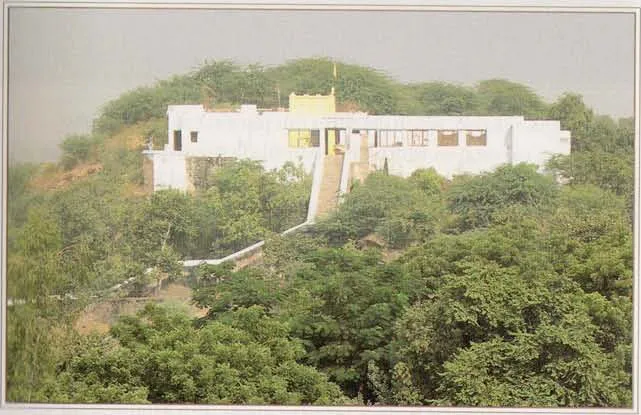
Ūñcāgaon
ऊँचागाँवŪñcāgaon, the "high village", stands on the hill of Lalitā-sthala (Aṭorā-parvata), one mile west of Varṣāṇā, according to the guidebook Śrī Vraja-maṇḍala Parikramā (2007) …
Indraulī
इन्द्रौलीIndraulī, also written Indrolī, is a village about two miles south-east of Kāmyavana.
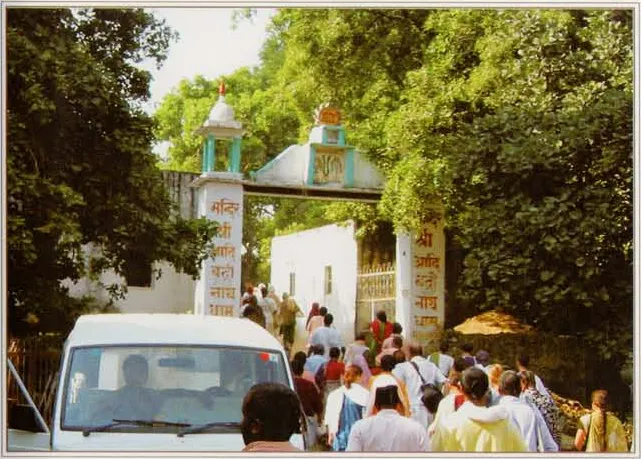
Ādi-badrī
आदि-बद्रीĀdi-badrī, "the original Badarī", is a hill area on the western side of Vraja-maṇḍala, one and a half miles north of Setu-kandarā, with the village of Ālīpura at the foot …
Beheja
बहजBeheja is a village on the road from Govardhana to Ḍīg (Dīrghapura), about six miles from Govardhana, according to the guidebook Śrī Vraja-maṇḍala Parikramā (2007).
Kanovāro
कनवाराKanovāro is a village near Kāmyavana.
Godṛṣṭivana
गोदृष्टिवनGodṛṣṭivana, "the forest of looking at the cows", is a place of Kṛṣṇa's cow-herding, now the village of Guhānā, one mile from Paramodarā.
Show all (16)
Kuṇḍas
20 placesTemples and shrines
4 placesOther places
25 places- Vyomāsura's cave
- Triveṇī-kūpa
- Bhojana-thālī
- Sakhīgiri-parvata
- Caraṇa-pahāḍī
- Luk-luka-kandarā
- Laṅkāpurī
- Footprint of Baladeva Prabhu
Show all (25)
- Phisalanī-śilā
- Bajanī-śilā
- Devaśīrṣa-sthāna
- Lalitā-vivāha-maṇḍapa
- Phisalanī-śilā (Sakhīgiri-parvata)
- Sakhī-kūpa
- Prabodhānanda Sarasvatī's place of bhajana
- Āṭora
- Kṛṣṇa's footprints and handprints (Vyomāsura's cave)
- Imprint of Kṛṣṇa's Kaustubha necklace (Vyomāsura's cave)
- Kadamba-khaṇḍī (Sunaharā)
- Śāṅarā-śikhara
- Ḍīg Gate
- Āmera Gate
- Delhi Gate
- Devī Gate
- Laṅkā Gate
Also described on this page
- Bajerā village
- Nārada-kuṇḍa (Kāmyavana) kuṇḍa
Also listed here
- Agasta-kuṇḍa kuṇḍa
- Agrāvalī village
- Alakṣa Garuḍa (Kāmyavana) shrine
- Avantikā-kuṇḍa kuṇḍa
- Bhadreśvara Śiva (Kāmyavana) shrine
- Bhāradvāja Ṛṣi-kūpa well
- Bilonda village
- Candrabhāṣā-kuṇḍa kuṇḍa
- Candrasakhī-puṣkariṇī kuṇḍa
- Candraśekhara Śiva (near Śṛṅgāra-tīrtha) shrine
- Candraśekhara, Vimaleśvara and Varāha deities (Kuśa-sthalī) shrine
- Candreśvara Mahādeva (Kāmyavana) temple
- Caraṇa-kuṇḍa (Kāmyavana) kuṇḍa
- Caturbhuja-kuṇḍa kuṇḍa
- Chabīlā-kuṇḍa kuṇḍa
- Datīlā-kuṇḍa kuṇḍa
- Deities of the five Pāṇḍavas with Draupadī (Kāmyavana) shrine
- Dharma-kūpa well
- Dihuhalī
- Dohanī-kuṇḍa (Kāmyavana) kuṇḍa
- Garuḍa-tīrtha tīrtha
- Garuḍajī (Kāmyavana) shrine
- Gaurī-kuṇḍa (Kedāranātha) kuṇḍa
- Gopikā-kuṇḍa kuṇḍa
- Govinda-kuṇḍa (Kāmyavana) kuṇḍa
- Gupta-gaṅgā kuṇḍa
- Haridvāra-kuṇḍa kuṇḍa
- Hill of the sakhās' and calves' footprints (near Caraṇa-pahāḍī) hill
- Hoḍa-sthāna pastime site
- Indrasena Hill hill
- Jakīlā-kuṇḍa kuṇḍa
- Jalvihāra-kuṇḍa (Kāmyavana) kuṇḍa
- Jugala-kiśora Mandira (Paśopā) temple
- Kalāvatā-grāma village
- Kapila-tīrtha tīrtha
- Kedāranātha (Vraja) hill with Śiva shrine
- Khoha village
- Kuśa-sthalī (Kāmyavana) sthalī
- Kṛṣṇa's sitting place (Bhojana-thālī) pastime site
- Kṛṣṇa's stone bridge (Kāmyavana) pastime site
- Kṛṣṇa-kūpa (Kāmyavana, east of Prabhālallī) well
- Kṛṣṇa-kūpa (Kāmyavana, north of Indulekhā's place) well
- Lalitā Granthi-datta-sthāna pastime site
- Lalitā-kuṇḍa (Kāmyavana) kuṇḍa
- Laṭhāvana forest
- Lokeśvara-tīrtha tīrtha
- Marriage-place of Sumanā Sakhī pastime site
- Matsya-kuṇḍa kuṇḍa
- Matīlā-kuṇḍa kuṇḍa
- Maṇikarṇikā-kuṇḍa kuṇḍa
- Mohinī-kuṇḍa (Kāmyavana) kuṇḍa
- Naimiṣa-tīrtha tīrtha
- Netramīcana-kuṇḍa kuṇḍa
- Nivāsa-kuṇḍa kuṇḍa
- Nṛsiṁha-kuṇḍa kuṇḍa
- Parama-mokṣa-kuṇḍa kuṇḍa
- Pañca-kuṇḍa kuṇḍa
- Paśopā village
- Place of Balarāma and the mark of His plough (Kāmyavana) pastime site
- Place of Indulekhā-devī (Kāmyavana) pastime site
- Place of Lohajaṅgha Ṛṣi āśrama
- Prabhālallī bāvaḍī (step-tank)
- Prahlāda-kuṇḍa kuṇḍa
- Puṣkara-kuṇḍa (Kāmyavana) kuṇḍa
- Pāṇḍava Mandira (Kāmyavana) temple
- Raṅgīlā-kuṇḍa kuṇḍa
- Rādhā-Gopīnātha Mandira (Kāmyavana) temple
- Rādhā-Mohana (Gopālajī) (Kāmyavana) shrine
- Rādhā-puṣkariṇī puṣkariṇī
- Satī-kuṇḍa kuṇḍa
- Saṅkarṣaṇa-kuṇḍa (Kāmyavana, near Kṛṣṇa-kūpa) kuṇḍa
- Saṅkarṣaṇa-kuṇḍa (Kāmyavana, north of Prabhālallī) kuṇḍa
- Seū-ghāṭī ghāṭī (pass)
- Suvarṇapura
- Tapta-kuṇḍa (Kāmyavana) kuṇḍa
- Varāha-kuṇḍa (Kāmyavana) kuṇḍa
- Varāha-kūpa well
- Vatsa-kuṇḍa kuṇḍa
- Viśākhā-kuṇḍa (Kāmyavana) kuṇḍa
- Viśākhā-vedī vedī (platform)
- Viṣṇu-cihna-pāda-parvata hill
- Viṣṇu-siṁhāsana siṁhāsana
- Yajña-kuṇḍa (Kāmyavana) kuṇḍa
- Āśrama of Pippalāda Ṛṣi āśrama
- Śyāma-kuṇḍa (Kāmyavana) kuṇḍa
- Śāntanu-kuṇḍa (Kāmyavana) kuṇḍa
- Śṛṅgāra-tīrtha tīrtha
- Candrabhāga-puṣkariṇī kuṇḍa
- Candrāvalī-puṣkariṇī kuṇḍa
- Lalitā-puṣkariṇī puṣkariṇī
- Līlāvatī-puṣkariṇī puṣkariṇī
- Place where Śaṅkhacūḍa was killed (Kuśa-sthalī) pastime site
- Prabhāvatī-puṣkariṇī puṣkariṇī
- Puṣkariṇīs of the sixty-four sakhīs (Rādhā-puṣkariṇī) puṣkariṇī (group)
- Viśākhā-puṣkariṇī puṣkariṇī
Nearby places
Yamunā · Varṣāṇā
Pictures
3 pictures
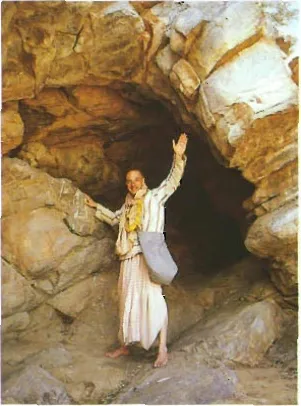
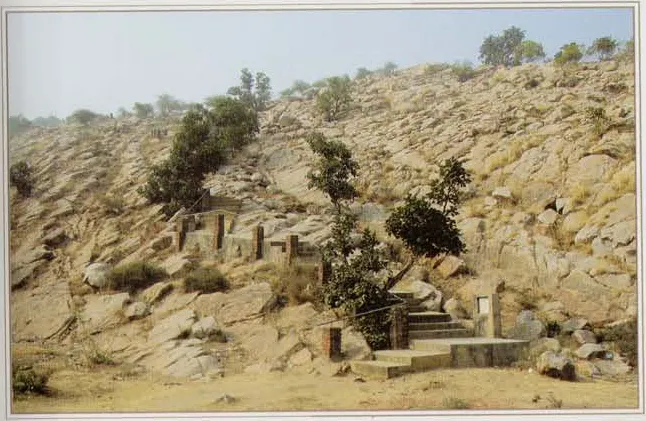
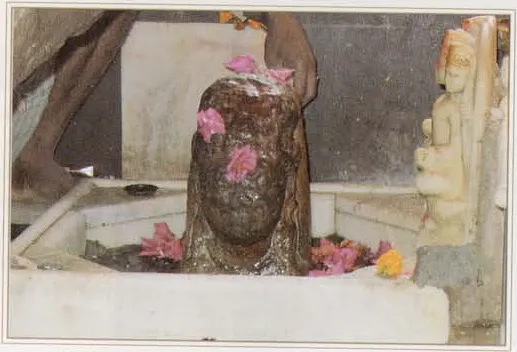
History
Śrīla Prabhupāda said in a lecture of 14 June 1970 that when Aurangzeb was harassing the Hindus and breaking temples, the king of Jaipur took the Deities of Govinda, Gopīnātha and Madana-mohana from Vṛndāvana to Jaipur.[99] The guidebooks and historians add that the Deities stopped at Kāmyavana on the way and that temples were built for them here. They differ on which Deities came, how long they stayed and what was built; the accounts are set side by side on the page of Śrī Govindadeva's temple.[30 +6] The guidebooks and A. W. Entwistle (1987) say that Vṛndā-devī, brought from Vṛndāvana with Govinda, remained at Kāmyavana; some of the guidebooks add that Śrīla Rūpa Gosvāmī had found her at Brahma-kuṇḍa in Vṛndāvana. Where her Deity is today is told differently.[30 +5] Read more: The temples of Vṛndāvana in Mughal times →
According to Entwistle (1987), after a campaign of 1650 Kīrat Singh, the second son of Mirzā Rājā Jai Singh of Amber, was given the parganās (districts) of Kāman-Pahāṛī and Khoh; the village of Khoha is probably that Khoh.[105]
Entwistle (1987), citing Prabhudayāl Mītal (1968), reports that the chief Deity of the Rādhāvallabha sampradāya was installed in a new temple at Kāman in 1682 and stayed there until 1785.[106] He also reports that the Vallabha-sampradāya Deities Gokulacandramā and Madana-mohana were housed in adjoining temples at Kāman in 1871; Śrī Vraja-maṇḍala Parikramā (2007) names the Vallabha Deities of Kāmyavana as Śrī Kṛṣṇa-candramā, Navanīta-priyājī and Śrī Madana-mohana.[4 +1]
The Vraja-bhakti-vilāsa already lists Govinda with Vṛndā, Rādhāvallabha and Gopīnātha among Kāmyavana's eighty-four deities, each with a prayer, while the guidebooks and historians date the coming of the Vṛndāvana Deities to Aurangzeb's time. The books do not say whether these are the same images, and the accounts differ:[108 +2]
Accounts differ The Vraja-bhakti-vilāsa's list of Kāmyavana's deities and the dates the historian gives for their arrival.
- Vraja-bhakti-vilāsa printed pp.50, 201the Kāmyavana circuit includes the darśana of Govinda with Vṛndā, Rādhā-vallabha, Gopīnātha, Navanīta-rāya and Gokuleśvara
- Vṛndāvana-Dhāma Ki Jaya! (c. 1986)Śrīla Nārāyaṇa Bhaṭṭa Gosvāmī, the author, was a contemporary of the six Gosvāmīs
- Entwistle (1987) printed p.185the Gauḍīya deities and Vṛndā-devī were taken to Kāman in response to the attacks made at Aurangzeb's behest (Kāman was then Kirat Singh's; his successor inherited it in 1671); the Rādhāvallabha deity was installed at Kāman in 1682
Where the sources differ
Who speaks the Ādi-vārāha verse on Kāmyaka-vana ('mama loke mahīyate').
Accounts differ Who speaks the Ādi-vārāha verse on Kāmyaka-vana ('mama loke mahīyate').
- Śrīla Prabhupāda, CC Madhya 18.55 purport (translation of the verse 'in the Ādi-varāha Purāṇa')'Lord Śiva said, … O goddess Devī, any person who goes there is eligible to enjoy the glories of my abode'
- Varāha Purāṇa (Wikisource text), chapter 153The chapter opens with the words 'Śrī Varāha said', and the Lord speaks to the goddess Earth; read in this text, the world the verse promises is Lord Varāha's, that is, Viṣṇu's.
- Bhakti-ratnākara, Fifth Wave, 1912 Bengali edition, printed p. 214Śrīla Rāghava Paṇḍita Gosvāmī, introducing the verse, says that one who goes here is worshipped in Viṣṇuloka, so the book reads the verse's 'my world' as Viṣṇu's world.
Kāmyavana's place in the lists of the twelve forests. An overview of all the lists is on the Vraja-maṇḍala page.
Accounts differ Kāmyavana's number among the twelve forests.
- Varāha Purāṇa 153.37, 161.7; Śrīla Rūpa Gosvāmī's Ādi-vārāha (MM v.337); Bhakti-ratnākarafourth
- Padma Purāṇa, Pātāla-khaṇḍa 69.16 (list) and 69.45 (tenth petal 'Kāmāraṇya')tenth (an English translation takes the 69.16 list as an order of importance)
- Vraja-bhakti-vilāsa, 'Pādma' list (printed p.2), and Śrī Vraja-maṇḍala Parikramā (2007) ('According to the Padma Purāṇa … (2) Kāmyavana')second (after Mahāvana)
- Śrīla Prabhupāda, Śrīmad-Bhāgavatam 4.8.42, purport (the list, as reprinted with numbers)'10) Kāmyavana' (the page's own numbering of the list in Śrīla Prabhupāda's ŚB 4.8.42 purport, which has no numbers)
Accounts differ Kāmyavana and Kāmavana: one forest or two?
- Śrī Vraja-maṇḍala Parikramā (2007) contents and chapter title'Kāmyavana (Kāmavana)': one forest
- Śrī Vraja-maṇḍala Parikramā (2007)Padma list: (2) Kāmyavana among the twelve forests; Bhaviṣya list: (4) Kāmavana among the twelve prativanas
- Vraja-bhakti-vilāsa printed pp.48, 50the list of this forest's sites is headed 'kāmavana-liṅgāni' and closed 'iti kāmyavana-liṅgāni'
- Vraja-bhakti-vilāsa printed p.2the 'Bhaviṣya' prativana list has the forest named Kāmya fourth (Hindi: कामवन) besides Kāmyavana among the twelve forests
The wording of these accounts is our summary of the sources, not a published translation.
Accounts differ Is Kāmyavana part of Vṛndāvana or separate from it?
- Śrī Vraja-maṇḍala Parikramā (2007)before Mahāprabhu Kāmyavana 'was considered to be Vṛndāvana'; it 'is without doubt separate from Vṛndāvana'
- Śrīla Sanātana Gosvāmī (and Śrīla Jīva Gosvāmī) on ŚB 10.11.29Khadira- and Kāmyaka-vana are separate only in the narrower sense of Vṛndāvana (Govindadeva's seat), not in the five-yojana view
- Śrīla Jīva Gosvāmī on ŚB 10.18.16Kāmyaka-vana is among the groves within Śrī Vṛndāvana
- Śrīla Jīva Gosvāmī on ŚB 10.22.29 (Laghu-toṣaṇī; Prīti-sandarbha 379)Kṛṣṇa went far from Vṛndāvana (vṛndāvanād gato dūram): first to the hilly Kāmyaka-vana
The wording of these accounts is our summary of the sources, not a published translation.
Accounts differ Where Kāmyavana lies: in relation to Mathurā, Govardhana, Nandīśvara or Varṣāṇā.
- Śrīla Prabhupāda, CC Madhya 1.239 purport'They start at Mathurā, where there is Kāmyavana. From there they go to Tālavana …'
- Śrī Vraja-maṇḍala Parikramā (2007)in Rājasthāna, six miles west of Varṣāṇā, two miles north-west of Indraulī
- Śrīla Viśvanātha Cakravartī, Vraja-rīti-cintāmaṇi 3.47in the region south-west of Nandīśvara
- Śrīla Murāri Gupta, Kṛṣṇa-caitanya-caritāmṛta 4.3.13West of Govardhana, which is west of Mathurā (Kṛṣṇadāsa's description of the forests before the tour); no distance.
Which sakhī is the eighth of Rādhā's principal companions: the sources do not agree.
Accounts differ Who the eighth principal sakhī is and whether Sudevī is Raṅgadevī's twin sister (the persons Śrī Vraja-maṇḍala Parikramā (2007) connects with Bajerā).
- Śrīla Rūpa Gosvāmī, Rādhā-Kṛṣṇa-gaṇoddeśa-dīpikā 1.94–95Sudevī, the eighth, is Raṅgadevī's twin, married to the younger brother of Raṅgadevī's husband Vakrekṣaṇa.
- Śrī Vraja-maṇḍala Parikramā (2007), pp. 295–296Raṅgadevī and Sudevī are twin sisters, daughters of Raṅgasāra and Karuṇā, born at Bajerā; their husbands are Vakrakhana and his younger brother.
- Ādi-purāṇa 11.59–62After Raṅgadevī (same parents and husband) the eighth is 'Mamatā', called her sister, with the father Devabandhu, the mother Sudevī and the husband Khaleha; no sakhī Sudevī is named.
More on this place
Kāmyavana parikramā: Vimala-kuṇḍa and the eighty-four tīrthas · The twelve forests of Vraja: the lists side by side · Kṛṣṇa and the wives of the brāhmaṇas: the pastime and its places · Where and when Kṛṣṇa killed Vyomāsura
- →Kāmyavana parikramā: Vimala-kuṇḍa and the eighty-four tīrthasarticle›
- →The twelve forests of Vraja: the lists side by sidearticle›
- →Kṛṣṇa and the wives of the brāhmaṇas: the pastime and its placesarticle›
- →Where and when Kṛṣṇa killed Vyomāsuraarticle›
- →The hills that melted at Kṛṣṇa's flute: the three Caraṇa-pahāḍīsarticle›
- →The killing of Śaṅkhacūḍa: when, where, and the jewelarticle›
- →Nanda's family at Nandagrāmaarticle›
- →The Pāṇḍavas in Kāmyavana: the Yakṣa's questions and the Pāṇḍava sitesarticle›
- →The temples of Vṛndāvana in Mughal timesarticle›
References
237 references
- Śrī Vraja-maṇḍala Parikramā (2007), PDF p. 21
- Śrī Vraja-maṇḍala Parikramā (2007), PDF p. 170
- Śrī Vraja-maṇḍala Parikramā (2007), PDF p. 142
- Śrī Vraja-maṇḍala Parikramā (2007), PDF p. 160
- Śrī Vraja-maṇḍala Parikramā (2007), PDF p. 145
- the undated parikramā notes Kāmyavana, ¶1
- Varāha Purāṇa, adhyāya 153, verses 37-38, Sanskrit Wikisource
- Varāha Purāṇa, adhyāya 161, verses 6-7, Sanskrit Wikisource
- Śrīla Rūpa Gosvāmī, Mathurā-māhātmya vv.337-340 (section on the twelve forests), quoting the Ādi-vārāha and the Skanda Purāṇa's Mathurā-khaṇḍa
- Śrīla Narahari Cakravartī, Bhakti-ratnākara, Fifth Wave, printed pp.214-215: Rāghava Paṇḍita shows Kāmyavana to Śrīnivāsa and Narottama, 2nd ed., 1912
- Śrīla Prabhupāda, Śrī Caitanya-caritāmṛta, Madhya-līlā 18.55, purport · vedabase.io
- Śrīla Prabhupāda, Śrīmad-Bhāgavatam, 4.8.42, purport · vedabase.io
- Śrīla Prabhupāda, Śrī Caitanya-caritāmṛta, Madhya-līlā 1.239, purport · vedabase.io
- Śrīla Prabhupāda, Śrī Caitanya-caritāmṛta, Madhya-līlā 17.193, purport · vedabase.io
- Śrīla Kṛṣṇadāsa Kavirāja Gosvāmī, Śrī Caitanya-caritāmṛta, CC Madhya-līlā 18.55, online edition · vedabase.io
- Śrīla Kṛṣṇadāsa Kavirāja Gosvāmī, Śrī Caitanya-caritāmṛta, CC Madhya-līlā 18.57, online edition · vedabase.io
- Śrīla Prabhupāda, Śrīmad-Bhāgavatam, Canto 1, Introduction, Introduction (life of Śrī Caitanya Mahāprabhu) · vedabase.io
- Śrīla Narahari Cakravartī, Bhakti-ratnākara, Fifth Wave, printed p.217, vv.881-882 of the Kāmyavana tour, 2nd ed., 1912
- Śrīla Narahari Cakravartī, Bhakti-ratnākara, Fifth Wave, printed p.216, v.851 of the Kāmyavana tour: the Setubandha-kuṇḍa, 2nd ed., 1912
- Śrīla Narahari Cakravartī, Bhakti-ratnākara, Fifth Wave, printed p.215, v.843 of the Kāmyavana tour: the kuṇḍa of the five Pāṇḍavas, 2nd ed., 1912
Show all 237 references
- Varāha Purāṇa, adhyāya 153, verses 37-38, Sanskrit Wikisource
- Śrī Vraja-maṇḍala Parikramā (2007), PDF p. 144
- Śrī Vraja-maṇḍala Parikramā (2007), PDF p. 154
- Śrī Vraja-maṇḍala Parikramā (2007), PDF p. 166
- Padma Purāṇa, Vṛndāvana-māhātmya (1) vv.16-17 (= Padma Pātāla-khaṇḍa 69.16-17)
- Padma Purāṇa, Vṛndāvana-māhātmya (1) vv.45-46 (= Padma Pātāla-khaṇḍa 69.45-46)
- Brahma-vaivarta Purāṇa, Prakṛti-khaṇḍa (2) 55.50 (with 55.47), Sanskrit Wikisource
- Śrīla Viśvanātha Cakravartī Ṭhākura, Vraja-rīti-cintāmaṇi, Third sarga, vv.47-51
- Śrīla Nārāyaṇa Bhaṭṭa Gosvāmī, Vraja-bhakti-vilāsa, chapter 6 v.2, printed p.150: the origin of Kāmyavana's name, 1st ed., publ. Bābā Kṛṣṇadāsa, Kusuma-sarovara, Saṁvat 2008
- Vṛndāvana-Dhāma Ki Jaya! (c. 1986), by Dhruva Mahārāja dāsa, PDF p. 44
- the undated parikramā notes Kāmyavana, ¶4
- Śrīla Rūpa Gosvāmī, Bhakti-rasāmṛta-sindhu, 1.2.285, GRETIL
- Jaya Jaya Madana Gopāla Baṁśī Dhārī (Narottama dāsa Ṭhākura (as the song book credits it)) · song book
- Śrīmad-Bhāgavatam 10.22.29, GRETIL
- Śrīla Jīva Gosvāmī: commentary on ŚB 10.22.29, Bhagavata Vidya Pith edition, ed. Bhagavata Rishi and Krishna Shankar Shastri, 1996
- Śrīmad-Bhāgavatam 10.23.22, Bhagavata Vidya Pith edition, ed. Bhagavata Rishi and Krishna Shankar Shastri, 1996
- Śrīla Jīva Gosvāmī: commentary on ŚB 10.23.22, Bhagavata Vidya Pith edition, ed. Bhagavata Rishi and Krishna Shankar Shastri, 1996
- Śrīla Prabhupāda, Kṛṣṇa, the Supreme Personality of Godhead (Kṛṣṇa book), Chapter 23, 'Delivering the Wives of the Brāhmaṇas Who Performed Sacrifices' · vedabase.io
- Śrīla Jīva Gosvāmī, Gopāla-campū, Pūrva-campū, twenty-second pūraṇa, ¶[2] v.1
- Śrīmad-Bhāgavatam 10.18.16, GRETIL
- Śrīla Jīva Gosvāmī: commentary on ŚB 10.18.16, Bhagavata Vidya Pith edition, ed. Bhagavata Rishi and Krishna Shankar Shastri, 1996
- Śrīmad-Bhāgavatam 10.46.22, GRETIL
- Śrīla Sanātana Gosvāmī: commentary on ŚB 10.46.22, Bhagavata Vidya Pith edition, ed. Bhagavata Rishi and Krishna Shankar Shastri, 1996
- Śrīla Sanātana Gosvāmī: commentary on ŚB 10.11.28-29, Bhagavata Vidya Pith edition, ed. Bhagavata Rishi and Krishna Shankar Shastri, 1996
- Śrīmad-Bhāgavatam 10.11.28, GRETIL
- Śrīmad-Bhāgavatam 10.37.26, GRETIL
- Śrīmad-Bhāgavatam 10.37.29, GRETIL
- Garga-saṁhitā, Mādhurya-khaṇḍa (4) 24.1-3 (chapter 'vyomāsura-ariṣṭa-vadham'), Sanskrit Wikisource
- Śrīla Prabhupāda, Kṛṣṇa, the Supreme Personality of Godhead (Kṛṣṇa book), Chapter 37, 'Killing the Keśī Demon and Vyomāsura' · vedabase.io
- the undated parikramā notes Kāmyavana, ¶80
- Śrīla Jīva Gosvāmī, Gopāla-campū, Pūrva-campū, tenth pūraṇa, ¶[60] and ¶[62]
- Śrīmad-Bhāgavatam 10.11.59, GRETIL
- Śrīla Prabhupāda, Kṛṣṇa, the Supreme Personality of Godhead (Kṛṣṇa book), Chapter 11, 'Killing the Demons Vatsāsura and Bakāsura' · vedabase.io
- Śrīla Nārāyaṇa Bhaṭṭa Gosvāmī, Vraja-bhakti-vilāsa, chapter 2 part 13 v.1, printed p.48: the marks (liṅgāni) of Kāmyavana, 1st ed., publ. Bābā Kṛṣṇadāsa, Kusuma-sarovara, Saṁvat 2008
- Vṛndāvana-Dhāma Ki Jaya! (c. 1986), by Dhruva Mahārāja dāsa, PDF p. 46
- the undated parikramā notes Kāmyavana, ¶65
- Śrī Vraja-maṇḍala Parikramā (2007), PDF p. 148
- Garga-saṁhitā, Vṛndāvana-khaṇḍa (2) 10.18, Sanskrit Wikisource
- Garga-saṁhitā, Vṛndāvana-khaṇḍa (2) 21.4-8, Sanskrit Wikisource
- Garga-saṁhitā, Mādhurya-khaṇḍa (4) 7.26-29, Sanskrit Wikisource
- Śrī Vraja-maṇḍala Parikramā (2007), PDF p. 146
- Śrī Vraja-maṇḍala Parikramā (2007), PDF p. 155
- Śrīla Narahari Cakravartī, Bhakti-ratnākara, Fifth Wave, 1912 ed. p. 216; Grantha Mandira text vv.852-854, 2nd ed., 1912
- Śrīla Kṛṣṇadāsa Kavirāja Gosvāmī, Govinda-līlāmṛta, sarga 18, vv.58-59, after the editions of Haridas Das and Haridas Shastri
- Śrīmad-Bhāgavatam 10.34.20, GRETIL
- Śrīmad-Bhāgavatam 10.34.25, GRETIL
- Śrīmad-Bhāgavatam 10.34.26, GRETIL
- Śrīmad-Bhāgavatam 10.34.31, GRETIL
- Śrīmad-Bhāgavatam 10.34.32, GRETIL
- Śrīla Prabhupāda, Kṛṣṇa, the Supreme Personality of Godhead (Kṛṣṇa book), Chapter 34, 'Vidyādhara Liberated and the Demon Śaṅkhacūḍa Killed' · vedabase.io
- Śrīmad-Bhāgavatam 2.7.33, GRETIL
- Śrīla Prabhupāda, Śrīmad-Bhāgavatam, Canto 2, 2.7.33, purport · vedabase.io
- Śrīla Nārāyaṇa Bhaṭṭa, Vraja-bhakti-vilāsa, chapter 2, v.53 (the list of Kāmyavana's places), printed p. 50, 1st ed., publ. Bābā Kṛṣṇadāsa, Kusuma-sarovara, Saṁvat 2008
- Śrīla Nārāyaṇa Bhaṭṭa Gosvāmī, Vraja-bhakti-vilāsa, chapter 9 v.51: the prayer at the place where Śaṅkhacūḍa was killed (from the 'Mahābhārata'), printed p.199, 1st ed., publ. Bābā Kṛṣṇadāsa, Kusuma-sarovara, Saṁvat 2008
- Śrīla Prabhupāda, Śrī Caitanya-caritāmṛta, Madhya-līlā 18.57, translation · vedabase.io
- Kṛṣṇa-caitanya-caritāmṛta of Śrī Murāri Gupta, prakrama 4, sarga 3, vv.13-14
- Kṛṣṇa-caitanya-caritāmṛta of Śrī Murāri Gupta, prakrama 4, sarga 10, v.16
- Śrī Locana dāsa Ṭhākura, Caitanya-maṅgala, Śeṣa-khaṇḍa, printed p. 170, left column, lines 21-22
- Śrī Locana dāsa Ṭhākura, Caitanya-maṅgala, Śeṣa-khaṇḍa, printed p. 177, right column, line 8
- Śrīla Nārāyaṇa Bhaṭṭa Gosvāmī, Vraja-bhakti-vilāsa, chapter 7 v.7, printed p.178: the forest-pilgrimage days; Kāmyavana on Bhādra śukla 1-2, 1st ed., publ. Bābā Kṛṣṇadāsa, Kusuma-sarovara, Saṁvat 2008
- Śrīla Nārāyaṇa Bhaṭṭa Gosvāmī, Vraja-bhakti-vilāsa, chapter 9 vv.65-66, printed p.202: end of the Kāmyavana circuit, 1st ed., publ. Bābā Kṛṣṇadāsa, Kusuma-sarovara, Saṁvat 2008
- Śrīla Nārāyaṇa Bhaṭṭa Gosvāmī, Vraja-bhakti-vilāsa, part 2 vv.1-2, printed p.5: the presiding Lords of the twelve forests, 1st ed., publ. Bābā Kṛṣṇadāsa, Kusuma-sarovara, Saṁvat 2008
- Śrīla Nārāyaṇa Bhaṭṭa Gosvāmī, Vraja-bhakti-vilāsa, chapter 2 part 13 v.53, printed p.50: end of the list of Kāmyavana's sites, 1st ed., publ. Bābā Kṛṣṇadāsa, Kusuma-sarovara, Saṁvat 2008
- Śrīla Nārāyaṇa Bhaṭṭa Gosvāmī, Vraja-bhakti-vilāsa, chapter 2 part 13, items 2, 9-11, 15 and 18 of the list of Kāmavana, printed p.48, 1st ed., publ. Bābā Kṛṣṇadāsa, Kusuma-sarovara, Saṁvat 2008
- Śrī Vraja-maṇḍala Parikramā (2007), PDF p. 138
- Śrī Vraja-maṇḍala Parikramā (2007), PDF p. 194
- the undated parikramā notes Kāmyavana, ¶7
- Śrīla Prabhupāda, Śrīmad-Bhāgavatam, 1.9.6-7, purport · vedabase.io
- Śrīla Prabhupāda, Śrīmad-Bhāgavatam, 1.15.16, purport · vedabase.io
- Padma Purāṇa, Uttara-khaṇḍa (6) 3.1, Sanskrit Wikisource
- Śrīla Nārāyaṇa Bhaṭṭa Gosvāmī, Vraja-bhakti-vilāsa, chapter 2 part 13 v.53, printed p.50: the five Pāṇḍavas with Draupadī in the list of Kāmyavana's sites, 1st ed., publ. Bābā Kṛṣṇadāsa, Kusuma-sarovara, Saṁvat 2008
- Pulinbihārī Datta, ch. 8 (aṣṭama pariccheda), entry 'Kāmyavana', printed p. 124, text lines 7-8 (counted below the running head)
- Mahābhārata, 3.6.1-3 (constituted text), BORI critical edition, electronic text, 1999
- Śrīmad-Bhāgavatam 1.15.11, GRETIL
- Śrīla Prabhupāda, Śrīmad-Bhāgavatam, 1.15.11, purport · vedabase.io
- Śrī Vraja-maṇḍala Parikramā (2007), PDF p. 152
- Śrīla Prabhupāda, Śrīmad-Bhāgavatam, 1.9.6-7, purport (on Bṛhadaśva) · vedabase.io
- the undated parikramā notes Kāmyavana, ¶9
- Śrīla Prabhupāda, Śrīla Baladeva Vidyābhūṣaṇa Appearance lecture, Los Angeles, 14 June 1970 · vedabase.io
- Śrī Vraja-maṇḍala Parikramā (2007), PDF p. 147
- Vṛndāvana, the Playground of God (2010), Bhakti Caitanya Svāmī, PDF p. 35
- Vṛndāvana, the Playground of God (2010), Bhakti Caitanya Svāmī, PDF p. 198
- The Color Guide to Vṛndāvana (2000), Written and Photographed by Rājaśekhara dāsa Brahmacārī, PDF p. 89
- A. W. Entwistle, gazetteer of Kaman (§33), entry 11 'Govind Dev and Gopinath', printed p. 368, Egbert Forsten, Groningen, 1987
- A. W. Entwistle, §5.20 (end), printed pp. 174–175, with note 211, Egbert Forsten, Groningen, 1987
- A. W. Entwistle, §5, printed p.185: the Rādhāvallabha deity at Kāman, Egbert Forsten, Groningen, 1987
- A. W. Entwistle, §5, printed p.223: the Vallabha-sampradāya deities at Kāman, Egbert Forsten, Groningen, 1987
- Śrīla Nārāyaṇa Bhaṭṭa Gosvāmī, Vraja-bhakti-vilāsa, ch. 2, list of the marks of Kāmavana, the items after Kuśasthalī (finding aid '(2) [part 13] v.53', after v.69), printed p. 50, 1st ed., publ. Bābā Kṛṣṇadāsa, Kusuma-sarovara, Saṁvat 2008
- Śrīla Nārāyaṇa Bhaṭṭa Gosvāmī, Vraja-bhakti-vilāsa, ch. 9 vv.59, 60, 62 and 63 (beginning), printed p. 201; Grantha Mandira text (9) vv.59-63, 1st ed., publ. Bābā Kṛṣṇadāsa, Kusuma-sarovara, Saṁvat 2008
- Śrīla Nārāyaṇa Bhaṭṭa Gosvāmī, Vraja-bhakti-vilāsa, ch. 9 v.64, printed p. 202; Grantha Mandira text (9) v.64, 1st ed., publ. Bābā Kṛṣṇadāsa, Kusuma-sarovara, Saṁvat 2008
- Śrī Vraja-maṇḍala Parikramā (2007), PDF p. 156
- Śrī Vraja-maṇḍala Parikramā (2007), PDF p. 157
- Śrī Vraja-maṇḍala Parikramā (2007), PDF p. 301
- Vṛndāvana-Dhāma Ki Jaya! (c. 1986), by Dhruva Mahārāja dāsa, PDF p. 63
- the undated parikramā notes Kāmyavana, ¶69
- Śrīla Gopāla Bhaṭṭa Gosvāmī, Hari-bhakti-vilāsa, 1.2, GRETIL
- Śrīla Prabhupāda, Śrī Caitanya-caritāmṛta, Madhya-līlā 17.104, purport · vedabase.io
- Śrī Vraja-maṇḍala Parikramā (2007), PDF p. 25
- Prabhudayāl Mītal, 'Braj-yātrā', Kāmavana, entry 'विविध देव मूर्तियाँ और देव स्थान' and the paragraph on the sampradāyas, printed p. ११७ (117)
- Śrīla Nārāyaṇa Bhaṭṭa Gosvāmī, Vraja-bhakti-vilāsa, ch. 9 v.61, printed p. 201; Grantha Mandira text (9) v.61, 1st ed., publ. Bābā Kṛṣṇadāsa, Kusuma-sarovara, Saṁvat 2008
- Śrīla Narahari Cakravartī, Bhakti-ratnākara, Fifth Wave vv.838-840, printed p.215, 2nd ed., 1912
- Śrīla Narahari Cakravartī, Bhakti-ratnākara, Fifth Wave, printed p.215: v.841 of the Kāmyavana tour, 2nd ed., 1912
- Śrīla Narahari Cakravartī, Bhakti-ratnākara, Fifth Wave v.855, printed p. 216, 2nd ed., 1912
- Śrīla Nārāyaṇa Bhaṭṭa Gosvāmī, Vraja-bhakti-vilāsa, chapter 6 vv.3-4: the origin of Gopikā-kuṇḍa and its bathing prayer (from the 'Nāradīya'), printed p.151, 1st ed., publ. Bābā Kṛṣṇadāsa, Kusuma-sarovara, Saṁvat 2008
- Śrīla Nārāyaṇa Bhaṭṭa Gosvāmī, Vraja-bhakti-vilāsa, ch. 2, list of the marks of Kāmavana, vv.1-4, printed p. 48; Grantha Mandira text (2) [part 13] vv.1-4, 1st ed., publ. Bābā Kṛṣṇadāsa, Kusuma-sarovara, Saṁvat 2008
- Śrī Vraja-maṇḍala Parikramā (2007), PDF p. 153
- Śrīla Nārāyaṇa Bhaṭṭa Gosvāmī, Vraja-bhakti-vilāsa, ch. 6 v.12, printed p. 153; Grantha Mandira text (6) v.12, 1st ed., publ. Bābā Kṛṣṇadāsa, Kusuma-sarovara, Saṁvat 2008
- Śrīla Narahari Cakravartī, Bhakti-ratnākara, Fifth Wave, 1912 ed. printed p. 215; Grantha Mandira text v.844, 2nd ed., 1912
- Śrīla Nārāyaṇa Bhaṭṭa Gosvāmī, Vraja-bhakti-vilāsa, chapter 6 v.11: the origin of the Mokṣa (Paramokṣa) kuṇḍa and its bathing prayer (from the 'Śaunakīya'), printed p.153, 1st ed., publ. Bābā Kṛṣṇadāsa, Kusuma-sarovara, Saṁvat 2008
- Śrīla Nārāyaṇa Bhaṭṭa Gosvāmī, Vraja-bhakti-vilāsa, chapter 6 v.13: the origin of Nivāsa-kuṇḍa and its bathing prayer (no source named), printed p.154, 1st ed., publ. Bābā Kṛṣṇadāsa, Kusuma-sarovara, Saṁvat 2008
- Śrīla Nārāyaṇa Bhaṭṭa Gosvāmī, Vraja-bhakti-vilāsa, ch. 2, list of the marks of Kāmavana, vv.16-18, printed p. 48; Grantha Mandira text (2) [part 13] vv.16-18, 1st ed., publ. Bābā Kṛṣṇadāsa, Kusuma-sarovara, Saṁvat 2008
- Śrīla Nārāyaṇa Bhaṭṭa Gosvāmī, Vraja-bhakti-vilāsa, ch. 6 v.19, printed p. 155; Grantha Mandira text (6) v.19, 1st ed., publ. Bābā Kṛṣṇadāsa, Kusuma-sarovara, Saṁvat 2008
- Śrīla Narahari Cakravartī, Bhakti-ratnākara, Fifth Wave, 1912 ed. p. 216; Grantha Mandira text v.856, 2nd ed., 1912
- Śrīla Nārāyaṇa Bhaṭṭa Gosvāmī, Vraja-bhakti-vilāsa, chapter 6 v.20: the bathing prayer at Jala-vihāra-kuṇḍa (from the 'Brahma-yāmala'), printed p.155, 1st ed., publ. Bābā Kṛṣṇadāsa, Kusuma-sarovara, Saṁvat 2008
- Śrīla Nārāyaṇa Bhaṭṭa Gosvāmī, Vraja-bhakti-vilāsa, ch. 2, list of the marks of Kāmavana, vv.19-24 and the next item, printed p. 49; Grantha Mandira text (2) [part 13] vv.19-24, 29, 1st ed., publ. Bābā Kṛṣṇadāsa, Kusuma-sarovara, Saṁvat 2008
- Śrīla Nārāyaṇa Bhaṭṭa Gosvāmī, Vraja-bhakti-vilāsa, ch. 6 v.22, printed p. 155; Grantha Mandira text (6) v.22, 1st ed., publ. Bābā Kṛṣṇadāsa, Kusuma-sarovara, Saṁvat 2008
- Śrīla Nārāyaṇa Bhaṭṭa Gosvāmī, Vraja-bhakti-vilāsa, chapter 2 part 13, items 22-29 of the list of Kāmavana, printed p.49, 1st ed., publ. Bābā Kṛṣṇadāsa, Kusuma-sarovara, Saṁvat 2008
- Śrīla Nārāyaṇa Bhaṭṭa Gosvāmī, Vraja-bhakti-vilāsa, chapter 2 part 13, the edition's Hindi list of the marks of Kāmavana, printed p.48, 1st ed., publ. Bābā Kṛṣṇadāsa, Kusuma-sarovara, Saṁvat 2008
- Śrīla Narahari Cakravartī, Bhakti-ratnākara, Fifth Wave v.861, printed p. 216, 2nd ed., 1912
- Śrīla Nārāyaṇa Bhaṭṭa Gosvāmī, Vraja-bhakti-vilāsa, ch. 2, list of the marks of Kāmavana, vv.32-33 and 36-37, printed p. 49; Grantha Mandira text (2) [part 13] vv.32-37, 1st ed., publ. Bābā Kṛṣṇadāsa, Kusuma-sarovara, Saṁvat 2008
- Śrīla Nārāyaṇa Bhaṭṭa Gosvāmī, Vraja-bhakti-vilāsa, ch. 6 v.29, printed p. 157; Grantha Mandira text (6) v.29, 1st ed., publ. Bābā Kṛṣṇadāsa, Kusuma-sarovara, Saṁvat 2008
- Śrīla Nārāyaṇa Bhaṭṭa Gosvāmī, Vraja-bhakti-vilāsa, ch. 8, closing verse and colophon, printed p. 185; Grantha Mandira text (8) after v.11 (part 5/5), 1st ed., publ. Bābā Kṛṣṇadāsa, Kusuma-sarovara, Saṁvat 2008
- Śrīla Nārāyaṇa Bhaṭṭa Gosvāmī, Vraja-bhakti-vilāsa, chapter 2 part 13, items 36-39 of the list of Kāmavana, printed p.49, 1st ed., publ. Bābā Kṛṣṇadāsa, Kusuma-sarovara, Saṁvat 2008
- Śrīla Nārāyaṇa Bhaṭṭa Gosvāmī, Vraja-bhakti-vilāsa, chapter 9 v.4: the bathing prayer at Lalitā-kuṇḍa (from the 'Vārāha'), printed p.190, 1st ed., publ. Bābā Kṛṣṇadāsa, Kusuma-sarovara, Saṁvat 2008
- Śrīla Nārāyaṇa Bhaṭṭa Gosvāmī, Vraja-bhakti-vilāsa, ch. 9 v.5, printed p. 190; Grantha Mandira text (9) v.5, 1st ed., publ. Bābā Kṛṣṇadāsa, Kusuma-sarovara, Saṁvat 2008
- Śrīla Narahari Cakravartī, Bhakti-ratnākara, Fifth Wave, 1912 ed. p. 216, lower third of the page, 2nd ed., 1912
- Śrīla Narahari Cakravartī, Bhakti-ratnākara, Fifth Wave, 1912 ed. printed p. 216; Grantha Mandira text v.865 (first line), 2nd ed., 1912
- Śrīla Nārāyaṇa Bhaṭṭa Gosvāmī, Vraja-bhakti-vilāsa, ch. 2, Kāmavana list v.38, printed p. 49; Grantha Mandira text (2) [part 13] v.38, 1st ed., publ. Bābā Kṛṣṇadāsa, Kusuma-sarovara, Saṁvat 2008
- Śrīla Nārāyaṇa Bhaṭṭa Gosvāmī, Vraja-bhakti-vilāsa, ch. 9 v.6, printed p. 190; Grantha Mandira text (9) v.6, 1st ed., publ. Bābā Kṛṣṇadāsa, Kusuma-sarovara, Saṁvat 2008
- Śrīla Narahari Cakravartī, Bhakti-ratnākara, Fifth Wave v.864, printed p.216, 2nd ed., 1912
- Śrīla Nārāyaṇa Bhaṭṭa Gosvāmī, Vraja-bhakti-vilāsa, chapter 9 v.7: the bathing prayer at Mohanī-kuṇḍa (from the 'Sammohana-tantra'), printed p.190, 1st ed., publ. Bābā Kṛṣṇadāsa, Kusuma-sarovara, Saṁvat 2008
- Śrīmad-Bhāgavatam 8.9.21, GRETIL
- Śrīla Narahari Cakravartī, Bhakti-ratnākara, Fifth Wave, 1912 ed. printed p. 217; Grantha Mandira text v.873, 2nd ed., 1912
- Śrīla Nārāyaṇa Bhaṭṭa Gosvāmī, Vraja-bhakti-vilāsa, ch. 2, Kāmavana list v.41, printed p. 49; Grantha Mandira text (2) [part 13] v.41, 1st ed., publ. Bābā Kṛṣṇadāsa, Kusuma-sarovara, Saṁvat 2008
- Śrīla Nārāyaṇa Bhaṭṭa Gosvāmī, Vraja-bhakti-vilāsa, ch. 9 v.9, printed p. 191; Grantha Mandira text (9) v.9, 1st ed., publ. Bābā Kṛṣṇadāsa, Kusuma-sarovara, Saṁvat 2008
- Śrīla Nārāyaṇa Bhaṭṭa Gosvāmī, Vraja-bhakti-vilāsa, ch. 2, list of the marks of Kāmavana, vv.42-43, printed p. 49; Grantha Mandira text (2) [part 13] vv.42-43, 1st ed., publ. Bābā Kṛṣṇadāsa, Kusuma-sarovara, Saṁvat 2008
- Śrīla Nārāyaṇa Bhaṭṭa Gosvāmī, Vraja-bhakti-vilāsa, ch. 9 v.11, printed p. 191; Grantha Mandira text (9) v.12, 1st ed., publ. Bābā Kṛṣṇadāsa, Kusuma-sarovara, Saṁvat 2008
- Śrīla Nārāyaṇa Bhaṭṭa Gosvāmī, Vraja-bhakti-vilāsa, chapter 2 part 13, items 44-46 of the list of Kāmavana, printed p.49, 1st ed., publ. Bābā Kṛṣṇadāsa, Kusuma-sarovara, Saṁvat 2008
- Śrīla Nārāyaṇa Bhaṭṭa Gosvāmī, Vraja-bhakti-vilāsa, chapter 9 v.13: the prayer at the place of closing the eyes (akṣa-mīlana; from the 'Āditya-purāṇa'), with the edition's Hindi, printed p.191, 1st ed., publ. Bābā Kṛṣṇadāsa, Kusuma-sarovara, Saṁvat 2008
- Śrīla Nārāyaṇa Bhaṭṭa Gosvāmī, Vraja-bhakti-vilāsa, chapter 9 v.12: the bathing prayer at Govinda-kuṇḍa (from the 'Viṣṇu-rahasya') and the close of the kuṇḍas of Kāmyavana, printed p.191, 1st ed., publ. Bābā Kṛṣṇadāsa, Kusuma-sarovara, Saṁvat 2008
- Śrīmad-Bhāgavatam 10.27.22-23, GRETIL
- Śrīla Prabhupāda, Kṛṣṇa, the Supreme Personality of Godhead (Kṛṣṇa book), Chapter 27, Prayers by Indra, the King of Heaven · vedabase.io
- Śrīmad-Bhāgavatam 10.11.59 (the same verse is 10.14.61), GRETIL
- Śrīla Narahari Cakravartī, Bhakti-ratnākara, Fifth Wave, printed p.216: v.849, 2nd ed., 1912
- Śrīla Prabhupāda, Śrīmad-Bhāgavatam, 1.6.33, translation · vedabase.io
- Prabhudayāl Mītal, "Braj-yātrā", Kāmavana, printed p. 118
- A. W. Entwistle, § 'Kaman', item 2 'Dharm Kund and other places near Mathura Darwaza' (continued), printed p. 365, Egbert Forsten, Groningen, 1987
- Śrīla Nārāyaṇa Bhaṭṭa Gosvāmī, Vraja-bhakti-vilāsa, ch. 2, list of the marks of Kāmavana, vv.5-8, printed p. 48; Grantha Mandira text (2) [part 13] vv.5-8, 1st ed., publ. Bābā Kṛṣṇadāsa, Kusuma-sarovara, Saṁvat 2008
- Śrīla Nārāyaṇa Bhaṭṭa Gosvāmī, Vraja-bhakti-vilāsa, ch. 6 v.9, printed p. 153; Grantha Mandira text (6) v.9, 1st ed., publ. Bābā Kṛṣṇadāsa, Kusuma-sarovara, Saṁvat 2008
- Śrīla Nārāyaṇa Bhaṭṭa Gosvāmī, Vraja-bhakti-vilāsa, ch. 2, list of the marks of Kāmavana, the items after Kuśasthalī (Grantha Mandira finding aid: '(2) [part 13] v.53'), printed p.50, 1st ed., publ. Bābā Kṛṣṇadāsa, Kusuma-sarovara, Saṁvat 2008
- Śrīla Nārāyaṇa Bhaṭṭa Gosvāmī, Vraja-bhakti-vilāsa, ch. 9 v.55 (the print's number), printed p.200: the prayer at the darśana of the five Pāṇḍavas with Draupadī, 1st ed., publ. Bābā Kṛṣṇadāsa, Kusuma-sarovara, Saṁvat 2008
- Vṛndāvana-Dhāma Ki Jaya! (c. 1986), by Dhruva Mahārāja dāsa, PDF p. 45
- Prabhudayāl Mītal, 'Kāmavana', entry 'पंच पांडव', printed p.117
- A. W. Entwistle, § 'Kaman', item 2 'Dharm Kund and other places near Mathura Darwaza', printed p. 364, Egbert Forsten, Groningen, 1987
- Śrīla Nārāyaṇa Bhaṭṭa Gosvāmī, Vraja-bhakti-vilāsa, ch. 2, list of the marks of Kāmavana, vv.60 (end)-68, printed p. 50; Grantha Mandira text (2) [part 13] vv.60-68, 1st ed., publ. Bābā Kṛṣṇadāsa, Kusuma-sarovara, Saṁvat 2008
- Śrīla Nārāyaṇa Bhaṭṭa Gosvāmī, Vraja-bhakti-vilāsa, ch. 9 v.42, printed p. 197; Grantha Mandira text (9) v.42, 1st ed., publ. Bābā Kṛṣṇadāsa, Kusuma-sarovara, Saṁvat 2008
- Śrīla Nārāyaṇa Bhaṭṭa Gosvāmī, Vraja-bhakti-vilāsa, ch. 9 v.49, printed p. 199; Grantha Mandira text (9) v.49, 1st ed., publ. Bābā Kṛṣṇadāsa, Kusuma-sarovara, Saṁvat 2008
- Śrīla Nārāyaṇa Bhaṭṭa Gosvāmī, Vraja-bhakti-vilāsa, ch. 2, Kāmavana list v.60, printed p. 50; Grantha Mandira text (2) [part 13] v.60, 1st ed., publ. Bābā Kṛṣṇadāsa, Kusuma-sarovara, Saṁvat 2008
- Śrīla Nārāyaṇa Bhaṭṭa Gosvāmī, Vraja-bhakti-vilāsa, ch. 2, list of the marks of Kāmavana, vv.54-56, printed p. 49; Grantha Mandira text (2) [part 13] vv.54-56, 1st ed., publ. Bābā Kṛṣṇadāsa, Kusuma-sarovara, Saṁvat 2008
- Śrīla Nārāyaṇa Bhaṭṭa Gosvāmī, Vraja-bhakti-vilāsa, ch. 9 v.36, printed p. 196; Grantha Mandira text (9) 'v.25' (Vraja-bhakti-vilāsa), 1st ed., publ. Bābā Kṛṣṇadāsa, Kusuma-sarovara, Saṁvat 2008
- Śrīla Nārāyaṇa Bhaṭṭa Gosvāmī, Vraja-bhakti-vilāsa, chapter 2 part 13, items 56-57 of the list of Kāmavana, printed p.49, 1st ed., publ. Bābā Kṛṣṇadāsa, Kusuma-sarovara, Saṁvat 2008
- Śrīla Nārāyaṇa Bhaṭṭa Gosvāmī, Vraja-bhakti-vilāsa, chapter 2 part 13, items 58-59 of the list of Kāmavana, printed p.50, 1st ed., publ. Bābā Kṛṣṇadāsa, Kusuma-sarovara, Saṁvat 2008
- Śrīla Nārāyaṇa Bhaṭṭa Gosvāmī, Vraja-bhakti-vilāsa, ch. 2 part 13 ('kāmavana-liṅgāni', the list of Kāmyavana's sites) v.60, printed p. 50) [part 13] v.60, 1st ed., publ. Bābā Kṛṣṇadāsa, Kusuma-sarovara, Saṁvat 2008
- Śrīla Nārāyaṇa Bhaṭṭa Gosvāmī, Vraja-bhakti-vilāsa, ch. 2, list of the marks of Kāmavana, v.60 (beginning), printed p. 50; Grantha Mandira text (2) [part 13] v.60, 1st ed., publ. Bābā Kṛṣṇadāsa, Kusuma-sarovara, Saṁvat 2008
- Śrīla Nārāyaṇa Bhaṭṭa Gosvāmī, Vraja-bhakti-vilāsa, ch. 9 v.40, printed p. 197; Grantha Mandira text (9) v.40, 1st ed., publ. Bābā Kṛṣṇadāsa, Kusuma-sarovara, Saṁvat 2008
- Śrīla Nārāyaṇa Bhaṭṭa Gosvāmī, Vraja-bhakti-vilāsa, ch. 2, list of the marks of Kāmavana, v.47 and the marks of Viṣṇu's footprint after v.48, printed p. 49; Grantha Mandira text (2) [part 13] vv.47, 49, 1st ed., publ. Bābā Kṛṣṇadāsa, Kusuma-sarovara, Saṁvat 2008
- Śrīla Nārāyaṇa Bhaṭṭa Gosvāmī, Vraja-bhakti-vilāsa, ch. 9 v.25, printed p. 194; Grantha Mandira text (9) v.25, 1st ed., publ. Bābā Kṛṣṇadāsa, Kusuma-sarovara, Saṁvat 2008
- Śrīla Nārāyaṇa Bhaṭṭa Gosvāmī, Vraja-bhakti-vilāsa, ch. 2, Kāmavana list v.47 (end), printed p. 49; Grantha Mandira text (2) [part 13] v.47, 1st ed., publ. Bābā Kṛṣṇadāsa, Kusuma-sarovara, Saṁvat 2008
- Śrīla Nārāyaṇa Bhaṭṭa Gosvāmī, Vraja-bhakti-vilāsa, ch. 9 v.19, printed p. 193; Grantha Mandira text (9) v.19, 1st ed., publ. Bābā Kṛṣṇadāsa, Kusuma-sarovara, Saṁvat 2008
- Śrīla Nārāyaṇa Bhaṭṭa Gosvāmī, Vraja-bhakti-vilāsa, chapter 2 part 13, items 48-49 of the list of Kāmavana, printed p.49, 1st ed., publ. Bābā Kṛṣṇadāsa, Kusuma-sarovara, Saṁvat 2008
- Śrīla Nārāyaṇa Bhaṭṭa Gosvāmī, Vraja-bhakti-vilāsa, chapter 9 v.20: the bathing prayer at Kapila-tīrtha (from the 'Bhaviṣya'), printed p.193, 1st ed., publ. Bābā Kṛṣṇadāsa, Kusuma-sarovara, Saṁvat 2008
- Śrīla Nārāyaṇa Bhaṭṭa Gosvāmī, Vraja-bhakti-vilāsa, ch. 9 v.21, printed p. 193; Grantha Mandira text (9) v.21, 1st ed., publ. Bābā Kṛṣṇadāsa, Kusuma-sarovara, Saṁvat 2008
- Śrīla Nārāyaṇa Bhaṭṭa Gosvāmī, Vraja-bhakti-vilāsa, chapter 9 v.22: the prayer at Indulekhā's place (from the 'Vārāha'), printed p.193, 1st ed., publ. Bābā Kṛṣṇadāsa, Kusuma-sarovara, Saṁvat 2008
- Śrīla Nārāyaṇa Bhaṭṭa Gosvāmī, Vraja-bhakti-vilāsa, chapter 2 part 13, item 49 of the list of Kāmavana (end), printed p.49, 1st ed., publ. Bābā Kṛṣṇadāsa, Kusuma-sarovara, Saṁvat 2008
- Śrīla Nārāyaṇa Bhaṭṭa Gosvāmī, Vraja-bhakti-vilāsa, chapter 9 v.27: the prayer at Baladeva's place (from the 'Pādma'), printed p.194, 1st ed., publ. Bābā Kṛṣṇadāsa, Kusuma-sarovara, Saṁvat 2008
- Śrīla Nārāyaṇa Bhaṭṭa Gosvāmī, Vraja-bhakti-vilāsa, chapter 9 v.28: the bathing prayer at Kṛṣṇa-kūpa (from the 'Ādi-purāṇa'), printed p.194, 1st ed., publ. Bābā Kṛṣṇadāsa, Kusuma-sarovara, Saṁvat 2008
- Śrīla Nārāyaṇa Bhaṭṭa Gosvāmī, Vraja-bhakti-vilāsa, ch. 2, list of the marks of Kāmavana, vv.49 (end)-50, printed p. 49; Grantha Mandira text (2) [part 13] vv.49-50, 1st ed., publ. Bābā Kṛṣṇadāsa, Kusuma-sarovara, Saṁvat 2008
- Śrīla Nārāyaṇa Bhaṭṭa Gosvāmī, Vraja-bhakti-vilāsa, ch. 9 v.29, printed p. 195; Grantha Mandira text (9) v.29, 1st ed., publ. Bābā Kṛṣṇadāsa, Kusuma-sarovara, Saṁvat 2008
- Śrīla Nārāyaṇa Bhaṭṭa Gosvāmī, Vraja-bhakti-vilāsa, chapter 2 part 13, item 51 of the list of Kāmavana, printed p.49, 1st ed., publ. Bābā Kṛṣṇadāsa, Kusuma-sarovara, Saṁvat 2008
- Śrīla Nārāyaṇa Bhaṭṭa Gosvāmī, Vraja-bhakti-vilāsa, chapter 9 v.30: the bathing prayer at the hidden tīrtha (guhya-tīrtha) of Lokeśvara (from the 'Laiṅga'), printed p.195, 1st ed., publ. Bābā Kṛṣṇadāsa, Kusuma-sarovara, Saṁvat 2008
- Śrīla Nārāyaṇa Bhaṭṭa Gosvāmī, Vraja-bhakti-vilāsa, ch. 2, list of the marks of Kāmavana, vv.51-53, printed p. 49; Grantha Mandira text (2) [part 13] vv.51-53, 1st ed., publ. Bābā Kṛṣṇadāsa, Kusuma-sarovara, Saṁvat 2008
- Śrīla Nārāyaṇa Bhaṭṭa Gosvāmī, Vraja-bhakti-vilāsa, ch. 9 v.31, printed p. 195; Grantha Mandira text (9) v.31, 1st ed., publ. Bābā Kṛṣṇadāsa, Kusuma-sarovara, Saṁvat 2008
- Śrīla Nārāyaṇa Bhaṭṭa Gosvāmī, Vraja-bhakti-vilāsa, ch. 9 v.32, printed p. 195; Grantha Mandira text (9) v.32, 1st ed., publ. Bābā Kṛṣṇadāsa, Kusuma-sarovara, Saṁvat 2008
- Śrīla Nārāyaṇa Bhaṭṭa Gosvāmī, Vraja-bhakti-vilāsa, ch. 2, Kāmavana list vv.53-55, printed p. 49; Grantha Mandira text (2) [part 13] vv.53-55, 1st ed., publ. Bābā Kṛṣṇadāsa, Kusuma-sarovara, Saṁvat 2008
- Śrīla Nārāyaṇa Bhaṭṭa Gosvāmī, Vraja-bhakti-vilāsa, ch. 9 v.34, printed p. 196; Grantha Mandira text (9) v.34, 1st ed., publ. Bābā Kṛṣṇadāsa, Kusuma-sarovara, Saṁvat 2008
- Śrīla Nārāyaṇa Bhaṭṭa Gosvāmī, Vraja-bhakti-vilāsa, ch. 9 v.35, printed p. 196; Grantha Mandira text (9) v.35, 1st ed., publ. Bābā Kṛṣṇadāsa, Kusuma-sarovara, Saṁvat 2008
- Śrīla Nārāyaṇa Bhaṭṭa Gosvāmī, Vraja-bhakti-vilāsa, chapter 2 part 13, item 47 of the list of Kāmavana (first part), printed p.49, 1st ed., publ. Bābā Kṛṣṇadāsa, Kusuma-sarovara, Saṁvat 2008
- Śrīla Nārāyaṇa Bhaṭṭa Gosvāmī, Vraja-bhakti-vilāsa, chapter 9 v.18: the prayer at the wedding place of Sumanā Sakhī (from the 'Bṛhad-gautamīya'), printed p.193, 1st ed., publ. Bābā Kṛṣṇadāsa, Kusuma-sarovara, Saṁvat 2008
- Śrīla Nārāyaṇa Bhaṭṭa Gosvāmī, Vraja-bhakti-vilāsa, chapter 9 v.17: the prayer at Lalitā-sthala (from the 'Nāradīya-pañcarātra', as its label is printed), printed p.192, 1st ed., publ. Bābā Kṛṣṇadāsa, Kusuma-sarovara, Saṁvat 2008
- Śrīla Nārāyaṇa Bhaṭṭa Gosvāmī, Vraja-bhakti-vilāsa, chapter 2 part 13, items 68-69 of the list of Kāmavana, printed p.50, 1st ed., publ. Bābā Kṛṣṇadāsa, Kusuma-sarovara, Saṁvat 2008
- Śrīla Nārāyaṇa Bhaṭṭa Gosvāmī, Vraja-bhakti-vilāsa, chapter 9 v.50: the bathing prayer at Kuśasthalī (from the 'Kaurmya'), printed p.199, 1st ed., publ. Bābā Kṛṣṇadāsa, Kusuma-sarovara, Saṁvat 2008
- Śrīla Nārāyaṇa Bhaṭṭa Gosvāmī, Vraja-bhakti-vilāsa, ch. 9 vv.53-54, printed p. 200; Grantha Mandira text (9) vv.53-54, 1st ed., publ. Bābā Kṛṣṇadāsa, Kusuma-sarovara, Saṁvat 2008
- Śrī Vraja-maṇḍala Parikramā (2007), PDF p. 158
- Śrī Vraja-maṇḍala Parikramā (2007), PDF p. 159
- Śrīmad-Bhāgavatam 10.37.33, GRETIL
- Śrīla Narahari Cakravartī, Bhakti-ratnākara, Fifth Wave, 1912 ed. printed p. 217; Grantha Mandira text v.877 (first line), 2nd ed., 1912
- Śrīla Narahari Cakravartī, Bhakti-ratnākara, Fifth Wave, 1912 ed. printed p. 217; Grantha Mandira text v.879, 2nd ed., 1912
- Śrīla Narahari Cakravartī, Bhakti-ratnākara, Fifth Wave, 1912 ed. printed p. 217; Grantha Mandira text v.882, 2nd ed., 1912
- Śrīla Narahari Cakravartī, Bhakti-ratnākara, Fifth Wave vv.867–868, printed p. 217, 2nd ed., 1912
- Śrīla Narahari Cakravartī, Bhakti-ratnākara, Fifth Wave vv.881 and 883, printed p. 217, 2nd ed., 1912
- Garga-saṁhitā, Vṛndāvana-khaṇḍa (2) 21.8, Sanskrit Wikisource
- Śrīmad-Bhāgavatam 10.21.19, Bhagavata Vidya Pith edition, ed. Bhagavata Rishi and Krishna Shankar Shastri, 1996
- Garga-saṁhitā, Vṛndāvana-khaṇḍa (2) 21.7, Sanskrit Wikisource
- the undated parikramā notes Ādi-Badrinātha, ¶60
- the undated parikramā notes Ādi-Badrinātha, ¶61
- Vṛndāvana-Dhāma Ki Jaya! (c. 1986), by Dhruva Mahārāja dāsa, PDF p. 43
- Śrī Vraja-maṇḍala Parikramā (2007), PDF p. 26
- the undated parikramā notes Ādi-Badrinātha, ¶57
- the undated parikramā notes Ādi-Badrinātha, ¶58
- the undated parikramā notes Ādi-Badrinātha, ¶56
- Śrī Vraja-maṇḍala Parikramā (2007), PDF p. 141
- Vṛndāvana-kathā, ch. 1 ('প্রথম পরিচ্ছেদ'), printed p. ১৭ (17)
- Vṛndāvana-kathā, list of the forests, entry 'দিগ্ বা লাঠাবন', printed p. ১২২ (122)
- Vṛndāvana-kathā, history of the Bharatpur kings (Sūrajmal), printed p. ২৩০ (230)
- Śrī Vraja-maṇḍala Parikramā (2007), PDF p. 161
- Śrīla Rūpa Gosvāmī, Rādhā-Kṛṣṇa-gaṇoddeśa-dīpikā, part 1 vv.92–95: Raṅgadevī and Sudevī
- Śrīla Prabhupāda, Śrīmad-Bhāgavatam 4.8.42, purport (the list, as reprinted with numbers)