Sakhīgiri-parvata
सखीगिरि-पर्वत Hindi name proposed
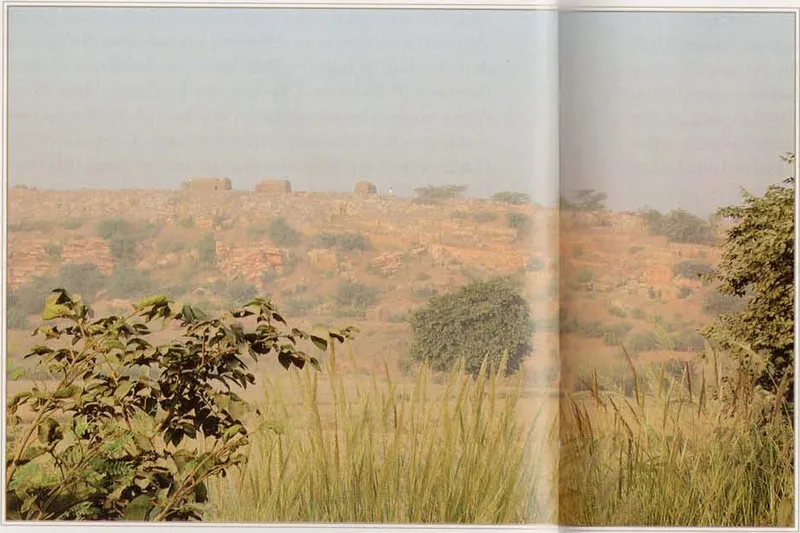
- What it is
- Sakhīgiri-parvata, the hill of the sakhīs, is a low hill near Ūñcāgaon, which Śrīla Nārāyaṇa Bhaṭṭa Gosvāmī's Vraja-bhakti-vilāsa calls Lalitā-grāma, after Lalitā, Śrī Rādhā's foremost companion.
- Places here
- Citra-śilās (Sakhīgiri-parvata), Lalitā-vivāha-maṇḍapa, Phisalanī-śilā (Sakhīgiri-parvata), Sakhī-kūpa
In short
Sakhīgiri-parvata, the hill of the sakhīs, is a low hill near Ūñcāgaon, which Śrīla Nārāyaṇa Bhaṭṭa Gosvāmī's Vraja-bhakti-vilāsa calls Lalitā-grāma, after Lalitā, Śrī Rādhā's foremost companion.[1] According to the same book, quoting the Viṣṇu-rahasya, Lalitā and the other cowherd girls played together here, delighted by Kṛṣṇa's qualities, and so the hill became known as Sakhīgiri.[1 +5] The same book lists the places on and around it: the sliding stone, Lalitā's wedding place, a well dug by the sakhīs, and the sakhīs' small footprints on the stones of the summit.[1 +3] The guidebook Śrī Vraja-maṇḍala Parikramā (2007) counts it among the twenty-three hills of Vraja-maṇḍala.[8 +1]
Key facts
| Kind | hill |
|---|---|
| Region · area | Kāmyavana |
| Ācāryas | Śrīla Nārāyaṇa Bhaṭṭa Gosvāmī |
Divine pastimes
Śrīmad-Bhāgavatam (10.29–10.33) tells the rāsa dance, Kṛṣṇa's dance with the gopīs, on the sandy bank of the river, which the translation names as the Yamunā, with the gopīs in a circle. It does not name Sakhīgiri or Lalitā.[10 +4]
nadyāḥ pulinam āviśya gopībhir hima-vālukam / juṣṭaṃ tat-taralānandi kumudāmoda-vāyunā //
Śrī Kṛṣṇa went with the gopīs to the bank of the Yamunā, where the sand was cooling and the wind, enlivened by the river’s waves, bore the fragrance of lotuses.
Translation: Śrīla Prabhupāda's disciples (BBT)About this place: Does not name the place; it tells where the Bhāgavatam sets the rāsa pastime that Śrī Vraja-maṇḍala Parikramā (2007) connects with Sakhīgiri-parvata, and the Vraja-bhakti-vilāsa with the Triveṇī-kūpa: on the sandy bank of the river, which the translation names the Yamunā. ŚB 10.29–10.33 tell the rāsa.
Śrīla Prabhupāda's Kṛṣṇa book sets the dance in the forest on the bank of the Yamunā (a general reference; it does not mention Sakhīgiri):[10 +4]
General teaching (does not name the place)“After this, the Supreme Personality of Godhead began His rāsa dance. A dance in the midst of many girls is called a rāsa dance. So Kṛṣṇa began to dance among the most beautiful and fortunate girls within the three worlds.”
Śrīla Prabhupāda, Kṛṣṇa, the Supreme Personality of Godhead (Kṛṣṇa book), Chapter 33, 'Description of the Rāsa Dance' · vedabase.io
Traditional accounts
The Vraja-bhakti-vilāsa opens its account of Lalitā-grāma, which its Hindi edition calls Ūñcā-gāṁv, with a verse that it quotes …
The name of the hill
The Vraja-bhakti-vilāsa opens its account of Lalitā-grāma, which its Hindi edition calls Ūñcā-gāṁv, with a verse that it quotes from the Viṣṇu-rahasya: where all the daughters of the cowherds, Lalitā and the others, played together, delighted by Śrī Kṛṣṇa's qualities, the hill became known in Vraja-maṇḍala by the name Sakhīgiri (summarised here, not translated). No copy of the Viṣṇu-rahasya itself could be found.[1 +5] According to Śrī Vraja-maṇḍala Parikramā (2007), which cites the same text, Lalitā and the other sakhīs enjoyed the rāsa and other pastimes with Kṛṣṇa on and around the hill. The verse it quotes says only that they played here.[4 +1]
Places on and around the hill
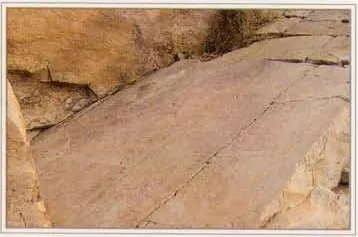
In its list of the marks of Lalitā-grāma, which it introduces as taken from a Śrīvatsa-upaniṣad, the Vraja-bhakti-vilāsa names the Sakhīgiri hill and, beside it, the Khisilinī stone, a sliding stone (see Phisalanī-śilā); right there Lalitā's wedding place; on the south side of the hill the Triveṇī-tīrtha, with a rāsa-maṇḍala in its middle and the Sakhī-kūpa beside it; and to the north a Baladeva image beneath hiṁsa trees (summarised here, not translated).[1 +3] Śrī Vraja-maṇḍala Parikramā (2007) gives a version of the same list but ascribes it to the Viṣṇu-rahasya; the question of its source belongs to the page of Ūñcāgaon.[1]
The sakhīs' footprints
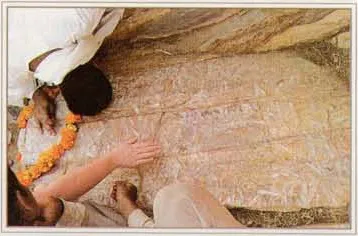
According to the Vraja-bhakti-vilāsa, the small footprints of Lalitā and the sakhīs, girls of seven, made in their play, are on the stones of Sakhīgiri's summit and are seen like a mirage; its Hindi edition adds that they appear after searching for many days. The book gives a prayer to the sakhīs' feet that it ascribes to the Matsya Purāṇa, which could not be checked (summarised here, not translated).[1 +4] Śrī Vraja-maṇḍala Parikramā (2007) says that one who searches on the hilltop with faith and prays can sometimes see the gopīs' footprints there.[5 +2]
The citra-śilās
According to Śrī Vraja-maṇḍala Parikramā (2007), the rocks on the northern part of the hilltop look many-coloured in the sunlight, because the gopīs painted pictures (citra) on them; so they are called the citra-śilās, the painted stones. No other source found names these stones or the painting; the Vraja-bhakti-vilāsa speaks only of the footprints on the stones of the summit.[7]
Location
Places at Sakhīgiri-parvata
4 places
Nearby places
Ūñcāgaon
Pictures
2 pictures
Where the sources differ
Where the rāsa took place: the Bhāgavatam tells it on the Yamunā's bank, and the guidebook and the Vraja-bhakti-vilāsa connect a rāsa of Lalitā and the sakhīs with Sakhīgiri and the Triveṇī. The positions are set side by side, not reconciled.[4 +6]
Accounts differ Where the rāsa took place: the Bhāgavatam's rāsa on the Yamunā's bank and the rāsa that Śrī Vraja-maṇḍala Parikramā (2007) and the Vraja-bhakti-vilāsa set at Sakhīgiri and the Triveṇī-kūpa
- Śrīmad-Bhāgavatam 10.29.45, 10.33.2–3 (translation by Śrīla Prabhupāda's disciples)the rāsa began on the river's sandy bank, the Yamunā in the translation; no other place, no sakhī named
- Kṛṣṇa book ch. 32–33 (Śrīla Prabhupāda)the forest on the bank of the river Yamunā; the dance there
- Śrīmad-Bhāgavatam 10.33.25 with Śrīla Viśvanātha, Śrīla Sanātana and Jīvaall those moonlit nights; such pastimes on other nights too (Viśvanātha: all nights of the twelve months), no place named
- Śrī Vraja-maṇḍala Parikramā (2007)Lalitā and the sakhīs enjoyed rāsa and other pastimes with Kṛṣṇa around and on Sakhīgiri-parvata
The wording of these accounts is our summary of the sources, not a published translation.
References
14 references
- Śrīla Nārāyaṇa Bhaṭṭa Gosvāmī, Vraja-bhakti-vilāsa, chapter 2 v.46, printed pp.45-46: the marks (liṅga) of Lalitā-grāma, 1st ed., publ. Bābā Kṛṣṇadāsa, Kusuma-sarovara, Saṁvat 2008
- Śrīla Nārāyaṇa Bhaṭṭa Gosvāmī, Vraja-bhakti-vilāsa, chapter 4 v.36, printed p.95: heading of the section on Lalitā-grāma and Ucca-grāma, 1st ed., publ. Bābā Kṛṣṇadāsa, Kusuma-sarovara, Saṁvat 2008
- Śrīla Nārāyaṇa Bhaṭṭa, Vraja-bhakti-vilāsa, Fourth chapter, v.37 (Viṣṇu-rahasya continued; the Khisalinī-śilā and its prayer); printed p. 95, 1st ed., publ. Bābā Kṛṣṇadāsa, Kusuma-sarovara, Saṁvat 2008
- Śrī Vraja-maṇḍala Parikramā (2007), PDF p. 166
- Śrīla Nārāyaṇa Bhaṭṭa, Vraja-bhakti-vilāsa, Second chapter, v.46 (continued), printed p. 46, 1st ed., publ. Bābā Kṛṣṇadāsa, Kusuma-sarovara, Saṁvat 2008
- Śrīla Nārāyaṇa Bhaṭṭa, Vraja-bhakti-vilāsa, Fourth chapter, v.47 (the sakhīs' footprints and the start of their prayer, from the 'Mātsya'); printed p. 97, 1st ed., publ. Bābā Kṛṣṇadāsa, Kusuma-sarovara, Saṁvat 2008
- Śrī Vraja-maṇḍala Parikramā (2007), PDF p. 162
- Śrī Vraja-maṇḍala Parikramā (2007), PDF p. 25
- Śrī Vraja-maṇḍala Parikramā (2007), PDF p. 26
- Śrīmad-Bhāgavatam 10.29.45, GRETIL
- Śrīmad-Bhāgavatam 10.33.2, GRETIL
- Śrīmad-Bhāgavatam 10.33.3, GRETIL
- Śrīla Prabhupāda, Kṛṣṇa, the Supreme Personality of Godhead (Kṛṣṇa book), Chapter 33, 'Description of the Rāsa Dance' · vedabase.io
- Śrīla Prabhupāda, Kṛṣṇa, the Supreme Personality of Godhead (Kṛṣṇa book), chapter 32 · vedabase.io