Rāsa-sthali (Śyāma-kuṭī)
रास-स्थली (श्याम-कुटी) Hindi name proposed
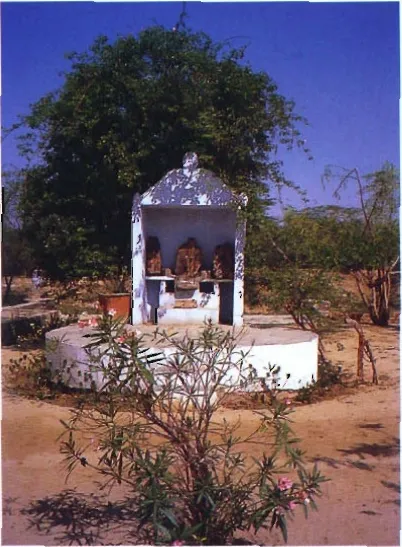
- What it is
- The Rāsa-sthali, the place of the rāsa dance, is a circular platform with a small shrine at Śyāma-kuṭī on Govardhana Hill.
- Visiting
- The photograph in Govardhana Hill (2001), captioned "Rāsa-sthali", shows a small whitewashed shrine on a low circular platform under a large tree.
In short
The Rāsa-sthali, the place of the rāsa dance, is a circular platform with a small shrine at Śyāma-kuṭī on Govardhana Hill. It is known from the guidebook Govardhana Hill (2001), which prints a photograph of it, and from a numbered list of the sites of Govardhana.[1 +2] Which rāsa it recalls, the sources do not settle. Śrīmad-Bhāgavatam sets the rāsa on autumn nights on the bank of the Yamunā, and the Gosvāmīs' texts that speak of a rāsa-sthalī near Govardhana name no spot or point to Pārāsaulī.[4 +9]
Key facts
| Kind | rāsa-sthalī |
|---|---|
| Region · area | Govardhana · Śyāma-kuṭī |
Divine pastimes
The rāsa in the Bhāgavatam
Śrīmad-Bhāgavatam (10.29–10.33) tells Kṛṣṇa's rāsa dance with the gopīs on the autumn nights. It was danced on the sandy bank of the Kālindī, the Yamunā, and the Bhāgavatam sums it up as His enjoyment of all those moonlit nights. It names no place of Govardhana and nothing called Śyāma-kuṭī.[4 +5]
tatrārabhata govindo rāsa-krīḍām anuvrataiḥ / strī-ratnair anvitaḥ prītair anyonyābaddha-bāhubhiḥ
There on the Yamunā’s banks Lord Govinda then began the pastime of the rāsa dance in the company of those jewels among women, the faithful gopīs, who joyfully linked their arms together.
Translation: Śrīla Prabhupāda's disciples (BBT)Two commentaries carry these pastimes beyond that night. Śrīla Viśvanātha Cakravartī Ṭhākura says that Kṛṣṇa had countless such pastimes with the gopīs on the nights of all twelve months in Śrī Vṛndāvana, and the Bṛhat-krama-sandarbha says that Govinda's rāsa took place again and again (summarised here, not translated). Neither names Govardhana or Śyāma-kuṭī.[6 +2]
A rāsa near Govardhana
Some Gosvāmī texts speak of a rāsa on or near Govardhana. Śrīla Raghunātha dāsa Gosvāmī praises Govardhana as the hill of the supreme rāsa-sthalī, where Rādhā dances in spring, and his Muktā-carita speaks of a supreme rāsa-sthalī near Govardhana. Śrīla Jīva Gosvāmī quotes a verse of an āgama on Kṛṣṇa staying on Govardhana Hill, eager for the rāsa, when the spring flowers made the directions fragrant. In Śrīla Viśvanātha Cakravartī Ṭhākura's Kṛṣṇa-bhāvanāmṛta, Vṛndā sends the beauty of spring to the rāsa-sthalī near Govardhana (all summarised here, not translated). None of them names Śyāma-kuṭī or a platform.[10 +3]
Two texts say where that rāsa-sthalī lay. The Bhakti-ratnākara places the spring rāsa on Govardhana at the village of Pārāsaulī, with Candra-sarovara, and Śrī Kṛṣṇadeva Sārvabhauma's commentary on the Kṛṣṇa-bhāvanāmṛta names the place "Parā Rāsuli", Pārāsaulī.[10 +1] The commentator Vaṁśīdhara says that on the night the bull-demon Ariṣṭa came, Kṛṣṇa came towards the people of Gokula from the rāsa place of Govardhana; he names no spot.[16] Read more: The spring rāsa at Govardhana: Pārāsaulī, Candra-sarovara and Paiṭhā →
The night of Śaṅkhacūḍa
Govardhana Hill (2001) also tells at Śyāma-kuṭī how the demon Śaṅkhacūḍa carried off the gopīs on a full-moon night, in words that closely follow Śrīla Prabhupāda's Kṛṣṇa book; the Kṛṣṇa book names neither Śyāma-kuṭī nor a full moon.[2 +1] Śrīmad-Bhāgavatam says only that Govinda and Rāma once played in the forest at night among the young women of Vraja when Śaṅkhacūḍa came; it does not call this a rāsa and names no place.[17 +1]
In the Garga-saṁhitā, by contrast, Śaṅkhacūḍa is killed during a rāsa, and Kṛṣṇa comes back to the circle of the rāsa with the jewel; Garga sets this rāsa in Lokajaṅgha-vana near the Kālindī (summarised here, not translated).[19]
एवं हत्वा शंखचूडं भगवान् मधुसूदनः । मणिपाणिः पुनः शीघ्रमाययौ रासमंडलम् ॥ 46 ॥ चंद्राननायै च मणिं दत्त्वा तं दीनवत्सलः । पुनर्गोपीनणैः सार्धं रासं चक्रे हरिः स्वयम् ॥ 47 ॥ इति श्रीगर्गसंहितायां वृन्दावनखण्डे रासक्रीडायां शंखचूडवधोनाम त्रयोविंशोऽध्यायः ॥ 23 ॥
evaṁ hatvā śaṁkhacūḍaṁ bhagavān madhusūdanaḥ
maṇipāṇiḥ punaḥ śīghramāyayau rāsamaṁḍalam
46
caṁdrānanāyai ca maṇiṁ dattvā taṁ dīnavatsalaḥ
punargopīnaṇaiḥ sārdhaṁ rāsaṁ cakre hariḥ svayam
47
iti śrīgargasaṁhitāyāṁ vṛndāvanakhaṇḍe rāsakrīḍāyāṁ śaṁkhacūḍavadhonāma trayoviṁśo'dhyāyaḥ || 23 ||
The commentators on the Bhāgavatam give the time of that night but no place. Śrīla Sanātana Gosvāmī calls it a spring night bright with moonlight, Śrīla Jīva Gosvāmī the Holī full moon after Śiva-rātri, and Śrīla Viśvanātha Cakravartī Ṭhākura a moonlit night after the Śiva-rātri vow (summarised here, not translated).[15] Read more: The killing of Śaṅkhacūḍa: when, where, and the jewel →
Śrīla Prabhupāda
Śrīla Prabhupāda does not speak of this platform by name.
Śrīla Prabhupāda does not speak of this platform by name. In the Kṛṣṇa book he gives the time of the rāsa dance from the Bhāgavatam, a general statement:[7]
General teaching (does not name the place)“In Śrīmad-Bhāgavatam it is stated that the rāsa dance took place on the full-moon night of the śarat season.”
Śrīla Prabhupāda, Kṛṣṇa, the Supreme Personality of Godhead (Kṛṣṇa book), Chapter 29, 'The Rāsa Dance: Introduction' · vedabase.io
He tells that Kṛṣṇa entered the forest on the bank of the Yamunā, where the gopīs made Him a seat on the soft sand, and that after the dance they bathed in the Yamunā.[8 +1] The night of Śaṅkhacūḍa he sets in the forest of Vṛndāvana.[17 +1]
Visiting today
The photograph in Govardhana Hill (2001), captioned "Rāsa-sthali", shows a small whitewashed shrine on a low circular platform under a large tree. The book's description is undated and has not been checked on the ground.[1 +2]
Where the sources differ
Which rāsa the platform recalls. According to the local tradition recorded in Govardhana Hill (2001), it commemorates the rāsa dance that took place here. The book does not say which rāsa, and the texts that give a place for the rāsa may mean other spots, the bank of the Yamunā or Pārāsaulī.[1 +1]
Accounts differ Which rāsa the platform at Śyāma Kuṭira commemorates: the Bhāgavatam's rāsa and its commentators
- Śrīmad-Bhāgavatam 10.29.1, 10.32.11, 10.33.2the autumn nights; the rāsa danced on the sandy bank of the Kālindī (Yamunā)
- Śrīla Prabhupāda, Kṛṣṇa book 29, 32 and 33the full-moon night of the śarat season; the forest on the bank of the Yamunā; after the dance the bath in the Yamunā
- Śrīla Jīva Gosvāmī, Laghu-toṣaṇī on ŚB 10.29.3Kṛṣṇa played His flute at the spot on the Yamunā's bank still famous as Rāsaulī
- Śrīla Viśvanātha Cakravartī on ŚB 10.33.25; Bṛhat-krama-sandarbha on ŚB 10.34.20such pastimes on the nights of all twelve months in Śrī Vṛndāvana; Govinda's rāsa again and again; no place
The wording of these accounts is our summary of the sources, not a published translation.
Accounts differ Where the rāsa connected with this place took place, and which Govardhana rāsa-sthalī the texts mean
- Govardhana Hill: India's Most Sacred Mountain (2001)a circular platform at Śyāma Kuṭira 'commemorates the rāsa dance that took place here'; Śaṅkhacūḍa carried off the gopīs here on a full-moon night while they enjoyed pastimes with Kṛṣṇa and Balarāma
- Bhakti-ratnākara, Fifth Wavethe spring rāsa on Govardhana was held at Pārāsaulī (with Candra-sarovara), where it quotes the Govardhanāśraya-daśaka's verse on the supreme rāsa-sthalī
- Muktā-carita of Śrīla Raghunātha dāsa Gosvāmīa supreme rāsa-sthalī 'near Govardhana' with a dense dark forest; no spot named
- Garga-saṁhitā 2.23the rāsa during which Śaṅkhacūḍa was killed was in Lokajaṅgha-vana by the Kālindī
More on this place
The spring rāsa at Govardhana: Pārāsaulī, Candra-sarovara and Paiṭhā · The killing of Śaṅkhacūḍa: when, where, and the jewel
References
22 references
- Govardhana Hill: India's Most Sacred Mountain (2001), Rajasekhara dasa Brahmacari, PDF p. 56
- Govardhana Hill: India's Most Sacred Mountain (2001), Rajasekhara dasa Brahmacari, PDF p. 57
- the key of the numbered Govardhana chart, ¶12
- Śrīmad-Bhāgavatam 10.29.1, GRETIL
- Śrīmad-Bhāgavatam 10.33.2, GRETIL
- Śrīmad-Bhāgavatam 10.33.25, GRETIL
- Śrīla Prabhupāda, Kṛṣṇa, the Supreme Personality of Godhead (Kṛṣṇa book), Chapter 29, 'The Rāsa Dance: Introduction' · vedabase.io
- Śrīla Prabhupāda, Kṛṣṇa, the Supreme Personality of Godhead (Kṛṣṇa book), Chapter 32, Kṛṣṇa Returns to the Gopīs (the scene before the rāsa dance of ch. 33) · vedabase.io
- Śrīla Prabhupāda, Kṛṣṇa, the Supreme Personality of Godhead (Kṛṣṇa book), Chapter 33, 'Description of the Rāsa Dance' · vedabase.io
- Śrīla Narahari Cakravartī, Bhakti-ratnākara, Fifth Wave, 1912 ed. p. 200, 2nd ed., 1912
- Śrīla Jīva Gosvāmī, Gopāla-campū, Pūrva-campū 31.56, GRETIL
- Śrīla Raghunātha dāsa Gosvāmī, Muktā-carita, prose, GRETIL
- Śrīla Viśvanātha Cakravartī Ṭhākura, Kṛṣṇa-bhāvanāmṛta, sarga 10 (daśamaḥ sargaḥ, kuñja-keli-cāturyāsvādana), verse 3 with the ṭīkā; the index labels it '(10) navamaḥ sargaḥ'), after the edition of Radhikanath Goswami, Vrindavan, 1906
- Śrīla Viśvanātha Cakravartī Ṭhākura: commentary on ŚB 10.33.25
- Bṛhat-krama-sandarbha: commentary on ŚB 10.34.20, Bhagavata Vidya Pith edition, ed. Bhagavata Rishi and Krishna Shankar Shastri, 1996
- Vaṁśīdhara: commentary on ŚB 10.36.6, Bhagavata Vidya Pith edition, ed. Bhagavata Rishi and Krishna Shankar Shastri, 1996
- Śrīla Prabhupāda, Kṛṣṇa, the Supreme Personality of Godhead, Chapter 34 · vedabase.io
- Śrīmad-Bhāgavatam 10.34.20, GRETIL
- Garga-saṁhitā, Vṛndāvana-khaṇḍa (2), adhyāya 23, verse 46-47 and colophon, Sanskrit Wikisource
- Śrīla Prabhupāda, Kṛṣṇa, the Supreme Personality of Godhead (Kṛṣṇa book), Chapter 34, 'Vidyādhara Liberated and the Demon Śaṅkhacūḍa Killed' · vedabase.io
- Govardhana Hill: India's Most Sacred Mountain (2001), Rajasekhara dasa Brahmacari, p. 43
- Numbered list of the Govardhana sites (key of the Govardhana chart)