Śyāma-kuṭī
श्याम-कुटी
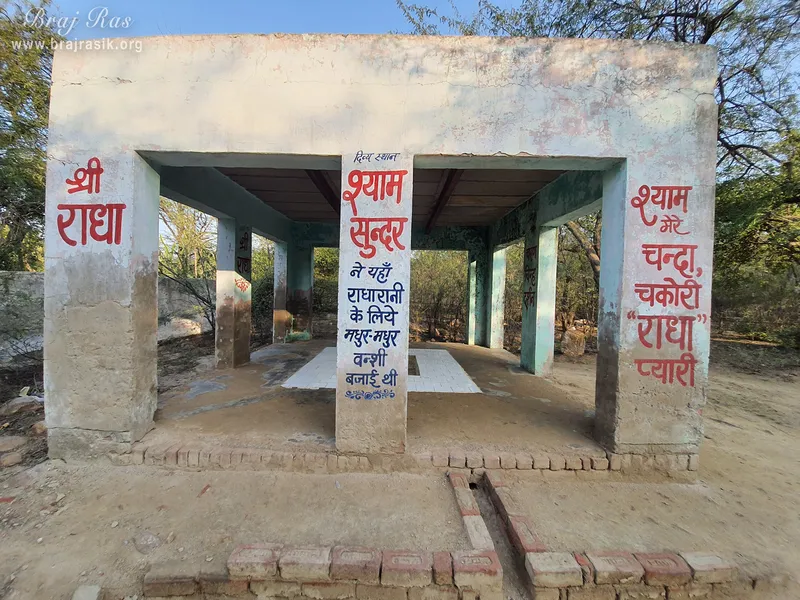
- What it is
- Śyāma-kuṭī, also written Śyāma Kuṭira, is a place at Govardhana Hill that the guidebook Śrī Vraja-maṇḍala Parikramā (2007) puts among thick trees near Ratna-siṁhāsana.
- Visiting
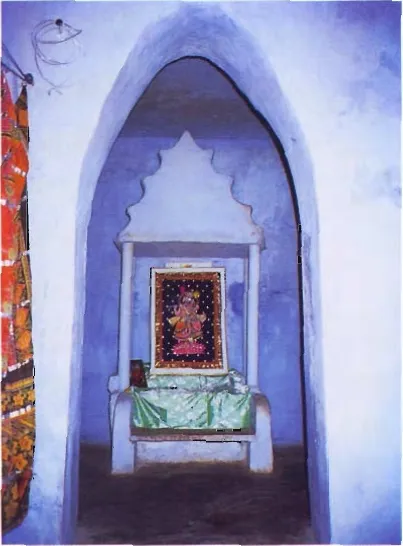
- Govardhana Hill (2001) says that the pūjārīs, the temple priests, at Śyāma Kuṭira will show on request where the Ratna-siṁhāsana stood, now inside a building.
- Parikramā
- Govardhana parikramā, station 7
- Places here
- Bajanī-śilā (Śyāma-kuṭī), Rāsa-sthali (Śyāma-kuṭī), Ratna-kuṇḍa (Śyāma-kuṭī), Ratna-siṁhāsana
In short
Śyāma-kuṭī, also written Śyāma Kuṭira, is a place at Govardhana Hill that the guidebook Śrī Vraja-maṇḍala Parikramā (2007) puts among thick trees near Ratna-siṁhāsana. According to the same book, Kṛṣṇa once dressed here wholly in dark (śyāma) colours, so that even the gopīs, the cowherd girls of Vraja, could not recognise Him.[1] Govardhana Hill (2001) tells here the killing of the demon Śaṅkhacūḍa, in words close to Śrīla Prabhupāda's Kṛṣṇa book, but adding the place: the Bhāgavatam names none, and other texts set the pastime elsewhere.[2 +4] Two historians, in 1966 and 1987, recorded a kuṭī (a hermit's hut) here with the samādhi, the tomb, of Bābā Śyāmadāsa, an ascetic who died in 1874.[7 +1]
Key facts
| Kind | pastime site |
|---|---|
| Region · area | Govardhana |
| Also part of | Śyāma Vana |
| On the parikramā | Govardhana parikramā, station 7 · the route |
Divine pastimes
Śaṅkhacūḍa in the Bhāgavatam
Śrīmad-Bhāgavatam (10.34.20–32) tells how one night Kṛṣṇa and Balarāma were playing in the forest with the young women of Vraja when Śaṅkhacūḍa, a follower of Kubera, the treasurer of the demigods, began to drive the women off towards the north. Hearing them cry out, the brothers took up logs of śāla trees and ran after him. He let the women go and fled; Balarāma stayed to protect them, and Kṛṣṇa caught the demon and with His fist took off his head together with his crest jewel. The Bhāgavatam names no place.[3 +5]
evaṃ vikrīḍatoḥ svairaṃ gāyatoḥ sampramatta-vat / śaṅkhacūḍa iti khyāto dhanadānucaro 'bhyagāt
tayor nirīkṣato rājaṃs tan-nāthaṃ pramadā-janam / krośantaṃ kālayām āsa diśy udīcyām aśaṅkitaḥ
O King, even as the two Lords looked on, Śaṅkhacūḍa brazenly began driving the women off toward the north. The women, who had accepted Kṛṣṇa and Balarāma as their Lords, began to cry out to Them.
Translation: Śrīla Prabhupāda's disciples (BBT)Kṛṣṇa then gave the jewel to His elder brother while the gopīs watched:[3 +3]
śaṅkhacūḍaṃ nihatyaivaṃ maṇim ādāya bhāsvaram / agrajāyādadāt prītyā paśyantīnāṃ ca yoṣitām
Having thus killed the demon Śaṅkhacūḍa and taken away his shining jewel, Lord Kṛṣṇa gave it to His elder brother with great satisfaction as the gopīs watched.
Translation: Śrīla Prabhupāda's disciples (BBT)The Bhāgavatam tells the pastime once more in the Second Canto, in Brahmā's account of the Lord's coming pastimes. Here the translation is Śrīla Prabhupāda's own, and it too names no place but the forest of Vṛndāvana:[11 +1]
krīḍan vane niśi niśākararaśmigauryāṃ rāsonmukhaḥ kalapadāyatamūrcchitena / uddīpitasmararujāṃ vrajabhṛdvadhūnāṃ harturhariṣyati śiro dhanadānugasya
When the Lord was engaged in His pastimes of the rāsa dance in the forest of Vṛndāvana, enlivening the sexual desires of the wives of the inhabitants of Vṛndāvana by sweet and melodious songs, a demon of the name Śaṅkhacūḍa, a rich follower of the treasurer of heaven [Kuvera], kidnapped the damsels, and the Lord severed his head from his trunk.
Translation: Śrīla A.C. Bhaktivedanta Swami PrabhupādaWhen and where the commentators set it
The commentators on the Tenth Canto speak mostly of the time (summarised here, not translated). Śrīla Jīva Gosvāmī sets that night on the full moon of Holī, after the Śiva-rātri festival with which the chapter opens; Śrīla Viśvanātha Cakravartī Ṭhākura calls it the spring pastime of the Holī songs; Śrīla Sanātana Gosvāmī says that it was spring. Śrīla Jīva Gosvāmī's Gopāla-campū and Śrīla Kavi-karṇapūra's Ānanda-vṛndāvana-campū also tell it at the Holī festival and name no place at Govardhana.[2 +10]
Only one commentator, Śrīla Sanātana Gosvāmī, brings in Govardhana. In one of his two explanations of the words "toward the north", the brothers were playing in the eastern part of Śrī Govardhana, and Śaṅkhacūḍa drove the women north towards Mathurā, to Kaṁsa. No source says whether Śyāma-kuṭī lies in the part of the hill he means.[2 +2]
The jewelled throne and the jewel
Śrīla Rūpa Gosvāmī's play Lalita-mādhava tells the pastime in its second act, called "The killing of Śaṅkhacūḍa". Kaṁsa sends his friend Śaṅkhacūḍa to carry off Rādhā. She is seated on a jewelled throne, a ratna-siṁhāsana, and the demon sets out to carry Her away with the throne. Kṛṣṇa kills him and gives the jewel to Balarāma, who gives it to Rādhikā, and Kṛṣṇa says that it is fit to adorn Her neck. The play sets all this in the forest of Vṛndā at the autumn full moon and names no place on Govardhana Hill.[23 +3]
Śrīla Sanātana Gosvāmī follows this play when he says that Śaṅkhacūḍa, urged by Kaṁsa, drove off Śrī Rādhā alone, though he then takes the verse's word for the women to mean all the gopīs. He also explains that Kṛṣṇa meant the jewel for Her and gave it to His brother so that it would reach Her without causing jealousy (summarised here, not translated).[5 +6] Śrīla Raghunātha dāsa Gosvāmī's Vilāpa-kusumāñjali says that Balarāma gave the jewel through Madhumaṅgala's hand, and asks Śrī Rādhā whether he may set it on Her as a pendant; in his Rādhā-Kṛṣṇa-gaṇoddeśa-dīpikā Śrīla Rūpa Gosvāmī counts the jewel, also called Syamantaka, among Her ornaments.[28 +2]
Other places named for the killing
Other texts set the killing elsewhere. The Bhakti-ratnākara says that its cause arose at Ratna-siṁhāsana, where Śrī Rādhikā sat on a jewelled throne, and that Kṛṣṇa Himself killed the demon at the village of Sāṅkhī. The Vraja-bhakti-vilāsa puts the place where Śaṅkhacūḍa was killed in Kāmyavana, by Kuśa-sthalī; the Padma Purāṇa puts it in a petal of its lotus-map of Vṛndāvana called Vyoma-ghātana; and the Garga-saṁhitā tells it during a rāsa dance (Kṛṣṇa's dance with the gopīs) by the Kālindī (Yamunā), with Śaṅkhacūḍa killed on the slopes of the Himālaya.[31 +10] Read more: The killing of Śaṅkhacūḍa: when, where, and the jewel →
Traditional accounts
According to Śrī Vraja-maṇḍala Parikramā (2007), Śyāmasundara, Kṛṣṇa, once smeared Himself with dark musk, put on dark clothes …
Kṛṣṇa in dark dress
According to Śrī Vraja-maṇḍala Parikramā (2007), Śyāmasundara, Kṛṣṇa, once smeared Himself with dark musk, put on dark clothes and ornaments and went into a dark bower here, so that even the gopīs could not recognise Him; when they did, He enjoyed many pastimes with them. The book names no source for this pastime.[1]
One place or two
Govardhana Hill (2001) says that Śyāma Kuṭira is situated in the forest of Śyāma Vana, the black forest, and that the area is also known as Ratna-siṁhāsana. No older text names a Śyāma Vana at Govardhana, and it is not certain that Śyāma-kuṭī and Ratna-siṁhāsana are one place, because the guides list them differently:[42]
Accounts differ Is Śyāma-kuṭī the same place as Ratna-siṁhāsana?
- Govardhana Hill: India's Most Sacred Mountain (2001)'Situated in the forest of Śyāma Vana … is … Śyāma Kuṭira. This area is also known as Ratna-siṁhāsana'
- Śrī Vraja-maṇḍala Parikramā (2007)Ratna-siṁhāsana (4) and Śyāma-kuṭī (5) are separate entries; Śyāma-kuṭī is 'near Ratna-siṁhāsana'
- the key of the numbered Govardhana chartone entry: '11 Ratna Simhasana & Syama Kutir'
- the undated parikramā notes Govardhanaheading 'Ratnasiṁhāsana (ShyamaKuti/Shyamavana):'
Śrīla Prabhupāda
Śrīla Prabhupāda does not name Śyāma-kuṭī.
Śrīla Prabhupāda does not name Śyāma-kuṭī. In his purport to the Second Canto verse above he says when Śaṅkhacūḍa was killed and how the event is still remembered (a general statement, not about this place):[2 +6]
General teaching (does not name the place)“The demon Śaṅkhacūḍa was killed by the Lord during His pastimes at Horikā in the month of Phālguna, and the same ceremony is still observed in India by the burning of the effigy of Śaṅkhacūḍa one day prior to the Lord’s pastimes at Horikā, generally known as Holi.”
Śrīla Prabhupāda, Śrīmad-Bhāgavatam, Canto 2, 2.7.33, purport · vedabase.io
His Kṛṣṇa book tells the pastime after the cowherds' pilgrimage to Ambikāvana for Śiva-rātri, which falls between the autumn rāsa and Holī, and sets it simply in the forest of Vṛndāvana.[3 +3]
Visiting today
Govardhana Hill (2001) says that the pūjārīs, the temple priests, at Śyāma Kuṭira will show on request where the Ratna-siṁhāsana stood, now inside a building. It also describes a small kuṇḍa (sacred pond), Ratna-kuṇḍa, and a circular platform that marks the rāsa dance, the Rāsa-sthali, and adds that a rock to the right of the gate bears the footprints of Kṛṣṇa and a calf (Kṛṣṇa's footprint).[2 +3]
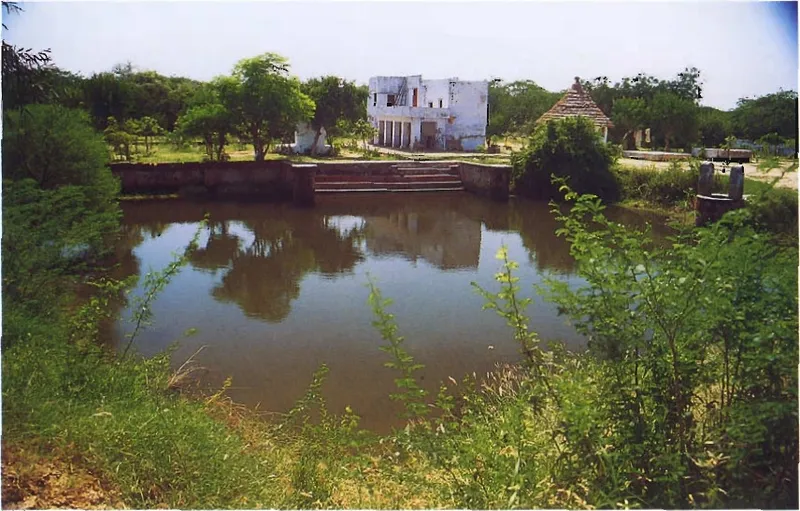
Ratna-kuṇḍa is known only from that book, which prints a photograph of a pond with stone embankments and steps, and from the key of the numbered chart of Govardhana, which lists it as no. 9, between Nārada-kuṇḍa and the Rāsa-sthali. Neither tells a pastime or a history of it.[42 +1]
Śrī Vraja-maṇḍala Parikramā (2007) mentions a bajanī-śilā nearby, a stone that makes a sweet sound when tapped.[1]
Location
| Where it is | 'Situated in the forest of Śyāma Vana'[46] 'Śyāma Kuṭira also marks the spot where Govardhana Hill first starts to appear above the ground'[46] |
|---|
Places at Śyāma-kuṭī
4 places
Nearby places
Kṛṣṇa's footprint (Ratna-siṁhāsana)
Pictures
2 pictures
History
The historian Prabhudayāl Mītal recorded in 1966, and A. W. Entwistle, following him, in 1987, that the kuṭī here held the samādhi of Bābā Śyāmadāsa, an ascetic of the Nimbārka sampradāya who died there in Saṁvat 1931 (1874 CE); Mītal adds his footprints. Whether they are still there today has not been checked. Neither cites an inscription or a dated document.[7 +1]
Where the sources differ
Where Govardhana Hill first rises out of the ground: Govardhana Hill (2001) names Śyāma Kuṭira, and on its next page a spot …
Where Govardhana Hill first rises out of the ground: Govardhana Hill (2001) names Śyāma Kuṭira, and on its next page a spot behind Gvāla-pokharā.
Accounts differ Where Govardhana Hill first emerges from the ground (Govardhana Hill: India's Most Sacred Mountain (2001) disagrees with itself)
- Govardhana Hill: India's Most Sacred Mountain (2001) p. 42 and caption p. 44'Śyāma Kuṭira also marks the spot where Govardhana Hill first starts to appear above the ground'
- Govardhana Hill: India's Most Sacred Mountain (2001) p. 45'In the dense jungle behind Gvāl Pokharā, one can see where Govardhana Hill actually begins to emerge from the ground'
Where and when the Śaṅkhacūḍa episode took place, whom he drove off, and who received the jewel: the sources differ, and their accounts are set side by side on the page of Ratna-siṁhāsana.[3 +3]
More on this place
The killing of Śaṅkhacūḍa: when, where, and the jewel
References
46 references
- Śrī Vraja-maṇḍala Parikramā (2007), PDF p. 115
- Govardhana Hill: India's Most Sacred Mountain (2001), Rajasekhara dasa Brahmacari, PDF p. 57
- Śrīla Prabhupāda, Kṛṣṇa, the Supreme Personality of Godhead, Chapter 34 · vedabase.io
- Śrīmad-Bhāgavatam 10.34.20, GRETIL
- Śrīmad-Bhāgavatam 10.34.25-26, GRETIL
- Śrīmad-Bhāgavatam 10.34.32, GRETIL
- Prabhudayāl Mītal, 'Braj ke katipaya bhakta jan': 'Śyāmadās jī', printed p. 290
- A. W. Entwistle, ch. 8 §13a 'Narad Kund and nearby places', printed p. 341, Egbert Forsten, Groningen, 1987
- Śrīmad-Bhāgavatam 10.34.22, GRETIL
- Śrīmad-Bhāgavatam 10.34.31, GRETIL
- Śrīmad-Bhāgavatam 2.7.33, GRETIL
- Śrīla Prabhupāda, Śrīmad-Bhāgavatam, Canto 2, 2.7.33, purport · vedabase.io
- Śrīla Jīva Gosvāmī, Śrīla Viśvanātha Cakravartī Ṭhākura: commentary on ŚB 10.34.1–2, Bhagavata Vidya Pith edition, ed. Bhagavata Rishi and Krishna Shankar Shastri, 1996
- Śrīla Jīva Gosvāmī, Śrīla Sanātana Gosvāmī, Śrīla Viśvanātha Cakravartī Ṭhākura: commentary on ŚB 10.34.20, Bhagavata Vidya Pith edition, ed. Bhagavata Rishi and Krishna Shankar Shastri, 1996
- Śrīmad-Bhāgavatam 10.34.1, GRETIL
- Śrīla Prabhupāda, Kṛṣṇa, the Supreme Personality of Godhead (Kṛṣṇa book), Chapter 34, Vidyādhara Liberated and the Demon Śaṅkhacūḍa Killed (opening paragraph) · vedabase.io
- Śrīla Jīva Gosvāmī, Gopāla-campū, Pūrva-campū 30, morning narration: verse 1.30.1 and edition paras [3]-[4], GRETIL
- Śrīla Jīva Gosvāmī, Gopāla-campū, Pūrva-campū 30: the verse before 1.30.26, edition paras [77]-[78] and verse 1.30.27, GRETIL
- Ānanda-vṛndāvana-campū, stavaka 21, opening prose and summary verse, with the commentary
- Ānanda-vṛndāvana-campū, stavaka 21, prose verses 28-29 with the commentary on v.28
Show all 46 references
- Ānanda-vṛndāvana-campū, stavaka 21, prose verse 32
- Śrīla Sanātana Gosvāmī: commentary on ŚB 10.34.26; the paragraphs numbered '||26||' and '||27||', Bhagavata Vidya Pith edition, ed. Bhagavata Rishi and Krishna Shankar Shastri, 1996
- Śrīla Rūpa Gosvāmī, Lalita-mādhava, Act 2, prose after v.8 (para 11) and after v.9 (paras 15 and 17)
- Śrīla Rūpa Gosvāmī, Lalita-mādhava, Act 2, prose after v.26, paras 107, 109 and 132
- Śrīla Rūpa Gosvāmī, Lalita-mādhava, Act 2, v.33 (para 146) and the closing prose, paras 152–153; vv.30–31 in notes
- Śrīla Rūpa Gosvāmī, Ujjvala-nīlamaṇi 15.166, quoting Lalita-mādhava 2.27, GRETIL
- Śrīla Sanātana Gosvāmī, Śrīla Viśvanātha Cakravartī Ṭhākura: commentary on ŚB 10.34.32, Bhagavata Vidya Pith edition, ed. Bhagavata Rishi and Krishna Shankar Shastri, 1996
- Śrīla Raghunātha dāsa Gosvāmī, Vilāpa-kusumāñjali, verse 34
- Śrīla Rūpa Gosvāmī, Rādhā-Kṛṣṇa-gaṇoddeśa-dīpikā, part 2, vv.206-207
- Śrīla Kṛṣṇadāsa Kavirāja Gosvāmī, Govinda-līlāmṛta, sarga 2, v.73, with the ṭīkā
- Śrīla Narahari Cakravartī, Bhakti-ratnākara, Fifth Wave, 1912 ed. p. 199, 2nd ed., 1912
- Śrīla Narahari Cakravartī, Bhakti-ratnākara, Fifth Wave, 1912 ed. p. 245, 2nd ed., 1912
- Śrī Vraja-maṇḍala Parikramā (2007), PDF p. 227
- Sri Sri Radha Krishna Pastimes at Umrao, ¶11
- Śrīla Nārāyaṇa Bhaṭṭa, Vraja-bhakti-vilāsa, chapter 2, v.53 (the list of Kāmyavana's places), printed p. 50, 1st ed., publ. Bābā Kṛṣṇadāsa, Kusuma-sarovara, Saṁvat 2008
- Śrī Vraja-maṇḍala Parikramā (2007), PDF p. 145
- Padma Purāṇa, 5.69.34-35 (Pātāla-khaṇḍa, adhyāya 69, verses 34-35), Sanskrit Wikisource
- Garga-saṁhitā, Vṛndāvana-khaṇḍa (2), adhyāya 23, verses 1-5, Sanskrit Wikisource
- Garga-saṁhitā, Vṛndāvana-khaṇḍa (2), adhyāya 23, verses 35-39, Sanskrit Wikisource
- Garga-saṁhitā, Vṛndāvana-khaṇḍa (2), adhyāya 23, verses 44-47, Sanskrit Wikisource
- Garga-saṁhitā, Mathurā-khaṇḍa (5), adhyāya 16, verse 19, Sanskrit Wikisource
- Govardhana Hill: India's Most Sacred Mountain (2001), Rajasekhara dasa Brahmacari, PDF p. 56
- Govardhana Hill: India's Most Sacred Mountain (2001), Rajasekhara dasa Brahmacari, PDF p. 58
- the key of the numbered Govardhana chart, ¶12
- the key of the numbered Govardhana chart, ¶11
- Govardhana Hill: India's Most Sacred Mountain (2001), Rajasekhara dasa Brahmacari, p. 42