Śrīnivāsa Ācārya Kuñja (Vṛndāvana)
श्रीनिवास आचार्य कुंज (वृन्दावन) Hindi name proposed
Also called Śrīnivāsa Ācārya's samādhī temple, Śrīnivāsa Ācārya Kuṇja
- What it is
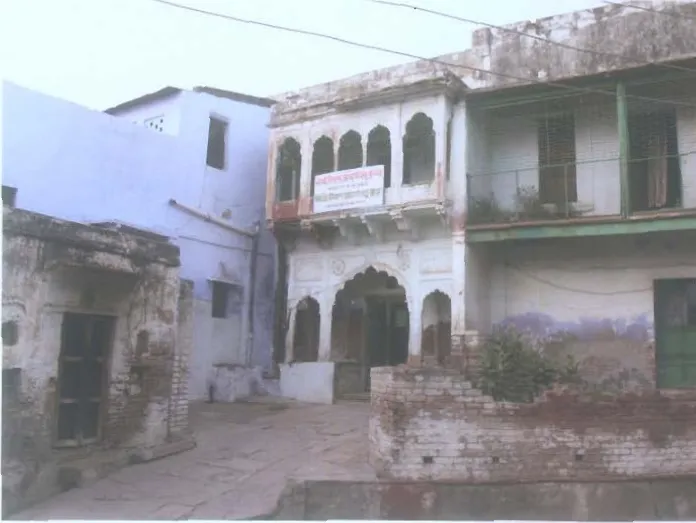
- The kuñja of Śrīla Śrīnivāsa Ācārya is a small temple compound near Dhīra-samīra in Vṛndāvana town; The Color Guide to Vṛndāvana (2000) calls it after him, and Vṛndāvana, the Playground of God (2010) …
- Visiting
- The Color Guide to Vṛndāvana (2000) and the notes Vṛndāvana say that inside the courtyard, on the left, is the temple of Rādhā-Mādhava, and that Śrīla Śrīnivāsa Ācārya's samādhi is in a room on the …
- Places here
- Rādhā-Mādhava Mandira (Śrīnivāsa Ācārya Kuñja, Vṛndāvana), Puṣpa-samādhi of Hemlatā Ṭhākurānī, Rāmacandra Kavirāja's samādhi, Śrīnivāsa Ācārya Samādhi
In short
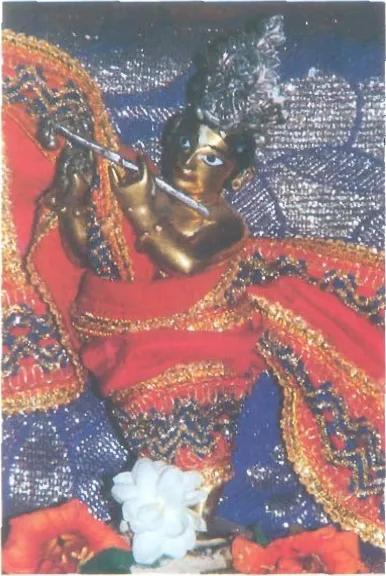
The kuñja of Śrīla Śrīnivāsa Ācārya is a small temple compound near Dhīra-samīra in Vṛndāvana town; The Color Guide to Vṛndāvana (2000) calls it after him, and Vṛndāvana, the Playground of God (2010) calls it his samādhi temple. On one side of its courtyard is the temple of Rādhā-Mādhava, with Śrīla Śrīnivāsa Ācārya's small Deity, Jula Ṭhākura; on the other is a room with his samādhi (tomb).[1 +4] Beside it are the samādhi of his disciple Śrīla Rāmacandra Kavirāja and the puṣpa-samādhi of his daughter Śrīmatī Hemalatā Ṭhākurāṇī.[5 +2] According to the Bhakti-ratnākara, Śrīla Śrīnivāsa Ācārya and Śrīla Rāmacandra Kavirāja lived in Vṛndāvana and served Śrī Gopāla Bhaṭṭa Gosvāmī, but it names no kuñja or house of theirs.[8]
Key facts
| Kind | kuñja |
|---|---|
| Region · area | Vṛndāvana |
| Ācāryas | Śrīla Śrīnivāsa Ācārya |
The Gosvāmīs and ācāryas
Śrīla Śrīnivāsa Ācārya
Śrīla Prabhupāda names Śrīla Śrīnivāsa Ācārya as a disciple of Śrī Gopāla Bhaṭṭa Gosvāmī, and writes that Śrīla Jīva Gosvāmī inspired him, with Śrīla Narottama dāsa Ṭhākura and Duḥkhī Kṛṣṇadāsa, to preach in Bengal:[9 +1]
General teaching (does not name the place)“Later, Śrīla Jīva Gosvāmī inspired Śrīnivāsa Ācārya, Narottama dāsa Ṭhākura and Duḥkhī Kṛṣṇadāsa to preach Kṛṣṇa consciousness in Bengal. Jīva Gosvāmī was informed that all the manuscripts that had been collected from Vṛndāvana and sent to Bengal for preaching purposes were plundered near Viṣṇupura, in Bengal, but later he received the information that the books had been recovered.”
Śrīla Prabhupāda, Śrī Caitanya-caritāmṛta, Ādi-līlā 10.85, purport · vedabase.io
Śrīla Prabhupāda also writes that Śrīla Jīva Gosvāmī gave every Gauḍīya Vaiṣṇava who came to Vṛndāvana a place to live and prasādam; he does not say where Śrīla Śrīnivāsa Ācārya lived.[10] Vṛndāvana, the Playground of God points to the Bhakti-ratnākara for the story of his life, and that book does follow him at length: in Purī, at his initiation by Śrī Gopāla Bhaṭṭa Gosvāmī, in Vṛndāvana with Śrīla Rāmacandra Kavirāja, and at his marriage.[5 +2] Of his years in Vṛndāvana with his disciple it says only this (summarised here, not translated):[8]
বৃন্দাবনে শ্রীভট্ট গোস্বামি আদি যত। সবে রামচন্দ্রে প্রশংসয়ে অবিরত ॥ শুনি রামচন্দ্রের কবিত্ব চমৎকার। কবিরাজ খ্যাতি হৈল সম্মত সবার ॥ কহিতে কি শ্রীরামচন্দ্রের গুণগণ। যার ইষ্টনিষ্ঠা-যশ গায় সর্ব্ব জন ॥ রামচন্দ্র নিজ ইষ্ট আচার্য্য-সঙ্গেতে। ভট্টগোস্বামির সেবা করে নানা মতে ॥ বৃন্দাবনে যৈছে বিলসয়ে দুই জন। বাহুল্য-ভয়েতে তাহা না হয় বর্ণন ॥
bṛndābane śrībhaṭṭa gosbāmi ādi yata| sabe rāmacandre praśaṁsaẏe abirata
śuni rāmacandrera kabitba camatkāra| kabirāja khyāti haila sammata sabāra
kahite ki śrīrāmacandrera guṇagaṇa| yāra iṣṭaniṣṭhā-yaśa gāẏa sarbba jana
rāmacandra nija iṣṭa ācāryya-saṅgete| bhaṭṭagosbāmira sebā kare nānā mate
bṛndābane yaiche bilasaẏe dui jana| bāhulya-bhaẏete tāhā nā haẏa barṇana ||
The Bhakti-ratnākara tells nothing of his departure or of a samādhi. The oldest dated report of the samādhis found is in the Bengali Vṛndāvana-kathā (1920): it places Śrīla Śrīnivāsa Ācārya's samādhi in Īśvarī-kuñja, in the Pātharapurā quarter of Vṛndāvana, and names in the same sentence the samādhi of his daughter Hemalatā, near Dhīra-samīra. Whether Īśvarī-kuñja is the compound that the later guidebooks name after Śrīla Śrīnivāsa Ācārya is not stated, but it may be.[13]
Śrīmatī Hemalatā Ṭhākurāṇī
The Color Guide to Vṛndāvana (2000) and the undated parikramā notes Vṛndāvana describe Śrīmatī Hemalatā Ṭhākurāṇī, Śrīla Śrīnivāsa Ācārya's daughter, as a preacher who made many disciples. Vṛndāvana, the Playground of God calls her a well-known ācārya of the Gauḍīya Vaiṣṇava line and names as her best-known disciple Yadunandana dāsa, who wrote the Karṇānanda about her father's life.[2 +2] Her memorial here is a puṣpa-samādhi: according to Vṛndāvana, the Playground of God, some of her belongings are buried in it. No source says when or by whom it was made, or where she left this world.[2 +2] Speaking at the Rādhā-Dāmodara temple in 1972, Śrīla Prabhupāda explained the word in general; he did not speak of her memorial:[7 +1]
General teaching (does not name the place)“Later on, several other devotees, they are not entombed like them. Flowers from their body, they were placed. It is called puṣpa-samādhi. But here, the original bodies.”
Śrīla Prabhupāda, Morning Walk, Vṛndāvana, 15 October 1972 · vedabase.io
Śrīla Rāmacandra Kavirāja
The samādhi of Śrīla Rāmacandra Kavirāja, Śrīla Śrīnivāsa Ācārya's disciple, stands beside his guru's; his life is told on the page of his samādhi.[5 +2]
Śrīla Prabhupāda
Asked in 1974 what devotees do at a samādhi, Śrīla Prabhupāda said that they offer respect to the ācāryas and worship Kṛṣṇa side …
Asked in 1974 what devotees do at a samādhi, Śrīla Prabhupāda said that they offer respect to the ācāryas and worship Kṛṣṇa side by side. He was speaking in general:[17]
General teaching (does not name the place)“Samādhi, we are offering respect to the ācāryas. Yes. Not that we are simply worshiping samādhi. We are worshiping Kṛṣṇa also, side by side.”
Śrīla Prabhupāda, Morning Walk, Bombay, 8 April 1974 · vedabase.io
Songs
Śrīla Narottama dāsa Ṭhākura's song Śrī Kṛṣṇa Caitanya Prabhu Doyā Koro More ends with a prayer to Śrīla Śrīnivāsa Ācārya and …
Śrīla Narottama dāsa Ṭhākura's song Śrī Kṛṣṇa Caitanya Prabhu Doyā Koro More ends with a prayer to Śrīla Śrīnivāsa Ācārya and asks for the company of Rāmacandra. The song book takes him to be Śrīla Rāmacandra Kavirāja, while Śrīla Prabhupāda's purport names Rāmacandra Cakravartī; see the page of Śrīla Rāmacandra Kavirāja's samādhi.[18]
Visiting today
The compound
The Color Guide to Vṛndāvana (2000) and the notes Vṛndāvana say that inside the courtyard, on the left, is the temple of Rādhā-Mādhava, and that Śrīla Śrīnivāsa Ācārya's samādhi is in a room on the right. Vṛndāvana, the Playground of God (2010) describes the same layout: the altar with Jula Ṭhākura, and across the courtyard a small room with the samādhis of Śrīla Śrīnivāsa Ācārya, Śrīla Rāmacandra Kavirāja and Hemalatā.[1 +4] Śrī Vraja-maṇḍala Parikramā (2007) lists these samādhis near Dhīra-samīra.[6 +1] The Color Guide printed the same darśana times for the temple and the samādhi, summer and winter: 7 am to 12 noon and 4 to 7:30 pm; they may have changed since.[1 +2]
Smaller places described here
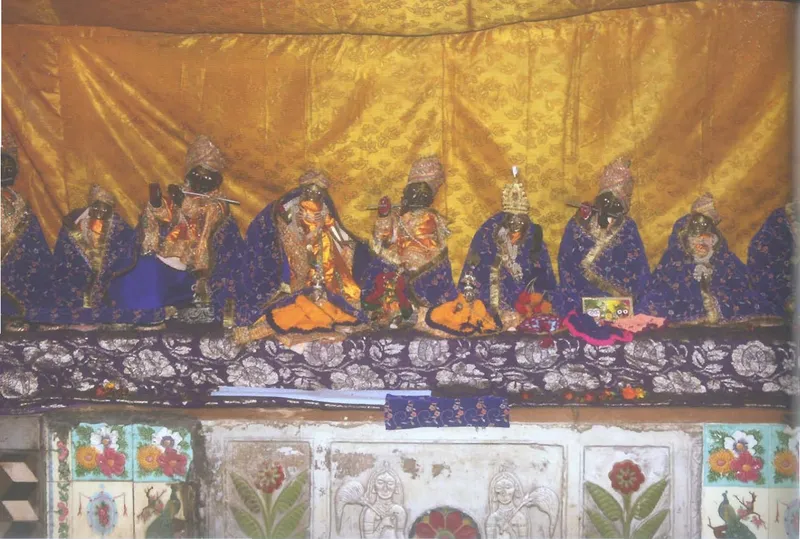
- The Rādhā-Mādhava Mandira: according to the temple tradition reported by The Color Guide and the notes, the small silver Deity of Kṛṣṇa on the bottom shelf, Jula Ṭhākura, was Śrīla Śrīnivāsa Ācārya's own Deity, whom he kept in his bead bag (jula). Vṛndāvana, the Playground of God adds that he carried this Deity around Vṛndāvana in a bag around his neck and massaged Him while chanting japa. No older source for this has been found. The books name the other Deities on the altar differently (see below).[1 +4]
- The puṣpa-samādhi of Śrīmatī Hemalatā Ṭhākurāṇī: all the guidebooks place it by her father's samādhi, but they differ on whether it stands near it, in front of it or in the same room (see below).[2 +3]
Location
| Where it is | samādhī room 'Across the courtyard from the altar'[23] |
|---|
Places at Śrīnivāsa Ācārya Kuñja (Vṛndāvana)
4 places
Pictures
2 pictures
Where the sources differ
Accounts differ Which Deities are on the altar where Śrīla Śrīnivāsa Ācārya's Jula Ṭhākura is kept.
- The Color Guide to Vṛndāvana (2000) entry 60A; the undated parikramā notes Vṛndāvana'the temple of Rādhā-mādhava'; Jula Ṭhākura is 'The small silver Deity of Krishna on the bottom shelf'.
- Vṛndāvana, the Playground of God (2010) entry 66 and the altar photographJula Ṭhākura is 'in the center, between the Gopāla Deities, on the lower level'; Rādhā-Mādhava are not named.
Accounts differ Where Hemalatā's puṣpa-samādhi stands relative to Śrīla Śrīnivāsa Ācārya's samādhi.
- The Color Guide to Vṛndāvana (2000), entry 60D'her samādhi is near the samādhi of her father'
- the undated parikramā notes Vṛndāvana'Her samādhi is in front of the samādhi of Śrīnivāsa.'
- Vṛndāvana, the Playground of God (2010)Across the courtyard from the altar is a small room with his samādhī, 'as well as the samādhīs of his most prominent disciple, Rāmacandra Kavirāja, and his daughter, Hemalatā'.
References
23 references
- The Color Guide to Vṛndāvana (2000), Written and Photographed by Rājaśekhara dāsa Brahmacārī, PDF p. 125
- The Color Guide to Vṛndāvana (2000), Written and Photographed by Rājaśekhara dāsa Brahmacārī, PDF p. 127
- the undated parikramā notes Vṛndāvana, ¶248-¶249
- Vṛndāvana, the Playground of God (2010), Bhakti Caitanya Svāmī, PDF p. 210
- Vṛndāvana, the Playground of God (2010), Bhakti Caitanya Svāmī, PDF p. 211
- Śrī Vraja-maṇḍala Parikramā (2007), PDF p. 345
- Vṛndāvana, the Playground of God (2010), Bhakti Caitanya Svāmī, PDF p. 214
- Śrīla Narahari Cakravartī, Bhakti-ratnākara, Ninth Wave (navama taraṅga), printed p. 577, lines 4-9, 2nd ed., 1912
- Śrīla Prabhupāda, Śrī Caitanya-caritāmṛta, Ādi-līlā 10.105, purport · vedabase.io
- Śrīla Prabhupāda, Śrī Caitanya-caritāmṛta, Ādi-līlā 10.85, purport · vedabase.io
- Śrīla Narahari Cakravartī, Bhakti-ratnākara, Third Wave (tṛtīya taraṅga), printed p. 114, lines 9-18, 2nd ed., 1912
- Śrīla Narahari Cakravartī, Bhakti-ratnākara, Ninth Wave (navama taraṅga), printed p. 577, lines 4-9, 2nd ed., 1912
- Pulinbihārī Datta, ch. 6 (ṣaṣṭha pariccheda), printed p. 91, lines 2-5
- the undated parikramā notes Vṛndāvana, ¶256
- the undated parikramā notes Vṛndāvana, ¶255
- Śrīla Prabhupāda, Morning Walk, Vṛndāvana, 15 October 1972 · vedabase.io
- Śrīla Prabhupāda, Morning Walk, Bombay, 8 April 1974 · vedabase.io
- Śrī Kṛṣṇa Caitanya Prabhu Doyā Koro More (Narottama dāsa Ṭhākura (as the song book credits it)) · song book
- the undated parikramā notes Vṛndāvana, ¶250
- the undated parikramā notes Vṛndāvana, ¶249
- Vṛndāvana, the Playground of God (2010), Bhakti Caitanya Svāmī, PDF p. 212
- the undated parikramā notes Vṛndāvana, ¶255-¶256
- Vṛndāvana, the Playground of God (2010), Bhakti Caitanya Svāmī, p. 210