Śrīnivāsa Ācārya Samādhi
श्रीनिवास आचार्य समाधि Hindi name proposed
Also called Samādhī of Śrīnivāsa Ācārya
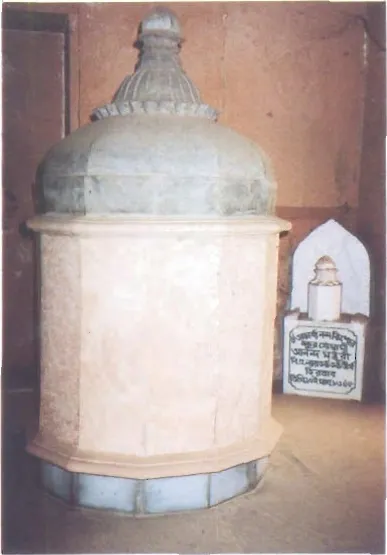
- What it is
- The samādhi (tomb) of Śrīla Śrīnivāsa Ācārya is in a small room of Śrīla Śrīnivāsa Ācārya's kuñja near Dhīra-samīra in Vṛndāvana, beside the samādhi of his disciple Śrīla Rāmacandra Kavirāja.
- Visiting
- The Color Guide to Vṛndāvana (2000) and the undated parikramā notes Vṛndāvana place the samādhi in a room on the right side of the courtyard of Śrīla Śrīnivāsa Ācārya's kuñja, with the temple on the …
In short
The samādhi (tomb) of Śrīla Śrīnivāsa Ācārya is in a small room of Śrīla Śrīnivāsa Ācārya's kuñja near Dhīra-samīra in Vṛndāvana, beside the samādhi of his disciple Śrīla Rāmacandra Kavirāja.[1 +5] Śrīla Prabhupāda writes that he was a disciple of Śrī Gopāla Bhaṭṭa Gosvāmī and that Śrīla Jīva Gosvāmī inspired him to preach in Bengal; in a 1969 talk he called him the next ācārya after the six Gosvāmīs.[1 +6] The guidebooks describe the samādhi, and a Bengali book of 1920 already reports it. No source read says whether he left this world in Vṛndāvana, or how and when the samādhi was made.[1 +4]
Key facts
| Kind | samādhi |
|---|---|
| Region · area | Vṛndāvana · Śrīnivāsa Ācārya Kuñja (Vṛndāvana) |
| Ācāryas | Śrīla Śrīnivāsa Ācārya |
The Gosvāmīs and ācāryas
Śrīla Śrīnivāsa Ācārya
According to the Bhakti-ratnākara, Śrī Gadādhara Paṇḍita in Purī told the young Śrīnivāsa that both of them had wished him to study the Bhāgavatam with Gadādhara, but an obstacle had come. Śrī Gadādhara Paṇḍita explained the meaning of the Bhāgavatam to him from time to time, told him that he would go to Vṛndāvana, where these wishes would be fulfilled, gave him his worn copy of the book, and sent him to Gauḍa (Bengal) (summarised here, not translated).[9 +1] The Vṛndāvana-kathā (1920), writing from a worn manuscript kept in the homes of his descendants, says that he was born in 1519 in the village of Cākhundī and went to Vṛndāvana at the age of sixteen.[12]
The guidebooks say that in Vṛndāvana he became a disciple of Śrī Gopāla Bhaṭṭa Gosvāmī, as Śrīla Prabhupāda also writes, and studied under Śrīla Jīva Gosvāmī, who sent him to preach in Bengal.[1 +5]
General teaching (does not name the place)“Śrīnivāsa Ācārya and Gopīnātha Pūjārī were two of his disciples.”
Śrīla Prabhupāda, Śrī Caitanya-caritāmṛta, Ādi-līlā 10.105, purport · vedabase.io
The Bhakti-ratnākara also says that Śrīla Rāmacandra Kavirāja served Śrī Gopāla Bhaṭṭa Gosvāmī in many ways together with his own ācārya, Śrīla Śrīnivāsa Ācārya, and that the author will not describe how the two lived in Vṛndāvana, so as not to make his book too long (summarised here, not translated).[14]
The Gosvāmīs' books
The guidebooks tell, on their pages about this samādhi, how the Gosvāmīs' books that Śrīla Śrīnivāsa Ācārya, Śrīla Narottama dāsa Ṭhākura and Śrīla Śyāmānanda Paṇḍita carried to Bengal were stolen by men of the king of Vana-viṣṇupura, and were recovered when the king surrendered to Śrīla Śrīnivāsa Ācārya. Śrīla Prabhupāda writes that the manuscripts were plundered near Viṣṇupura and later recovered.[2 +5]
General teaching (does not name the place)“Later, Śrīla Jīva Gosvāmī inspired Śrīnivāsa Ācārya, Narottama dāsa Ṭhākura and Duḥkhī Kṛṣṇadāsa to preach Kṛṣṇa consciousness in Bengal. Jīva Gosvāmī was informed that all the manuscripts that had been collected from Vṛndāvana and sent to Bengal for preaching purposes were plundered near Viṣṇupura, in Bengal, but later he received the information that the books had been recovered.”
Śrīla Prabhupāda, Śrī Caitanya-caritāmṛta, Ādi-līlā 10.85, purport · vedabase.io
Vṛndāvana, the Playground of God (2010) says that the Bhakti-ratnākara describes Śrīla Śrīnivāsa Ācārya's life at length, and it does: the book follows him in Purī, at his initiation, in Vṛndāvana with Śrīla Rāmacandra Kavirāja and at his marriage. It does not tell of his passing or of a samādhi.[3 +2]
His departure
The Vṛndāvana-kathā reports from the same family manuscript that he passed away in 1603, at the age of eighty-four, and that his festival is held on the bright eighth day of Kārttika. It does not say where he passed away.[12] The guidebooks call this room his samādhi without saying how it came to be, and the editors have found no source that says whether his body lies here or whether it is a memorial.[1 +3]
His identity in Kṛṣṇa's pastimes
The Prema-vilāsa gives his name in Kṛṣṇa's pastimes as Maṇimañjarī, under the shelter of Guṇa-mañjarī, whom it identifies as Śrī Gopāla Bhaṭṭa Gosvāmī; the guidebooks call Maṇimañjarī one of Śrī Rādhā's intimate maidservants or one of Rūpa-mañjarī's assistants. No scripture or Gosvāmī text that says this has been found, so it is told here as the tradition of these books, and what is said of it may not be certain.[15 +4]
Śrīla Prabhupāda
Śrīla Prabhupāda quotes a verse in praise of the six Gosvāmīs as sung by Śrīla Śrīnivāsa Ācārya; it is the second verse of the …
Śrīla Prabhupāda quotes a verse in praise of the six Gosvāmīs as sung by Śrīla Śrīnivāsa Ācārya; it is the second verse of the Ṣaḍ-gosvāmy-aṣṭaka, which The Color Guide to Vṛndāvana (2000) also names on its page about this samādhi.[15 +1]
General teaching (does not name the place)“Śrīla Śrīnivāsa Ācārya has sung: nānā-śāstra-vicāraṇaika-nipuṇau sad-dharma-saṁsthāpakau lokānāṁ hita-kāriṇau tri-bhuvane mānyau śaraṇyākarau rādhā-kṛṣṇa-padāravinda-bhajanānandena mattālikau vande rūpa-sanātanau raghu-yugau śrī-jīva-gopālakau”
Śrīla Prabhupāda, Śrī Caitanya-caritāmṛta, Madhya-līlā 1.33, purport · vedabase.io
He explained in 1974 why devotees honour the samādhi of an ācārya. He was speaking in general, not of this samādhi:[21]
General teaching (does not name the place)“Samādhi, we are offering respect to the ācāryas. Yes. Not that we are simply worshiping samādhi. We are worshiping Kṛṣṇa also, side by side.”
Śrīla Prabhupāda, Morning Walk, Bombay, 8 April 1974 · vedabase.io
Songs
Śrīla Narottama dāsa Ṭhākura closes his song Śrī Kṛṣṇa Caitanya Prabhu by asking Śrīla Śrīnivāsa Ācārya for mercy and begging for …
Śrīla Narottama dāsa Ṭhākura closes his song Śrī Kṛṣṇa Caitanya Prabhu by asking Śrīla Śrīnivāsa Ācārya for mercy and begging for the company of Rāmacandra; the sources differ on which Rāmacandra he means (see below).[22]
In Je Anilo Prema Dhana, Śrīla Narottama dāsa Ṭhākura laments the departed associates of Śrī Caitanya Mahāprabhu; its first verse asks where the Ācārya Ṭhākura has gone, who brought the treasure of divine love. The song book takes him to be Śrīla Śrīnivāsa Ācārya; no other source read here says so.[23]
Visiting today
The Color Guide to Vṛndāvana (2000) and the undated parikramā notes Vṛndāvana place the samādhi in a room on the right side of the courtyard of Śrīla Śrīnivāsa Ācārya's kuñja, with the temple on the left. Vṛndāvana, the Playground of God (2010) puts it across the courtyard from the altar, in a small room shared with the samādhis of Śrīla Rāmacandra Kavirāja and of his daughter, Śrīmatī Hemalatā Ṭhākurāṇī. Śrī Vraja-maṇḍala Parikramā (2007) lists the two samādhis near Dhīra-samīra.[1 +5]
The Bengali Vṛndāvana-kathā (1920) places Śrīla Śrīnivāsa Ācārya's samādhi in Īśvarī-kuñja, in the Pātharapurā quarter of Vṛndāvana, and names his daughter's samādhi near Dhīra-samīra in the same sentence. Whether Īśvarī-kuñja is the compound that the later guidebooks call Śrīla Śrīnivāsa Ācārya's kuñja has not been checked.[12]
Location
| Where it is | in a room on the right side of the courtyard[24] 'The samādhi is in a room on the right side of the courtyard'[2] |
|---|
Nearby places
Dhīra-samīra · Rādhā-Mādhava Mandira (Śrīnivāsa Ācārya Kuñja, Vṛndāvana) · Rāmacandra Kavirāja's samādhi · Puṣpa-samādhi of Hemlatā Ṭhākurānī
Where the sources differ
Where Śrīmatī Hemalatā Ṭhākurāṇī's samādhi stands beside her father's: the guidebooks differ, as the page of Śrīla Śrīnivāsa Ācārya's kuñja sets out.[1 +4]
Which Rāmacandra Śrīla Narottama dāsa Ṭhākura asks to be with at the end of his song Śrī Kṛṣṇa Caitanya Prabhu: Śrīla Prabhupāda names Rāmacandra Cakravartī, while a guidebook and the song book name Śrīla Rāmacandra Kavirāja. The accounts are set side by side on the page Śrīla Rāmacandra Kavirāja's samādhi.[22]
Śrī Gopāla Bhaṭṭa Gosvāmī's identity in Kṛṣṇa's pastimes, under whom the Prema-vilāsa places Śrīla Śrīnivāsa Ācārya.
Accounts differ Śrī Gopāla Bhaṭṭa Gosvāmī's identity in Kṛṣṇa's pastimes: Anaṅga-mañjarī, Guṇa-mañjarī, or Anaṅga-mañjarī with Guṇa-mañjarī as a second view.
- Prema-vilāsa (Prema-vilāsa (Nityānanda dāsa), Bengali, publ. Yaśodālāl Tālukdār (1913), Kolkata c. 1913), Twentieth Vilāsa printed p. 203 and Sixth Vilāsa printed p. 36Śrī Gopāla Bhaṭṭa is Śrī Guṇamañjarī; at Śrīnivāsa's initiation Śrī Gopāla Bhaṭṭa tells him that he is Maṇimañjarikā under the shelter of Guṇamañjarikā.
- Gaura-gaṇoddeśa-dīpikā v.184'anaṅga-mañjarī yāsīt sādya gopāla-bhaṭṭakaḥ': she who was Anaṅga-mañjarī is now Śrī Gopāla Bhaṭṭa; bhaṭṭa-gosvāminaṁ kecid āhuḥ śrī-guṇa-mañjarī: some say that the Bhaṭṭa Gosvāmī is Śrī Guṇa-mañjarī.
- Śrīla Prabhupāda, Śrī Caitanya-caritāmṛta Ādi-līlā 10.105, purport'In the Gaura-gaṇoddeśa-dīpikā (184) it is mentioned that his previous name in the pastimes of Lord Kṛṣṇa was Anaṅga-mañjarī. Sometimes he is also said to have been an incarnation of Guṇa-mañjarī.'
- Bhakti-ratnākara (Śrīla Narahari Cakravartī), Fourth Wave, printed p. 142, quoting the Gaura-gaṇoddeśa-dīpikā as verse 184 ('১৮৪ শ্লোকঃ')Its own line names Śrī Gopāla Bhaṭṭa with both names (śrīgopālabhaṭṭaguṇa-anaṅgamañjarī); the verse it quotes: she who was Anaṅga-mañjarī is now Śrī Gopāla Bhaṭṭa; some say that the Bhaṭṭa Gosvāmī is Śrī Guṇa-mañjarī.
The wording of these accounts is our summary of the sources, not a published translation.
References
24 references
- The Color Guide to Vṛndāvana (2000), Written and Photographed by Rājaśekhara dāsa Brahmacārī, PDF p. 125
- the undated parikramā notes Vṛndāvana, ¶249
- Vṛndāvana, the Playground of God (2010), Bhakti Caitanya Svāmī, PDF p. 211
- Śrī Vraja-maṇḍala Parikramā (2007), PDF p. 345
- the undated parikramā notes Vṛndāvana, ¶134
- Vṛndāvana, the Playground of God (2010), Bhakti Caitanya Svāmī, PDF p. 214
- Śrīla Prabhupāda, Śrī Caitanya-caritāmṛta, Ādi-līlā 10.105, purport · vedabase.io
- Śrīla Prabhupāda, Śrī Caitanya-caritāmṛta, Ādi-līlā 10.85, purport · vedabase.io
- The Color Guide to Vṛndāvana (2000), Written and Photographed by Rājaśekhara dāsa Brahmacārī, PDF p. 126
- Vṛndāvana, the Playground of God (2010), Bhakti Caitanya Svāmī, PDF p. 212
- Śrīla Prabhupāda, Purport to Śrī Kṛṣṇa Caitanya Prabhu, Los Angeles, 11 January 1969 · vedabase.io
- Pulinbihārī Datta, ch. 6 (ṣaṣṭha pariccheda), printed p. 91, lines 2-5
- Śrīla Narahari Cakravartī, Bhakti-ratnākara, Third Wave (tṛtīya taraṅga), printed p. 114, lines 9-18, 2nd ed., 1912
- Śrīla Narahari Cakravartī, Bhakti-ratnākara, Ninth Wave (navama taraṅga), printed p. 577, lines 4-9, 2nd ed., 1912
- The Color Guide to Vṛndāvana (2000), Written and Photographed by Rājaśekhara dāsa Brahmacārī, PDF p. 127
- Vṛndāvana, the Playground of God (2010), Bhakti Caitanya Svāmī, PDF p. 213
- Prema-vilāsa, Twentieth Vilāsa (বিংশ বিলাস, which begins in the left column of this page), printed p. 203, right column, lines 11-14, Kolkata, 1913
- Prema-vilāsa, Sixth Vilāsa (ষষ্ঠ বিলাস), printed p. 36, right column, lines 15-18, Kolkata, 1913
- Pulinbihārī Datta, ch. 6 (ṣaṣṭha pariccheda), printed p. 94, text lines 11 (from 'ইঁহাদের') to 23
- Śrīla Prabhupāda, Śrī Caitanya-caritāmṛta, Madhya-līlā 1.33, purport · vedabase.io
- Śrīla Prabhupāda, Morning Walk, Bombay, 8 April 1974 · vedabase.io
- Śrī Kṛṣṇa Caitanya Prabhu Doyā Koro More (Narottama dāsa Ṭhākura (as the song book credits it)) · song book
- Je Anilo Prema Dhana (Sva-pārṣada-bhagavad-viraha-janita-vilāpa) (Narottama dāsa Ṭhākura (as the song book credits it)) · song book
- The Color Guide to Vṛndāvana (2000), Written and Photographed by Rājaśekhara dāsa Brahmacārī, p. 111