Śveta-varāha Mandira
श्वेत-वराह मन्दिर Hindi name proposed
Also called Sveta Varaha Temple, Nṛ-varāha
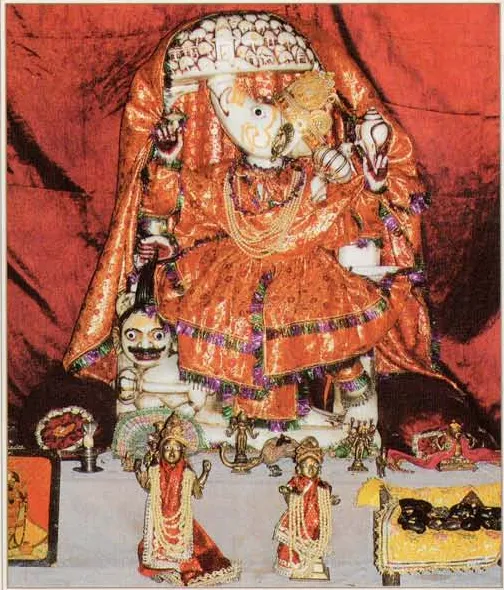
- What it is
- The Śveta-varāha Mandira holds the white Deity of Lord Varāha, the boar incarnation, behind the Dvārakādhīśa temple in the Māṇika-choka quarter of Mathurā.
- Visiting
- The guidebook Śrī Vraja-maṇḍala Parikramā (2007) and the undated parikramā notes Mathurā place two Varāha temples behind the Dvārakādhīśa temple, one with a black and one with a white Deity.
In short
The Śveta-varāha Mandira holds the white Deity of Lord Varāha, the boar incarnation, behind the Dvārakādhīśa temple in the Māṇika-choka quarter of Mathurā. The other Varāha temple there, the Ādi-varāha Mandira, has a black Deity.[1 +3] Śveta-varāha means "the white boar". Śrīla Rūpa Gosvāmī writes that the present day of Brahmā is called the Śveta-varāha kalpa, and Śrīla Prabhupāda speaks of the "Śveta-varāha millennium"; this explains the name, but no scripture names the temple.[5 +1] The Varāha Purāṇa praises the sight of "Śveta" in Mathurā, without saying which Deity it means.[7]
Key facts
| Kind | temple |
|---|---|
| Region · area | Mathurā · Māṇika-choka |
| Ācāryas | Śrīla Bhaktisiddhānta Sarasvatī Ṭhākura, Śrī Jāhnavā-devī (Jāhnavā Īśvarī) |
Why it is glorified
The Varāha Purāṇa tells how Śatrughna brought the Varāha Deity of the sage Kapila to Mathurā and installed it there.
The Varāha Purāṇa tells how Śatrughna brought the Varāha Deity of the sage Kapila to Mathurā and installed it there. In the next verse Varāha says that whatever comes from offering piṇḍa, the rice offering to the forefathers, at Gayā is gained by always seeing "Śveta", the white one (summarised here, not translated). The text does not say whether "Śveta" is the Kapila Deity just installed or another white form.[7] Read more: The Varāha Deity of Mathurā and its journey from Kapila to Śatrughna →
देवमादाय शत्रुघ्नो जगाम मथुरां पुरीम् ।। ब्राह्मणं स्थापयित्वा तु आगच्छन्मम सन्निधौ ॥ 64 ॥ तत्र मध्ये तु संस्थाप्य पूजयामास राघवः ।। अनेन क्रमयोगेण मथुरायां स्थितः प्रभुः ॥ 65 ॥ गयायां पिण्डदानेन यत्फलं ज्यष्ठेपुष्करे ।। तत्फलं समवाप्नोति श्वेतं दृष्ट्वा सदा नरः ॥ 66 ॥
devamādāya śatrughno jagāma mathurāṁ purīm
brāhmaṇaṁ sthāpayitvā tu āgacchanmama sannidhau
64
tatra madhye tu saṁsthāpya pūjayāmāsa rāghavaḥ
anena kramayogeṇa mathurāyāṁ sthitaḥ prabhuḥ
65
gayāyāṁ piṇḍadānena yatphalaṁ jyaṣṭhepuṣkare
tatphalaṁ samavāpnoti śvetaṁ dṛṣṭvā sadā naraḥ || 66 ||
In his Mathurā-māhātmya Śrīla Rūpa Gosvāmī quotes a verse that counts Varāha among the chief Deities of Mathurā, with Keśava, Svayambhū, Padmanābha, Dīrgha-viṣṇu, Gataśrama, Govinda and Hari. It does not say which Varāha, white or black.[9]
The white boar and the red
Śrīmad-Bhāgavatam tells that a tiny boar came out of Brahmā's nostril and lifted the earth, and that the same Lord in the form of the Boar killed the demon Hiraṇyākṣa. Śrīla Prabhupāda explains that these were two appearances in two different periods:[10 +1]
General teaching (does not name the place)“In both millenniums there was a boar incarnation of the Lord, but in the Svāyambhuva millennium He lifted the earth from within the water of the universe, whereas in the Cākṣuṣa millennium He killed the first demon, Hiraṇyākṣa. In the Svāyambhuva millennium He assumed the color white, and in the Cākṣuṣa millennium He assumed the color red.”
Śrīla Prabhupāda, Śrīmad-Bhāgavatam, 3.14.2, purport · vedabase.io
In his Laghu-bhāgavatāmṛta Śrīla Rūpa Gosvāmī also teaches that Varāha appeared twice in this kalpa: from Brahmā's nostril in the Svāyambhuva period to lift the earth, and from the waters in the Cākṣuṣa period. The slayer of Hiraṇyākṣa, he writes, is four-legged, though some call Him Nṛ-varāha, the man-boar, and Varāha is remembered with two colours, dark as a rain-cloud and pale as the moon; he does not say which appearance had which colour (summarised here, not translated).[12] Śrī Vraja-maṇḍala Parikramā (2007) and the undated parikramā notes Mathurā differ: they make the white Deity the half-human Varāha who killed Hiraṇyākṣa, while Śrīla Prabhupāda's purport gives the white colour to the boar who lifted the earth (see below).[10 +1]
dvir āvirāsīt kalpe'sminn ādye svāyambhuvāntare
ghrāṇād vidher dharoddhṛtyai cākṣuṣīye tu nīrataḥ // hiraṇyākṣaṃ dharoddhāre nihantuṃ daṃṣṭri-puṅgavaḥ
catuṣpāt śrī-varāho'sau nṛ-varāhaḥ kvacin mataḥ // kadācij jalada-śyāmaḥ kadācic candrapāṇḍaraḥ
yajña-mūrtiḥ sthaviṣṭho'yaṃ varṇa-dvaya-yutaḥ smṛtaḥ // dakṣāt prācetasāt sṛṣṭiḥ śrūyate cākṣuṣe'ntare
atas tatraiva janmāsya hiraṇyākṣasya yujyate //
The Gosvāmīs and ācāryas
According to the Bhakti-ratnākara, Śrīla Jāhnavā-devī bathed at Viśrāma-ghāṭa, stayed a day in Mathurā and saw the Deities Varāha and Keśava before she went on to Vṛndāvana. The book does not say which of Mathurā's Varāha Deities she saw.[14]
তথা হৈতে লৈয়া গেলা অপূর্ব্ব বাসায় । সে দিবস সকলে রহিলা মথুরায় ॥ বরাহকেশব দেবে করিয়া দর্শন । প্রাতঃকালে কৈল বৃন্দাবনেতে গমন ॥
tathā haite laiẏā gelā apūrbba bāsāẏa
se dibasa sakale rahilā mathurāẏa
barāhakeśaba debe kariẏā darśana
prātaḥkāle kaila bṛndābanete gamana ||
The guidebook Vṛndāvana-Dhāma Ki Jaya! (c. 1986) says that Śrīla Bhaktisiddhānta Sarasvatī Ṭhākura visited "this sacred temple" on a Vraja-maṇḍala parikramā that he led. Its paragraph stands under the Ādi-varāha temple but tells the story of Śveta-varāha, so the visit may belong to either temple.[4]
Śrīla Prabhupāda
Śrīla Prabhupāda does not speak of this temple by name.
Śrīla Prabhupāda does not speak of this temple by name. In the Caitanya-caritāmṛta he translates the name of another Śveta-varāha temple, at Vṛddhakola in South India, which Śrī Caitanya Mahāprabhu visited, as "the white boar incarnation".[16]
Visiting today
The guidebook Śrī Vraja-maṇḍala Parikramā (2007) and the undated parikramā notes Mathurā place two Varāha temples behind the Dvārakādhīśa temple, one with a black and one with a white Deity. Vṛndāvana-Dhāma Ki Jaya! (c. 1986) says that the white Deity is kept in a private house down the side-street. Its owners did not then let "non-Hindus" inside, but the Deity could be seen from the street when the curtain was open.[1 +3] No dated record of the temple or its Deity has been found.
Location
| Where it is | 'behind the present Dvārakādhīśa Temple in Māṇika-choka'[20] down the side-street next to the Dvārakādhīśa temple, right at a small Śiva temple[21] |
|---|
Nearby places
Dvārakādīśa Mandira · Ādi-varāha Mandira
Where the sources differ
Accounts differ Which Varāha appearance is the white one (Śveta-varāha), and what that form did.
- Śrīla Prabhupāda, ŚB 3.14.2 purportSvāyambhuva millennium: lifted the earth, colour white; Cākṣuṣa millennium: killed Hiraṇyākṣa, colour red.
- Śrī Vraja-maṇḍala Parikramā (2007); the undated parikramā notes MathurāBlack Kṛṣṇa-varāha: from Brahmā's nostril, Svāyambhuva period, four-legged, lifted the Earth. White Śveta-varāha (Nṛ-varāha): from the ocean, Cākṣuṣa period, boar's face and human lower body, killed Hiraṇyākṣa.
- Śrīla Rūpa Gosvāmī, Laghu-bhāgavatāmṛta 1.3.10-13Two appearances (nostril/Svāyambhuva; waters/Cākṣuṣa); the Hiraṇyākṣa-slayer is four-legged, considered Nṛ-varāha in some places; two colours, cloud-dark and moon-white, not assigned.
- Śrīmad-Bhāgavatam 3.13.18, 3.14.2The boar from Brahmā's nostril lifts the earth; Vidura hears that Hiraṇyākṣa was slain 'by the same' Boar (no colour given).
The wording of these accounts is our summary of the sources, not a published translation.
Which of Mathurā's two Varāha Deities the Kapila history belongs to is told differently; the accounts are set side by side on the page of the Ādi-varāha temple.[1 +5]
More on this place
The Varāha Deity of Mathurā and its journey from Kapila to Śatrughna
References
21 references
- Śrī Vraja-maṇḍala Parikramā (2007), PDF p. 56
- the undated parikramā notes Mathurā, ¶44
- Vṛndāvana-Dhāma Ki Jaya! (c. 1986), by Dhruva Mahārāja dāsa, PDF p. 20
- Vṛndāvana-Dhāma Ki Jaya! (c. 1986), by Dhruva Mahārāja dāsa, PDF p. 21
- Śrīla Rūpa Gosvāmī, Laghu-bhāgavatāmṛta, 1.4.28, GRETIL
- Śrīla Prabhupāda, Śrīmad-Bhāgavatam, 3.13.16, purport · vedabase.io
- Varāha Purāṇa, adhyāya 163, verses 64-66, Sanskrit Wikisource
- Varāha Purāṇa, adhyāya 163, verses 64-66, Sanskrit Wikisource
- Śrīla Rūpa Gosvāmī, Mathurā-māhātmya v.444
- Śrīla Prabhupāda, Śrīmad-Bhāgavatam, 3.14.2, purport · vedabase.io
- Śrīmad-Bhāgavatam ŚB 3.14.2, GRETIL
- Śrīla Rūpa Gosvāmī, Laghu-bhāgavatāmṛta 1.3.10-13, GRETIL
- Śrīla Rūpa Gosvāmī, Laghu-bhāgavatāmṛta 1.3.10-13, GRETIL
- Śrīla Narahari Cakravartī, Bhakti-ratnākara, Eleventh Wave (ekādaśa taraṅga), 1912 ed. p. 664; verses 96-97 in the Grantha Mandira text numbering, 2nd ed., 1912
- Śrīla Narahari Cakravartī, Bhakti-ratnākara, Eleventh Wave (ekādaśa taraṅga), 1912 ed. p. 664; verses 96-97 in the Grantha Mandira text numbering, 2nd ed., 1912
- Śrīla Prabhupāda, Śrī Caitanya-caritāmṛta, Madhya-līlā 9.73, translation · vedabase.io
- the undated parikramā notes Mathurā, ¶51
- Varāha Purāṇa, adhyāya 163, verse 32, Sanskrit Wikisource
- Garga-saṁhitā, Mathurā-khaṇḍa (5) 25.7-8, Sanskrit Wikisource
- Śrī Vraja-maṇḍala Parikramā (2007), p. 86-87
- Vṛndāvana-Dhāma Ki Jaya! (c. 1986), by Dhruva Mahārāja dāsa, p. 2