Ādi-varāha Mandira
आदि-वराह मन्दिर Hindi name proposed
Also called Adi – Varaha Temple
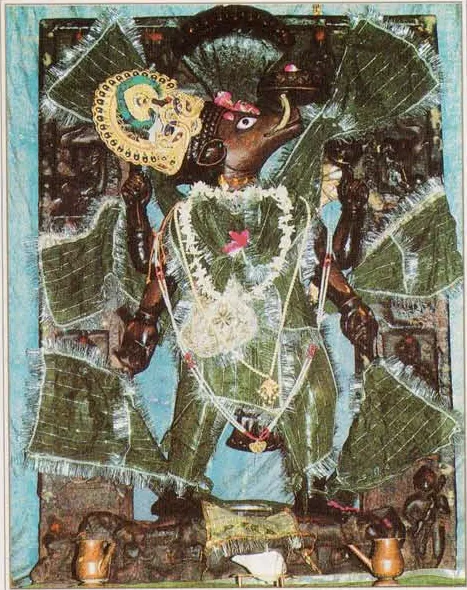
- What it is
- The Ādi-varāha Mandira, also called the Kṛṣṇa-varāha temple, is one of two temples of Lord Varāha, the boar incarnation, behind the Dvārakādhīśa temple in the Māṇika-choka quarter of Mathurā.
- Visiting
- The guidebook Śrī Vraja-maṇḍala Parikramā (2007), the undated parikramā notes Mathurā and Vṛndāvana-Dhāma Ki Jaya!
In short
The Ādi-varāha Mandira, also called the Kṛṣṇa-varāha temple, is one of two temples of Lord Varāha, the boar incarnation, behind the Dvārakādhīśa temple in the Māṇika-choka quarter of Mathurā. Its Deity is black; the other temple, Śveta-varāha, has a white Deity.[1 +4] The Varāha Purāṇa tells how a divine Varāha Deity passed from the sage Kapila to Indra, Rāvaṇa and Śrī Rāma, and how Rāma's brother Śatrughna installed it in Mathurā.[6 +5] Śrīla Rūpa Gosvāmī counts Varāha among the chief Deities of Mathurā.[12] The guidebooks give the Kapila history to this black Deity, but the sources differ on which of the two Varāhas it belongs to.
Key facts
| Kind | temple |
|---|---|
| Region · area | Mathurā · Māṇika-choka |
| Ācāryas | Śrīla Bhaktisiddhānta Sarasvatī Ṭhākura, Śrīla Rūpa Gosvāmī, Śrīla Narahari Cakravartī Ṭhākura |
Why it is glorified
The Varāha Purāṇa describes Mathurā as a lotus with a Deity on each petal.
Varāha on Mathurā's lotus
The Varāha Purāṇa describes Mathurā as a lotus with a Deity on each petal. On the southern petal, Varāha says, stands His own divine image, large-bodied and well-formed (surūpa), resembling the form of Keśava, and whoever sees it rejoices with Brahmā (summarised here, not translated).[13 +4]
यं दृष्ट्वा तु नरो याति मुक्तिं नास्त्यत्र संशयः ।। दक्षिणेन तु मां विद्धि प्रतिमां दिव्यरूपिणीम् ॥ 163.20 ॥ महाकायां सुरूपां च केशवाकारसन्निभाम् ।। तां दृष्ट्वा मनुजो देवि ब्रह्मणा सह मोदते ॥ 21 ॥ कृते युगे तु राजासीन्मान्धाता नाम नामतः ।। तेनाहं तोषितो देवि भक्तियुक्तेन चेतसा ॥ 22 ॥
yaṁ dṛṣṭvā tu naro yāti muktiṁ nāstyatra saṁśayaḥ
dakṣiṇena tu māṁ viddhi pratimāṁ divyarūpiṇīm mahākāyāṁ surūpāṁ ca keśavākārasannibhām
tāṁ dṛṣṭvā manujo devi brahmaṇā saha modate kṛte yuge tu rājāsīnmāndhātā nāma nāmataḥ
tenāhaṁ toṣito devi bhaktiyuktena cetasā
Śrīla Rūpa Gosvāmī quotes this verse in his Mathurā-māhātmya, and in the same work he names Varāha among Mathurā's chief Deities, with Keśava in the centre and Svayambhū, Padmanābha, Dīrgha-viṣṇu, Gataśrama, Govinda and Hari.[12 +1] The Bhakti-ratnākara of Śrīla Narahari Cakravartī Ṭhākura says that Śrī Varāhadeva adorns the southern petal and that by His mercy people gain every perfection, and it quotes the same verse.[13 +3] The guidebook Śrī Vraja-maṇḍala Parikramā (2007) calls this Varāha of the southern petal Ādi-varāhadeva.[13 +4] None of these texts gives the image a colour.
How the Deity came to Mathurā
The Varāha Purāṇa gives a chapter to the Kapila-varāha, the Varāha of Kapila (summarised here, not translated). Varāha says that He gave His image to King Māndhātā in the Kṛta-yuga and that it came to stand in Mathurā when the demon Lavaṇa was killed. The chapter then tells that the sage Kapila created a Varāha image in his mind and worshipped it every day, and gave it to Indra. Rāvaṇa conquered Indra, carried the Deity to Laṅkā on his flying chariot, the Puṣpaka, and worshipped it there. After Rāvaṇa's death Śrī Rāma asked Vibhīṣaṇa for it and worshipped it in Ayodhyā. When Śatrughna had killed Lavaṇa, Rāma gave him the Deity as a boon, and Śatrughna installed it in Mathurā.[6 +5] Read more: The Varāha Deity of Mathurā and its journey from Kapila to Śatrughna →
नय शत्रुघ्न देवं त्वं दिव्यं वाराहरूपिणम् ।। धन्याऽसौ मण्डली लोके धन्या सा मथुरा पुरी ॥ 163.60 ॥ धन्यास्ते माथुरा लोकाः पश्यन्ति कपिलं सदा ।। दृष्टः स्पृष्टः तदा ध्यातः स्नापितश्च दिने दिने ॥ 61 ॥ अनुलिप्तश्च शत्रुघ्न सर्वपापं व्यपोहति ।। पूजितः स्नापितो देवो दृष्टो यैस्तु दिने दिने ॥ 62 ॥
naya śatrughna devaṁ tvaṁ divyaṁ vārāharūpiṇam
dhanyā'sau maṇḍalī loke dhanyā sā mathurā purī dhanyāste māthurā lokāḥ paśyanti kapilaṁ sadā
dṛṣṭaḥ spṛṣṭaḥ tadā dhyātaḥ snāpitaśca dine dine anuliptaśca śatrughna sarvapāpaṁ vyapohati
pūjitaḥ snāpito devo dṛṣṭo yaistu dine dine
The Garga-saṁhitā tells the same history in short and says that this "Kapila-vārāha", served by all the people of Mathurā, is honoured as the city's chief minister.[19 +1]
स्तुत्वा रामं च शत्रुघ्नो यमनीय प्रयत्नतः । मथुरायां महापुर्यां स्थापयित्वा ननाम ह ॥ 7 ॥ सेवितो माथुरैः सर्वेः सर्वेषां च वरप्रदः । साक्षात्कपिलवाराहः सोऽयं मंत्रिवरः स्मृतः ॥ 8 ॥
stutvā rāmaṁ ca śatrughno yamanīya prayatnataḥ
mathurāyāṁ mahāpuryāṁ sthāpayitvā nanāma ha sevito māthuraiḥ sarveḥ sarveṣāṁ ca varapradaḥ
sākṣātkapilavārāhaḥ so'yaṁ maṁtrivaraḥ smṛtaḥ
Right after the installation, the Varāha Purāṇa says that always seeing "Śveta", the white one, gives the result of offering piṇḍa at Gayā, and that Varāha's effulgence is at Viśrānti at sunrise, at Dīrgha-viṣṇu at noon and at Keśava in the fourth part of the day. The text does not say whether "Śveta" is the Kapila Deity.[21]
The Gosvāmīs and ācāryas
The guidebook Vṛndāvana-Dhāma Ki Jaya! (c. 1986) says that Śrīla Bhaktisiddhānta Sarasvatī Ṭhākura visited this temple on a Vraja-maṇḍala parikramā that he led. Its paragraph covers both Varāha temples, and the book it cites for the visit could not be checked.[5]
Visiting today
The guidebook Śrī Vraja-maṇḍala Parikramā (2007), the undated parikramā notes Mathurā and Vṛndāvana-Dhāma Ki Jaya! (c. 1986) all place two temples of Varāha behind the Dvārakādhīśa temple in Māṇika-choka, one with this black Deity and one with the white Śveta-varāha. Vṛndāvana-Dhāma Ki Jaya! calls the Ādi-varāha "probably the oldest Deity in the area".[1 +4] No dated source gives the age of the temple.
Location
| Where it is | 'behind the present Dvārakādhīśa Temple in Māṇika-choka'[22] further up the same street as Śveta-varāha[23] |
|---|
Nearby places
Dvārakādīśa Mandira · Śveta-varāha Mandira
Pictures
1 pictures
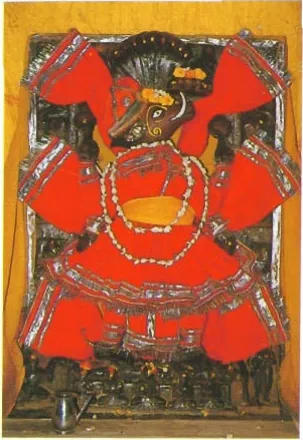
Where the sources differ
Accounts differ Which Varāha Deity of Mathurā the Kapila history belongs to.
- Śrī Vraja-maṇḍala Parikramā (2007) and the undated parikramā notes MathurāTo the black Deity, Kṛṣṇa-varāha or Ādi-varāha, worshipped by the sage Kapila.
- Vṛndāvana-Dhāma Ki Jaya! (c. 1986)Told under the Ādi-varāha temple, but the Deity is called Śveta-varāha and Kapila-varāha: 'Lord Śveta-varāha has been there ever since'.
- Varāha Purāṇa 163 (Kapila-varāha-māhātmya)Calls the Deity 'Kapila-vārāha' (v. 32) and 'Kapila' (vv. 50, 61); right after the installation (v. 66) it praises seeing 'Śveta'; the southern-petal image is 'resembling Keśava' (v. 21); no colour is given for the Kapila image.
- Garga-saṁhitā 5.25.8'Kapila-vārāha', Mathurā's chief minister (no colour given).
Accounts differ How the Varāha Deity first came into human hands.
- Varāha Purāṇa 163.22-26Varāha gave the image to King Māndhātā in Kṛta-yuga; the sage Kapila created the Varāha image in his mind and worshipped it.
- Garga-saṁhitā 5.25.4The brāhmaṇa Kapila received it from the Lord Himself.
- Śrī Vraja-maṇḍala Parikramā (2007), the undated parikramā notes Mathurā, Vṛndāvana-Dhāma Ki Jaya! (c. 1986)The sage Kapila, a worshipper of Ādi-varāha (Vṛndāvana-Dhāma Ki Jaya! (c. 1986): Kapila gave the Deity to Indra), with no mention of Māndhātā.
Accounts differ When Śatrughna asked Rāma for the Varāha Deity.
- Śrī Vraja-maṇḍala Parikramā (2007), the undated parikramā notes MathurāBefore leaving Ayodhyā to kill Lavaṇa.
- Varāha Purāṇa 163.57-59After Lavaṇa had been killed, when Rāma offered him a boon.
- Vṛndāvana-Dhāma Ki Jaya! (c. 1986)He brought the Deity with him when he went to Madhupurī to defeat the demons.
Accounts differ How long Rāma worshipped the Deity in Ayodhyā.
- Vṛndāvana-Dhāma Ki Jaya! (c. 1986)110 years.
- Varāha Purāṇa 163.51A thousand years passed, and ten more (varṣa-sahasraṁ daśottaram) before He sent Śatrughna against Lavaṇa.
The wording of these accounts is our summary of the sources, not a published translation.
Accounts differ The two Varāha appearances and their names.
- Śrī Vraja-maṇḍala Parikramā (2007), the undated parikramā notes MathurāKṛṣṇa-varāha (= Ādi-varāha) came from Brahmā's nostril in Svāyambhuva Manu's period (Brāhma-kalpa) and lifted the Earth; Śveta-varāha (Nṛ-varāha) came from the ocean in Cākṣuṣa Manu's period and killed Hiraṇyākṣa.
- Śrīla Prabhupāda, ŚB 3.13.16 purport (after Śrīla Jīva Gosvāmī)The chapter in which the boar comes from Brahmā's nostril (3.13.18) belongs to the Śveta-varāha millennium, with Cākṣuṣa-millennium topics also discussed.
- Śrīla Rūpa Gosvāmī, Laghu-bhāgavatāmṛta 1.4.28The present kalpa is called Śveta-vārāha.
More on this place
The Varāha Deity of Mathurā and its journey from Kapila to Śatrughna
References
23 references
- Śrī Vraja-maṇḍala Parikramā (2007), PDF p. 56
- Śrī Vraja-maṇḍala Parikramā (2007), PDF p. 57
- the undated parikramā notes Mathurā, ¶44
- Vṛndāvana-Dhāma Ki Jaya! (c. 1986), by Dhruva Mahārāja dāsa, PDF p. 20
- Vṛndāvana-Dhāma Ki Jaya! (c. 1986), by Dhruva Mahārāja dāsa, PDF p. 21
- Varāha Purāṇa, adhyāya 163, verses 23-25, Sanskrit Wikisource
- Varāha Purāṇa, adhyāya 163, verses 26-28, Sanskrit Wikisource
- Varāha Purāṇa, adhyāya 163, verses 32-33, Sanskrit Wikisource
- Varāha Purāṇa, adhyāya 163, verses 44-45, Sanskrit Wikisource
- Varāha Purāṇa, adhyāya 163, verses 48-50, Sanskrit Wikisource
- Varāha Purāṇa, adhyāya 163, verses 51-52, Sanskrit Wikisource
- Śrīla Rūpa Gosvāmī, Mathurā-māhātmya, v.444-446 (the chief Deities of Māthura; closing verses)
- Varāha Purāṇa, adhyāya 163, verses 20-22, Sanskrit Wikisource
- Varāha Purāṇa, adhyāya 163, verses 18-20, Sanskrit Wikisource
- Śrī Vraja-maṇḍala Parikramā (2007), PDF p. 30
- Śrīla Rūpa Gosvāmī, Mathurā-māhātmya, v.156-158 (continuing the lotus)
- Śrīla Narahari Cakravartī, Bhakti-ratnākara, Fifth Wave, printed p. 163 (1912 ed.), 2nd ed., 1912
- Varāha Purāṇa, adhyāya 163, verses 60-62, Sanskrit Wikisource
- Garga-saṁhitā, Mathurā-khaṇḍa (5) 25.4-6, Sanskrit Wikisource
- Garga-saṁhitā, Mathurā-khaṇḍa (5) 25.7-8, Sanskrit Wikisource
- Varāha Purāṇa, adhyāya 163, verses 64-66, Sanskrit Wikisource
- Śrī Vraja-maṇḍala Parikramā (2007), p. 86-87
- Vṛndāvana-Dhāma Ki Jaya! (c. 1986), by Dhruva Mahārāja dāsa, p. 2