Vilachu-kuṇḍa
बिलछू-कुण्ड Hindi name proposed
Also called Vilāsa-vadana
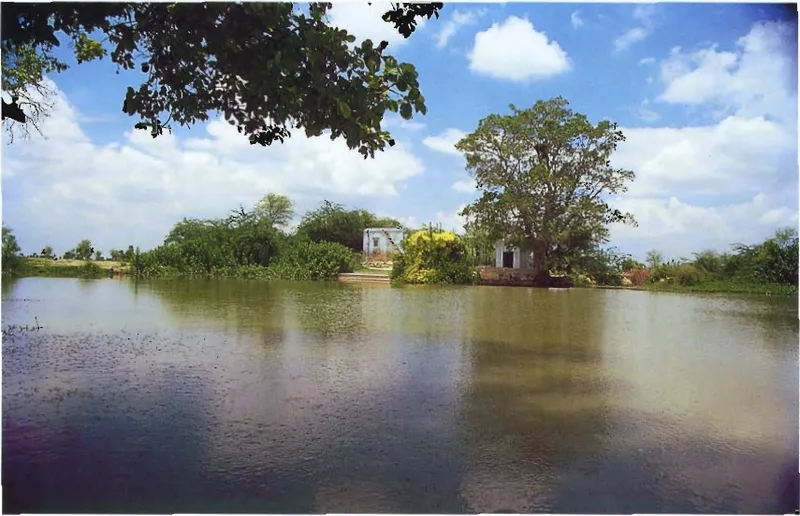
- What it is
- Vilachu-kuṇḍa, also written Bilachū-kuṇḍa, is a kuṇḍa (sacred pond) on the western side of the circuit of Govardhana Hill, just before Dāna-ghāṭī on the way into the town of Govardhana.
- Visiting
- Śrī Vraja-maṇḍala Parikramā (2007) numbers the kuṇḍa 37 in its round of Govardhana and has the pilgrim go on from it across Dāna-ghāṭī into the town; the key of the numbered chart of Govardhana lists …
- Parikramā
- Govardhana parikramā, station 39
- Places here
- Stone seat (Vilachu-kuṇḍa)
In short
Vilachu-kuṇḍa, also written Bilachū-kuṇḍa, is a kuṇḍa (sacred pond) on the western side of the circuit of Govardhana Hill, just before Dāna-ghāṭī on the way into the town of Govardhana.[1 +4] Two guidebooks call it a place of Rādhā and Kṛṣṇa's pastimes (vilāsa). Śrī Vraja-maṇḍala Parikramā (2007) gives it the other name Vilāsa-vadana; Govardhana Hill (2001) says that a forest called Vilāsa Vana once surrounded it and tells a story, from no known source, of how Rādhārāṇī lost an ankle-bell here; the story is not certain.[1 +1] Śrīla Prabhupāda names a village Bilachu near Gāṅṭhuli, but no statement of his about the kuṇḍa has been found in the works searched.[7]
Key facts
| Kind | kuṇḍa |
|---|---|
| Region · area | Govardhana |
| Also part of | Vilāsa Vana |
| On the parikramā | Govardhana parikramā, station 39 · the route |
Traditional accounts
Vilāsa Vana
Vilāsa Vana, the forest of pastimes (vilāsa), is named only by the guidebook Govardhana Hill (2001), which says that it used to surround the kuṇḍa and was one of the places where Rādhā and Kṛṣṇa enjoyed Their pastimes. No older text names a Vilāsa Vana at Govardhana.[6] Śrī Vraja-maṇḍala Parikramā (2007) gives the kuṇḍa itself the other name Vilāsa-vadana and calls it a place of Rādhā and Kṛṣṇa's pastimes; it does not speak of a forest, and whether the two books' names are connected is not certain.[1] Govardhana Hill writes that the forest "used to" surround the kuṇḍa, so it is not certain that any of it still stands.[6]
The stone seat
Govardhana Hill (2001) adds that there used to be a stone seat on the southern bank where, it says, the Divine Couple sat and talked sweetly together. It writes "used to" of the seat too, so it does not say that the seat still exists, and no other source mentions it, so it is not certain.[6]
The lost ankle-bell
The same book tells that Śrīmatī Rādhārāṇī once lost Her ankle-bell here. Kṛṣṇa teased Her by asking whether She was looking for His lost flute; then, to pacify Her, He dug the earth with His hands, brought up many ankle-bells of gold and silver and priceless gems, and asked which one was Hers. The book names no source for this story, and none has been found, so it is not certain where it comes from.[6]
Śrīla Prabhupāda
In his purport to Caitanya-caritāmṛta Madhya 18.37, Śrīla Prabhupāda names a village called Bilachu near Gāṅṭhuli-grāma.
In his purport to Caitanya-caritāmṛta Madhya 18.37, Śrīla Prabhupāda names a village called Bilachu near Gāṅṭhuli-grāma. He says nothing of a kuṇḍa, a forest or a pastime, and no source says that this village is the place of the kuṇḍa, so his words are not quoted here as being about it.[7]
Visiting today
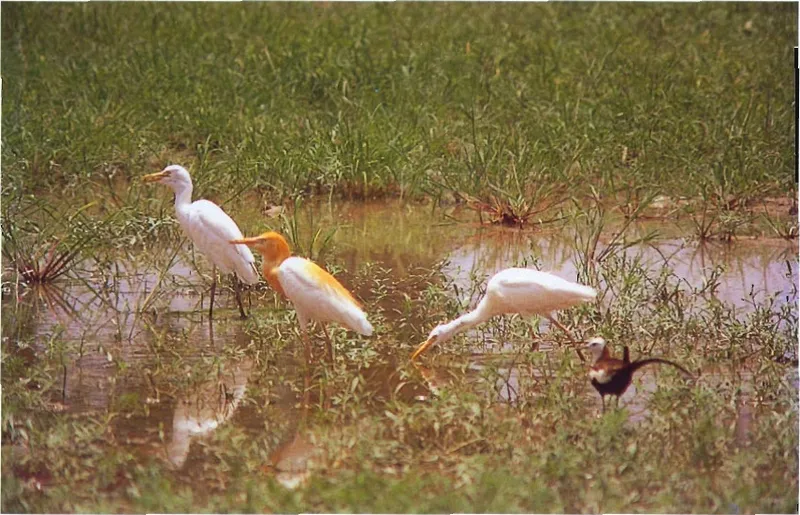
Śrī Vraja-maṇḍala Parikramā (2007) numbers the kuṇḍa 37 in its round of Govardhana and has the pilgrim go on from it across Dāna-ghāṭī into the town; the key of the numbered chart of Govardhana lists it as no. 66. Govardhana Hill (2001) shows it as a quiet pond with water-birds.[1 +4]
Location
| Where it is | Town map: far west[11] |
|---|---|
| On the numbered Govardhana chart | 66 (printed as “Vilachu Kunda”)[12] |
Places at Vilachu-kuṇḍa
2 places
Also described on this page
- Vilāsa Vana forest
Nearby places
Govardhana (town) · Govardhana
Pictures
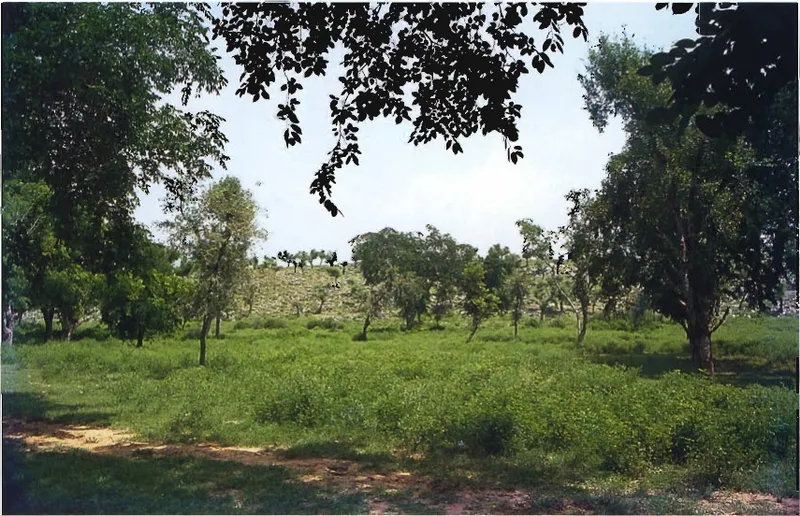
2 pictures
Where the sources differ
According to the local tradition recorded in Govardhana Hill (2001), this kuṇḍa is connected with the original Deity of Harideva, which the book says was later taken to Rasadhan near Kanpur; it names no source for this, so it is not certain. The accounts of how the Deity left Govardhana, none of which mentions this kuṇḍa, are set side by side on the page of Harideva.[6 +3] Read more: Harideva of Govardhana: the Deity, Śrī Caitanya's visit and the temple →
More on this place
Harideva of Govardhana: the Deity, Śrī Caitanya's visit and the temple
References
12 references
- Śrī Vraja-maṇḍala Parikramā (2007), PDF p. 134
- Śrī Vraja-maṇḍala Parikramā (2007), PDF p. 110
- Govardhana Hill: India's Most Sacred Mountain (2001), Rajasekhara dasa Brahmacari, PDF p. 146
- the key of the numbered Govardhana chart, ¶69
- Śrī Vraja-maṇḍala Parikramā (2007), PDF p. 131
- Govardhana Hill: India's Most Sacred Mountain (2001), Rajasekhara dasa Brahmacari, PDF p. 147
- Śrīla Prabhupāda, Śrī Caitanya-caritāmṛta, Madhya-līlā 18.37, purport · vedabase.io
- Govardhana Hill: India's Most Sacred Mountain (2001), Rajasekhara dasa Brahmacari, PDF p. 76
- A. W. Entwistle, ch. 8 §14.4 'Haridev', printed p. 344, Egbert Forsten, Groningen, 1987
- Prabhudayāl Mītal, 'Braj-yātrā', Govardhana: 'Śrī Harideva jī', printed p. 108
- Śrī Vraja-maṇḍala Parikramā (2007), p. 242-243
- Numbered list of the Govardhana sites (key of the Govardhana chart)