Harideva of Govardhana: the Deity, Śrī Caitanya's visit and the temple
गोवर्धन के श्रीहरिदेव: विग्रह, श्रीचैतन्य का दर्शन और मन्दिर
In short
Harideva is the Deity (sacred form) of the town of Govardhana, Kṛṣṇa as the lifter of the hill, on the bank of Mānasī-gaṅgā. The Garga-saṁhitā says Vajranābha installed Him. The Caitanya-caritāmṛta tells that Śrī Caitanya Mahāprabhu danced before Him and spent a night in His temple. Who built the temple, the sources do not agree.[1–11]
On this page
At a glance
- The Purāṇa: the Varāha Purāṇa places Hari who dwells at Govardhana on the western petal of the lotus of Mathurā.[12–15]
- The Caitanya-caritāmṛta calls Harideva an incarnation of Nārāyaṇa, in Śrīla Prabhupāda's translation.[13, 14]
- The form: Kṛṣṇa as the seven-year-old lifter of the hill, as the Vraja-bhakti-vilāsa's prayer to Him says.[16, 17]
- The installation: the Garga-saṁhitā names Vajranābha, Kṛṣṇa's great-grandson, who installed Harideva on Govardhana among six images of Hari.[5]
- Śrī Caitanya Mahāprabhu: the Caitanya-caritāmṛta says He saw Harideva, danced before Him and spent the night in His temple (Madhya 18.17–22).[6 +7]
- The custom: according to a 2001 guidebook, pilgrims bathe in Mānasī-gaṅgā and see Harideva before they walk round the hill.[17]
Who is Harideva of Govardhana?
The guidebook Śrī Vraja-maṇḍala Parikramā (2007) places His temple on the southern bank of Mānasī-gaṅgā and calls Him the presiding Deity of Girirāja-Govardhana.[1–4] More than fifteen books speak of Him: Purāṇas (old scriptures), commentaries on the Bhāgavatam, lives of Śrī Caitanya Mahāprabhu, pilgrims' handbooks and historians. They agree on His name and His form, and on little else. So each is given here in turn, from the scriptures and the Gosvāmīs to the temple's history.[6–17]
The Varāha Purāṇa pictures the land of Mathurā as a lotus. Keśava stands in its centre. On the western petal is the god Hari who lives at Govardhana, and seeing Him takes away all grief (163.15–18, summarised here, not translated).[12–15] The Purāṇa says the god Hari, not the single name Harideva. The Caitanya-caritāmṛta reads the verse as a name.[13]
Names this place“Harideva is an incarnation of Nārāyaṇa, and His residence is on the western petal of the lotus of Mathurā.”
Śrīla Prabhupāda, Śrī Caitanya-caritāmṛta, Madhya-līlā 18.18, translation · vedabase.io
The Bengali calls Him Nārāyaṇa's ādi parakāśa, an original manifestation, which Śrīla Prabhupāda renders an incarnation of Nārāyaṇa.[13, 14] The Bhakti-ratnākara of Śrīla Narahari Cakravartī Ṭhākura describes the same lotus and puts the charming Harideva who dwells at Govardhana on its western petal.[15, 18]
Harideva and the walk round the hill
Another verse of the Varāha Purāṇa joins Him to the walk around the hill. One who has bathed in the Mānasa-gaṅgā, seen Hari at Govardhana and walked around Annakūṭa, as it calls the hill, has no more reason to grieve (164.11).[20] Śrīla Rūpa Gosvāmī gives this verse, and the lotus verse too, in his Mathurā-māhātmya. The Bhakti-ratnākara repeats the promise with the name Harideva in place of Hari (summarised here, not translated).[20–24] The walk itself is told in “Govardhana parikramā”.[20]
What the commentators on the Bhāgavatam say
Two commentators on the Bhāgavatam name Him (summarised here, not translated). Explaining how Nanda's people settled in Vṛndāvana (10.11.35), Śrīla Jīva Gosvāmī quotes the Ādi-varāha. Those who die in the land north of Harideva and south of Kāliya, it says, are not born again. Here, he explains, Harideva means the chief Deity of Govardhana.[3]
In the Bhāgavatam the gopīs, the cowherd girls, praise Govardhana as the best of Hari's servants (10.21.18). On this verse, Śrīla Viśvanātha Cakravartī Ṭhākura says that the gopīs plan a visit to the hill. They will bathe in the Mānasa-gaṅgā and see its chief Deity, the Nārāyaṇa named Śrī Harideva. Their elders cannot forbid such an outing, and Kṛṣṇa plays right there.[4]
Why is Harideva the lifter of the hill?
The Bhāgavatam tells that Kṛṣṇa lifted Govardhana with one hand, as a child lifts a mushroom (10.25.19). Afterwards the cowherd men asked Nanda how a seven-year-old boy could hold up the great hill with one hand (10.26.3).[25–28] Śrīla Prabhupāda tells it in the Kṛṣṇa book.[27]
General teaching (does not name the place)“Lord Kṛṣṇa immediately picked up Govardhana Hill with one hand, exactly as a child picks up a mushroom from the ground. … They were simply astonished to see how Kṛṣṇa was holding up the mountain with the little finger of His left hand.”
Śrīla Prabhupāda, Kṛṣṇa, the Supreme Personality of Godhead (Kṛṣṇa book), Chapter 25, 'Devastating Rainfall in Vṛndāvana' · vedabase.io
Harideva is worshipped in this form. The Vraja-bhakti-vilāsa of Śrīla Nārāyaṇa Bhaṭṭa Gosvāmī, a pilgrims' handbook, gives a prayer to Him. It bows to Harideva, who lifted the king of mountains with His hand, the protector of the cowherds, in the form of a seven-year-old. The book says the prayer is from the Skanda Purāṇa; whether it is there is not certain (summarised here, not translated).[16] Govardhana Hill (2001) describes the Deity as Kṛṣṇa aged seven, holding the hill in His left hand and the flute in the other. The Bengali Vṛndāvana-kathā of Pulinbihārī Datta (1920) calls Him a Giridhārī form, the holder of the hill.[16 +2]
The commentators on the lifting take the one hand to be the left. Śrīla Sanātana Gosvāmī adds that the hand is seen so in the Deity. Śrīla Jīva Gosvāmī explains the word playfully as a pose, with the right hand on the hip, because the ancient Deity is seen so (both summarised here, not translated).[25 +2] Neither says which Deity he means, so it cannot be said that he means Harideva.[25 +2] The pastime itself is told in “The lifting of Govardhana Hill, Indra's homage and the name Govinda”.[25–28]
Who installed Harideva?
The Garga-saṁhitā tells that Vajra, also called Vajranābha, Kṛṣṇa's great-grandson, held a horse sacrifice at Mathurā. Then he installed six images of Hari in Vraja: Dīrgha-viṣṇu and Keśava at Mathurā, Govinda in Vṛndāvana, Harideva on the lord of hills, Gokuleśa in Gokula, and Bala near Gokula (Aśvamedha-khaṇḍa 62.26–27, summarised here, not translated).[5]
The Skanda Purāṇa's Bhāgavata-māhātmya says that Vajra, by the sage Śāṇḍilya's grace, found and named the places of Kṛṣṇa's pastimes and installed the forms of Govinda, Harideva and others. It does not say where. The English translation published by Motilal Banarsidass reads the compound as Hari and other gods instead of a name.[31]
How did Śrī Caitanya Mahāprabhu see Harideva?
The Caitanya-caritāmṛta (Madhya 18.17–22) tells that Śrī Caitanya Mahāprabhu came from Sumanas Lake to the village of Govardhana, saw Harideva and offered obeisances.[6 +2]
Names this place“Mad with ecstatic love, Śrī Caitanya Mahāprabhu began to dance before the Harideva Deity. Hearing of the Lord’s wonderful activities, all the people came to see Him.”
Śrīla Prabhupāda, Śrī Caitanya-caritāmṛta, Madhya-līlā 18.19, translation · vedabase.io
The priests who served Harideva received Him well.[8, 33] He took His meal at Brahma-kuṇḍa and spent the night in Harideva's temple. There He thought about how He might see the Deity Gopāla without climbing the hill. The next morning He bathed in the Mānasa-gaṅgā and set out around Govardhana (18.32).[6 +6] The story of that Gopāla is told in “The Gopāla Deity of Govardhana”.[9]
The Bhakti-ratnākara adds a scene before the darśana, the respectful seeing of the Deity. At Dāna-ghāṭī, Mahāprabhu asked the brāhmaṇa with Him about Kṛṣṇa's toll pastimes and smiled to hear them. When He danced before Harideva, the weeping people said that He was Harideva come down to earth; the words can also mean Hari, God, come down (summarised here, not translated).[18] In the same book, Śrīla Rāghava Paṇḍita takes darśana of Harideva with Śrīla Śrīnivāsa Ācārya before speaking the glories of Govardhana.[18, 24]
Is Hari-rāya the same as Harideva?
Several texts speak of a Deity on Govardhana named Hari-rāya. In Śrīla Rūpa Gosvāmī's play Dāna-keli-kaumudī, the gopī Campakalatā points out a hilltop place of Govardhana adorned with Brahmā's kuṇḍa (pond). Citrā answers that the Nārāyaṇa named Hari-rāya, affectionate to His devotees, dwells right there.[22] In Śrīla Murāri Gupta's account of Mahāprabhu's visit (Kṛṣṇa-caitanya-caritāmṛta 4.8.13), His guide shows Him the Lord called Hari-rāya on the hill (both summarised here, not translated).[19]
The two names are close, and the Dāna-keli-kaumudī, like the Caitanya-caritāmṛta, calls the Deity it names Nārāyaṇa. Still, none of these texts says that Hari-rāya is Harideva. The Caitanya-caritāmṛta places Harideva in the village of Govardhana, while these texts set Hari-rāya on the hill.[6 +5]
The Vraja-bhakti-vilāsa lists the Harideva temple standing upon the Govardhana mountain. That may mean the summit or the hill country in which the town lies, and it does not say which.[36] So whether Hari-rāya and Harideva are one Deity is still uncertain. No source proves it or rules it out, so the two names are given as their texts give them.[19, 35]
How do the guidebooks describe His worship?
Govardhana Hill (2001) says that Vaiṣṇavas and the people of Vraja first bathe in Mānasī-gaṅgā and then take darśana of Harideva, before they begin the parikramā, the walk round Govardhana.[17] It traces the custom to Śrīla Rūpa Gosvāmī's Mathurā-māhātmya, which gives the Varāha verse described above; the verse there is a rule for pilgrims, not an account of Mahāprabhu.[21 +3]
The undated notes Govardhana say that the walk around the hill is held incomplete without His blessings.[1–4] Śrī Vraja-maṇḍala Parikramā (2007) adds that on Dīpāvalī great numbers of people bathe in the lake, take darśana of Śrī Harideva and set ghee lamps on all its banks.[38] The lamps of that night are told in “How Mānasī-gaṅgā came to be: the Gaṅgā of the mind at Govardhana”.[38]
Where the sources differ
The guidebooks add a story of the name. The local tradition is recorded in Govardhana Hill (2001) and in the undated notes. In it, Rādhā and the gopīs, waiting for Kṛṣṇa near Mānasī-gaṅgā, are said to have called out "Harideva" in the pain of separation. Then, it is said, a Deity of Kṛṣṇa holding the hill and the flute appeared. No scripture or Gosvāmī's book is known to tell it; the Vraja-bhakti-vilāsa links the gopīs' calling of the name with a pond instead, the kuṇḍa named Śrī Harideva.[2 +2]
Accounts differ Accounts that connect the name 'Harideva' with the gopīs, and the origin of the Deity
- Govardhana Hill: India's Most Sacred Mountain (2001) and the undated parikramā notes Govardhanawhile waiting for Kṛṣṇa near Mānasī-gaṅgā the gopīs chanted 'Harideva' in separation and a Deity of Kṛṣṇa holding Govardhana appeared, whom they worshipped (the undated parikramā notes Govardhana: 'it is said')
- Vraja-bhakti-vilāsa, printed p. 115the gopīs brought the boy Kṛṣṇa and bathed Him happily, saying 'Harideva' again and again, and made the kuṇḍa named Śrī Harideva (a Harideva-kuṇḍa, not the temple Deity)
- Garga-saṁhitā 10.62.26; Skanda Purāṇa, Bhāgavata-māhātmya 2.6Harideva was installed by Vajra; no appearance story
How many Deities Vajranābha installed is told differently as well: six in the Garga-saṁhitā, four in the undated notes Govardhana.[2 +2]
Accounts differ Which and how many Deities Vajranābha installed in Vraja
- Garga-saṁhitā, Aśvamedha-khaṇḍa 62.26-28six images of Hari: Dīrgha-viṣṇu and Keśava at Mathurā, Govinda in Vṛndāvana, Harideva on Govardhana, Gokuleśa in Gokula, Bala one yojana from Gokula; and five other images of Bala in Vraja-maṇḍala
- Skanda Purāṇa, Bhāgavata-māhātmya 2.6the forms of Govinda, Harideva and others (no number)
- the undated parikramā notes Govardhanafour Deva-vigrahas: Harideva at Govardhana, Govindadeva at Vṛndāvana, Keśavadeva at Mathurā and Baladeva at Mahāvana
The order of events at Mahāprabhu's visit is told differently. In the Caitanya-caritāmṛta the darśana comes first and the bath the next morning. Govardhana Hill (2001) has Mahāprabhu bathe first and then see Harideva. It also says that He danced for hours, and it dates the visit to 1515. The Caitanya-caritāmṛta gives neither detail, so they may come from the guidebook alone.[2 +10]
Accounts differ Order of Mahāprabhu's bath in Mānasa-gaṅgā, His darśana of Harideva and His stop at Brahma-kuṇḍa
- Caitanya-caritāmṛta, Madhya 18.17-22 and 18.32He came to Govardhana village and saw Harideva, danced, took His bath and meal at Brahma-kuṇḍa, spent the night in Harideva's temple, and bathed in Mānasa-gaṅgā the next morning before the parikramā
- Govardhana Hill: India's Most Sacred Mountain (2001)Mahāprabhu first bathed in Mānasī-gaṅgā and then saw Harideva (as Śrīla Rūpa Gosvāmī's Mathurā-māhātmya recommends), and 'it is said' He then rested at Brahma-kuṇḍa
- Varāha Purāṇa 164.11 and Bhakti-ratnākara (1912 p. 205)for the pilgrim: bathe in Mānasa-gaṅgā, see Hari (Bhakti-ratnākara: Harideva) at Govardhana, then go round Annakūṭa-Govardhana (a prescribed order, not an account of Mahāprabhu)
The Caitanya-caritāmṛta shows that Harideva had a temple and priests in Mahāprabhu's time, but it names no builder. The later sources name several people who may have built it, and no inscription or dated document is known that decides between them.[6 +10]
- Rājā Bhagavān dāsa of Āmer, father of Rājā Mān Singh. Govardhana Hill (2001) dates the red sandstone temple to the late sixteenth century, a date that may not be exact. The historian Prabhudayāl Mītal (1966) gives Saṁvat 1637 (a year of the Indian Vikrama calendar), about 1580, and A. W. Entwistle (1987) credits it to his reign.[39–43]
- Bihar Mal of Āmer, Bhagavān dāsa's father: Entwistle (1987), on another page of the same book.[41, 42]
- A devotee named Bhagavān dāsa of Mathurā, who lived there by the emperor's grant: the Bhaktamāla tradition, in Priyādāsa's verse and Rūpakalā's prose commentary (1904). It does not say that he is the Rājā of Āmer, and he may be a different person.[44]
- Ṭoḍaramal, Akbar's revenue minister: the Vṛndāvana-kathā (1920), which cites no source, so the claim may not be reliable.[29]
Accounts differ Who built the stone ghāṭas of Mānasī-gaṅgā and the Harideva temple: the names the sources give (a Jaipur or Āmer king, the father or the son, a devotee, a minister)
- Śrī Vraja-maṇḍala Parikramā (2007)King Bhagavān dāsa, the father of Māna Singh, a king of Jaipura, built the stone ghāṭas of Mānasī-gaṅgā
- Govardhana Hill: India's Most Sacred Mountain (2001)Rāja Bhagavān Singh of Jaipur, father of Rāja Man Singh, built the present red sandstone Harideva temple in the late sixteenth century
- A. W. Entwistle (1987), a historian, reporting F. S. GrowseFollowing Growse, Entwistle names Rājā Mān Singh as the first builder of the ghāṭas around Mānasī-gaṅgā, and Mān Singh's father as the builder of the nearby Harideva temple.
- Prabhudayāl Mītal (1966), a historianAccording to Mītal, Rājā Bhagavānadāsa of Āmer built the Harideva temple in about Saṁvat 1637 (about 1580); his son Rājā Mānasiṁha lined the tank with masonry, so that it was also known by his name; the ghāṭas on its four sides were added over time by pious kings and merchants.
The sources also differ on whether the building standing today is that first temple. Govardhana Hill (2001) says the present red sandstone temple is the sixteenth-century one, which may be so. Entwistle (1987) describes the standing building as the temple of Bhagavān dāsa's reign, restored in the 1870s by a merchant from Aring. Mītal (1966), however, writes that the first temple was destroyed in Aurangzeb's time, in Saṁvat 1726, and that the one standing when he wrote was built long after.[39–43]
Accounts differ Whether the Harideva temple standing today is the one built in Rājā Bhagavān dāsa's time (late sixteenth century) or a later rebuilding
- Govardhana Hill: India's Most Sacred Mountain (2001)The present red sandstone Harideva temple was built in the late sixteenth century by Rāja Bhagavān Singh of Jaipur, father of Rāja Man Singh.
- A. W. Entwistle (1987), a historianEntwistle dates the temple to the reign of Rājā Bhagavān Dās of Āmer and treats the standing building as that temple. Following Growse, he adds that two further towers were cut down to the level of the nave roof and that a merchant from Aring restored the temple in the 1870s.
- Mītal (1966), p. 108The grand temple built by Rājā Bhagavānadāsa of Āmer in Saṁvat 1637 was destroyed by Aurangzeb in Saṁvat 1726; the temple standing today was built long after, and its Deity is not old either.
The original Deity, too, is reported to have left Govardhana, and the reports differ. Govardhana Hill (2001) says that in Aurangzeb's reign He was taken to Badhauli near Rasadhan, in the region of Kanpur. It says that the Deity worshipped in 2001 is a pratibhū-mūrti, a Deity installed in His place. Mītal (1966) reports, as hearsay, that the old images of Harideva and of Keśavadeva of Mathurā were taken out of Braj. They are said to be in a village of Kanpur district. Entwistle (1987) reports from local scholars that the Deity was removed in Aurangzeb's reign to a village in Kanpur district. He sets beside it a tradition that the two Deities were taken away by Himmat Bahadur. None of them cites a document.[17 +2]
Accounts differ When and by whom the original Harideva Deity was taken away from Govardhana
- Govardhana Hill: India's Most Sacred Mountain (2001)During Aurangzeb's reign the original Harideva was taken to Badhauli near Rasadhan, in the vicinity of Kanpur; the Deity now worshipped is a pratibhū-mūrti.
- Entwistle (1987), p. 344, reporting 'local scholars'The deity was removed during the reign of Aurangzeb and, like Keśavadeva of Mathurā, taken to a village in Kanpur district.
- Mītal (1966), p. 108 ('it is said')The old images of Harideva and Keśavadeva were saved from the invaders and taken out of Braj; they are said to be now in the village of Rajadhāna-Budhaulī, Kanpur district (no ruler named for the removal; on the same page he says Aurangzeb destroyed the temple in Saṁvat 1726).
- Nawal Singh Pradhan, as reported by Entwistle (1987), p. 344The two deities (Harideva and Keśavadeva) were taken away by Himmat Bahadur.
Places in this article
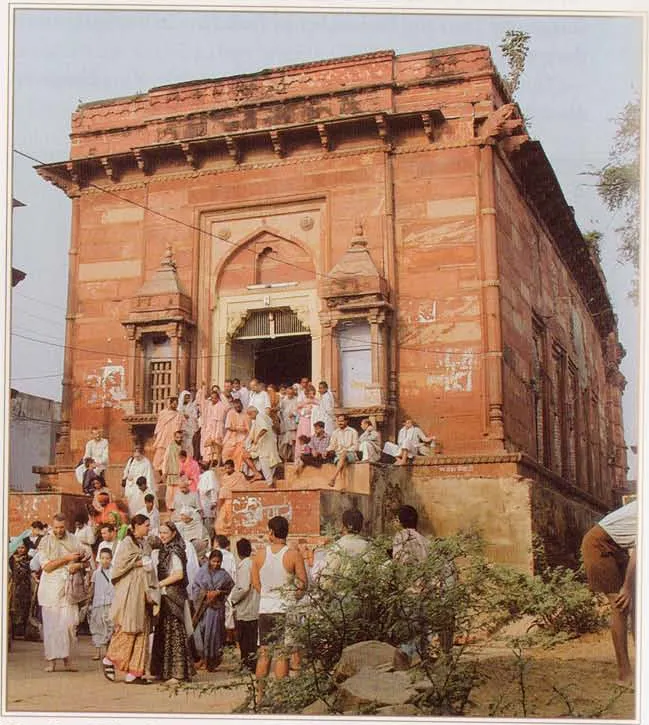
Harideva Mandira
हरिदेव मन्दिरHarideva, Kṛṣṇa as the lifter of Govardhana Hill, is the Deity of Govardhana town, worshipped in His temple on the southern bank of Mānasī-gaṅgā; Śrī Vraja-maṇḍala Parikr …
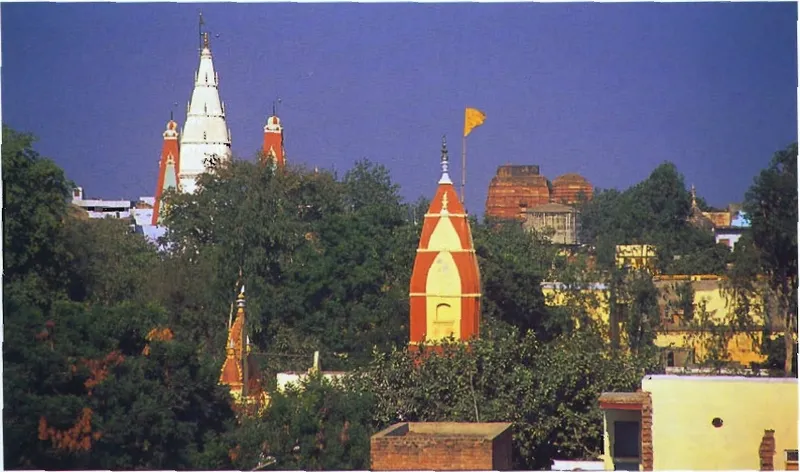
Govardhana (town)
गोवर्धन (कस्बा)Govardhana town lies at Govardhana Hill, around the lake Mānasī-gaṅgā, which the guidebook Govardhana Hill (2001) places in the middle of the town.
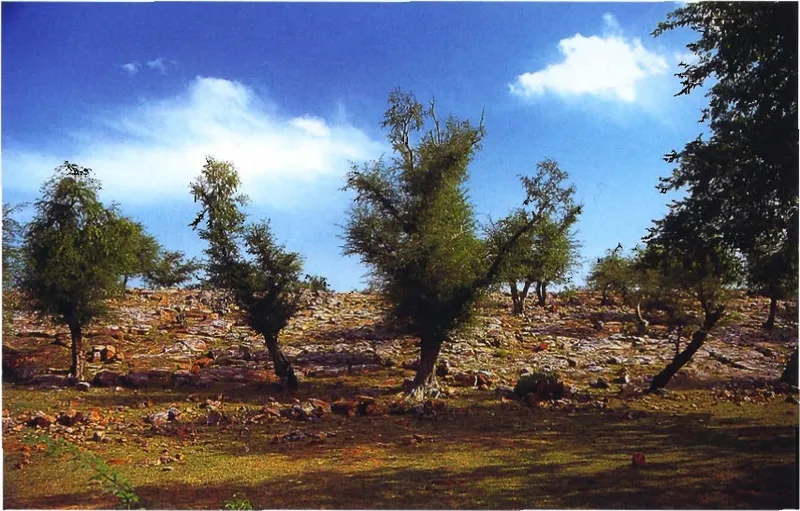
Govardhana
गोवर्धनGovardhana is the hill that Kṛṣṇa lifted with one hand and held up for seven days, so that the people and cows of Vraja could shelter under it from Indra's rain.
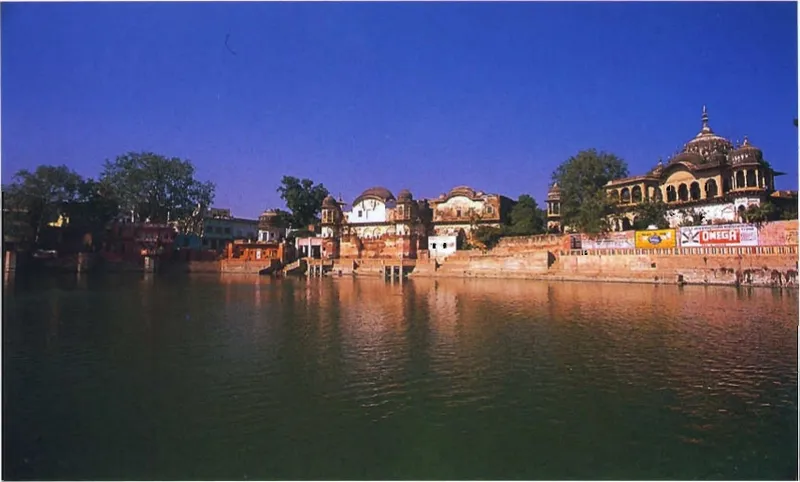
Mānasī-gaṅgā
मानसी-गंगाMānasī-gaṅgā is the large lake in the middle of Govardhana town, on Govardhana Hill.
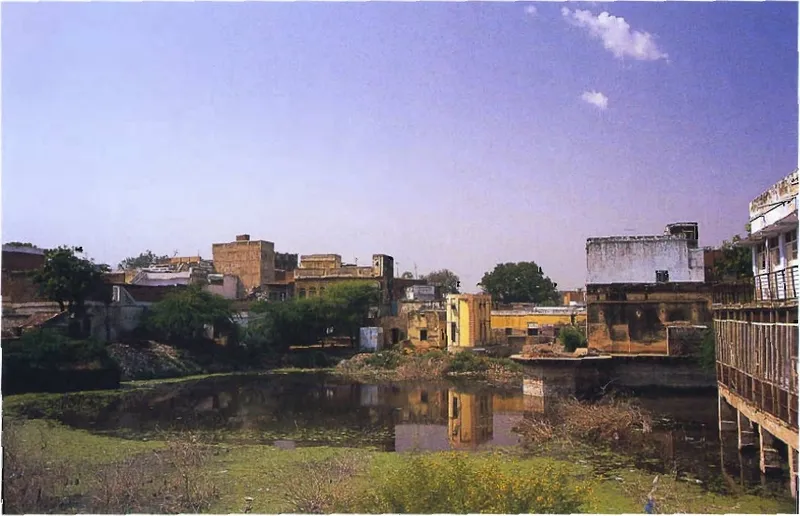
Brahma-kuṇḍa (Govardhana)
ब्रह्म-कुण्ड (गोवर्धन)Brahma-kuṇḍa is a kuṇḍa (sacred pond) in the town of Govardhana, which the guidebooks place below the temple of the goddess Manasā-devī on the south bank of Mānasī-gaṅgā.
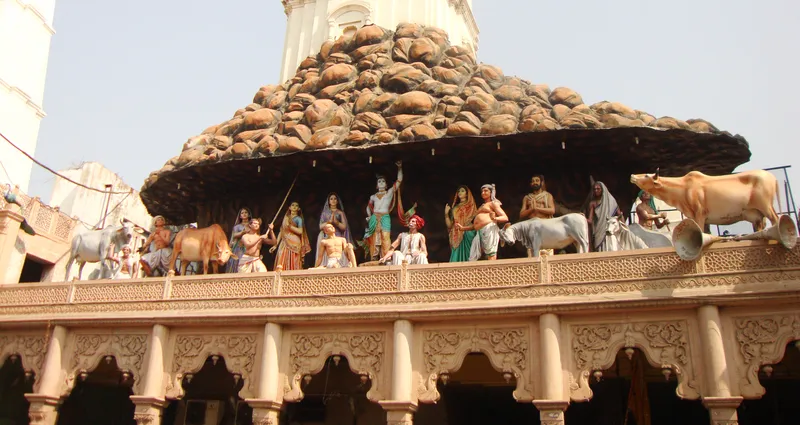
Dāna-ghāṭī
दान-घाटीDāna-ghāṭī, the pass (ghāṭī) of the toll (dāna), is the place where the road from Mathurā crosses Govardhana Hill, as the guidebooks describe it.
Questions and answers
The Garga-saṁhitā says that Vajranābha, Kṛṣṇa's great-grandson, installed Harideva on Govardhana as one of six images of Hari in Vraja.[5]
Yes. The Caitanya-caritāmṛta (Madhya 18.17–22) says He came to the village of Govardhana, saw Harideva, danced before Him in ecstatic love and spent the night in His temple.[6–11]
Kṛṣṇa as the lifter of Govardhana. The Vraja-bhakti-vilāsa's prayer calls Him the seven-year-old who lifted the king of mountains, and a 2001 guidebook describes Him holding the hill in His left hand.[16, 17]
The sources differ. The historians Mītal and Entwistle name Rājā Bhagavān dāsa of Āmer, around 1580. On another page Entwistle names his father Bihar Mal, and other books name other builders, set out above.[40 +2]
In the town of Govardhana, on the southern bank of Mānasī-gaṅgā, according to the 2007 guidebook; the Caitanya-caritāmṛta places Harideva in the village of Govardhana.[1 +6]
The Varāha Purāṇa joins the bath in Mānasa-gaṅgā, the sight of Hari at Govardhana and the walk round the hill. A 2001 guidebook records the custom of seeing Harideva before setting out.[17, 20]
Sources
- Śrī Vraja-maṇḍala Parikramā (2007), PDF p. 118
- the undated parikramā notes Govardhana, ¶53
- Śrīla Jīva Gosvāmī: commentary on ŚB 10.11.35, Bhagavata Vidya Pith edition, ed. Bhagavata Rishi and Krishna Shankar Shastri, 1996
- Śrīla Viśvanātha Cakravartī Ṭhākura: commentary on ŚB 10.21.18, Bhagavata Vidya Pith edition, ed. Bhagavata Rishi and Krishna Shankar Shastri, 1996
- Garga-saṁhitā, Aśvamedha-khaṇḍa (10), adhyāya 62, verses 26-27, Sanskrit Wikisource
- Śrīla Kṛṣṇadāsa Kavirāja Gosvāmī, Śrī Caitanya-caritāmṛta, CC Madhya-līlā 18.17, online edition · vedabase.io
- Śrīla Kṛṣṇadāsa Kavirāja Gosvāmī, Śrī Caitanya-caritāmṛta, Madhya-līlā 18.19, online edition · vedabase.io
- Śrīla Kṛṣṇadāsa Kavirāja Gosvāmī, Śrī Caitanya-caritāmṛta, CC Madhya-līlā 18.20, online edition · vedabase.io
- Śrīla Kṛṣṇadāsa Kavirāja Gosvāmī, Śrī Caitanya-caritāmṛta, CC Madhya-līlā 18.22, online edition · vedabase.io
- Śrīla Prabhupāda, Śrī Caitanya-caritāmṛta, Madhya-līlā 18.17, translation · vedabase.io
- Śrīla Prabhupāda, Śrī Caitanya-caritāmṛta, Madhya-līlā 18.19, translation · vedabase.io
- Varāha Purāṇa, adhyāya 163, verses 16-18, Sanskrit Wikisource
- Śrīla Kṛṣṇadāsa Kavirāja Gosvāmī, Śrī Caitanya-caritāmṛta, CC Madhya-līlā 18.18, online edition · vedabase.io
- Śrīla Prabhupāda, Śrī Caitanya-caritāmṛta, Madhya-līlā 18.18, translation · vedabase.io
- Śrīla Narahari Cakravartī, Bhakti-ratnākara, Fifth Wave, 1912 ed. p. 163, 2nd ed., 1912
- Śrīla Nārāyaṇa Bhaṭṭa, Vraja-bhakti-vilāsa, Govardhana section, printed p. 112, prayer 3, 1st ed., publ. Bābā Kṛṣṇadāsa, Kusuma-sarovara, Saṁvat 2008
- Govardhana Hill: India's Most Sacred Mountain (2001), Rajasekhara dasa Brahmacari, PDF p. 76
- Śrīla Narahari Cakravartī, Bhakti-ratnākara, Fifth Wave, 1912 ed. pp. 203-204, 2nd ed., 1912
- Kṛṣṇa-caitanya-caritāmṛta of Murāri Gupta, prakrama 4, sarga 8, v.13
- Varāha Purāṇa, adhyāya 164 (Annakūṭa-parikrama-prabhāva), verses 11-12a, Sanskrit Wikisource
Show all 44 references
- Śrīla Rūpa Gosvāmī, Mathurā-māhātmya vv.400-401, in the section 'atha śrī-govardhanasya' (v.399), quoting the Ādi-varāha
- Śrīla Rūpa Gosvāmī, Dāna-keli-kaumudī, Prakrit prose of Campakalatā and Citrā before v.23, after the undated edition published by Krishna Das of Kusum Sarovar
- Govardhana Hill: India's Most Sacred Mountain (2001), Rajasekhara dasa Brahmacari, PDF p. 38
- Śrīla Narahari Cakravartī, Bhakti-ratnākara, Fifth Wave, 1912 ed. p. 205, 2nd ed., 1912
- Śrīmad-Bhāgavatam 10.25.19, GRETIL
- Śrīmad-Bhāgavatam 10.26.3, GRETIL
- Śrīla Prabhupāda, Kṛṣṇa, the Supreme Personality of Godhead (Kṛṣṇa book), Chapter 25, 'Devastating Rainfall in Vṛndāvana' · vedabase.io
- Śrīla Prabhupāda, Kṛṣṇa, the Supreme Personality of Godhead (Kṛṣṇa book), Chapter 26, 'Wonderful Kṛṣṇa' · vedabase.io
- Vṛndāvana-kathā, chapter 1 (prathama pariccheda), printed p. 9
- Śrīla Jīva Gosvāmī: commentary on ŚB 10.25.19, Bhagavata Vidya Pith edition, ed. Bhagavata Rishi and Krishna Shankar Shastri, 1996
- Skanda Purāṇa, Vaiṣṇava-khaṇḍa (2), Bhāgavata-māhātmya, adhyāya 2, verses 4-6, Sanskrit Wikisource
- Śrīla Prabhupāda, Śrī Caitanya-caritāmṛta, Madhya-līlā 18, chapter summary (Prabhupāda's English of Bhaktivinoda Ṭhākura's Amṛta-pravāha-bhāṣya summary) · vedabase.io
- Śrīla Prabhupāda, Śrī Caitanya-caritāmṛta, Madhya-līlā 18.20, translation · vedabase.io
- Śrīla Prabhupāda, Śrī Caitanya-caritāmṛta, Madhya-līlā 18.22, translation · vedabase.io
- Śrīla Locana dāsa Ṭhākura, Caitanya-maṅgala, Śeṣa-khaṇḍa, 1903 ed. printed p. 174, right column
- Śrīla Nārāyaṇa Bhaṭṭa, Vraja-bhakti-vilāsa, list of the sacred spots (liṅga) of Govardhana, printed p. 47, section 50, 1st ed., publ. Bābā Kṛṣṇadāsa, Kusuma-sarovara, Saṁvat 2008
- Vṛndāvana-Dhāma Ki Jaya! (c. 1986), by Dhruva Mahārāja dāsa, PDF p. 39
- Śrī Vraja-maṇḍala Parikramā (2007), PDF p. 117
- Govardhana Hill: India's Most Sacred Mountain (2001), Rajasekhara dasa Brahmacari, PDF p. 78
- A. W. Entwistle, ch. 8 §14.4 'Haridev', printed p. 344, Egbert Forsten, Groningen, 1987
- A. W. Entwistle, ch. 5 §12 'Akbar and his Hindu associates' (the Kachhwāhā rulers of Amber), printed p. 159, Egbert Forsten, Groningen, 1987
- A. W. Entwistle, ch. 6 §13 'The yogapitha theme (PP, GLA, VRC, AY, etc.)', printed p. 248, Egbert Forsten, Groningen, 1987
- Prabhudayāl Mītal, 'Braj-yātrā', Govardhana: 'Śrī Harideva jī', printed p. 108
- Bhaktamāla of Nābhā dāsa with Priyādāsa's kavittas and Rūpakalā's prose tilaka, entry on Śrī Bhagavān dāsa: Priyādāsa's ṭīkā kavitta 620, printed p. 1290, and Rūpakalā's prose (vārtika tilaka), printed p. 1291
Further sources
- Śrī Caitanya-caritāmṛta, Madhya 18.17–32, translation by Śrīla Prabhupāda; Kṛṣṇa, the Supreme Personality of Godhead, chapter 25 (BBT).
- Śrīmad-Bhāgavatam 10.11.35, 10.21.18, 10.25.19, 10.26.3, with the commentaries of Śrīla Sanātana Gosvāmī, Śrīla Jīva Gosvāmī and Śrīla Viśvanātha Cakravartī Ṭhākura (Sanskrit; summarised here, not translated).
- Varāha Purāṇa 163–164; Garga-saṁhitā, Aśvamedha-khaṇḍa 62; Skanda Purāṇa, Bhāgavata-māhātmya; Śrīla Rūpa Gosvāmī, Mathurā-māhātmya and Dāna-keli-kaumudī; Vraja-bhakti-vilāsa; Bhakti-ratnākara; Śrīla Murāri Gupta, Kṛṣṇa-caitanya-caritāmṛta (summarised here, not translated).
- Bhaktamāla with Priyādāsa and Rūpakalā (1904); Pulinbihārī Datta, Vṛndāvana-kathā (1920); A. W. Entwistle (1987) and Prabhudayāl Mītal (1966), paraphrased for dated history only.
- Guidebooks: Govardhana Hill: India's Most Sacred Mountain (2001), Śrī Vraja-maṇḍala Parikramā (2007), Govardhana (undated notes).