Yogapīṭha (old Govinda temple)
योगपीठ (पुराना गोविन्द मन्दिर) Hindi name proposed
Also called Yogapitha
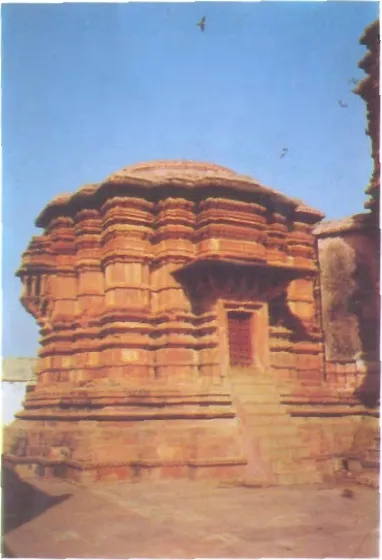
- What it is
- The Yogapīṭha is the chapel of the old Govinda temple in Vṛndāvana that the guidebooks give as the very spot where Śrīla Rūpa Gosvāmī found the Deity of Śrī Govinda.
- Visiting
- According to The Color Guide to Vṛndāvana (2000), the Yogapīṭha is a chapel to the left of the main altar of the old Govinda temple, with a small Deity of Yogamāyā and the footprints of Govinda, and …
In short
The Yogapīṭha is the chapel of the old Govinda temple in Vṛndāvana that the guidebooks give as the very spot where Śrīla Rūpa Gosvāmī found the Deity of Śrī Govinda.[1 +5] A yogapīṭha is the seat where the Lord meets His eternal devotees: the Caitanya-caritāmṛta, the Padma Purāṇa and the Gosvāmīs describe Govinda seated for ever on a jewelled throne at the yogapīṭha of Vṛndāvana, with Śrī Rādhā and the sakhīs, and the Bhakti-ratnākara identifies that yogapīṭha with Gomā-ṭīlā, the hill on which the temple stands.[7 +6] The guidebooks of 2000 and 2010 say that a small Deity of Yogamāyā is kept in the underground chapel and that the pūjārī gives darśana on request.[4]
Key facts
| Kind | shrine |
|---|---|
| Region · area | Vṛndāvana · Rādhā-Govinda Mandira (Vṛndāvana, old) |
| Ācāryas | Śrīla Rūpa Gosvāmī |
Why it is glorified
In the Caitanya-caritāmṛta Śrīla Kṛṣṇadāsa Kavirāja Gosvāmī describes Govinda seated in Vṛndāvana at the yogapīṭha, amid desire …
Govinda's eternal seat
In the Caitanya-caritāmṛta Śrīla Kṛṣṇadāsa Kavirāja Gosvāmī describes Govinda seated in Vṛndāvana at the yogapīṭha, amid desire trees, on a throne of gems in a jewelled pavilion. Śrīla Prabhupāda translates yoga-pīṭha here as "the principal temple", and in a later verse as "a great place of pilgrimage".[8 +4]
বৃন্দাবনে যোগপীঠে কল্পতরু–বনে ।
রত্নমণ্ডপ, তাহে রত্নসিংহাসনে ॥ ২১৮ ॥
শ্রীগোবিন্দ বসিয়াছেন ব্রজেন্দ্রনন্দন ।
মাধুর্য প্রকাশি’ করেন জগৎ মোহন ॥ ২১৯ ॥
vṛndāvane yoga-pīṭhe kalpa-taru-vane
ratna-maṇḍapa, tāhe ratna-siṁhāsane
śrī-govinda vasiyāchena vrajendra-nandana
mādhurya prakāśi’ karena jagat mohana
On an altar made of gems in the principal temple of Vṛndāvana, amidst a forest of desire trees, Lord Govinda, the son of the King of Vraja, sits upon a throne of gems and manifests His full glory and sweetness, thus enchanting the entire world.
Translation: Śrīla A.C. Bhaktivedanta Swami PrabhupādaThe Padma Purāṇa calls the yogapīṭha in the middle of Vṛndāvana, eight-cornered, with a throne of rubies and an eight-petalled lotus on it, the supreme abode of Govinda.[7 +5] The Ūrdhvāmnāya-tantra, as the Bhakti-ratnākara quotes it, says that Gopāla Himself is Govinda, always present at the yogapīṭha in Vṛndāvana and worshipped by Nanda, the cowherds and even by Kṛṣṇa, and it places Brahma-kuṇḍa beside the pavilion of the yogapīṭha.[11 +2] Śrīla Jīva Gosvāmī writes (summarised here, not translated) that Keśava and Govinda are known by these names at the great yogapīṭhas of Mathurā and Vṛndāvana: to worldly eyes they appear as Deities, to their own devotees directly.[10 +1]
Śrī Rādhā-kṛṣṇa Gosvāmī, a priest of the Govinda temple, opens a chapter of his Sādhana-dīpikā with Śrī Govindadeva shining on the royal throne on the lotus of the yogapīṭha, which he calls the crown of Vṛndāvana (summarised here, not translated).[19] Śrīla Kṛṣṇadāsa Kavirāja Gosvāmī's Govinda-līlāmṛta calls Śrī Govinda-sthala the seat of union with Kṛṣṇa, and Śrīla Viśvanātha Cakravartī Ṭhākura says that the place the Purāṇas call Govinda's land and the tantras the yogapīṭha he calls Śrī Kuñja-rāja. Both describe the eternal place, not the temple or its chapel.[20 +1]
Divine pastimes
Śrīmad-Bhāgavatam tells that Govinda began the rāsa dance with the gopīs "there", on the Yamunā's bank, and that at the end of the night He sent them home. It does not name Gomā-ṭīlā, the temple or the yogapīṭha.[22 +2]
tatrārabhata govindo rāsa-krīḍām anuvrataiḥ / strī-ratnair anvitaḥ prītair anyonyābaddha-bāhubhiḥ
There on the Yamunā’s banks Lord Govinda then began the pastime of the rāsa dance in the company of those jewels among women, the faithful gopīs, who joyfully linked their arms together.
Translation: Śrīla Prabhupāda's disciples (BBT)The Caitanya-caritāmṛta says that Śrī Govinda of the yogapīṭha enjoys the rāsa and other pastimes with Śrī Rādhā and Her friends, who stand at His left; this is an eternal pastime in the Gauḍīya understanding.[8 +1] In one of his readings of the verse that ends the rāsa (ŚB 10.33.38), Śrīla Śrīnātha Cakravartī says that the gopīs, not wishing to go home, went to an eternal place in Vṛndāvana called the yogapīṭha (summarised here, not translated). He does not name Gomā-ṭīlā, and no source says that the two are the same.[1 +1] Vṛndāvana, the Playground of God (2010) counts the yogapīṭha at the old temple as one of Rādhā and Kṛṣṇa's three daily meeting places; it gives no source, and the undated parikramā notes Nandagrāma name the places differently (see below).
Traditional accounts
According to the Bhakti-ratnākara, which quotes the older Sādhana-dīpikā, Śrīla Rūpa Gosvāmī searched Vraja in vain until a …
Śrī Govinda is found
According to the Bhakti-ratnākara, which quotes the older Sādhana-dīpikā, Śrīla Rūpa Gosvāmī searched Vraja in vain until a person of great beauty, in the form of a Vrajavāsī, told him that at Gomā-ṭīlā a cow gave her milk every forenoon and that Govinda was hidden there. The villagers dug the ground, and Govinda appeared "in the middle of the yogapīṭha".[1 +4] The book calls the whole hill the yogapīṭha of Vṛndāvana, and the villagers say, "we now know Gomā-ṭīlā is the yogapīṭha".[1 +1] The Sādhana-dīpikā adds that Śrī Caitanya Mahāprabhu, meeting Śrīla Rūpa Gosvāmī at Prayāga, told him to make known the service of Śrī Govinda in Vṛndāvana.[6 +2] The story is told in full on the page of Gomā-ṭīlā. Read more: How Śrīla Rūpa Gosvāmī found Śrī Govinda on Gomā-ṭīlā →
The Color Guide to Vṛndāvana (2000), Vṛndāvana, the Playground of God (2010) and the undated parikramā notes Vṛndāvana name the chapel itself as the spot where Govinda was found; the Bhakti-ratnākara describes no chapel.[1 +5]
The Yogamāyā Deity
The guidebooks say that a small Deity of Yogamāyā is kept at the yogapīṭha. Vṛndāvana, the Playground of God says that she was found with Govinda, The Color Guide that she was also worshipped by Śrīla Rūpa Gosvāmī; this is not certain. No older Vaiṣṇava text about this Deity has been found.[3 +5]
Śrīmad-Bhāgavatam (10.2–10.4) tells of Yogamāyā: Kṛṣṇa told her to appear in Yaśodā; she was born of Nanda's wife; and when Kaṁsa tried to dash the newborn girl against a stone, she rose into the sky as the eight-armed goddess, the younger sister of Viṣṇu. It names no Deity of her and no place in Vṛndāvana.[34 +5]
sā tad-dhastāt samutpatya sadyo devy ambaraṃ gatā / adṛśyatānujā viṣṇoḥ sāyudhāṣṭa-mahābhujā
The child, Yoga-māyā-devī, the younger sister of Lord Viṣṇu, slipped upward from Kaṁsa’s hands and appeared in the sky as Devī, the goddess Durgā, with eight arms, completely equipped with weapons.
Translation: Śrīla A.C. Bhaktivedanta Swami PrabhupādaAbout this place: Does not name the place; it tells the pastime whose goddess Śrī Vraja-maṇḍala Parikramā (2007) identifies with Kaṅkālī-devī (Vṛndāvana-Dhāma Ki Jaya! (c. 1986) tells the same story under Mahāvidyā-devī). When Kaṁsa tried to dash Devakī's newborn daughter against a stone, she slipped upward from his hands and appeared in the sky as the goddess, the younger sister of Viṣṇu, with eight mighty arms holding weapons (ŚB 10.4.8–9).
Śrīla Viśvanātha Cakravartī Ṭhākura explains (summarised here, not translated) that Yogamāyā herself stayed unseen in Vraja, and that the Māyā who deceived Kaṁsa is a part of her.[40 +1] The guidebooks identify the chapel's Deity with the girl whom Kaṁsa tried to kill; see the accounts below.
Śrīla Prabhupāda
Śrīla Prabhupāda explains in general what a yoga-pīṭha is.
Śrīla Prabhupāda explains in general what a yoga-pīṭha is. He is speaking of the spiritual world, not of this chapel:[8 +2]
General teaching (does not name the place)“In the Padma Purāṇa, Uttara-khaṇḍa, there is a full description of the yoga-pīṭha, or the particular place where the Lord is in audience to His eternal devotees.”
Śrīla Prabhupāda, Śrīmad-Bhāgavatam, 2.9.16, purport · vedabase.io
He also explains why Yogamāyā is called the younger sister of Kṛṣṇa. This too is general and does not mention a Deity of her:[49]
General teaching (does not name the place)… since she was Yoga-māyā, the younger sister of Lord Viṣṇu, she slipped upward and assumed the form of the goddess Durgā. The word anujā, meaning “the younger sister,” is significant. When Viṣṇu, or Kṛṣṇa, took birth from Devakī, He must have simultaneously taken birth from Yaśodā also. Otherwise how could Yoga-māyā have been anujā, the Lord’s younger sister?
Śrīla Prabhupāda, Śrīmad-Bhāgavatam, 10.4.9, purport · vedabase.io
Songs
A verse of the Śrī Govindadevāṣṭaka, by Śrīla Viśvanātha Cakravartī Ṭhākura, places Govinda on the lotus of the yogapīṭha in a …
A verse of the Śrī Govindadevāṣṭaka, by Śrīla Viśvanātha Cakravartī Ṭhākura, places Govinda on the lotus of the yogapīṭha in a jewelled temple beneath a desire tree.[50]
Visiting today
According to The Color Guide to Vṛndāvana (2000), the Yogapīṭha is a chapel to the left of the main altar of the old Govinda temple, with a small Deity of Yogamāyā and the footprints of Govinda, and the pūjārī gives darśana on request.[4] Vṛndāvana, the Playground of God (2010) says that a Vrajavāsī family looks after the Deities of the old temple and that Yogamāyā's darśana is given on request; The Color Guide printed the temple's darśana times as 8 am to 12:30 pm and 4 to 9 pm. These details may have changed since.[3 +2] The books place the chapel under the southern wing, down narrow stairs, in the south-western chapel, or to the left of the altar (see below).
Location
| Where it is | 'under the southern wing of the old temple', down narrow stairs[53] in a chapel to the left side of the main altar of the Govindajī temple[54] |
|---|
Nearby places
Rādhā-Govinda Mandira (Vṛndāvana, old)
Pictures
1 pictures
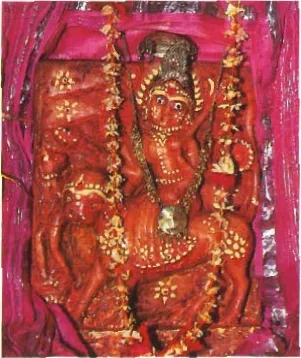
History
The temple's inscription, as F. S. Growse printed it in 1883, Pulinbihārī Datta copied it in his Bengali Vṛndāvana-kathā (1920) and A. W. Entwistle reported it in 1987, says that Mahārājādhirāja Mānasiṁhadeva, son of Bhagavantadāsa, made the temple of Śrī Govindadeva at the place of the Śrī Vṛndāvana yogapīṭha. It is the oldest dated record found that calls the site the yogapīṭha; its date is read in two ways, as told on the page of the old Govinda temple.[42 +4]
In 1883 Growse recorded a cell under the south-west chapel of the temple called Pātāl Devī, and the gazetteer of 1911 repeats it.[47 +1] The oldest description found of the chapel's goddess is Datta's of 1920: by lamplight, down some steps, an eight-armed goddess riding a lion, on a stone, whom he calls Nanda's daughter Yogamāyā. Later writers describe the chapel and the image differently, so its exact place in the building may not be certain (see below).[3 +6]
Where the sources differ
Where in the old Govinda temple the yogapīṭha chapel with the Yogamāyā image is, and what the image is.
Accounts differ Where in the old Govinda temple the yogapīṭha chapel with the Yogamāyā image is, and what the image is.
- Pulinbihārī Datta, Vṛndāvana-kathā (1920), pp. 34, 37-38Of the two small temples on the north and south sides of the jagamohana, the yogapīṭha is in the southern one, twelve or thirteen steps down in a narrow dark chamber; an eight-armed lion-riding goddess on a stone, 'Nanda's daughter Yogamāyā', and Kṛṣṇa's footprints; the northern one held Vṛndā-devī.
- A. W. Entwistle (1987), p. 410A cellar beneath the western of the two side chapels at the north end of the nave (the chapel that once housed Vṛndā-devī) holds a small marble relief of Durgā called 'Yogamaya' or 'Patal Devi'.
- Vṛndāvana, the Playground of God (2010)The yogapīṭha is now under the southern wing, reached by narrow stairs; the original Vṛndā-devī formerly resided in the other wing.
- The Color Guide to Vṛndāvana (2000)A special chapel built to the left side of the main altar.
Accounts differ What the underground chapel on the south(-west) side of the old Govinda temple is, and where Vṛndā-devī's Deity used to be.
- Vṛndāvana, the Playground of God (2010)Yogamāyā is kept at the yogapīṭha, the spot where Govindadeva was found, now under the southern wing; the other wing, now empty, formerly held the original Deity of Vṛndā-devī (now at Kāmyavana).
- Śrī Vraja-maṇḍala Parikramā (2007); Vṛndāvana-Dhāma Ki Jaya! (c. 1986); The Color Guide to Vṛndāvana (2000)'Pātāla-devī, or Yogamāyā' south-west of the ancient temple (Śrī Vraja-maṇḍala Parikramā (2007)); Yogamāyā in an underground complex in the south-western chapel (Vṛndāvana-Dhāma Ki Jaya! (c. 1986)); a chapel to the left of the main altar at the yogapīṭha with Yogamāyā and Govinda's footprints (The Color Guide to Vṛndāvana (2000)).
- Growse (1883); Muttra gazetteer (1911)The south-west chapel encloses a subterranean cell called Pātāl Devī, 'said by some to be the Gosáins' original shrine in honour of the goddess Brindá'.
Accounts differ Whether the Yogamāyā of the yogapīṭha chapel is the girl whom Kaṁsa tried to kill: how the Bhāgavatam, Śrīla Prabhupāda, the Canto 10 commentators and the guidebooks speak of Yaśodā's daughter.
- Śrīmad-Bhāgavatam 10.3.47, 10.3.51, 10.4.9, 10.4.13 (Sanskrit)Yogamāyā was born of Nanda's wife; Vasudeva took 'her daughter' to Kaṁsa's prison; the girl Kaṁsa tried to kill rose into the sky as the goddess (devī), the younger sister of Viṣṇu, and, as 'devī māyā bhagavatī', became known by many names in many places.
- Śrīla Prabhupāda: ŚB 10.2.9 purport; translations of 10.3.51 and 10.4.9 and the 10.4.9 purport; Kṛṣṇa book ch. 2 and 4Yoga-māyā became the daughter of mother Yaśodā but did not enjoy her parents' love; Vasudeva took 'her daughter, an expansion of Yoga-māyā'; 'the child, Yoga-māyā-devī, the younger sister of Lord Viṣṇu', slipped from Kaṁsa's hands and appeared as the goddess Durgā ('the child (who was actually the goddess Durgā)'); Kṛṣṇa and Yogamāyā appeared as brother and sister.
- Śrīla Viśvanātha Cakravartī and Śrīla Baladeva Vidyābhūṣaṇa on ŚB 10.2.9–10Yogamāyā herself would stay in Vraja with an imperceptible form (Baladeva gives this reading of 10.2.9 as what they say); the Māyā whom Vasudeva would bring and who deceived Kaṁsa is a part of her (Viśvanātha) or a potency reflecting her (Baladeva), worshipped in places such as the Vindhya.
- Śrīla Jīva Gosvāmī (Laghu-toṣaṇī on ŚB 10.2.9 and 10.3.51) and Śrīla Sanātana Gosvāmī (on 10.3.51)Yogamāyā would only be present in Yaśodā, not become her daughter in dealings (Jīva on 10.2.9); out of love for the Lord, Vasudeva accepted even Māyā (Sanātana on 10.3.51), knowing her to be Māyā (Jīva on 10.3.51).
The wording of these accounts is our summary of the sources, not a published translation.
Which places are Rādhā and Kṛṣṇa's daily meeting places, and what the place near the Govinda temple is called; the guidebook's list of three is not certain.[3 +1]
Accounts differ Which places are Rādhā and Kṛṣṇa's daily meeting places (yoga-pīṭhas), and what the place near the Govindajī temple is called.
- Vṛndāvana, the Playground of God (2010)Morning Vṛndā-kuṇḍa near Nandagrāma, midday Rādhā-kuṇḍa, evening around sunset the yogapīṭha at the Rādhā-Govinda temple.
- the undated parikramā notes Nandagrāma (Nandagrāma)'The morning Yoga Pit is Gupta Kund (7am – 8am), the midday is Radha Kund, and the night is in Vrindavan near the Govinda ji temple it is called the Rasa Sthali.'
More on this place
How Śrīla Rūpa Gosvāmī found Śrī Govinda on Gomā-ṭīlā
References
54 references
- Śrīla Narahari Cakravartī, Bhakti-ratnākara, Second Wave (dvitīya taraṅga), 1912 ed. p. 89, 2nd ed., 1912
- Śrīla Narahari Cakravartī, Bhakti-ratnākara, Second Wave, quoting the Sādhana-dīpikā of Rādhā-kṛṣṇa Gosvāmī, 1912 ed. p. 90, 2nd ed., 1912
- Vṛndāvana, the Playground of God (2010), Bhakti Caitanya Svāmī, PDF p. 35
- The Color Guide to Vṛndāvana (2000), Written and Photographed by Rājaśekhara dāsa Brahmacārī, PDF p. 146
- the undated parikramā notes Vṛndāvana, ¶266
- Śrīla Rādhā-kṛṣṇa Gosvāmī, Sādhana-dīpikā, (8) aṣṭa-kakṣā, the account of Śrī Rūpa and Śrī Govinda … after v.7', part 1/2)
- Padma Purāṇa, Pātāla-khaṇḍa (5), chapter 69, verses 79-83, Sanskrit Wikisource
- Śrīla Kṛṣṇadāsa Kavirāja Gosvāmī, Śrī Caitanya-caritāmṛta, CC Ādi-līlā 5.218-219, online edition · vedabase.io
- Śrīla Kṛṣṇadāsa Kavirāja Gosvāmī, Śrī Caitanya-caritāmṛta, CC Ādi-līlā 8.50, online edition · vedabase.io
- Śrīla Jīva Gosvāmī, Kṛṣṇa-sandarbha, anuccheda 153, GRETIL
- Śrīla Narahari Cakravartī, Bhakti-ratnākara, Fifth Wave, quoting the Ūrdhvāmnāya-tantra, 1912 ed. p. 297, 2nd ed., 1912
- Śrīla Narahari Cakravartī, Bhakti-ratnākara, Fifth Wave, quoting the Sammohana-tantra, 1912 ed. p. 293, 2nd ed., 1912
- Śrīla Prabhupāda, Śrīmad-Bhāgavatam, 2.9.16, purport · vedabase.io
- Śrīla Kṛṣṇadāsa Kavirāja Gosvāmī, Śrī Caitanya-caritāmṛta, CC Ādi-līlā 8.51, online edition · vedabase.io
- Śrīla Kṛṣṇadāsa Kavirāja Gosvāmī, Śrī Caitanya-caritāmṛta, CC Ādi-līlā 1.16, online edition · vedabase.io
- Śrī Vraja-maṇḍala Parikramā (2007), PDF p. 323
- Śrīla Narahari Cakravartī, Bhakti-ratnākara, Fifth Wave, quoting the Ūrdhvāmnāya-tantra, 1912 ed. p. 298, 2nd ed., 1912
- Śrīla Narahari Cakravartī, Bhakti-ratnākara, Fifth Wave, quoting the Skanda Purāṇa (Mathurā-khaṇḍa), 1912 ed. p. 293, 2nd ed., 1912
- Śrīla Rādhā-kṛṣṇa Gosvāmī, Sādhana-dīpikā, (2) dvitīya-kakṣā, prose after v.21 after v.21', part 1/2)
- Śrīla Kṛṣṇadāsa Kavirāja Gosvāmī, Govinda-līlāmṛta, 21.28, after the editions of Haridas Das and Haridas Shastri
Show all 54 references
- Śrīla Viśvanātha Cakravartī Ṭhākura, Vraja-rīti-cintāmaṇi, dvitīya sarga (chapter 2) vv. 70, 73-74
- Śrīmad-Bhāgavatam 10.33.2, GRETIL
- Śrīmad-Bhāgavatam 10.33.38, GRETIL
- Śrīla Prabhupāda, Kṛṣṇa, the Supreme Personality of Godhead (Kṛṣṇa book), Chapter 33, 'Description of the Rāsa Dance' · vedabase.io
- Śrīla Kṛṣṇadāsa Kavirāja Gosvāmī, Śrī Caitanya-caritāmṛta, CC Ādi-līlā 5.220, online edition · vedabase.io
- Śrīla Śrīnātha Cakravartī: commentary on ŚB 10.33.38
- Śrīla Narahari Cakravartī, Bhakti-ratnākara, Second Wave, quoting the Sādhana-dīpikā, 1912 ed. p. 90, 2nd ed., 1912
- Vṛndāvana-Dhāma Ki Jaya! (c. 1986), by Dhruva Mahārāja dāsa, PDF p. 75
- Śrīla Rādhā-kṛṣṇa Gosvāmī, Sādhana-dīpikā, part 1, prose after v.16 and v.17
- Śrīla Kṛṣṇadāsa Kavirāja Gosvāmī, Śrī Caitanya-caritāmṛta, Madhya-līlā 1.32, online edition · vedabase.io
- Vṛndāvana, the Playground of God (2010), Bhakti Caitanya Svāmī, PDF p. 30
- Vṛndāvana, the Playground of God (2010), Bhakti Caitanya Svāmī, PDF p. 36
- Śrī Vraja-maṇḍala Parikramā (2007), PDF p. 345
- Śrīmad-Bhāgavatam 10.2.9, GRETIL
- Śrīmad-Bhāgavatam 10.3.47, Bhagavata Vidya Pith edition, ed. Bhagavata Rishi and Krishna Shankar Shastri, 1996
- Śrīmad-Bhāgavatam 10.3.51, Bhagavata Vidya Pith edition, ed. Bhagavata Rishi and Krishna Shankar Shastri, 1996
- Śrīmad-Bhāgavatam 10.4.9, GRETIL
- Śrīmad-Bhāgavatam 10.4.13, GRETIL
- Śrīla Prabhupāda, Kṛṣṇa, the Supreme Personality of Godhead (Kṛṣṇa book), Chapter 2, 'Prayers by the Demigods for Lord Kṛṣṇa in the Womb' · vedabase.io
- Śrīla Viśvanātha Cakravartī Ṭhākura: commentary on ŚB 10.2.9, Bhagavata Vidya Pith edition, ed. Bhagavata Rishi and Krishna Shankar Shastri, 1996
- Śrīla Viśvanātha Cakravartī Ṭhākura: commentary on ŚB 10.2.10, Bhagavata Vidya Pith edition, ed. Bhagavata Rishi and Krishna Shankar Shastri, 1996
- Vṛndāvana-kathā, chapter 2 (dvitīya pariccheda), printed p. 38
- A. W. Entwistle, ch. 8 gazetteer, §25 'Govind Dev', printed pp. 409-410, Egbert Forsten, Groningen, 1987
- A. W. Entwistle, ch. 5 §12 (Akbar's reign), printed pp. 159-160, Egbert Forsten, Groningen, 1987
- A. W. Entwistle, ch. 8 gazetteer, §25 'Govind Dev', printed p. 410, Egbert Forsten, Groningen, 1987
- Mathurá (1883), F. S. Growse, B.C.S., M.A. Oxon., C.I.E. (as the title page gives him
- Mathurá (1883), F. S. Growse, B.C.S., M.A. Oxon., C.I.E. (as the title page gives him, p. 243
- Muttra (1911), D. L. Drake-Brockman, I.C.S. (edited and compiled), p. 243
- Śrīla Prabhupāda, Śrīmad-Bhāgavatam, 10.4.9, purport · vedabase.io
- Śrī Govindadevāṣṭaka (Viśvanātha Cakravartī Ṭhākura (as the song book credits it)) · song book
- the undated parikramā notes Vṛndāvana, ¶271
- the undated parikramā notes Nandagrāma, ¶37
- Vṛndāvana, the Playground of God (2010), Bhakti Caitanya Svāmī, p. 35
- The Color Guide to Vṛndāvana (2000), Written and Photographed by Rājaśekhara dāsa Brahmacārī