How Śrīla Rūpa Gosvāmī found Śrī Govinda on Gomā-ṭīlā
श्रील रूप गोस्वामी ने गोमा-टीला पर श्री गोविन्द को कैसे पाया
In short
According to the Bhakti-ratnākara, Śrīla Rūpa Gosvāmī found the Deity (sacred form) of Śrī Govinda buried in Gomā-ṭīlā, a mound in Vṛndāvana. A Vrajavāsī (local villager) had told him that a cow gave her milk there every forenoon. The villagers dug the ground, and Govinda appeared in the middle of the yogapīṭha. Mahāprabhu heard of it at Purī.[1–3]
On this page
At a glance
- The order: Śrī Caitanya Mahāprabhu told Śrīla Rūpa Gosvāmī to make known the lost holy places of Vraja.[4–7]
- The account: the Bhakti-ratnākara of Śrīla Narahari Cakravartī Ṭhākura. It quotes an older book, the Sādhana-dīpikā.[1, 2]
- The place: Gomā-ṭīlā. The Bhakti-ratnākara calls it the yogapīṭha of Vṛndāvana.[1, 2]
- The sign, according to the same book: a cow that let her milk flow there every forenoon.[1, 2]
- The time: in Śrī Caitanya Mahāprabhu's lifetime, since Śrīla Rūpa Gosvāmī wrote to Him at Purī. No year is given.[3]
- The temple: the guidebooks say the large Govinda temple was later built on top of the mound.[8–12]
Why did Śrī Caitanya send Śrīla Rūpa Gosvāmī to Vṛndāvana?
The finding of Govinda is part of a larger task. Śrī Caitanya Mahāprabhu gave Śrīla Rūpa Gosvāmī two duties in Vraja. He was to write the books of devotional service, and he was to bring the forgotten holy places to light.[4–7]
ব্রজে যাই রসশাস্ত্র করিহ নিরূপণ ।
লুপ্ত-তীর্থ সব তাহাঁ করিহ প্রচারণ ॥ ২১৮ ॥
vraje yāi rasa-śāstra kariha nirūpaṇa
lupta-tīrtha saba tāhāṅ kariha pracāraṇa
“When you go to Vṛndāvana, stay there, preach transcendental literature and excavate the lost holy places.
Translation: Śrīla A.C. Bhaktivedanta Swami PrabhupādaThe Caitanya-caritāmṛta records how the two brothers carried out that order. After reaching Vṛndāvana, Śrīla Rūpa and Śrīla Sanātana Gosvāmī preached and made known many places of pilgrimage. They also began the service of Madana-mohana and Govindajī, two Deities (sacred forms of Kṛṣṇa that are worshipped). The book does not name Gomā-ṭīlā or tell how Govinda was found.[4–7] Read more: How Madana-mohana came to Śrīla Sanātana Gosvāmī →
ভক্তি প্রচারিয়া সর্বতীর্থ প্রকাশিল ।
মদনগোপাল-গোবিন্দের সেবা প্রচারিল ॥ ৩২ ॥
bhakti pracāriyā sarva-tīrtha prakāśila
madana-gopāla-govindera sevā pracārila
After going to Vṛndāvana, the brothers preached devotional service and discovered many places of pilgrimage. They specifically initiated the service of Madana-mohana and Govindajī.
Translation: Śrīla A.C. Bhaktivedanta Swami PrabhupādaŚrīla Prabhupāda calls this work the Gosvāmīs' excavation (digging up) of lost places of pilgrimage. He adds that all the important temples of Vṛndāvana were established through their efforts:[4–7]
General teaching (does not name the place)“This is one of the brilliant examples of how the Gosvāmīs excavated lost places of pilgrimage. Similarly, it is through the endeavor of the Gosvāmīs that all the important temples in Vṛndāvana were established.”
Śrīla Prabhupāda, Śrī Caitanya-caritāmṛta, Ādi-līlā 10.90, purport · vedabase.io
The Sādhana-dīpikā, written by a priest of the Govinda temple, puts the same order in its own words. According to that book, Śrī Caitanya Mahāprabhu met Śrīla Rūpa Gosvāmī at Prayāga. He told him to go to Vṛndāvana and make known the service of Śrī Govinda there (summarised here, not translated).[5 +2]
How did Śrīla Rūpa Gosvāmī find Śrī Govinda?
The Bhakti-ratnākara tells the story in its Second Wave (its second chapter), and every step below follows it (summarised here, not translated). Śrīla Rūpa Gosvāmī searched Vraja for Govinda, but he could not find Him. Then someone beautiful came to him in the form of a Vrajavāsī, a resident of Vraja, and told him not to worry.[1 +6]
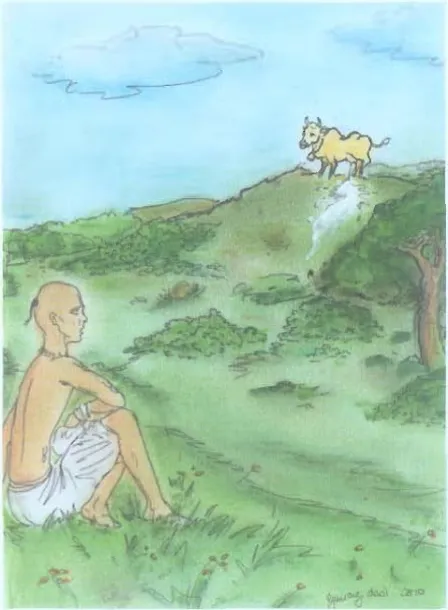
The visitor spoke of Gomā-ṭīlā, the yogapīṭha of Vṛndāvana. A fine cow came there every forenoon and let her milk flow, he said, and Śrī Govindadeva was hidden there. He led Śrīla Rūpa Gosvāmī to the spot, showed it to him and vanished.[1, 2]
Śrīla Rūpa Gosvāmī heard his words, saw his form and fainted. When he woke, he understood what the Lord had shown him. He told the Vrajavāsīs that Govindadeva was here.[1, 2]
Young and old came to the mound. According to the book, they said that they now knew Gomā-ṭīlā to be the yogapīṭha. As they dug the ground, the Lord, the son of the King of Vraja, appeared in the middle of the yogapīṭha.[1, 2] The Bhakti-ratnākara adds that crowds then came from every side.[3]
The letter to Purī
As soon as Govinda had appeared, the same book says, Śrīla Rūpa Gosvāmī sent a letter to Śrī Caitanya Mahāprabhu at Purī. Mahāprabhu read it with His associates, and He could not keep still for joy.[1–5, 18] So the finding took place in Mahāprabhu's lifetime. But no source gives the year.[3]
Which source tells the story of the cow?
The story comes from the Bhakti-ratnākara, and its author does not tell it on his own word. In the middle of the account he quotes, in Sanskrit, an older book: the Sādhana-dīpikā of Śrī Rādhā-kṛṣṇa Gosvāmī, a disciple of Śrī Haridāsa Paṇḍita Gosvāmī of Vraja.[1 +2]
In that older text the Vrajavāsī leads Śrīla Rūpa Gosvāmī to the place called Gumāṭṭilā. He says that a cow comes there every forenoon and lets her milk flow. The villagers clear the ground and see Kṛṣṇa, the son of the King of Vraja, in the middle of the yogapīṭha (summarised here, not translated).[2]
The author of the Sādhana-dīpikā held the service of the Govinda temple, and he calls Śrī Haridāsa Paṇḍita his guru. The Caitanya-caritāmṛta names Śrī Haridāsa Paṇḍita as the chief of Govinda's service.[13, 20] The Caitanya-caritāmṛta itself does not tell the finding. Its verses on the Gosvāmīs' work are a general record; the link to the hill comes from the Bhakti-ratnākara.[4–7]
What is Gomā-ṭīlā?
According to the guidebooks, Gomā-ṭīlā is the mound in Vṛndāvana on which the old Govinda temple stands.[8–12] The Bhakti-ratnākara writes the name Gomāṭilā in its Bengali verses and Gumāṭṭilā in the Sanskrit it quotes. The guidebooks write Gomā-ṭīlā or Goma-ṭilā. No source explains what the name means.[1 +5]
In 1920 Pulinbihārī Datta described the mound in his Bengali book Vṛndāvana-kathā. It was about twenty to twenty-five feet high, on the west side of the road that enters Vṛndāvana from Mathurā, with Govindadeva's temples on top.[23]
What does "yogapīṭha" mean here?
A yogapīṭha is the seat of union: the central place where the Lord is present with His associates. Several texts describe Govinda as eternally seated on a jewelled throne at the yogapīṭha in Vṛndāvana, with Śrī Rādhā and Her friends. They are the Padma Purāṇa, the Caitanya-caritāmṛta, Śrīla Jīva Gosvāmī and the Ūrdhvāmnāya-tantra quoted in the Bhakti-ratnākara. These texts describe the eternal seat. It is the Bhakti-ratnākara that identifies this seat with the spot dug out on Gomā-ṭīlā.[24–29]
Śrīla Kṛṣṇadāsa Kavirāja Gosvāmī describes the Govinda he saw in this setting:[25 +3]
বৃন্দাবনে যোগপীঠে কল্পতরু–বনে ।
রত্নমণ্ডপ, তাহে রত্নসিংহাসনে ॥ ২১৮ ॥
শ্রীগোবিন্দ বসিয়াছেন ব্রজেন্দ্রনন্দন ।
মাধুর্য প্রকাশি’ করেন জগৎ মোহন ॥ ২১৯ ॥
vṛndāvane yoga-pīṭhe kalpa-taru-vane
ratna-maṇḍapa, tāhe ratna-siṁhāsane
śrī-govinda vasiyāchena vrajendra-nandana
mādhurya prakāśi’ karena jagat mohana
On an altar made of gems in the principal temple of Vṛndāvana, amidst a forest of desire trees, Lord Govinda, the son of the King of Vraja, sits upon a throne of gems and manifests His full glory and sweetness, thus enchanting the entire world.
Translation: Śrīla A.C. Bhaktivedanta Swami PrabhupādaIn this verse Śrīla Prabhupāda translates the word yoga-pīṭha as "the principal temple".[25 +3] The Ūrdhvāmnāya-tantra, as the Bhakti-ratnākara quotes it, says that Gopāla Himself is Govinda. He is always at the yogapīṭha in Vṛndāvana, its lord in all four ages.[18, 28]
Two Gosvāmīs speak of Govinda's place without naming the hill. Śrīla Jīva Gosvāmī writes that Keśava and Govinda are known by these names at the great yogapīṭhas of Mathurā and Vṛndāvana (summarised here, not translated).[27, 32] Śrīla Sanātana Gosvāmī calls Śrī Govindadeva the presiding Deity of Vṛndāvana, as Śrī Keśava is of Mathurā. He also uses Him as a landmark: Keśī was killed on the Yamunā north of Śrī Govindadeva, near Keśī-ghāṭa.[33–35]
One commentator on the Bhāgavatam uses the word in another setting. The rāsa dance is Kṛṣṇa's circle dance with the gopīs, the cowherd girls of Vraja. Śrīla Śrīnātha Cakravartī gives three readings of the verse that ends it. In one of them he says that the gopīs went to an eternal place in Vṛndāvana called the yogapīṭha. He does not name Gomā-ṭīlā, and no source says that the two are the same.[1, 36]
Śrīla Bhaktivinoda Ṭhākura sings of Rādhā and Kṛṣṇa seated on the yogapīṭha in a kadamba grove of Vṛndāvana. The eight sakhīs, Śrī Rādhā's close friends, are around Them. The song does not name the hill.[37]
joga-pīṭhopari-sthita aṣṭa-sakhī-subeṣṭita
bṛndāraṇye kadamba-kānane
rādhā-saha baṁśī-dhārī biśwa-jana-citta-hārī
prāṇa mora tāhāra caraṇe
Who came to stand beside Govinda?
The Bhakti-ratnākara, still following the Sādhana-dīpikā, says what happened next. Śrī Caitanya Mahāprabhu sent His own Deity form, named Gaura-Govinda, with Śrī Kāśīśvara Paṇḍita. Śrī Kāśīśvara seated Him at Govinda's right and served Him there.[3 +5] The sources agree on this account, but they differ on where that Deity is today:
Accounts differ Where the Gaura-Govinda Deity that Kāśīśvara brought is now.
- Bhakti-ratnākara, Second Wave pp. 91-92 (with the Sādhana-dīpikā)Kāśīśvara seated Him on Govinda's right (দক্ষিণে); the Mahāprabhu beside Śrī Govinda (no present location).
- Śrī Vraja-maṇḍala Parikramā (2007)'That same deity is nearby, in the southern part of the Govindajī Temple.'
- Vṛndāvana, the Playground of God (2010)Placed on Govindajī's right; 'The Deity is now in Jaipur in the Rādhā-Govinda temple.'
The wording of these accounts is our summary of the sources, not a published translation.
The same books say that Śrī Rādhā was not with Govinda when He appeared; She was sent later from Purī. The Caitanya-caritāmṛta, however, describes Śrī Rādhikā at Govinda's left in Śrīla Kṛṣṇadāsa Kavirāja Gosvāmī's time.[25, 42] The accounts of when She came differ, and they are set side by side here:
Accounts differ Whether a Rādhā Deity stood beside Govinda in the Gosvāmīs' and Śrīla Kṛṣṇadāsa Kavirāja's time.
- Śrī Caitanya-caritāmṛta, Ādi 5.220In Kṛṣṇadāsa's description of the Govinda he saw, Śrī Rādhikā and Her friends are at His left side.
- Śrīla Prabhupāda, letter to Jadurani, 28 June 1973There was no Rādhārāṇī in Govindajī's temple then; She was introduced later.
- Bhakti-ratnākara, Sixth Wave pp. 458-461Rādhikā was not with Govinda when He manifested; She was later sent from Purī by Puruṣottama Jānā and seated at His left.
- Vṛndāvana-Dhāma Ki Jaya! (c. 1986)She was the first Rādhārāṇī Deity worshipped by the Gosvāmīs in Vṛndāvana.
The same books say that Śrīla Rūpa Gosvāmī also brought Vṛndā-devī to light from the bank of Brahma-kuṇḍa (a kuṇḍa is a sacred pond). Where she was worshipped before she went to Kāmyavana is told differently:
Accounts differ Where Vṛndā-devī was worshipped in Vṛndāvana before she went to Kāmyavana.
- Bhakti-ratnākara / Sādhana-dīpikā (Second Wave p. 92)Manifested by Rūpa from the bank of Brahma-kuṇḍa; praised as standing 'beside Śrī Govinda'.
- Vṛndāvana-Dhāma Ki Jaya! (c. 1986)Previously installed in the Rādhā-Govinda Mandira in Vṛndāvana.
- Vṛndāvana, the Playground of God (2010)The original Vṛndā-devī Deity formerly resided in the other wing of the old temple (the southern wing holds the yogapīṭha).
- the undated parikramā notes KāmyavanaRūpa installed her 'in a small temple next to the Radha Govinda Temple'.
The temple on the hill
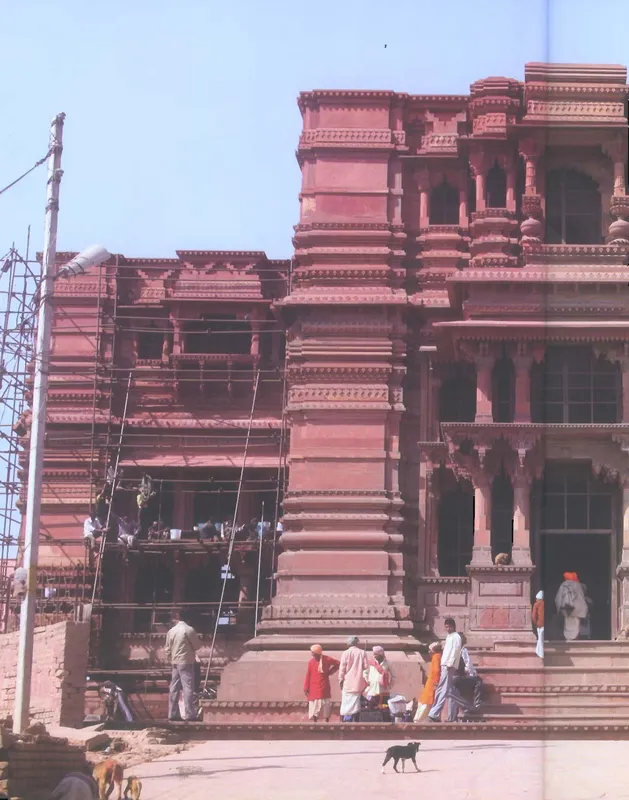
The Caitanya-caritāmṛta later says that Śrīla Raghunātha Bhaṭṭa Gosvāmī had his disciples build a temple for Govinda, but it does not name the site. The guidebooks place that large red-sandstone temple on top of Gomā-ṭīlā.[8–12] The article on the temple tells who built it, what its inscription records and how the Deity later went to Jaipur. Read more: The great temple of Śrī Govinda →
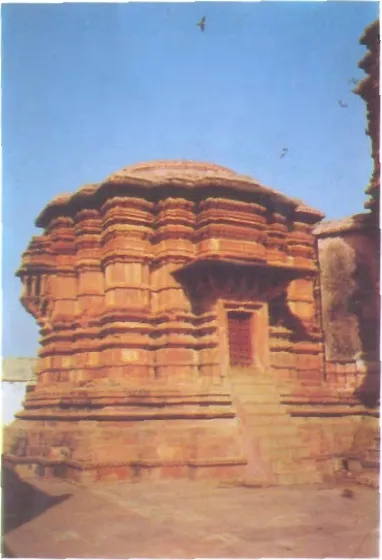
The guidebooks of 2000 and 2010 show a chapel of the old temple, the Yogapīṭha, to the left of the main altar. According to The Color Guide to Vṛndāvana (2000), it is the very spot where Śrīla Rūpa Gosvāmī found the Deity. A small Deity of Yogamāyā and Govinda's footprints were kept there. The book describes the chapel as it was in 2000.[9]
Where the sources differ
Four guidebooks and a set of notes retell the finding with differences. They disagree on who the guide was: a Vrajavāsī boy, or Kṛṣṇa Himself in that form. They differ on whether Śrīla Rūpa Gosvāmī saw the cow himself, and whether the milk flowed into a hole. They also differ on what he was doing when the guide came, and on whether a Deity of Yogamāyā was found with Govinda.[8 +5] The Bhakti-ratnākara's account and theirs are given side by side:
Accounts differ How the finding of Govinda on the hill is told.
- Bhakti-ratnākara, Second Wave pp. 88-90 (quoting the Sādhana-dīpikā)Rūpa, staying on the Yamunā bank after searching everywhere, is approached by someone beautiful in the form of a Vrajavāsī, who tells him that a cow gives milk every forenoon at Gomā-ṭīlā, the yogapīṭha, takes him there and vanishes; Rūpa faints on hearing him and seeing his form; young and old Vrajavāsīs dig/clear the ground and Govinda appears in the middle of the yogapīṭha.
- Śrī Vraja-maṇḍala Parikramā (2007)During his daily parikramā Rūpa sits weeping under a tree on the Yamunā bank; a beautiful Vrajavāsī boy, also doing parikramā, brings him to Gomā-ṭīlā: every day just before noon a cow comes to the mound and irrigates it with her milk; the boy disappears; Rūpa faints thinking of the boy; the Vrajavāsīs dig and find Govinda 'a little under the ground'.
- Vṛndāvana, the Playground of God (2010)An extraordinarily attractive Vrajavāsī tells of a hill named Goma-ṭilā, on top of which a cow releases her milk every day, takes Rūpa there and vanishes; later the cow comes and Rūpa sees her milk pour out, then faints; the people dig at the top of the hill and find Govinda and also a small Deity of Yogamāyā.
- The Color Guide to Vṛndāvana (2000)Rūpa, by the Yamunā, weeps calling 'Ha Chaitanya'; Lord Krishna in the guise of a beautiful brijvasi boy tells him of a cow emptying its milk into a hole on a nearby hillock; the boy disappears; Rūpa looks into the milk-drenched hole and faints; the local people excavate the hole and find Govinda.
The wording of these accounts is our summary of the sources, not a published translation.
Four guidebooks add that Vajranābha, Kṛṣṇa's descendant, first installed Govinda long before, and that the Deity was later lost until Śrīla Rūpa Gosvāmī found Him. No scripture or Gosvāmī's book is known to say so, and it is not certain.[17 +4]
Places in this article
Gomā-ṭīlā
गोमा-टीलाGomā-ṭīlā is the hillock in Vṛndāvana where, according to the Bhakti-ratnākara, Śrīla Rūpa Gosvāmī found the Deity of Śrī Govinda.
Rādhā-Govinda Mandira (Vṛndāvana, old)
राधा-गोविन्द मन्दिर (वृन्दावन, पुराना)The old Rādhā-Govinda Mandira is the great red-sandstone temple of Śrī Govindadeva in Vṛndāvana, built, as the guidebooks say, on top of Gomā-ṭīlā, a mound.
Yogapīṭha (old Govinda temple)
योगपीठ (पुराना गोविन्द मन्दिर)The Yogapīṭha is the chapel of the old Govinda temple in Vṛndāvana that the guidebooks give as the very spot where Śrīla Rūpa Gosvāmī found the Deity of Śrī Govinda.
Vṛndāvana
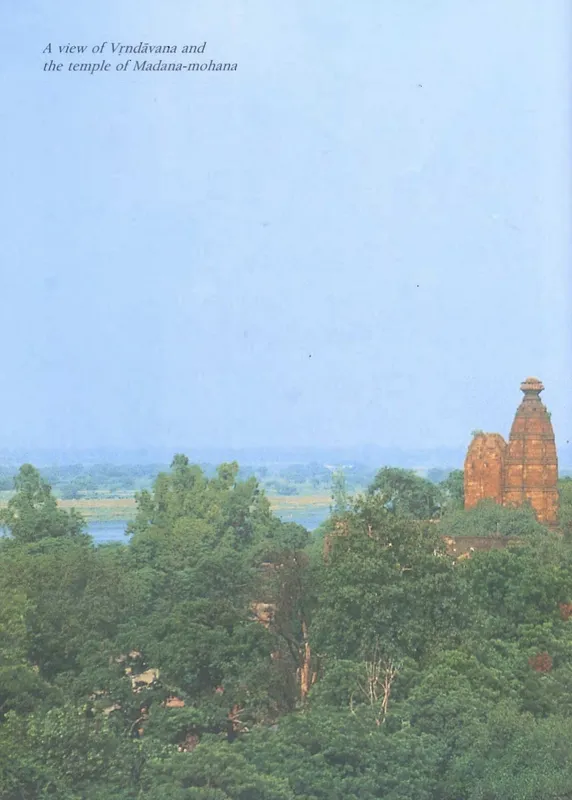
वृन्दावनVṛndāvana is the forest on the bank of the Yamunā where Kṛṣṇa spent His childhood and youth, and the town of temples that stands in that forest today.
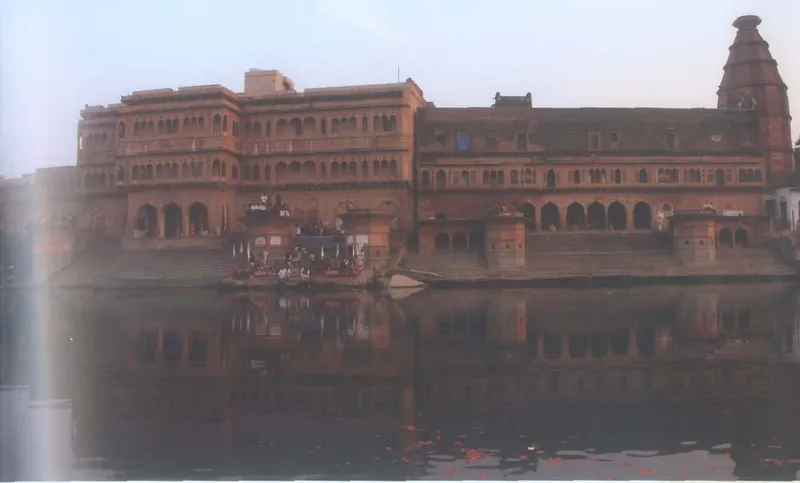
Keśī-ghāṭa
केशी-घाटKeśī-ghāṭa, also called Keśī-tīrtha, is a bathing place on the Yamunā in the north-west of Vṛndāvana, close to Cīra-ghāṭa.
Questions and answers
According to the Bhakti-ratnākara, a beautiful Vrajavāsī told him that a cow gave her milk every forenoon on Gomā-ṭīlā, and that Govinda was hidden there. The villagers dug the ground, and Govinda appeared in the middle of the yogapīṭha.[1, 2]
It is a mound in Vṛndāvana. The Bhakti-ratnākara calls it the yogapīṭha of Vṛndāvana, and the guidebooks say the old Govinda temple was built on top of it. No source explains the name.[1 +10]
It is Govinda's eternal seat in Vṛndāvana. The scriptures describe Him there on a jewelled throne with Śrī Rādhā and the sakhīs. The Bhakti-ratnākara identifies that seat with the spot on Gomā-ṭīlā where He appeared.[24–29]
He told Śrīla Rūpa Gosvāmī to write devotional books in Vraja and to make known its lost holy places. The Caitanya-caritāmṛta says the brothers then began the service of Madana-mohana and Govinda.[4–7]
The Bhakti-ratnākara of Śrīla Narahari Cakravartī Ṭhākura tells it. It quotes the older Sādhana-dīpikā of Śrī Rādhā-kṛṣṇa Gosvāmī, a priest of the Govinda temple. The Caitanya-caritāmṛta does not tell the finding.[1 +3]
No year is given. Śrīla Rūpa Gosvāmī wrote to Śrī Caitanya Mahāprabhu at Purī as soon as Govinda appeared. So the Bhakti-ratnākara places the finding in Mahāprabhu's lifetime.[3]
According to the guidebooks, the old Govinda temple stands on it. In 1920 Pulinbihārī Datta placed the mound on the west side of the road from Mathurā into Vṛndāvana. The Color Guide to Vṛndāvana (2000) shows the Yogapīṭha chapel of the old temple as the spot of the finding.[9, 23]
Sources
- Śrīla Narahari Cakravartī, Bhakti-ratnākara, Second Wave (dvitīya taraṅga), 1912 ed. p. 89, 2nd ed., 1912
- Śrīla Narahari Cakravartī, Bhakti-ratnākara, Second Wave, quoting the Sādhana-dīpikā, 1912 ed. p. 90, 2nd ed., 1912
- Śrīla Narahari Cakravartī, Bhakti-ratnākara, Second Wave (dvitīya taraṅga), 1912 ed. p. 91, 2nd ed., 1912
- Śrīla Kṛṣṇadāsa Kavirāja Gosvāmī, Śrī Caitanya-caritāmṛta, Antya-līlā 1.218, online edition · vedabase.io
- Śrīla Kṛṣṇadāsa Kavirāja Gosvāmī, Śrī Caitanya-caritāmṛta, Madhya-līlā 1.32, online edition · vedabase.io
- Śrīla Prabhupāda, Śrī Caitanya-caritāmṛta, Ādi-līlā 10.90, purport · vedabase.io
- Śrīla Prabhupāda, Śrī Caitanya-caritāmṛta, Ādi-līlā 7.164, purport · vedabase.io
- Vṛndāvana, the Playground of God (2010), Bhakti Caitanya Svāmī, PDF p. 34
- The Color Guide to Vṛndāvana (2000), Written and Photographed by Rājaśekhara dāsa Brahmacārī, PDF p. 146
- the undated parikramā notes Vṛndāvana, ¶268
- Śrī Vraja-maṇḍala Parikramā (2007), PDF p. 324
- Śrīla Kṛṣṇadāsa Kavirāja Gosvāmī, Śrī Caitanya-caritāmṛta, CC Antya-līlā 13.131, online edition · vedabase.io
- Śrīla Rādhā-kṛṣṇa Gosvāmī, Sādhana-dīpikā, (8) aṣṭa-kakṣā, the account of Śrī Rūpa and Śrī Govinda … after v.7', part 1/2)
- Śrīla Rādhā-kṛṣṇa Gosvāmī, Sādhana-dīpikā, part 1, prose after v.16 and v.17
- Śrīla Narahari Cakravartī, Bhakti-ratnākara, Second Wave (dvitīya taraṅga), 1912 ed. p. 88, 2nd ed., 1912
- Śrīla Narahari Cakravartī, Bhakti-ratnākara, Second Wave, quoting the Sādhana-dīpikā of Rādhā-kṛṣṇa Gosvāmī, 1912 ed. p. 90, 2nd ed., 1912
- Śrī Vraja-maṇḍala Parikramā (2007), PDF p. 322
- Śrī Vraja-maṇḍala Parikramā (2007), PDF p. 323
- Vṛndāvana, the Playground of God (2010), Bhakti Caitanya Svāmī, PDF p. 30
- Śrīla Kṛṣṇadāsa Kavirāja Gosvāmī, Śrī Caitanya-caritāmṛta, CC Ādi-līlā 8.54, online edition · vedabase.io
Show all 44 references
- The Color Guide to Vṛndāvana (2000), Written and Photographed by Rājaśekhara dāsa Brahmacārī, PDF p. 140
- Vṛndāvana-Dhāma Ki Jaya! (c. 1986), by Dhruva Mahārāja dāsa, PDF p. 74
- Vṛndāvana-kathā, chapter 2 (dvitīya pariccheda), printed p. 34
- Padma Purāṇa, Pātāla-khaṇḍa (5), chapter 69, verses 79-83, Sanskrit Wikisource
- Śrīla Kṛṣṇadāsa Kavirāja Gosvāmī, Śrī Caitanya-caritāmṛta, CC Ādi-līlā 5.218-219, online edition · vedabase.io
- Śrīla Kṛṣṇadāsa Kavirāja Gosvāmī, Śrī Caitanya-caritāmṛta, CC Ādi-līlā 8.50, online edition · vedabase.io
- Śrīla Jīva Gosvāmī, Kṛṣṇa-sandarbha, anuccheda 153, GRETIL
- Śrīla Narahari Cakravartī, Bhakti-ratnākara, Fifth Wave, quoting the Ūrdhvāmnāya-tantra, 1912 ed. p. 297, 2nd ed., 1912
- Śrīla Narahari Cakravartī, Bhakti-ratnākara, Fifth Wave, quoting the Sammohana-tantra, 1912 ed. p. 293, 2nd ed., 1912
- Śrīla Kṛṣṇadāsa Kavirāja Gosvāmī, Śrī Caitanya-caritāmṛta, CC Ādi-līlā 8.51, online edition · vedabase.io
- Śrīla Kṛṣṇadāsa Kavirāja Gosvāmī, Śrī Caitanya-caritāmṛta, CC Ādi-līlā 1.16, online edition · vedabase.io
- Śrīla Narahari Cakravartī, Bhakti-ratnākara, Fifth Wave, quoting the Skanda Purāṇa (Mathurā-khaṇḍa), 1912 ed. p. 293, 2nd ed., 1912
- Śrīla Sanātana Gosvāmī: commentary on ŚB 10.11.28–29, Bhagavata Vidya Pith edition, ed. Bhagavata Rishi and Krishna Shankar Shastri, 1996
- Śrīla Sanātana Gosvāmī: commentary Śrīla Sanātana Gosvāmī, Bṛhad-vaiṣṇava-toṣaṇī, on ŚB 10.37.2, Bhagavata Vidya Pith edition, ed. Bhagavata Rishi and Krishna Shankar Shastri, 1996
- Śrīla Jīva Gosvāmī: commentary Śrīla Jīva Gosvāmī, Laghu-vaiṣṇava-toṣaṇī, on ŚB 10.37.2, Bhagavata Vidya Pith edition, ed. Bhagavata Rishi and Krishna Shankar Shastri, 1996
- Śrīla Śrīnātha Cakravartī: commentary on ŚB 10.33.38
- Joga-pīṭhopari Sthita Aṣṭa-sakhī Subeṣṭita (Bhaktivinoda Ṭhākura (as the song book credits it; Gītāvalī)) · song book
- Śrīla Narahari Cakravartī, Bhakti-ratnākara, Second Wave, quoting the Sādhana-dīpikā, 1912 ed. p. 92, 2nd ed., 1912
- Vṛndāvana, the Playground of God (2010), Bhakti Caitanya Svāmī, PDF p. 193
- Vṛndāvana, the Playground of God (2010), Bhakti Caitanya Svāmī, PDF p. 194
- Śrīla Kṛṣṇadāsa Kavirāja Gosvāmī, Śrī Caitanya-caritāmṛta, Ādi-līlā 8.66, online edition · vedabase.io
- Śrīla Kṛṣṇadāsa Kavirāja Gosvāmī, Śrī Caitanya-caritāmṛta, CC Ādi-līlā 5.220, online edition · vedabase.io
- Śrī Vraja-maṇḍala Parikramā (2007), PDF p. 325
- the undated parikramā notes Vṛndāvana, ¶266
Further sources
- Bhakti-ratnākara of Śrīla Narahari Cakravartī Ṭhākura, Second Wave (Bengali, 1912 edition), with the Sādhana-dīpikā it quotes: summarised, not translated.
- Śrī Caitanya-caritāmṛta with Śrīla Prabhupāda's translation and purports (BBT).
- The Canto 10 commentaries of Śrīla Sanātana Gosvāmī, Śrīla Jīva Gosvāmī and Śrīla Śrīnātha Cakravartī (Sanskrit), summarised, not translated.