Brahma-kuṇḍa (Vṛndāvana)
ब्रह्म-कुण्ड (वृन्दावन)
Also called Brahmā-kuṇḍa, Śeṣa-bhiru-caturmukha
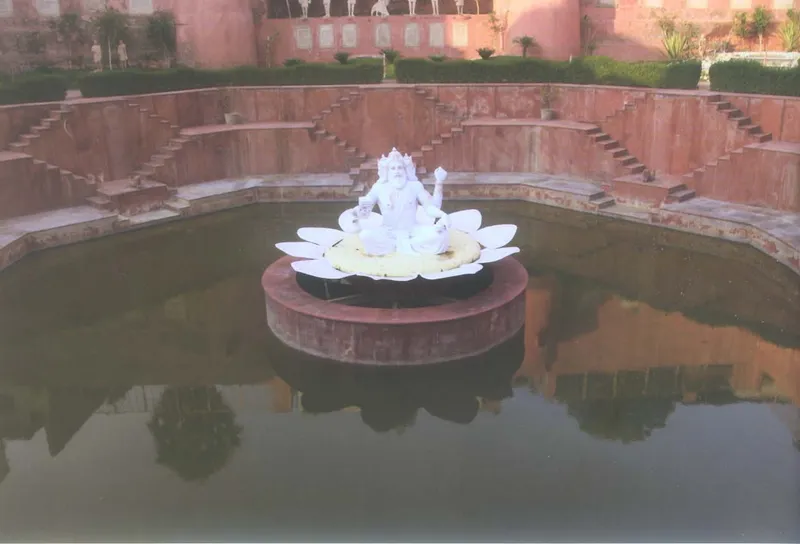
- What it is
- Brahma-kuṇḍa is a tank in Vṛndāvana, north of the Raṅgajī temple.
- Visiting
- Śrī Vraja-maṇḍala Parikramā (2007) places Brahma-kuṇḍa north of the Raṅgajī temple and a little south-west of Jñāna-gudri; The Color Guide to Vṛndāvana (2000) says that the Manas Mandir overlooks it.
- Places here
- Aśoka tree (Brahma-kuṇḍa)
In short
Brahma-kuṇḍa is a tank in Vṛndāvana, north of the Raṅgajī temple.[1 +2] Works of Śrīla Rūpa Gosvāmī, Śrīla Kṛṣṇadāsa Kavirāja Gosvāmī and Śrīla Viśvanātha Cakravartī Ṭhākura place it beside Śrī Govinda's Yogapīṭha, with the Śiva called Gopīśvara on its bank.[4 +5] According to the Bhakti-ratnākara, Śrīla Rūpa Gosvāmī brought the Deity of Vṛndā-devī to light from its bank, and Śrīla Prabhupāda writes that Śrīla Bilvamaṅgala Ṭhākura lived near it.[10 +9] Guidebooks connect it with Brahmā's prayers to Kṛṣṇa, but the Bhāgavatam names no kuṇḍa in that pastime, and older works link the kuṇḍa with other pastimes.[20 +8]
Key facts
| Kind | kuṇḍa |
|---|---|
| Region · area | Vṛndāvana |
| Ācāryas | Śrīla Bilvamaṅgala Ṭhākura, Śrīla Rūpa Gosvāmī, Śrīla Jīva Gosvāmī, Śrīla Narahari Cakravartī Ṭhākura, Śrī Caitanya Mahāprabhu |
Why it is glorified
Śrīla Rūpa Gosvāmī's Mathurā-māhātmya gives Brahma-kuṇḍa a section of its own.
Śrīla Rūpa Gosvāmī's Mathurā-māhātmya gives Brahma-kuṇḍa a section of its own. It quotes verses that it gives as from the Ādi-varāha and the Skanda Purāṇa (the printed edition of Haridāsa Dāsa, c. 1944, labels the second group Vārāha as well), saying that one who bathes in this kuṇḍa, overgrown with bushes and creepers, enjoys with the Gandharvas, and that one who leaves the body here goes to the Lord's world (summarised here, not translated).[7 +2] The printed Varāha Purāṇa has the same verses among the holy places of Vṛndāvana, but without the kuṇḍa's name:[31]
Accounts differ Whether the Varāha verses on the bathing benefits name Brahma-kuṇḍa.
- Varāha Purāṇa, printed vulgate, Mathurā-māhātmya 156.8'tatra kuṇḍe mahābhāge bahu-gulma-latāvṛte' (a kuṇḍa in Vṛndāvana, not named).
- Bhakti-ratnākara, Fifth Wave, printed p. 447, quoting the 'Ādi-varāha''tatra brāhme mahābhāge bahu-gulma-latāvṛte', placed under the heading of Brahma-kuṇḍa.
- Śrīla Rūpa Gosvāmī, Mathurā-māhātmya v.378–382Under a heading on Śrī Brahma-kuṇḍa he quotes two verses as from the Ādi-varāha (v.378–379) and three similar verses (v.380–382), which the text used here gives as from the Skanda and the printed edition of Haridāsa Dāsa (c. 1944) as Vārāha; all are for Brahma-kuṇḍa.
The wording of these accounts is our summary of the sources, not a published translation.
In the same section, and in three works of Śrīla Jīva Gosvāmī, a verse that they give as from the Varāha speaks of a white-shining aśoka tree on the north side of the kuṇḍa that blossoms on the twelfth day of the bright half of Vaiśākha and is known only to a pure devotee. In his Gopāla-campū Śrīla Jīva Gosvāmī says that the verse means Brahma-kuṇḍa.[2 +7]
The Bhakti-ratnākara shows the kuṇḍa on Śrīla Śrīnivāsa Ācārya's walk through Vṛndāvana, a very secluded place covered with bushes and creepers, and quotes the same verses.[10 +2]
Divine pastimes
Brahmā and the calves
Śrīmad-Bhāgavatam (10.13–10.14) tells that while Kṛṣṇa and the cowherd boys were eating on a riverbank, Brahmā took the calves and the boys away. Kṛṣṇa expanded Himself as all of them for a year. When Brahmā came back, he saw Vṛndāvana, and Kṛṣṇa alone in it, searching for the calves with a morsel of food in His hand; he fell at Kṛṣṇa's feet, bathed them with tears of joy and offered prayers. The Bhāgavatam names Vṛndāvana and a riverbank, but no kuṇḍa.[20 +5]
dṛṣṭvā tvareṇa nija-dhoraṇato 'vatīrya / pṛthvyāṃ vapuḥ kanaka-daṇḍam ivābhipātya / spṛṣṭvā catur-mukuṭa-koṭibhir aṅghri-yugmaṃ / natvā mud-aśru-sujalair akṛtābhiṣekam
After seeing this, Lord Brahmā hastily got down from his swan carrier, fell down like a golden rod and touched the lotus feet of Lord Kṛṣṇa with the tips of the four crowns on his heads. Offering his obeisances, he bathed the feet of Kṛṣṇa with the water of his tears of joy.
Translation: Śrīla A.C. Bhaktivedanta Swami PrabhupādaThe guidebooks of 2000 and 2010 say that Brahmā offered his prayers here and that his tears formed the kuṇḍa. No scripture or Gosvāmī text found so far says this; the Bhakti-ratnākara places Brahmā's prayers at the village of Ecomuhā (Caumā), and the sources disagree:[20 +6]
Accounts differ Where Brahmā offered his prayers after stealing the calves and boys, and whether his tears formed Brahma-kuṇḍa.
- Vṛndāvana, the Playground of God (2010)The brahmā-vimohana-līlā took place here; as Brahmā prayed he cried tears of ecstasy, and these tears formed the waters of this kuṇḍa.
- The Color Guide to Vṛndāvana (2000)This is where Brahmā offered his prayers; the kuṇḍa was created from his tears.
- Vṛndāvana-Dhāma Ki Jaya! (c. 1986) (Vrindavana dhama Ki Jaya)The place where Brahmā offered prayers is known as Brahma-kuṇḍa (with Vraja-vilāsa-stava 97).
- Bhakti-ratnākara, Fifth Wave, printed pp. 269–270Brahmā stole the calves at Vatsavana (printed p. 269, with Vraja-vilāsa-stava 96) and the boys at Balihārā village, and came to Kṛṣṇa and offered prayers at Ecomuhā village (printed 'এচোমুহা', one word; p. 270, with Vraja-vilāsa-stava 97).
The Nārada Purāṇa calls a Brahma-kuṇḍa "in the forest of Vṛndāvana" the place where the truth was shown to Brahmā, and says that one who bathes there sees something of the Lord's glory. Its Vṛndāvana is large and includes Govardhana, so it may mean either this kuṇḍa or the one at Govardhana.[26] Vṛndāvana, the Playground of God (2010) gives a dialogue of Brahmā and Kṛṣṇa here "from Śrīla Viśvanātha Cakravartī Ṭhākura's purport". His commentary on Brahmā's prayer (ŚB 10.14.34) has Brahmā ask to be born as grass in Vṛndāvana, or as a stone on the edge of Gokula touched by the dust of the feet of Kṛṣṇa's servants (summarised here, not translated); it does not say where the prayers were offered.[12 +2] Read more: Brahmā's theft of the calves and cowherd boys →
The cowherds' bath
Śrīmad-Bhāgavatam (10.28.16) tells that Kṛṣṇa brought the cowherd men to the "brahma-hrada", had them dip in it and lifted them out, and that they saw the spiritual world where Akrūra later saw it. It does not say where in Vraja the lake is.[28 +1] According to Śrīla Murāri Gupta's life of Śrī Caitanya, His guide in Vraja showed Him Brahma-kuṇḍa as the place of this bath, and the aśoka grove north of it, where Kṛṣṇa sports with Śrī Rādhā (summarised here, not translated).[27 +2] Read more: The cowherds' vision at Brahma-hrada →
Accounts differ Which pastime the sources connect with Brahma-kuṇḍa.
- Vṛndāvana, the Playground of God (2010), The Color Guide to Vṛndāvana (2000), Vṛndāvana-Dhāma Ki Jaya! (c. 1986)Brahmā's theft of the calves and boys and his prayers; his tears formed the kuṇḍa (Vṛndāvana, the Playground of God (2010), The Color Guide to Vṛndāvana (2000)).
- Vṛndāvana-kathā (1920), printed p. 197Brahmā stole the calves here; hence the name.
- Nārada Purāṇa, Uttara 80.58–59The truth (tattva) was shown to Brahmā here.
- Śrīla Murāri Gupta, Kṛṣṇa-caitanya-caritāmṛta 4.9.2–3Kṛṣṇa, after bringing Nanda back from Varuṇa, had His people bathe in Brahma-kuṇḍa and see the world of Brahman (the pastime of ŚB 10.28.16–17).
The aśoka grove and Gopīśvara
Śrīla Viśvanātha Cakravartī Ṭhākura's Vraja-rīti-cintāmaṇi places Brahma-kuṇḍa north-east of the Yogapīṭha, with groves all around it, an aśoka grove of Rādhā and Kṛṣṇa's pastimes to its north, and Gopīśvara in its north-east corner. Śrīla Kṛṣṇadāsa Kavirāja Gosvāmī's Govinda-līlāmṛta gives the same order, with Vaṁśīvaṭa beyond on the Yamunā's bank.[4 +6] In the prologue of his play Lalita-mādhava, Śrīla Rūpa Gosvāmī calls Gopīśvara the lord of the land on the bank of Brahma-kuṇḍa.[4 +5]
The commentator Vaṁśīdhara cites a tradition that Śiva saw the rāsa dance and at that very time became Gopīśvara (summarised here, not translated). He names no kuṇḍa.[44 +1] The Bhakti-ratnākara says only that here Vṛndā-devī fulfilled the desire of Nārada Muni, while the Nārada Purāṇa tells how Nārada became a gopī at Kusuma-sarovara. The guidebooks place the gopī forms of Śiva and of Nārada at different lakes, this one among them.[34 +1] Read more: How Nārada became a gopī: the accounts side by side →
Accounts differ Where Śiva was given a gopī's form to enter the rāsa.
- Śrī Vraja-maṇḍala Parikramā (2007)Paurṇamāsī dipped him in 'the nearby Brahma-kuṇḍa'.
- Vṛndāvana-Dhāma Ki Jaya! (c. 1986)He bathed in the Māna-sarovara and took on a female form.
- The Color Guide to Vṛndāvana (2000)Lalitā told him to bathe in 'the Rādhārāṇī Manasorovar lake'.
- Vṛndāvana, the Playground of God (2010)Paurṇamāsī dipped him in Māna Sarovara 'on the eastern side of the River Yamunā'.
Accounts differ Where Nārada received a gopī's form (Nāradī Gopī) to see Rādhā-Kṛṣṇa's pastimes.
- Śrī Vraja-maṇḍala Parikramā (2007), Vṛndāvana chapterVṛndā-devī gave Nārada the form of Nāradī Gopī by bathing him in Brahma-kuṇḍa.
- Śrī Vraja-maṇḍala Parikramā (2007), Govardhana chapter (Nārada-kuṇḍa)Nārada worshipped at Nārada-kuṇḍa near Kusuma-sarovara; Yogamāyā Paurṇamāsī dipped him in Kusuma-sarovara, and he received the form of a gopī.
- Vṛndāvana-Dhāma Ki Jaya! (c. 1986) (Vrindavana dhama Ki Jaya), Nārada-vanaBlessed by Vṛndā-devī, Nārada took on a female form after bathing in Kusuma-sarovara and saw the pastimes at Rādhā-kuṇḍa.
- Bhakti-ratnākara, Fifth Wave, printed p. 448At Brahma-kuṇḍa Vṛndā-devī revealed her mind and fulfilled Śrīla Nārada Muni's desire (how is not said).
Traditional accounts
According to the Bhakti-ratnākara, Vṛndā-devī made herself known to Śrīla Rūpa Gosvāmī in a dream, and he brought her Deity to …
According to the Bhakti-ratnākara, Vṛndā-devī made herself known to Śrīla Rūpa Gosvāmī in a dream, and he brought her Deity to light from the bank of Brahma-kuṇḍa. The Sādhana-dīpikā, which the Bhakti-ratnākara quotes, adds that her service was given to its author's guru, Haridāsa.[10 +7] The guidebooks and the Vṛndāvana-kathā (1920) say that the Deity was later taken towards Jaipur and stayed at Kāmyavana; where she is now is told in different ways.[10 +5]
Accounts differ Where the Vṛndā-devī deity is now: Kāmyavana, or Vṛndāvana (Rūpa-Sanātana Gauḍīya Maṭha); Śrī Vraja-maṇḍala Parikramā (2007) says both.
- Vṛndāvana, the Playground of God (2010), The Color Guide to Vṛndāvana (2000), Vṛndāvana-Dhāma Ki Jaya! (c. 1986), the undated parikramā notes KāmyavanaThe deity is now in Kāmyavana, where she stopped on the way to Jaipur. Vṛndāvana, the Playground of God (2010), The Color Guide to Vṛndāvana (2000) and the undated parikramā notes Kāmyavana identify her with the deity Śrīla Rūpa Gosvāmī found at Brahma-kuṇḍa; Vṛndāvana-Dhāma Ki Jaya! (c. 1986) says she was earlier installed in the Rādhā-Govinda Mandira in Vṛndāvana.
- Śrī Vraja-maṇḍala Parikramā (2007), Kāmyavana chapter'Śrī Vṛndā-devī came as far as Kāmyavana, but she did not leave Vraja to go further. There is thus a special darśana of Śrī Vṛndā-devī here.' The same page then says that she 'resides in Vṛndāvana only' and 'now resides in Śrī Rūpa-Sanātana Gauḍīya Maṭha in Śrī Dhāma Vṛndāvana'. …
- Vṛndāvana-kathā (1920), printed pp. 197–198Citing the Bhakti-ratnākara for Śrīla Rūpa Gosvāmī's finding of Vṛndā-devī at Brahma-kuṇḍa: the image was later worshipped in a small temple on the left of Govindajī's temple, and when the Deities were moved in Aurangzeb's time she stayed at Kāmyavana.
The Gosvāmīs and ācāryas
Śrīla Prabhupāda writes that Śrīla Bilvamaṅgala Ṭhākura, the author of the Kṛṣṇa-karṇāmṛta, lived in Vṛndāvana for seven hundred …
Śrīla Prabhupāda writes that Śrīla Bilvamaṅgala Ṭhākura, the author of the Kṛṣṇa-karṇāmṛta, lived in Vṛndāvana for seven hundred years near Brahma-kuṇḍa; the guidebooks say the same.[13 +4]
Names this place“He intensely desired to enter into the eternal pastimes of the Lord, and he lived at Vṛndāvana for seven hundred years in the vicinity of Brahma-kuṇḍa, a still-existing bathing tank in Vṛndāvana.”
Śrīla Prabhupāda, Śrī Caitanya-caritāmṛta, Ādi-līlā 1.57, purport · vedabase.io
Śrī Vraja-maṇḍala Parikramā (2007) instead places his bhajana and his departure at Kāliya-daha, and Vṛndāvana, the Playground of God shows his samādhi elsewhere, so the sources differ:[13 +4]
Accounts differ Where Śrīla Bilvamaṅgala Ṭhākura performed bhajana in Vṛndāvana.
- Śrīla Prabhupāda, CC Ādi 1.57 purportHe lived at Vṛndāvana for seven hundred years in the vicinity of Brahma-kuṇḍa.
- Vṛndāvana, the Playground of God (2010), The Color Guide to Vṛndāvana (2000), Vṛndāvana-Dhāma Ki Jaya! (c. 1986), the undated parikramā notes VṛndāvanaHe lived / performed bhajana or austerities at Brahma-kuṇḍa (Vṛndāvana, the Playground of God (2010): 'mainly living at nearby Brahmā-kuṇḍa for 700 years').
- Śrī Vraja-maṇḍala Parikramā (2007)His place of bhajana is on the bank of Kālīya-daha; he resided near Kālīya-daha and 'performed his disappearance pastime here'.
Śrīla Prabhupāda
In letters of December 1971 and January 1972 Śrīla Prabhupāda writes of a house called "Brahma Kunda" in Vṛndāvana, which a donor …
In letters of December 1971 and January 1972 Śrīla Prabhupāda writes of a house called "Brahma Kunda" in Vṛndāvana, which a donor was to give to ISKCON, and of the need for the "Brahma Kunda rooms" for devotees overseeing the work. The letters do not describe the kuṇḍa, and whether the house stood beside it is not known.[51 +1]
Visiting today
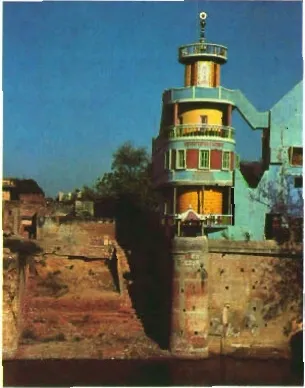
Śrī Vraja-maṇḍala Parikramā (2007) places Brahma-kuṇḍa north of the Raṅgajī temple and a little south-west of Jñāna-gudri; The Color Guide to Vṛndāvana (2000) says that the Manas Mandir overlooks it.[1 +2] The 2000 book also shows a photograph of an ancient temple at Brahma-kuṇḍa, a small domed shrine, without naming it.[3]
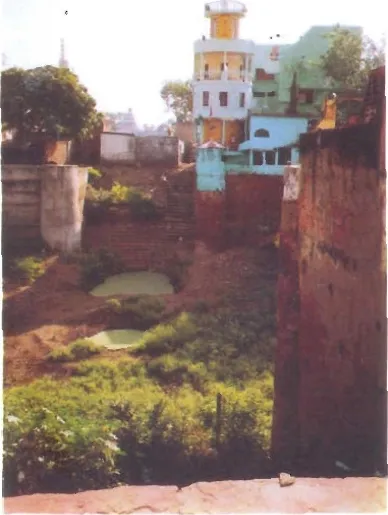
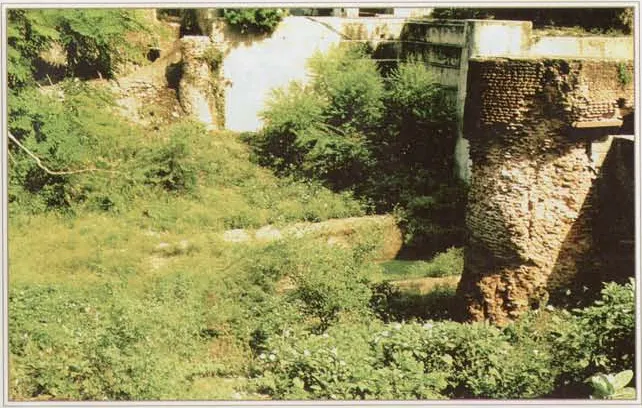
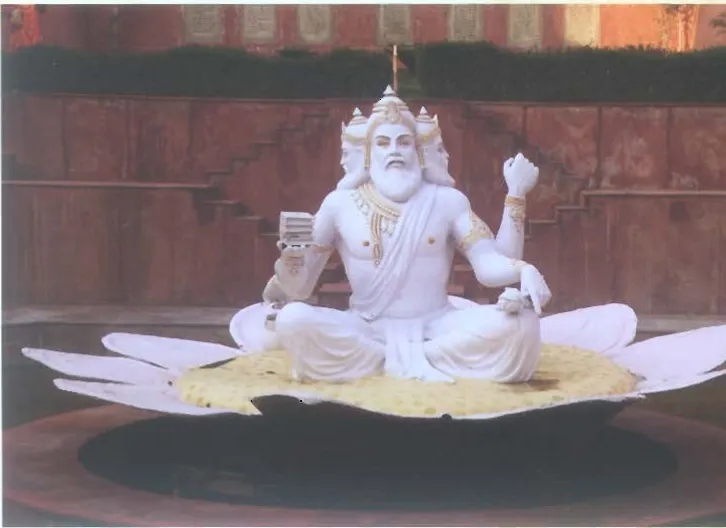
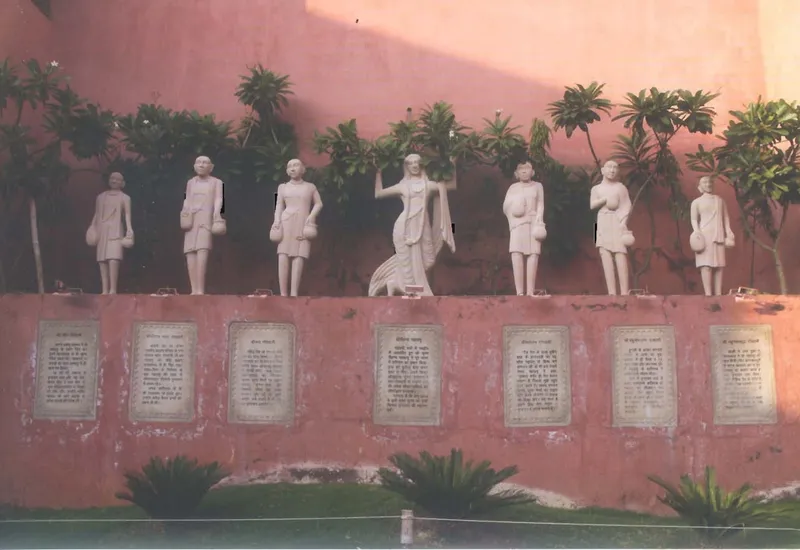
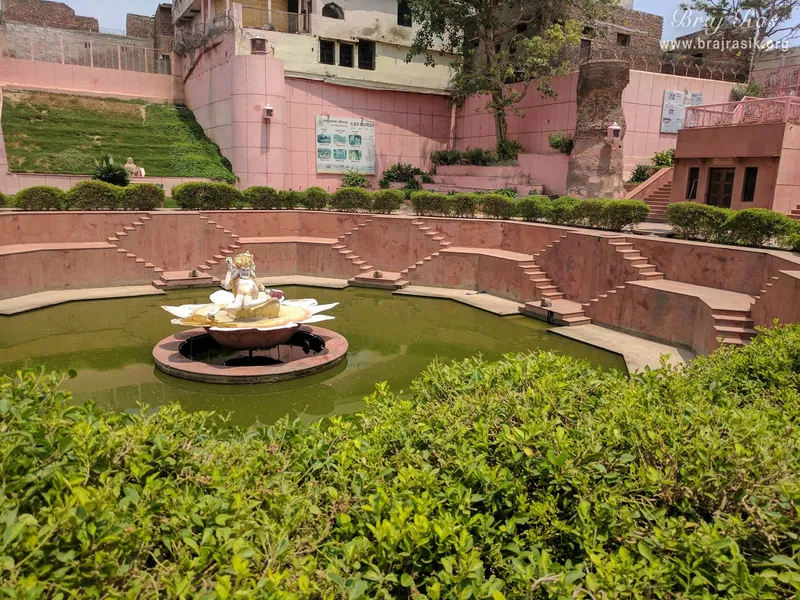
The state of the kuṇḍa has changed over the years. In 1920 the Vṛndāvana-kathā found its red stone lining and its four chatrīs (domed pavilions) falling apart; the 2000 guidebook found it dry and neglected, while the 2010 guidebook describes it as newly renovated, with statues of the Gosvāmīs and of Brahmā. The reports differ because they come from different years:[49]
Accounts differ Present condition of the kuṇḍa.
- The Color Guide to Vṛndāvana (2000)Dried up and fallen into neglect; full of water until a few years earlier.
- Vṛndāvana, the Playground of God (2010)Recently completely renovated; now a very beautiful place.
- Śrī Vraja-maṇḍala Parikramā (2007), photographPhotograph captioned Brahma-kuṇḍa shows a deep hollow overgrown with grass and shrubs.
- Vṛndāvana-kathā (1920), printed p. 198Lined with red stone, with four chatrīs over the ghāṭa; the stones were falling everywhere, the chatrīs close to falling, the water foul and discoloured, yet devotees bathed in it and drank it.
Location
| Where it is | a little south-west of Jñāna-gudaḍī; map key 15[53] to the north of Śrī Raṅgajī Temple (Famous kuṇḍas list)[54] |
|---|
Places at Brahma-kuṇḍa (Vṛndāvana)
1 places
Nearby places
Jñāna-gudri · Raṅgajī Mandira · Manas Mandira · Bilvamaṅgala Ṭhākura's samādhi
Pictures
7 pictures
History
The stone lining of the kuṇḍa is credited only by hearsay: the Vṛndāvana-kathā (1920) passes on a report that Bīrbal, Akbar's minister, had it built, and the historian A. W. Entwistle (1987) gives Bīr Singh Deo of Orchhā instead. Neither cites a record, so the builder is not certain.[49 +1]
Where the sources differ
Who had Brahma-kuṇḍa lined with stone (both only as hearsay).
Accounts differ Who had Brahma-kuṇḍa lined with stone (both only as hearsay).
- Vṛndāvana-kathā (1920), printed p. 198'Some say' that Bīrbal, Akbar's witty brāhmaṇa minister, had the kuṇḍa lined (red stone, four chatrīs).
- A. W. Entwistle (1987), a historianEntwistle reports that the tank is said to have been lined with masonry ghāṭas by Vīrasiṁha Deva of Orchha.
More on this place
Brahmā's theft of the calves and cowherd boys · The cowherds' vision at Brahma-hrada · How Nārada became a gopī: the accounts side by side
References
54 references
- Śrī Vraja-maṇḍala Parikramā (2007), PDF p. 345
- Śrī Vraja-maṇḍala Parikramā (2007), PDF p. 321
- The Color Guide to Vṛndāvana (2000), Written and Photographed by Rājaśekhara dāsa Brahmacārī, PDF p. 136
- Śrīla Kṛṣṇadāsa Kavirāja Gosvāmī, Govinda-līlāmṛta, sarga 21 (ekaviṁśaḥ sargaḥ), v.86, after the editions of Haridas Das and Haridas Shastri
- Govinda-līlāmṛta with Vṛndāvana Cakravartī's Sad-ānanda-vidhāyinī ṭīkā, ṭīkā on sarga 21, v.86, after Haridas Shastri's edition, 1981
- Śrīla Viśvanātha Cakravartī, Vraja-rīti-cintāmaṇi, sarga 2 (dvitīyaḥ sargaḥ), vv. 73–74
- Śrīla Rūpa Gosvāmī, Lalita-mādhava, act 1, prologue spoken by the sūtradhāra after the nāndī … after v.2')
- Śrīla Rūpa Gosvāmī, Vidagdha-mādhava, commentary on the prologue word 'śrī-śaṅkara-devena' veṇu-nāda-vilāsaḥ [part 2] v.4')
- Śrīla Rādhā-kṛṣṇa Gosvāmī, Sādhana-dīpikā, section (2), after v.9, 'atha ūrdhvāmnāya-tantra-vākyāny āha'
- Śrīla Narahari Cakravartī, Bhakti-ratnākara, Second Wave (dvitīya taraṅga), printed p. 92 (1912 edition); Sādhana-dīpikā verse 2 as numbered there, 2nd ed., 1912
- The Color Guide to Vṛndāvana (2000), Written and Photographed by Rājaśekhara dāsa Brahmacārī, PDF p. 89
- Vṛndāvana, the Playground of God (2010), Bhakti Caitanya Svāmī, PDF p. 198
- Vṛndāvana-Dhāma Ki Jaya! (c. 1986), by Dhruva Mahārāja dāsa, PDF p. 79
- the undated parikramā notes Nandagrāma, ¶57
- the undated parikramā notes Kāmyavana, ¶20
- Śrīla Prabhupāda, Śrī Caitanya-caritāmṛta, Ādi-līlā 1.57, purport · vedabase.io
- Vṛndāvana, the Playground of God (2010), Bhakti Caitanya Svāmī, PDF p. 190
- The Color Guide to Vṛndāvana (2000), Written and Photographed by Rājaśekhara dāsa Brahmacārī, PDF p. 125
- the undated parikramā notes Vṛndāvana, ¶245
- Śrīmad-Bhāgavatam 10.13.15, Bhagavata Vidya Pith edition, ed. Bhagavata Rishi and Krishna Shankar Shastri, 1996
Show all 54 references
- Śrīmad-Bhāgavatam 10.13.18, GRETIL
- Śrīmad-Bhāgavatam 10.13.40, GRETIL
- Śrīmad-Bhāgavatam 10.13.59, GRETIL
- Śrīmad-Bhāgavatam 10.13.61, Bhagavata Vidya Pith edition, ed. Bhagavata Rishi and Krishna Shankar Shastri, 1996
- Śrīmad-Bhāgavatam 10.13.62, GRETIL
- Nārada Purāṇa, उत्तरार्धः/अध्यायः 80 v.80-58–80-60
- Kṛṣṇa-caitanya-caritāmṛta of Murāri Gupta, prakrama 4, sarga 9 ('mahā-rāsa-sthalī-darśanam'), verses 4.9.2–4.9.4, PDF page 581
- Śrīmad-Bhāgavatam 10.28.16, GRETIL
- Śrīla Rūpa Gosvāmī, Mathurā-māhātmya, part 1 v.378–382, under the heading 'atha śrī-brahma-kuṇḍasya'
- Śrīla Rūpa Gosvāmī, Mathurā-māhātmya, part 1 v.383–385, in the section 'atha śrī-brahma-kuṇḍasya'
- Varāha Purāṇa, adhyāya 156 (Mathurā-prādurbhāva), vv. 8–9, Sanskrit Wikisource
- Śrīla Jīva Gosvāmī, Kṛṣṇa-sandarbha, anuccheda 106, GRETIL
- Śrīla Jīva Gosvāmī, Gopāla-campū, Uttara-campū, pūraṇa 29, sections 88–89, GRETIL
- Śrīla Narahari Cakravartī, Bhakti-ratnākara, Fifth Wave, printed p. 448 (1912 edition), 2nd ed., 1912
- Śrī Vraja-maṇḍala Parikramā (2007), PDF p. 346
- Śrīla Jīva Gosvāmī, Gopāla-campū, Uttara-campū, pūraṇa 29, sections [88]–[89], GRETIL
- Śrīla Jīva Gosvāmī: commentary on ŚB 10.28.17, Bhagavata Vidya Pith edition, ed. Bhagavata Rishi and Krishna Shankar Shastri, 1996
- Śrīla Narahari Cakravartī, Bhakti-ratnākara, Fifth Wave (pañcama taraṅga), printed p. 447 (1912 edition), 2nd ed., 1912
- Śrīla Narahari Cakravartī, Bhakti-ratnākara, Fifth Wave, printed p. 270 (1912 edition), 2nd ed., 1912
- Śrīla Viśvanātha Cakravartī Ṭhākura: commentary on ŚB 10.14.34, Bhagavata Vidya Pith edition, ed. Bhagavata Rishi and Krishna Shankar Shastri, 1996
- Śrīmad-Bhāgavatam 10.14.34, GRETIL
- Śrīla Prabhupāda, Kṛṣṇa, the Supreme Personality of Godhead (Kṛṣṇa book), Chapter 28, 'Releasing Nanda Mahārāja from the Clutches of Varuṇa' · vedabase.io
- Caitanya-maṅgala, Śeṣa-khaṇḍa, printed p. 174, right-hand column
- Vaṁśīdhara: commentary on ŚB 10.33.10
- Śrīmad-Bhāgavatam 10.33.3
- Nārada Purāṇa, उत्तरार्धः/अध्यायः 80 v.80-22 to 80-26
- Śrīla Rādhā-kṛṣṇa Gosvāmī, Sādhana-dīpikā, section (8) ('yāṅhāra prasāde haya abhīṣṭa-pūraṇa'), after v.7
- Pulinbihārī Datta, ch. 17 (saptadaśa pariccheda), section 3 'kuṇḍa, bāpī o kūpa', printed p. 197
- Pulinbihārī Datta, ch. 17, section 3, printed p. 198
- A. W. Entwistle, ch. 8 §29 'Brahmakund', printed p. 412, Egbert Forsten, Groningen, 1987
- Śrīla Prabhupāda, Letter to Gargamuni, letter of 22 December 1971 · vedabase.io
- Śrīla Prabhupāda, Letter to Gargamuni, letter of 1 January 1972 · vedabase.io
- Śrī Vraja-maṇḍala Parikramā (2007), p. 616-617
- Śrī Vraja-maṇḍala Parikramā (2007), p. 664-665