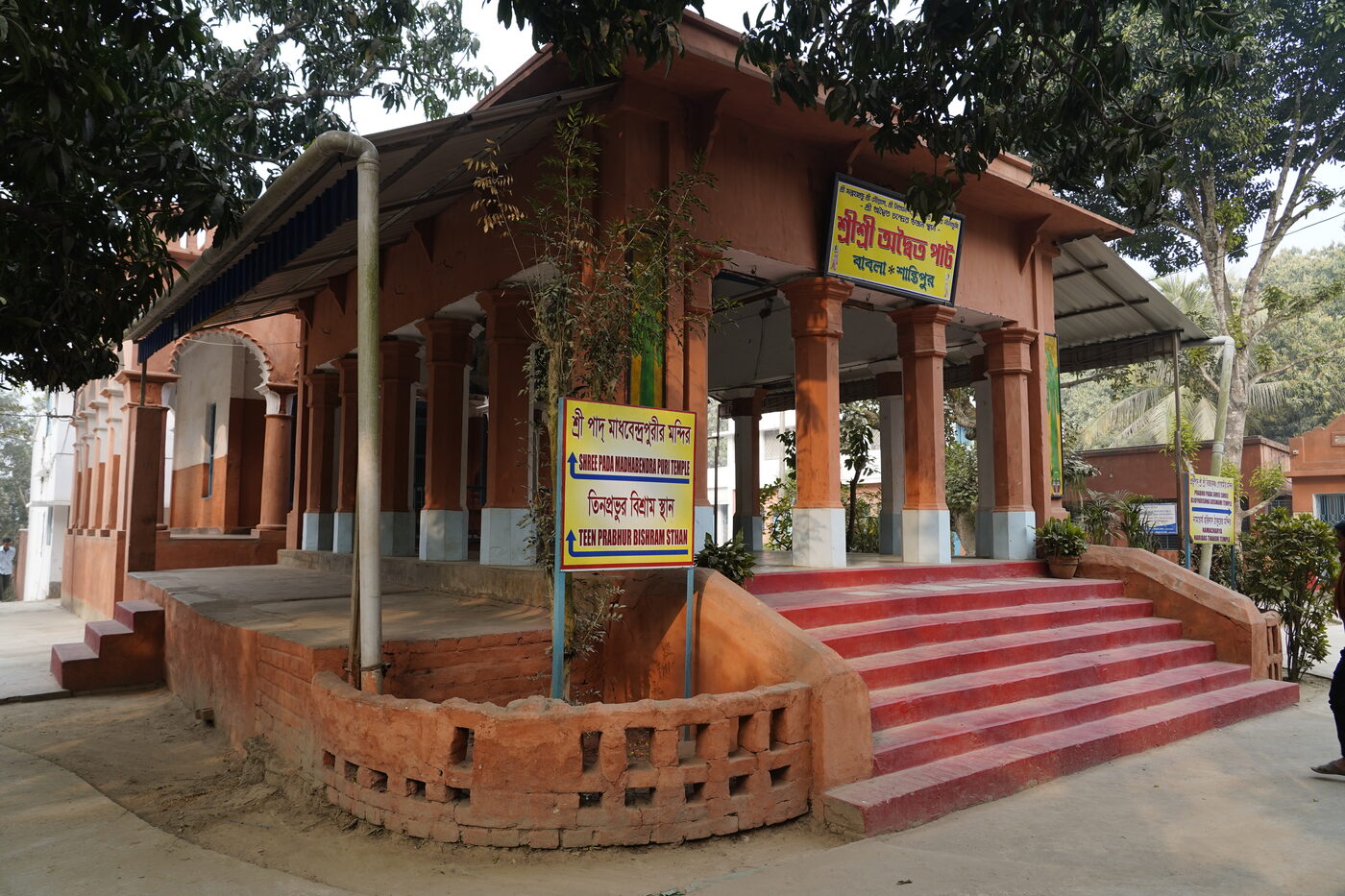
Advaita Acharya was already an old man when the events that Bengal remembers Him for began. He was born in 1434 in the village of Nabagrama in the Srihatta district of eastern Bengal, as the son of Kuvera Pandita and Nabhadevi. Sri Chaitanya Mahaprabhu's own family came from the same district. His father is described as a man of some importance, and the boy was given the name Kamalaksha, "lotus-eyed." Krishnadasa Kaviraja notes that the name was fitting for one who is a limb of the lotus-eyed Supreme Lord.
| Detail | Description |
|---|---|
| Year of appearance | 1434 |
| Day observed | Seventh day of the bright fortnight of Magha, kept as Advaita Saptami |
| Birthplace | Nabagrama, Srihatta district, eastern Bengal |
| Parents | Kuvera Pandita and Nabhadevi |
| Birth name | Kamalaksha, "lotus-eyed" |
| Spiritual master | Madhavendra Puri |
| Later seat | Shantipura, Nadia district, on the Ganges |
Advaita Saptami and the Age Gap #
The traditional date given for His appearance is the seventh day of the bright fortnight of Magha, and the anniversary is kept across the Gaudiya world as Advaita Saptami. If His birth is fixed at 1434, He was fifty-two years older than Mahaprabhu. This age gap explains almost everything unusual about His position. He was old enough to be the Lord's grandfather. He had spent a lifetime as a respected Vaishnava teacher before the Lord appeared. After that, everyone around Him showed Him great respect, but in all His later conduct He kept insisting that He was a servant.
Pilgrimage and the Move to Shantipura #
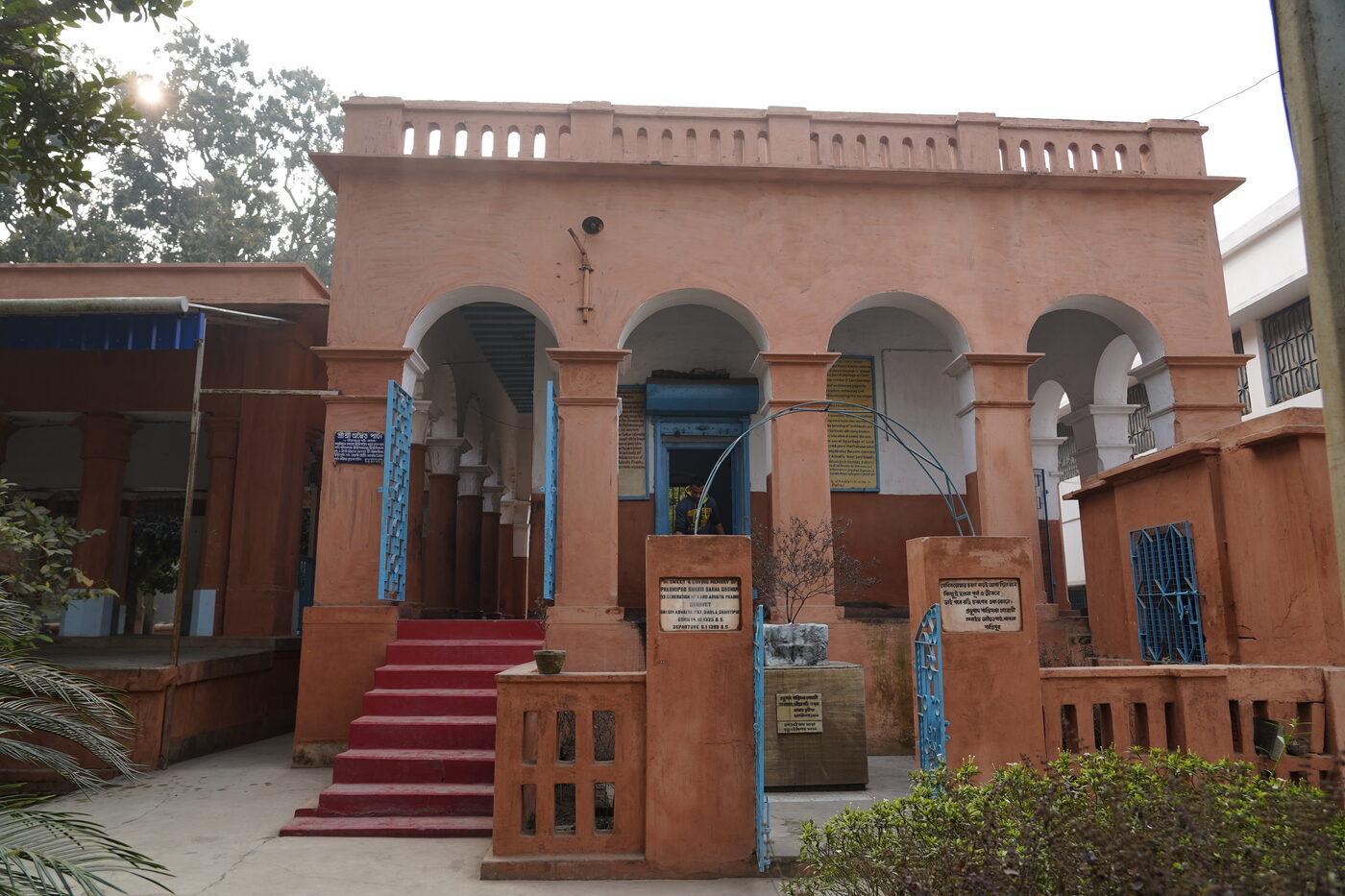
After the passing of His parents, Kamalaksha left home and travelled. The accounts describe a long pilgrimage across India, visiting the holy places and studying. The picture they give is of a man carefully preparing Himself. He gained a deep command of the Bhagavatam, the Bhagavad-gita and the Vedanta. He did this at a time when, in Bengal, those texts were mostly explained in ways He regarded as deeply mistaken. He eventually settled at Shantipura, on the bank of the Ganges in the Nadia district. History remembers Him as the Vaishnava authority of Shantipura.
Initiation From Madhavendra Puri #
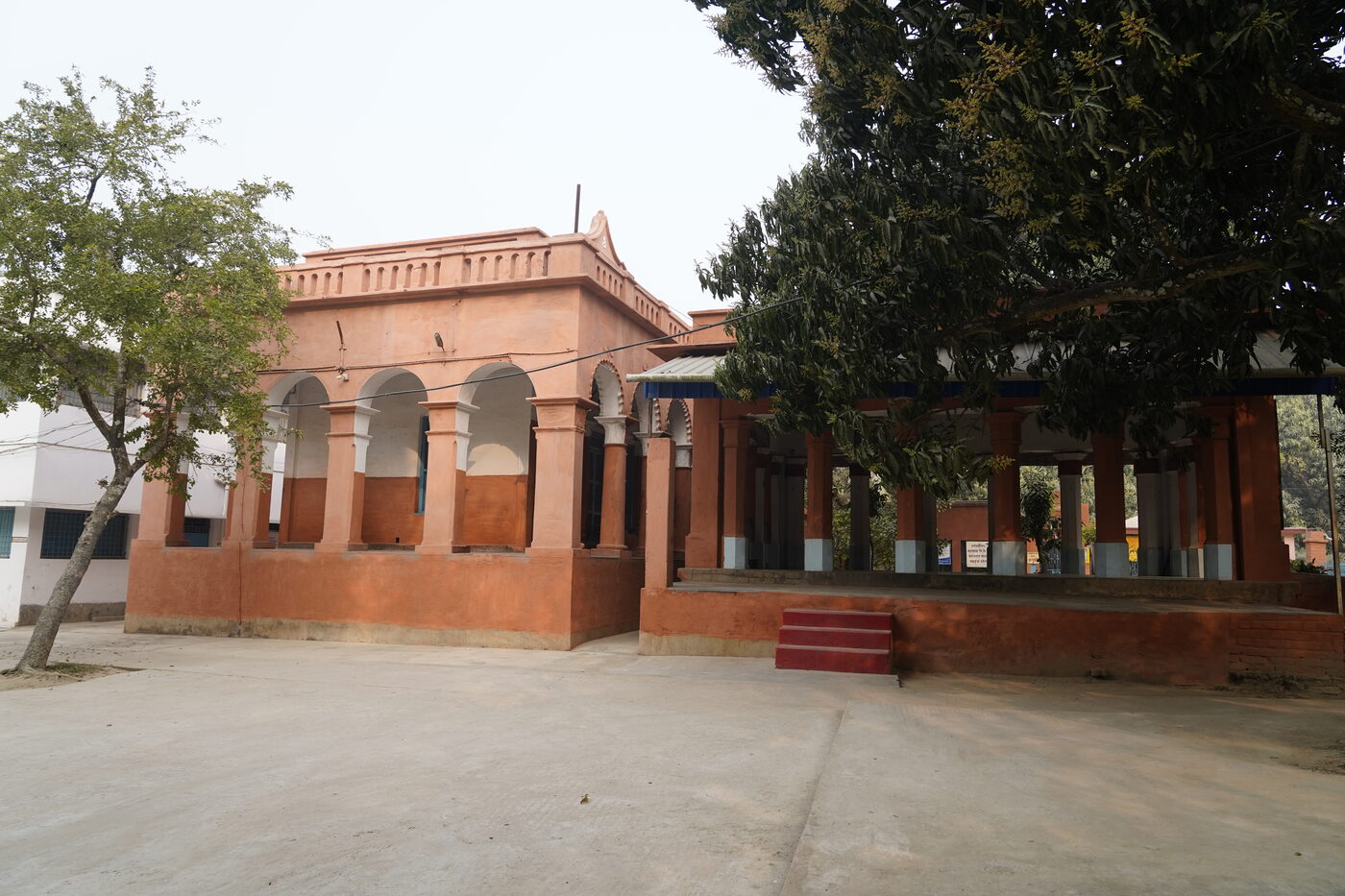
During His travels He met Madhavendra Puri and accepted him as His spiritual master. This was a very important fact, and the Chaitanya-charitamrita records it plainly. The Gaudiya tradition sees in Madhavendra Puri the first appearance of intense, personal and deeply felt love for Krishna. This mood would later define the whole movement. Advaita Acharya received that mood from him directly. Krishnadasa Kaviraja states that Sri Chaitanya Mahaprabhu considered Advaita Acharya a disciple of Madhavendra Puri. So Mahaprabhu obeyed Him and respected Him as a spiritual master. This is why the Lord's dealings with this one associate look unlike His dealings with anyone else.
Why He Is Called Advaita Acharya #
He is known everywhere by two names. Both are titles, not the name His parents gave Him, and the reasons for them are recorded. He is called Advaita, "non-different," because He is understood to be identical in all respects with the Supreme Lord. He is not a separate being who serves Him, but a direct expansion. He is called Acharya because teaching devotional service was His only occupation. So the two words Advaita Acharya sum up everything the tradition says about Him: that He is God, and that He spent His life as a teacher of bhakti.
What He taught explains why He became so frustrated, and that frustration led to the next chapter of His life. He explained the Bhagavad-gita and the Bhagavatam in terms of devotional service. That is, He read them as being about a person to be loved, not an impersonal absolute to be merged into. In the Bengal of the late fifteenth century, only a few people held this view, and it went against the common trend. The learned world of Nabadwip, sixty miles away, was busy with logic and with ritual. The leading philosophers were Mayavadis. And in His judgement, the ordinary religious life of the province had become only a matter of correct performance, without any real love of God. He taught otherwise for decades, to whoever would listen, and watched it make very little difference.
Maha-Vishnu and the Material Cause #
Behind all this is Advaita Acharya's theological identity, and the Chaitanya-charitamrita states it clearly. Advaita Acharya is the incarnation of Maha-Vishnu. Krishnadasa Kaviraja explains this more exactly. Vishnu, in His efficient aspect, glances upon material energy and sets creation in motion. Advaita Acharya is the material cause of the cosmic manifestation. He is described as the creator of millions of universes, and as the principal limb of Narayana. The word "limb" is chosen over "part" on purpose, because it implies a closer relationship. That is the being who was living quietly at Shantipura in the 1480s, teaching the Bhagavatam to a small circle, and becoming steadily more distressed at the state of the world.