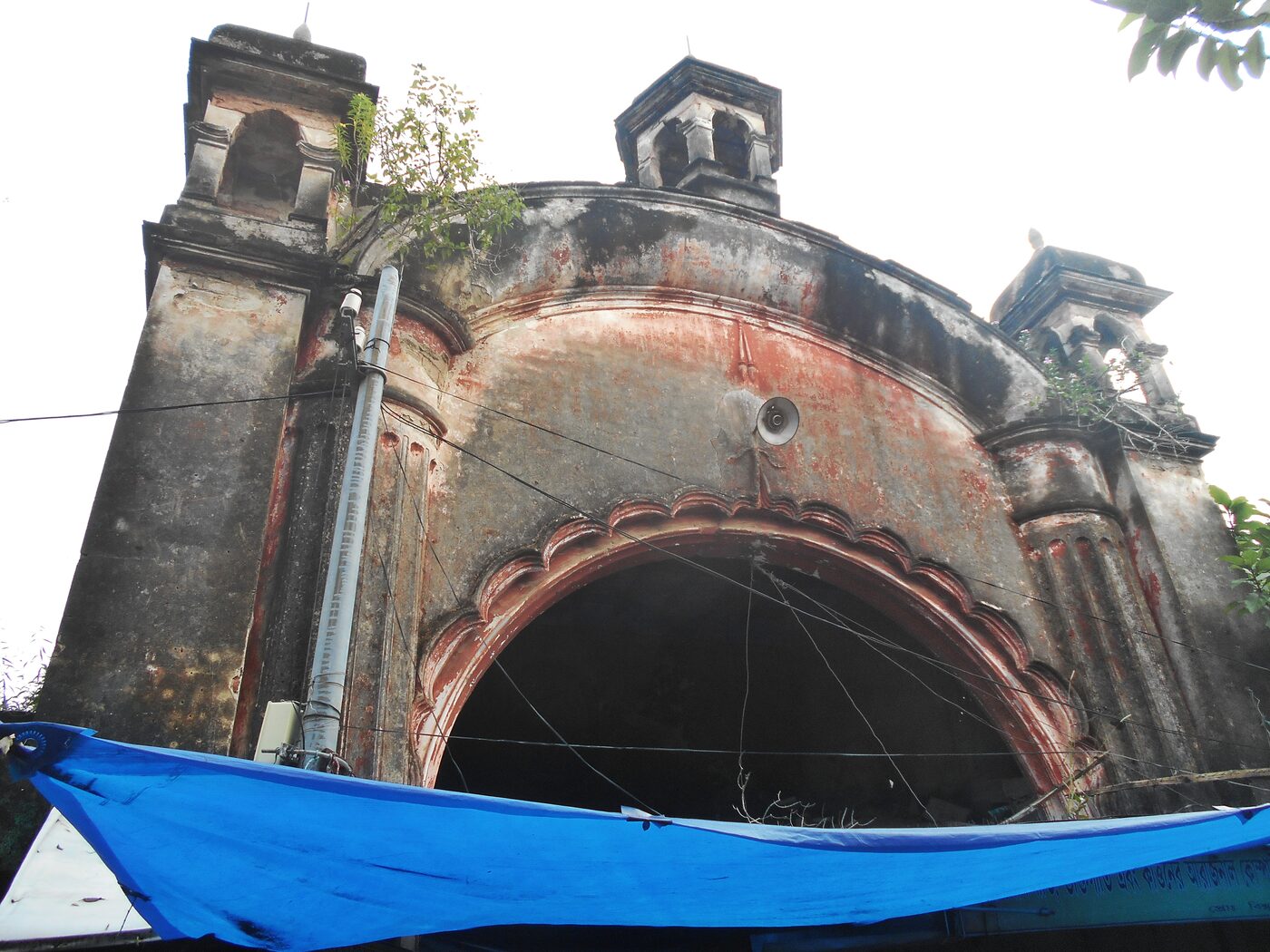
Advaita Acharya outlived Sri Chaitanya Mahaprabhu. He had been fifty-two when the Lord was born. He was therefore about a hundred when the Lord's manifest pastimes concluded at Puri in 1534. The traditional accounts hold that He remained at Shantipura for some years afterwards. The sources do not give the exact date of His disappearance with any confidence. The biographers are exact about His birth, but they become vague about the end of His life. So we do not know the date.
| Detail | Description |
|---|---|
| Age at Mahaprabhu's advent | Fifty-two |
| Age in 1534 | About a hundred, when the Lord's manifest pastimes concluded at Puri |
| Last years spent at | Shantipura |
| Date of disappearance | Not fixed with any confidence in the sources |
| Samadhi | Shantipura, together with the family Deities |
The Last Years at Shantipura #
His last years are recorded mainly through the effect He had on other people. By then Mahaprabhu was gone, and the Nabadwip generation was growing smaller. Advaita Acharya was the senior surviving figure of the original circle, so the Vaishnavas of Bengal looked to Shantipura. Devotees came to Him for direction. He continued to teach the Bhagavatam, which He had been doing since before any of them were born. The sources show a very old man filling, for a second time, the position He had held before the Lord ever appeared. He was again the Vaishnava authority of the district, explaining the Bhagavatam to whoever came.
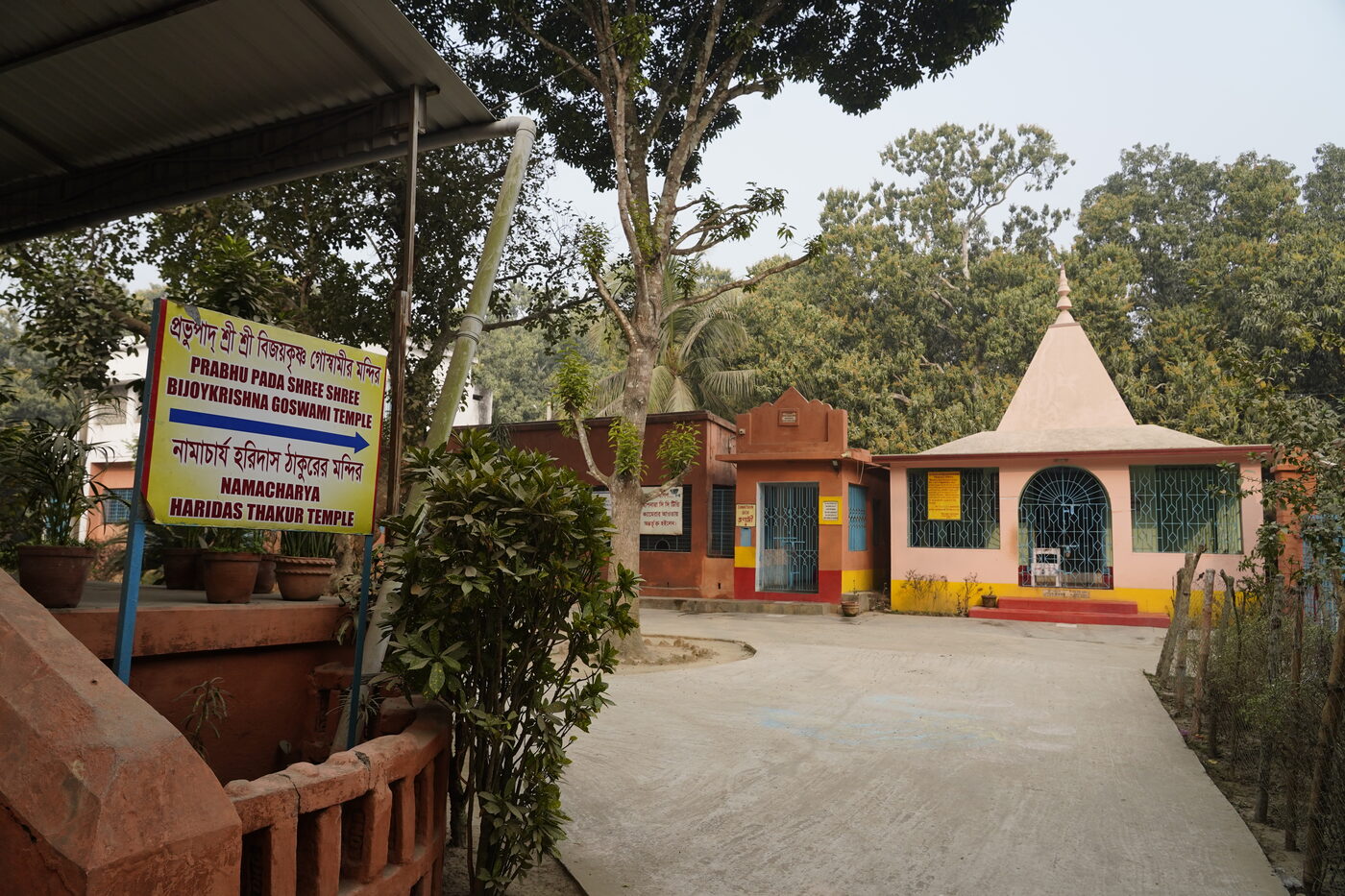
The Samadhi and Deities at Shantipura #
His samadhi is at Shantipura, together with the family Deities, and the site remains a place of pilgrimage in the Nadia circuit, visited on the same journeys that take pilgrims to Mayapur, Nabadwip and Ekachakra. The Deities of Advaita Acharya and Sita Thakurani installed there are among the holy sights that Bengali Vaishnavas travel to see.
Maha-Vishnu Who Wanted a Master #
Gaudiya theology sums up His life with a puzzle that it leaves unsolved. According to its own teaching, Advaita Acharya is Maha-Vishnu, the material cause of the cosmic manifestation. Through Him countless universes are produced and maintained. He is not a great devotee of the Lord. He is the Lord, under a name that means exactly that He is not different. And across five centuries of Bengali devotional literature, He is remembered for wanting a master. He went to great lengths to find one. Having found one, He spent the rest of a very long life telling everybody within reach that they were servants of Sri Chaitanya Mahaprabhu.
What Advaita Acharya Is Remembered For #
Two lessons are usually drawn from His life. The first comes from the prayers that brought the Lord down. It is that one devotee, if serious enough, can change the spiritual condition of an age. The tradition states this plainly, without adding conditions, and means it literally.
The second lesson is subtler. It is about the way He lived, not about what He achieved. Advaita Acharya had every possible reason to be given the first place. He had age, learning and spiritual rank, and He could claim to have called the Lord down in the first place. Yet for fifty years He firmly refused all of it, choosing a position He clearly regarded as better. The tradition keeps returning to what Krishnadasa Kaviraja observes on this point. He says that love for Krishna has one unusual effect. It fills superiors, equals and inferiors alike with the spirit of service, and there is no joy anywhere that can compare with what is tasted in it. Advaita Acharya is the proof of this. He is the one member of the Panca-tattva whose whole life story shows that being a servant is the best thing there is to be.
