Sri Advaita Acharya
The Devotee Whose Prayers Called the Lord Down
The complete life, on one page: The main biography and every pastime page, in order, in one place
Introduction
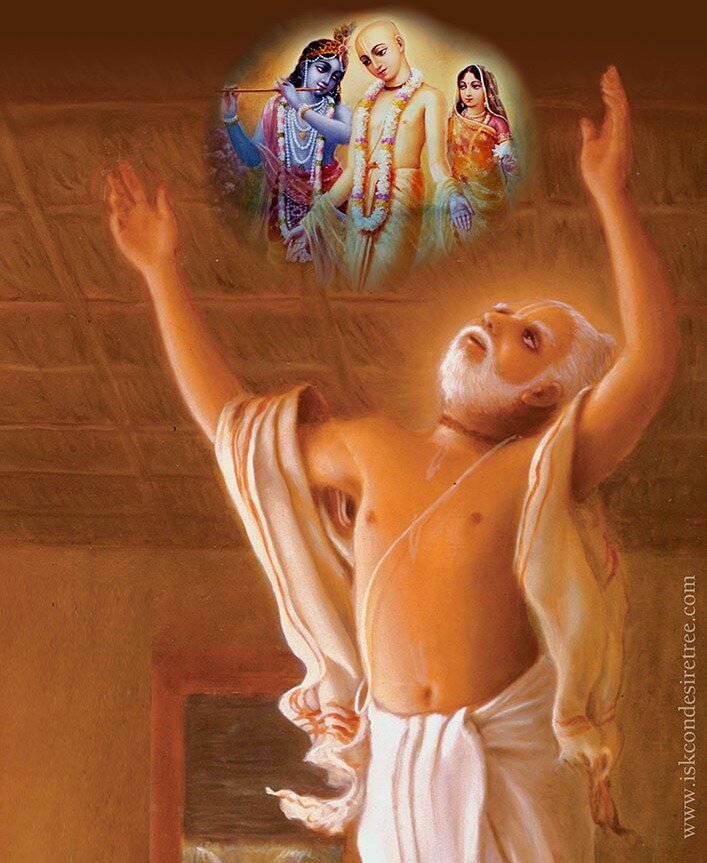
Sri Advaita Acharya has a place in the Panca-tattva unlike any of the others. He is far older than Sri Chaitanya Mahaprabhu, by roughly fifty years, and the tradition holds that His prayers brought the Lord down. He is understood to be a combined incarnation of Maha-Vishnu and Sadashiva. He is also counted as bhakta-avatara, the Lord descending in the role of a devotee. For this reason He is worshipped as part of the Lord's own descent, not only as an associate who came with it.
| Detail | Description |
|---|---|
| Appearance | 1434, Nabagrama, Srihatta district, eastern Bengal |
| Birth name | Kamalaksha |
| Parents | Kuvera Pandita and Nabhadevi |
| Identity | Incarnation of Maha-Vishnu, one with Sadashiva; the bhakta-avatara (Gaura-ganoddesha-dipika 11, 76; Chaitanya-charitamrita Adi 1.12) |
| Wife | Sita Thakurani, daughter of Nrsimha Bhaduri |
| Spiritual master | Madhavendra Puri |
| Seat | Shantipura, on the bank of the Ganges in Nadia |
Scriptural evidence for the introduction (3)
अस्यार्थो विवृतस्तैर्यः स सङ्क्षिप्य विलिख्यते ।
भक्तरूपो गौरचन्द्रो यतोऽसौ नन्दनन्दनः ॥
भक्तस्वरूपो नित्यानन्दो व्रजे यः श्रीहलायुधः ।
भक्तावतार आचार्योऽद्वैतो यः श्रीसदाशिवः ॥
भक्ताख्याः श्रीनिवासाद्या यतस्ते भक्तरूपिनः ।
भक्तशक्तिर्द्विजाग्रण्यः श्रीगदाधरपण्डितः ॥११॥
asyārtho vivṛtas tair yaḥ sa saṅkṣipya vilikhyate |
bhakta-rūpo gauracandro yato’sau nanda-nandanaḥ ||
bhakta-svarūpo nityānando vraje yaḥ śrī-halāyudhaḥ |
bhaktāvatāra ācāryo’dvaito yaḥ śrī-sadāśivaḥ ||
bhaktākhyāḥ śrīnivāsādyā yatas te bhakta-rūpinaḥ |
bhakta-śaktir dvijāgraṇyaḥ śrī-gadādhara-paṇḍitaḥ ||11||
I shall now summarily explain the meaning of these words. In this Panca-tattva, the bhakta-rupa (form of a devotee) is Lord Caitanya Mahaprabhu, who formerly appeared as Lord Krsna, the son of Nanda Maharaja. The bhakta-svarupa (devotional incarnation) is Lord Nityananda, who formerly appeared in Vrajabhumi as Lord Balarama. The bhaktavatara (devotional manifestation) is Lord Advaita Acarya, who is not different from Lord Sadasiva. The bhaktakhya (pure devotee) is Srinivasa and the other great devotees as well. The bhakta-sakti (devotional energy) is Gadadhara Pandita, the foremost of brahmanas.
From the purport: Advaita Ācārya is the incarnation of Sadāśiva from the spiritual world.
Kavi Karnapura's summary of the Panca-tattva: Advaita Acharya is the bhakta-avatara and is Sri Sadashiva. Sanskrit: diacritic edition of the Gaura-ganoddesha-dipika; English translation as published at bvmlu.org. Purport excerpt: Srila Prabhupada, Chaitanya-charitamrita Adi 17.301.
व्रजे आवेशरूपत्वाद्व्यूहो योऽपि सदाशिवः ।
स एवाद्वैतगोस्वामी चैतन्याभिन्नविग्रहः ॥७६॥
vraje āveśa-rūpatvād vyūho yo’pi sadāśivaḥ |
sa evādvaita-gosvāmī caitanyābhinna-vigrahaḥ ||76||
Lord Sadasiva, who formerly appeared as an avesa-incarnation in Vrajabhumi, appeared in Lord Caitanya's pastimes as Lord Advaita Gosvami, who is non-different from Lord Caitanya Himself.
Identifies Sadashiva, who in Vraja appeared as an avesha form, as Advaita Gosvami, non-different from Sri Chaitanya. Sanskrit: diacritic edition of the Gaura-ganoddesha-dipika; English translation as published at bvmlu.org.
মহাবিষ্ণুর্জগৎকর্তা মায়য়া যঃ সৃজত্যদঃ ।
তস্যাবতার এবায়মদ্বৈতাচার্য ঈশ্বরঃ ॥ ১২ ॥
mahā-viṣṇur jagat-kartā
māyayā yaḥ sṛjaty adaḥ
tasyāvatāra evāyam
advaitācārya īśvaraḥ
Lord Advaita Ācārya is the incarnation of Mahā-Viṣṇu, whose main function is to create the cosmic world through the actions of māyā.
States that Advaita Acharya is the incarnation of Maha-Vishnu, the creator of the cosmic world.
Chapter 1
The Advent and Early Life of Advaita Acharya
Kamalaksha of Nabagrama, the pilgrim scholar who became the Vaishnava authority of Shantipura
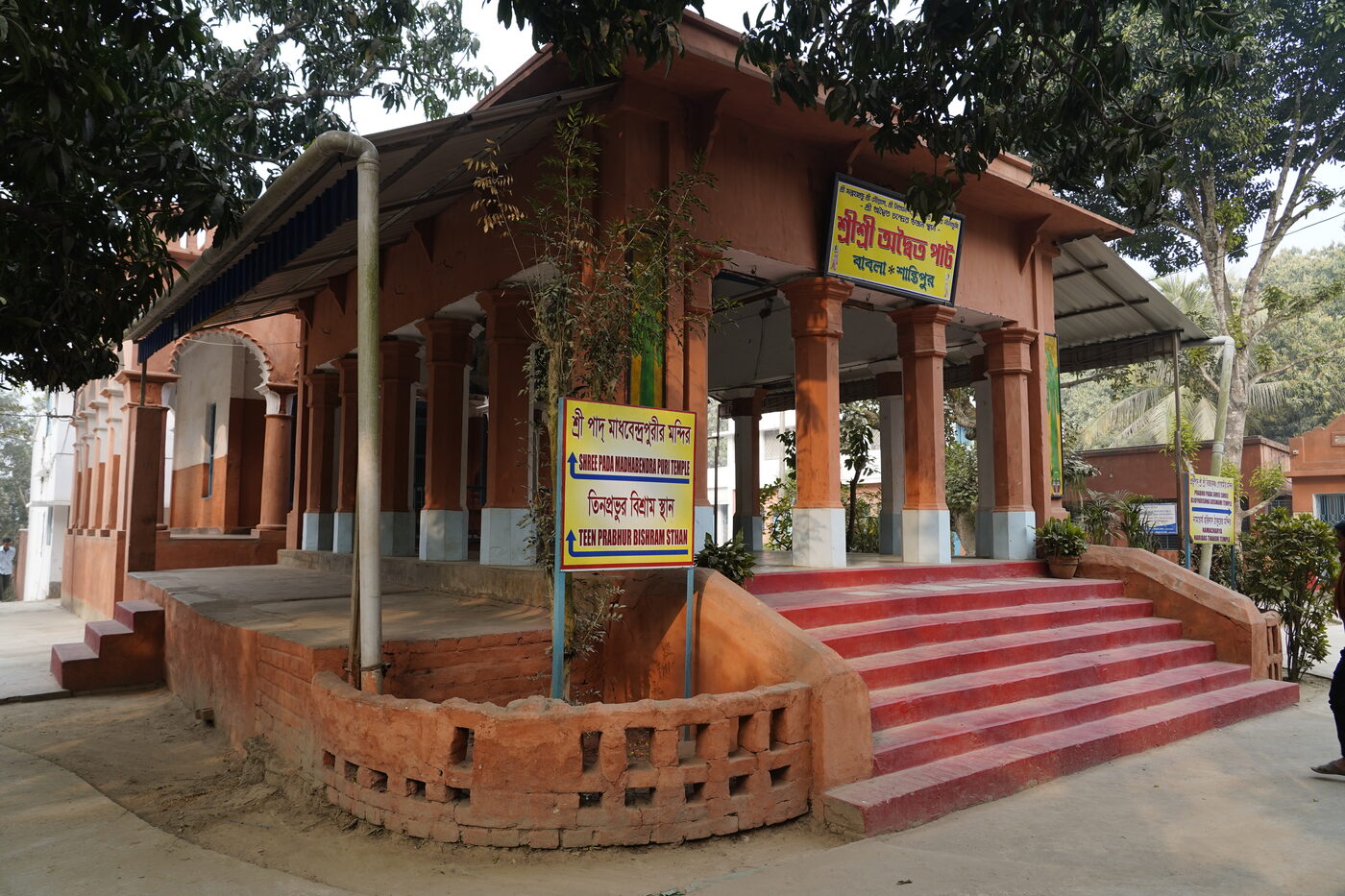
Advaita Acharya was already an old man when the events that Bengal remembers Him for began. He was born in 1434 in the village of Nabagrama in the Srihatta district of eastern Bengal, as the son of Kuvera Pandita and Nabhadevi. Sri Chaitanya Mahaprabhu's own family came from the same district. His father is described as a man of some importance, and the boy was given the name Kamalaksha, "lotus-eyed." Krishnadasa Kaviraja notes that the name was fitting for one who is a limb of the lotus-eyed Supreme Lord.
| Detail | Description |
|---|---|
| Year of appearance | 1434 |
| Day observed | Seventh day of the bright fortnight of Magha, kept as Advaita Saptami |
| Birthplace | Nabagrama, Srihatta district, eastern Bengal |
| Parents | Kuvera Pandita and Nabhadevi |
| Birth name | Kamalaksha, "lotus-eyed" |
| Spiritual master | Madhavendra Puri |
| Later seat | Shantipura, Nadia district, on the Ganges |
Advaita Saptami and the Age Gap #
The traditional date given for His appearance is the seventh day of the bright fortnight of Magha, and the anniversary is kept across the Gaudiya world as Advaita Saptami. If His birth is fixed at 1434, He was fifty-two years older than Mahaprabhu. This age gap explains almost everything unusual about His position. He was old enough to be the Lord's grandfather. He had spent a lifetime as a respected Vaishnava teacher before the Lord appeared. After that, everyone around Him showed Him great respect, but in all His later conduct He kept insisting that He was a servant.
Pilgrimage and the Move to Shantipura #
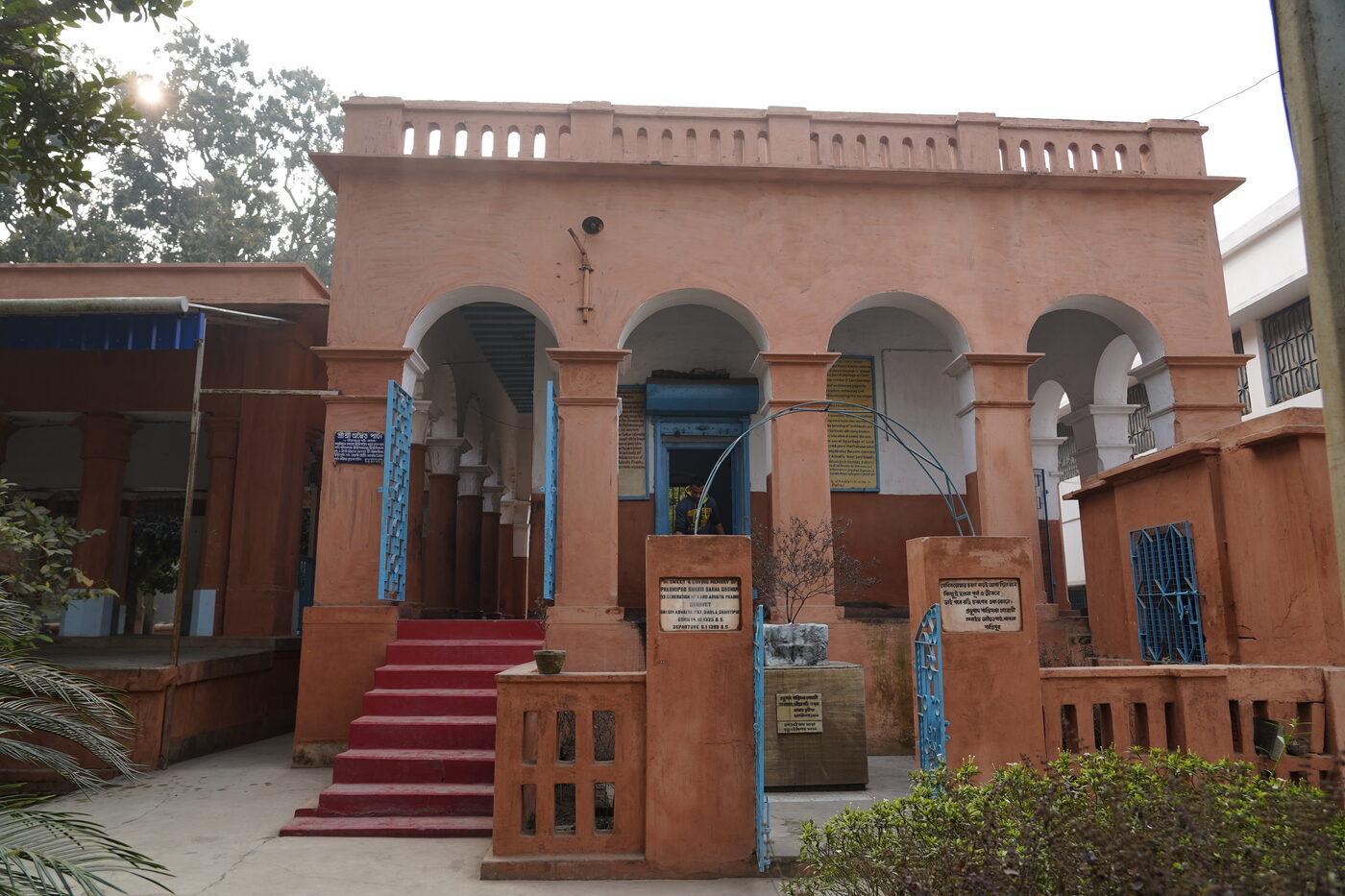
After the passing of His parents, Kamalaksha left home and travelled. The accounts describe a long pilgrimage across India, visiting the holy places and studying. The picture they give is of a man carefully preparing Himself. He gained a deep command of the Bhagavatam, the Bhagavad-gita and the Vedanta. He did this at a time when, in Bengal, those texts were mostly explained in ways He regarded as deeply mistaken. He eventually settled at Shantipura, on the bank of the Ganges in the Nadia district. History remembers Him as the Vaishnava authority of Shantipura.
Initiation From Madhavendra Puri #
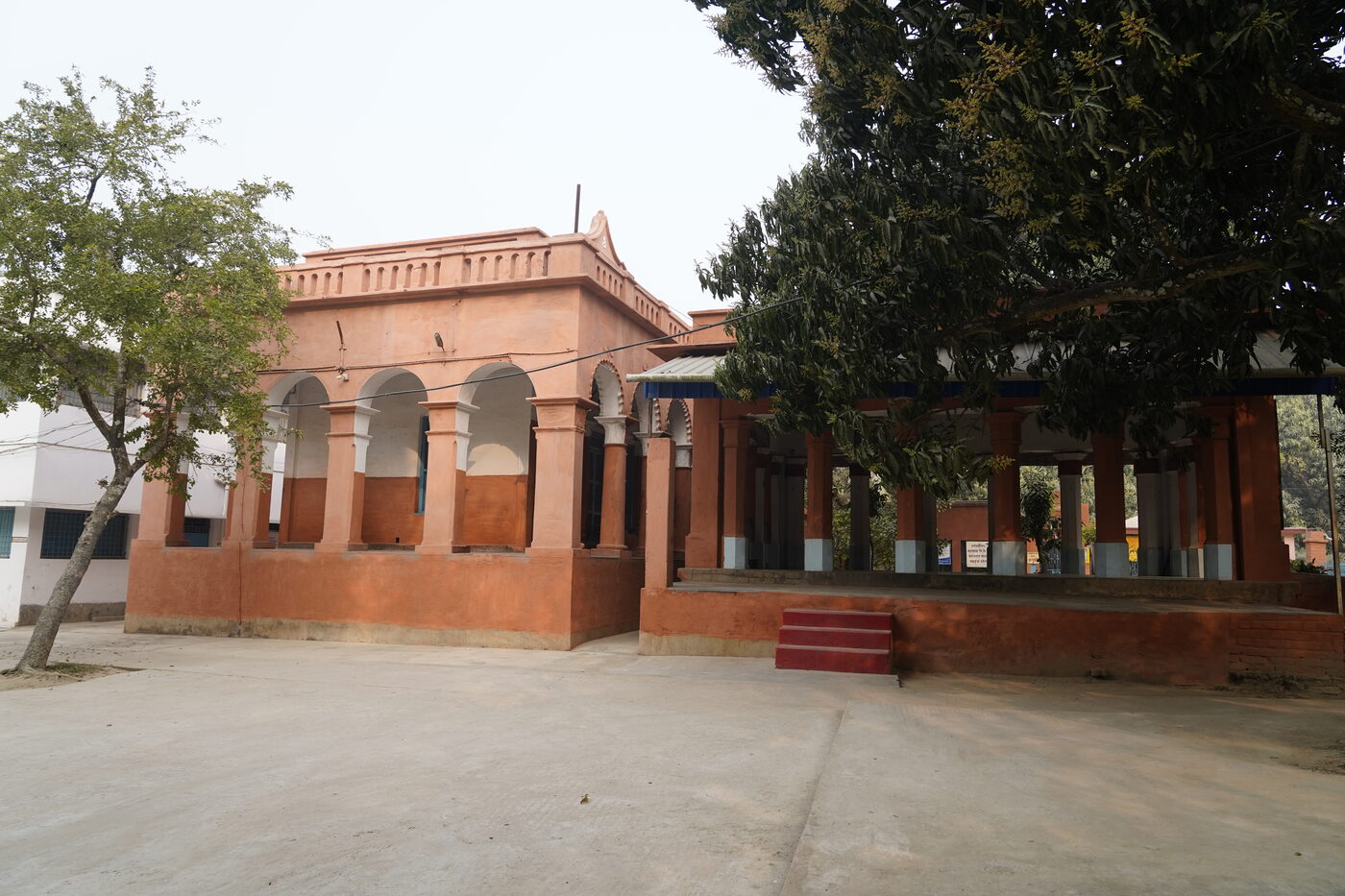
During His travels He met Madhavendra Puri and accepted him as His spiritual master. This was a very important fact, and the Chaitanya-charitamrita records it plainly. The Gaudiya tradition sees in Madhavendra Puri the first appearance of intense, personal and deeply felt love for Krishna. This mood would later define the whole movement. Advaita Acharya received that mood from him directly. Krishnadasa Kaviraja states that Sri Chaitanya Mahaprabhu considered Advaita Acharya a disciple of Madhavendra Puri. So Mahaprabhu obeyed Him and respected Him as a spiritual master. This is why the Lord's dealings with this one associate look unlike His dealings with anyone else.
Why He Is Called Advaita Acharya #
He is known everywhere by two names. Both are titles, not the name His parents gave Him, and the reasons for them are recorded. He is called Advaita, "non-different," because He is understood to be identical in all respects with the Supreme Lord. He is not a separate being who serves Him, but a direct expansion. He is called Acharya because teaching devotional service was His only occupation. So the two words Advaita Acharya sum up everything the tradition says about Him: that He is God, and that He spent His life as a teacher of bhakti.
What He taught explains why He became so frustrated, and that frustration led to the next chapter of His life. He explained the Bhagavad-gita and the Bhagavatam in terms of devotional service. That is, He read them as being about a person to be loved, not an impersonal absolute to be merged into. In the Bengal of the late fifteenth century, only a few people held this view, and it went against the common trend. The learned world of Nabadwip, sixty miles away, was busy with logic and with ritual. The leading philosophers were Mayavadis. And in His judgement, the ordinary religious life of the province had become only a matter of correct performance, without any real love of God. He taught otherwise for decades, to whoever would listen, and watched it make very little difference.
Maha-Vishnu and the Material Cause #
Behind all this is Advaita Acharya's theological identity, and the Chaitanya-charitamrita states it clearly. Advaita Acharya is the incarnation of Maha-Vishnu. Krishnadasa Kaviraja explains this more exactly. Vishnu, in His efficient aspect, glances upon material energy and sets creation in motion. Advaita Acharya is the material cause of the cosmic manifestation. He is described as the creator of millions of universes, and as the principal limb of Narayana. The word "limb" is chosen over "part" on purpose, because it implies a closer relationship. That is the being who was living quietly at Shantipura in the 1480s, teaching the Bhagavatam to a small circle, and becoming steadily more distressed at the state of the world.
Scriptural evidence for this chapter (5)
মহাবিষ্ণুর্জগৎকর্তা মায়য়া যঃ সৃজত্যদঃ ।
তস্যাবতার এবায়মদ্বৈতাচার্য ঈশ্বরঃ ॥ ৪ ॥
mahā-viṣṇur jagat-kartā
māyayā yaḥ sṛjaty adaḥ
tasyāvatāra evāyam
advaitācārya īśvaraḥ
Word for word
mahā-viṣṇuḥ: Mahā-Viṣṇu, the resting place of the efficient cause; jagat-kartā: the creator of the cosmic world; māyayā: by the illusory energy; yaḥ: who; sṛjati: creates; adaḥ: that universe; tasya: His; avatāraḥ: incarnation; eva: certainly; ayam: this; advaita-ācāryaḥ: Advaita Ācārya; īśvaraḥ: the Supreme Lord, the resting place of the material cause.
Lord Advaita Ācārya is the incarnation of Mahā-Viṣṇu, whose main function is to create the cosmic world through the actions of māyā.
identifies Advaita Acharya as the incarnation of Maha-Vishnu
মহাবিষ্ণুর অংশ—অদ্বৈত গুনধাম ।
ঈশ্বরে অভেদ, তেঞি ‘অদ্বৈত’ পূর্ণ নাম ॥ ২৬ ॥
mahā-viṣṇura aṁśa — advaita guṇa-dhāma
īśvare abheda, teñi ‘advaita’ pūrṇa nāma
Word for word
mahā-viṣṇura: of Lord Mahā-Viṣṇu; aṁśa: part; advaita: Advaita Ācārya; guṇa-dhāma: reservoir of all attributes; īśvare: from the Lord; abheda: nondifferent; teñi: therefore; advaita: nondifferent; pūrṇa nāma: full name.
Śrī Advaita, who is a reservoir of virtues, is the main limb of Mahā-Viṣṇu. His full name is Advaita, for He is identical in all respects with that Lord.
why He is named Advaita, identical in all respects with the Lord
ভক্তি–উপদেশ বিনু তাঁর নাহি কার্য ।
অতএব নাম হৈল ‘অদ্বৈত আচার্য’ ॥ ২৯ ॥
bhakti-upadeśa vinu tāṅra nāhi kārya
ataeva nāma haila ‘advaita ācārya’
Word for word
bhakti-upadeśa: instruction of devotional service; vinu: without; tāṅra: His; nāhi: there is not; kārya: occupation; ataeva: therefore; nāma: the name; haila: became; advaita ācārya: the supreme teacher (ācārya) Advaita Prabhu.
Since He has no other occupation than to teach devotional service, His name is Advaita Ācārya.
why He is named Acharya, He has no occupation but teaching devotional service
কমল–নয়নের তেঁহো, যাতে ‘অঙ্গ’, ‘অংশ’ ।
কমলাক্ষ’ করি ধরে নাম অবতংস ॥ ৩১ ॥
kamala-nayanera teṅho, yāte ‘aṅga’ ‘aṁśa’
‘kamalākṣa’ kari dhare nāma avataṁsa
Word for word
kamala-nayanera: of the lotus-eyed; teṅho: He; yāte: since; aṅga: limb; aṁśa: part; kamala-akṣa: the lotus-eyed; kari’: accepting that; dhare: takes; nāma: the name; avataṁsa: partial expansion.
Since He is a limb or part of the lotus-eyed Supreme Lord, He also bears the name Kamalākṣa.
the name Kamalaksha, given at birth
মাধবেন্দ্রপুরীর ইঁহো শিষ্য, এই জ্ঞানে ।
আচার্য–গোসাঞিরে প্রভু গুরু করি’ মানে ॥ ৪০ ॥
mādhavendra-purīra iṅho śiṣya, ei jñāne
ācārya-gosāñire prabhu guru kari’ māne
Word for word
mādhavendra-purīra: of Mādhavendra Purī; iṅho: Advaita Ācārya; śiṣya: disciple; ei jñāne: by this consideration; ācārya-gosāñire: unto Advaita Ācārya; prabhu: Śrī Caitanya Mahāprabhu; guru: spiritual master; kari’: taking as; māne: obeys Him.
Thinking “He [Śrī Advaita Ācārya] is a disciple of Śrī Mādhavendra Purī,” Lord Caitanya obeys Him, respecting Him as His spiritual master.
Mahaprabhu respects Him as a spiritual master, considering Him a disciple of Madhavendra Puri
Chapter 2
Calling the Lord to Descend
Ganges water, tulasi leaves, and the appeal of one devotee that the tradition holds brought Krishna into the world
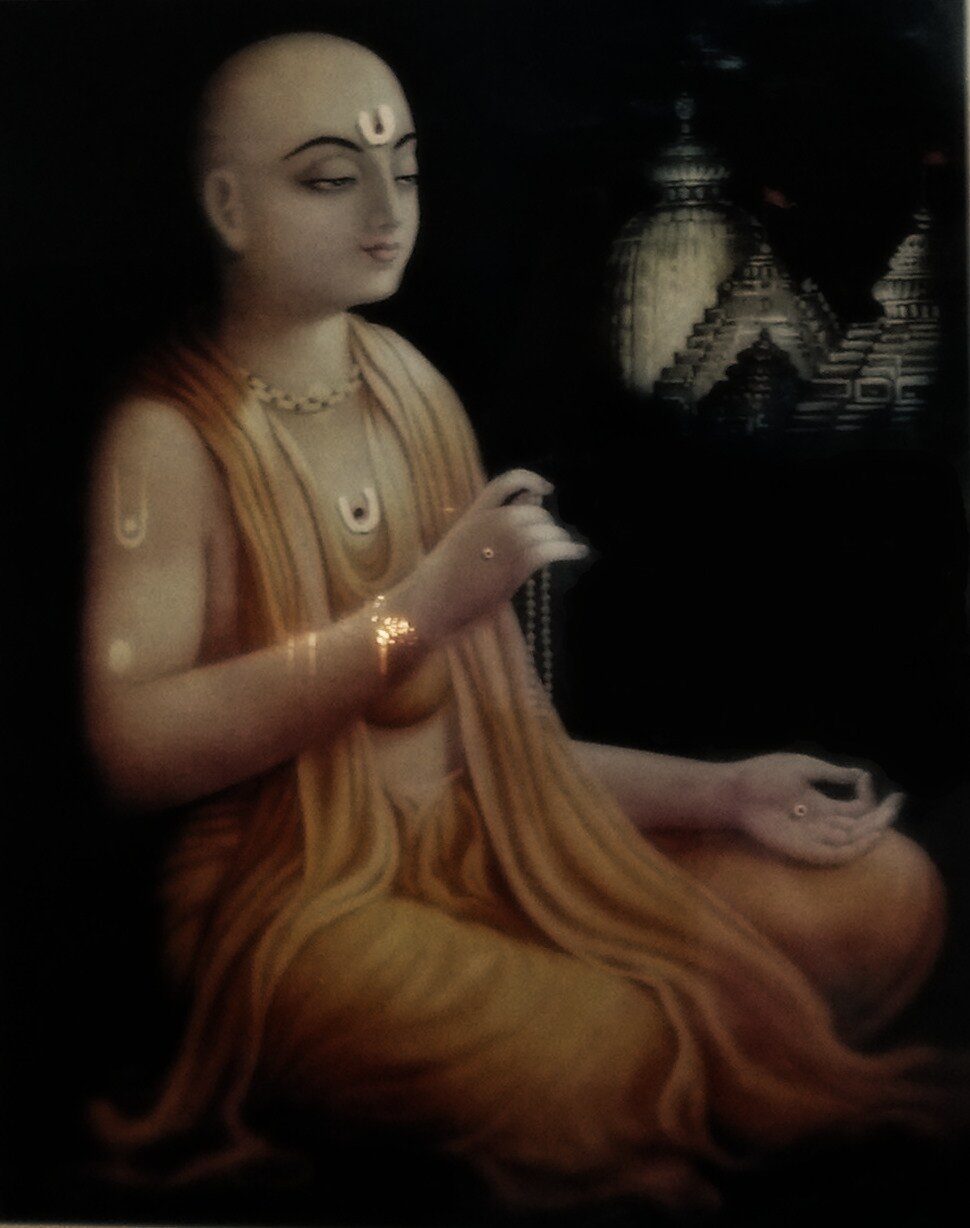
By the middle of the 1480s Advaita Acharya had come to a conclusion, and the Vaishnava biographers report it plainly. He concluded that the situation could not be put right by ordinary means. He had spent decades teaching devotional service in Bengal and had made converts. But to Him the general condition of the age seemed to be getting worse, not better. People were religious only in the sense that they performed rituals correctly and argued philosophy skilfully. Almost nobody loved God. He judged that no amount of preaching by a teacher, however qualified, was going to change this. Nothing less than Krishna's own personal coming would be enough.
The Decision to Compel a Descent #
What He did next followed logically from that judgement. If the Lord alone can fix this, then the Lord must be made to come. So Advaita Acharya set out, quite deliberately, to make the Lord descend.
Worship With Ganges Water and Tulasi Leaves #
His method was worship, continued far past the point where ordinary worship stops. Vaishnava accounts describe Him at Shantipura offering Ganges water and tulasi leaves to a salagrama-sila. They describe Him calling out, loudly and continuously, over a long period, for Krishna to appear. The tradition explains that this worked not because of how loud He was, but because of a technical point of devotional practice. Krishna is said to be bound by an offering of tulasi and Ganges water made by a pure devotee who feels real distress for the world. It is said that He cannot keep refusing such an offering for ever. The biographers present the result as a kind of exchange that the Lord could not honourably refuse.
The accounts focus on how intense it was. He was not simply worshipping and hoping for an answer. Advaita Acharya is described as roaring and weeping. He is described as continuing for so long and with such force that the sound was heard at a distance, and as making it clear that He did not intend to stop. His mood was closer to a demand than a request. Bengali Vaishnavas have never been embarrassed by that. In fact, they admire this very boldness.
The Advent at Mayapur as the Answer #
Sri Chaitanya Mahaprabhu appeared at Sridhama Mayapur on the full-moon evening of Phalguna in February 1486. The tradition regards this as the direct answer. This is the reason Advaita Acharya is counted among the five features of the Lord's own descent. The reason is not that He was a great teacher, or a great scholar, or an incarnation of Maha-Vishnu. Krishnadasa Kaviraja puts the matter in a single line: it was through Advaita Acharya that Lord Chaitanya spread the sankirtana movement, and through Him that He delivered the world.
The Long Wait at Shantipura #
Bengali devotional literature returns with pleasure to one detail in this story. Advaita Acharya was living at Shantipura, some distance from Nabadwip, and did not immediately know what had happened. The Lord He had called down was born and grew into a boy. He became a famous logician and married, and for some years He was the most argumentative young pandit in Nadia. All this time the elderly Advaita Acharya, who had called Him down, went on with His Bhagavatam classes at Shantipura, waiting. Only after Nimai returned from Gaya, when the great change in Him was clear for all to see, did the two come together. Then the purpose behind all of this became clear to everyone involved.
Why One Devotee's Prayer Was Enough #
Gaudiya theology draws a clear and powerful teaching from this episode, and its importance goes well beyond the story itself. The claim is that the appeal of a single devotee is enough to move the Supreme Lord to act. It does not need a mass movement, an institution or a favourable turn in history. It needs only one person, praying seriously enough and for long enough. Advaita Acharya is the tradition's lasting evidence for it. Vaishnava teachers also say openly that the same way is still open. If it is not taken more often, the reason is not that it has been closed. The reason is that almost nobody is willing to pray like that.
His Diagnosis of an Outwardly Flourishing Religion #
There is also a more serious lesson in the same story, and the tradition does not hide it. Advaita Acharya was distressed by a religious culture that looked flourishing from outside but was empty inside. It was well attended, well funded and learned, and correct in its observances. His judgement was not obvious to the people of His time. Most of them would have said that religion in Nadia was in excellent health. It took a man of unusual seriousness to look at such a thriving religious world and see that the most important thing had gone out of it. The tradition keeps His judgement as a warning to every generation after Him.
Scriptural evidence for this chapter (4)
যাঁর দ্বারা কৈল প্রভু কীর্তন প্রচার ।
যাঁর দ্বারা কৈল প্রভু জগৎ নিস্তার ॥ ৩৫ ॥
yāṅra dvārā kaila prabhu kīrtana pracāra
yāṅra dvārā kaila prabhu jagat nistāra
Word for word
yāṅra dvārā: by whom; kaila: did; prabhu: Lord Śrī Caitanya Mahāprabhu; kīrtana pracāra: spreading of the saṅkīrtana movement; yāṅra dvārā: by whom; kaila: did; prabhu: Śrī Caitanya Mahāprabhu; jagat nistāra: deliverance of the entire world.
It is through Him [Advaita Ācārya] that Lord Caitanya spread the saṅkīrtana movement and through Him that He delivered the world.
through Advaita Acharya the Lord spread the sankirtana movement and delivered the world
পূর্বে যৈছে কৈল সর্ব–বিশ্বের সৃজন ।
অবতরি’ কৈল এবে ভক্তি–প্রবর্তন ॥ ২৭ ॥
pūrve yaiche kaila sarva-viśvera sṛjana
avatari’ kaila ebe bhakti-pravartana
Word for word
pūrve: formerly; yaiche: as; kaila: performed; sarva: all; viśvera: of the universes; sṛjana: creation; avatari’: taking incarnation; kaila: did; ebe: now; bhakti-pravartana: inauguration of the bhakti cult.
As He had formerly created all the universes, now He descended to introduce the path of bhakti.
having formerly created the universes, He descended to introduce the path of bhakti
জীব নিস্তারিল কৃষ্ণভক্তি করি’ দান ।
গীতা–ভাগবতে কৈল ভক্তির ব্যাখ্যান ॥ ২৮ ॥
jīva nistārila kṛṣṇa-bhakti kari’ dāna
gītā-bhāgavate kaila bhaktira vyākhyāna
Word for word
jīva: the living entities; nistārila: delivered; kṛṣṇa-bhakti: devotional service to Lord Kṛṣṇa; kari’: making; dāna: gift; gītā-bhāgavate: in the Bhagavad-gītā and Śrīmad-Bhāgavatam; kaila: performed; bhaktira vyākhyāna: explanation of devotional service.
He delivered all living beings by offering the gift of kṛṣṇa-bhakti. He explained the Bhagavad-gītā and Śrīmad-Bhāgavatam in the light of devotional service.
He delivered all living beings by the gift of krishna-bhakti, explaining Gita and Bhagavatam in devotional terms
জগৎ ভরিয়া লোক বলে—‘হরি’ ‘হরি’ ।
সেইক্ষণে গৌরকৃষ্ণ ভূমে অবতরি ॥ ৯৪ ॥
jagat bhariyā loka bale — ‘hari’ ‘hari’
sei-kṣaṇe gaurakṛṣṇa bhūme avatari
Word for word
jagat: the whole world; bhariyā: fulfilling; loka: people; bale: said; hari hari: the holy name of the Lord; sei-kṣaṇe: at that time; gaurakṛṣṇa: Lord Kṛṣṇa in the form of Gaurahari; bhūme: on the earth; avatari: advented.
When the whole world was thus chanting the holy name of the Supreme Personality of Godhead, Kṛṣṇa in the form of Gaurahari advented Himself on the earth.
the Lord advents while the whole world is chanting the holy name
Chapter 3
His Relationship with Sri Chaitanya Mahaprabhu
An elder, fifty-two years older than the Lord, who insisted on being a servant though everyone honoured Him
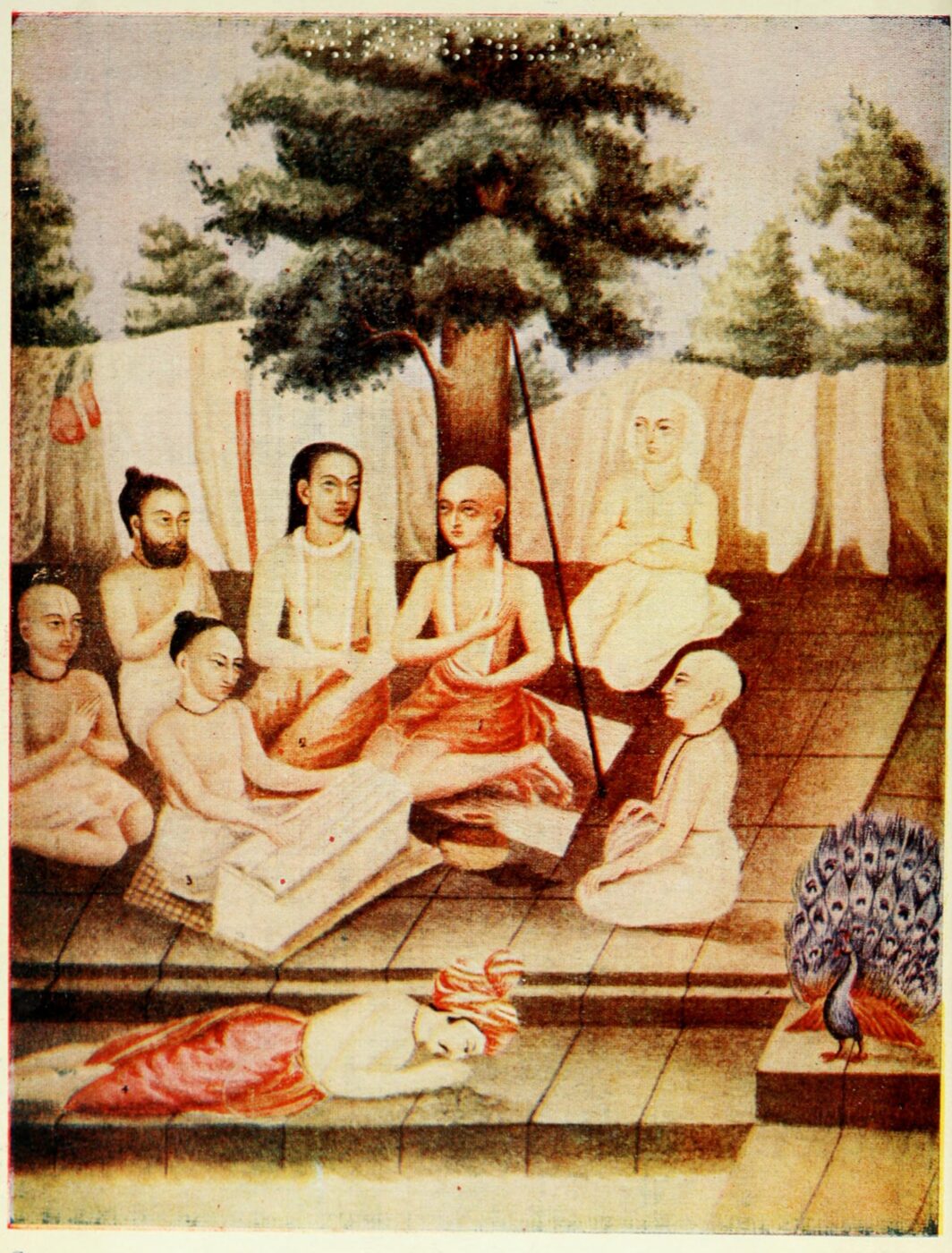
The relationship between Advaita Acharya and Sri Chaitanya Mahaprabhu is the most unusual in the whole of Gaudiya Vaishnava literature, and the biographers do not try to make it simpler than it is. Advaita was fifty-two years older. He was a disciple of Madhavendra Puri. The Lord Himself had taken initiation in Madhavendra Puri's line, through Ishvara Puri. This placed Advaita in the position of a senior godbrother of Mahaprabhu's own guru. He was the most respected Vaishnava in the region before Mahaprabhu was born. And it was Advaita's own prayers that had brought the Lord.
Each Treating the Other as Master #
Krishnadasa Kaviraja records how the Lord handled this. Considering Advaita Acharya to be a disciple of Madhavendra Puri, Mahaprabhu obeyed Him and offered Him the respect due to a spiritual master. Advaita Acharya, for His part, regarded Mahaprabhu as His master and Himself as Mahaprabhu's servant. He forgot Himself completely in the joy of this feeling. He went about telling everyone He met that they too were servants of Sri Chaitanya Mahaprabhu. The Chaitanya-charitamrita describes Advaita Acharya reflecting that the Lord considers Him a spiritual master, while He feels Himself to be only a servant. It explains this puzzle by saying that this is simply what love for Krishna does. It gives superiors, equals and inferiors alike the spirit of service.
Teaching Mayavada to Provoke the Lord #
The most famous episode between them comes directly from this relationship. Advaita Acharya wanted the Lord to reveal Himself, and He worked out a way to make this happen. He began teaching an interpretation of the Bhagavad-gita that He did not Himself hold. He explained it in the impersonal way that makes liberation the final goal, a view He had spent His life opposing. And He did so publicly, knowing what the effect would be. Mahaprabhu heard that Advaita Acharya, of all people, was spreading Mayavada. He came to Advaita in fury and scolded Him. In that show of divine anger, Mahaprabhu revealed exactly what Advaita Acharya had been trying to make Him reveal. The accounts describe Advaita Acharya as delighted. They say He explained afterwards that this had been His whole purpose.
The tradition does not read this as deception, and this is typical of how it treats Him. It sees it as a kind of devotional strategy that only someone of His position could use. Vaishnava commentators note that a devotee in an ordinary position could not have done it, and would have been wrong to try. The story does not teach that provoking the Lord is a technique. Its point is that Advaita Acharya was so close to the Lord that He knew exactly what to do.
Bringing the Lord to Shantipura After Sannyasa #
The other great episode came after Mahaprabhu's sannyasa. When the Lord took the renounced order at Katwa at the age of twenty-four, His intention was to go to Vrindavana, and He set out. Nityananda Prabhu judged that the devotees of Nabadwip, and above all Sachi Devi, could not simply be abandoned. For three days the Lord travelled through Radha-desha, in a state of almost continuous ecstasy. So Nityananda Prabhu arranged for Him to be brought instead to the western side of Shantipura, and for Him to be made to believe that the Ganges was the Yamuna. While He was worshipping the river, Advaita Prabhu arrived by boat, told Him to bathe, and took Him home.
Sachi Devi's Last Days With Her Son #
What followed at Advaita Acharya's house is among the most tender passages in the Chaitanya-charitamrita. Word went to Nabadwip. The devotees came, and Sachi Devi came. The Lord now had a shaven head and wore the cloth of a sannyasi. In the eyes of society He was no longer anyone's son or husband. Yet for some days He stayed under the roof of the man who had called Him into the world. Sachi Devi cooked for Him and for Nityananda Prabhu. There was joking at the meal. These were, in practice, the household's last few days with Him before He left for Puri. They happened at Shantipura because Advaita Acharya's house was the one place where such a meeting could be arranged.
Why the Lord Chose to Be a Servant #
The tradition draws a theological point from all this. It is easy to miss, because the story is so full of affection. According to Gaudiya teaching, Advaita Acharya is the Supreme Lord. He is Maha-Vishnu, the material cause of creation, the maker of countless universes. Even so, what He wanted was to be a servant. The Chaitanya-charitamrita observes that even the goddess of fortune, who lives on Krishna's chest, prays for the joy of the service that Advaita Acharya was tasting. It says that Brahma, Siva, Narada and the rest are pleased in the same mood. For the tradition, He is the proof that being a servant is not a lower position, accepted unwillingly by those fit for nothing better. It is what even God chooses when He is free to choose.
Scriptural evidence for this chapter (7)
মাধবেন্দ্রপুরীর ইঁহো শিষ্য, এই জ্ঞানে ।
আচার্য–গোসাঞিরে প্রভু গুরু করি’ মানে ॥ ৪০ ॥
mādhavendra-purīra iṅho śiṣya, ei jñāne
ācārya-gosāñire prabhu guru kari’ māne
Word for word
mādhavendra-purīra: of Mādhavendra Purī; iṅho: Advaita Ācārya; śiṣya: disciple; ei jñāne: by this consideration; ācārya-gosāñire: unto Advaita Ācārya; prabhu: Śrī Caitanya Mahāprabhu; guru: spiritual master; kari’: taking as; māne: obeys Him.
Thinking “He [Śrī Advaita Ācārya] is a disciple of Śrī Mādhavendra Purī,” Lord Caitanya obeys Him, respecting Him as His spiritual master.
the Lord obeys Him, respecting Him as a spiritual master
চৈতন্যগোসাঞিকে আচার্য করে ‘প্রভু’–জ্ঞান ।
আপনাকে করেন তাঁর ‘দাস’–অভিমান ॥ ৪২ ॥
caitanya-gosāñike ācārya kare ‘prabhu’-jñāna
āpanāke karena tāṅra ‘dāsa’-abhimāna
Word for word
caitanya-gosāñike: unto Śrī Caitanya Mahāprabhu; ācārya: Advaita Ācārya; kare: does; prabhu-jñāna: considering His master; āpanāke: unto Himself; karena: does; tāṅra: of Śrī Caitanya Mahāprabhu; dāsa: as a servant; abhimāna: conception.
Śrī Advaita Ācārya, however, considers Lord Caitanya Mahāprabhu His master, and He thinks of Himself as a servant of Lord Caitanya Mahāprabhu.
Advaita Acharya considers Mahaprabhu His master and Himself the servant
সেই অভিমান–সুখে আপনা পাসরে ।
কৃষ্ণদাস’ হও—জীবে উপদেশ করে ॥ ৪৩ ॥
sei abhimāna-sukhe āpanā pāsare
‘kṛṣṇa-dāsa’ hao — jīve upadeśa kare
Word for word
sei: that; abhimāna-sukhe: in the happiness of that conception; āpanā: Himself; pāsare: He forgets; kṛṣṇa-dāsa hao: You are servants of Lord Kṛṣṇa; jīve: the living beings; upadeśa kare: He instructs.
He forgets Himself in the joy of that conception and teaches all living entities, “You are servants of Śrī Caitanya Mahāprabhu.”
He forgets Himself in that joy and teaches everyone they are servants of Mahaprabhu
পরমপ্রেয়সী লক্ষ্মী হৃদয়ে বসতি ।
তেঁহো দাস্য–সুখ মাগে করিয়া মিনতি ॥ ৪৬ ॥
parama-preyasī lakṣmī hṛdaye vasati
teṅho dāsya-sukha māge kariyā minati
Word for word
parama-preyasī: the most beloved; lakṣmī: the goddess of fortune; hṛdaye: on the chest; vasati: residence; teṅho: she; dāsya-sukha: the happiness of being a maidservant; māge: begs; kariyā: offering; minati: prayers.
The most beloved goddess of fortune resides on the chest of Śrī Kṛṣṇa, yet she too, earnestly praying, begs for the joy of service at His feet.
even the goddess of fortune prays for the joy of that servitorship
চৈতন্যগোসাঞি মোরে করে গুরু–জ্ঞান ।
তথাপিহ মোর হয় দাস–অভিমান ॥ ৫২ ॥
caitanya-gosāñi more kare guru jñāna
tathāpiha mora haya dāsa-abhimāna
Word for word
caitanya-gosāñi: Lord Śrī Caitanya Mahāprabhu; more: unto Me; kare: does; guru-jñāna: consideration as a spiritual master; tathāpiha: still; mora: My; haya: there is; dāsa-abhimāna: the conception of being His servant.
Śrī Advaita Ācārya thinks, “Lord Caitanya considers Me His spiritual master, yet I feel Myself to be only His servant.”
the paradox stated in His own words
কৃষ্ণপ্রেমের এই এক অপূর্ব প্রভাব ।
গুরু–সম–লঘুকে করায় দাস্যভাব ॥ ৫৩ ॥
kṛṣṇa-premera ei eka apūrva prabhāva
guru-sama-laghuke karāya dāsya-bhāva
Word for word
kṛṣṇa-premera: of love of Kṛṣṇa; ei: this; eka: one; apūrva prabhāva: unprecedented influence; guru: to those on the level of the spiritual master; sama: equal level; laghuke: unto the less important; karāya: makes; dāsya-bhāva: the conception of being a servant.
Love for Kṛṣṇa has this one unique effect: it imbues superiors, equals and inferiors with the spirit of service to Lord Kṛṣṇa.
love for Krishna imbues superiors, equals and inferiors alike with the spirit of service
সন্ন্যাস করি’ প্রেমাবেশে চলিলা বৃন্দাবন ।
রাঢ়-দেশে তিন দিন করিলা ভ্রমণ ॥ ৪ ॥
sannyāsa kari’ premāveśe calilā vṛndāvana
rāḍha-deśe tina dina karilā bhramaṇa
Word for word
sannyāsa kari’: after accepting the sannyāsa order; prema-āveśe: in intense love for Kṛṣṇa; calilā: proceeded; vṛndāvana: toward Vṛndāvana-dhāma; rāḍha-deśe: in the tract of land known as Rāḍha; tina dina: continuously for three days; karilā: did; bhramaṇa: wandering.
After accepting the sannyāsa order, Caitanya Mahāprabhu, out of intense love for Kṛṣṇa, started for Vṛndāvana. However, He mistakenly wandered about in a trance continuously for three days in the tract of land known as Rāḍha-deśa.
the Lord brought to Shantipura after sannyasa by Nityananda Prabhu's arrangement
Chapter 4
Sita Thakurani and the Family at Shantipura
The woman who named Him Nimai, the household that received the Lord after His sannyasa, and a division the tradition does not conceal
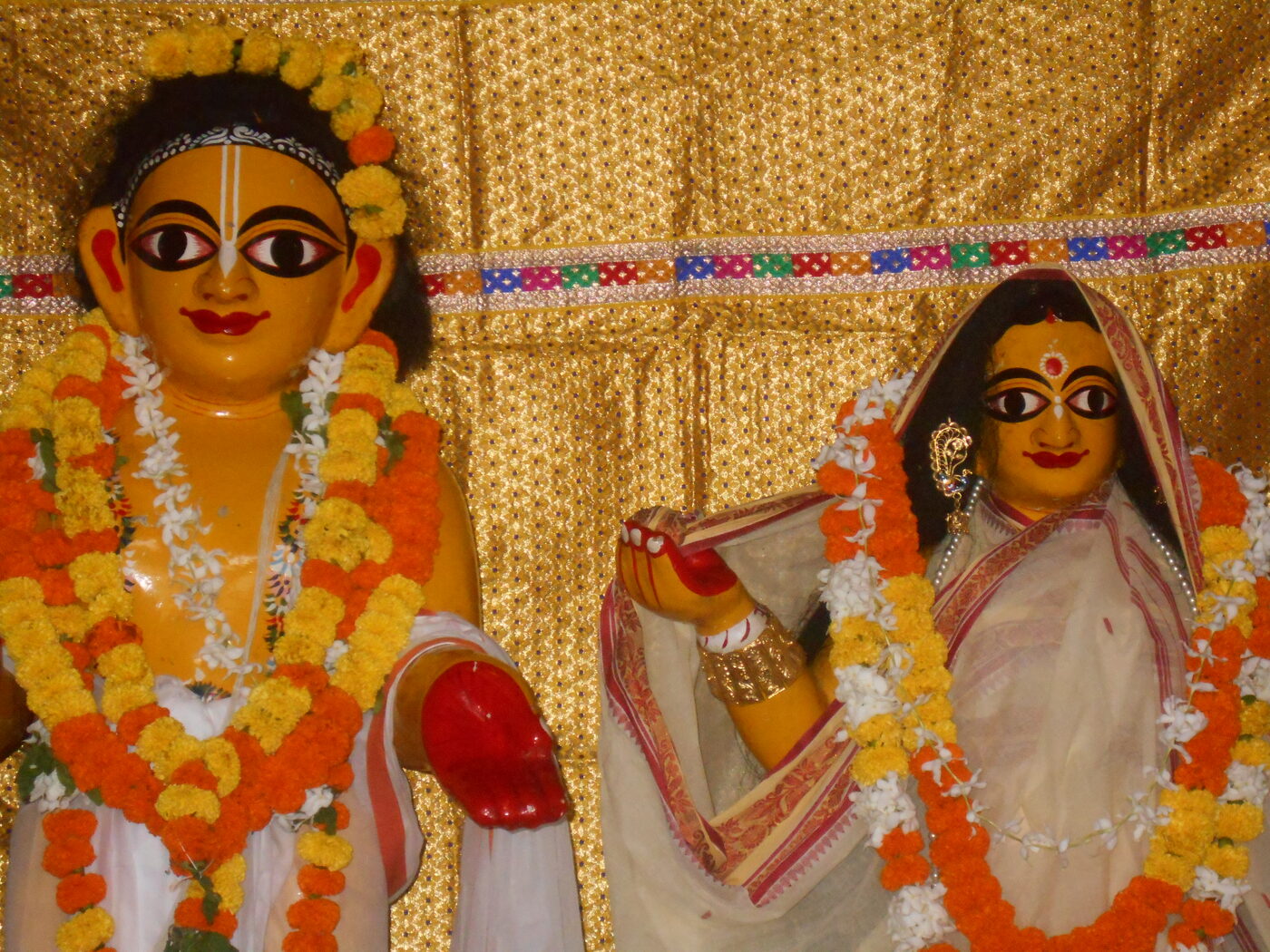
Advaita Acharya's wife was Sita Thakurani, the daughter of Sri Nrsimha Bhaduri. She is honoured throughout Bengal for herself, not only as the Acharya's wife. Vaishnava literature treats her as an incarnation of Yogamaya, the Lord's internal potency in its role of arranging the Lord's pastimes. The episode she is best remembered for fits that role completely. She was among the first outside the immediate family to go and see the newborn Mahaprabhu.
| Family member | Description |
|---|---|
| Advaita Acharya | Head of the household at Shantipura |
| Sita Thakurani | His wife, daughter of Sri Nrsimha Bhaduri, treated as an incarnation of Yogamaya |
| Acyutananda | The eldest son, a devotee of note from childhood |
| Other sons named | Krishna Mishra, Gopala, Balarama, Svarupa and Jagadisha |
| Note on the lists | The sources differ on the number of sons and on their order |
Naming the Newborn Nimai at Mayapur #
The accounts describe her setting out for Mayapur when word came that a son had been born to Jagannatha Mishra and Sachi Devi. She took with her the things one takes to a newborn: ornaments, cloth, turmeric, sandalwood, garlands, and gifts for the mother. She is said to have understood at once who the child really was. Sita Thakurani gave the child the name Nimai, after the nimba tree beside the house. Her reasoning was that a name taken from a bitter tree would protect Him from the attention of evil spirits. The name stayed with Him for twenty-four years, and Bengal still uses it.
Shantipura as the House of Refuge #
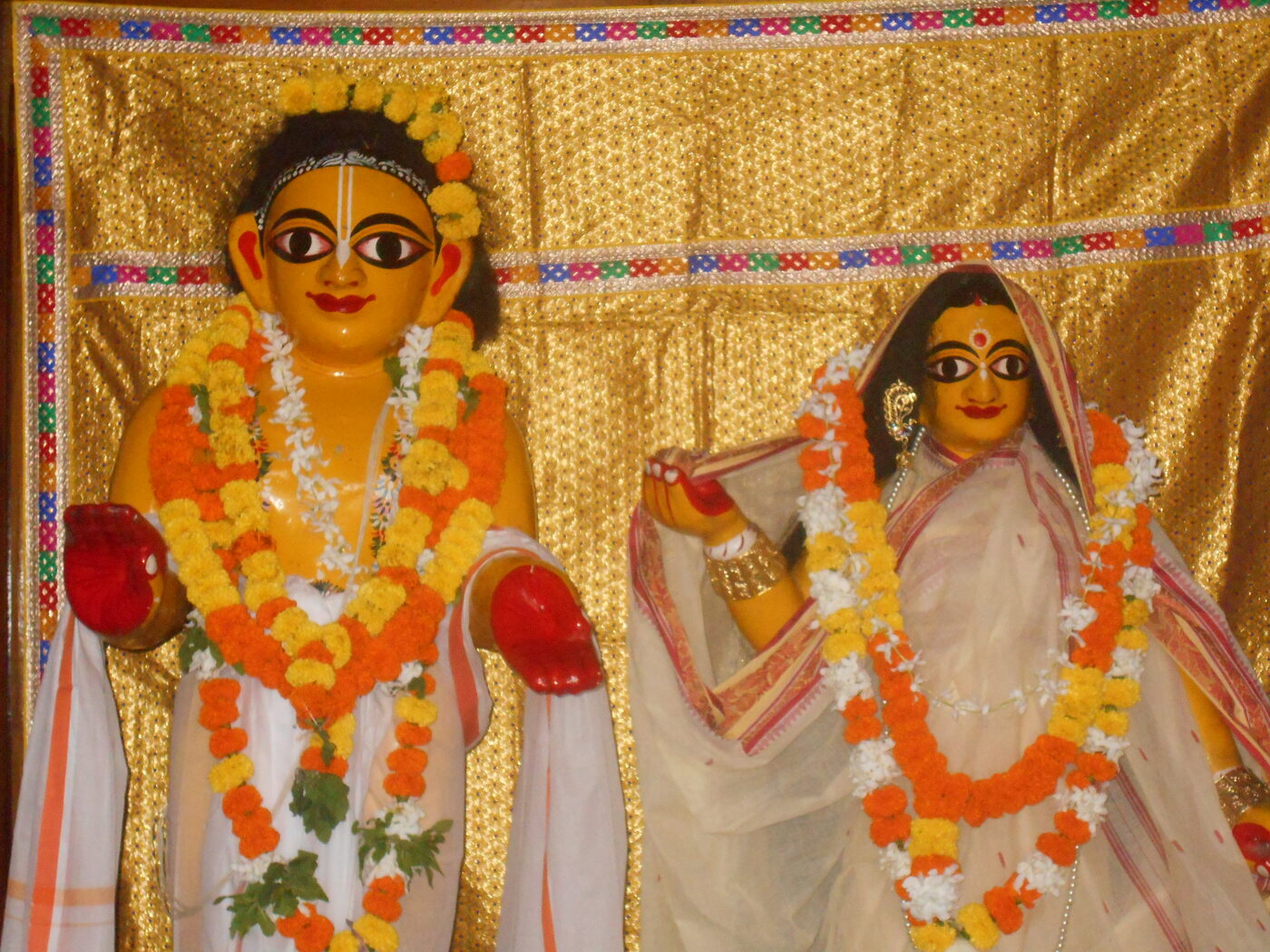
The household she and Advaita Acharya kept at Shantipura became one of the two or three main centres of the movement. Its role was different from the others. Srivasa Angan at Nabadwip was where the sankirtana began. Puri was where the Lord finally settled. Shantipura was the place of refuge and of hospitality. It was the house the Lord was brought to after sannyasa, where Sachi Devi could reach Him, and where devotees travelling between Bengal and Puri stopped. The Chaitanya-charitamrita describes Mahaprabhu eating there many times, with Sita Thakurani cooking and the house filling up with devotees. These homely scenes are part of why the place is remembered warmly.
The Sons of Advaita Acharya #
They had several sons. The eldest, Acyutananda, was a well-known devotee from childhood. The Chaitanya-charitamrita records that, while still a boy, he corrected an adult on a point of doctrine so directly that everyone present was astonished. Krishna Mishra, Gopala, Balarama, Svarupa and Jagadisha are also named in the various lists, though the sources differ on the number and the order.
The Division in the Family Line #
The tradition itself records a division in the family, so this account records it too. Not all of Advaita Acharya's sons continued in their father's line. Some left His teaching. The later Gaudiya literature speaks of them with real sorrow, as sons who abandoned the path He had established. The split ran so deep that the descendants of the two branches were afterwards treated as distinct from each other. Vaishnava writers of the following generations treat the matter as a true grief for the tradition, not as an embarrassment to be hidden. Acyutananda and those who remained with him are honoured. The others are not. It is a sad note in the story of a family otherwise remembered for its hospitality and its devotion, and a truthful account must include it.
Sita Thakurani as a Teacher of Women #
Bengali Vaishnava tradition also remembers Sita Thakurani as a teacher. Women of the devotee families are described as coming to her, and she is remembered as having instructed them. The same pattern appears again in the tradition a generation later, with Jahnava Mata. The Gaudiya line has been clearly more willing to make room for this than most Indian religious movements of that time were. Her samadhi and the family Deities are at Shantipura, and the site is still visited.
What the Shantipura Household Gave the Movement #
We can best see what the household at Shantipura gave the movement by asking what would have been missing without it. For its first years, the sankirtana movement was a gathering of young men, held at night with the doors shut, and it drew on the energy of people in their twenties. Shantipura supplied something else. It was an established, respected Vaishnava household, settled in worldly life and headed by an elderly couple whose good name no one could question. It could receive the Lord after His renunciation. It could help a grieving mother accept what her son had done. And it could give the whole movement a kind of respect in society that a courtyard full of ecstatic young men could not have earned on its own.
Scriptural evidence for this chapter (5)
সুবর্ণের কড়ি–বউলি, রজতমুদ্রা–পাশুলি,
সুবর্ণের অঙ্গদ, কঙ্কণ ।
দু–বাহুতে দিব্য শঙ্খ, রজতের মলবঙ্ক,
স্বর্ণমুদ্রার নানা হারগণ ॥ ১১২ ॥
suvarṇera kaḍi-ba-uli, rajatamudrā-pāśuli,
suvarṇera aṅgada, kaṅkaṇa
du-bāhute divya śaṅkha, rajatera malabaṅka,
svarṇa-mudrāra nānā hāragaṇa
Word for word
suvarṇera: made of gold; kaḍi-ba-uli: bangles worn on the hand; rajata-mudrā: gold coins; pāśuli: a kind of ornament covering the foot; suvarṇera: made of gold; aṅgada: a kind of ornament; kaṅkaṇa: another kind of ornament for the hand; du-bāhute: in two arms; divya: celestial; śaṅkha: conchshell; rajatera: made of gold; malabaṅka: bangles for the foot; svarṇa-mudrāra: made of gold; nānā: varieties; hāra-gaṇa: necklaces.
She brought different kinds of golden ornaments, including armlets, necklaces, anklets and bangles for the hands.
Sita Thakurani comes to see the newborn Lord bringing gifts
অচ্যুতানন্দ—বড় শাখা, আচার্য–নন্দন ।
আজন্ম সেবিলা তেঁহো চৈতন্য–চরণ ॥ ১৩ ॥
acyutānanda — baḍa śākhā, ācārya-nandana
ājanma sevilā teṅho caitanya-caraṇa
Word for word
acyutānanda: Acyutānanda; baḍa śākhā: a big branch; ācārya-nandana: the son of Advaita Ācārya; ājanma: from the very beginning of life; sevilā: served; teṅho: he; caitanya-caraṇa: the lotus feet of Lord Caitanya.
A big branch of Advaita Ācārya was His son Acyutānanda. From the beginning of his life he engaged in the service of the lotus feet of Lord Caitanya.
Acyutananda, the eldest son, engaged in the Lord's service from the beginning of his life
পঞ্চম বর্ষের বালক কহে সিদ্ধান্তের সার ।
শুনিয়া পাইলা আচার্য সন্তোষ অপার ॥ ১৭ ॥
pañcama varṣera bālaka kahe siddhāntera sāra
śuniyā pāilā ācārya santoṣa apāra
Word for word
pañcama: five; varṣera: years; bālaka: small boy; kahe: says; siddhāntera: conclusive; sāra: essence; śuniyā: hearing; pāilā: got; ācārya: Advaita Ācārya; santoṣa: satisfaction; apāra: very much.
When Advaita Ācārya heard this statement from His five-year-old son Acyutānanda, He felt great satisfaction because of his conclusive judgment.
Advaita Acharya's satisfaction at his five-year-old son's conclusive judgement
কৃষ্ণমিশ্র–নাম আর আচার্য–তনয় ।
চৈতন্য–গোসাঞি বৈসে যাঁহার হৃদয় ॥ ১৮ ॥
kṛṣṇa-miśra-nāma āra ācārya-tanaya
caitanya-gosāñi baise yāṅhāra hṛdaya
Word for word
kṛṣṇa-miśra: Kṛṣṇa Miśra; nāma: of the name; āra: and; ācārya-tanaya: the son of Advaita Ācārya; caitanya-gosāñi: Lord Caitanya Mahāprabhu; baise: sits; yāṅhāra: in whose; hṛdaya: heart.
Kṛṣṇa Miśra was a son of Advaita Ācārya. Lord Caitanya Mahāprabhu always sat in his heart.
Krishna Mishra, another son of Advaita Acharya
আচার্যের আর পুত্র—শ্রীবলরাম ।
আর পুত্র—‘স্বরূপ’–শাখা, ‘জগদীশ’ নাম ॥ ২৭ ॥
ācāryera āra putra — śrī-balarāma
āra putra — ‘svarūpa’-śākhā, ‘jagadīśa’ nāma
Word for word
ācāryera: of Śrīla Advaita Ācārya; āra: another; putra: son; śrī-balarāma: Śrī Balarāma; āra putra: another son; svarūpa: Svarūpa; śākhā: branch; jagadīśa nāma: of the name Jagadīśa.
The other sons of Advaita Ācārya were Śrī Balarāma, Svarūpa and Jagadīśa.
the remaining sons: Balarama, Svarupa and Jagadisha
Chapter 5
The Disappearance of Advaita Acharya
The last of the Nabadwip generation, whose whole life shows that being a servant is the best thing to be
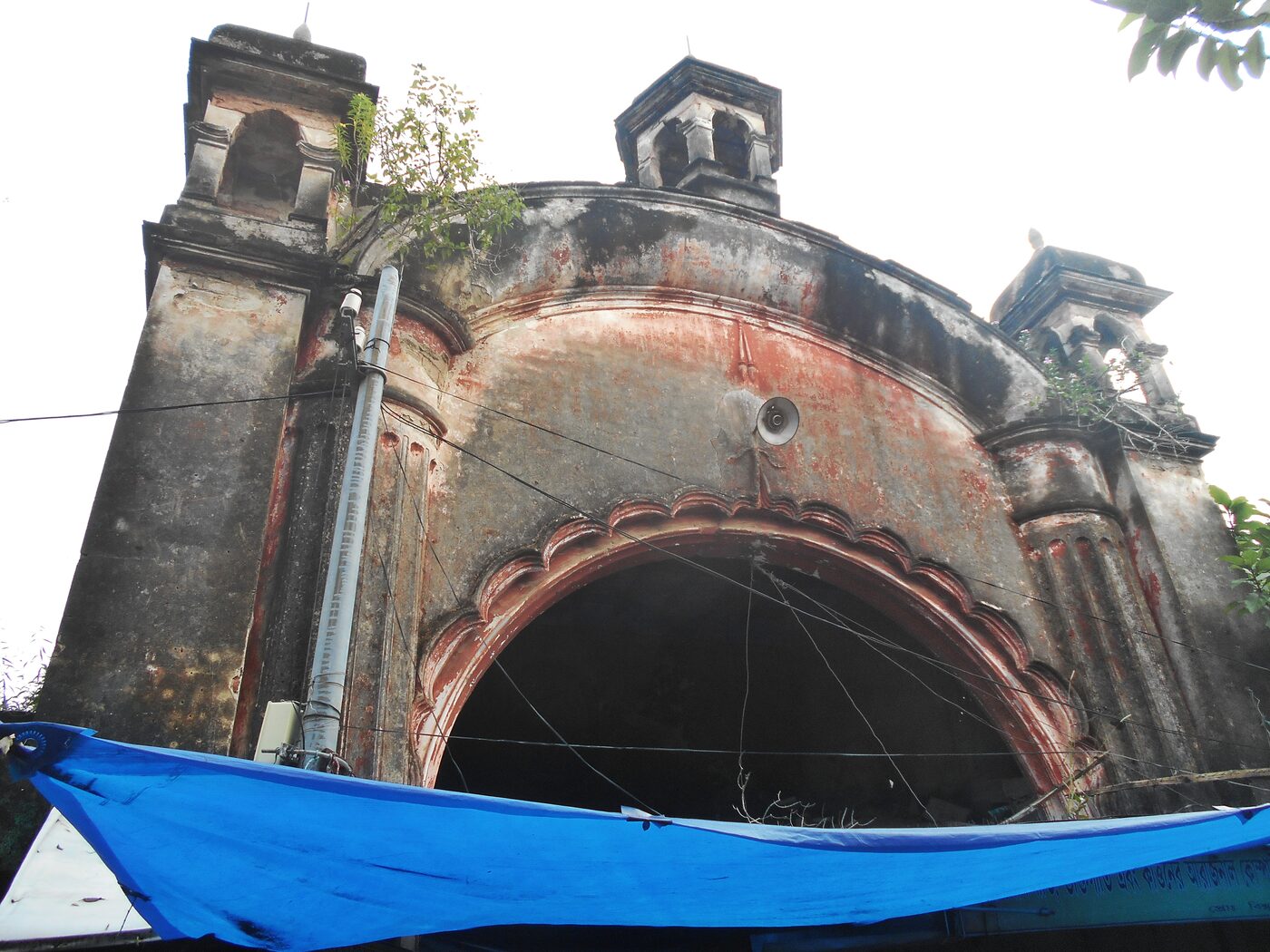
Advaita Acharya outlived Sri Chaitanya Mahaprabhu. He had been fifty-two when the Lord was born. He was therefore about a hundred when the Lord's manifest pastimes concluded at Puri in 1534. The traditional accounts hold that He remained at Shantipura for some years afterwards. The sources do not give the exact date of His disappearance with any confidence. The biographers are exact about His birth, but they become vague about the end of His life. So we do not know the date.
| Detail | Description |
|---|---|
| Age at Mahaprabhu's advent | Fifty-two |
| Age in 1534 | About a hundred, when the Lord's manifest pastimes concluded at Puri |
| Last years spent at | Shantipura |
| Date of disappearance | Not fixed with any confidence in the sources |
| Samadhi | Shantipura, together with the family Deities |
The Last Years at Shantipura #
His last years are recorded mainly through the effect He had on other people. By then Mahaprabhu was gone, and the Nabadwip generation was growing smaller. Advaita Acharya was the senior surviving figure of the original circle, so the Vaishnavas of Bengal looked to Shantipura. Devotees came to Him for direction. He continued to teach the Bhagavatam, which He had been doing since before any of them were born. The sources show a very old man filling, for a second time, the position He had held before the Lord ever appeared. He was again the Vaishnava authority of the district, explaining the Bhagavatam to whoever came.
The Samadhi and Deities at Shantipura #
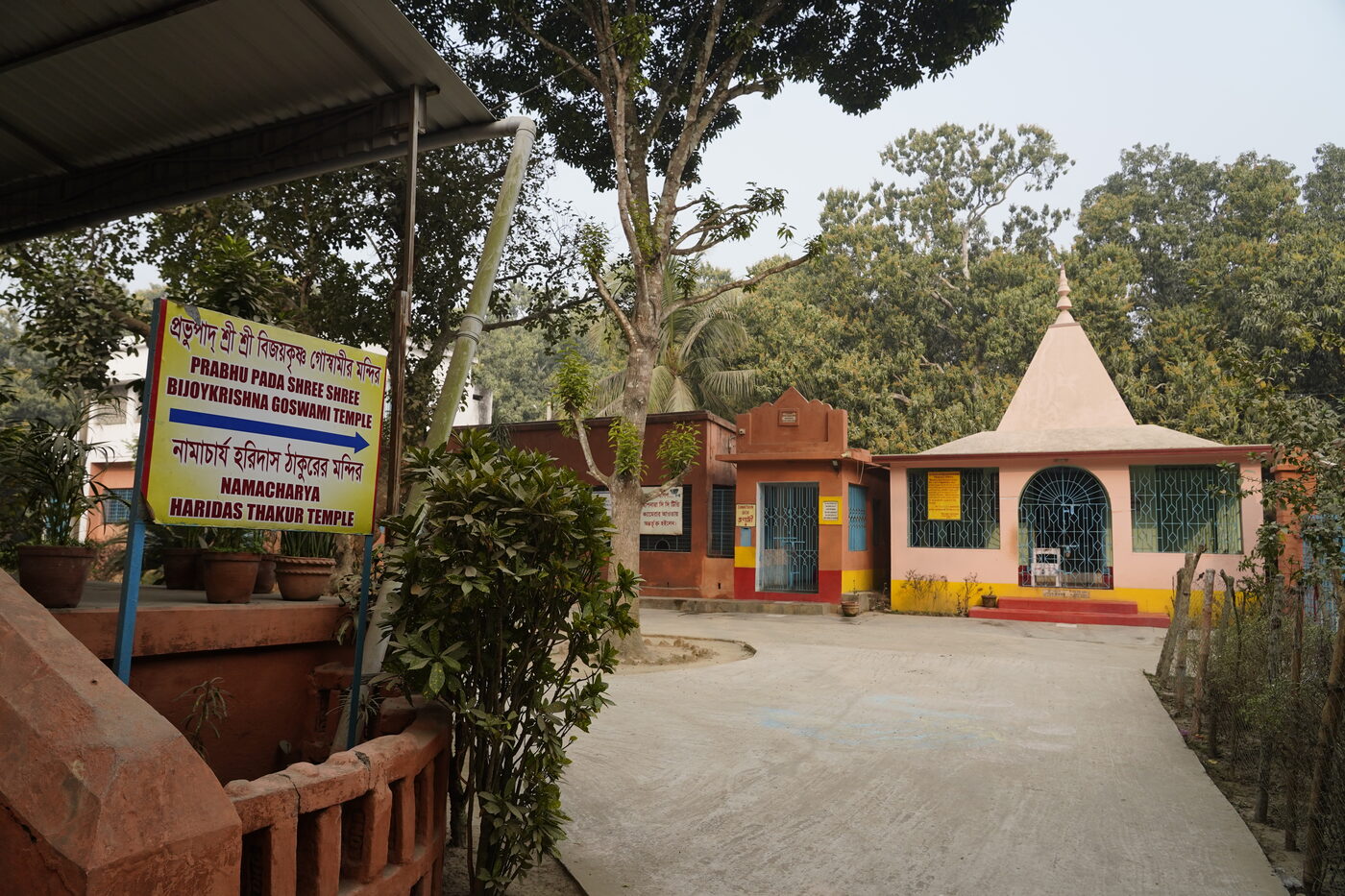
His samadhi is at Shantipura, together with the family Deities, and the site remains a place of pilgrimage in the Nadia circuit, visited on the same journeys that take pilgrims to Mayapur, Nabadwip and Ekachakra. The Deities of Advaita Acharya and Sita Thakurani installed there are among the holy sights that Bengali Vaishnavas travel to see.
Maha-Vishnu Who Wanted a Master #
Gaudiya theology sums up His life with a puzzle that it leaves unsolved. According to its own teaching, Advaita Acharya is Maha-Vishnu, the material cause of the cosmic manifestation. Through Him countless universes are produced and maintained. He is not a great devotee of the Lord. He is the Lord, under a name that means exactly that He is not different. And across five centuries of Bengali devotional literature, He is remembered for wanting a master. He went to great lengths to find one. Having found one, He spent the rest of a very long life telling everybody within reach that they were servants of Sri Chaitanya Mahaprabhu.
What Advaita Acharya Is Remembered For #
Two lessons are usually drawn from His life. The first comes from the prayers that brought the Lord down. It is that one devotee, if serious enough, can change the spiritual condition of an age. The tradition states this plainly, without adding conditions, and means it literally.
The second lesson is subtler. It is about the way He lived, not about what He achieved. Advaita Acharya had every possible reason to be given the first place. He had age, learning and spiritual rank, and He could claim to have called the Lord down in the first place. Yet for fifty years He firmly refused all of it, choosing a position He clearly regarded as better. The tradition keeps returning to what Krishnadasa Kaviraja observes on this point. He says that love for Krishna has one unusual effect. It fills superiors, equals and inferiors alike with the spirit of service, and there is no joy anywhere that can compare with what is tasted in it. Advaita Acharya is the proof of this. He is the one member of the Panca-tattva whose whole life story shows that being a servant is the best thing there is to be.
Scriptural evidence for this chapter (3)
অদ্বৈত–আচার্য—কোটিব্রহ্মাণ্ডের কর্তা ।
আর এক এক মূর্ত্যে ব্রহ্মাণ্ডের ভর্তা ॥ ২১ ॥
advaita-ācārya koṭi-brahmāṇḍera kartā
āra eka eka mūrtye brahmāṇḍera bhartā
Word for word
advaita-ācārya: Advaita Ācārya; koṭi-brahmāṇḍera kartā: the creator of millions and millions of universes; āra: and; eka eka: each and every; mūrtye: by expansions; brahmāṇḍera bhartā: maintainer of the universe.
Śrī Advaita Ācārya is the creator of millions and millions of universes, and by His expansions [as Garbhodakaśāyī Viṣṇu] He maintains each and every universe.
Advaita Acharya as creator of millions of universes
অংশ’ না কহিয়া, কেনে কহ তাঁরে ‘অঙ্গ’ ।
অংশ’ হৈতে ‘অঙ্গ’, যাতে হয় অন্তরঙ্গ ॥ ২৫ ॥
‘aṁśa’ nā kahiyā, kene kaha tāṅre ‘aṅga’
‘aṁśa’ haite ‘aṅga,’ yāte haya antaraṅga
Word for word
aṁśa: part; nā kahiyā: not saying; kene: why; kaha: you say; tāṅre: Him; aṅga: limb; aṁśa haite: than a part; aṅga: limb; yāte: because; haya: is; antaraṅga: more.
Why has Śrī Advaita been called a limb and not a part? The reason is that “limb” implies greater intimacy.
why He is called a limb rather than a part, limb implies greater intimacy
কৃষ্ণপ্রেমের এই এক অপূর্ব প্রভাব ।
গুরু–সম–লঘুকে করায় দাস্যভাব ॥ ৫৩ ॥
kṛṣṇa-premera ei eka apūrva prabhāva
guru-sama-laghuke karāya dāsya-bhāva
Word for word
kṛṣṇa-premera: of love of Kṛṣṇa; ei: this; eka: one; apūrva prabhāva: unprecedented influence; guru: to those on the level of the spiritual master; sama: equal level; laghuke: unto the less important; karāya: makes; dāsya-bhāva: the conception of being a servant.
Love for Kṛṣṇa has this one unique effect: it imbues superiors, equals and inferiors with the spirit of service to Lord Kṛṣṇa.
the effect of love for Krishna, which the tradition takes as the summary of his life
Closing
Advent, Pilgrimage and the Seat at Shantipura #
He appeared in 1434 in the village of Nabagrama in the Srihatta district of eastern Bengal, as the son of Kuvera Pandita and Nabhadevi, and was given the name Kamalaksha. After His parents' passing He travelled widely on pilgrimage, studied deeply, and eventually settled at Shantipura on the bank of the Ganges in Nadia, where He became the most respected Vaishnava authority in the region. He was known as a strict scholar of the Bhagavatam and the Bhagavad-gita. He received the title Advaita, "non-different," because He was understood to be non-different from the Supreme Lord. He received the title Acharya because He taught bhakti.
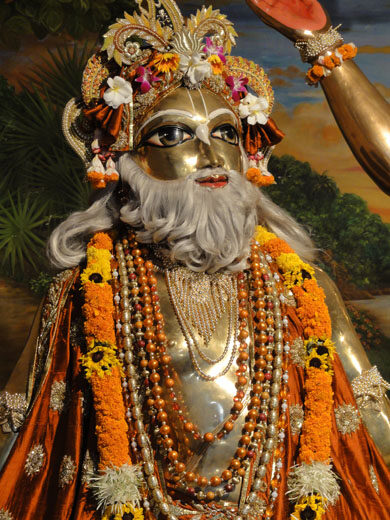
Both sides of His identity are stated in scripture. Kavi Karnapura's Gaura-ganoddesha-dipika (verse 11) names Him the bhakta-avatara and identifies Him with Sadashiva:
bhaktāvatāra ācāryo’dvaito yaḥ śrī-sadāśivaḥ
"The bhaktavatara (devotional manifestation) is Lord Advaita Acarya, who is not different from Lord Sadasiva." (Gaura-ganoddesha-dipika 11)
Chaitanya-charitamrita gives the other side, that He is the incarnation of Maha-Vishnu:
mahā-viṣṇur jagat-kartā
māyayā yaḥ sṛjaty adaḥ
tasyāvatāra evāyam
advaitācārya īśvaraḥ
"Lord Advaita Ācārya is the incarnation of Mahā-Viṣṇu, whose main function is to create the cosmic world through the actions of māyā." (Chaitanya-charitamrita Adi 1.12)
Calling the Lord to Descend #
The most important act of His life was His appeal for the Lord to descend. His position in the Panca-tattva rests on this act. Advaita Acharya looked at the Bengal of His day. It was religious on the outside and learned in ritual, but in His judgement it had no devotion at all. He concluded that only Krishna Himself, coming in person, could help. Vaishnava accounts describe Him worshipping a salagrama-sila with Ganges water and tulasi leaves. He called out so strongly and for so long that Krishna had to come. The tradition regards Sri Chaitanya Mahaprabhu's appearance at Mayapur in 1486 as the direct answer. This is why Bengali Vaishnavas hold Advaita Acharya in a special kind of affection. He is the one who asked.
His Relationship With Sri Chaitanya Mahaprabhu #
After the Lord's advent, Advaita's relationship with Mahaprabhu was also unusual. By age, the elderly Advaita was like a grandfather to the young Nimai, but in devotion He was Nimai's servant. The Chaitanya-charitamrita preserves several episodes in which Advaita Acharya deliberately provoked the Lord. The most famous is when He taught an interpretation of the Bhagavad-gita that He did not Himself hold. He did this so that Mahaprabhu would show divine anger and in this way reveal Himself. When Mahaprabhu accepted sannyasa at Katwa, He could not go to Vrindavana. Instead He was brought to Advaita Acharya's house at Shantipura. There Sachi Devi was able to see her son for a few last days.
Sita Thakurani and the Household at Shantipura #
His wife was Sita Thakurani, the daughter of Nrsimha Bhaduri. Sita Thakurani is remembered for herself, not only as His wife. She went to Mayapur when Mahaprabhu was born, bringing gifts for the child, and she is honoured throughout Bengal as one of the great women devotees of the tradition. Their household at Shantipura became one of the main centres of the movement. Several of their sons, Acyutananda in particular, were themselves well-known devotees. But the most painful division within the tradition also came from this family, when other sons turned away from their father's line of teaching.
Last Years, Samadhi and Legacy #
Advaita Acharya lived to a great age and outlived Mahaprabhu. His samadhi and the family Deities remain at Shantipura, which is still a place of pilgrimage. In Gaudiya theology He stands for a clear and powerful teaching. If the sincere appeal of even one devotee is kept up long enough and meant seriously enough, it is enough to move the Supreme Lord to act.
