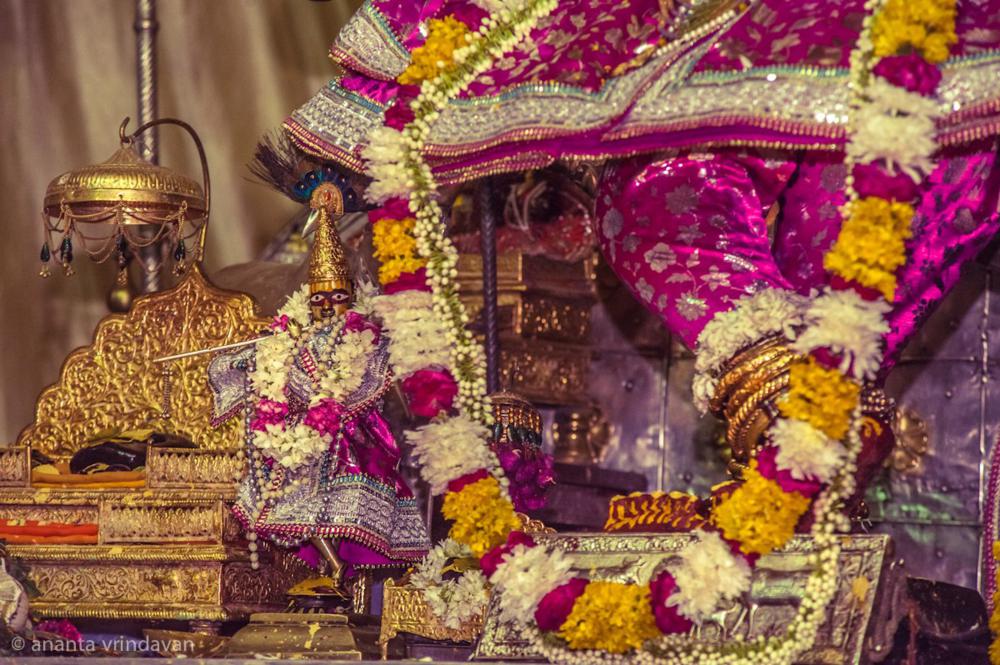
चैतन्य-चरितामृत जगन्नाथ पुरी में काशीश्वर पण्डित की दशकों की सेवा का वर्णन करता है। इस वर्णन पर लिखी गई टीकाएँ उन्हें एक दूसरा नाम भी देती हैं। यह नाम बताता है कि महाप्रभु की लीला से पहले, वृन्दावन के नित्य जीवन में उनका क्या स्थान था। यही पहचान, और आगे चलकर इससे जुड़ी विग्रह-सेवा, काशीश्वर की कथा का वह भाग है जो पुरी से सबसे दूर तक पहुँचता है।
गौर-गणोद्देश-दीपिका में वर्णित भृंगार #
कृष्णदास कविराज गोस्वामी का अपना ग्रन्थ काशीश्वर के गुरु और उनके सहचर गोविन्द का सावधानी से वर्णन करता है। काशीश्वर ईश्वर पुरी के एक ब्रह्मचारी शिष्य थे, और उनका नाम सदा गोविन्द के साथ आता है। ग्रन्थ गोविन्द को कहता है, "उनके एक और प्रिय शिष्य।" इस श्लोक (आदि 10.138) पर श्रील प्रभुपाद का तात्पर्य एक पारम्परिक उत्तर जोड़ता है कि महाप्रभु के प्रकट होने से पहले ये दोनों कौन थे: "गौर-गणोद्देश-दीपिका (137) में कहा गया है कि वृन्दावन में पहले भृंगार और भंगुर नामक जो सेवक थे, वे चैतन्य महाप्रभु की लीला में काशीश्वर और गोविन्द बने।" गौर-गणोद्देश-दीपिका वह पारम्परिक गौड़ीय वैष्णव ग्रन्थ है, जो महाप्रभु के हर सहचर के लिए बताता है कि कृष्ण की व्रज-लीला में वे कौन थे। इस ग्रन्थ के अनुसार वहाँ काशीश्वर भृंगार थे, जो वृन्दावन में कृष्ण की व्यक्तिगत सेवा करने वाले सेवकों में से एक थे। वहाँ गोविन्द भंगुर नाम के सेवक थे। पुरी-वर्षों में गोविन्द महाप्रभु के निजी सेवक थे।
गोविन्दजी विग्रह के पुजारी, गोविन्द गोसाईं #
चैतन्य-चरितामृत एक दूसरे, अलग गोविन्द के बारे में भी बताता है। वे काशीश्वर को केवल शास्त्र में दी गई समानता से नहीं, बल्कि वृन्दावन नाम के वास्तविक स्थान से सीधे जोड़ते हैं। चैतन्य-चरितामृत के एक श्लोक में गोविन्द गोसाईं को "वृन्दावन में भगवान गोविन्द की सेवा में नियुक्त पुजारी" और "काशीश्वर गोसाईं के शिष्य" कहा गया है। उसमें यह भी लिखा है कि "गोविन्द-विग्रह को इनसे बढ़कर प्रिय कोई सेवक नहीं था"। गोविन्द गोसाईं उसी विग्रह के पुजारी थे, जिन्हें श्री रूप गोस्वामी ने वृन्दावन में खोजा था। ये श्री गोविन्दजी थे, जो गोमटीला में भूमि से प्रकट हुए और रूप गोस्वामी द्वारा उनके लिए बनाए गए मन्दिर में स्थापित किए गए। इतनी बात सीधे चैतन्य-चरितामृत के मूल पाठ से आती है, जैसा कि भक्तिसिद्धान्त सरस्वती की टिप्पणियों में समझाया गया है। इसे हम पूरे विश्वास के साथ कह सकते हैं। काशीश्वर के अपने शिष्य ने अपना जीवन वृन्दावन के सबसे विश्वसनीय पुजारियों में से एक के रूप में पूरा किया। वे उस विग्रह की सेवा करते थे, जो वहाँ के छह गोस्वामियों के पूरे कार्य से सबसे निकट से जुड़ा है।
काशीश्वर का अपना प्रस्थान: परम्परा जो और बताती है #
gaudiyahistory.iskcondesiretree.com द्वारा संकलित भक्ति-वृत्तान्त इससे एक कदम आगे जाते हैं। उनके अनुसार, जब रूप गोस्वामी द्वारा विग्रह की खोज का समाचार पुरी पहुँचा, तो महाप्रभु ने स्वयं काशीश्वर को गोविन्द के पास वृन्दावन भेजा। प्रभु का साथ छोड़ने के विचार से काशीश्वर व्याकुल हो उठे। उन्होंने कहा, "हे प्रभु, यदि मुझे आपका संग त्यागना ही पड़े तो मेरा हृदय दो टुकड़ों में बँट जाएगा।" इस कथा के अनुसार, महाप्रभु ने उत्तर में उन्हें अपने ही स्वरूप का एक स्वयं-प्रकट विग्रह दिया। यह विग्रह सुनहरे रंग का था और बाँसुरी बजा रहा था। कहा जाता है कि यह महाप्रभु से इतना मिलता-जुलता था कि इसने काशीश्वर का शोक शान्त कर दिया। इसे गोविन्दजी के दाहिनी ओर स्थापित किया गया और इसका नाम गौर-गोविन्द रखा गया। वही परम्परा मानती है कि यह विग्रह आगे चलकर जयपुर पहुँचा, जहाँ गौर-गोविन्द और गोविन्दजी की आज भी साथ-साथ पूजा होती है। परम्परा यह भी मानती है कि श्री साधना-दीपिका नाम का एक स्तोत्र काशीश्वर को विशेष रूप से उस "प्रेम और भक्ति के सामर्थ्य" के लिए सम्मान देता है, जो "श्री चैतन्य को पश्चिमी भारत में एक विग्रह के रूप में लेकर आया।"
कथा का यह भाग एक भक्ति-परम्परा है। गौड़ीय वैष्णव संस्थाओं ने इसे सच्ची सावधानी के साथ सुरक्षित रखा और सुनाया है, लेकिन चैतन्य-चरितामृत स्वयं इसे नहीं बताता। जो ग्रन्थ भृंगार का नाम लेता है और गोविन्द गोसाईं को गोविन्दजी का पुजारी बताता है, वह आगे काशीश्वर के वृन्दावन जाने, उनके विदाई के वचनों, या किसी व्यक्तिगत विग्रह के उपहार का वर्णन नहीं करता। ये विवरण केवल बाद की भक्ति-परम्परा से आते हैं। ये दोनों विवरण एक-दूसरे के विरोधी नहीं हैं। परम्परा कहती है कि काशीश्वर, जो स्वयं एक प्रिय शिष्य थे, अपने शिष्य के पीछे वृन्दावन गए, ताकि उसके साथ सेवा करते रहें। यह बात चैतन्य-चरितामृत में दिए गए तथ्यों से ठीक-ठाक मेल खाती है। लेकिन यह कहना प्रमाण से अधिक होगा कि गौर-गोविन्द की कथा उतनी ही पक्की है, जितने भीड़ सँभालने के वे प्रसंग, जिन्हें चैतन्य-चरितामृत स्वयं श्लोक-दर-श्लोक दर्ज करता है।
वल्लभपुरा में एक पारिवारिक सूत्र #
एक और ठोस विवरण बचा हुआ है। पुरी के बाहर काशीश्वर के जीवन के किसी भी भाग की पूरी बाहरी पुष्टि हमें नहीं मिलती, लेकिन उसके सबसे निकट यही विवरण है। भक्तिसिद्धान्त सरस्वती ठाकुर लिखते हैं कि काशीश्वर चौधुरी परिवार के वासुदेव भट्टाचार्य के पुत्र थे। वे यह भी लिखते हैं कि काशीश्वर के भांजे, यानी उनकी बहन के पुत्र, रुद्र पण्डित, वल्लभपुरा के एक मन्दिर के सबसे पहले पुजारी बने। यह मन्दिर बंगाल में श्रीरामपुर रेलवे स्टेशन के निकट है। इसमें राधा-गोविन्द और गौरांग के विग्रह हैं। भक्तिसिद्धान्त सरस्वती लिखते हैं कि वे स्वयं इस मन्दिर में गए और वहाँ प्रसाद ग्रहण किया। उनके समय तक बाद की पीढ़ियों ने परिवार की वह मूल भूमि काफ़ी हद तक बेच दी थी, जिससे विग्रह की नित्य सेवा का खर्च चलता था। इस हानि से सेवा पहले ही प्रभावित हो चुकी थी। भक्ति-परम्परा वृन्दावन में महाप्रभु के सहचरों की चौंसठ समाधियों में काशीश्वर की भी एक समाधि मानती है, लेकिन कोई स्रोत इसके बारे में और कुछ नहीं बताता। इस प्रकार बंगाल में एक वास्तविक परिवार है, वृन्दावन में पुजारी के रूप में स्थापित एक वास्तविक शिष्य है, और यह भक्ति-स्मृति है कि रक्षक, यानी स्वयं काशीश्वर, अपने शिष्य के पीछे वहाँ गए। पुरी के बाद काशीश्वर पण्डित का जीवन दर्ज तथ्यों और भक्ति-स्मृति का मिश्रण है, और यहाँ दोनों को स्पष्ट रूप से अलग रखा गया है।