नरोत्तम दास ठाकुर का आशीर्वाद मिलते ही संतोष दत्त एक राजा के पूरे साधनों के साथ काम में जुट गए। कुछ ही महीनों में खेतुरी में एक विशाल मंदिर परिसर खड़ा हो गया। इसमें एक बड़ा मंदिर भवन था, और इतना बड़ा भंडार गृह था कि आने वाली भीड़ को भोजन कराया जा सके। साथ ही एक कीर्तन हॉल, आने वाले भक्तों के लिए एक निवास भवन और आश्रम, एक स्नान कुंड, एक फूलों का बगीचा और एक अतिथि गृह भी था। इसके केंद्र में श्री गौरांग का विग्रह स्थापित हुआ, और उन्हीं के नाम पर यह परिसर आगे चलकर गौरांगबाड़ी मंदिर के नाम से जाना जाने लगा।
बंगाल के हर कोने में दूत #
संतोष और नरोत्तम कोई छोटा या निजी समारोह नहीं करना चाहते थे। खेतुरी के चारों ओर मीलों तक दूत भेजे गए। वे राजाओं, जमींदारों, कवियों, पंडितों, गायकों, वक्ताओं और हर प्रकार के वैष्णवों के लिए निमंत्रण लेकर गए। चुनी गई तिथि अपने आप में महत्त्वपूर्ण थी। यह फाल्गुन की पूर्णिमा, अर्थात् गौर पूर्णिमा थी, जो इस संसार में चैतन्य महाप्रभु के प्राकट्य का वार्षिक दिवस है। परंपरा के अनुसार यह उत्सव 1574 में हुआ। उस काल के बारे में श्री चैतन्य सारस्वत मठ के वृत्तांत के अनुसार, इसे नवद्वीप में महाप्रभु की अपनी लीलाओं के बाद गौड़ीय वैष्णवों का सबसे बड़ा समागम माना गया। इसमें सैकड़ों भक्त आए, जो उस समय के नए गौड़ीय आंदोलन की लगभग हर शाखा से थे। उनकी सूचियाँ कम से कम तीन अलग-अलग ग्रंथों में सुरक्षित हैं: प्रेम-विलास, नरोत्तम-विलास और भक्तिरत्नाकर।
पद्मा तट पर आगमन #
इतने अधिक अतिथियों को नदी किनारे बसे एक गाँव तक पहुँचाने के लिए सावधान योजना की आवश्यकता थी। यहीं संतोष का प्रशासनिक अनुभव उत्सव के सबसे अधिक काम आया। उन्होंने भक्तों को पद्मा नदी पार कराने के लिए नावों की व्यवस्था की। आगे के रास्ते के लिए बैलगाड़ियों और पालकियों का प्रबंध किया, ताकि दूर से आने वाले किसी भी व्यक्ति को अनावश्यक कष्ट न हो। नित्यानंद प्रभु की सहधर्मिणी जाह्नवा देवी अपने दल के साथ पधारीं, और उन्हें उत्सव की मुख्य अतिथि के रूप में सम्मान दिया गया। श्रीनिवास आचार्य, श्यामानंद पंडित, रामचंद्र कविराज, वृंदावन दास ठाकुर (श्री चैतन्य-भागवत के रचयिता) और कवि कर्णपुर गोस्वामी भी उपस्थित थे। इन्हीं घटनाओं को देखने के बाद कवि कर्णपुर ने आगे चलकर श्री गौर-गणोद्देश-दीपिका लिखी। संतोष, नरोत्तम और श्रीनिवास ने स्वयं चंदन का लेप और फूलों की मालाएँ देकर आने वाले अतिथियों का स्वागत किया। हर अतिथि के लिए कमरे और सेवक की व्यवस्था की गई।
छह विग्रहों की स्थापना #
गौर पूर्णिमा की सुबह सभी वैष्णव मंदिर में इकट्ठा हुए, ताकि श्रीनिवास आचार्य द्वारा की जा रही प्राण-प्रतिष्ठा देख सकें। उन्होंने एक-एक करके छह विग्रहों को उनके सिंहासनों पर विराजमान किया और उनके नाम घोषित किए: श्री गौरांग, श्री वल्लभी कांत, श्री व्रज मोहन, श्री कृष्ण, श्री राधा कांत और श्री राधा रमण। वृत्तांत बताते हैं कि यह दृश्य देखकर महंत भावविभोर होकर रो पड़े। वैदिक मंत्रों की ध्वनि कीर्तन के वाद्यों के साथ गूँज उठी, और जाह्नवा देवी अपने सम्मानित स्थान पर विराजमान रहीं। यह समारोह लगभग पूरे दिन चलता रहा, जिसमें भोजन, दीप, चंदन और फूलों की मालाएँ अर्पित की गईं। इसके बाद घंटों तक संकीर्तन हुआ। परंपरा के अनुसार, इस संकीर्तन में महाप्रभु और उनके अपने पार्षद फिर से प्रकट होकर नाचती हुई भीड़ के बीच दिखाई दिए।
इस उत्सव ने कुछ ऐसे प्रश्न भी सुलझाए, जिनका समारोह से कोई सीधा संबंध नहीं था। नरोत्तम और श्यामानंद, दोनों में से कोई भी ब्राह्मण परिवार में नहीं जन्मा था। इस कारण कुछ गौड़ीय वैष्णवों में इस पर मतभेद था कि क्या कोई अब्राह्मण दीक्षा-गुरु बन सकता है। खेतुरी में एकत्र आचार्यों ने निर्णय दिया कि वह बन सकता है। स्वयं चैतन्य महाप्रभु ने रामानंद राय को यही सिद्धांत सिखाया था: "चाहे कोई ब्राह्मण हो, चाहे संन्यासी हो अथवा शूद्र ही क्यों न हो, यदि वह कृष्ण-तत्त्व का ज्ञाता है तो वह गुरु बनने योग्य है" (श्री चैतन्य-चरितामृत, मध्य-लीला 8.128)। गुरु होने का निर्णय जन्म से नहीं, कृष्ण के ज्ञान से होता है। इसी उत्सव में पंच-तत्त्व की अवधारणा को भी गौड़ीय वैष्णवों में वह व्यापक स्वीकृति मिली, जो आज भी बनी हुई है। पंच-तत्त्व का अर्थ है चैतन्य, नित्यानंद, अद्वैत, गदाधर और श्रीवास, पाँचों एक साथ। जैसा कि श्रील प्रभुपाद अपने भाष्य में समझाते हैं, "आध्यात्मिक दृष्टि से इन पाँचों तत्त्वों में कोई भेद नहीं है, क्योंकि दिव्य स्तर पर सब कुछ निरपेक्ष है। फिर भी आध्यात्मिक जगत में विविधताएँ भी विद्यमान हैं, और इन आध्यात्मिक विविधताओं का रसास्वादन करने के लिए इनके बीच भेद करना आवश्यक है" (श्री चैतन्य-चरितामृत, आदि-लीला 7.5)। इस सिद्धांत से जुड़े कार्य में संतोष की अपनी कोई भूमिका नहीं थी। उनका भाग यह था कि जिन आचार्यों ने यह कार्य किया, उनके लिए स्थान, भोजन और स्वागत की व्यवस्था हो।
एक कृतज्ञ विदाई #
जैसे-जैसे उत्सव समाप्ति की ओर बढ़ा और भक्त अपने-अपने श्रीपाटों की ओर लौटने लगे, संतोष और नरोत्तम ने मिलकर उन्हें विदा किया। संतोष ने विदाई के उपहार के रूप में सोने के सिक्के, वस्त्र और जलपात्र बाँटे। वे श्रेष्ठ अतिथि बंगाल, ओडिशा और उससे भी आगे अपने-अपने स्थानों को लौटने वाले थे। उनके जाने से पहले संतोष ने एक अंतिम बार उनके चरण स्पर्श किए। ये अतिथि अपने साथ केवल नरोत्तम के गीत ही नहीं ले गए, बल्कि एक साझा अनुभूति भी ले गए। महाप्रभु के अंतर्धान के बाद पहली बार उन्हें लगा कि उनके आंदोलन की बिखरी हुई शाखाएँ आखिरकार एक ही समुदाय हैं।
खेतुरी, तब से अब तक #
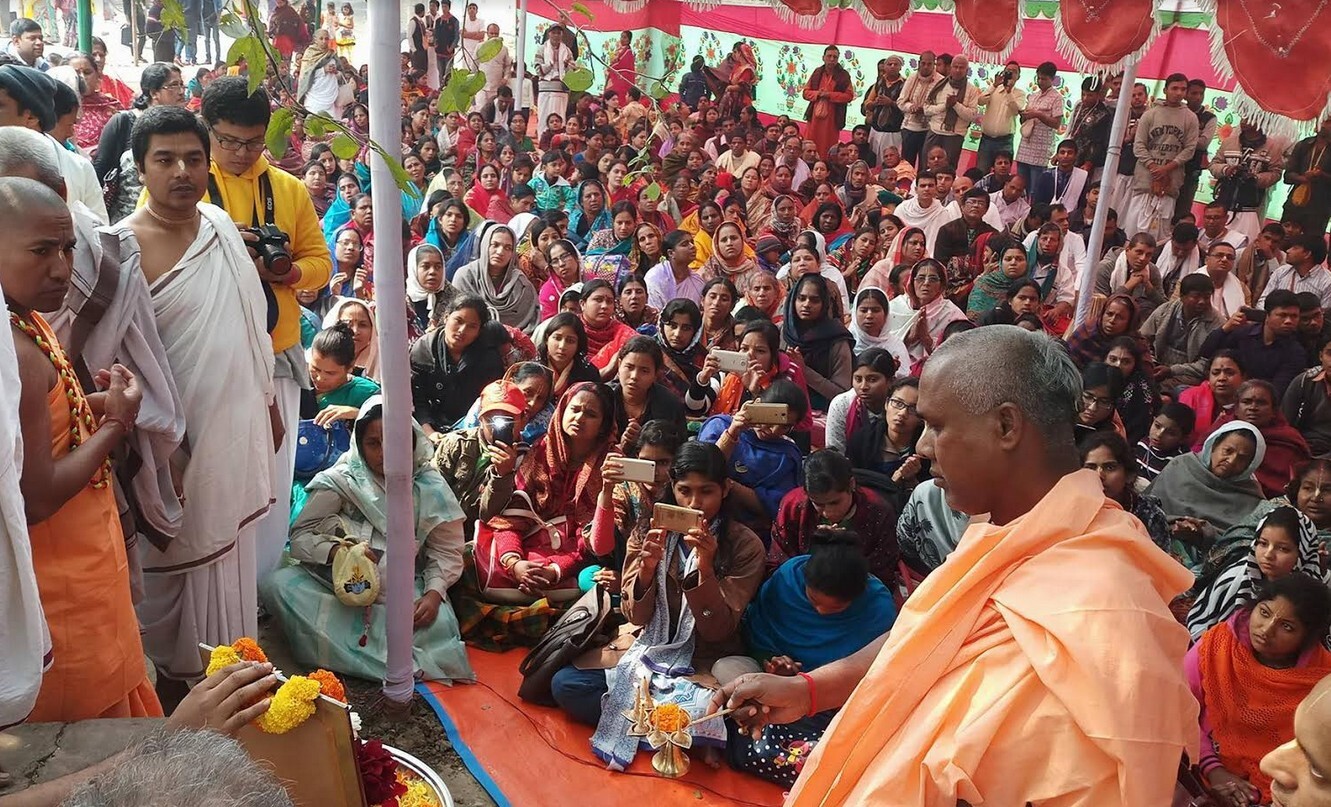
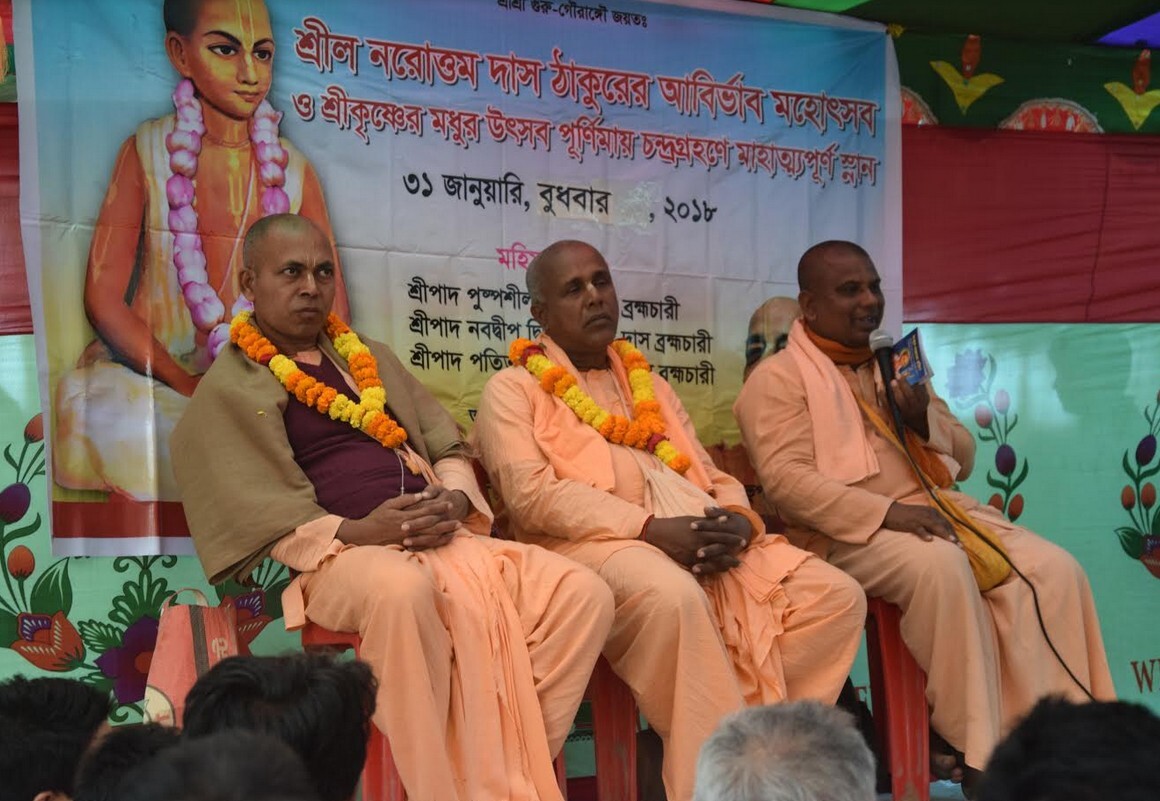
संतोष द्वारा बनवाया गया मंदिर उनके बाद चार शताब्दियों से भी अधिक समय से खड़ा है, लेकिन कुछ हानि के साथ। नरोत्तम ने वहाँ जो मूल विग्रह स्थापित किए थे, वे 1970 के दशक में बांग्लादेश में हुए युद्धों के दौरान लुप्त हो गए। बताया जाता है कि आज इस स्थान पर नरोत्तम की पूजनीय शालग्राम-शिलाओं में से केवल कुछ ही शेष हैं। हाल के वर्षों में इस्कॉन बांग्लादेश ने खेतुरी धाम में प्रतिवर्ष नरोत्तम पूर्णिमा उत्सव मनाना आरंभ किया है। भक्त फिर से उसी भूमि पर गाने और एकत्र होने आते हैं, जिसे संतोष ने कभी तैयार किया था। साढ़े चार शताब्दियों बाद यह उस कहीं अधिक बड़ी भीड़ की एक छोटी-सी याद है, जिसका उन्होंने कभी स्वयं वहाँ स्वागत किया था।
