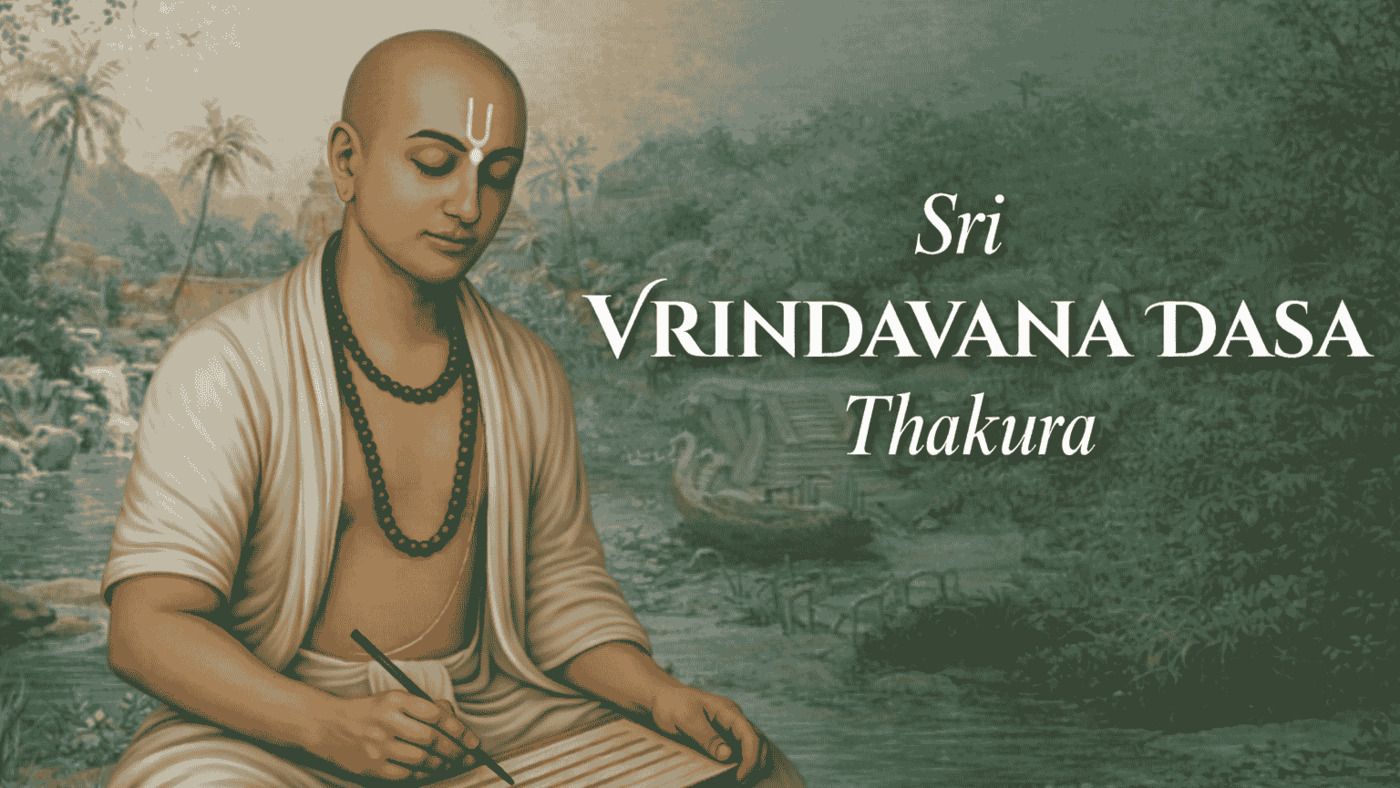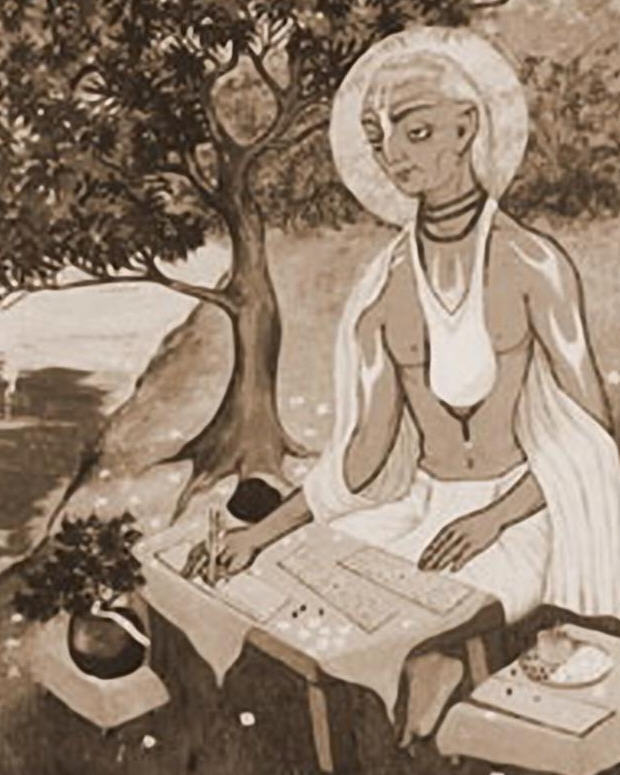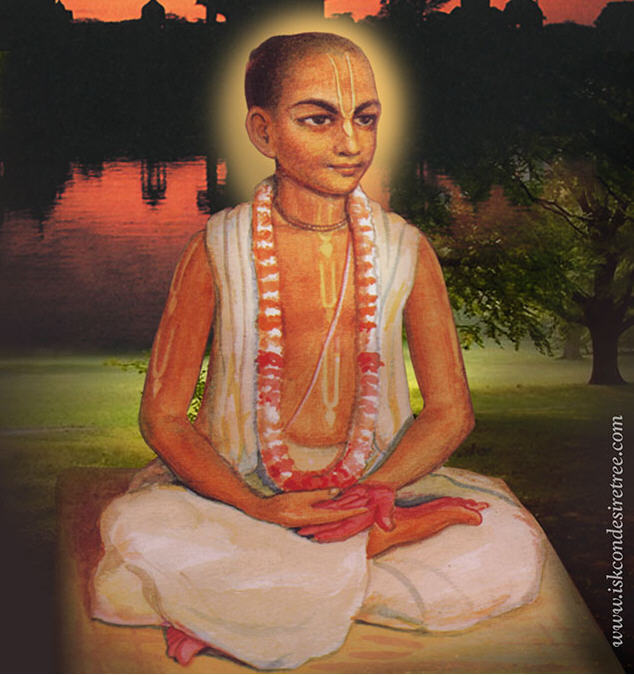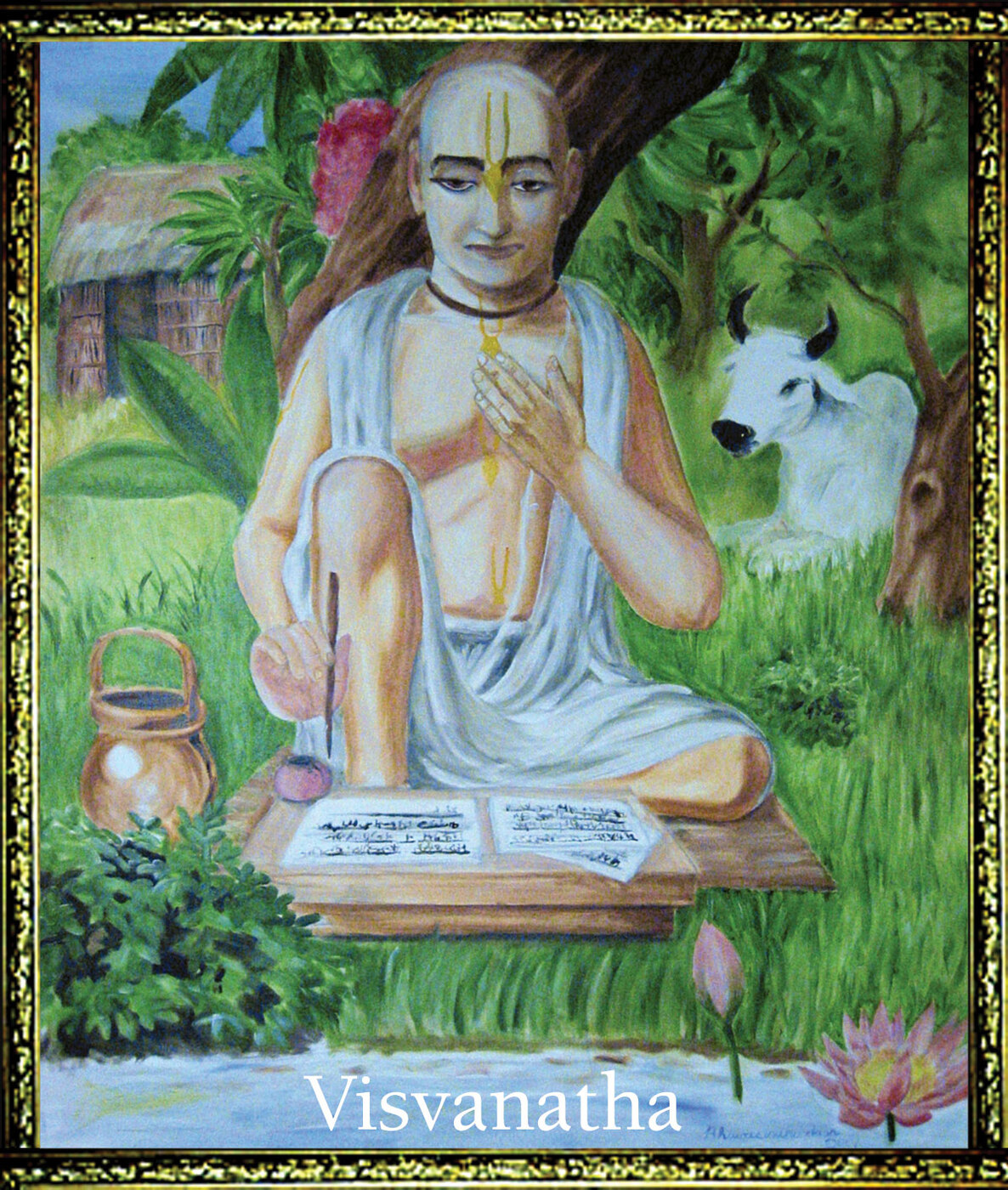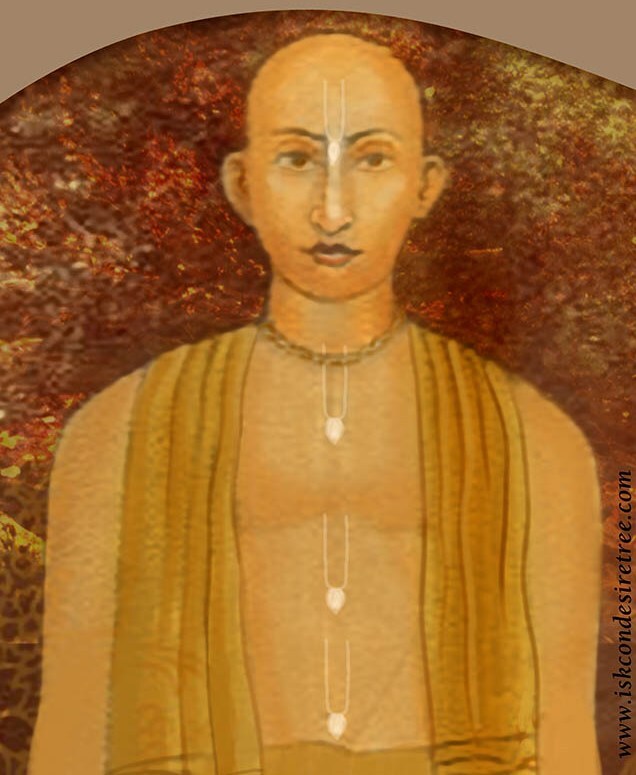
Srila Shyamananda Pandit
The Milkman's Son Who Carried the Goswamis Home
Also known as Shyamananda Prabhu, Syamananda Pandita, Duhkhi Krishnadasa, Dukhi, Dukhia, Krishnadasa
“Yes, of course, you shall see it. You shall go to Braj-dhama.”
Hridaya Chaitanya's reply, as recorded in the traditional biographies, when the newly initiated Krishnadasa said that after bathing in the Ganges he now wished to see the Yamuna as well. This was the moment that sent him on to Vrindavana and, in time, to the Six Goswamis.
Srila Shyamananda Pandit was born Duhkhi, to a family of milkmen in rural Bengal. Together with Shrinivasa Acharya and Narottama Dasa Thakura, he became one of three preachers whom the Goswamis of Vrindavana sent home. They were sent to carry Gaudiya Vaishnavism into Bengal and Utkal (the older name for Odisha). Along the way, it was also carried into a family line of gurus. Historians and Srila Prabhupada's own purports both confirm that this line ran for centuries afterward. Until now he did not have a page of his own here, even though two other pages on this site talk about him at length. One is Hridaya Chaitanya, because Shyamananda was the disciple who made the name of that quiet Bengali householder-guru important in history. The other is Rasikananda Prabhu, because Shyamananda was Rasikananda's own guru.
| Detail | Description |
|---|---|
| Birth name | Duhkhi (also Dukhi, Dukhia), later Krishnadasa |
| Approximate birth year | c. 1535 AD, about a year after Sri Chaitanya Mahaprabhu's own disappearance |
| Birthplace | Dharenda Bahadurpur, near present-day Kalaikunda, Midnapur, Bengal |
| Family | Sadgopa (milkman) caste; father Krishna Mandal, mother Durika |
| Diksha-guru | Hridaya Chaitanya of Ambika Kalna |
| Siksha-guru in Vrindavana | Jiva Goswami, who gave him the name Shyamananda |
| Chief disciple | Rasikananda Prabhu |
| Literary works | Vrindavan Parikrama; Upasana Sara Samgraha; poems in Aprakashita Pada-ratnavali |
| Disappearance | Krishna-pratipada, month of Ashadha; exact year and place both disputed (see below) |
A Milkman's Son Recognized by Hridaya Chaitanya #
As a boy, Duhkhi left home and arrived at Ambika Kalna. There Hridaya Chaitanya saw him and accepted him despite his non-brahmana birth, and he received the name Krishnadasa. This early life is already told in depth on Hridaya Chaitanya's own pages, especially Discovering Duhkhi Krishnadasa and Training and Sending Him to Vrindavana. It is not repeated here. Early Life and Training Under Hridaya Chaitanya gives a short summary and sends the reader to those pages for the full story. For Shyamananda's own biography, the important thing is the result. His guru was willing to look past caste. And the disciple's service, even carrying water on his head until the skin broke, earned him the chance to be sent on to Vrindavana.
Trained in Vrindavana, Renamed by Radharani's Own Mercy #
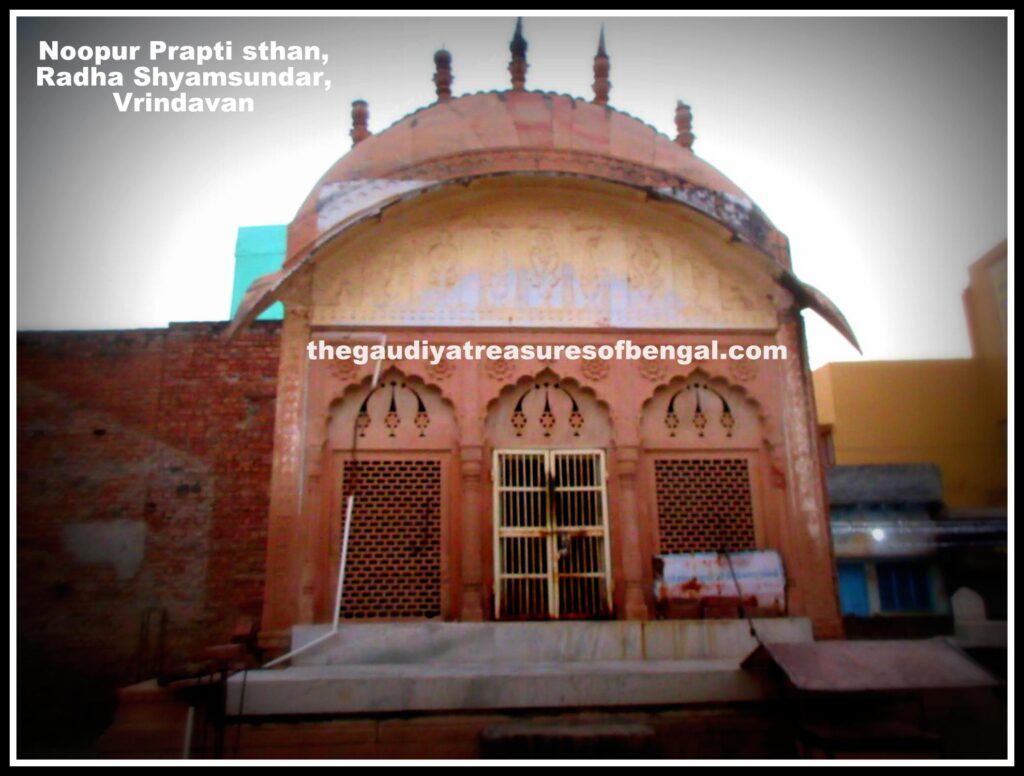
At Vrindavana, Krishnadasa took shelter of Jiva Goswami, the youngest and, by then, the only surviving senior authority among the Six Goswamis. Every day he drew water from the Kanana-Kunja as a service to his teacher. One day he found a lost anklet at the water's edge. Through it he was granted the darshan of Srimati Radharani Herself. She marked his forehead with Her own noopur (anklet) and, by most accounts, gave him the name Shyamananda on the spot. The next morning Jiva Goswami confirmed the name and the tilaka. Shyamananda then spent his years of real philosophical and devotional training under Jiva Goswami, together with two other young students, Narottama Dasa Thakura and Shrinivasa Acharya. The fuller account, including the temporary break with Hridaya Chaitanya that it caused, is on Education in Vrindavana Under the Goswamis.
Carrying the Goswamis' Scriptures Home #
When Jiva Goswami judged the three friends ready, he sent them east with the handwritten books of the Vrindavana Goswamis. These were the manuscripts of Rupa, Sanatana, Gopala Bhatta, Raghunatha Dasa and Jiva himself. They were to be preached and copied in Bengal and Odisha, since no other copies of this literature existed anywhere else. Near Vishnupura, the men of a local king, Vira Hambira, robbed the cart. This episode changed the religious history of a kingdom. The full story of how the books were recovered is told on Shrinivasa Acharya's own page, The Encounter With Vira Hambira. Shyamananda's own smaller part in that episode, and what happened once he was back in Bengal, are covered on Carrying the Scriptures and the Vira Hambira Episode.
Missionary in Odisha: Deities, Kings and a Chief Disciple #
Hridaya Chaitanya ordered Shyamananda to revive the fading preaching work in Utkal. Over several decades Shyamananda built a genuine mission there. He installed Deities and converted kings, zamindars and at least one hostile Mughal official. At the village of Rohini he met the boy who would become his own most important disciple. That meeting, and all that Rasikananda Prabhu did with what Shyamananda gave him, are already told at length on Rasikananda's discipleship page and the pages that follow it. Shyamananda's own side of that mission is told on Establishing Deities and Preaching in Odisha. That page covers the Deities he personally installed, the temple town of Gopiballabhpur that grew up around him, and his presence at Narottama Dasa Thakura's Kheturi festival. For much of this period the Vaishnavas of Odisha remained in political danger. It took Raja Man Singh's own military campaign against the Pathans to make the ground safe enough for Shyamananda's mission to take root. His followers also left behind their own musical tradition, Reneti kirtan, along with the few literary works listed above.
Marriage and Crossing Caste Lines #
Later, Shyamananda gave Rasikananda the instruction to initiate "from the brahmanas up to the chandalas... without any discrimination," and this is covered in full on Rasikananda's own Initiating Across Caste Lines. This instruction had roots in Shyamananda's own life. He had already been living that principle himself. He initiated a proud brahmana yogi and converted a hostile Muslim officer. According to a fuller account of his life from his family line, he also married more than once, in ways that reached beyond his own Sadgopa birth. This account is not found in the more commonly repeated version of his biography. The two traditions really disagree, so both are reported on Marriage and Initiating Across Social Boundaries.
Final Days and a Legacy Carried by Rasikananda #
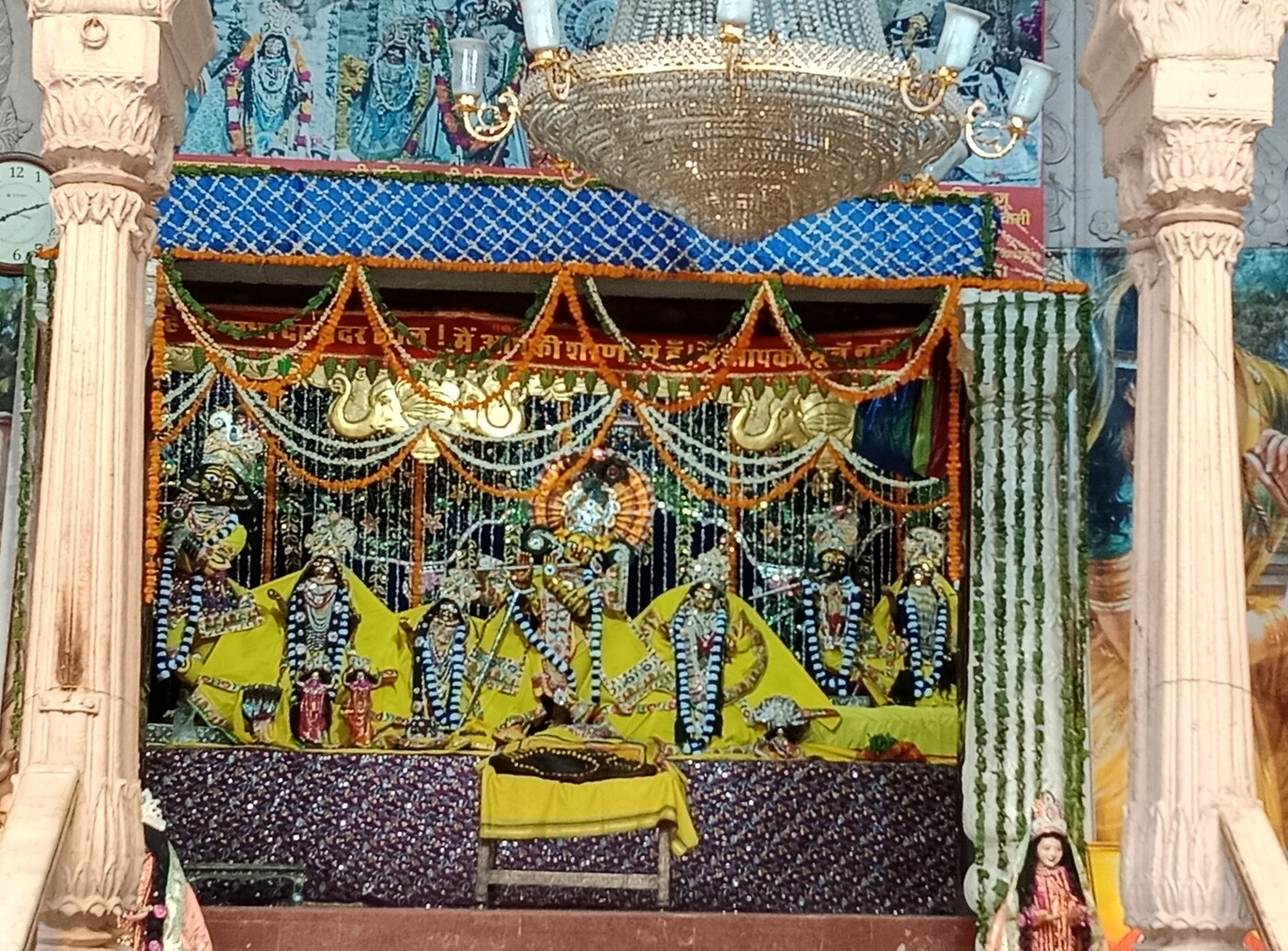
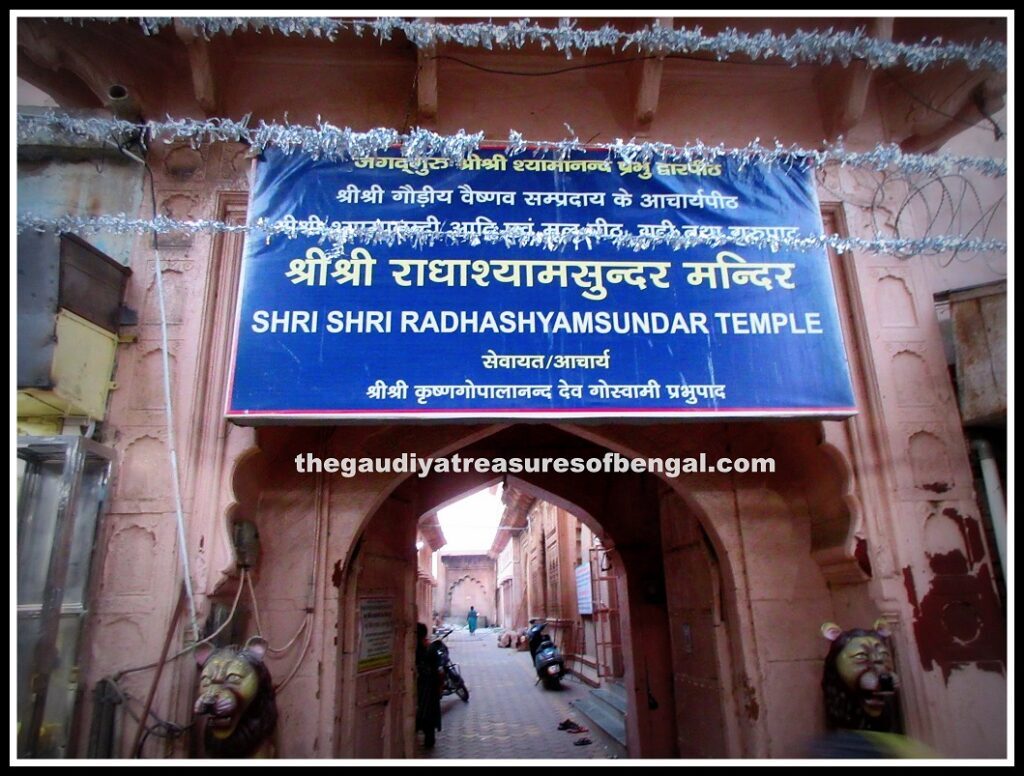
Sources disagree on the exact year, and even the exact place, of Shyamananda's disappearance. This is a real disagreement, and we state it plainly instead of hiding it. But the sources agree on what came just before it. With his own hand, he tied a turban on Rasikananda Prabhu and declared him Mahanta of the entire Shyamanandi community. From that one act came a documented chain of gurus running to Baladeva Vidyabhusana, and a "Shyamanandi parivar" still active across Odisha and southern Bengal today. The Radha-Shyamsundar temple he founded in Vrindavana also still stands, where he first found Radharani's anklet. The full story is on Final Days and Legacy.
Scriptural evidence
kibā vipra, kibā nyāsī, śūdra kene naya
yei kṛṣṇa-tattva-vettā, sei 'guru' haya
Word for word
kibā: whether; vipra: a brāhmaṇa; nyāsī: a sannyāsī; śūdra: a śūdra; kene naya: why not; yei: anyone who; kṛṣṇa-tattva-vettā: a knower of the science of Kṛṣṇa; sei: that person; guru haya: is the spiritual master.
Whether one is a brahmana, a sannyasi or a shudra — regardless of what he is — he can become a spiritual master if he knows the science of Krishna.
From the purport: Purport excerpt: Srila Rasikananda, although born in a brahmana family, was initiated by Sri Syamananda Prabhu, who was not born in a caste brahmana family.
This is the very verse Srila Prabhupada's own purport uses Shyamananda and Rasikananda to illustrate; it is placed on the main page because it states, more directly than any other citation here, the single principle Shyamananda's whole life ran on.
na śūdrā bhagavad-bhaktās
te 'pi bhāgavatottamāḥ
sarva-varṇeṣu te śūdrā
ye na bhaktā janārdane
Word for word
na: not; śūdrāḥ: shudras; bhagavat-bhaktāḥ: devotees of the Lord; te api: they also; bhāgavata-uttamāḥ: first-class devotees; sarva-varṇeṣu: among all social classes; te: they; śūdrāḥ: shudras; ye: those who; na: not; bhaktāḥ: devotees; janārdane: of the Lord.
Devotees of the Lord are never shudras, even by birth in a shudra family; but among every class of men, those who are not devotees of the Lord are to be considered shudras.
Quoted by Srila Prabhupada in the same purport that names Shyamananda directly, this is the scriptural basis for treating a devotee's spiritual, not social, standing as what actually defines him.
What Srila Prabhupada said
"yei kṛṣṇa-tattva-vettā sei guru haya: One who knows Krishna specifically, not superficially, but in all details what is the meaning of Krishna, what is Krishna, he can become guru."
- Hridaya Chaitanya (this site)
- Rasikananda Prabhu (this site)
- Jiva Goswami (this site)
- Shrinivasa Acharya (this site)
- SHYAMANANDA PRABHU - Biography - Gaudiya History
- Sri Shyamananda Prabhu - Stephen Knapp
- Life of Shyamananda Pandit - ISKCON ebooks (PDF)
- Sri Syamananda Prabhu - Disappearance - ISKCON Desire Tree
- A Short Biography of Sri Shyamananda Prabhu (trans. Demian Martins)
- Radha Shyamsundar Temple, Vrindavan - Founded by Shyamananda Pandit - The Gaudiya Treasures of Bengal
- Syamananda Pandita - Biography - Sripat Kanupur - The Gaudiya Treasures of Bengal
- Sri Chaitanya-caritamrita, Madhya-lila 8.128
- Sri Chaitanya-caritamrita, Adi-lila 7.45
- Sri Chaitanya-caritamrita, Antya-lila 4.67
- Teachings of Lord Caitanya, Chapter 31, The Supreme Perfection
- Lecture on CC Madhya-lila 8.128 -- Bhuvanesvara, January 24, 1977
Disciples
Ser Khan
Pathan official won over by Shyamananda Pandit's kirtan
Not recorded – Not recorded
1 pastime page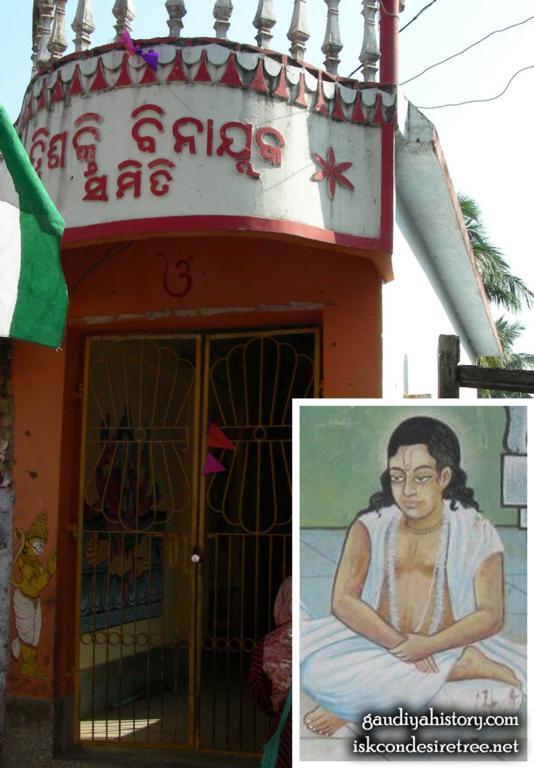
Srila Rasikananda Prabhu
The Preacher Who Crossed Every Caste Line in Odisha
Kartika, night of Dipamalika (Diwali), Sakabda 1512 (c. 1590 AD) – First day of the bright fortnight of Phalguna, Sakabda 1574 (1652 AD)
5 pastime pagesFrequently asked
When was Srila Shyamananda Pandit born?
Srila Shyamananda Pandit appeared Chaitra Purnima; traditionally dated 1535 AD by one detailed account from his family line, though most sources give no year in Dharenda Bahadurpur, near present-day Kalaikunda, Midnapur district, Bengal.
Who was the guru of Srila Shyamananda Pandit?
The spiritual master of Srila Shyamananda Pandit was Srila Hridaya Chaitanya.
When and where did Srila Shyamananda Pandit disappear?
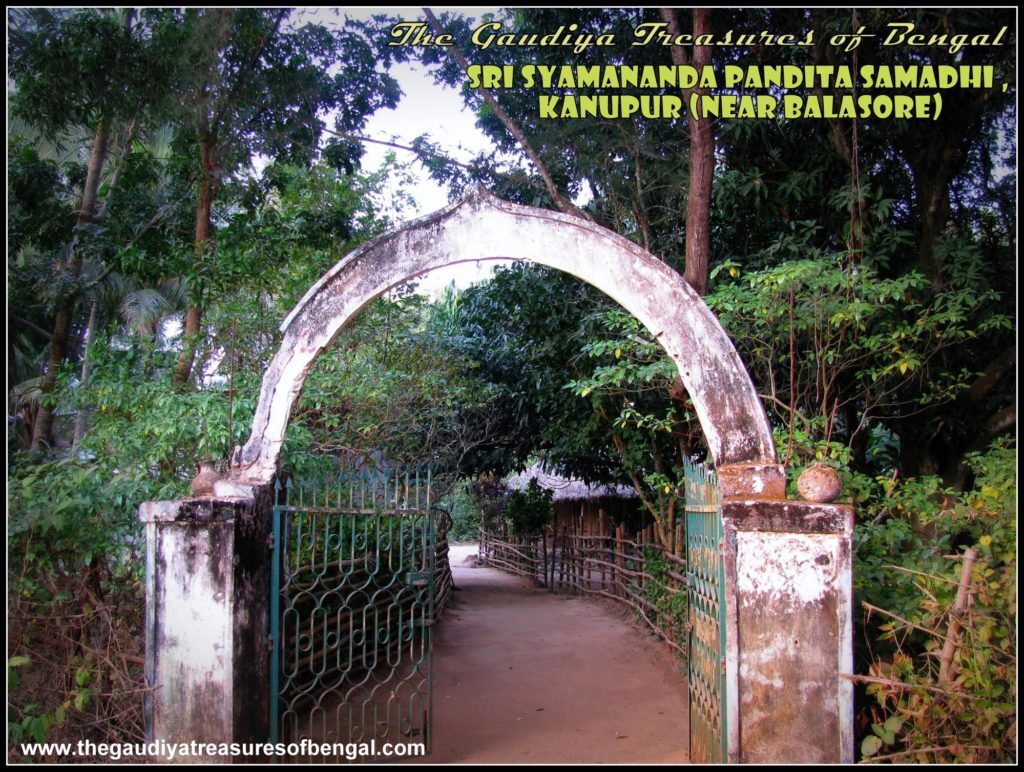
Srila Shyamananda Pandit disappeared Krishna-pratipada (first lunar day of the dark fortnight), month of Ashadha; year given as 1623 AD by one detailed source, and as Shaka 1552 / 1630 AD by other sources; the sources disagree at Nrisinghpur (present-day Kanupur, near Balasore, Mayurbhanj district, Odisha) by the fullest account; Gopiballabhpur by a more widely repeated one - sources disagree.
What are the main pastimes of Srila Shyamananda Pandit?
The pastimes covered here include: Early Life and Training Under Hridaya Chaitanya, Education in Vrindavana Under the Goswamis, Carrying the Scriptures and the Vira Hambira Episode, Establishing Deities and Preaching in Odisha, Marriage and Initiating Across Social Boundaries, Final Days and Legacy.