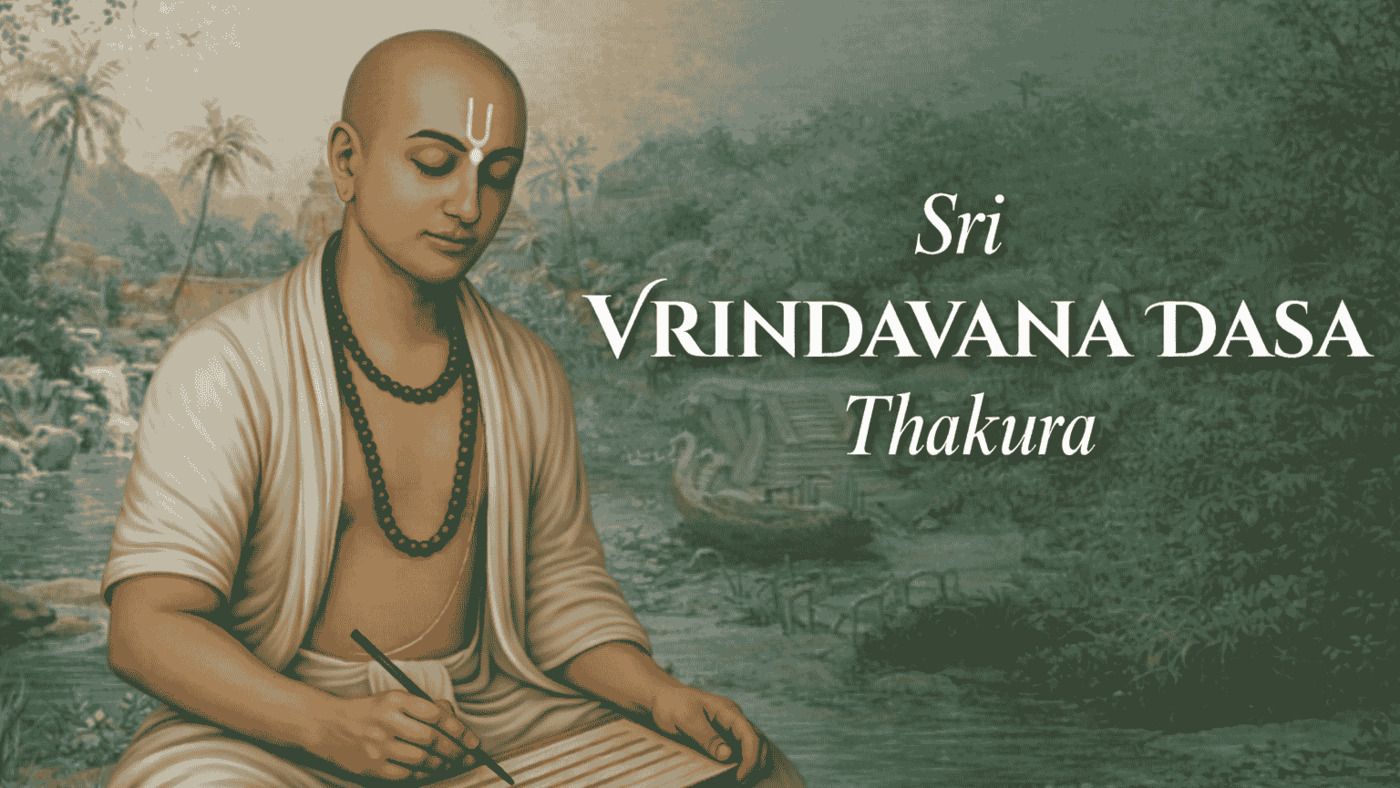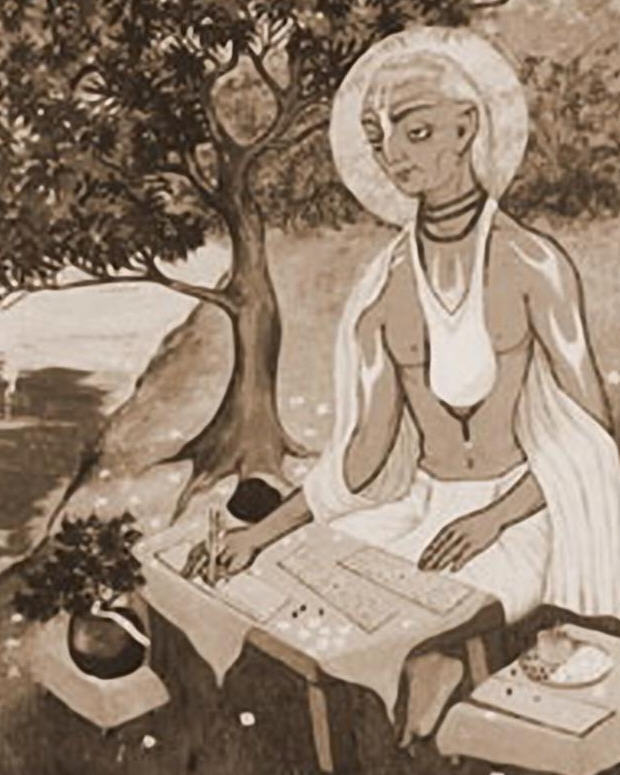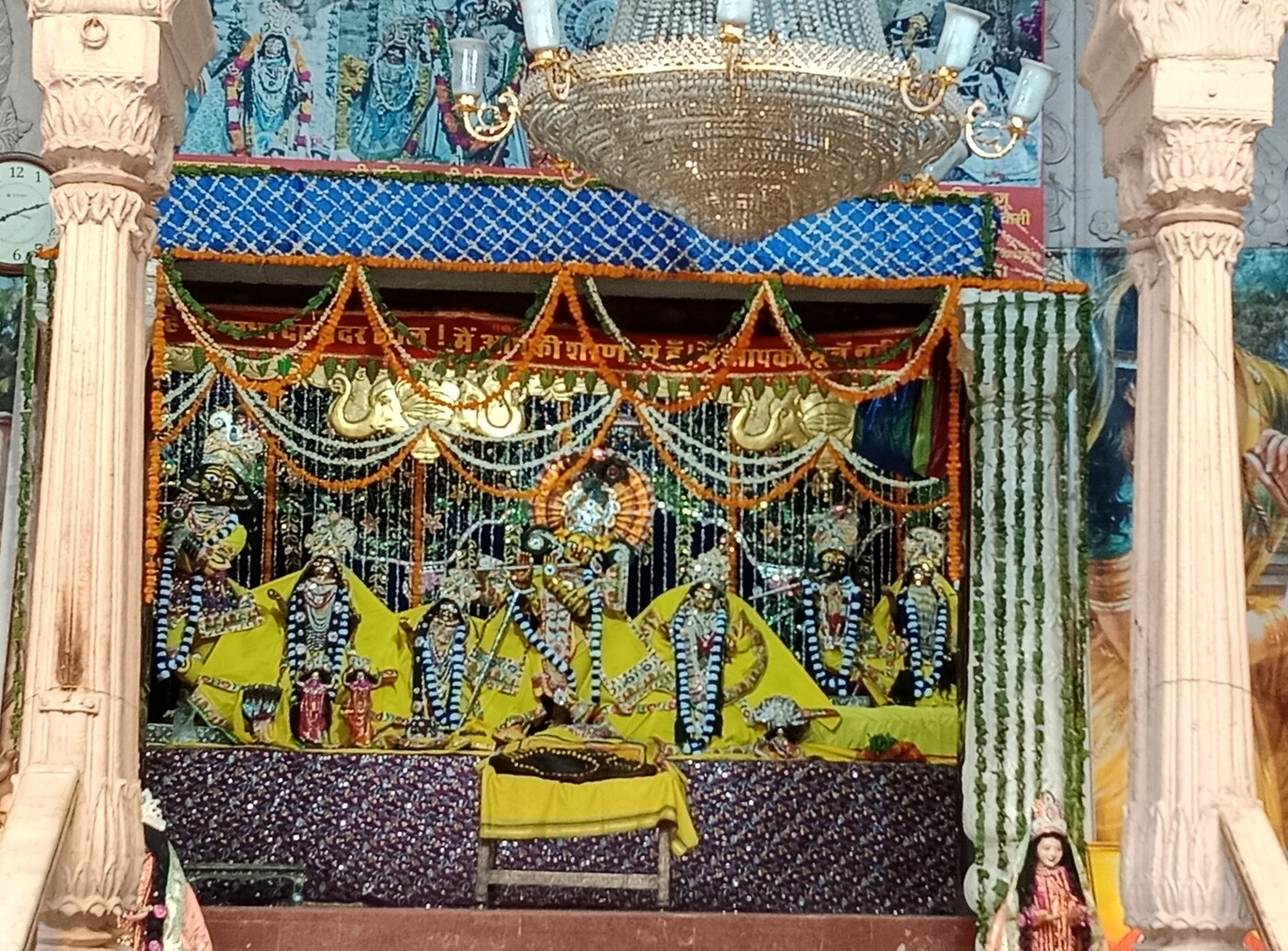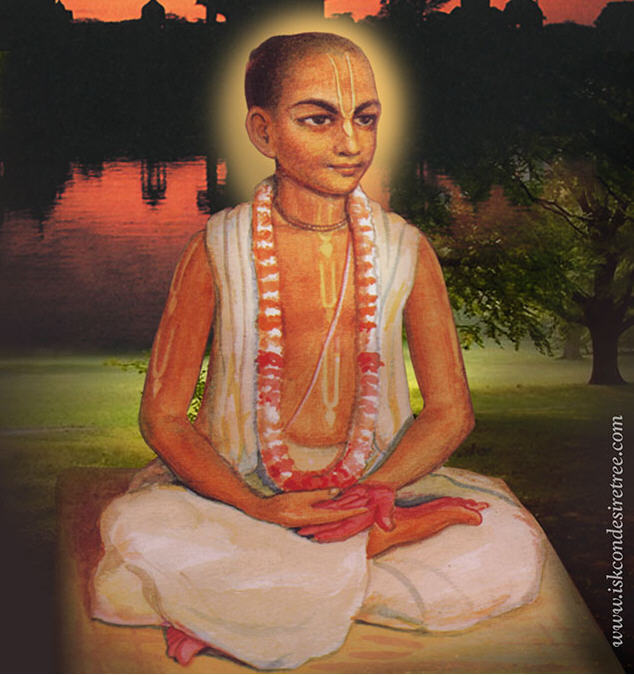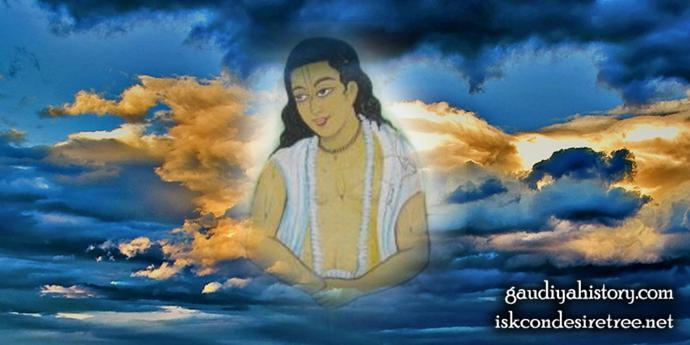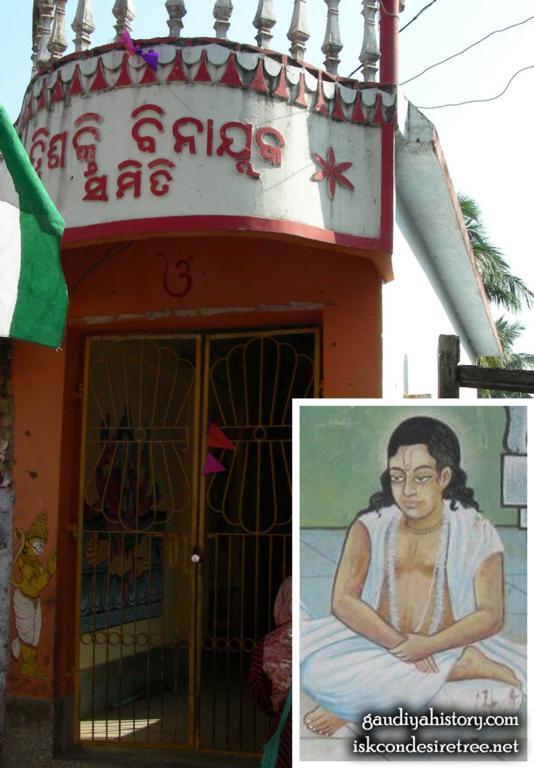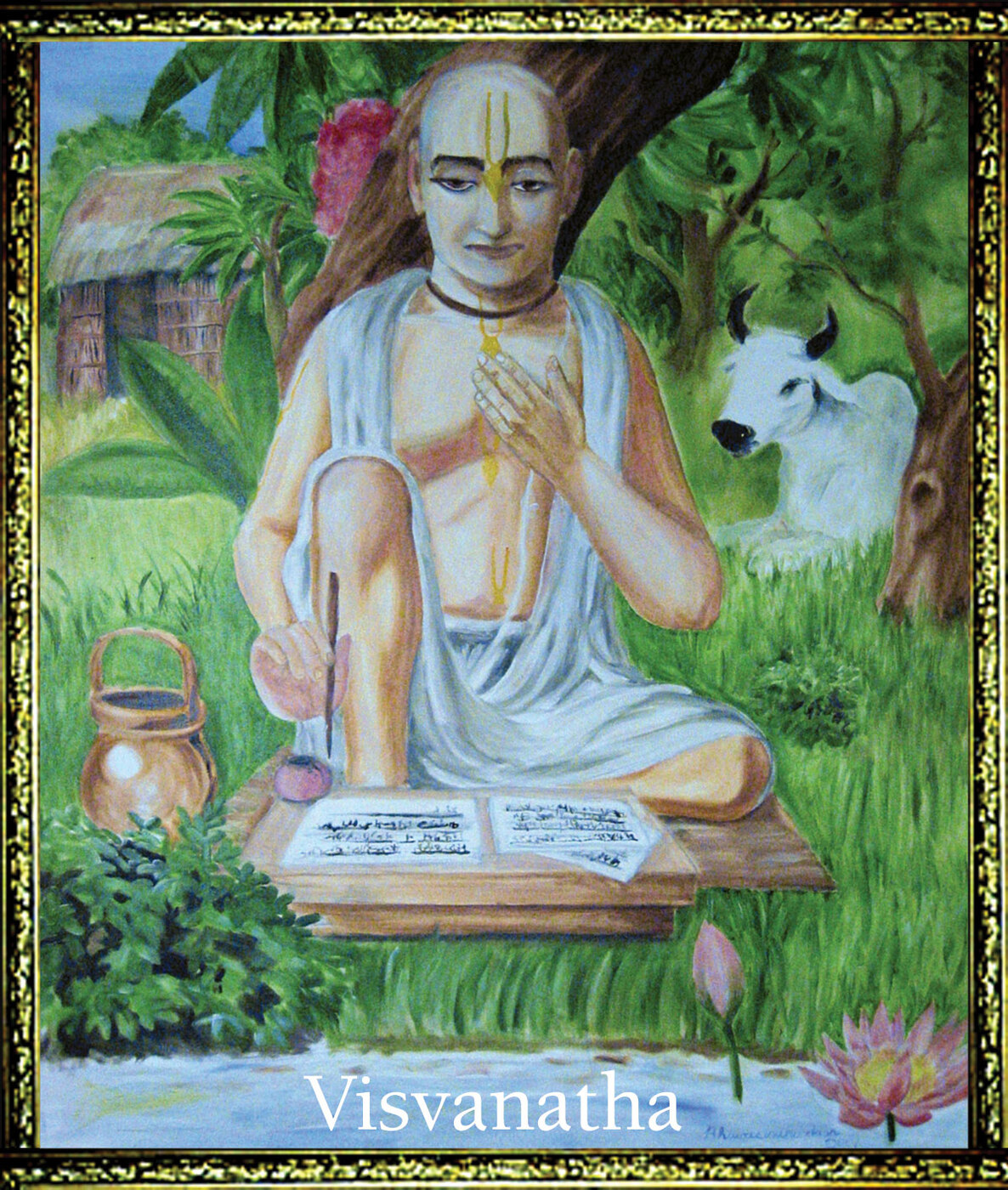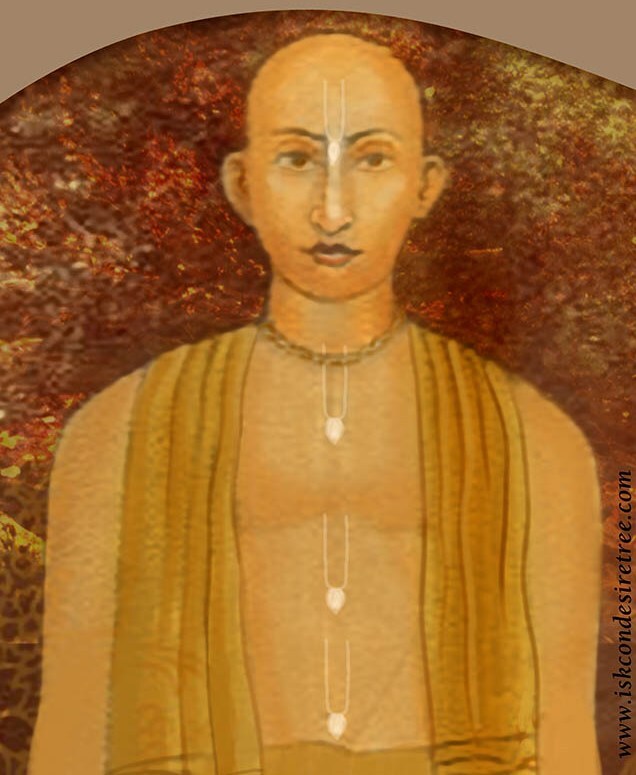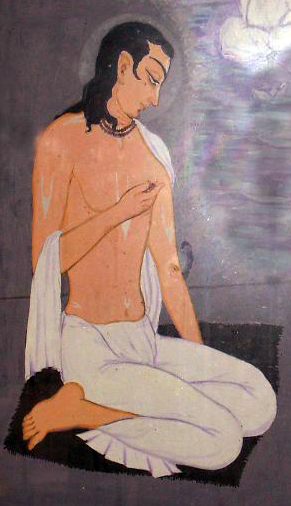
Srila Ramachandra Kaviraja
Poet-Disciple of Shrinivasa Acharya and Closest Friend of Narottama Dasa Thakura
Also known as Ramacandra Kaviraja, Ramachandra Kaviraja Goswami, Ramachandra Kaviraj, Ramachandra Sena, Ramachandra Dasa
“Sri Chaitanya Mahaprabhu, in his causeless mercy, has given the whole world the nectar of the Hare Krishna maha-mantra - a flood of divine love in which anyone, even one who is blind or dumb, can drown and be saved. Yet Ramachandra dasa is so unfortunate that he could not taste even a single drop of that nectar.”
A padavali verse composed and signed by Ramachandra Kaviraja himself, on the mercy of the Hare Krishna maha-mantra; preserved in Vaishnava anthology tradition.
Srila Ramachandra Kaviraja belonged to the generation of Gaudiya Vaishnava saints who came directly after Sri Chaitanya Mahaprabhu's own associates had finished their work in Bengal and Vraja. We know more about him than about many others of that later generation. A few verses and a Prabhupada purport in Sri Chaitanya-charitamrita leave no real doubt about his family and his guru. A much longer story preserved in Narahari Chakravarti Thakura's *Bhakti-ratnakara* fills in a vivid picture of his life around those basic facts. He was a Bengali physician-poet who gave up worldly comfort on his own wedding day. He became Shrinivasa Acharya's most devoted personal servant, and he earned the title "Kaviraja", king of poets, from Jiva Goswami himself in Vrindavana.
| Detail | Description |
|---|---|
| Guru | Shrinivasa Acharya |
| Parents | Chiranjiva Sena and Sunanda, of Shrikhanda, Bengal |
| Younger brother | Govinda Dasa Kaviraja, Vaishnava poet-composer |
| Era | Late 16th - early 17th century, one generation after the Six Goswamis |
| Title "Kaviraja" | Conferred by Jiva Goswami in Vrindavana |
| Chief literary works | Smarana-chamatkara, Smarana-darpana, Siddhanta-chandrika, Shrinivasa Acharyera Jivana-charita |
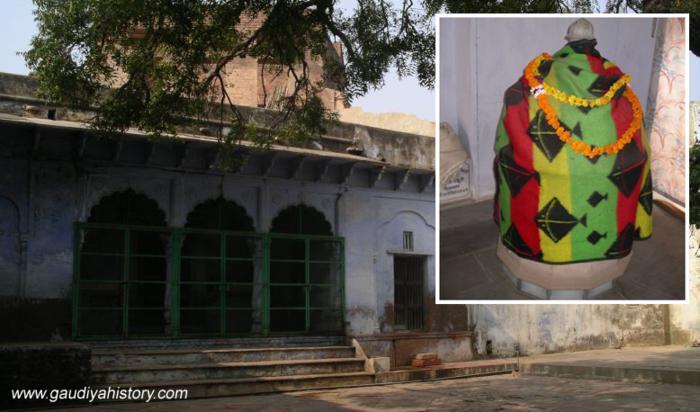
| Samadhi | Dhira Samira, Vrindavana, beside Shrinivasa Acharya's own samadhi |
At a Glance
- Born into a Bengali family of physicians in Shrikhanda; raised for a time in Shakta worship, before his own initiation changed everything.
- Renounced the celebrations of his own wedding procession the moment he encountered Shrinivasa Acharya, and never really returned to household life.
- Traveled to Vrindavana, met Jiva Goswami and several of the Six Goswamis in person, and received the Kaviraja title after reciting his own poetry.
- Defended Narottama Dasa Thakura's mission in disguise as a village shopkeeper, when a rival party tried to discredit it.
- Died in Vrindavana after Shrinivasa Acharya's own disappearance, unable to bear separation from the Goswamis who had already passed on.
A Physician's Son Raised Among Shaktas #
Chiranjiva Sena, Ramachandra's father, belonged to Shrikhanda, a village in Bengal. In Sri Chaitanya-charitamrita, Krishnadasa Kaviraja Goswami names the devotees of this village directly: Mukunda, Narahari Sarakara, Raghunandana, and Chiranjiva himself. There Chiranjiva is described as "extremely learned", and his wife's conduct as "completely transcendental" (Chaitanya-charitamrita, Adi 11.92). Every year this same circle traveled to Puri for Ratha-yatra to see Mahaprabhu dance before Lord Jagannatha. Chiranjiva came from a family of physicians, and he had two sons. The elder was Ramachandra, and the younger was Govinda, who grew up to become the celebrated Vaishnava poet Govinda Dasa Kaviraja, author of Sangita-madhava and Gitamrita.
After their father's death, the brothers went to live with their maternal grandfather, Damodara Kaviraja. He was a real poet himself, but he was also a committed worshiper of Durga in the Shakta tradition. Under his influence, both boys grew up worshiping goddesses, who are personal forms of Krishna's external energy, instead of Krishna Himself. By early adulthood Ramachandra had made a name for himself as a practicing physician and an accomplished poet.
The Wedding Procession That Changed His Life #
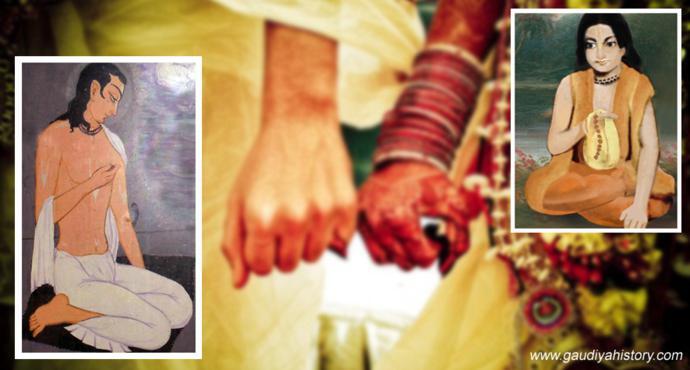
All accounts agree that the turning point in Ramachandra's life came on the day of his own wedding. The page The Wedding Procession at Jajigram tells in full what happened: the procession that passed Shrinivasa Acharya's veranda at Jajigram, the sleepless night that followed, and the embrace at dawn. In short, one glimpse of Shrinivasa Acharya undid a lifetime of Shakta upbringing in a single day. Ramachandra returned that same night, fell at the Acharya's feet, and was initiated with the Radha-Krishna mantra. His Shakta relatives and neighbors did not accept this decision without protest, as that same page also describes.
Poet, Physician, and the Kaviraja Title #
Once initiated, Ramachandra asked permission to travel to Vrindavana, where his guru was then staying. On the way he passed through Gaya, Kashi, Prayaga and Mathura. This pilgrimage brought him face to face with Jiva Goswami, Gopala Bhatta Goswami, Lokanatha Goswami and Bhugarbha Goswami. It also took him to bathe at Radha-kunda and Shyama-kunda, where Raghunatha Dasa Goswami personally embraced him. There the Vaishnavas of Vraja, with Jiva Goswami at their head, heard him recite his own poetic compositions and gave him the title Kaviraja. This made him one of the eight kavirajas among Shrinivasa Acharya's disciples. In his purport to Chaitanya-charitamrita, Adi-lila 11.51, Srila Prabhupada confirms the same honor in far fewer words: "Srila Jiva Gosvami very much appreciated Sri Ramacandra Kaviraja's great devotion to Lord Krsna and therefore gave him the title Kaviraja." The full story of that journey is told on Pilgrimage to Vrindavana and the Kaviraja Title.
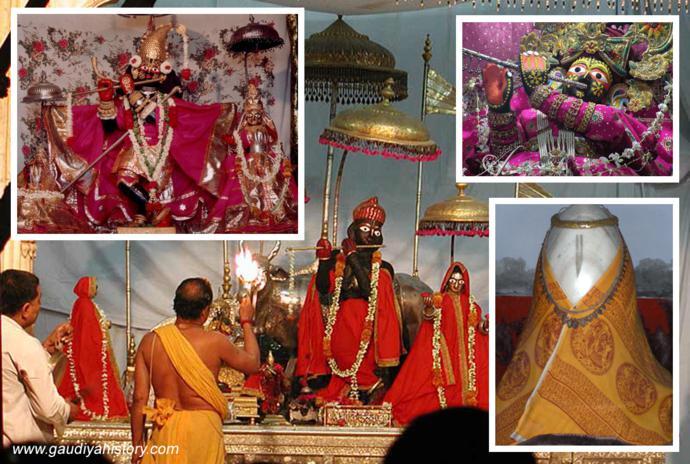
Ramachandra went on to write several works of his own: *Smarana-chamatkara* and *Smarana-darpana* (both concerned with meditative remembrance of Krishna's pastimes), *Siddhanta-chandrika*, and a biography of his own guru, *Shrinivasa Acharyera Jivana-charita*. None of these is widely available in English translation today. So we give here only their titles and subjects, as later Vaishnava tradition records them, and not their content in detail.
Best Friend of Narottama Dasa Thakura #
All available sources agree that Ramachandra's closest bond in this life was with Narottama Dasa Thakura. Srila Prabhupada's own purport calls this friendship "the most intimate" of Narottama's life. A party of caste-conscious brahmanas once set out to prove that Narottama Dasa Thakura was wrong to initiate brahmana disciples, since he was born a kayastha. Ramachandra personally stepped in, in disguise, to defend him. This episode is told in full on The Disguised Shopkeepers of Kumarapura. Narottama Dasa Thakura himself later preserved the memory of this friendship in a line from his *Prarthana*: "daya kara sri-acarya prabhu srinivasa, ramacandra sanga mage narottama dasa," "Be merciful, O Prabhu Shrinivasa Acharya! Narottama Dasa begs for the association of Ramachandra."
Final Years and Disappearance in Vrindavana #
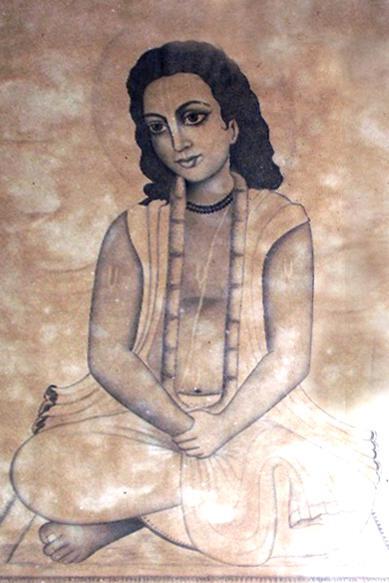
Ramachandra was present at the great Kheturi festival organized by Narottama Dasa Thakura. Afterward he returned to Vrindavana a final time in the company of Shrinivasa Acharya. The story of that last journey, of his brother Govinda's conversion from Shakta worship, and of his own disappearance is told on Kheturi and the Return to Vrindavana. Sources do not agree on the exact date. One account places his disappearance on the third day of the dark fortnight of Pausha, another on Krishna-trayodashi of Magha. But every source agrees that he disappeared in Vrindavana, sometime after Shrinivasa Acharya's own disappearance. They also agree on the site of his samadhi, in the Dhira Samira grove of Vraja-mandala, directly beside his guru's.
Legacy in the Gaudiya Vaishnava Tradition #
The Gaura-ganoddesha-dipika identifies Ramachandra's eternal identity in Krishna's Vraja-lila as Karunamanjari, one of the gopis who assist Srimati Radharani (sources give the name variously as Karunamanjari and Karna-manjari). Almost every surviving detail about his life comes from two sources. The first is Chaitanya-charitamrita and its purports, which mention him in a sober, factual way. The second is the Bhakti-ratnakara, which preserves a far more detailed and more devotional account. In both, Ramachandra Kaviraja is remembered not so much for any single contribution to doctrine as for a quality that later Vaishnavas have always prized highly. That quality is total, unwavering friendship, first with his guru and then with Narottama Dasa Thakura. It was a friendship of the kind Narottama himself prayed his whole life to keep.
Scriptural evidence
From the purport: Purport excerpt: "Of Ciranjiva's two sons, the elder, Ramacandra Kaviraja, was a disciple of Srinivasa Acarya and an intimate associate of Narottama dasa Thakura. The younger son was Govinda dasa Kaviraja, the famous Vaisnava poet."
Srila Prabhupada's own purport is the primary documentary source establishing Ramachandra Kaviraja's parentage, his guru, and his relationship to Narottama Dasa Thakura and his brother Govinda.
svardhunyas-tira-bhumau sarajani-nagare gauda-bhupadi-patrad brahmanyad visnu-bhaktad api suparicitat sri-ciranjiva-senat yah sri-ramendu-nama samajani paramah sri-sunandabhidhayam so-yam sriman narakhye sa hi kavi-nrpatih samyag asid abhinnah
Ramachandra, a king amongst poets, was born in the town of Sarajani on the banks of the Ganges as the son of Sunanda and Chiranjiva Sena, a well-known minister of the king of Gauda, a devotee of the brahmanas and of Vishnu. Ramachandra was not in any way different from Narottama Dasa Thakura.
Composed by his own brother Govinda Dasa Kaviraja, this verse is the earliest source for Ramachandra Kaviraja's birthplace and family, though it names the town Sarajani-nagara rather than Shrikhanda.
- Sri Chaitanya-charitamrita, Adi-lila 10.78-79, with Prabhupada's purport
- Sri Chaitanya-charitamrita, Adi-lila 11.51, with Prabhupada's purport
- Gaudiya History (ISKCON Desire Tree): Ramachandra Kaviraja
- Gaudiya History (ISKCON Desire Tree): Ramachandra Kaviraja - Biography 2
- Gaudiya History (ISKCON Desire Tree): Ramacandra Kaviraja - Biography 3
- Shyam Das Baba: Sri Ramacandra Kaviraja (excerpting Bhakti Ballabh Tirtha Maharaja, Sri Chaitanya: His Life & Associates)
- ISKCON Bangalore: Sri Ramchandra Kaviraja
- Vaniquotes: Sri Ramacandra Kaviraja, the son of Khandavasi Ciranjiva and Sunanda...
Frequently asked
When was Srila Ramachandra Kaviraja born?
Srila Ramachandra Kaviraja appeared Not recorded by year; lived in the generation after Sri Chaitanya Mahaprabhu's own associates, as a disciple of Shrinivasa Acharya (later 16th century) in Shrikhanda, Bengal (one verse instead names the ancestral town Sarajani-nagara).
Who was the guru of Srila Ramachandra Kaviraja?
The spiritual master of Srila Ramachandra Kaviraja was Srila Srinivasa Acharya.
When and where did Srila Ramachandra Kaviraja disappear?
Srila Ramachandra Kaviraja disappeared Not recorded by year; sources differ on the exact date (the dark-fortnight tritiya of Pausha per one account, Krishna-trayodashi of Magha per another) at Vrindavana; samadhi in the Dhira Samira grove, beside Shrinivasa Acharya's own samadhi.
What are the main pastimes of Srila Ramachandra Kaviraja?
The pastimes covered here include: The Wedding Procession at Jajigram, Pilgrimage to Vrindavana and the Kaviraja Title, The Disguised Shopkeepers of Kumarapura, Kheturi and the Return to Vrindavana.