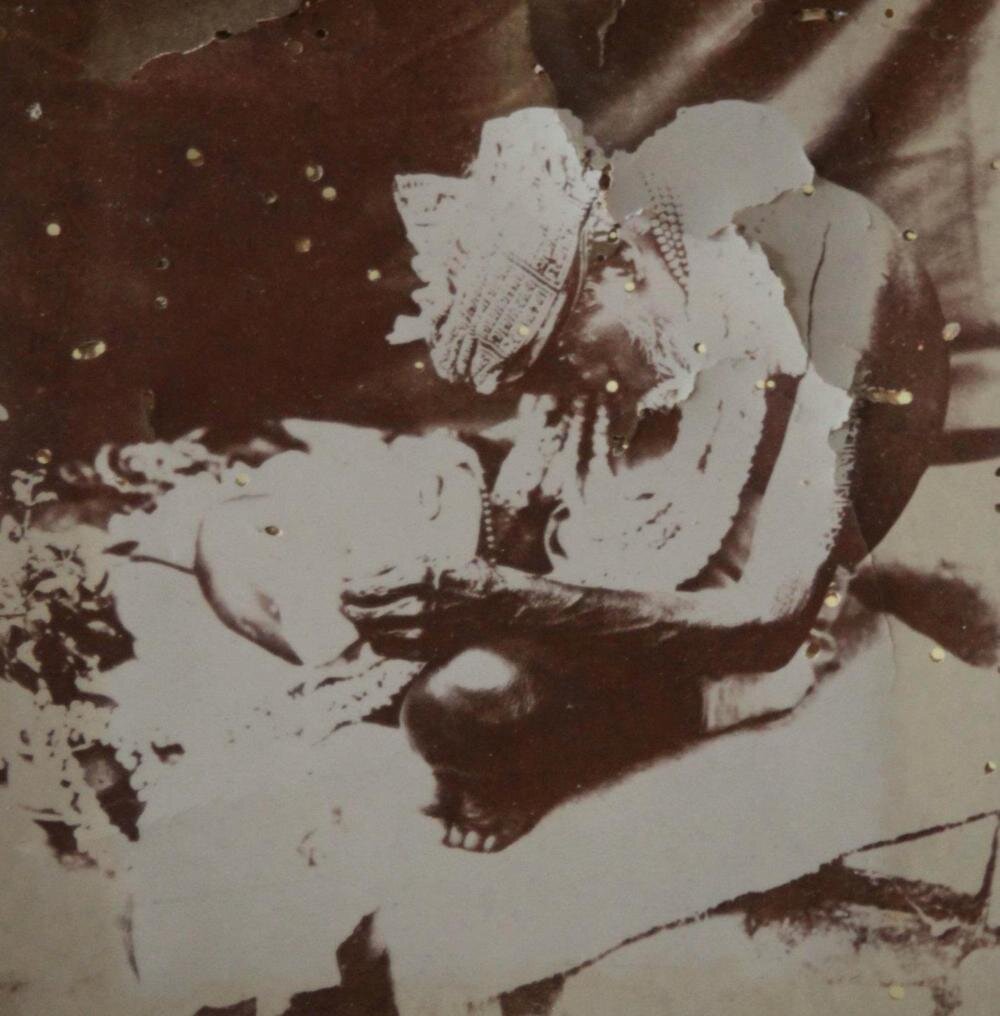
Srila Jagannatha Dasa Babaji
Vaishnava Sarvabhauma — Emperor Among the Vaishnavas
The complete life, on one page: The main biography and every pastime page, in order, in one place
Introduction
gaurāvirbhāva-bhūmes tvaṁ nirdeṣṭā saj-jana-priyaḥ
vaiṣṇava-sārvabhaumaḥ śrī-jagannāthāya te namaḥ
"I offer my respectful obeisances unto Sri Jagannatha Dasa Babaji, who is dear to the saintly and honored by the entire Vaishnava community as Vaishnava Sarvabhauma, and who pointed out the very place of Lord Gaura's appearance."
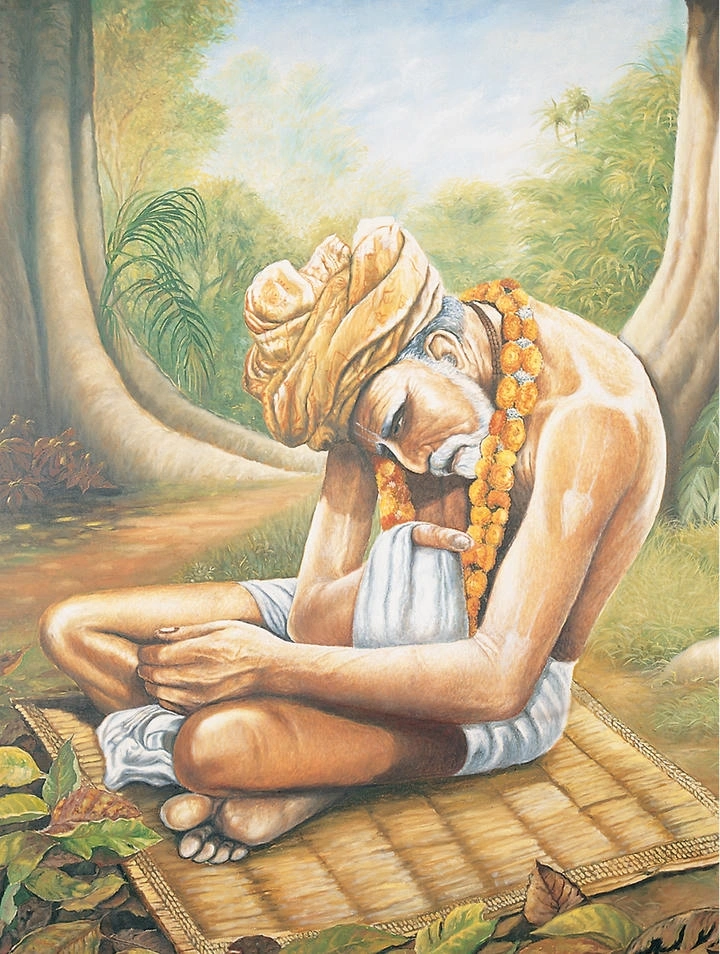
Srila Jagannatha Dasa Babaji is remembered as the "emperor among Vaishnavas," or Vaishnava Sarvabhauma, of his era. He was a renunciant of Vrindavana and Nabadwip who lived on alms. He wrote no books and founded no institution. Still, he is a direct link in the guru-parampara that runs from Sri Chaitanya Mahaprabhu down to Srila Prabhupada. He is the paramaguru (guru's guru) of Srila Bhaktisiddhanta Sarasvati Thakura. In his extreme old age, he personally confirmed the site of Sri Chaitanya Mahaprabhu's birth at Mayapur, and this settled the question once and for all. He is said to have been born into a noble family in a village in the Tangail subdivision of the Mayamanasimha district of Bengal, in present-day Bangladesh. Sources do not agree on the year of his birth. Some place it around 1750 and others closer to 1800, so we report it here as an open question, not a settled fact. His birth and guru lineage are covered in full here.
Chapter 1
Birth and Guru Lineage
From a disciple of Baladeva Vidyabhushana's line to the title Vaishnava Sarvabhauma
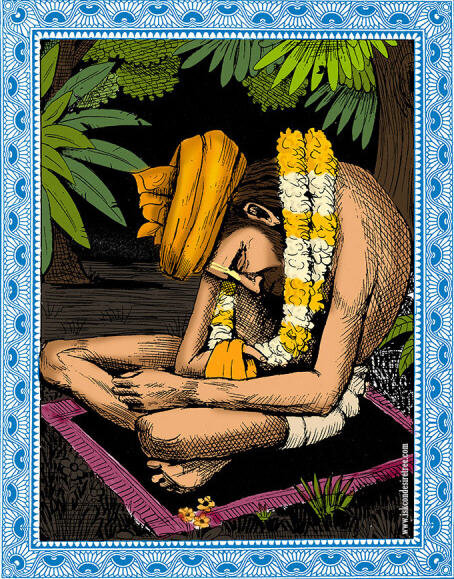
Very little is recorded about Srila Jagannatha Dasa Babaji's early years, and Vaishnava tradition itself does not claim to fill that gap. What has been kept is almost all about the extraordinary old age he lived to and the pastimes of that time, not the ordinary facts of a childhood. He is said to have been born into an aristocratic family in a village in the Tangail subdivision of the Mayamanasimha district of Bengal (in present-day Bangladesh). Even the year of his birth is disputed. Another devotional account places his appearance "sometime around 1750 A.D.," while other secondary biographies place it closer to 1800. The sources do not agree, and this page does not try to settle the difference. The short life-sketches that do survive all agree on one thing. They pass quickly over his birth and move on to the line of spiritual teachers that shaped him.
A Guru Lineage from Baladeva Vidyabhushana #
That lineage is recorded quite clearly, and more than one source confirms it independently. The great Gaudiya Vedanta commentator Srila Baladeva Vidyabhushana had an initiated disciple named Uddhava Dasa Babaji. Uddhava Dasa Babaji's own initiated disciple was Madhusudana Dasa Babaji, who lived at Suryakunda near Radhakunda in the Vraja area. Madhusudana Dasa Babaji's disciple, in turn, was Jagannatha Dasa Babaji himself, who accepted babaji initiation from him. So Jagannatha Dasa Babaji was only three links away from one of the most important philosophical authorities in the Gaudiya tradition. He took up the renounced life of a babaji, living on alms, at Suryakunda, in the intense devotional atmosphere of Vraja.
Vaishnava Sarvabhauma #
In time he became so widely respected across the Gaudiya Vaishnava community that he was given the title Vaishnava Sarvabhauma. It means literally "emperor among Vaishnavas," or chief of the Vaishnavas. This title of honour was not given for learned writings, since he is not known to have written anything himself. It was given for his deep, realised devotion, which the whole community had come, on its own, to recognise and bow to. Srila Bhaktivinoda Thakura himself is recorded as calling him the topmost general among Gaudiya Vaishnavas. This was high praise from a man who did not speak carelessly. He was also famous as a siddha-baba, a perfectly realised soul. At times he was known to chant the holy name continuously for three days and nights without sleep. Only afterward would he break his fast, with flat rice and yogurt.
The Long Years at Suryakunda and Vrindavana #
Jagannatha Dasa Babaji spent many years living and performing bhajan in Vrindavana and the holy places around it. It was his settled custom to divide his time between six months in Sri Nabadwip Dhama and six months in Vraja-mandala. Beyond the fact that he lived there and was known as "a perfect devotee," fairly little detailed story about these years survives. The specific, vividly remembered episodes of his life begin only in his extreme old age, when he had already been a recognised authority for decades. Most of them are preserved because his own disciples and associates saw them and told them again. The chief of these was his devoted servant Bihari Dasa. His installation of Deities at Suryakunda, and what happened to Them afterward, is told here, and his pivotal role in identifying the lost birthplace of Sri Chaitanya Mahaprabhu at Mayapur is told here.
When he was over a hundred years old, his body had become bent almost double. His attending disciples had to lift his eyelids before he could offer tulasi manjaris to his worshipable Deity of Sri Giriraja Govardhana. Even then, he continued to give the same instruction to any devotee who asked for his guidance on sadhana:
"The best time for chanting the holy name is from three o'clock in the morning until seven in the morning, and again from sunset until eleven o'clock at night. No serious-minded devotee should sleep during these hours, for Lord Shiva comes to inspect the devotees of his own worshipable Lord, Sri Krishna, at those times."
Chapter 2
Installing Deities in Vrindavana
Dacoits, a golden Gaura, and a six-armed Chaitanya hidden in a bag of cattle feed
In his years as a renunciant living on alms at Suryakunda, Jagannatha Dasa Babaji once asked his servant Bihari Dasa to find a Deity for worship there. Bihari Dasa approached a local zamindar of the weaver caste, who arranged for Deities of Gaura-Nitai to be brought from Dainhata. After they were installed, the Deities were so beautiful that, in the words of the tradition, they appeared to be made of gold. Because of this, the Deities were very nearly lost from Suryakunda altogether.
Another devotional account tells this same episode somewhat differently. It says that the villagers of Suryakunda themselves built a room and small temple for Jagannatha Dasa Babaji, and that he asked Bihari Dasa to install a Deity in it. In this account, Bihari Dasa travelled instead to Sonaruddi village, about eight miles from Katoa, where a local landlord gave him the Gaura-Nitai Deities. Then Bihari Dasa went on to Calcutta and collected five thousand rupees toward Their installation from Srinath Rai, the Laha family, and others. The two accounts do not agree on where the Deities came from, or on whether any money was collected. Both are reported here, instead of being quietly combined into one.
The Dacoits Who Dropped the Deities #
A band of dacoits heard of Deities that looked golden and came to steal them. Jagannatha Dasa Babaji told the robbers plainly that he had nothing of value and that they were welcome to search the temple themselves. They broke open the door, gathered up everything they could carry, including the Deities, and fled. In their hurry they stumbled at the doorstep and dropped the Deities. They saw that the sun was beginning to rise, and they did not want to be caught in daylight. So the dacoits left the Deities there and escaped with the rest of what they had taken. It was certainly a narrow escape, and Jagannatha Dasa Babaji learned the obvious practical lesson from it.
Sonara Gaura and the Six-Armed Deity #
After the robbery he asked Bihari Dasa to arrange for the Deities to be cared for somewhere else. Bihari Dasa carried Them to Vrindavana. There he placed Them in the care of a devotee known as Mother-Goswamini of Gayespur, along with a donation of two thousand rupees. Those same Deities are still worshipped today at Dhopapada in Gopalbag, under the name that this incident gave Them: Sonara Gaura, "the golden Gaura."
Some time afterward, Jagannatha Dasa Babaji asked Bihari Dasa to find him another Deity. This time Bihari Dasa found a six-armed form of Lord Chaitanya. A Manipuri Vaishnava named Dinu Babaji, near Radhakunda, had kept this Deity hidden inside a bag of cattle feed. Bihari Dasa cleaned and dressed the Deity and brought Him to Suryakunda, where Jagannatha Dasa Babaji worshipped Him for ten years. At the end of that decade, Jagannatha Dasa Babaji told Bihari Dasa that he wished to go to Nabadwip, and that his body should in the end be offered at the lotus feet of Lord Gauranga there. This is the first clear sign in the sources of his move toward Bengal, which would shape the rest of his life. The six-armed Deity was placed in the care of Narottama Dasaji, head of the Gopalaguru Matha, and is today worshipped in a lane of Nidhuvana in Vrindavana.
Vraja Knows No Caste #
Not every episode from these years concerned Deities. On one occasion Jagannatha Dasa Babaji accepted bread offered to him by a person of the sweeper caste in Vrindavana, and the local Vaishnava community criticised him sharply for it. When challenged to explain himself, he answered, "Do you know who these sweepers are? Before appearing in Vraja-dhama, Lord Krishna asked eighty-eight thousand sages to take birth there, and they were born in low families. Devotees reside in Vraja-dhama simply to get the opportunity of smearing their bodies with its dust, and to give up their bodies here. These sweepers are always serving the dust of Vrindavana. I therefore regard them as servants of Vraja-dhama, no different from any other Vaishnava."
Even so, the criticism hurt him. Afterward he withdrew to a quiet, lonely spot called Pesi Kadamkhandi, near Khandiravana, one of Vraja's twelve forests, and took only Bihari Dasa with him. There the two of them fasted completely through Dashami and Ekadashi. On the next morning, Dvadashi, Bihari Dasa began to worry. His guru had gone to a place with nothing to eat, and there was no way to break the fast properly on grains. But Jagannatha Dasa Babaji simply had him chant the maha-mantra loudly with karatalas. Before noon a resident of Vraja arrived with grains for them to cook. From the next day onward, milk arrived for them daily without fail.
The Departure for Nabadwip #
When the time came to leave Vraja for good, Bihari Dasa carried his guru-maharaja on his shoulder in a bamboo basket to the railway station at Mathura and boarded a train bound for Bengal. At the Memari station in Bardhaman a British railway officer, struck by the simplicity and blissful nature of the old Babaji, went out of his way to assist them. They left the train before reaching Nabadwip, hired a bullock cart, and travelled to the ashrama of a renowned soul named Bhagavan Dasa Babaji, who lived at Ambika Kalna.
Bhagavan Dasa Babaji was overjoyed to see him. He cried out "Oh! My friend has come!" and embraced him. The two elderly Babajis fell to the ground together in a deep spiritual trance. They lay motionless in each other's arms from ten o'clock in the morning until eleven o'clock that night. Their attendants grew anxious and finally asked Bihari Dasa to help. He brought them back to outer awareness by massaging his guru's chest and chanting the maha-mantra. Jagannatha Dasa Babaji had neither eaten nor drunk through three full days of travel. He broke his fast at midnight, and afterward the two old friends rested.
They stayed ten days at Kalna. During that time Bhagavan Dasa Babaji, who was very poor, insisted on giving all the money he had left, eighteen rupees, for the onward journey. Then Jagannatha Dasa Babaji set out again by bullock cart for Nabadwip. There Bihari Dasa suggested that they stay at the well-known Bada-akhara ashrama, but his guru refused: "No, we will not stay in any ashrama. We will stay under some tree." They did exactly that, until a devotee named Madhava Datta bought the land beside the tree and gave it to the Babaji. A year later Bhaktivinoda Thakura built two small huts there for him. The landlord Vanamali Rai added three more huts and a boundary wall, and a wealthy elderly lady had a well dug nearby for drinking water. Jagannatha Dasa Babaji stayed at this spot in Kuliya for thirty-two years. Whenever his travels took him to Calcutta, he stayed at Bhaktivinoda Thakura's own house on Maniktala Street. Otherwise he declined the many invitations of devotees who wished to host him for prasada. He later gave a Govardhana-shila to Bhaktivinoda Thakura, who kept and worshipped it at his Bhakti Bhavan.
Chapter 3
Discovering Mayapura
Carried to the spot in a basket, blind and unable to walk, he leapt out and danced
When Srila Bhaktivinoda Thakura set out to establish, once and for all, the true site of Sri Chaitanya Mahaprabhu's birth, he did not do it alone. He asked Jagannatha Dasa Babaji to go with him. By then Jagannatha Dasa Babaji was a very old man, respected across the Gaudiya Vaishnava world as its greatest living authority. Vaishnava tradition remembers his part in that search as one of the great pastimes of his long life.
A Shifted River and a Vanished Town #
The problem Bhaktivinoda faced was truly difficult. Over three centuries the Ganges had changed its course again and again through the nine islands of Nabadwip. It had covered some places with water and uncovered others. So when the town called Nabadwip in Bhaktivinoda's own day was examined, it turned out to be barely a hundred years old. It was clearly not the Nabadwip in which Chaitanya Mahaprabhu had been born. Local Vaishnavas were divided in their opinion. Some held that the birthplace now lay beneath the river itself. Others held that it stood somewhere within the modern town. Bhaktivinoda was not satisfied with rumours. He turned to old maps, government land records and Vaishnava texts written in Chaitanya Mahaprabhu's own time. All of them agreed that the true site of Mayapur-Nabadwip lay on the east bank of the Ganges. There he found several large mounds, thickly overgrown with sacred tulasi plants. The land was then owned by Muslim landholders. They themselves avoided the site, because they believed it was haunted by strange lights and sounds.
Carried to the Spot in a Basket #
Many of the old babajis of the area already believed that this overgrown ground, which people kept away from, was the actual birthplace of Mahaprabhu. Bhaktivinoda most wanted Jagannatha Dasa Babaji to confirm it. By this time the Babaji was so old and weak that he could not walk at all. He could not even open his own eyes without forcing them apart with his fingers. Bihari Dasa carried him there in the same basket in which he carried him everywhere in those last years.
Upon arriving at the site, Jagannatha Dasa Babaji leapt out of the basket unassisted and danced in ecstasy, shouting "Haribol!" and "Gauranga!" It established, to everyone present, that this was indeed the place.
Traditional accounts date this decisive visit to 1893. Jagannatha Dasa Babaji was then living at Kuliya in Nabadwip. He went to Surabhi-kunja in Godrumadwipa, where Bhaktivinoda Thakura lived, and from there on to Mayapur with his followers. On this same journey he is said to have identified not only the birth-site itself but other lost holy places nearby. These included the Yogapitha and Srivasa Angana, the courtyard where the sankirtana movement had begun. A verse of homage still recited in the Gaudiya Vaishnava community credits him directly with the discovery:
gaurāvirbhāva-bhūmes tvaṁ nirdeṣṭā saj-jana-priyaḥ
vaiṣṇava-sārvabhaumaḥ śrī-jagannāthāya te namaḥ
"I offer my respectful obeisances unto Sri Jagannatha Dasa Babaji Maharaja, dear to the devotees, who is honoured by the entire Vaishnava community as Vaishnava Sarvabhauma, and who pointed out the place of Lord Gaura's appearance."
A Skin Disease Cured in the Dust of the Dhama #
Jagannatha Dasa Babaji spent some time at the Yogapitha itself with Bhaktivinoda Thakura. It is remembered that during this same visit he cured one of Bhaktivinoda Thakura's own sons of a skin disease. He simply told the boy to lie down in the dust of the ground where Lord Gaura had appeared. No medicine, mantra or ritual is recorded, only the instruction to take shelter of the dust of that dhama. The disease is said to have left him.
Settling at Nabadwip #
After this, Jagannatha Dasa Babaji remained in the Nadia area, performing bhajan on the bank of the Ganges at Kuliya. His bhajan kutir and samadhi shrine stand there to this day. On his instruction, Bhaktivinoda Thakura quickly built a veranda for his cottage at Kuliya, so that the devotees who kept coming to see him would have some shelter.
It is remembered that in this period prasada kept reaching him in ways no one could quite explain. Once, during the rainy season, the Ganges flooded Nabadwip and rain fell without stopping for a week, so no one could go out to beg alms. Even so, four people suddenly appeared in a small boat. They gave Jagannatha Dasa Babaji some twenty kilograms of flat rice, yogurt and sandesha. The unusual, often very funny character he displayed in these final years at Nabadwip, as witnessed by his servant Bihari Dasa, is described here, and his part in guiding both Bhaktivinoda Thakura and the young Bhaktisiddhanta Sarasvati is told here.
Scriptural evidence for this chapter (1)
Quoted in the text above:
- Pranama to Srila Jagannatha Dasa Babaji Traditional pranam mantra
Chapter 4
Servant Bihari Dasa and His Character
The dogs who ate from his plate, the torn kaupina, and an uncompromising word against professional Bhagavatam reciters
In the stories remembered about him, Jagannatha Dasa Babaji is not a solemn, distant figure. He is surprisingly direct and often playful. Nearly everything recorded about his personal character in old age survives because his devoted servant, Bihari Dasa, saw it at close range and passed the stories on.
The Dogs at His Plate #
Living in a tent on the bank of the Ganges at Nabadwip, Jagannatha Dasa Babaji shared his dwelling with a litter of puppies that had been born nearby. Whenever he took his prasadam from a large brass plate, the dogs would come and lick food from it, and he never objected. Bihari Dasa was disgusted to see dogs eating from his guru's plate, and finally he drove them off. Jagannatha Dasa Babaji reacted at once: "If the dogs can't eat, I won't eat!" Bihari Dasa had to go and bring the puppies back before his guru would touch his own meal. "These dogs are residents of the holy dhama," he told his servant on another occasion when the same argument arose. "You may not abuse them. If you wish to drive them off, you may take my plate away as well. I shall not eat today." When the puppies returned to share his plate once more, he exclaimed, "All glories to the dhama's dogs!" He also could not bear to leave prasada uneaten. If he thought someone might later eat what he had left on his leaf plate, he would finish every last bit, and eat the leaf itself as well. He did this so that nothing of what had been offered would go to waste.
The Rupee He Could Not Carry #
Bihari Dasa was famous for carrying his guru. Sometimes, without meaning to, he also gave his guru the occasion for a lesson in detachment. Once, while Bihari Dasa carried him through the countryside in his basket, a wealthy man gave a single rupee as an offering. Bihari Dasa accepted it and kept it safely. After they had travelled on for some miles, Jagannatha Dasa Babaji had Bihari Dasa turn back and return the rupee to the very man who had given it. "I understand that you have a good deal of money," he told the astonished donor. "I could not bear the burden of even one rupee, and I wonder how you tolerate the burden of so many." He is recorded as sometimes accepting donations for the service of the Vaishnavas. But this time he chose instead to show how careful a renunciate must be of wealth offered by men who judge their own worth by it. He did this without a word of blame.
Twelve Rupees Hidden From a Nearly Blind Old Man #
In his final years Jagannatha Dasa Babaji was nearly blind. Many visitors came to offer him donations for Krishna's service, and Bihari Dasa kept all of it in a bag for him. Once Bihari Dasa set aside twelve rupees for a service he had planned for his guru's benefit. Then he reported a smaller total than the bag actually held. Even with his failing eyesight, Jagannatha Dasa Babaji noticed the difference at once: "Bihari! Why have you kept twelve rupees aside? Give me all the rupees!" Bihari Dasa, caught and smiling, handed over the rest. Jagannatha Dasa Babaji then had the full amount, some two hundred rupees, spent entirely on sweets and rice cakes for the poor and on feeding every cow in Nabadwip. He said it was better to feed the Dhama's animals than to support the many hypocrites who wore the dress of a babaji but did not live its renunciation.
Austerities of Caturmasya and Puraścaraṇa #
Jagannatha Dasa Babaji kept the four-month Caturmasya vow of the rainy season very strictly. In the first month he took only four bananas each evening, in the second only guavas, in the third a little buttermilk, and in the fourth nothing but the flowers of the banana tree. Once he travelled to Rishikesh to perform puraścaraṇa, a very strict chanting vow for purification. He bathed at three o'clock each morning and then chanted inside a closed room until sunset. He did not speak or eat. He did not even leave the room to answer a call of nature without first bathing again. After keeping this vow for two months, he spoke a few words to Bihari Dasa by mistake. He did not let this slip pass. He began the entire vow again from the beginning and completed it in three months. He would afterward say that anyone who wished to have darshan of Krishna in the form of Sri Chaitanya Mahaprabhu should perform puraścaraṇa in exactly this way.
Confirmed From Afar #
Once, while he was staying at Nabadwip, the landlord Srinath Rai and several family members came to seek him out without recognising him, and asked if he knew where the famous siddha-baba lived. "I don't know anyone who is a siddha-baba here," he replied. "I am staying here, but I am simply an ordinary living entity like all of you." Realising, from his manner, exactly who they were addressing, they humbly asked him to show them a miracle. Visibly displeased at the request, he picked up a stick and began beating the ground, as if in irritation, until the landlord, fearing he had given offence, begged his forgiveness.
"I am not angry with you," Jagannatha Dasa Babaji told him. "I was just chasing away a goat that was eating the tulasi plant near the cottage of Srila Lokanatha Gosvami at Radhakunda." Astonished, the Rai family sent a reply-paid telegram to Radhakunda to test the claim. The answer came back the following day: a goat had indeed entered Lokanatha Gosvami's cottage and ruined the tulasi plant there, at the very hour Jagannatha Dasa Babaji had been beating the ground at Nabadwip, many miles away.
Healing His Servant #
Once, while at Nabadwip, Bihari Dasa himself fell seriously ill with a severe fever and delirium, and he fell unconscious again and again. A doctor called from Calcutta said the case was hopeless and predicted that Bihari Dasa would not survive the night. Jagannatha Dasa Babaji sat beside his servant, placed a sanctified tulasi leaf in his mouth, and began to chant the Hare Krishna maha-mantra. Within half an hour Bihari Dasa was cured. He got up at once to cook. His guru had fasted throughout the illness, and Bihari Dasa knew that he would eat nothing prepared by anyone else.
On another occasion, Jagannatha Dasa Babaji asked the illiterate Bihari Dasa, who did not know the alphabet, to read to him from Sri Chaitanya-charitamrita. When Bihari Dasa reminded him that he could not read, his guru simply told him to look at the book for a while and begin. Within minutes Bihari Dasa was reciting the pastimes of Lord Chaitanya directly from its pages.
The Beggar and the Torn Kaupina #
Not everyone who came asking Jagannatha Dasa Babaji for charity found him generous with money. He preferred to guide beggars toward service instead of handing out alms. One man, Gaura Hari Dasa, came asking for money and was refused. He did not leave. He simply sat outside the Babaji's tent and fasted for three days. At last Jagannatha Dasa Babaji gave in, but not with money. He tore a piece from his own kaupina, the simple loincloth of a renunciate, and had Bihari Dasa give it to the beggar. Without a word of lecture, this made the point that before taking up the profession of a saint, a man must first learn to control his own senses.
Another devotional account tells what appears to be this same episode quite differently. In that version, a certain Gaura Hari Dasa came seeking babaji initiation, not money. He too was refused, and he too fasted for three days in front of the cottage. In the end he was given babaji initiation, not a piece of cloth. The two accounts agree on the man's name, his three-day fast, and Jagannatha Dasa Babaji's final mercy. But they disagree on what he actually asked for and what he received. Both are reported here instead of being combined into a single version.
Against Professional Recitation of the Bhagavatam #
He took an especially firm and uncompromising stand against one practice that was common enough in his day. This was the practice of professional public reciters who read the Srimad-Bhagavatam aloud for a fee. "This kind of professional Bhagavata-recitation is simply prostitution," he is recorded as saying. "Those who make their living reading Srimad-Bhagavatam are offenders against the holy name of Krishna, and no one should listen to the kirtana or Bhagavatam readings they produce. Anyone who listens and thereby commits offence against the holy name certainly goes to hell." He held that such people should give up the practice at once. Instead, they should humbly worship the residents of Vrindavana, consider themselves the most fallen, and pray only for forgiveness. It is remembered that one such professional reciter took this rebuke to heart at once. He gave up his recitations the same day, and he lived the rest of his life simply, as a genuine devotee in Vrindavana. In this one area, his strictness matched the same uncompromising standards that his spiritual grandson, Srila Bhaktisiddhanta Sarasvati Thakura, would later bring to his own confrontations with doctrinal deviation.
Chapter 5
Instructing Bhaktivinoda and Young Bhaktisiddhanta
Two decades of guidance to the father, and one calendar-making commission to a twelve-year-old son
Jagannatha Dasa Babaji's relationship with the Datta family lasted nearly two decades. It was first with Bhaktivinoda Thakura himself, and later with Bhaktivinoda's remarkable young son. Because of who that son would become, it is one of the most important personal connections in the whole modern history of Gaudiya Vaishnavism.
Meeting Bhaktivinoda Thakura, 1880 #
Bhaktivinoda Thakura first met Jagannatha Dasa Babaji in Vrindavana in 1880. At that meeting he received a great deal of instruction in hari-bhakti from the Babaji. The two met again some time later, when Jagannatha Dasa Babaji visited the Burdwan district in the month of Phalguna and stayed at the village of Amalajora. Bhaktivinoda Thakura also went there, using government business as his excuse, so that he could have the Babaji's association a second time. Jagannatha Dasa Babaji was greatly pleased to see Bhaktivinoda's clear enthusiasm for preaching the holy name. So he stayed at Amalajora for eleven days, performing kirtana and hari-katha day and night without a break. Bhaktivinoda later established his Prapanna-ashrama at that same village. In later years, when Jagannatha Dasa Babaji came to Calcutta, he would stay at Bhaktivinoda's own house on Manikatala Street. But he was deeply renounced by nature. So he accepted Bhaktivinoda's eager invitations to take prasadam there only now and then, never as a regular habit.
Calling on a Twelve-Year-Old Astronomer #
The more remarkable episode concerns Bhaktivinoda's son. When Bimala Prasad (the boy who would grow up to be Srila Bhaktisiddhanta Sarasvati Thakura) was twelve years old, he had already become expert in jyotish-shastra, the science of Vedic astrology and astronomical calculation. His early brilliance is described in full on his own page. Hearing of this, Jagannatha Dasa Babaji called the boy to him. He asked Bimala Prasad to prepare a proper Vaishnava calendar, calculated according to correct astronomical siddhanta. It was to include the appearance and disappearance days of Chaitanya Mahaprabhu's associates and of Vishnupriya Thakurani, and the festivals through the year. Bimala Prasad did as he was asked, and Jagannatha Dasa Babaji was clearly satisfied. The finished work became the basis of the Sri Nabadwip Panjika, the Vaishnava almanac still used across the Gaudiya community.
It is a small episode and easy to overlook. Accounts of his old age say that Jagannatha Dasa Babaji could barely open his eyes or walk without help in these years. Yet it was his personal initiative that first drew the future founder of the Gaudiya Math into public service. This was years before Bhaktisiddhanta's 1900 initiation from Srila Gaura Kishora Dasa Babaji. Most sources place Gaura Kishora Dasa Babaji himself within Jagannatha Dasa Babaji's own spiritual line, through his guru Bhagavata Dasa Babaji, though not every source agrees. Jagannatha Dasa Babaji's disciples and the rest of that lineage are covered on the next page.
Chapter 6
His Disciples, Disappearance and Legacy
The paramaguru of Srila Bhaktisiddhanta Sarasvati Thakura, and a lifespan tradition remembers as extraordinary
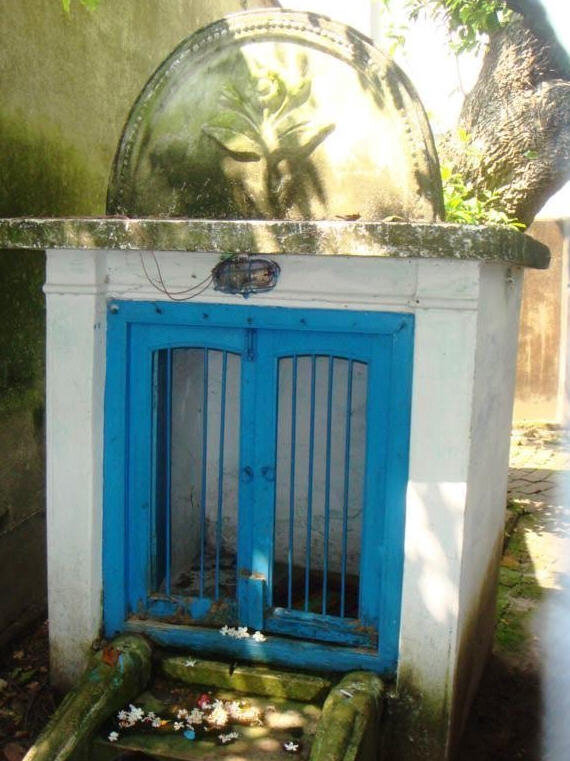
Jagannatha Dasa Babaji did not write books or found an institution. What he left behind was a circle of disciples. Through them, he left an unbroken, living connection to everything that followed in modern Gaudiya Vaishnavism.
His Disciples #
Vaishnava biographical sources preserve a list of his principal disciples: Biharidasa Babaji, Bhagavata Dasa Babaji, Gaurahari Dasa Babaji, Ramahari Dasa Babaji, Ramadasa Babaji, Nityananda Dasa Babaji (a resident of Varshana), and Harekrishna Dasa Babaji, a resident of Kadamkhandi. Of these, one name matters more than all the others for the line that produced this tradition. It is Bhagavata Dasa Babaji, whom Jagannatha Dasa Babaji initiated into the babaji order. According to most sources (though not every source agrees), Bhagavata Dasa Babaji in turn gave the same babaji-vesa to Srila Gaura Kishora Dasa Babaji. If this account is correct, Jagannatha Dasa Babaji is the guru's guru, the paramaguru, of the man who would formally initiate Srila Bhaktisiddhanta Sarasvati Thakura. So he is a direct link in the chain that the guru-parampara page traces from Chaitanya Mahaprabhu down to Srila Prabhupada.
An Extraordinary Age #
Vaishnava tradition holds that Jagannatha Dasa Babaji lived to an extraordinary age, though the sources do not agree on the exact figure. One account says that at close to 135 years of age he was still preaching. Though he was almost paralysed by weakness, he still raised his arms in ecstasy during kirtana. Another account gives his age at disappearance as 147. It says this was after he had spent 32 years at the site in Nabadwip where his bhajan kutir and samadhi still stand. Another devotional account gives a third figure, close to the higher of these. It places him at 146 years old on his final journey from Radhakunda to Nabadwip. On that occasion, many Vrajavasis and other Vaishnavas asked him why he was leaving Vraja-dhama at such an age, and he answered them with great humility:
"You can all stay here in Vraja-dhama, because you are all pure Vaishnavas. I am very offensive, and therefore it is better for me to stay at Nabadwip. Sri Sri Gaura-Nitai do not count one's offenses, for They have appeared to liberate all offenders. But here in Vraja-dhama, offenses are counted and their reactions strictly enforced."
The available sources report 135, 146 and 147 years. None of them settles the difference, so it is not settled here either. What the tradition always stresses is not an exact number of years. It is the plain fact that his life was unusually long, and that he kept up his devotional practice without a break to the very end. The people of his own time saw this long life itself as a sign of his spiritual greatness. This was his last journey to Nabadwip-dhama. A few months after he arrived, he entered the Lord's eternal pastimes. It was the first day of the new moon in the month of Phalguna, a fortnight before the anniversary of Lord Chaitanya's own appearance. The year is given only as sometime after 1897, and no exact date survives. To the very end he paid a thousand obeisances daily to his worshipable Deity of Sri Giridhari.
| Detail | Description |
|---|---|
| Birth | Sources disagree: c. 1750 or c. 1800, in the Tangail subdivision of Mayamanasimha district, Bengal |
| Guru lineage | Baladeva Vidyabhushana → Uddhava Dasa Babaji → Madhusudana Dasa Babaji → Jagannatha Dasa Babaji |
| Title | Vaishnava Sarvabhauma ("emperor among the Vaishnavas") |
| Principal disciple in this line | Bhagavata Dasa Babaji, said by most sources to be the guru of Gaura Kishora Dasa Babaji |
| Key pastime | Confirmed the site of Sri Chaitanya Mahaprabhu's birth at Mayapur, 1893 |
| Final years | Nabadwip, on the bank of the Ganges; samadhi shrine still stands |
| Disappearance | Sometime after 1897, on the new moon of Phalguna, a fortnight before Gaura Purnima; reported age at disappearance ranges from 135 to 147 across sources |
Legacy #
This much can be said with confidence. He was a wandering renunciant who lived on alms. He wrote nothing, built nothing and did not look for followers. Yet in his own lifetime the most learned Vaishnava of the age recognised him as the topmost general among Gaudiya Vaishnavas. Bhaktivinoda Thakura himself is remembered as always calling him by this same title, Vaishnava Sarvabhauma. Jagannatha Dasa Babaji was carried in a basket to a forgotten, tulasi-covered mound on the bank of the Ganges. By being present there in person, he turned a scholar's argument from books into a place people could actually visit. Every pilgrim who has since stood at Yogapitha in Mayapur, and every disciple in the line running from Srila Prabhupada back through Srila Bhaktisiddhanta Sarasvati Thakura, owes something to that single act of confirmation.
Closing
A Guru's Guru in the Direct Line #
His own disciple Bhagavata Dasa Babaji gave the babaji order to Srila Gaura Kishora Dasa Babaji (most sources agree on this, though not every source does). Gaura Kishora Dasa Babaji in turn initiated Srila Bhaktisiddhanta Sarasvati Thakura. According to this account, Jagannatha Dasa Babaji stands two full generations before the founder of the Gaudiya Math in the guru-parampara traced here. His own guru lineage went back through Madhusudana Dasa Babaji and Uddhava Dasa Babaji to the great Vedanta commentator Srila Baladeva Vidyabhushana.